Badshahi Masjid, also called Shahi Masjid, is one of the most famous landmarks in Lahore. In fact, for many people it is the picture that comes to mind when they think of the city. Emperor Aurangzeb ordered it in 1671, and the work was finished in 1673.
The mosque is built of red sandstone, with white marble domes and fine inlay work. Inside, calligraphy and carved designs cover the walls. So, if you are planning a trip to Lahore, put Badshahi Masjid at the very top of your list.
Table of content
History of Badshahi Masjid
Badshahi Masjid means “the Emperor’s Mosque”. The sixth Mughal emperor, Aurangzeb, built it, and his foster brother Fidai Khan Koka, the governor of Lahore, supervised the work. It took only about two years, from 1671 to 1673.
For more than three centuries, it was the largest mosque in the world. Then, in 1986, Faisal Mosque in Islamabad overtook it. Even so, it is still one of the biggest mosques in South Asia. Its huge courtyard can hold around 100,000 people, and the prayer hall holds thousands more.
The mosque stands right opposite the Lahore Fort, with the Hazuri Bagh garden between them. Its red sandstone walls carry delicate marble inlay and carvings. Inside, the prayer hall is decorated with frescoes, stucco work and calligraphy.
The mosque also went through hard times. During the Sikh period, the courtyard was used as stables and as a store for weapons. Later, the British used it as a military garrison. As a result, much of it was damaged. However, a long restoration in the 20th century brought back its old glory.

Photo Credit: Muhammad Ashar, Own work, CC BY-SA 3.0, Link
Architecture of Badshahi Masjid
Badshahi Masjid is a superb example of Mughal architecture. It is built of red sandstone, and three white marble domes crown its prayer hall. In addition, four tall minarets, each about 60 metres high, stand at the corners of the courtyard.

Photo Credit: Shabi Abdullah, CC BY-SA 4.0, Link
Look closely at the walls of Badshahi Masjid, because the details are amazing. Floral patterns, carved panels and fine inlay cover almost every surface. Even today, these designs look fresh, so it is easy to see how skilled the Mughal craftsmen were.

Photo Credit: Shabi Abdullah, Own work, CC BY-SA 4.0, Link
Tips for visiting Badshahi Masjid
Badshahi Masjid is one of the most popular places to visit in Lahore, and huge numbers of people come here every year. So, if you are planning a trip, here are a few tips to help you make the most of it:
- Go early or late: Visit in the morning or late afternoon. In summer, Lahore can cross 40 degrees, and the courtyard stone gets very hot.
- Dress modestly: Cover your shoulders and knees, and avoid tight clothes. Women should also cover their hair.
- Be respectful: This is a working mosque, so keep your voice low. Also, do not take photos of people while they pray.
- Read a little first: The mosque has a rich history. So, if you know the story before you go, you will enjoy it much more.
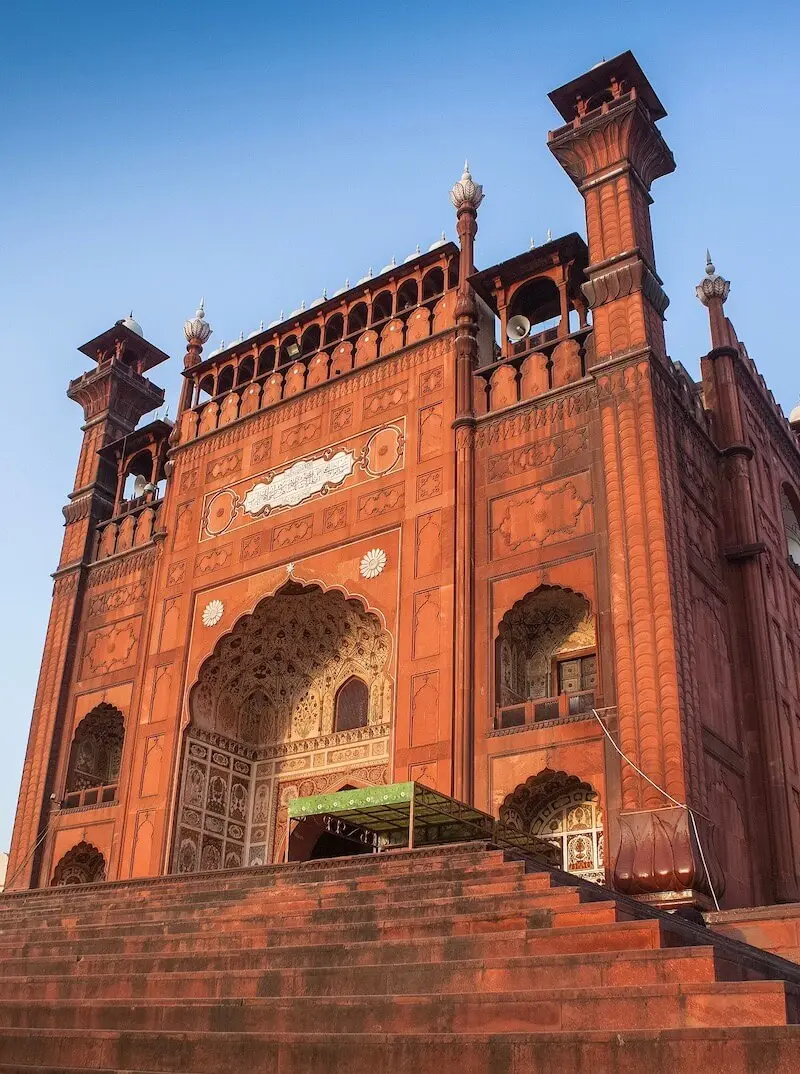
Photo Credit: Zakiimtiaz1, Own work, CC BY-SA 3.0, Link
Gateway that faces the Hazuri Bagh quadrangle
What to see in Badshahi Masjid?
When you visit Badshahi Masjid, dress modestly, because this is a place of worship. You will also need to remove your shoes at the entrance. Then, expect big crowds, especially at Friday prayers. Once you are inside, take your time to enjoy the architecture before you join the prayers.
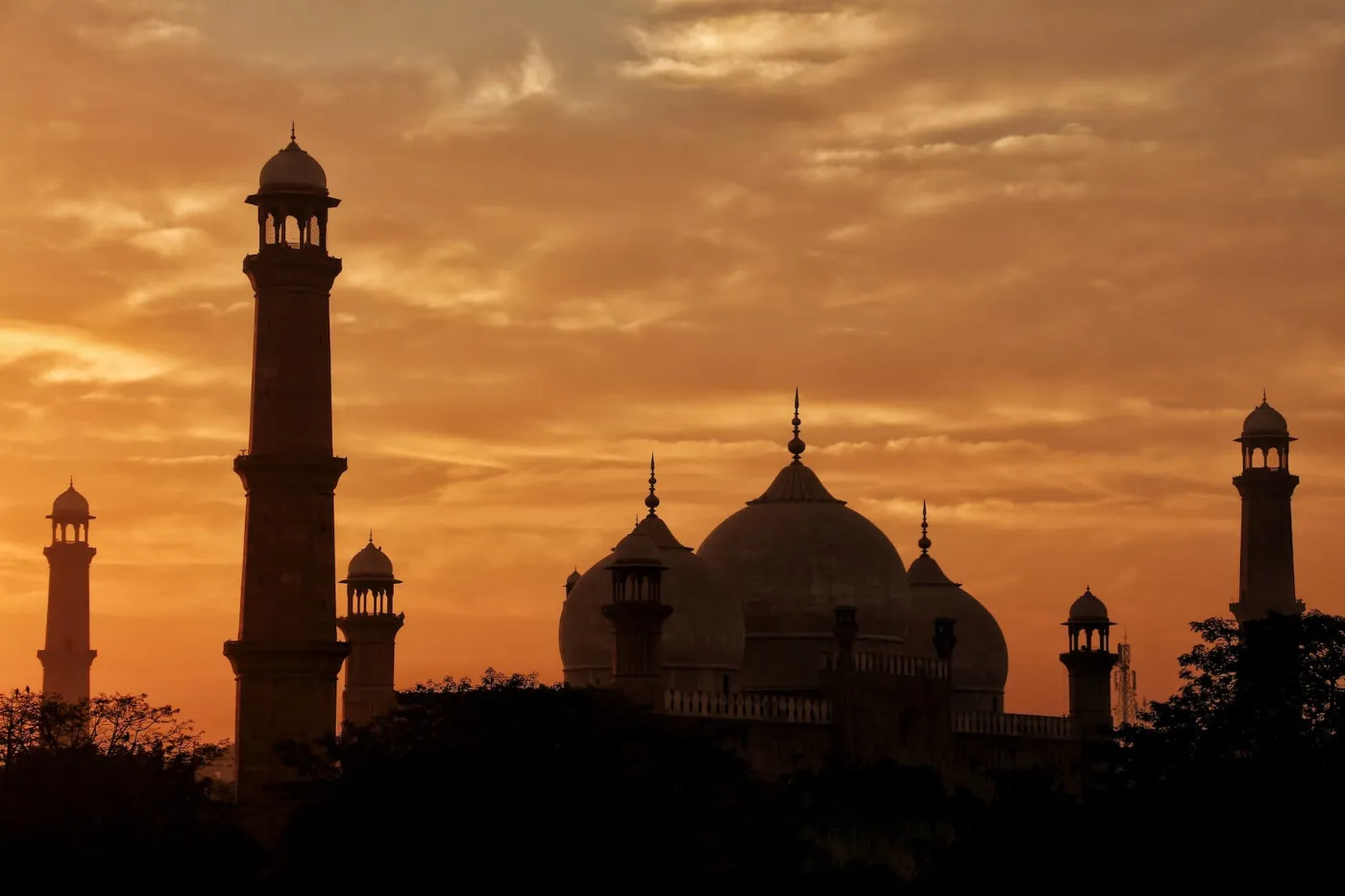
Photo Credit: Fassifarooq, Own work, CC BY-SA 4.0, Link
Courtyard of Badshahi Masjid
The courtyard of Badshahi Masjid is one of the largest mosque courtyards in the world. In fact, it can hold around 100,000 worshippers. Four tall minarets stand at its corners, and a large pool for ablution sits in the middle.
On the east side, you will find the grand main gateway. It faces Hazuri Bagh and the Lahore Fort, and it is decorated with carved panels and calligraphy.

Photo Credit: vecteezy.com
Prayer Hall of Badshahi Masjid
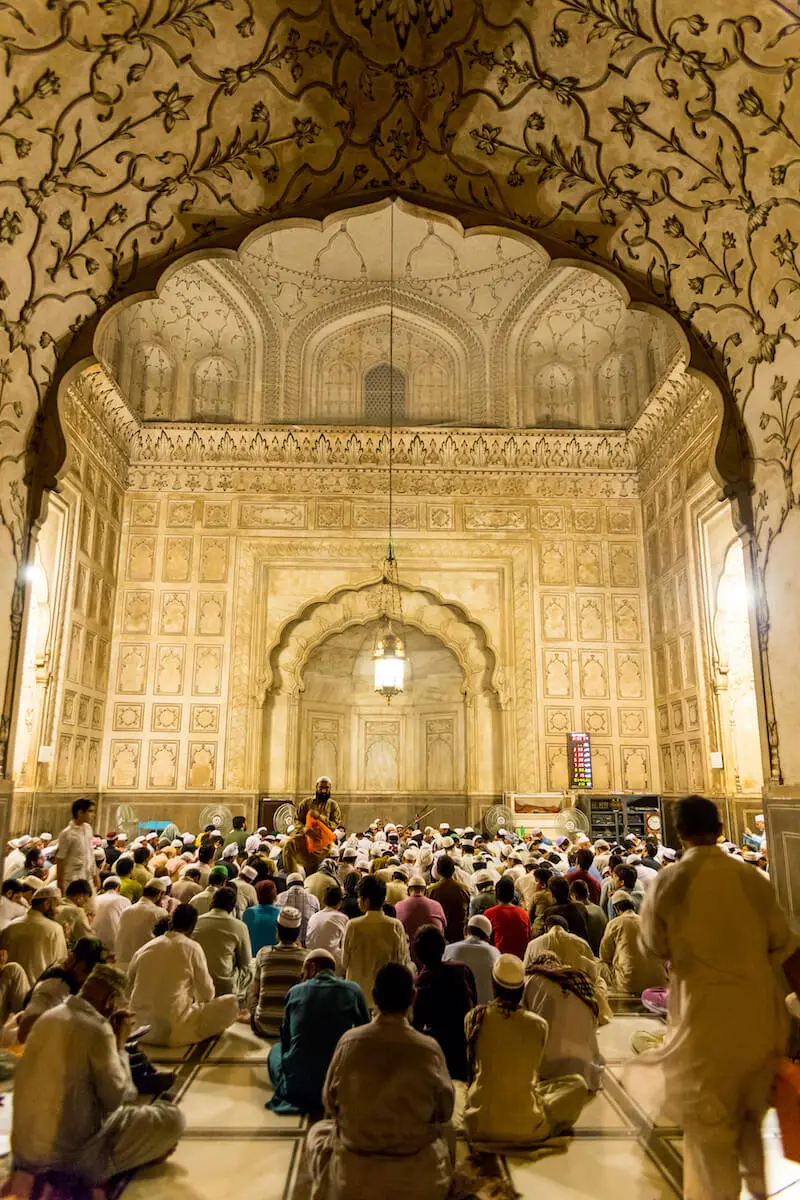
The main prayer hall of Badshahi Masjid is a vast and impressive space. It sits on a raised platform at the west end of the courtyard. Above it, three marble domes rise against the sky, and a row of arches opens onto the courtyard.
Inside the prayer hall, the walls and ceilings are beautifully decorated. For example, you will see frescoes, carved stucco and flowing calligraphy. Also, soft carpets cover the floor, so it is a comfortable place to sit and pray.

Photo Credit: Ujphotos, CC BY-SA 3.0, Link

Minerats of Badshahi Masjid
Badshahi Masjid, the “Emperor’s Mosque”, is one of the most iconic buildings in Lahore. Emperor Aurangzeb built it in the 17th century, and it is a fine example of Mughal architecture. Its red sandstone walls, white marble domes and huge courtyard make it unforgettable.
The mosque is usually open to visitors every day, outside of prayer times. However, timings and any entry fee for tourists can change, so check at the gate. Dress modestly, with no shorts or sleeveless shirts, and remove your shoes before you go in.
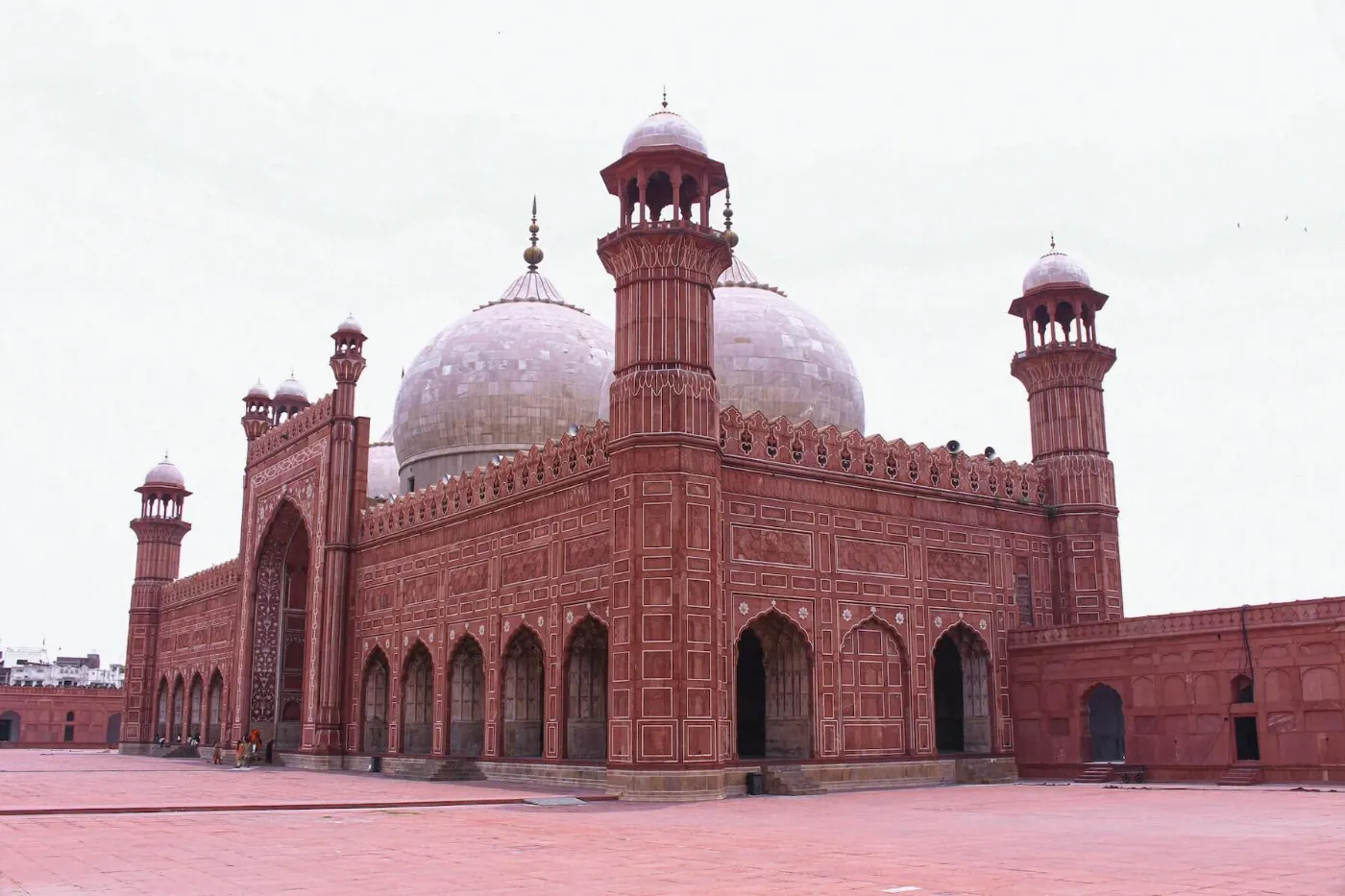
Photo Credit: evangelicalfocus.com
Museum of Badshahi Masjid
Inside the main gateway, a small gallery displays sacred relics. These are believed to have belonged to the Holy Prophet Muhammad (PBUH) and his family. As a result, many visitors stop here with great respect. Please follow the staff’s instructions in this area.

Photo Credit: sites.google.com
How to Get to Badshahi Masjid
The easiest way to reach Badshahi Masjid is by rickshaw, Careem, inDrive or Yango from anywhere in Lahore. The mosque stands at the north end of the Walled City, next to the Lahore Fort, so every driver knows it.
If you are coming from another city, first take a train, bus or flight to Lahore. Then take a rickshaw or ride-hailing car to the mosque. Also, if you are already at Minar-e-Pakistan, it is only a short walk across the road.
Places to Visit Near Badshahi Masjid
Once you have seen Badshahi Masjid, there is a lot more to explore close by. Here are a few places we have written about that fit nicely into the same trip:
- Lahore Fort: right across Hazuri Bagh, home to the Sheesh Mahal and the Picture Wall.
- Tomb of Allama Iqbal: just beside the steps of the mosque.
- Minar-e-Pakistan: a short walk away in Greater Iqbal Park.
- Gurdwara Dera Sahib: next to the fort, where Guru Arjan Dev is remembered.
- Data Darbar: the most loved Sufi shrine in Lahore, near Bhati Gate.
If you would like to dig deeper into the history of Badshahi Masjid, the Badshahi Mosque on Wikipedia page is a good place to start.
Conclusion
Badshahi Masjid is an incredible place, and it is one of the most important religious sites in Pakistan. So, take your time, sit in the courtyard for a while and look up at the minarets. We hope this guide helps you plan a wonderful visit.
Cover photo: Shahzaib Damn Cruze, CC BY-SA 4.0, via Wikimedia Commons (cropped and colour-enhanced)