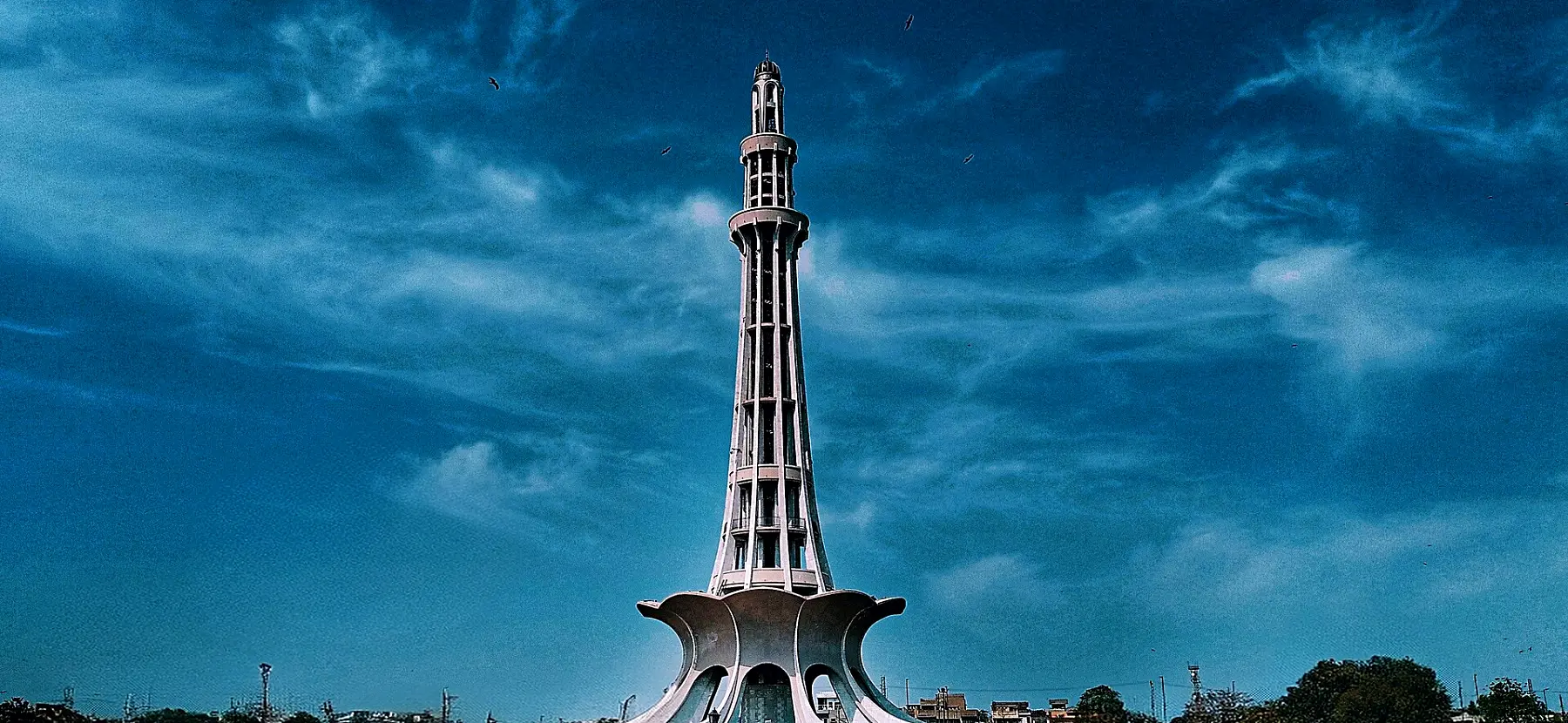
Every Pakistani child knows the shape of Minar-e-Pakistan: a slim white tower rising from a base that opens like a flower. It stands in Greater Iqbal Park on the exact spot where, on 23 March 1940, the All-India Muslim League passed the resolution that led to Pakistan. For many visitors, coming here feels like visiting the birthplace of the country’s dream.
This guide covers the story behind the tower, what its design means, the park around it, and how to plan your visit.
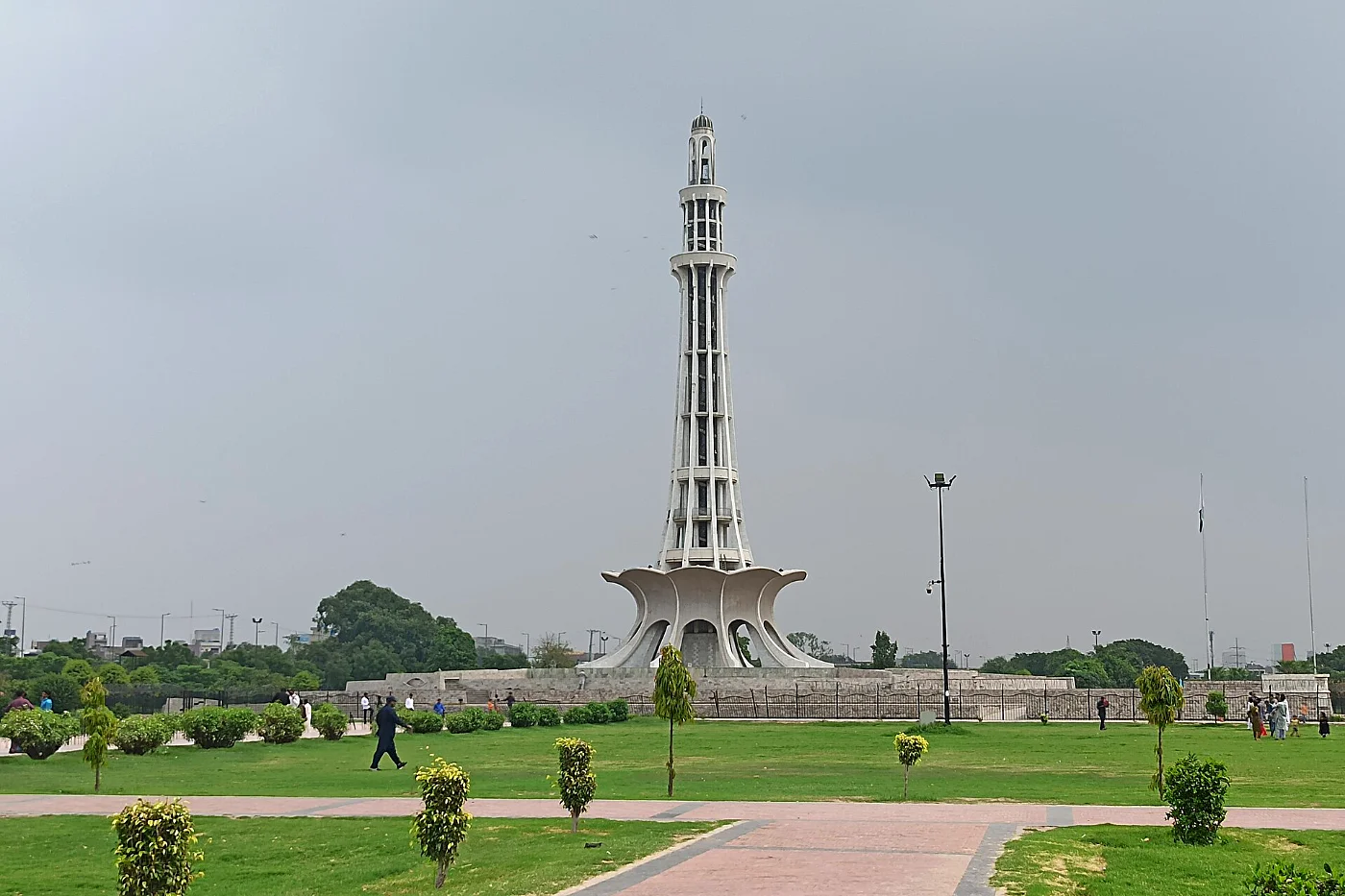
Minar-e-Pakistan seen from a path in Greater Iqbal Park. Photo Credit: Khan.gesta, CC BY-SA 4.0.
Quick facts
- Location: Greater Iqbal Park, Azadi Chowk, next to Badshahi Masjid
- Timings: Park open daily, about 7 am to 10 pm
- Ticket: Park entry is free or very cheap; the tower top is closed
- Time needed: 1 to 2 hours with the park
- Best time: October to March, late afternoon into the evening
- Map: Open in Google Maps
Last checked: November 2026. Full details in Visitor Information.
History of Minar-e-Pakistan
In British times, the ground here was called Minto Park. On 23 March 1940, Quaid-e-Azam Muhammad Ali Jinnah led the annual session of the All-India Muslim League in this park, and the members passed the Lahore Resolution, calling for independent states for the Muslims of British India. It later became known as the Pakistan Resolution, and the day is now celebrated as Pakistan Day.
Building the Tower
Work on a monument began in 1960 and finished in 1968. It was designed by Nasreddin Murat-Khan, a Russian-born architect and engineer who had settled in Pakistan, and it rises about 62 metres. The park was later renamed Iqbal Park after the poet Allama Iqbal, and in 2016 it was expanded and reopened as Greater Iqbal Park.
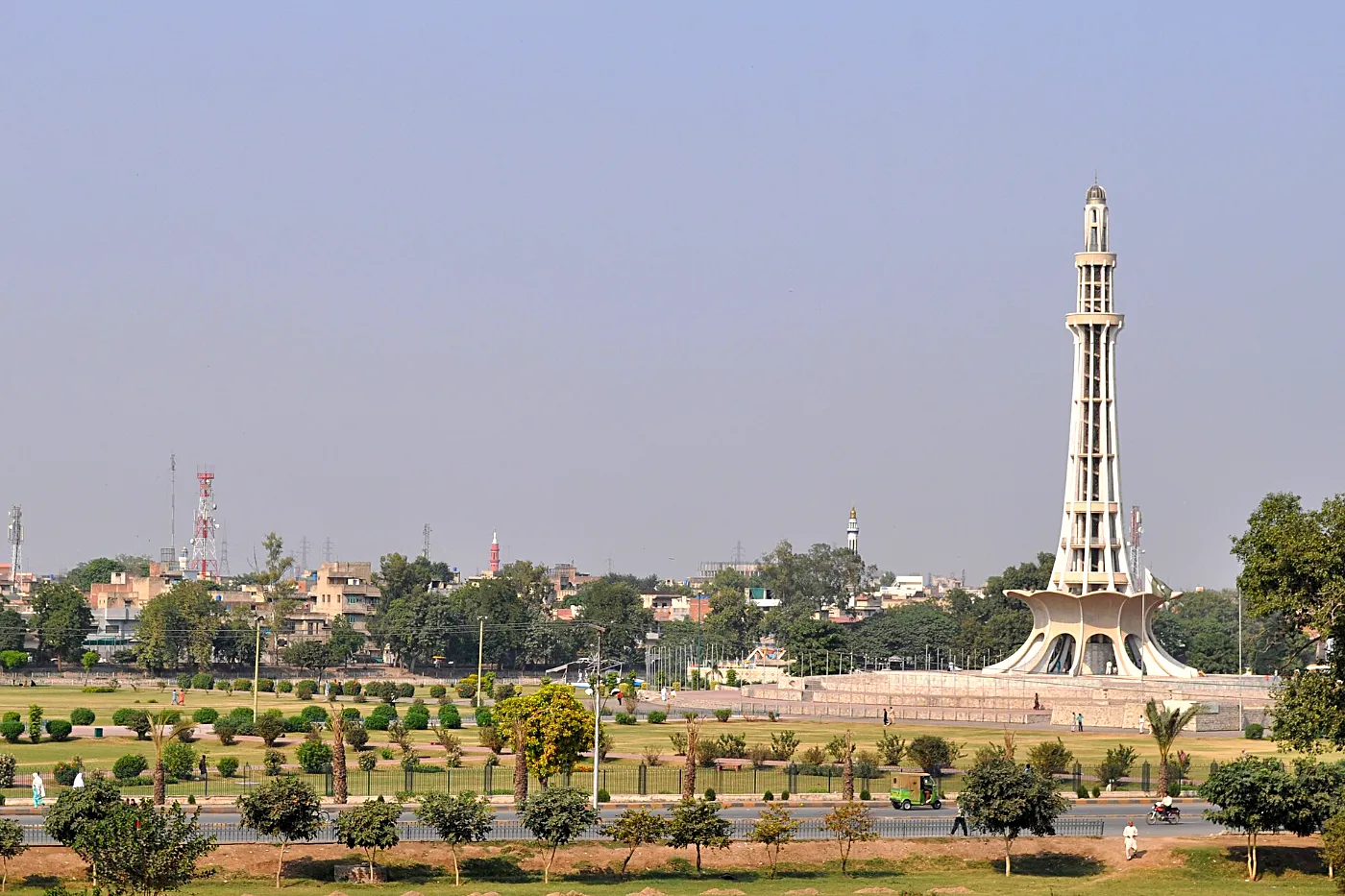
The tower in Greater Iqbal Park. Photo Credit: Irfan0552007, CC BY-SA 3.0.
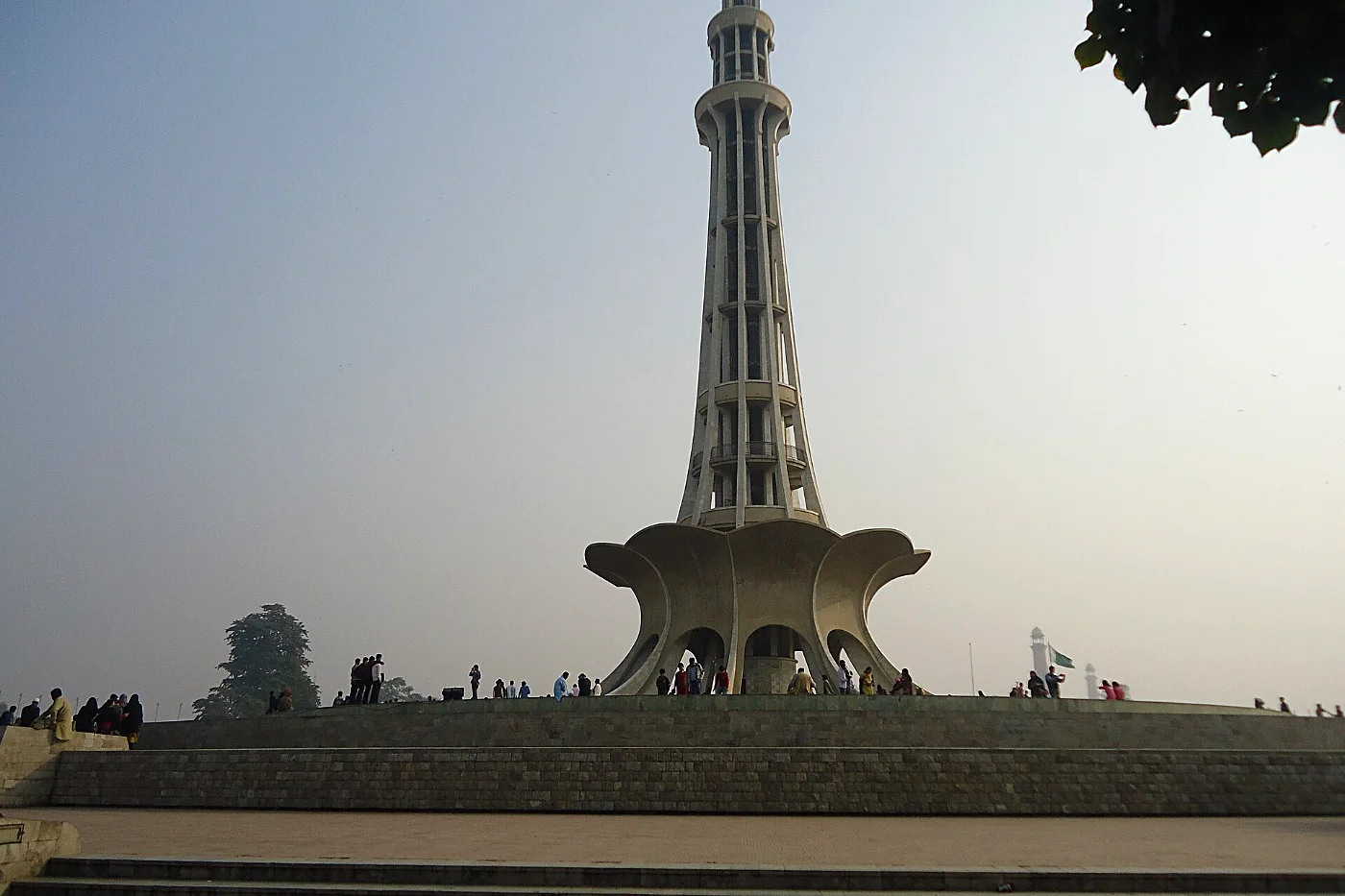
Minar-e-Pakistan above the park. Photo Credit: Abbashuru, CC BY-SA 4.0.
The Design and Its Meaning
A Tower That Tells a Story
The base of Minar-e-Pakistan is built in stages. The lowest platform is made of rough, uneven stone, and each level above it becomes smoother until you reach polished white marble. The idea is simple: the struggle for Pakistan began in hard conditions and slowly rose to success. Above the platforms, curved concrete petals open like a flower, and the tower rises from their centre.
Inscriptions on Minar-e-Pakistan
Around the base, marble plaques carry the text of the Lahore Resolution in Urdu, Bengali and English, as well as the national anthem, verses of the Quran, the 99 names of Allah, and lines by Allama Iqbal. Take time to read them; most visitors walk straight past.
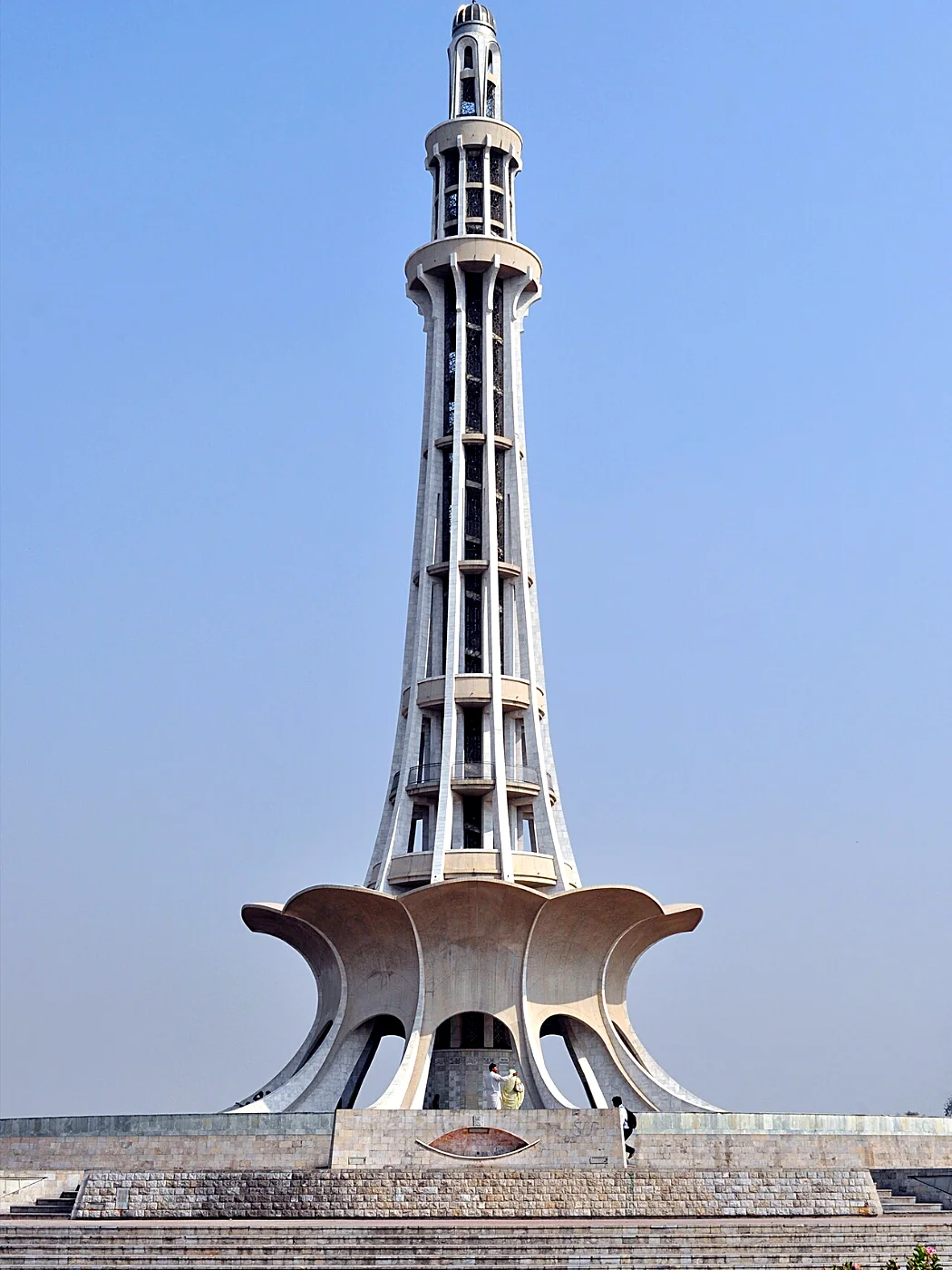
The flower-shaped base. Photo Credit: Irfan0552007, CC BY-SA 3.0.
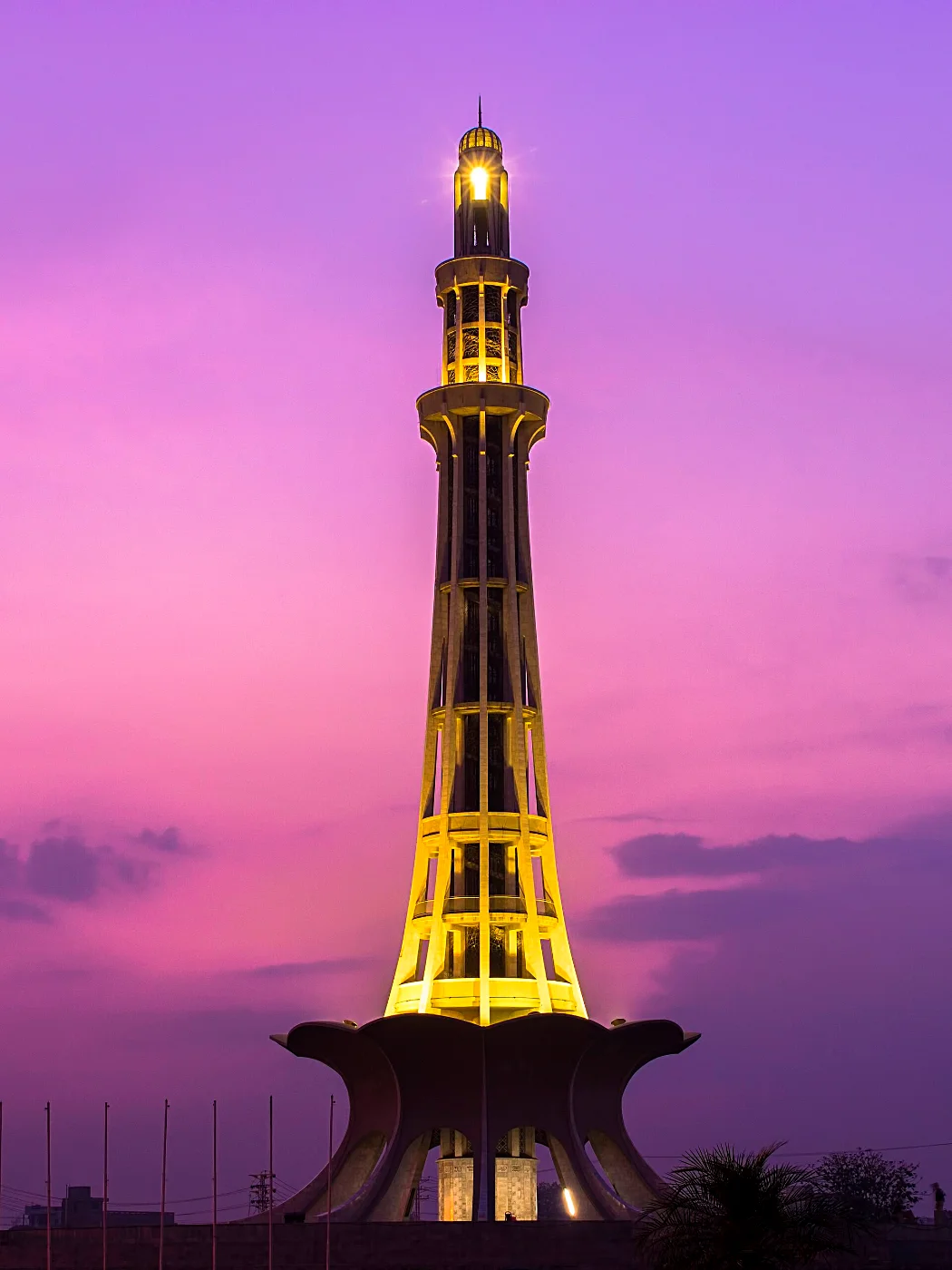
The tower lit up at dusk. Photo Credit: Ammar Ejaz, CC BY-SA 3.0.
Greater Iqbal Park
The tower stands at the centre of Greater Iqbal Park, a large green space between the Walled City and the Ravi side. After its renovation in 2016, the park gained a boating lake with an 800-foot musical fountain, walking tracks, a library, children’s play areas and the National History Museum, which tells the story of the Pakistan Movement. The Tomb of Hafeez Jalandhari, the poet who wrote the national anthem, is also inside the park.
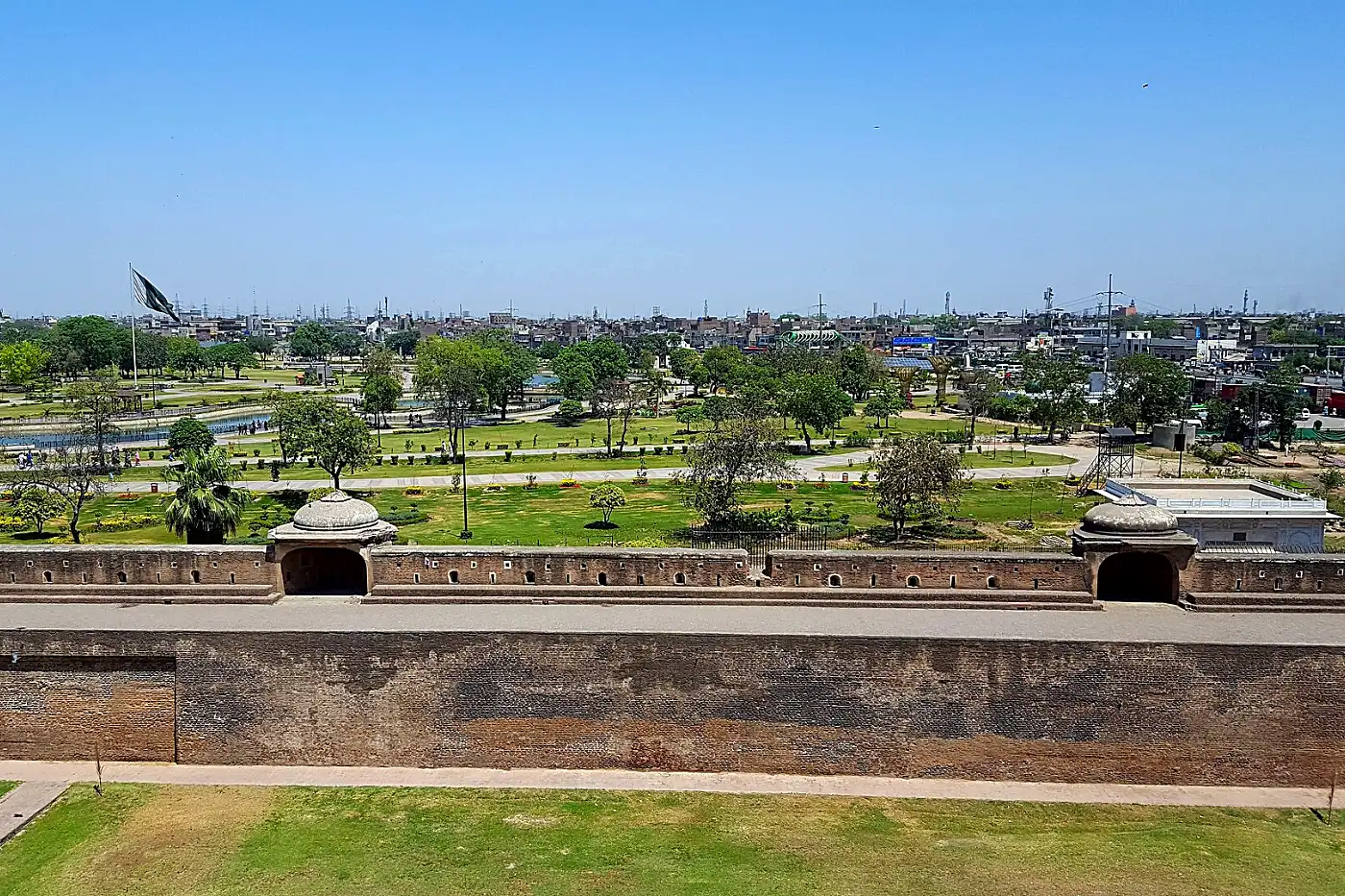
Greater Iqbal Park around the tower. Photo Credit: Shahzaib Damn Cruze, CC BY-SA 4.0.
Things to Do
- Read the plaques: Walk around the base and read the Lahore Resolution in three languages.
- Best photo spot: The long path in front of the tower, or across the lake at sunset.
- Evening show: Stay after dark, when the tower is lit up and the musical fountain plays on some evenings.
- Museum visit: The National History Museum in the park brings the Pakistan Movement to life.
- With children: Open lawns, play areas and boating make it an easy family outing.
- Combine with: The Badshahi Masjid, Lahore Fort and Tomb of Allama Iqbal, all a short walk away.
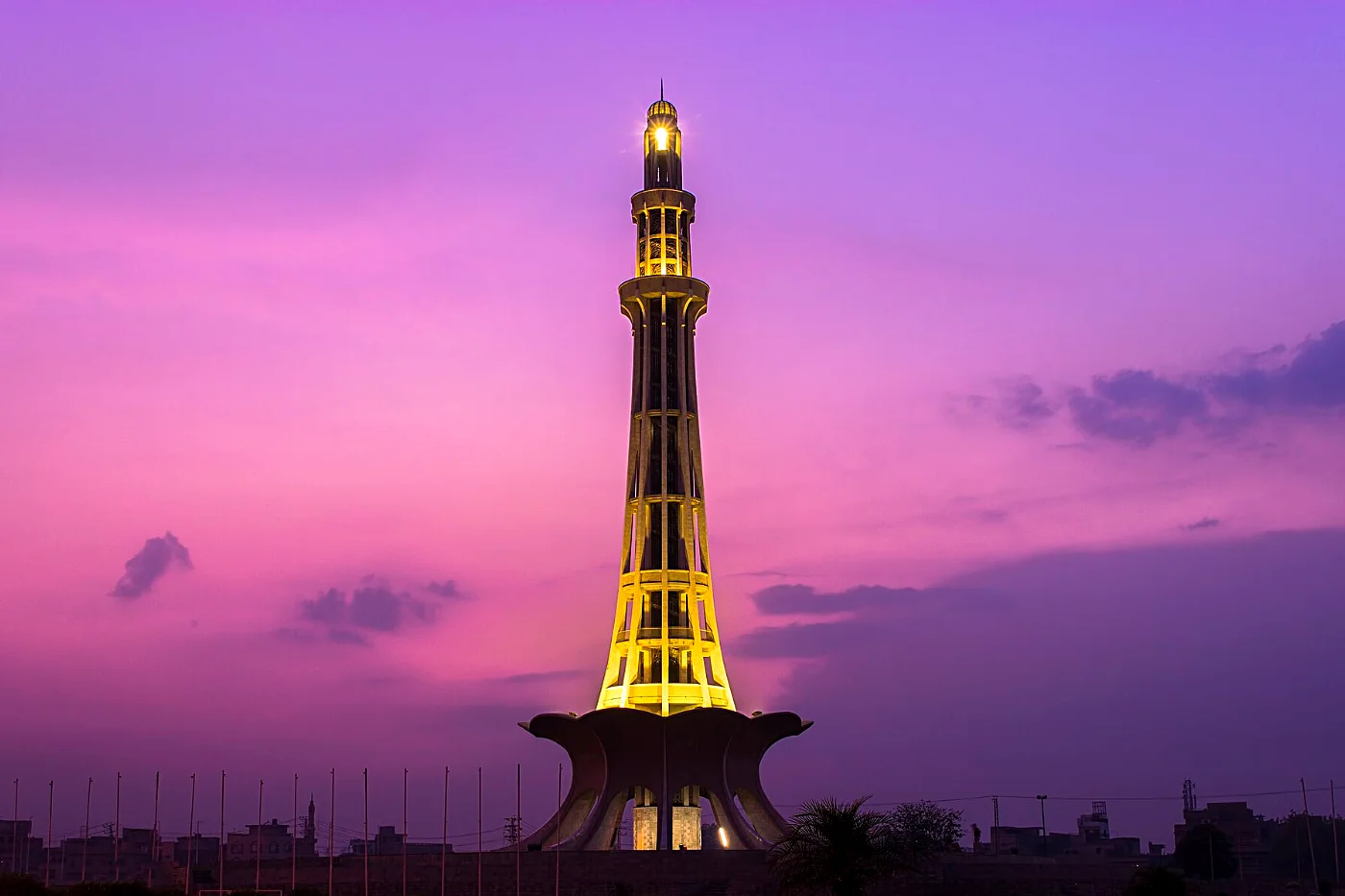
The tower against a pink evening sky. Photo Credit: Ammar Ejaz, CC BY-SA 3.0.
Food Nearby
There is a food court inside the park for snacks, ice cream and drinks. For a proper meal, walk to Fort Road Food Street next to the Badshahi Masjid, where rooftop restaurants serve karahi, tikka and naan with views of the mosque. Snacks cost a few hundred rupees; rooftop dinners cost around PKR 1,500 to 3,000 per person.
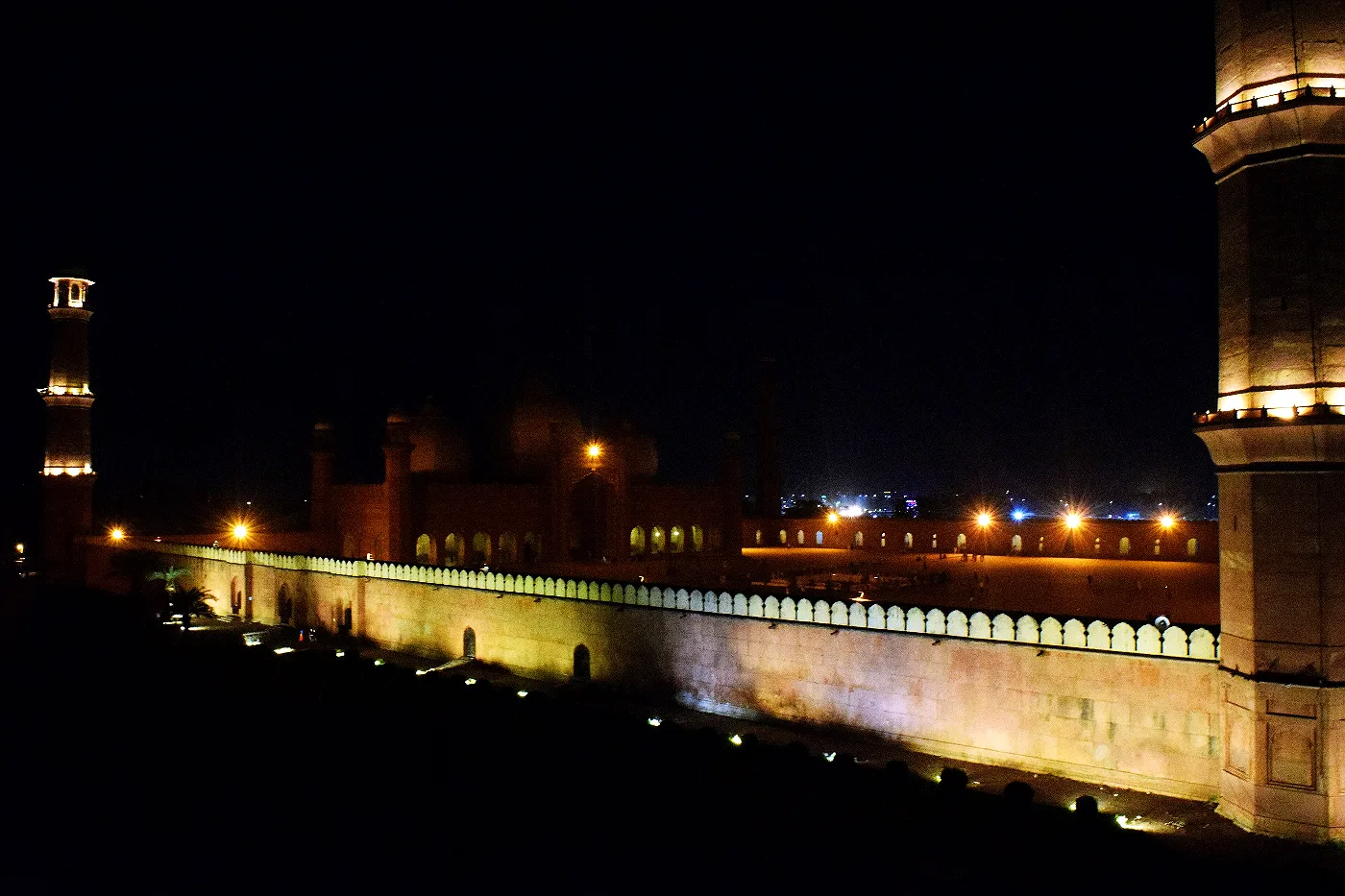
The Badshahi Masjid from Fort Road Food Street. Photo Credit: Khadijareyaz, CC BY-SA 4.0.
Visitor Information
Visiting Minar-e-Pakistan
- Location: Greater Iqbal Park, near Azadi Chowk, next to the Badshahi Masjid and Lahore Fort.
- Timings: The park is usually open daily from about 7 am to 10 pm, with longer hours on national days.
- Entry: Entry to the park and the tower area is free or costs a very small fee; the museum and boating charge separately.
- Tower top: The lift and stairs to the top have been closed to the public for years, so you can only visit the base.
- Best time: October to March, from late afternoon into the evening.
- Time needed: 1 to 2 hours with the park.
- Special days: On 23 March and 14 August the park is packed and security is tight.
- Families: Very family-friendly, with lawns, play areas and toilets.
- Accessibility: The park paths are mostly flat; the base platforms have steps.
Last checked: November 2026. Timings and prices can change, especially in Ramadan and on public holidays.
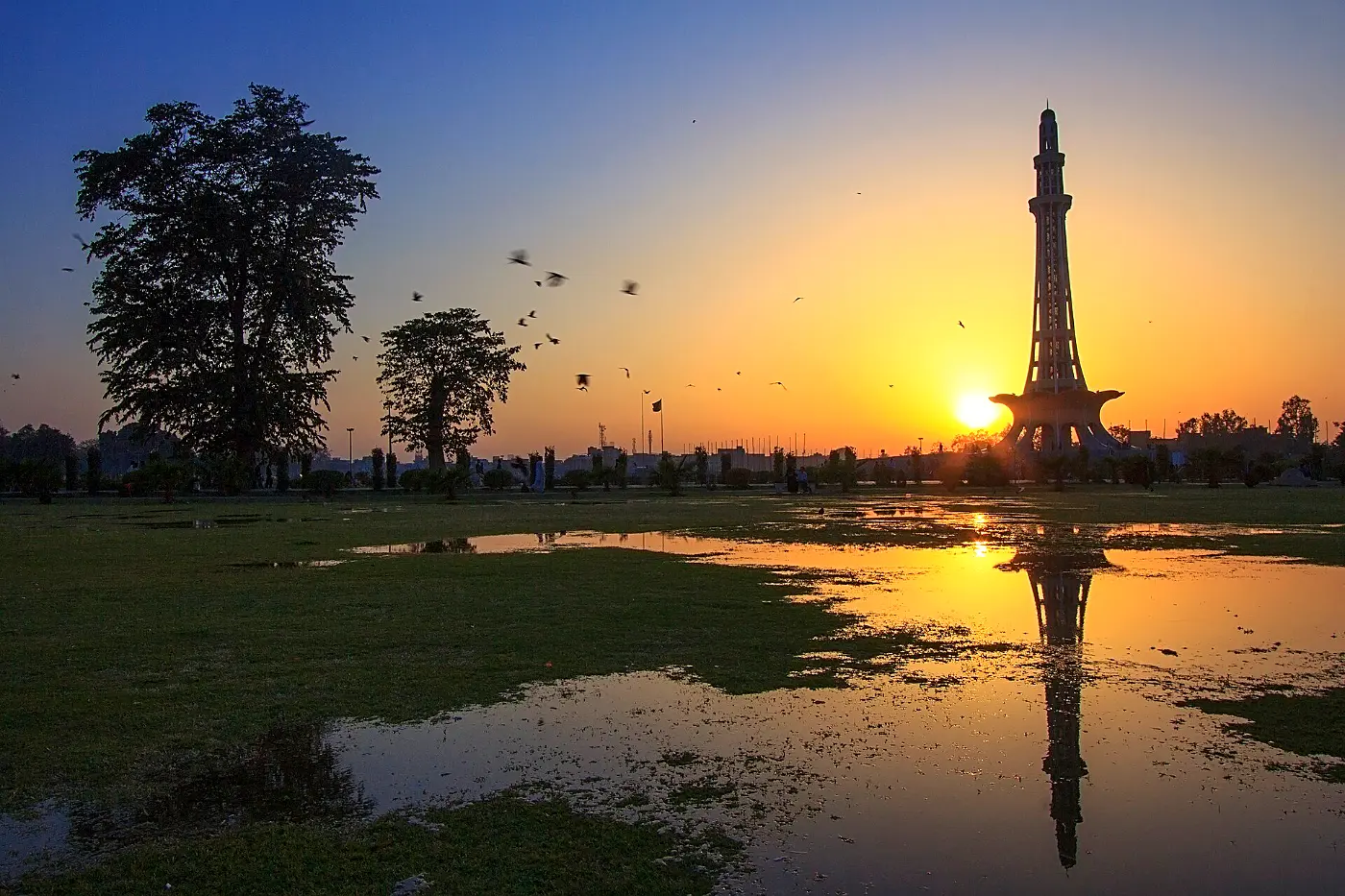
The tower reflected at sunset. Photo Credit: Aliraza Khatri, CC BY-SA 4.0.
How to Get There
Minar-e-Pakistan is at Azadi Chowk on Circular Road, just outside the Walled City. The easiest way is the Metro Bus: get off at Azadi Chowk station and walk into the park. A rickshaw, Careem or inDrive from Liberty or Gulberg takes about 30 to 40 minutes depending on traffic. The Punjab Tourism sightseeing bus also stops here.
Places to Visit Nearby
- Badshahi Masjid: Aurangzeb’s grand mosque, across the road.
- Lahore Fort: the Mughal fort and its palaces.
- Tomb of Allama Iqbal: the poet’s tomb by the mosque steps.
- Tomb of Hafeez Jalandhari: the anthem writer’s tomb inside the park.
- Hazuri Bagh: the marble baradari garden between the fort and the mosque.
Planning more days in the city? See our things to do in Lahore guide.
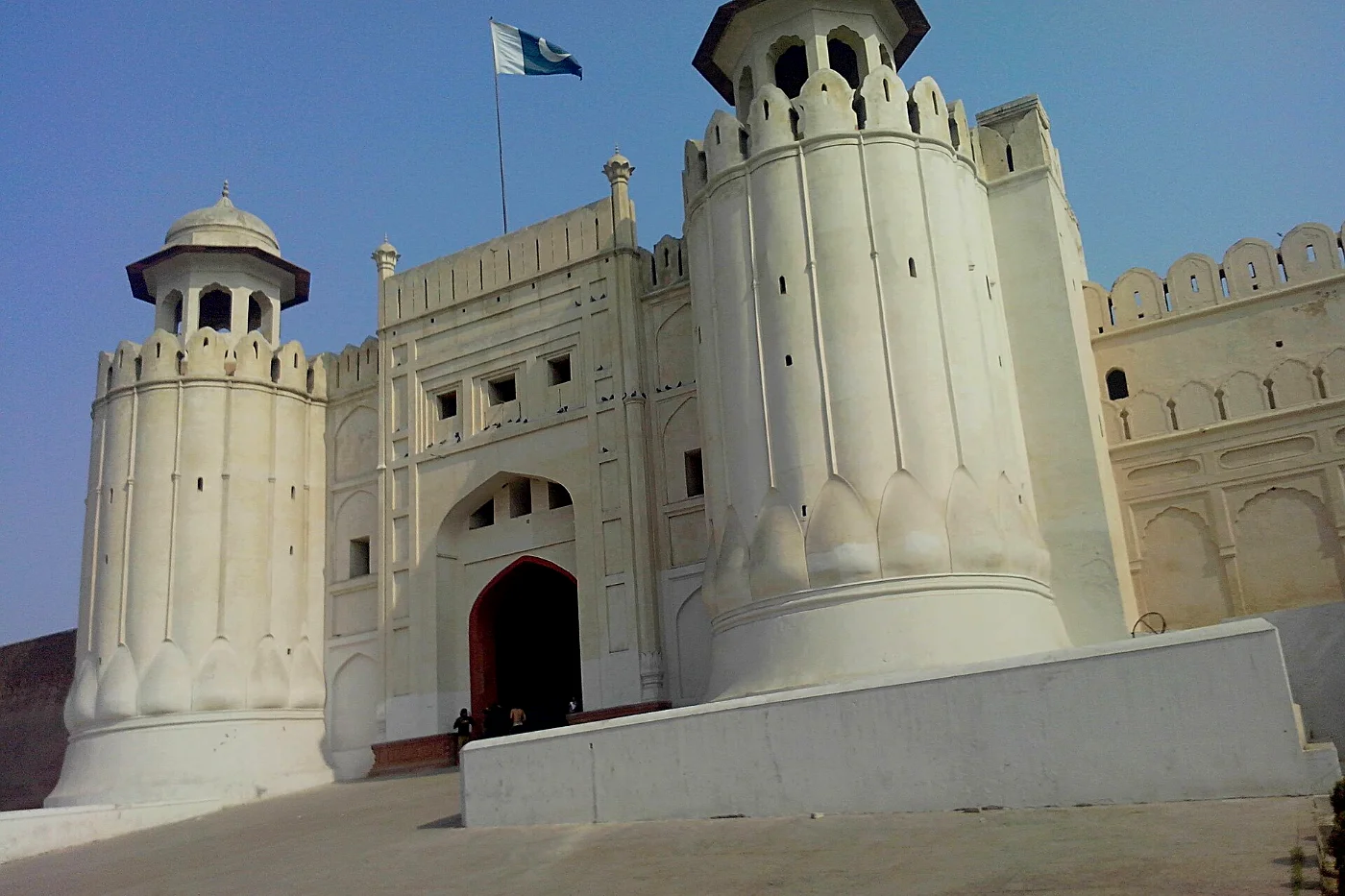
The Alamgiri Gate of Lahore Fort. Photo Credit: AhsanAli1994, CC BY-SA 4.0.
Frequently Asked Questions
Why was Minar-e-Pakistan built?
It marks the spot where the Lahore Resolution was passed on 23 March 1940, the first formal demand that led to Pakistan.
How tall is Minar-e-Pakistan?
It is about 62 metres tall.
Can you go to the top of Minar-e-Pakistan?
No. The lift and stairs have been closed to the public for many years.
Is there a ticket for Minar-e-Pakistan?
Entry to Greater Iqbal Park is free or very cheap; the museum and boating cost extra.
Who designed Minar-e-Pakistan?
Nasreddin Murat-Khan, a Russian-born architect who settled in Pakistan, designed it. It was built between 1960 and 1968.
Conclusion
Minar-e-Pakistan is more than a tower. It marks the moment a dream was put into words. Come in the late afternoon, read the plaques at its base, walk through Greater Iqbal Park, and stay to see it lit up after dark. Then cross the road to the Badshahi Masjid and the Lahore Fort to complete one of the best days you can have in Lahore.
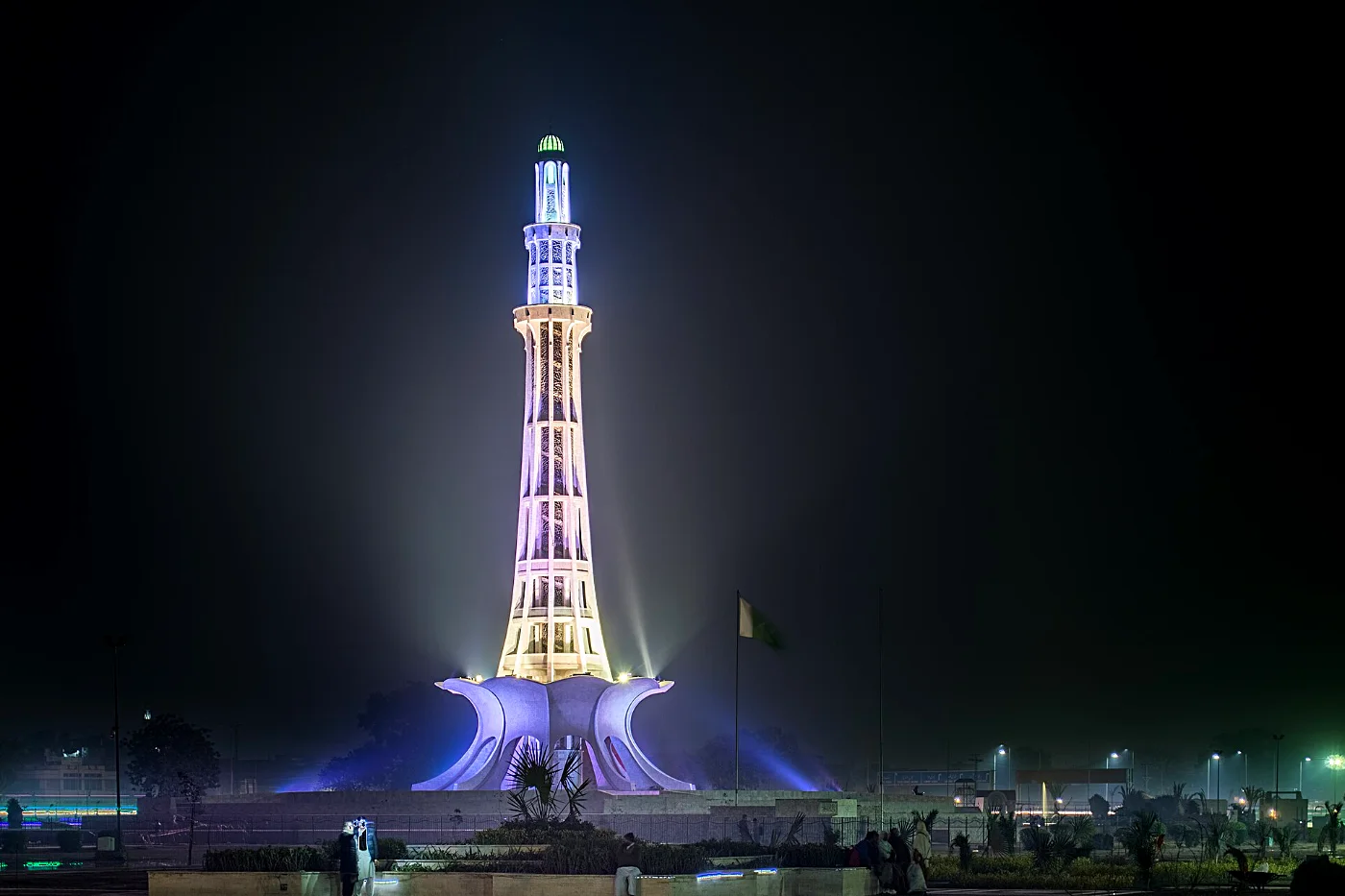
The tower at night. Photo Credit: shahmeerathar, CC BY-SA 4.0.
Cover photo: Muhammad Umair Mirza, CC BY-SA 4.0.