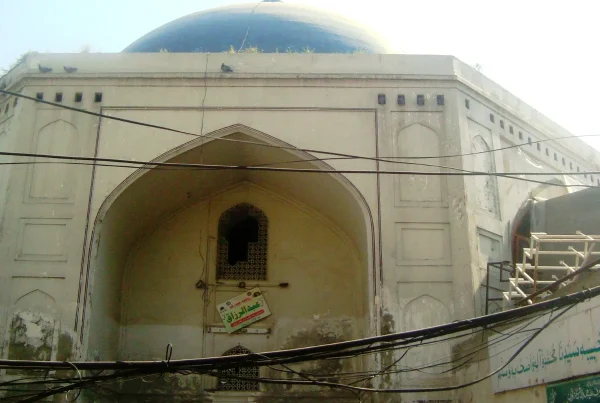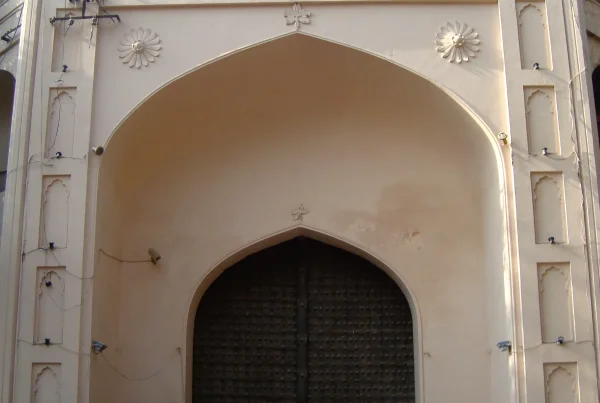
Walk down from Anarkali towards the old city and you reach a tall white gateway with a row of carved windows on top. This is Lohari Gate, one of the oldest gates of the Walled City of Lahore. Behind it starts Lohari Mandi, a narrow, noisy bazaar that has been trading for centuries.
Most people pass through Lohari Gate without looking up. However, if you stop for a minute, you will see fine jali windows, a stone balustrade and an old plaque from 1864. So this guide tells you what to look for, where to eat and how to make the most of a short walk here.
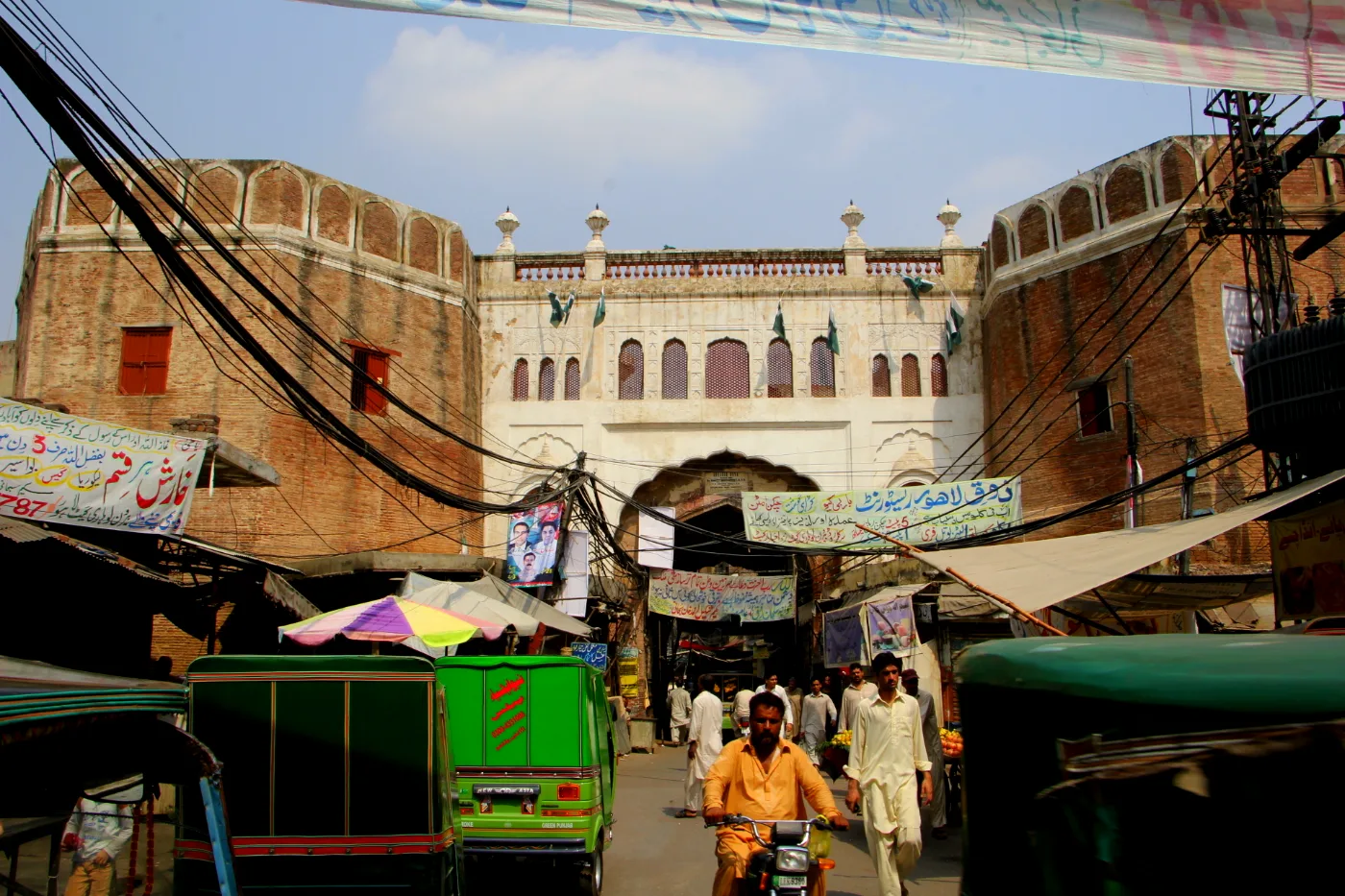
Lohari Gate from the Circular Road side. Photo Credit: The Walled City of Lahore Authority, CC BY-SA 4.0.
Quick facts
- Location: Circular Road, Walled City of Lahore, a short walk from Anarkali Bazaar
- Timings: Open all the time (it is a street gateway); shops from about 11 am to late evening
- Ticket: Free
- Time needed: 30 minutes to 1 hour with the bazaar
- Best time: Morning for photos; evening for food
- Map: Open in Google Maps
Last checked: November 2026. Full details in Visitor Information.
History of Lohari Gate
Why Is It Called Lohari Gate?
There are two stories about the name. Some historians say the old town of Lahore once stood near Ichhra, so the gate facing that side was called Lahori Gate. Others say many lohars (blacksmiths) had their shops outside the gate, and over time Lahori became Lohari. Today people use both names.
One of the Oldest Gates
Lohari Gate is often called the oldest gateway of the Walled City. According to tradition, Malik Ayaz, the governor sent by Mahmud of Ghazni, rebuilt Lahore in the 11th century, and the first settlement grew up just inside this gate. Caravans from Multan also entered the city here.
The gate has also seen war. In 1799, Ranjit Singh’s soldiers entered Lahore through Lohari Gate, and a few years later he became the ruler of the Punjab.
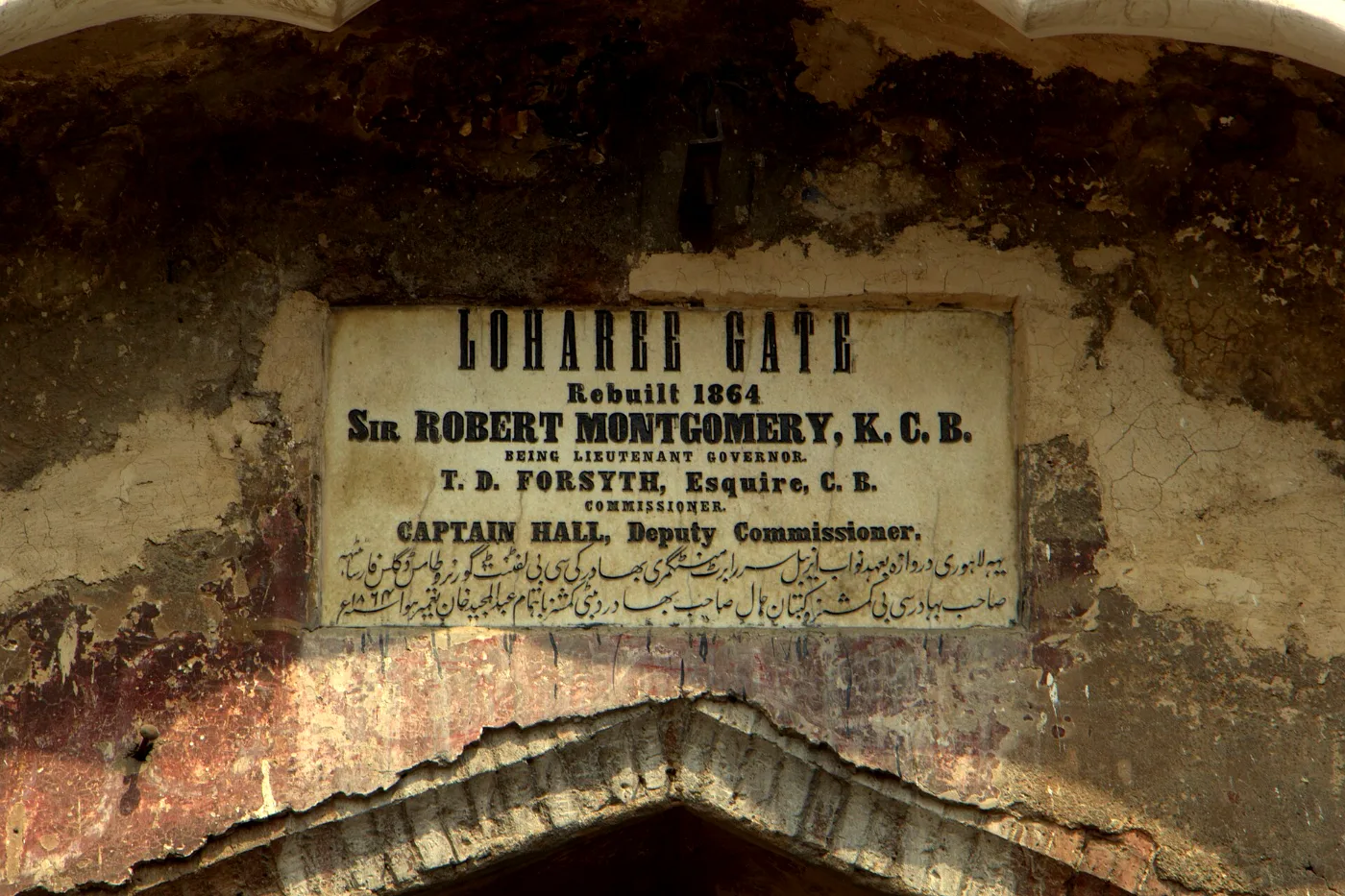
The 1864 plaque above the arch. Photo Credit: The Walled City of Lahore Authority, CC BY-SA 4.0.
Rebuilt in 1864
The gate you see today is not the original. The British rebuilt it in 1864, and a marble plaque above the arch still says so. It names Sir Robert Montgomery, the Lieutenant Governor, along with the Commissioner and the Deputy Commissioner of the time.
For many years the rooms inside the gate were occupied and the building was in poor shape. Then, in 2016, the Walled City of Lahore Authority cleared the rooms. After that, it carried out a full conservation project, which was completed in 2024.
Architecture
What Makes Lohari Gate Special
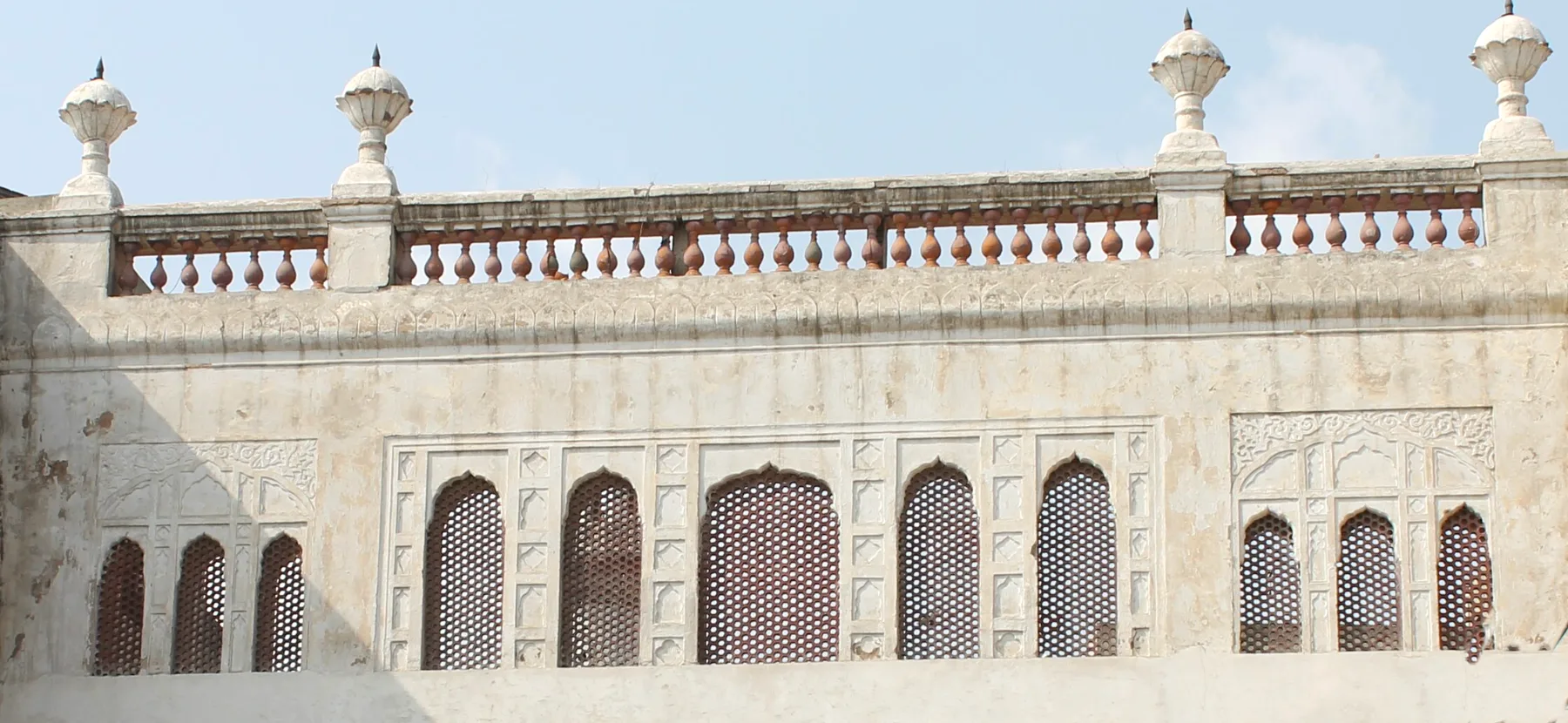
Lohari Gate is a solid brick gateway, plastered white, with a large pointed arch in the middle. Above the arch is a long gallery with arched jali (lattice) windows. On top runs a balustrade of small red stone pillars, with four lotus-shaped finials standing like guards.
Inside the gate there are rooms on the upper level, and the ceiling under the arch has traces of old painted decoration. In addition, the round brick bastions on both sides show how the city wall once joined the gate.
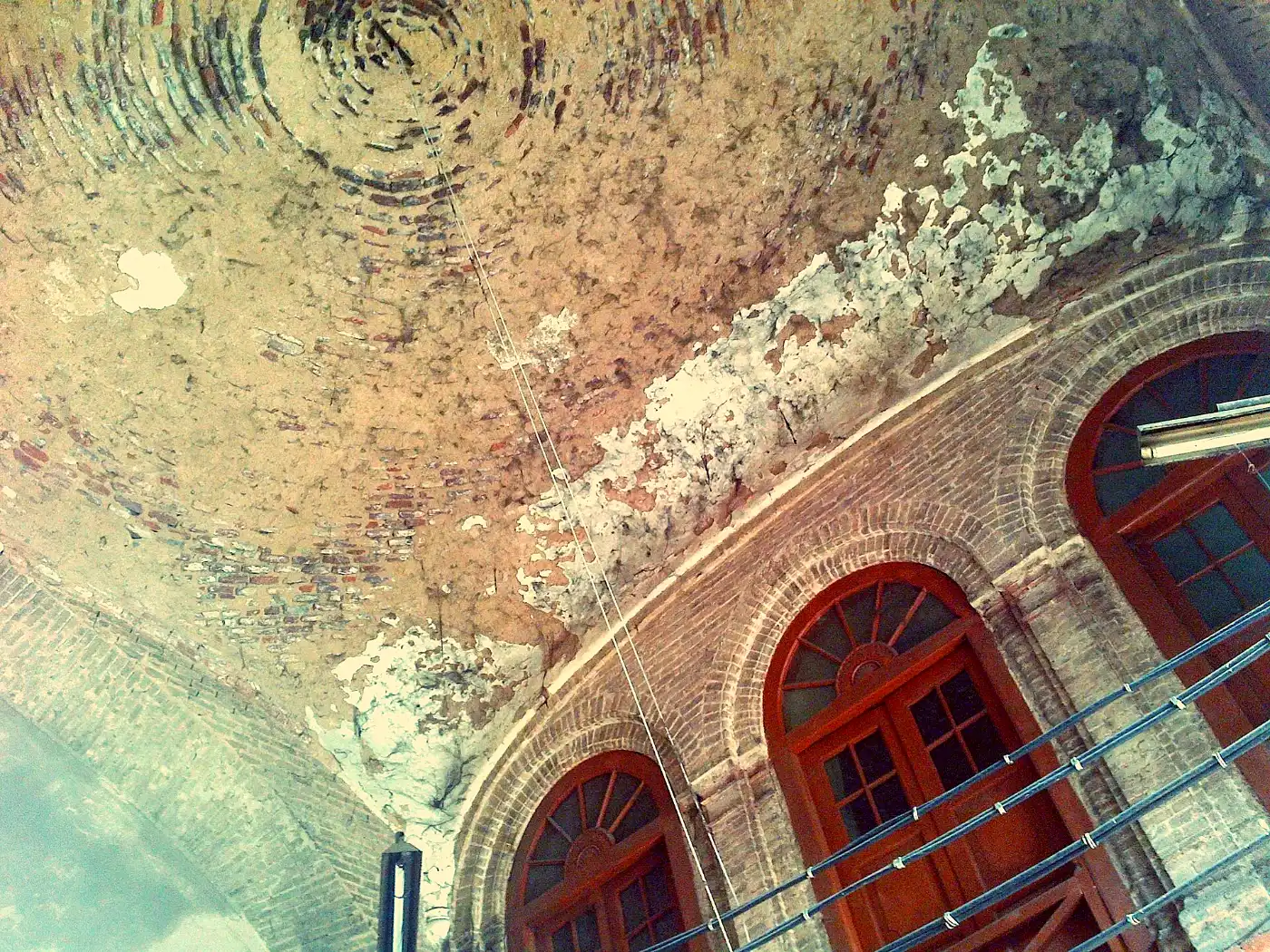
The painted ceiling inside the gate. Photo Credit: Muhammad Imran Saeed from City of London, Canada, CC BY 2.0.
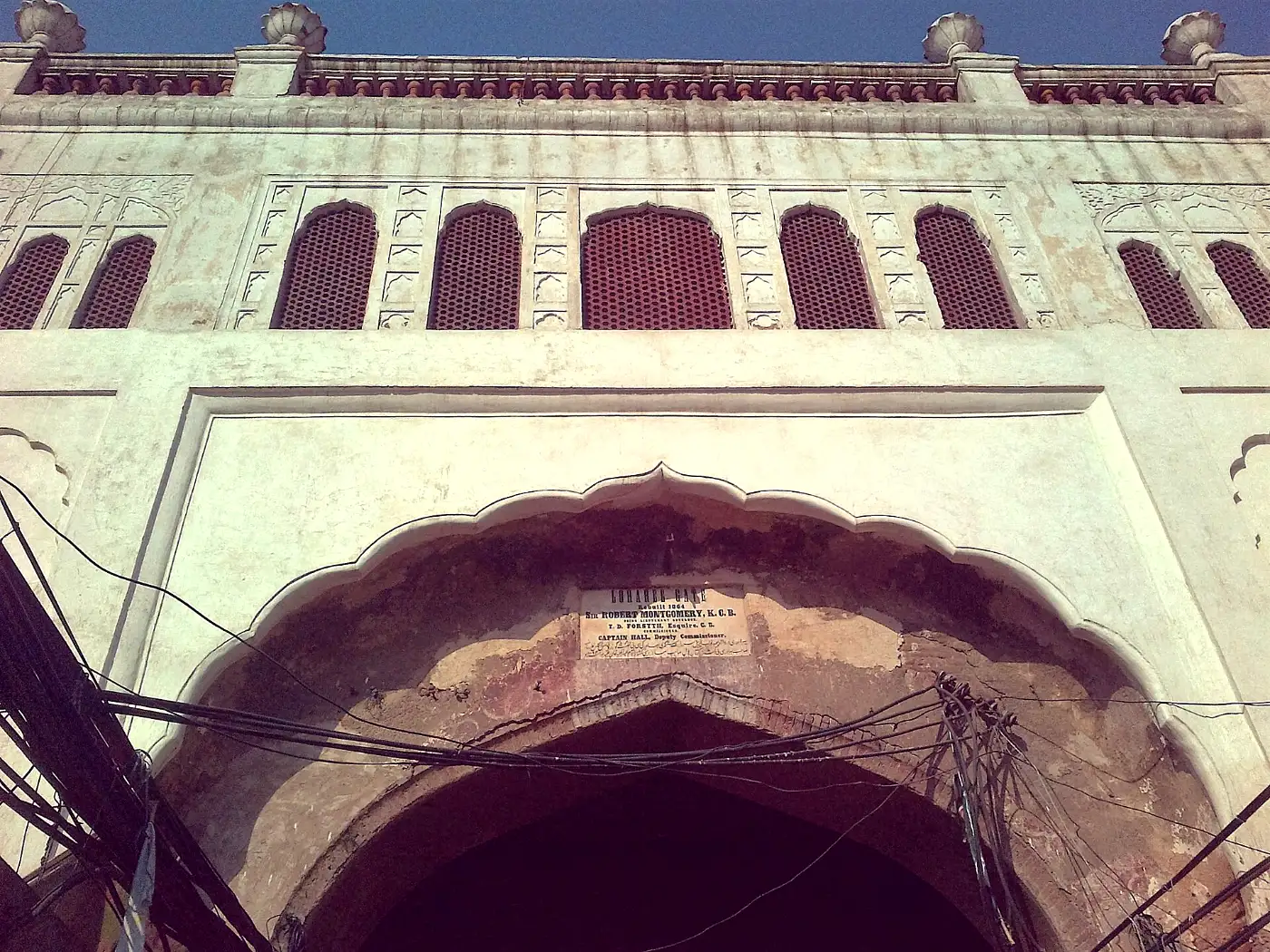
Looking up at the main arch. Photo Credit: Muhammad Imran Saeed from City of London, Canada, CC BY 2.0.
What to See
The Jali Windows and Finials
Stand on the Circular Road side and look up. The carved windows, the white panels and the four finials are the best part of the gate. Morning light shows the details clearly.
The 1864 Plaque
Next, look just above the arch for the old plaque in English and Urdu. It is one of the few original British-era plaques left on the gates of Lahore.
Lohari Mandi
Walk through the arch and you are in Lohari Mandi, one of the oldest markets in Lahore. The lanes sell spices, dry fruit, utensils, cloth and household goods. It is also known for its many optical shops.
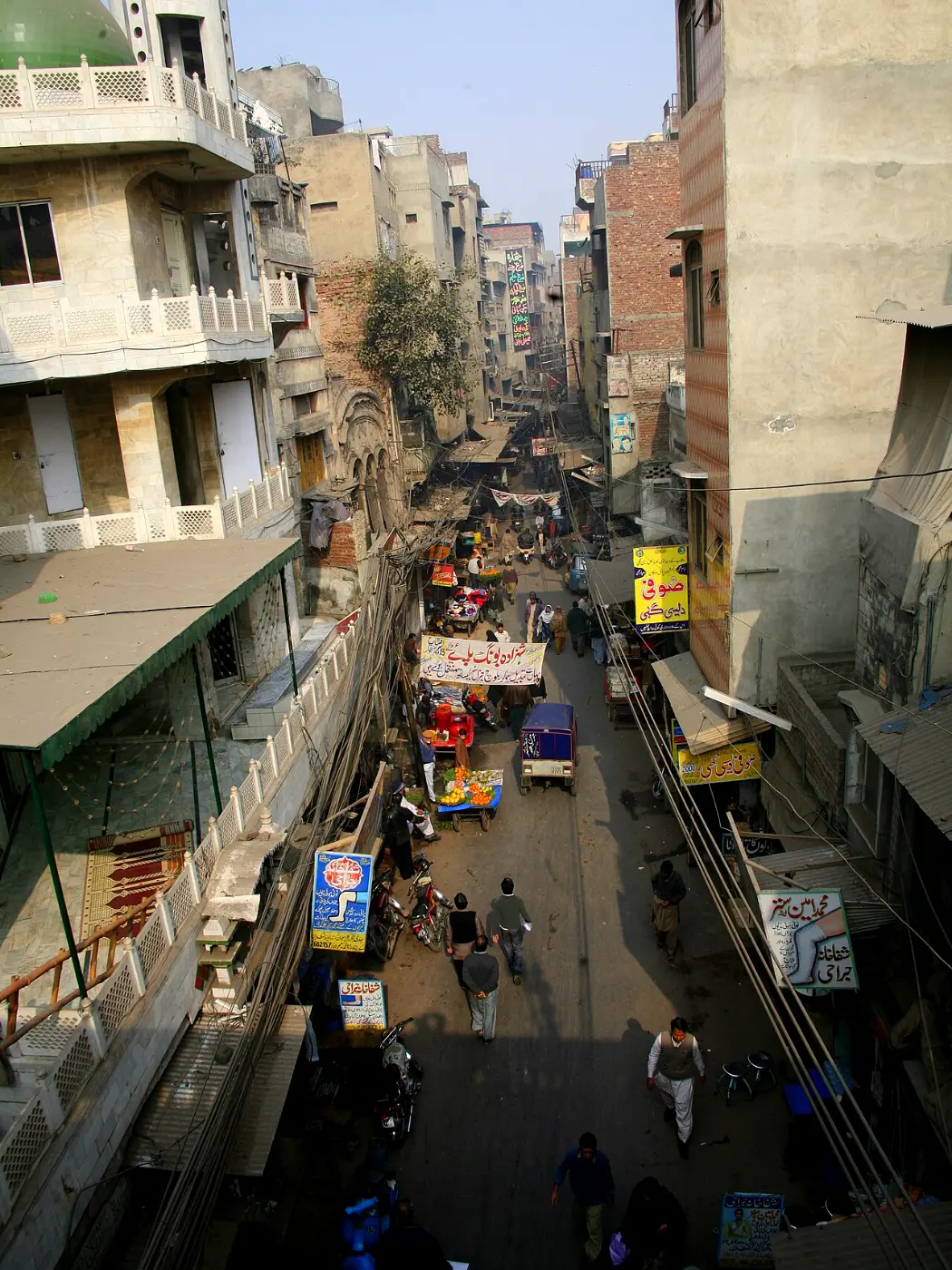
Lohari Mandi seen from above. Photo Credit: The Walled City of Lahore Authority, CC BY-SA 4.0.
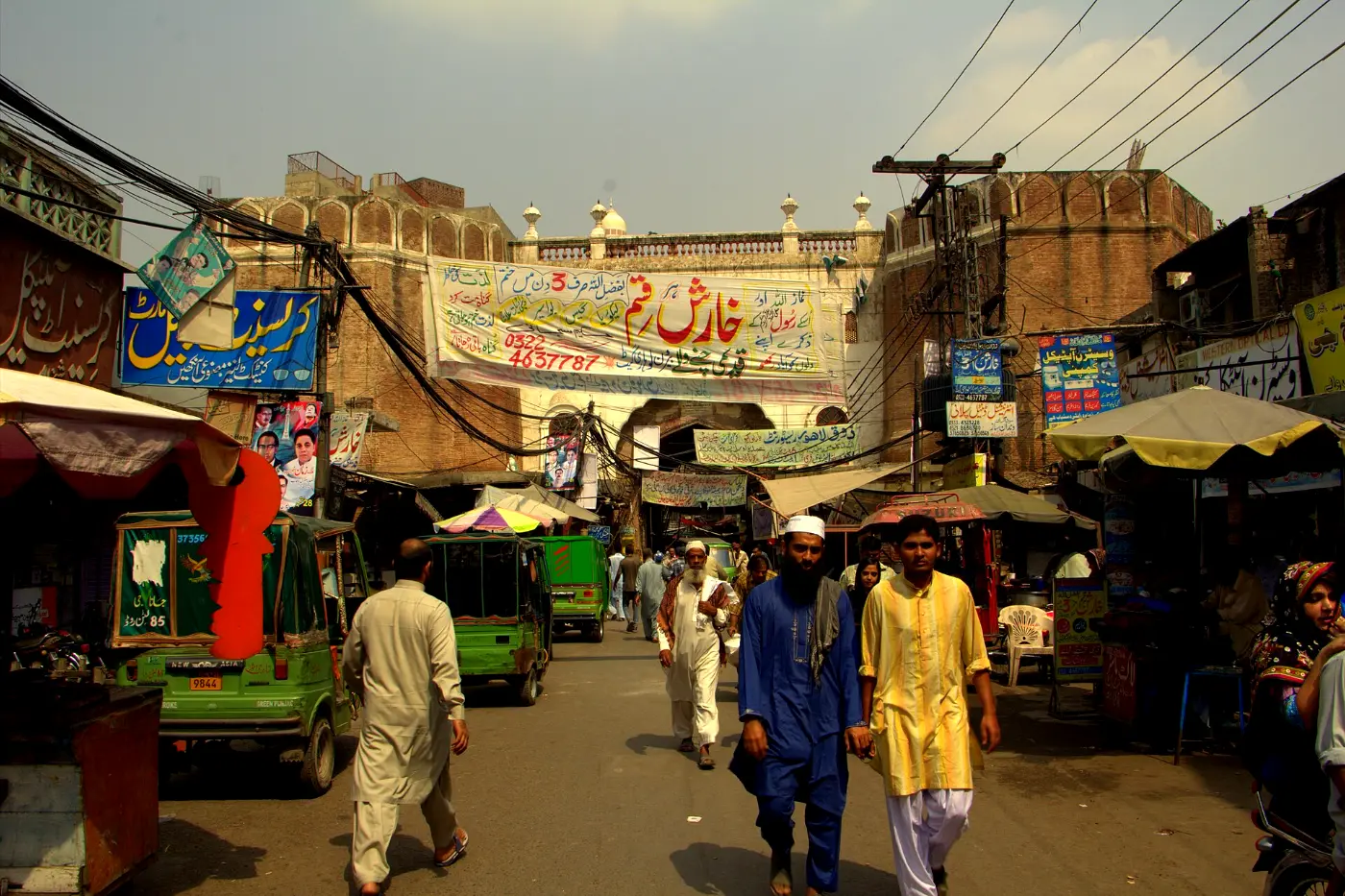
The busy bazaar at the gate. Photo Credit: The Walled City of Lahore Authority, CC BY-SA 4.0.
The Old City Beyond
From Lohari Mandi, the lanes lead deep into the Walled City. If you climb to a rooftop café or a friend’s house, you can see a sea of old rooftops, mosque minarets and the gate itself.
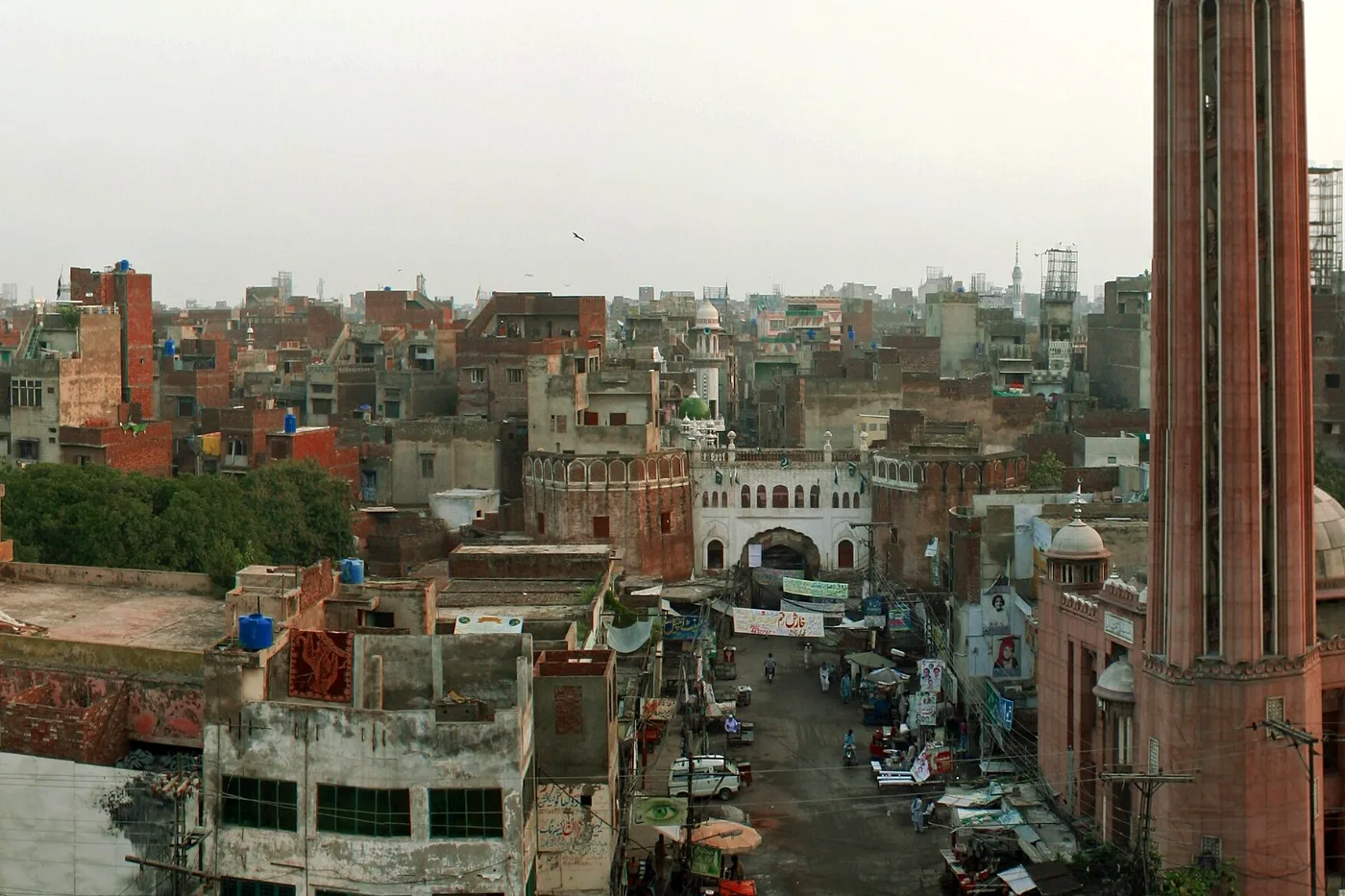
Rooftops of the Walled City. Photo Credit: Tahir8088, CC BY-SA 3.0.
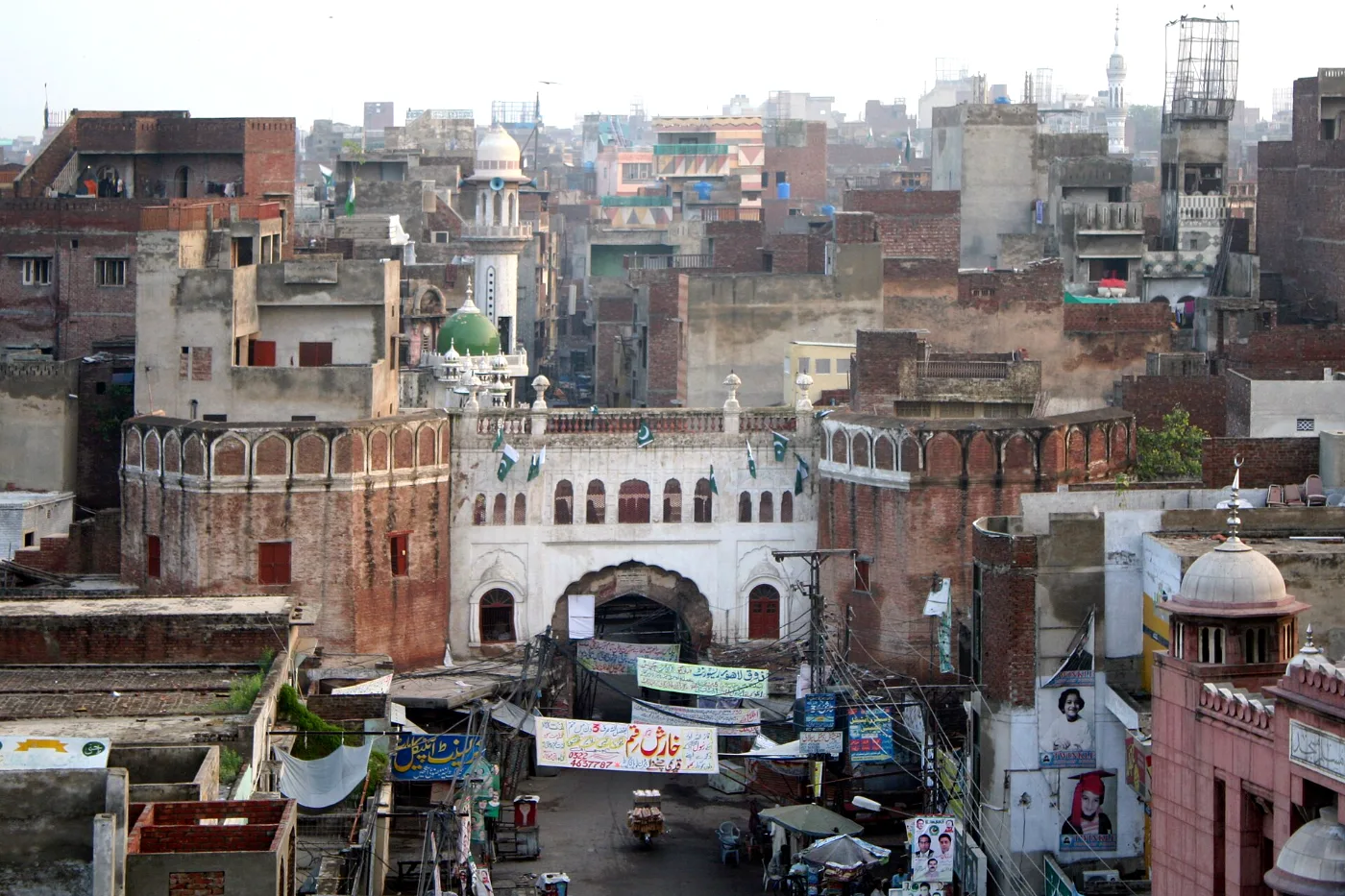
Lohari Gate among the old houses. Photo Credit: Tahir8088, CC BY-SA 3.0.
Things to Do
- Start from Anarkali: Lohari Gate is a short walk from the Anarkali Bazaar, so it is easy to combine the two.
- Have breakfast nearby: The old shops around the gate serve halwa puri, nihari and lassi in the morning.
- Shop in Lohari Mandi: Bargain for spices, dry fruit or pots and pans, just as Lahoris have done for generations.
- Join the Walled City walk: From here you can walk to Bhati Gate or join the WCLA heritage trail that starts at Delhi Gate.
- Photograph the top of the gate: The wires are thick at street level, so stand back and frame the upper gallery against the sky.
Visitor Information
Visiting Lohari Gate
- Location: Circular Road, south side of the Walled City, near Anarkali.
- Timings: The gate is a public street, so it is always open. Shops in Lohari Mandi usually open late morning and stay open till late evening. Many close on Friday afternoon for prayers.
- Ticket: Free. The rooms in the gate are used as offices and are not usually open to visitors.
- Best time: October to March. Come in the morning for photos and lighter crowds.
- Parking: Very limited. Park near Anarkali or use a rickshaw, Careem or inDrive.
- Families and women: Busy and safe in the day, but the lanes are crowded, so keep children close.
- Accessibility: Narrow, uneven lanes with motorbikes; difficult for wheelchairs.
- Safety: Keep your phone and wallet in a front pocket in the crowd.
Last checked: November 2026. Timings and prices can change, especially in Ramadan and on public holidays.
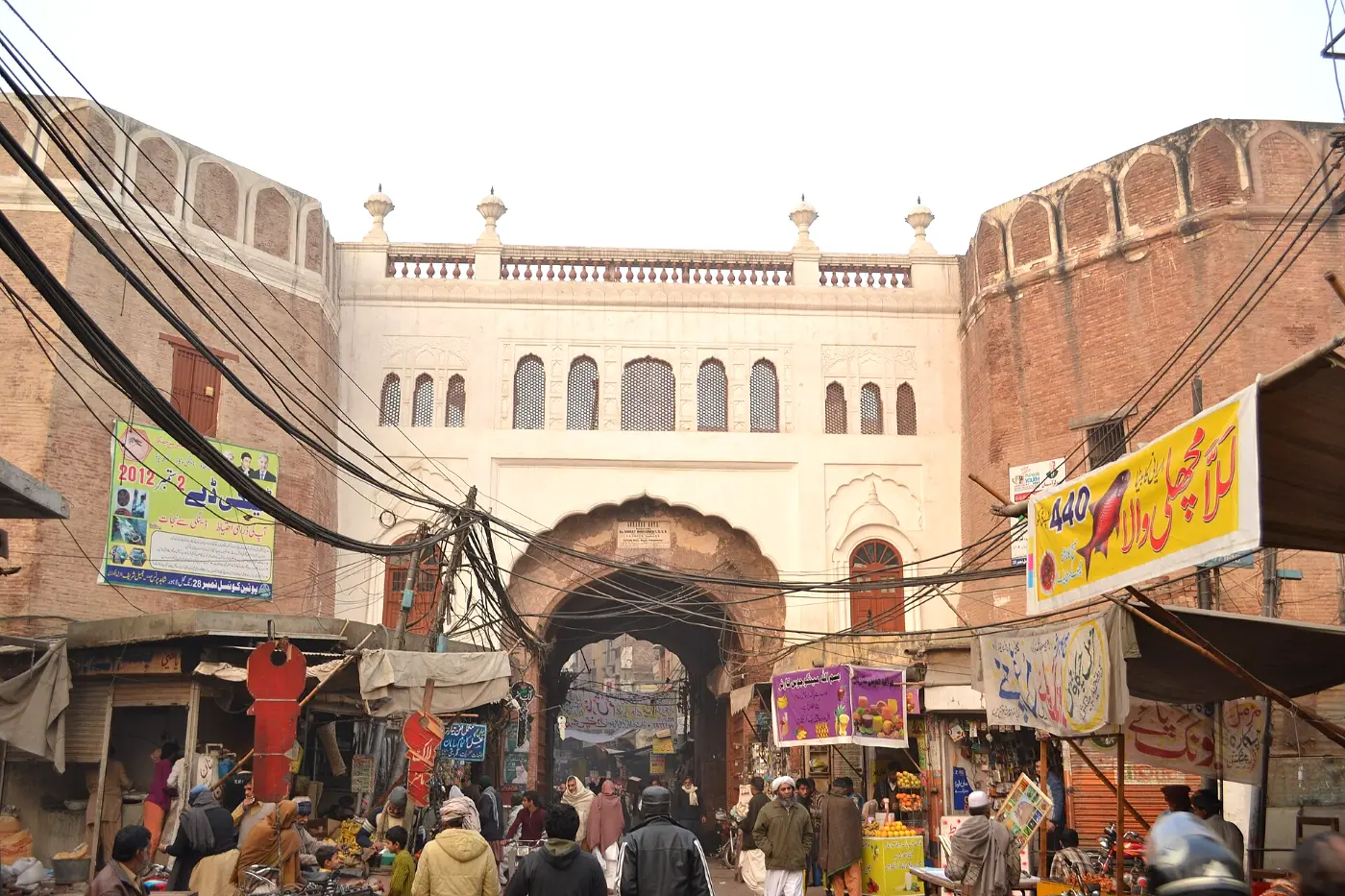
Shoppers outside Lohari Gate. Photo Credit: Khalid Mahmood, CC BY-SA 3.0.
How to Get There
Lohari Gate is on the Circular Road at the south side of the Walled City, about a 10-minute walk from Anarkali Bazaar. The Orange Line’s Anarkali station is close by. From the Mall Road, take a rickshaw and ask for “Lohari Gate” or “Lohari Mandi”. Careem and inDrive can drop you on the Circular Road outside the gate.
Places to Visit Nearby
- Anarkali Bazaar: Lahore’s most famous old market. See our Anarkali Bazaar guide.
- Tomb of Qutbuddin Aibak: The first Sultan of Delhi rests nearby. Read the Qutbuddin Aibak Tomb guide.
- Bhati Gate: Another old gate with a museum and food street. See the Bhati Gate guide.
- Haveli Nau Nihal Singh: A painted Sikh-era haveli near Mori Gate. Read about Haveli Nau Nihal Singh.
- Neela Gumbad: The blue-domed tomb at the end of Anarkali. See the Neela Gumbad guide.
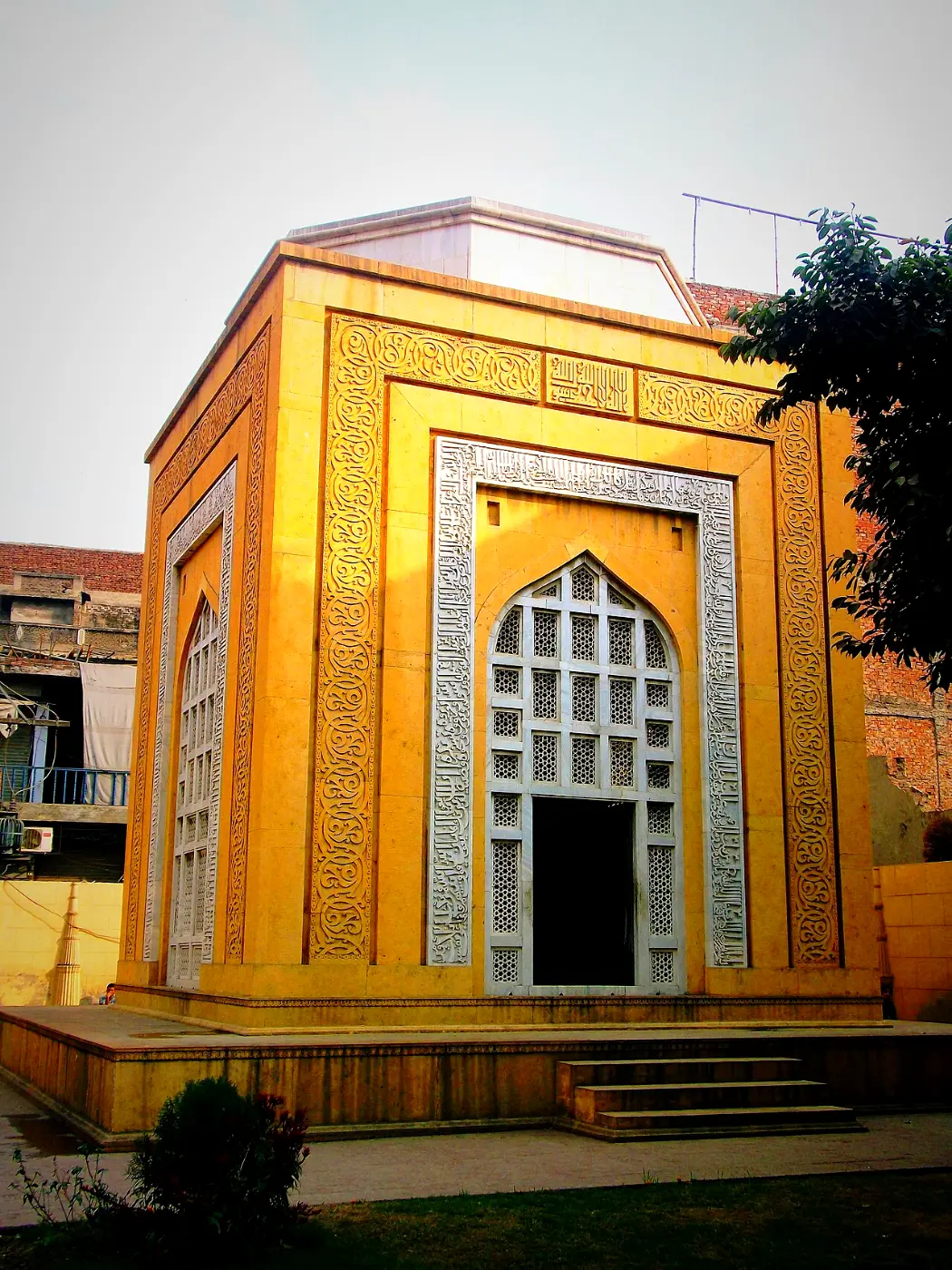
The Tomb of Qutbuddin Aibak. Photo Credit: Muhammad Umair Mirza, CC BY-SA 4.0.
Frequently Asked Questions
Where is Lohari Gate in Lahore?
It is on the Circular Road on the south side of the Walled City, close to Anarkali Bazaar.
Is it Lohari Gate or Lahori Gate?
Both names are used. Lahori Gate may come from the old city of Lahore, while Lohari may come from the lohars (blacksmiths) who worked here.
When was Lohari Gate built?
The gate is very old, but the present structure was rebuilt in 1864. The Walled City of Lahore Authority restored it again in 2023–24.
What is Lohari Mandi famous for?
It is one of the oldest bazaars of Lahore, known for spices, dry fruit, household goods and optical shops.
Can I go inside the gate rooms?
Usually not. The rooms are used as offices by the Walled City of Lahore Authority.
Conclusion
Lohari Gate is not a museum or a monument you buy a ticket for. Instead, it is a living gateway that still does its job, letting thousands of people into the old city every day. So look up at its carved windows, read the 1864 plaque, then walk into Lohari Mandi and let the old city take over.
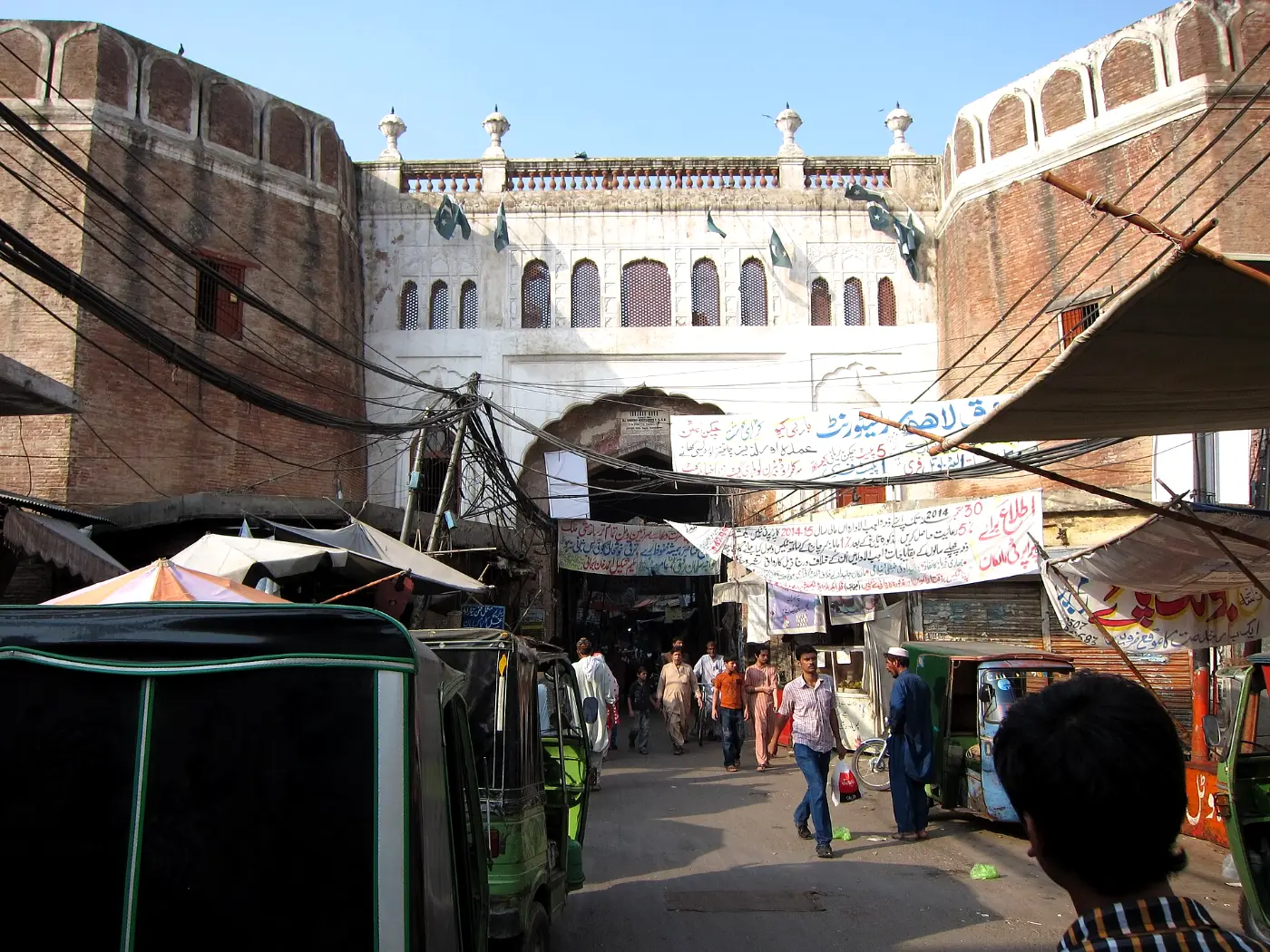
Lohari Gate on a sunny afternoon. Photo Credit: S.Orangzeb, CC BY-SA 3.0.
Cover photo: Umajix, CC BY-SA 3.0.