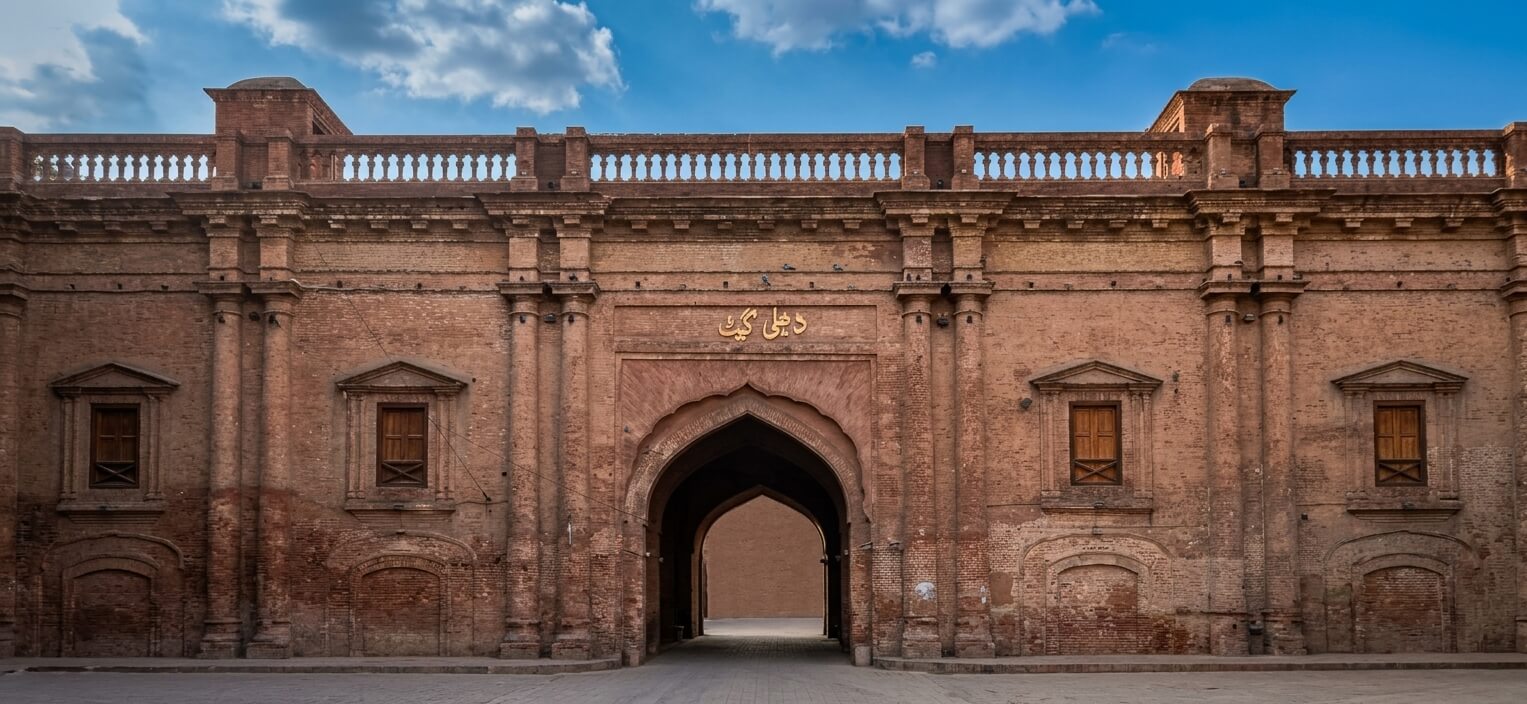
Every visit to old Lahore should start at one place: Delhi Gate. In fact, this tall brick gateway, called Dilli Darwaza in Urdu, opens into the busiest and most beautiful part of the Walled City. Then, walk through its arch, and in a few minutes you reach the Shahi Hammam, Masjid Wazir Khan and the old Royal Trail to the Lahore Fort.
In this guide to Delhi Gate Lahore, we cover its history, what to see inside and around it, where to eat, and how to plan your walk. So, wear comfortable shoes, because the best way to enjoy it is on foot.
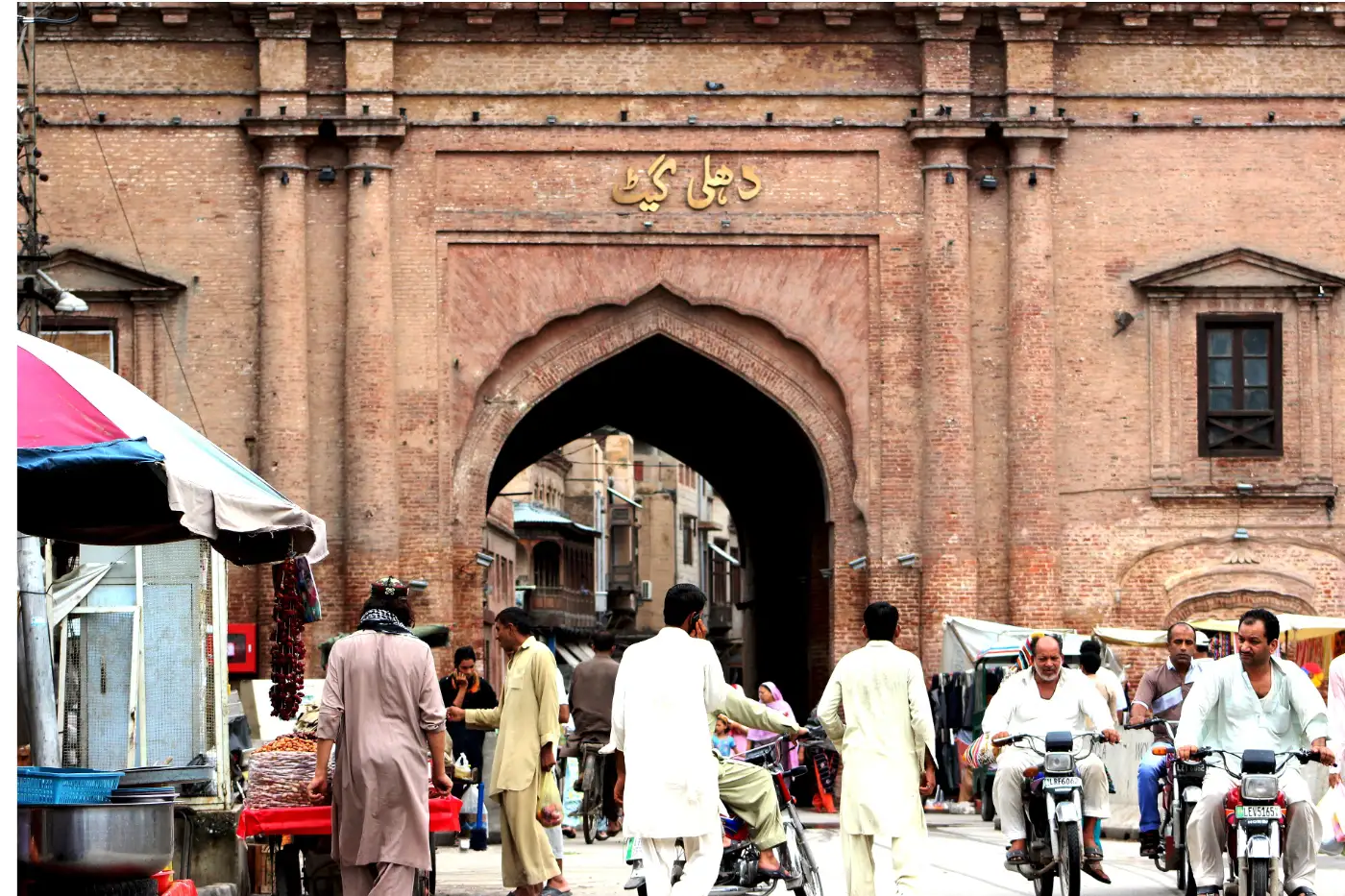
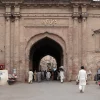
The busy entrance of Delhi Gate. Photo Credit: Asaad Ghafoor, CC BY-SA 4.0.
History of Delhi Gate Lahore
To begin with, old Lahore was once a city inside high walls. In Mughal times, the walls had 13 gates, and their doors were shut every evening. Delhi Gate faces east, towards Delhi, which is how it got its name. As a result, it became the main entrance to the city for travellers, traders and even emperors coming from Delhi.
The Original Mughal Gate
Interestingly, the first Mughal gate stood a little further inside. Today, people call it Chitta Gate, or the White Gate, and it stands about 100 metres west of the present Delhi Gate. So, when you walk down the bazaar towards Wazir Khan Mosque, you actually pass through the older gate as well.
British Rule and After
After the revolt of 1857, the British pulled down most of Lahore’s city walls. They also rebuilt Delhi Gate in the 19th century, in the form you see now. In addition, the famous Zamzama gun once stood here, before the British moved it to the Mall in front of the Lahore Museum. Later, after Partition, the rooms of the gate even housed a girls’ school.
Restoring Delhi Gate Lahore
For years, wires, encroachments and traffic hid the gate. Then, around 2014 and 2015, the Walled City of Lahore Authority restored it with help from the Aga Khan Trust for Culture. First, they repaired the brickwork, cleared the front, and added lights that make the gate glow at night.
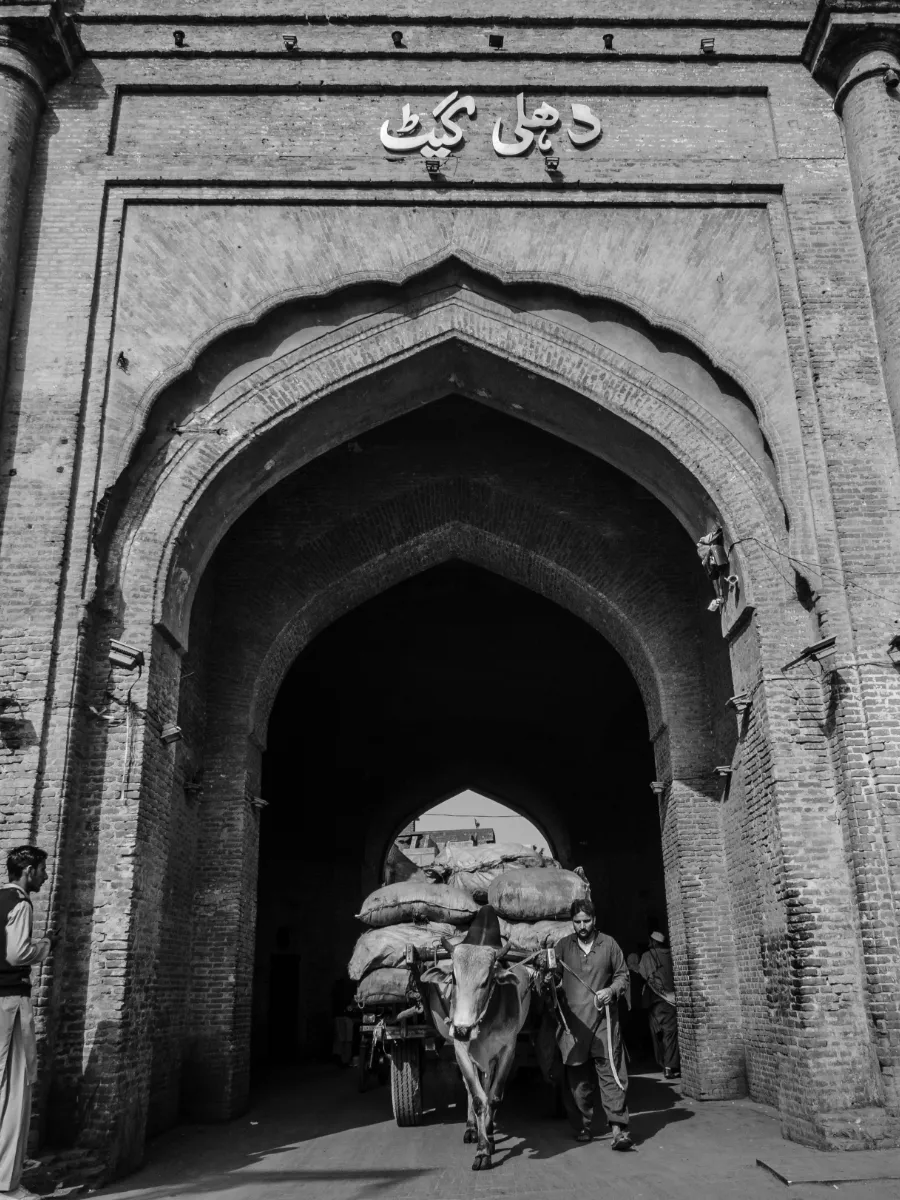
Porters carrying loads through the gate. Photo Credit: Shahbaz Aslam, CC BY-SA 4.0.
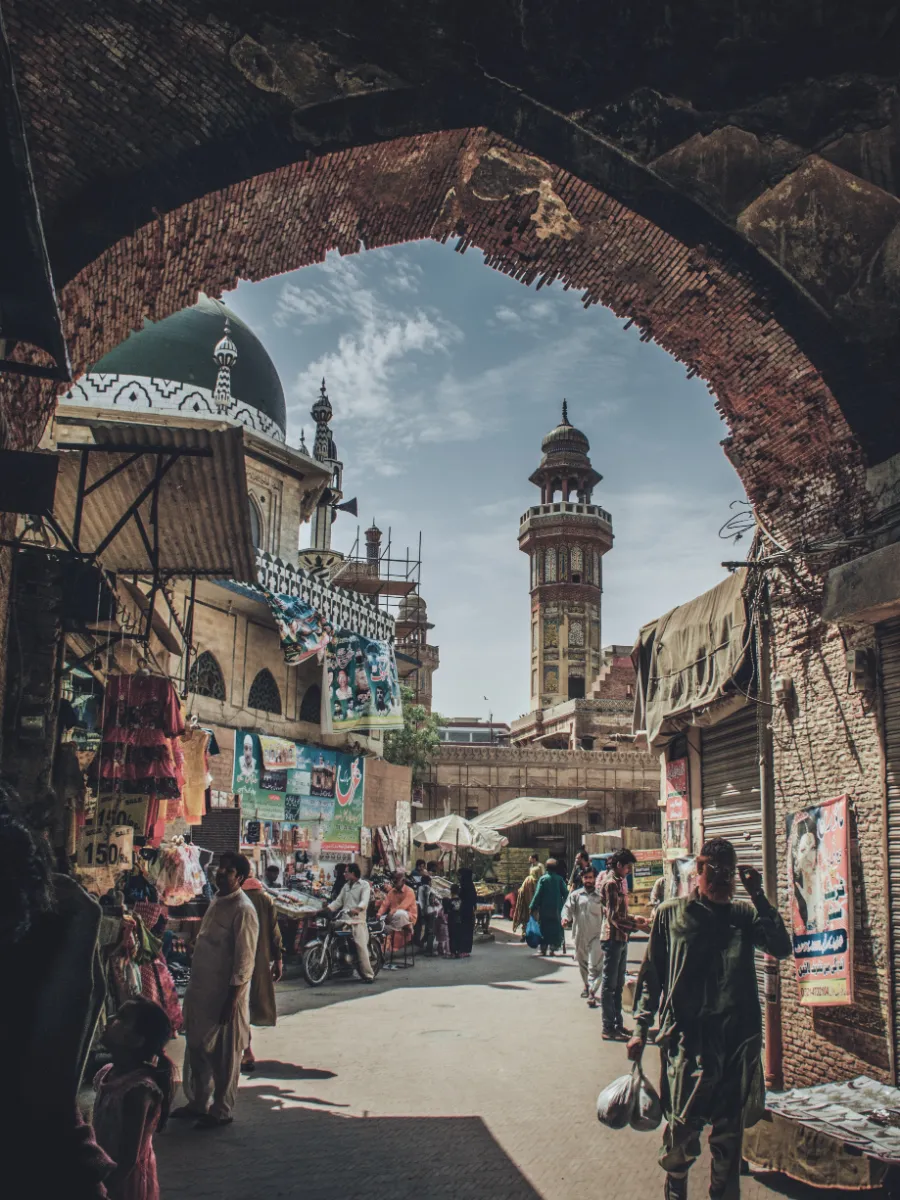
Chitta Gate, with Wazir Khan Mosque beyond. Photo Credit: Muhammad Salman Shahid, CC BY-SA 4.0.
Architecture of Delhi Gate
First of all, Delhi Gate is a wide, two-storey block of small red bricks. In the middle, a tall pointed arch leads into the city. Just above it, the words Dilli Darwaza appear in gold Urdu letters, so it is easy to spot in photos.
Columns, Windows and a Roof Terrace
On both sides of the arch, you will see brick columns, framed windows and small triangular pediments. Together, these details mix Mughal shapes with British-era style. Meanwhile, a long balustrade runs along the roof, with small brick pavilions at the corners. As a result, from the roof you get a wide view over the bazaar and the domes of the old city.
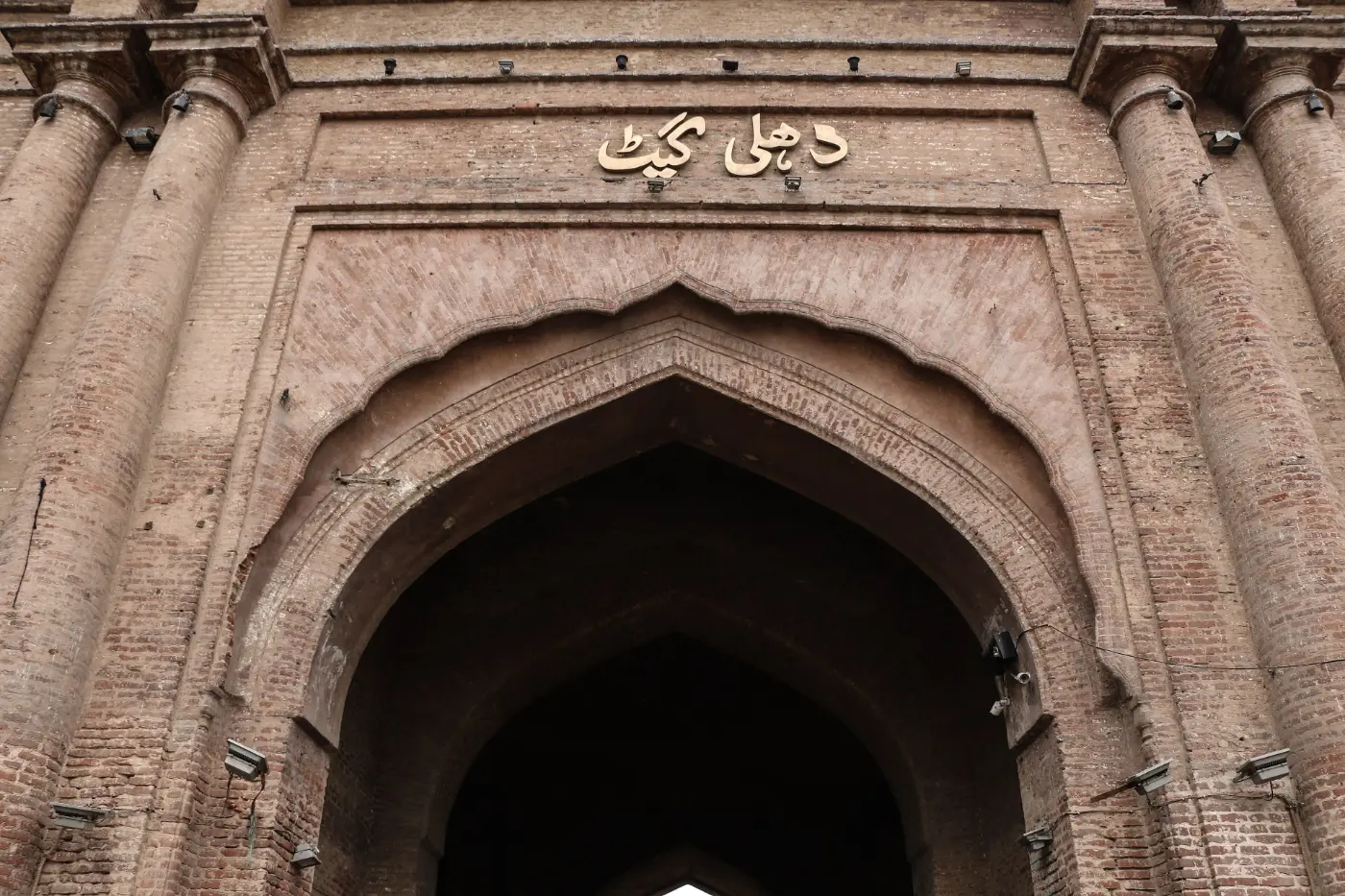
The pointed arch and the name plate, Dilli Darwaza. Photo Credit: Kumail Hasan, CC BY-SA 4.0.
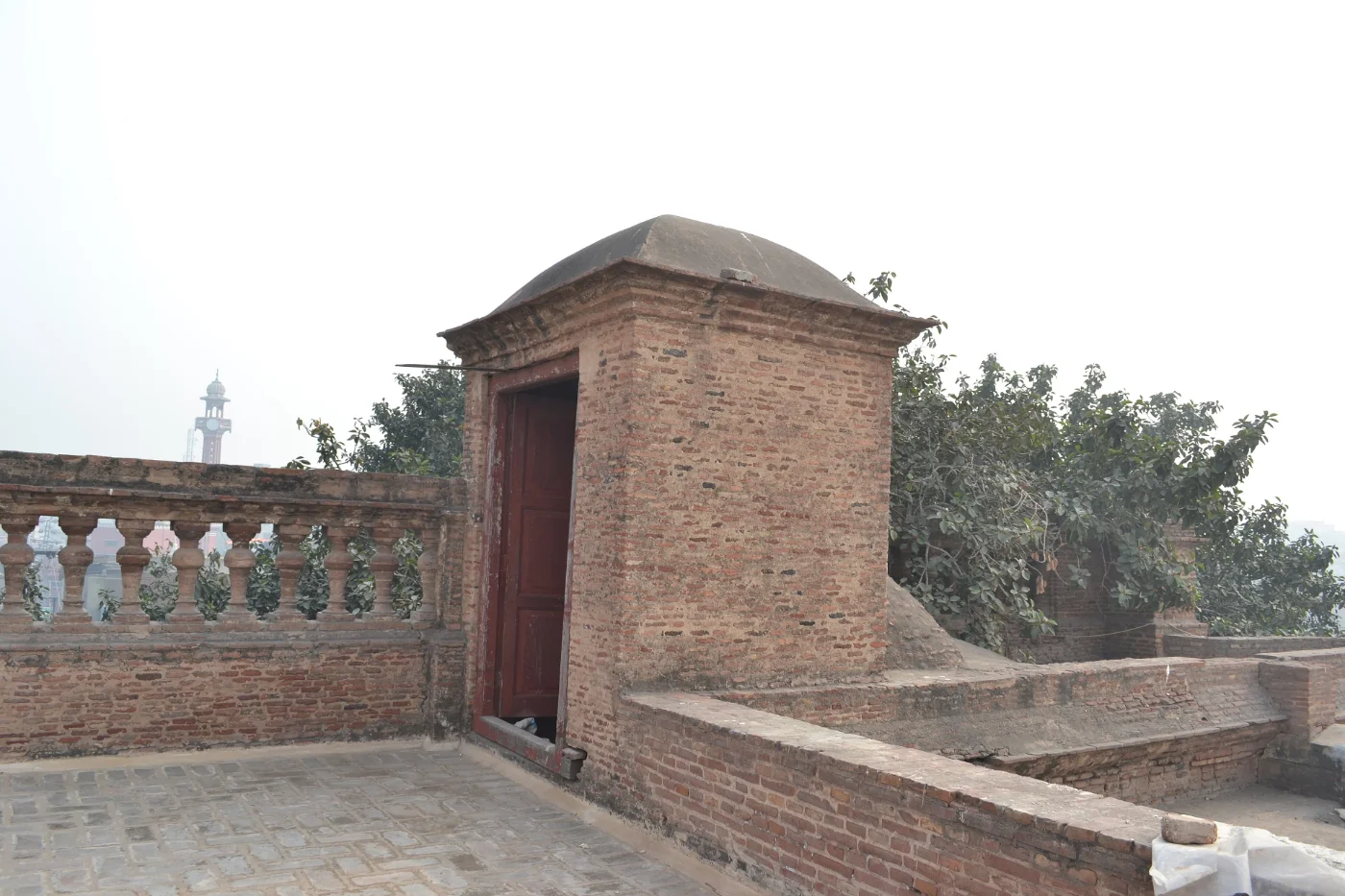
A small pavilion on the roof of the gate. Photo Credit: Khalid Mahmood, CC BY-SA 3.0.
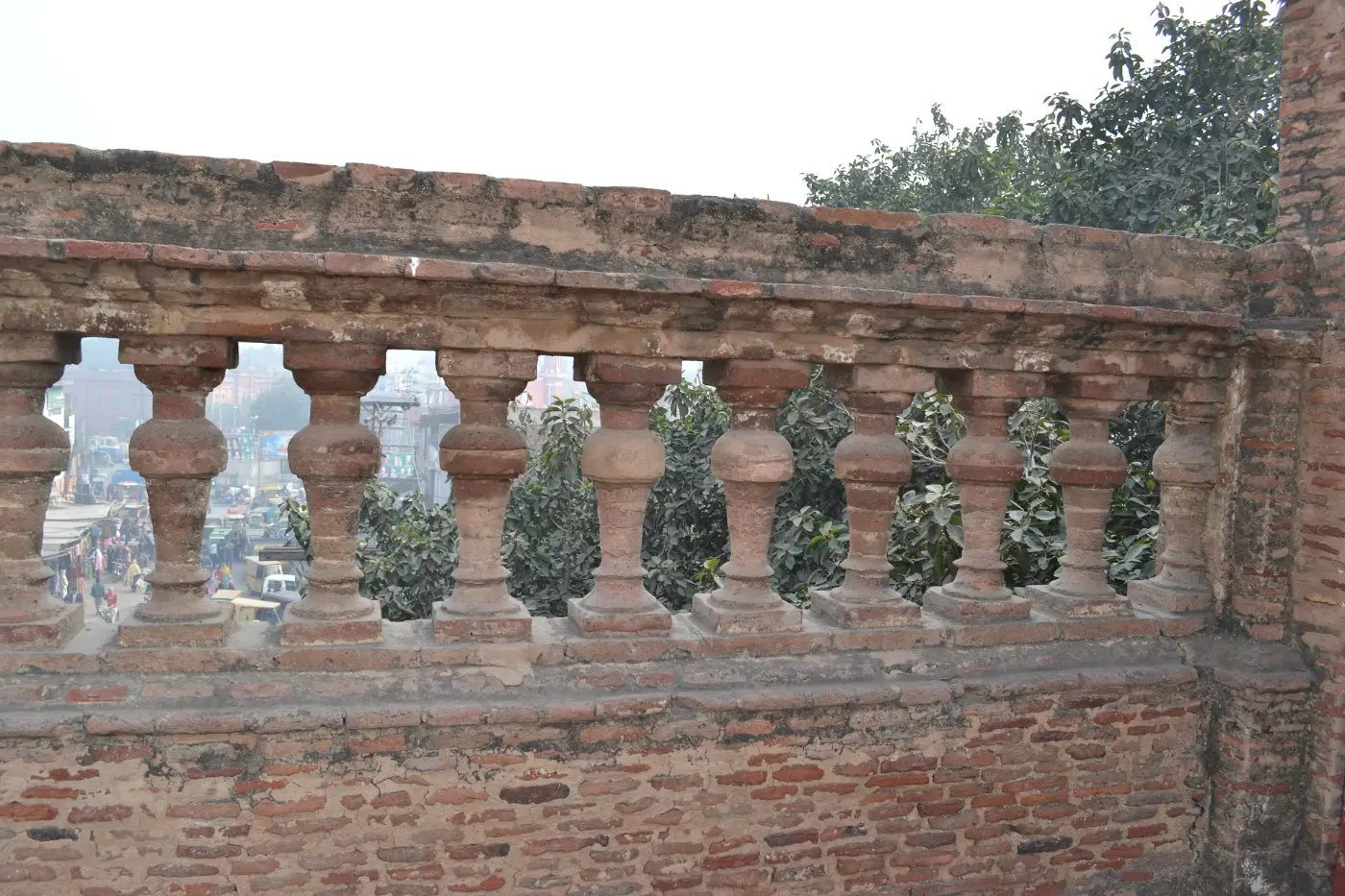
The brick balustrade on the roof. Photo Credit: Khalid Mahmood, CC BY-SA 3.0.
Inside the Gate
Once you step through the arch, you enter a long vaulted passage. On both sides, there are also arched rooms on two levels. In the past, these rooms held guards and shops, and today some of them still work as small shops and offices. After the restoration, the Walled City Authority also opened a tourist office in a few of the rooms.
At night, however, warm lights fill the passage and the arches. That is why many photographers come here after sunset.
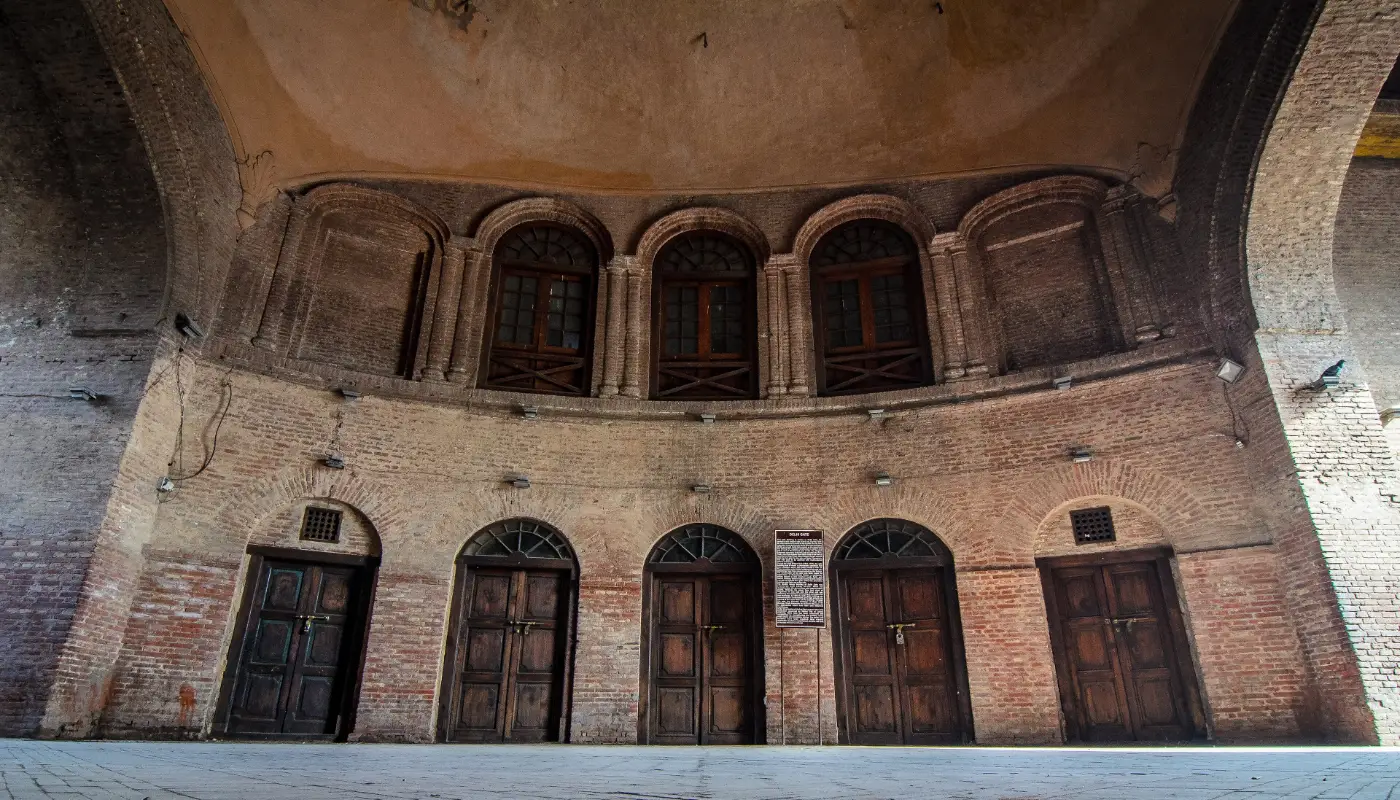
The arched rooms inside the gate. Photo Credit: Shahbaz Aslam, CC BY-SA 4.0.
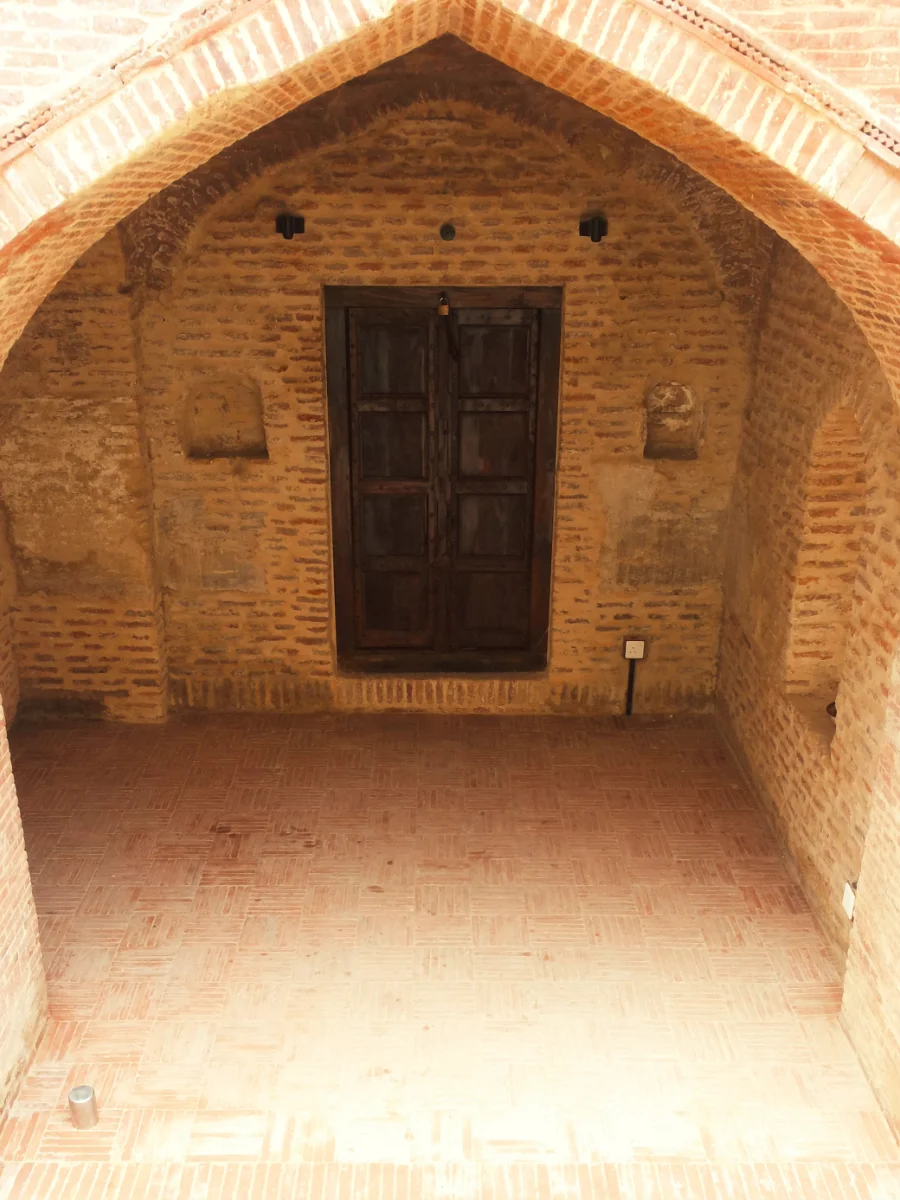
One of the brick rooms inside the gate. Photo Credit: Addi murtaza, CC BY-SA 4.0.
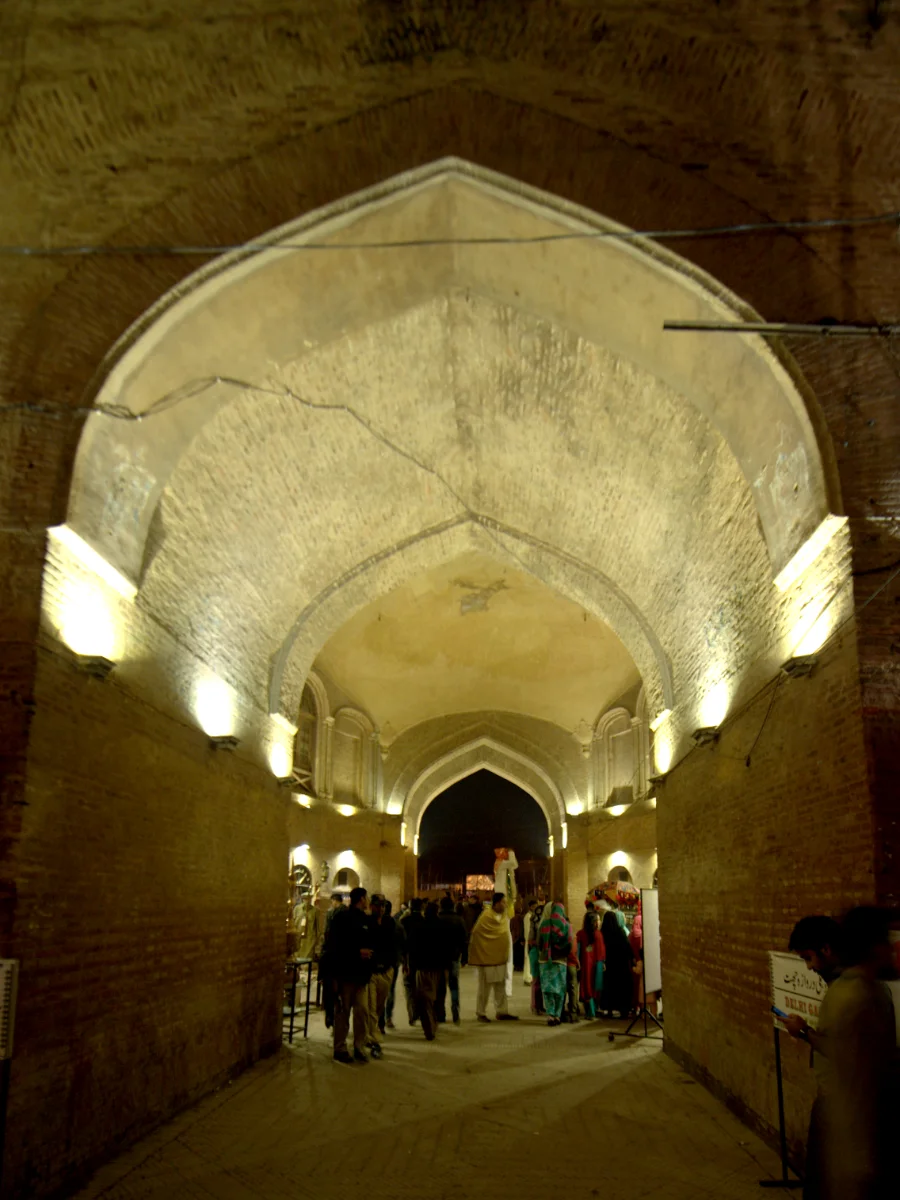
The lit passage through the gate at night. Photo Credit: DarNadeem, CC BY-SA 4.0.
The Royal Trail (Shahi Guzargah)
Meanwhile, the straight street that starts at Delhi Gate is the Shahi Guzargah, or Royal Trail. Back in Mughal times, emperors arriving from Delhi rode along it to the Lahore Fort. In fact, the trail runs about 1.6 km through the heart of the Walled City.
Highlights Along the Trail
- Shahi Hammam: the 1635 royal bathhouse, which is just inside the gate.
- Akbari Mandi: a spice and dry-fruit market right next to the gate.
- Chitta Gate: the older Mughal gateway, a short walk ahead.
- Masjid Wazir Khan: Lahore’s most colourful Mughal mosque, about 260 metres inside.
- Usman Ki Baithak: a cosy chai corner in Gali Surjan Singh.
- Sunehri Masjid: the Golden Mosque in Kashmiri Bazaar.
- Lahore Fort: the end of the trail at Masti Gate.
Also, the Walled City Authority moved the overhead electric wires underground along this route, so the old havelis and balconies look much cleaner than before.
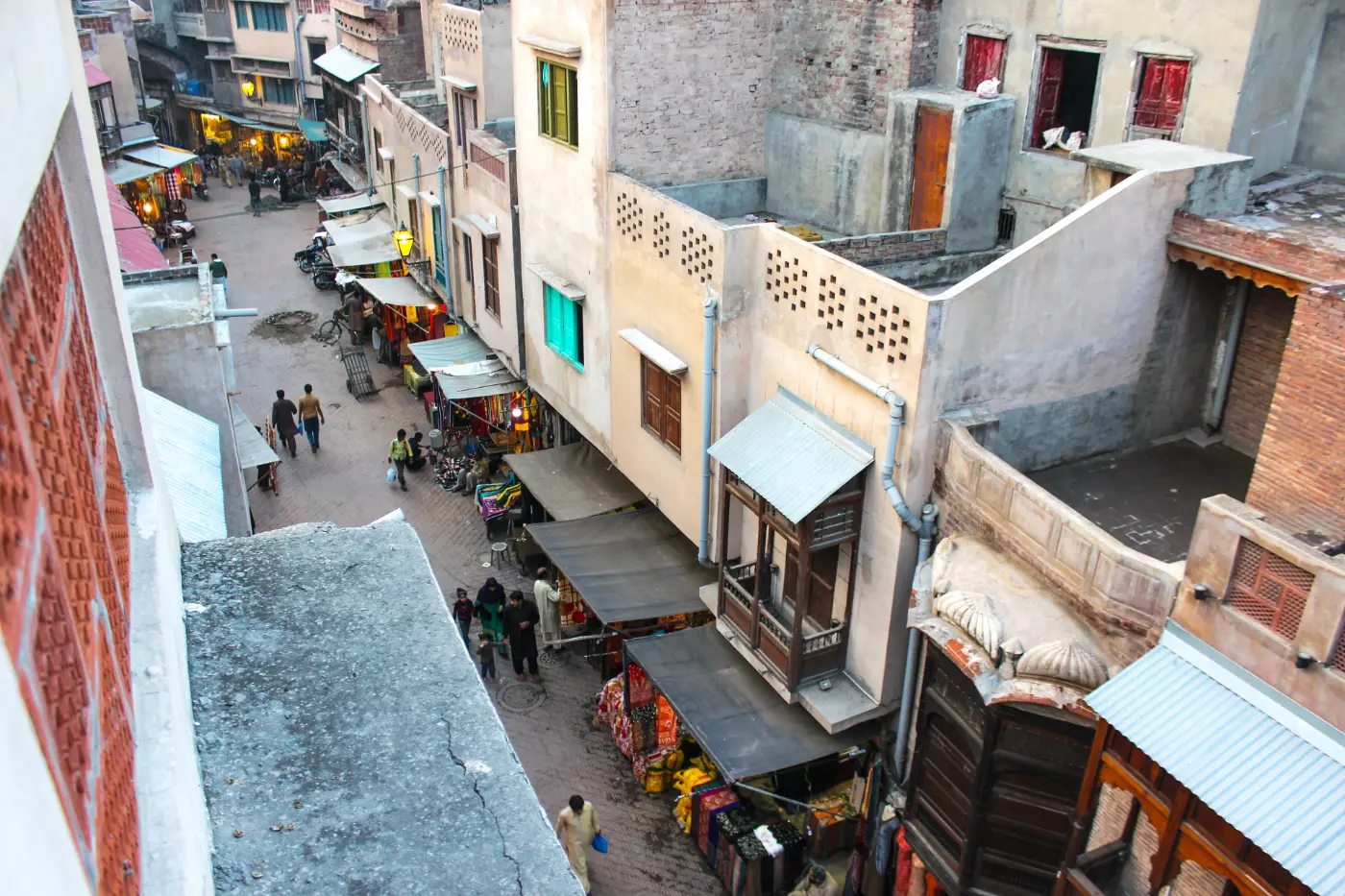
Shahi Guzargah seen from above. Photo Credit: AnoshNadeemButt, CC BY-SA 4.0.
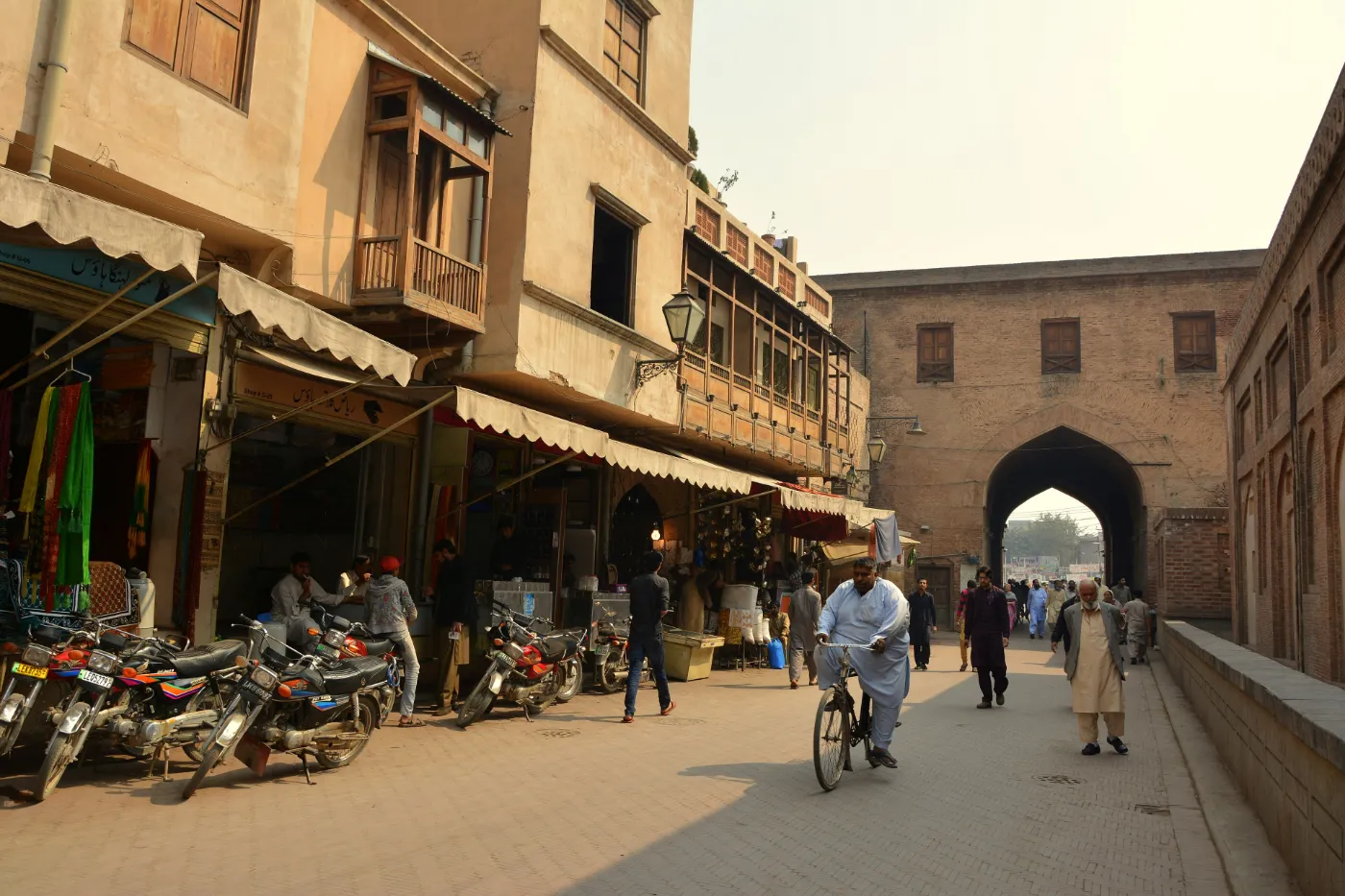
The Royal Trail leading to Chitta Gate. Photo Credit: The Walled City of Lahore Authority, CC BY-SA 4.0.
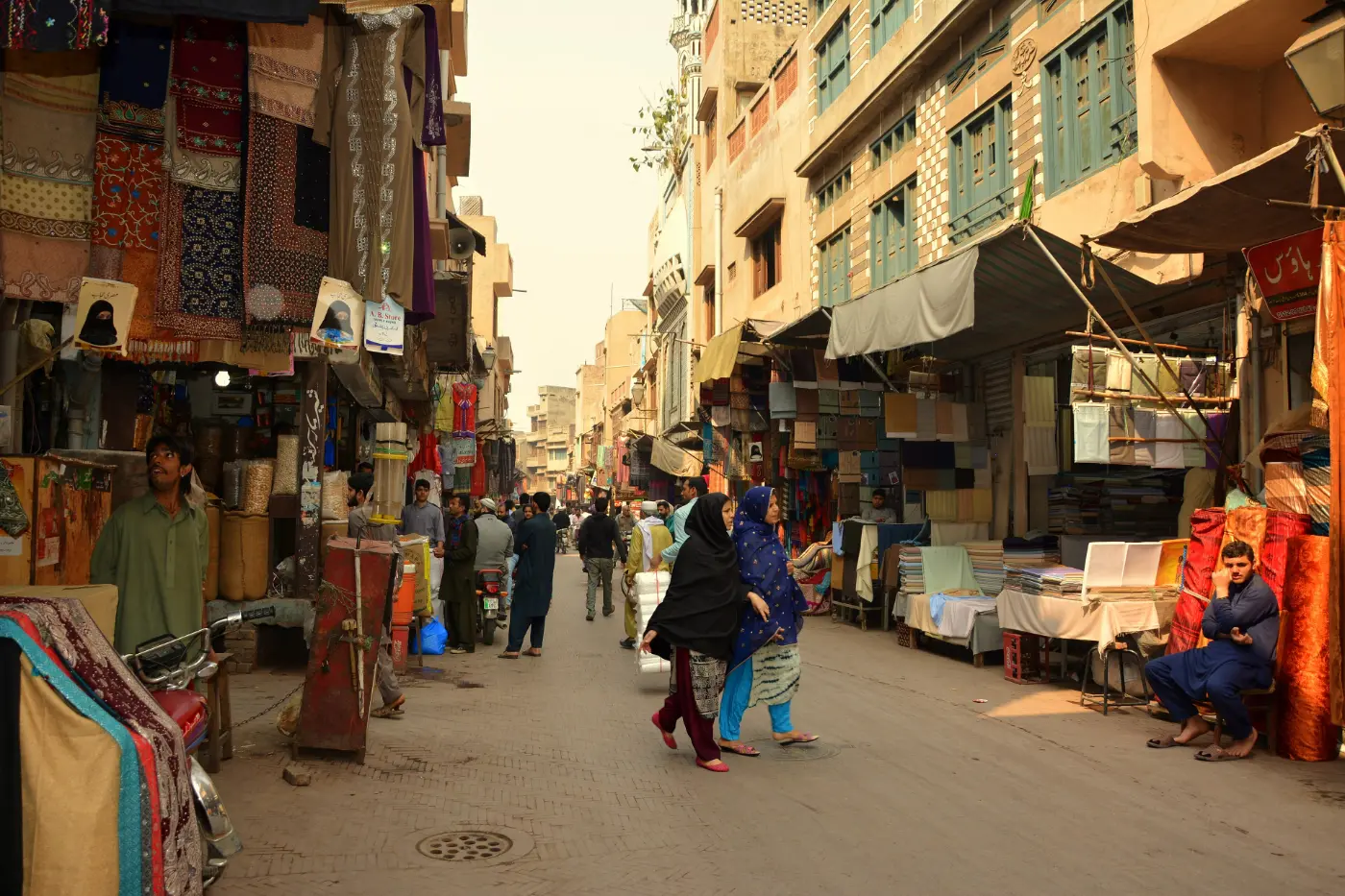
Shops along the restored Shahi Guzargah. Photo Credit: The Walled City of Lahore Authority, CC BY-SA 4.0.
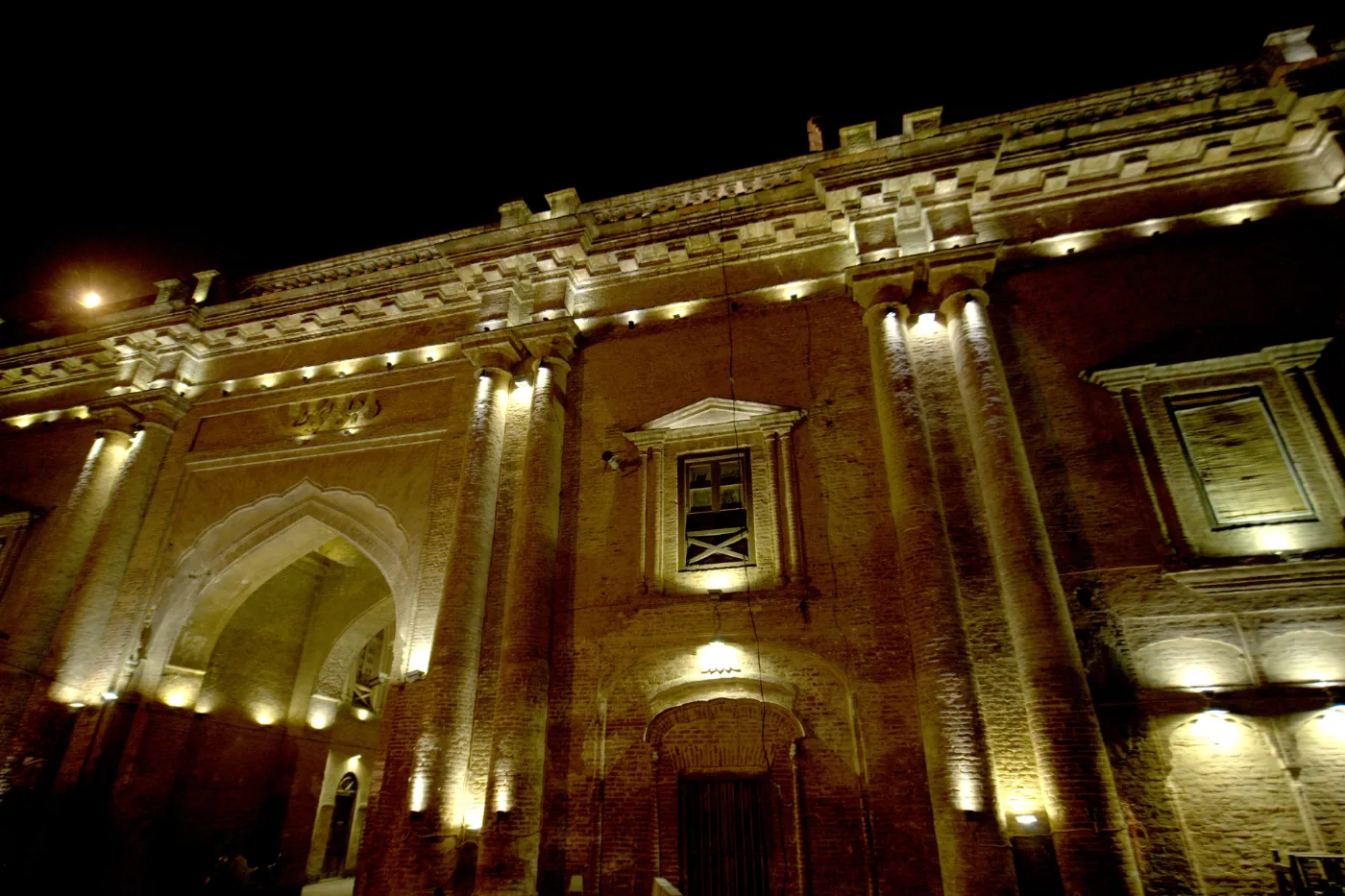
Delhi Gate lit up at night. Photo Credit: DarNadeem, CC BY-SA 4.0.
Things to Do
- First, walk the Royal Trail from Delhi Gate to the Lahore Fort, stopping at each monument.
- Climb to the roof of the gate, if it is open, for a view of the old city.
- Next, visit Shahi Hammam to see its painted ceilings and old bath rooms.
- After that, shop for spices, dry fruits and pickles in Akbari Mandi.
- Also, watch craftsmen make tablas, brass pots and other goods in the side lanes.
- Finally, come back after sunset to photograph the gate when it is lit up.
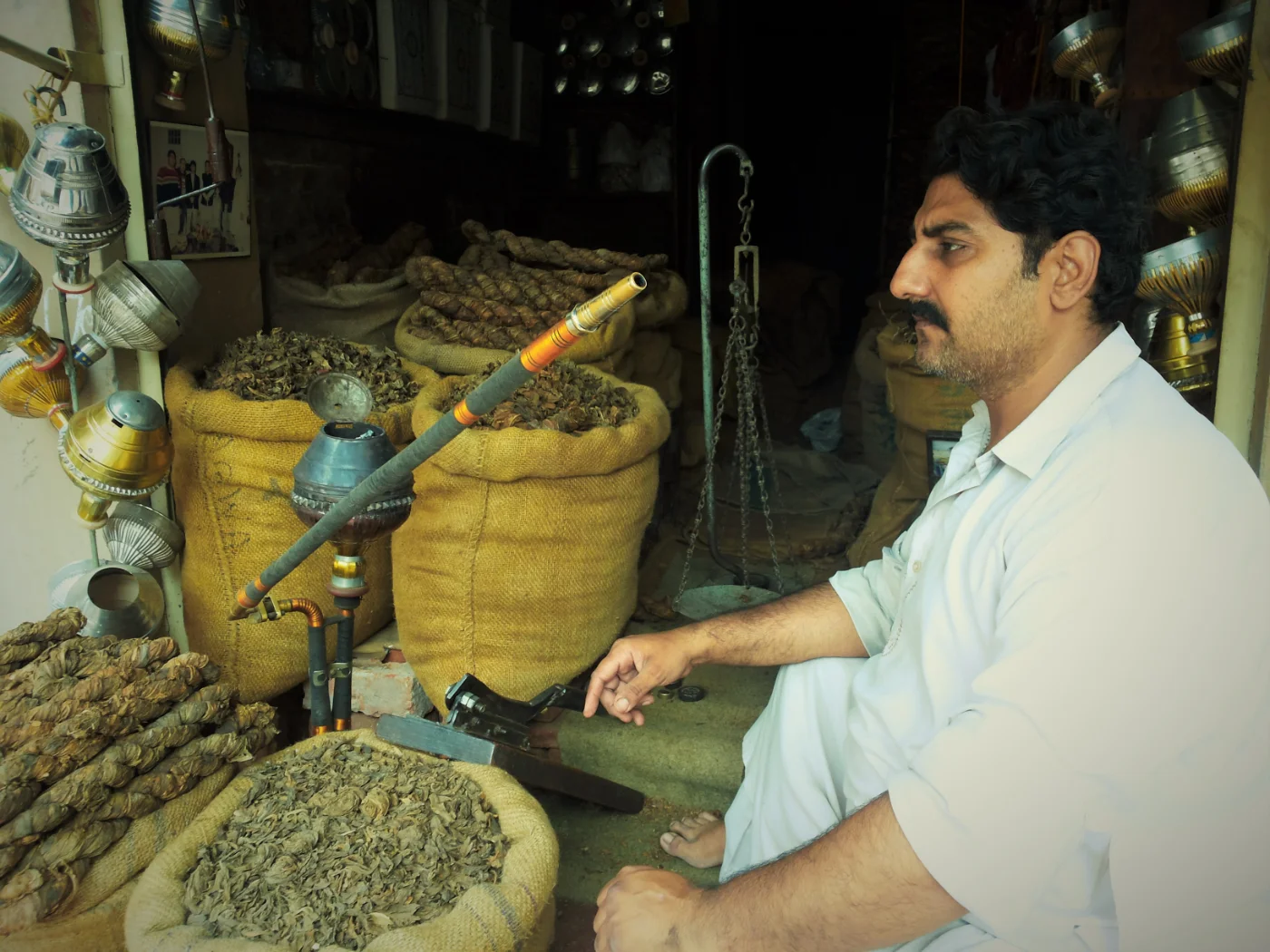
A spice seller in Akbari Mandi. Photo Credit: Addi murtaza, CC BY-SA 4.0.
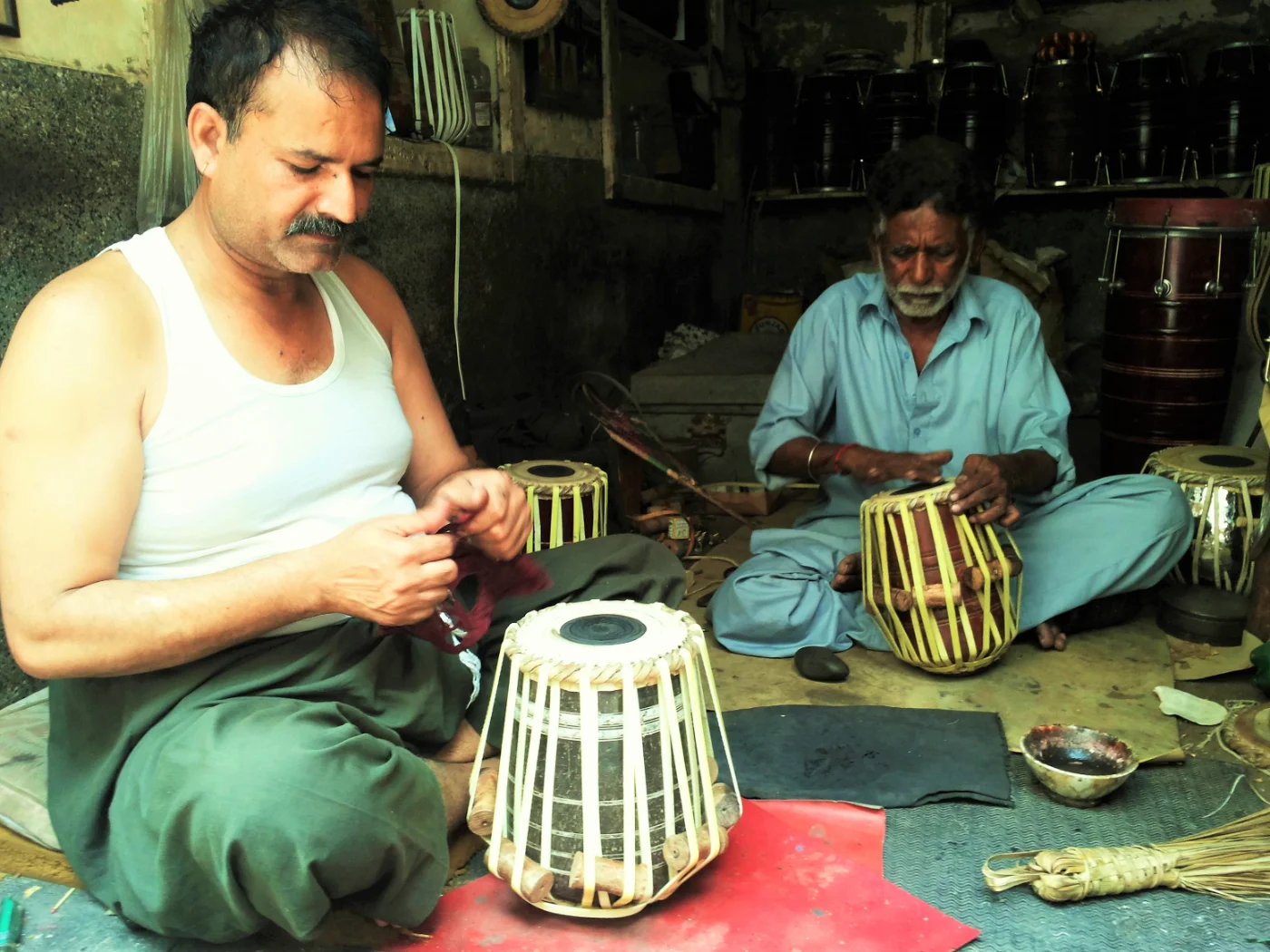
Tabla makers at work near the gate. Photo Credit: Addi murtaza, CC BY-SA 4.0.
Food Nearby
The lanes around Delhi Gate are full of simple, tasty food. For example, you will find stalls selling halwa puri and chanay in the morning, and samosas, pakoras and fruit chaat in the afternoon. Also, look for fresh lassi, kulfi and a cup of doodh patti.
For chai with a view, stop at Usman Ki Baithak near Wazir Khan Mosque. Then, for a full Lahori dinner, take a short rickshaw ride to Gawalmandi Food Street. In general, most street snacks cost around PKR 100 to 500, while a full meal is about PKR 800 to 2,000 per person.
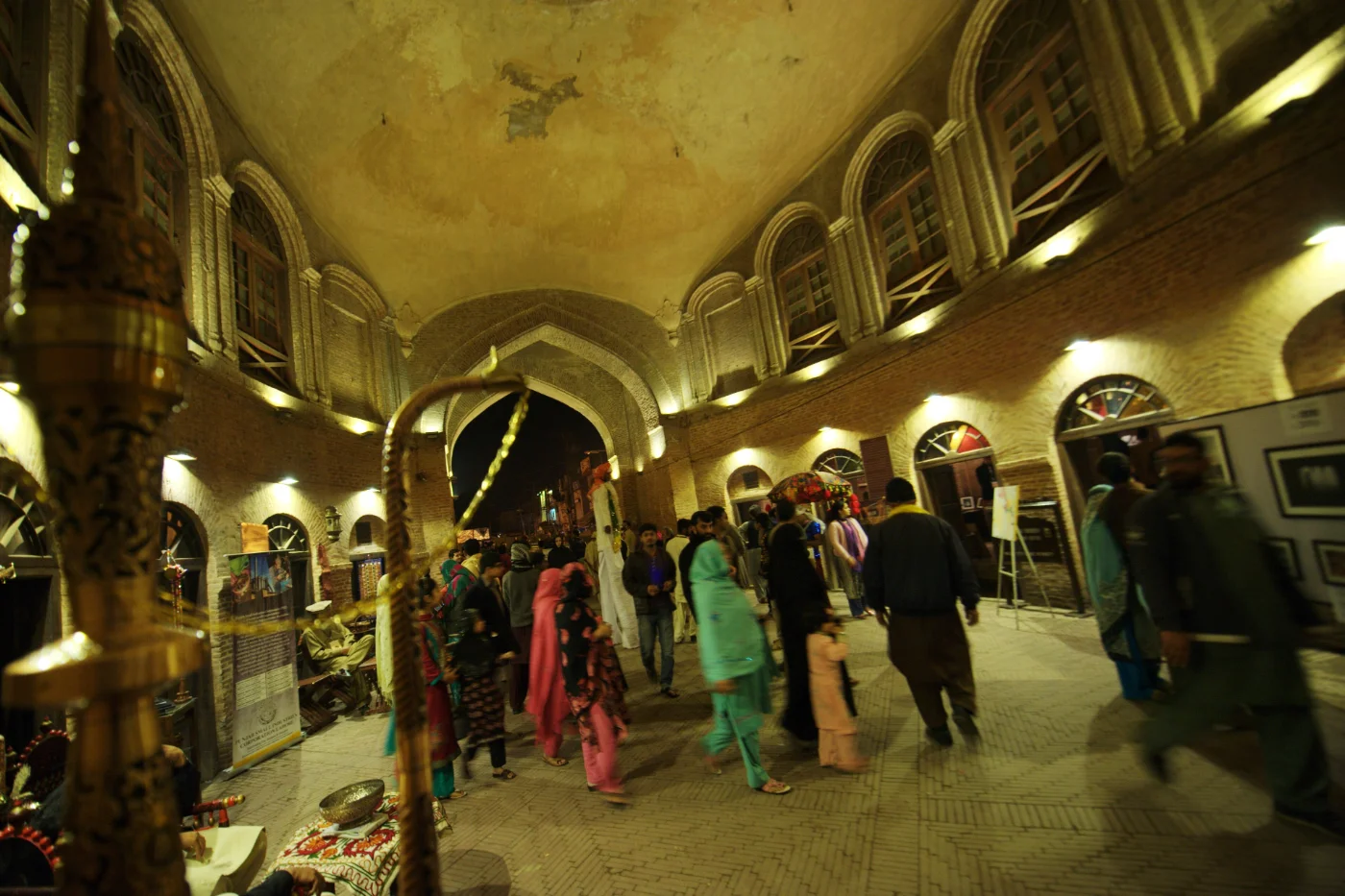
The night bazaar inside the gate. Photo Credit: DarNadeem, CC BY-SA 4.0.
Visitor Information
Visiting Delhi Gate Lahore
Before you visit Delhi Gate Lahore, keep these points in mind.
- Location: Circular Road, on the eastern side of the Walled City, Lahore.
- Timings: The gate is a public street, so it is open all day. Most shops open from late morning until late evening, and the monuments inside have their own timings.
- Ticket: Free for the gate and the Royal Trail. However, Shahi Hammam and the Lahore Fort do charge separate tickets, so check current prices before you go.
- Best time: October to March. Mornings are calmer, while evenings are best for the lights.
- Time needed: 30 minutes for the gate, or 3 to 4 hours for the whole Royal Trail.
- Parking: Very limited, so park along Circular Road or come by rickshaw.
- Families and women: Family-friendly, though the bazaar is crowded, especially on weekends.
- Dress code: Modest clothes are best, so dress simply. Also, for Wazir Khan Mosque, cover your head and remove your shoes.
- Photography: Allowed; however, ask before photographing shopkeepers or women.
- Accessibility: The main trail is paved, but crowds and motorbikes make wheelchair use hard.
- Safety: Keep your phone and wallet close, as pickpockets work in busy bazaars.
During Muharram processions and on big religious days, roads in the Walled City may close, so plan around them.
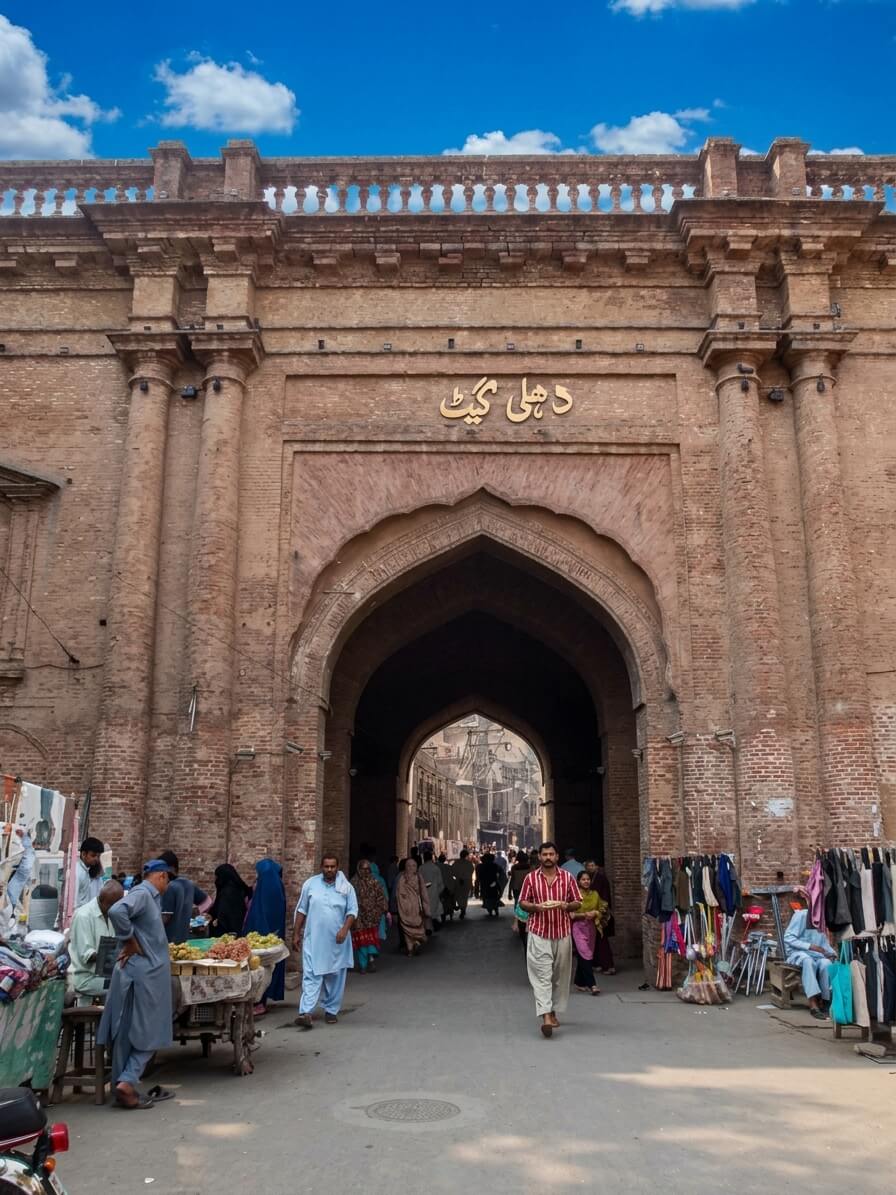
Delhi Gate from the outside. Photo Credit: Guilhem Vellut, CC BY 2.0.
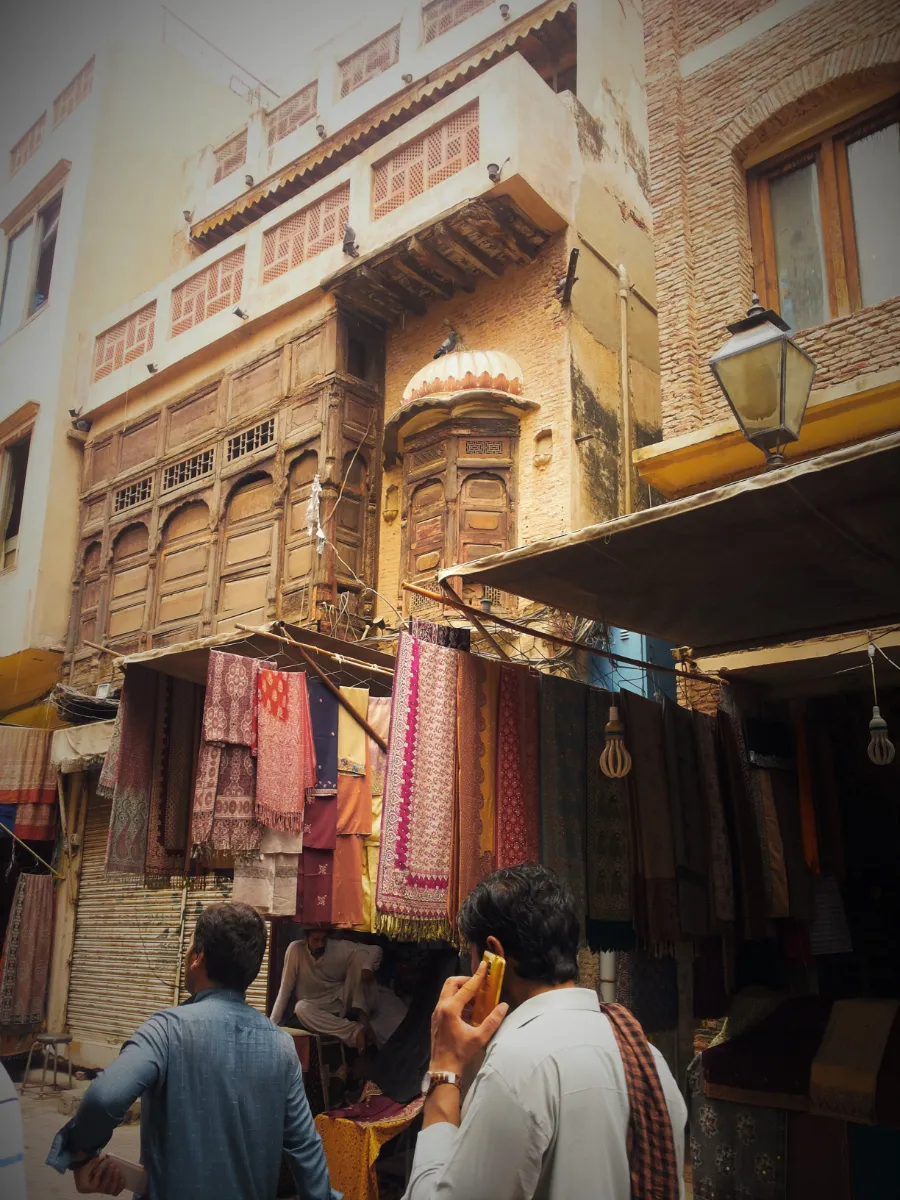
Old havelis and cloth shops near the gate. Photo Credit: Addi murtaza, CC BY-SA 4.0.
How to Get There
Delhi Gate stands on Circular Road, on the eastern edge of the Walled City. By Careem, inDrive or rickshaw, simply ask for Delhi Gate. Your car can drop you outside; however, they cannot go through the gate.
By public transport, take the Orange Line Metro Train to the Railway Station stop. From there, a rickshaw to Delhi Gate takes only a few minutes. Alternatively, it is a walk of about 20 minutes.
Places to Visit Near Delhi Gate
- Shahi Hammam: the royal bathhouse, just inside the gate.
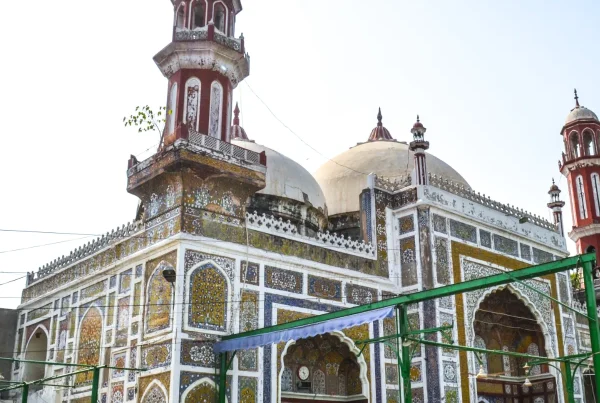
- Masjid Wazir Khan: famous for its tile work, a 5-minute walk.
- Usman Ki Baithak: a chai corner on the Royal Trail.
- Sunehri Masjid: the Golden Mosque, about 15 minutes on foot.
- Maryam Zamani Mosque: a painted royal mosque near Masti Gate.
- Lahore Fort: at the end of the trail, about 30 minutes on foot.
- Haveli Nau Nihal Singh: a painted Sikh-era haveli inside the Walled City.
- Dai Anga Mosque: a tiled Mughal mosque behind Lahore Railway Station, a short rickshaw ride away.
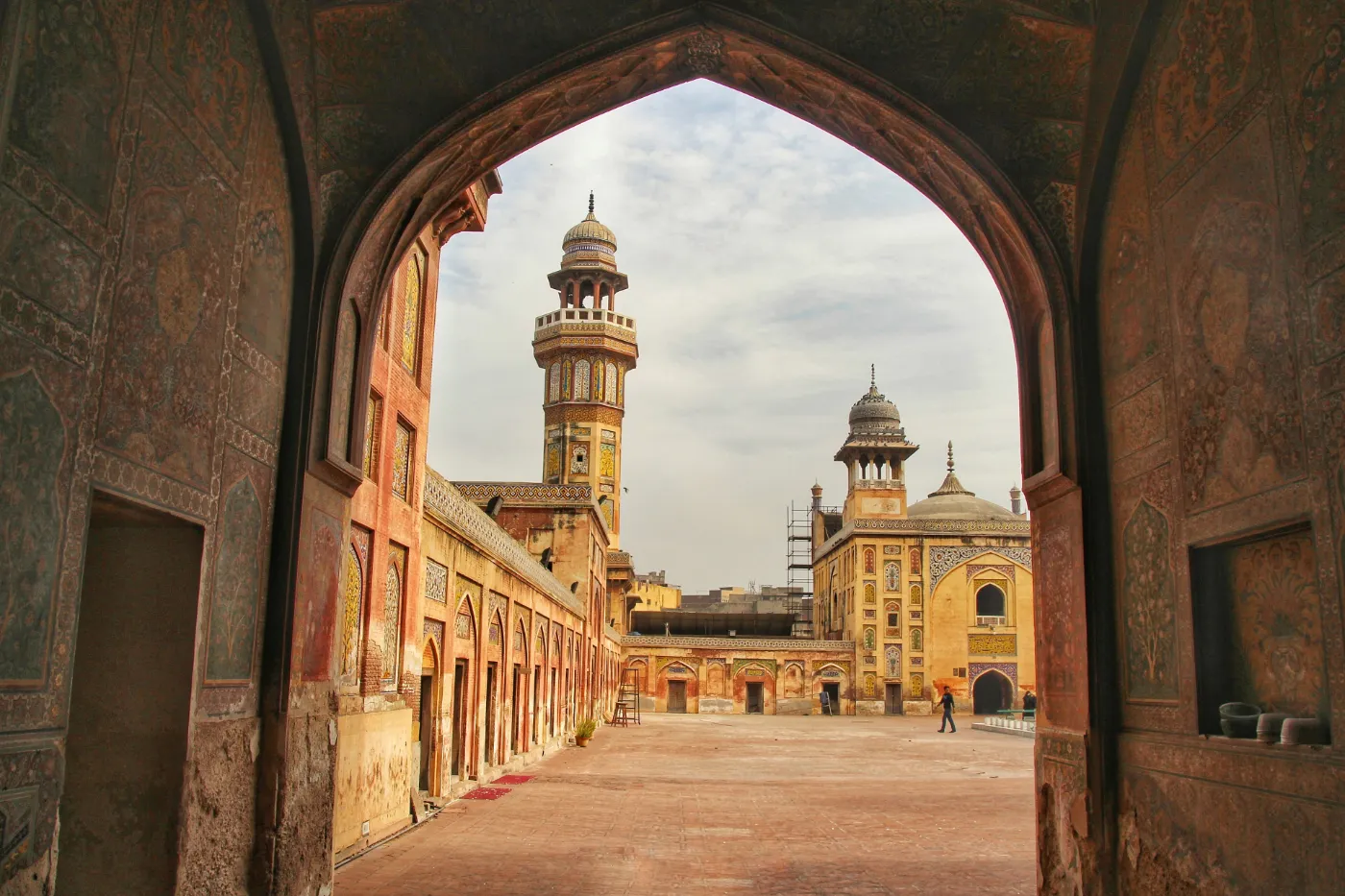
Wazir Khan Mosque through its own gateway. Photo Credit: Fassifarooq, CC BY-SA 4.0.
Frequently Asked Questions
Why is it called Delhi Gate?
Because it faces east, towards Delhi. Therefore, travellers from Delhi used it. In other words, it was the road to Delhi.
Is there an entry fee for Delhi Gate Lahore?
No. In fact, the gate and the Royal Trail are free. Only some monuments inside, such as Shahi Hammam, charge a ticket.
Is Delhi Gate open at night?
Yes. Since it is a public gate, it stays open, and it is lit up after sunset, so evening visits are popular.
Who built Delhi Gate?
The first gate dates from the Mughal period. The present gate was rebuilt under British rule in the 19th century.
How far is Wazir Khan Mosque from Delhi Gate?
It is about 260 metres, or a 5-minute walk along the Royal Trail.
How many gates did old Lahore have?
The Walled City had 13 gates. However, only a few, such as Delhi Gate, Lohari Gate and Bhati Gate, still stand today.
Conclusion
In short, Delhi Gate is the front door of old Lahore. Once you step through it, the city’s history opens up one street at a time, from the Shahi Hammam to Wazir Khan Mosque and finally the Lahore Fort. So, start your Walled City day here, take it slow, and stop for chai along the way.
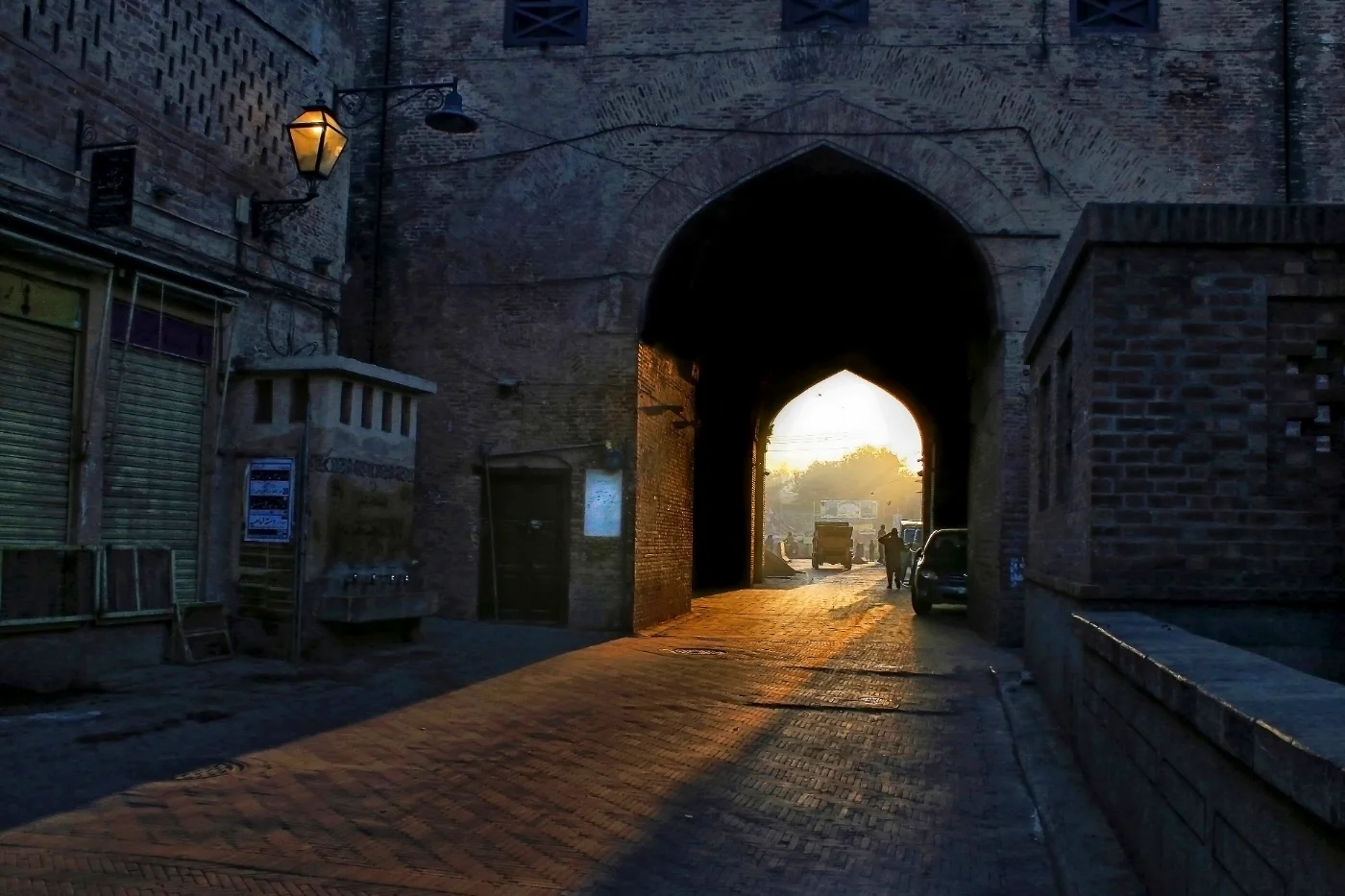
Morning light under an arch of the Walled City. Photo Credit: Umaimaumi, CC BY-SA 4.0.
Cover photo: Hassantahir101, CC BY-SA 3.0.