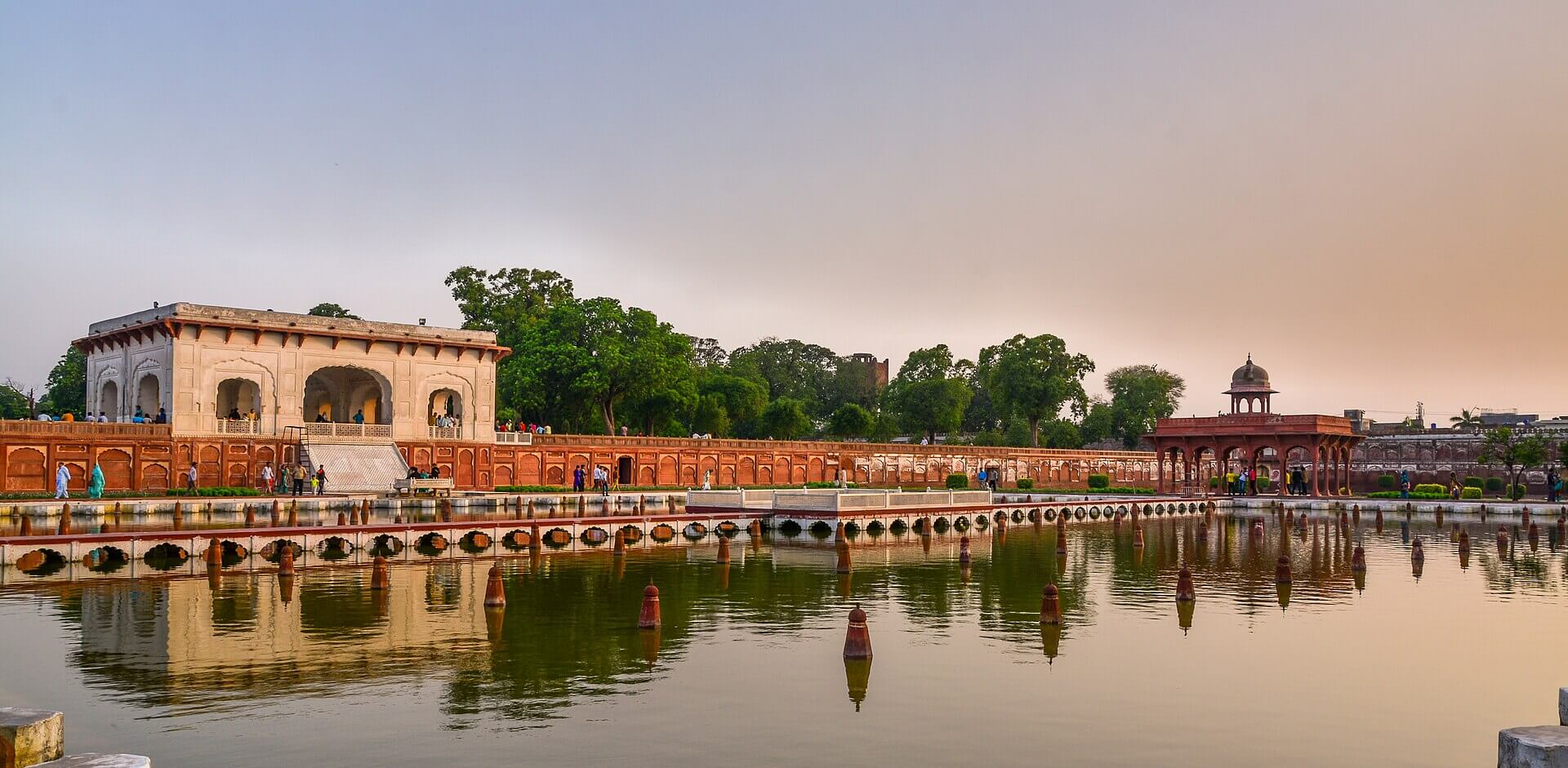
If Lahore ever had a backyard for its emperors, this was it. Shalimar Gardens, or Shalimar Bagh as most Lahoris call it, is a walled Mughal garden on GT Road with three stepped terraces, long water channels, marble cascades and more than 400 fountains. It was built almost 400 years ago by Shah Jahan, the same emperor who gave the world the Taj Mahal.
Today Shalimar Gardens is a UNESCO World Heritage Site, and on a winter morning, with the lawns freshly cut and the fountains running, it is one of the calmest places you will find in this loud, lovely city. In this guide we will take you through its history, the three terraces, the buildings worth finding, and everything you need to plan your visit: timings, tickets, how to get there on the Orange Line and what else to see nearby.
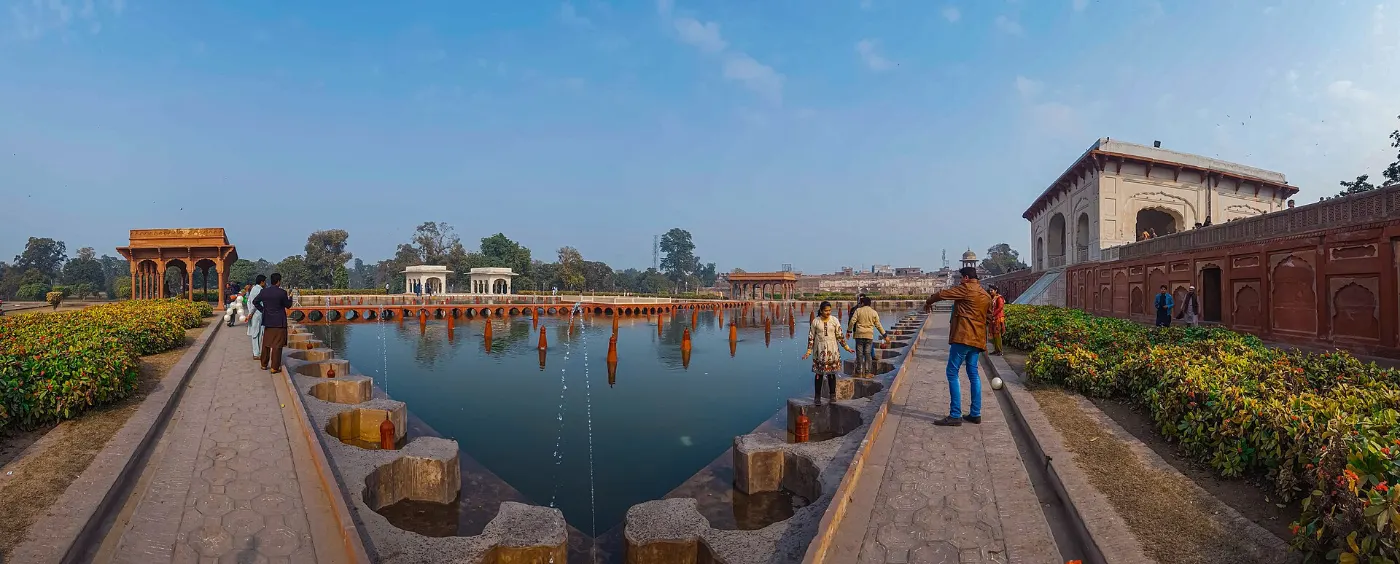
Photo Credit: Shahzaib Damn Cruze, CC BY-SA 4.0, via Wikimedia Commons
Table of Content
- Introduction
- History of Shalimar Gardens
- Why Is It Called Shalimar?
- The Three Terraces
- Fountains, Cascades and the Sawan Bhadon
- Buildings Worth Finding
- Chandni Raatain: Shalimar by Night
- Visitor Information
- How to Get to Shalimar Gardens
- Places to See Nearby
- Tips for Visitors
- Frequently Asked Questions
- Final Word
History of Shalimar Gardens
Shah Jahan loved two things a great deal: buildings and Lahore. Work on Shalimar started on 6 June 1641 and was finished about a year and a half later, in 1642. The project was supervised by Khalilullah Khan, a noble of the Mughal court, while Ali Mardan Khan, the emperor’s well-known engineer, handled most of the construction.
His hardest job was the water. To keep hundreds of fountains running, he had a canal, later known as Shah Nahar, dug for more than 150 kilometres to carry water from the hills down to this spot. That steady water supply is the main reason this site was chosen.
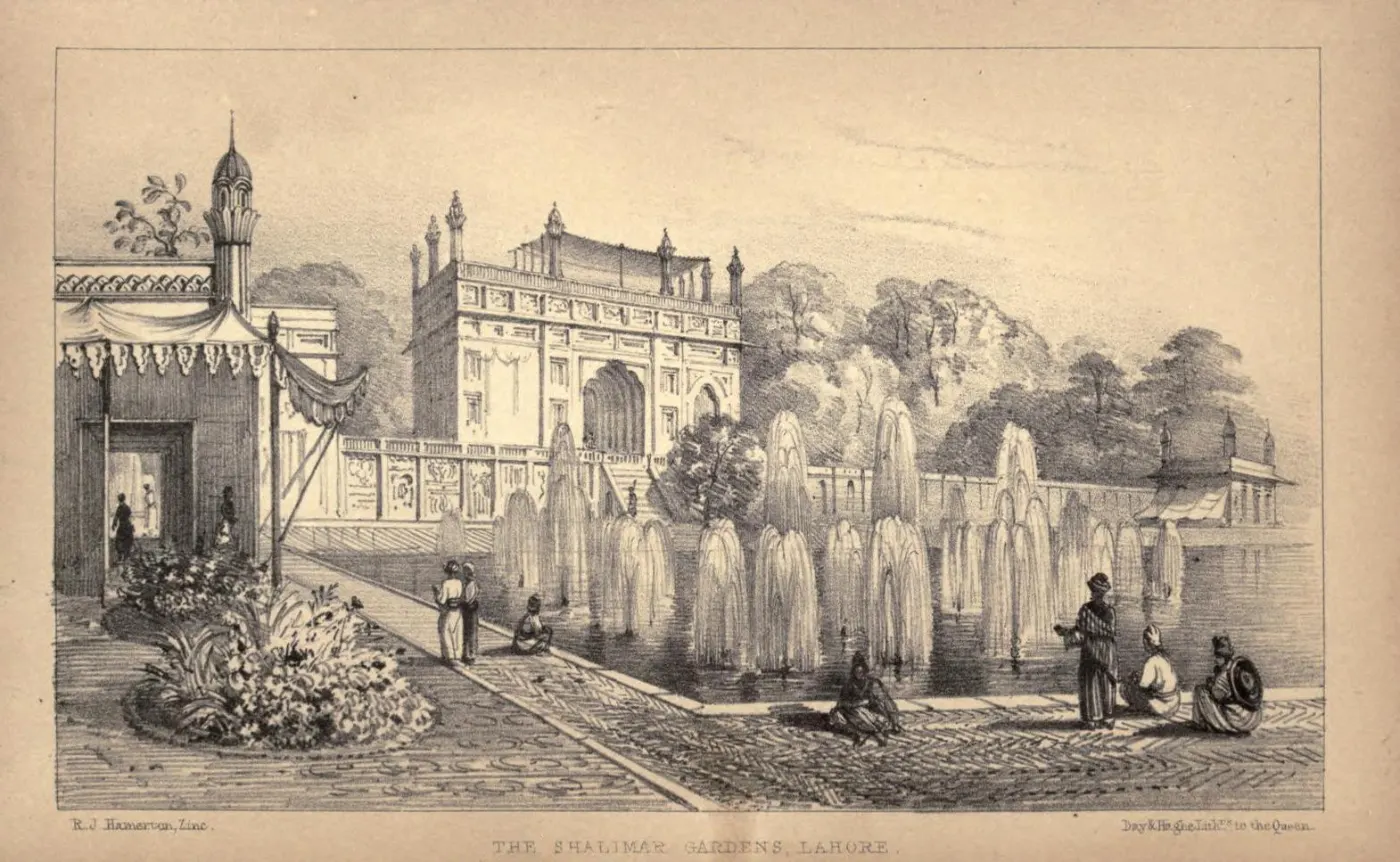
Image: From The Court and Camp of Runjeet Sing by W. G. Osborne (c. 1840), public domain, via Wikimedia Commons
The land belonged to the Arain Mian family of Baghbanpura. The head of the family, Mian Muhammad Yusuf, gave it to the emperor, and in return the family was made the garden’s custodian. They looked after it for more than three centuries.
After the Mughals, the garden went through a rough patch. During the Sikh period much of its marble was taken away to Amritsar, and its expensive agate gate was stripped and sold. Maharaja Ranjit Singh ordered repairs in 1806. For many years the famous Mela Chiraghan, the festival of lights in memory of the Sufi poet Shah Hussain, was held inside these walls, until it was stopped in 1958. In 1962 the government of General Ayub Khan took the garden over from the Mian family.
In 1981 UNESCO added Shalimar Gardens, together with Lahore Fort, to its list of World Heritage Sites. Today the Walled City of Lahore Authority (WCLA) looks after it.
Why Is It Called Shalimar?
Funny enough, nobody is completely sure. In Shah Jahan’s time the garden was called Farah Bakhsh, which means “the one that gives joy”. It shares the name Shalimar with the older garden in Kashmir built by Shah Jahan’s father, Jahangir, which inspired its design (pictured here). Some historians read the word as “abode of joy”, others as “abode of streams”.
Maharaja Ranjit Singh did not like the name at all. After a long debate with his courtiers, he renamed it Shahla Bagh and ordered that it be written that way in official letters. The new name never really caught on. Ask anyone in Lahore today and they will simply say Shalamar Bagh.
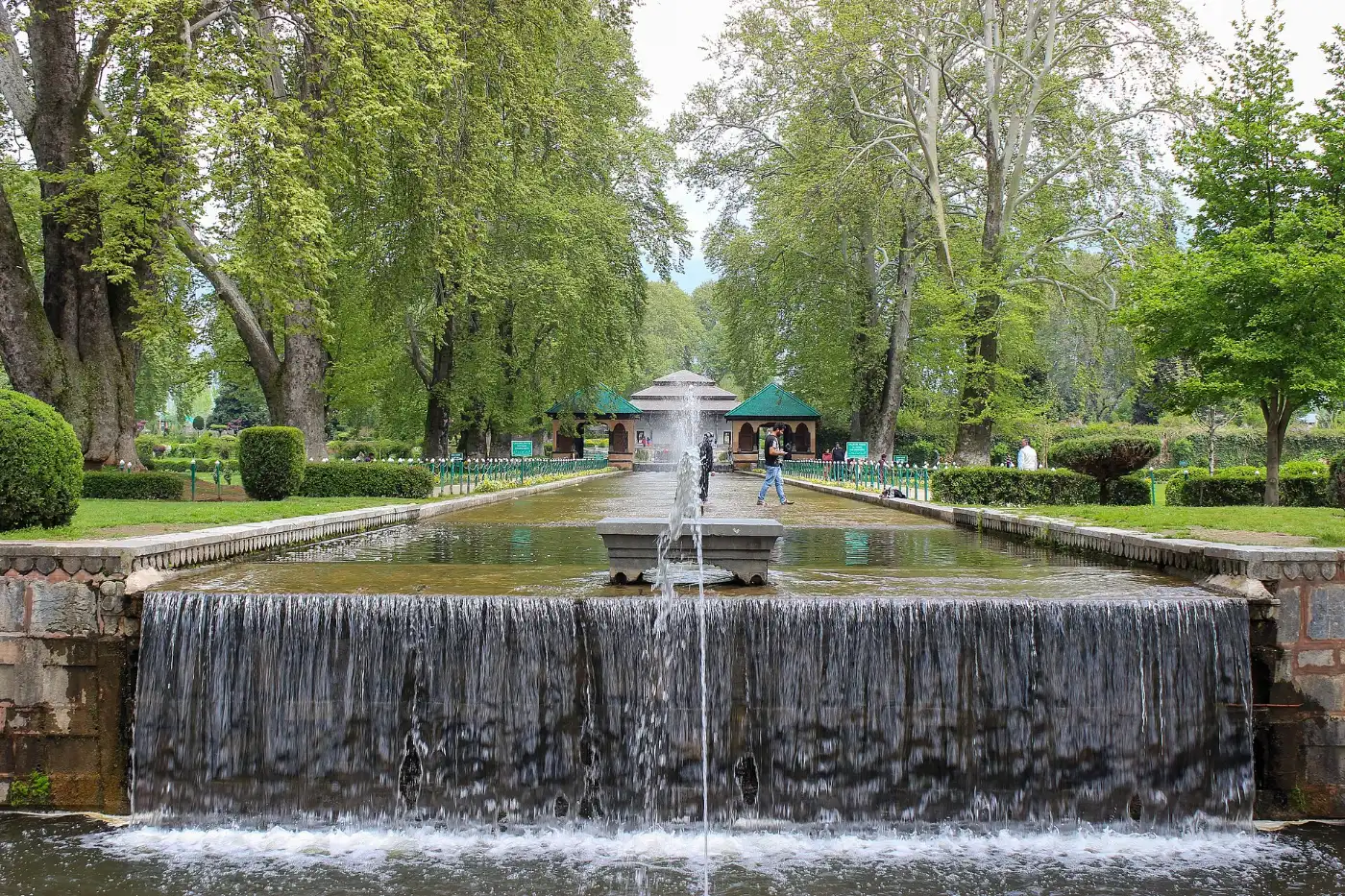
Photo Credit: Pradeepkjoshi, CC BY-SA 4.0, via Wikimedia Commons
The Three Terraces
Shalimar is a large rectangle, about 658 metres long and 258 metres wide, spread over roughly 16 hectares. It follows the Persian charbagh idea: a garden divided into four parts by water channels and raised walkways, meant to be a small picture of paradise on earth. The clever bit is that it is built on three levels, each one 4 to 5 metres higher than the one below, so the water can tumble down from the top to the bottom.
Farah Bakhsh (upper terrace): The “bestower of pleasure”. In Mughal times this level was kept for the royal women. Its square lawns, split into four by fountain channels, are usually the first thing visitors photograph.
Faiz Bakhsh (middle terrace): The “bestower of goodness” and the emperor’s own garden. It is a long, narrow strip with the biggest pool in the complex, a marble platform in the middle, and the most elaborate waterworks of any Mughal garden.
Hayat Bakhsh (lower terrace): Usually called the “bestower of life”. This is where the garden’s main entrance originally opened, and where nobles, and sometimes ordinary people, were allowed in. Old records group the middle and lower levels together as Faiz Bakhsh, but most guides today use the name Hayat Bakhsh for the lowest one.
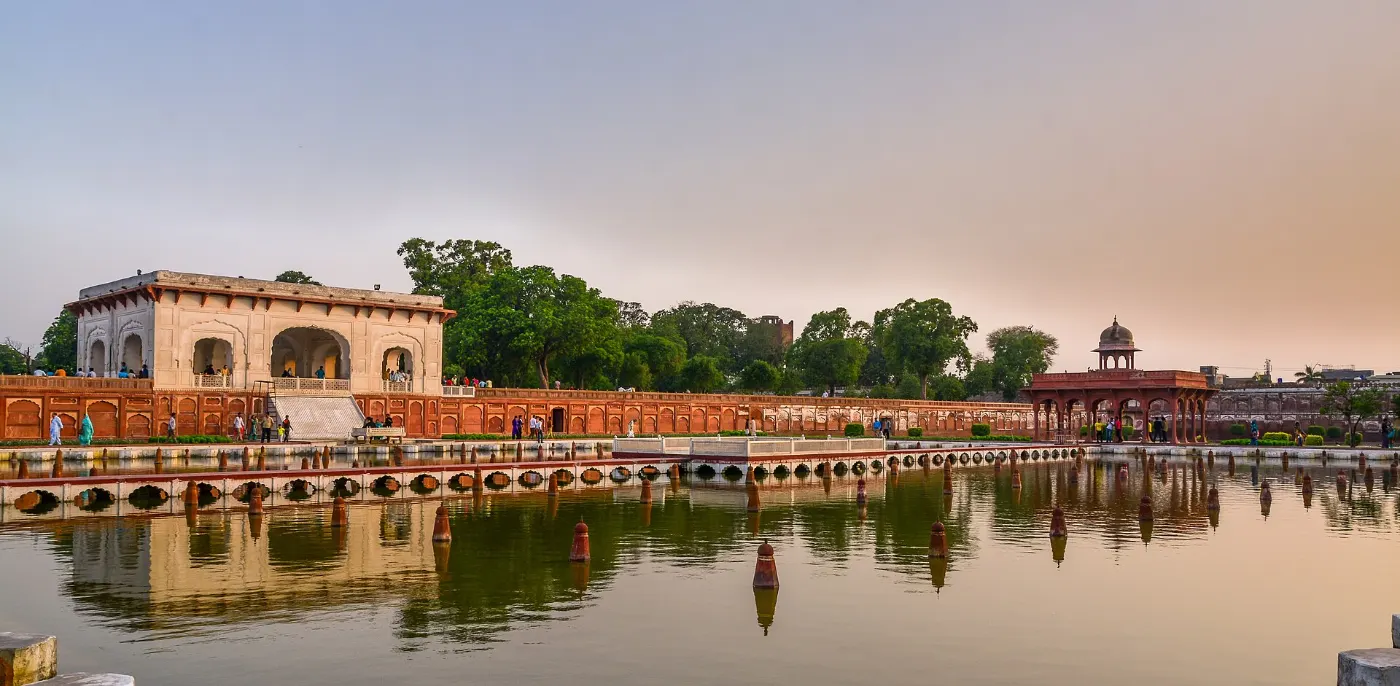
Photo Credit: Muhammad Ashar, CC BY-SA 3.0, via Wikimedia Commons
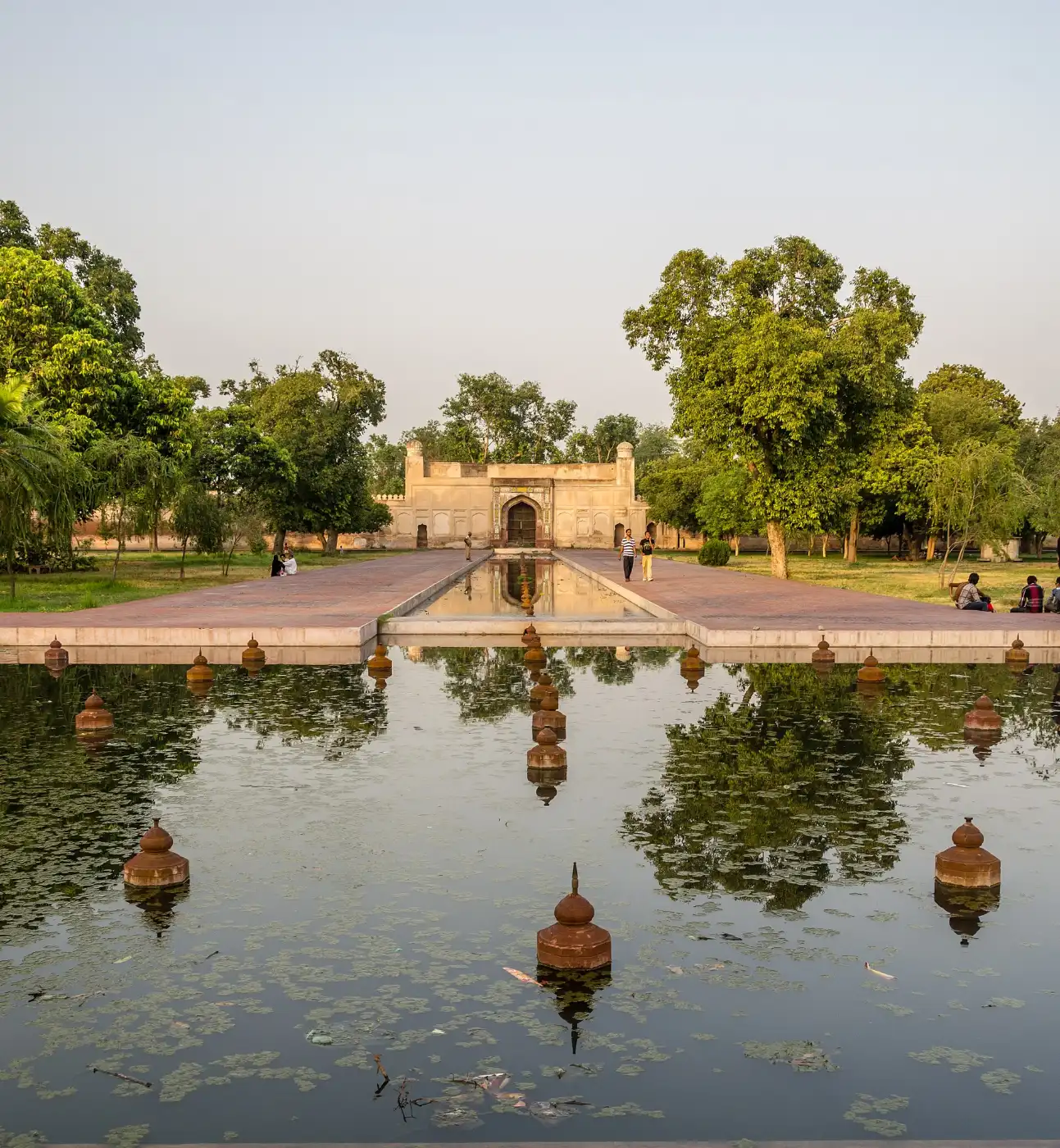
Photo Credit: Muhammad Ashar, CC BY-SA 3.0, via Wikimedia Commons
Walk the terraces from top to bottom and you will notice how the mood changes. The upper level feels private and neat, the middle one is grand and open with its huge pool, and the lower one is the liveliest, full of families sitting on the grass.
The raised brick walkways, called khayaban, were built higher than the flower beds on purpose. They give you a better view of the garden, exactly as they did for the Mughal court.
Fountains, Cascades and the Sawan Bhadon
Count the fountains if you have the patience. There are around 410 of them spread across the three terraces, along with five water cascades. On a June afternoon, when Lahore crosses 45 degrees, the water, the shade and the big old trees make the garden feel noticeably cooler than the road outside. That was the whole point.
Look for the Sawan Bhadon pavilions on the middle terrace. Sawan and Bhadon are the two monsoon months, and the name suits the place, because water falls down a marble wall here like rain. Behind the falling water are rows of small arched niches called chini khanas. At night the Mughals placed oil lamps in them, and in the day, vases of flowers, so the lights and colours glowed through a curtain of water. Stand there for a minute and you will understand why people still talk about it.
The great marble cascade between the upper and middle terraces works on the same idea. The Mughals called these sloping sheets of water chadar, because the water spreads over the carved marble like a thin sheet of cloth.
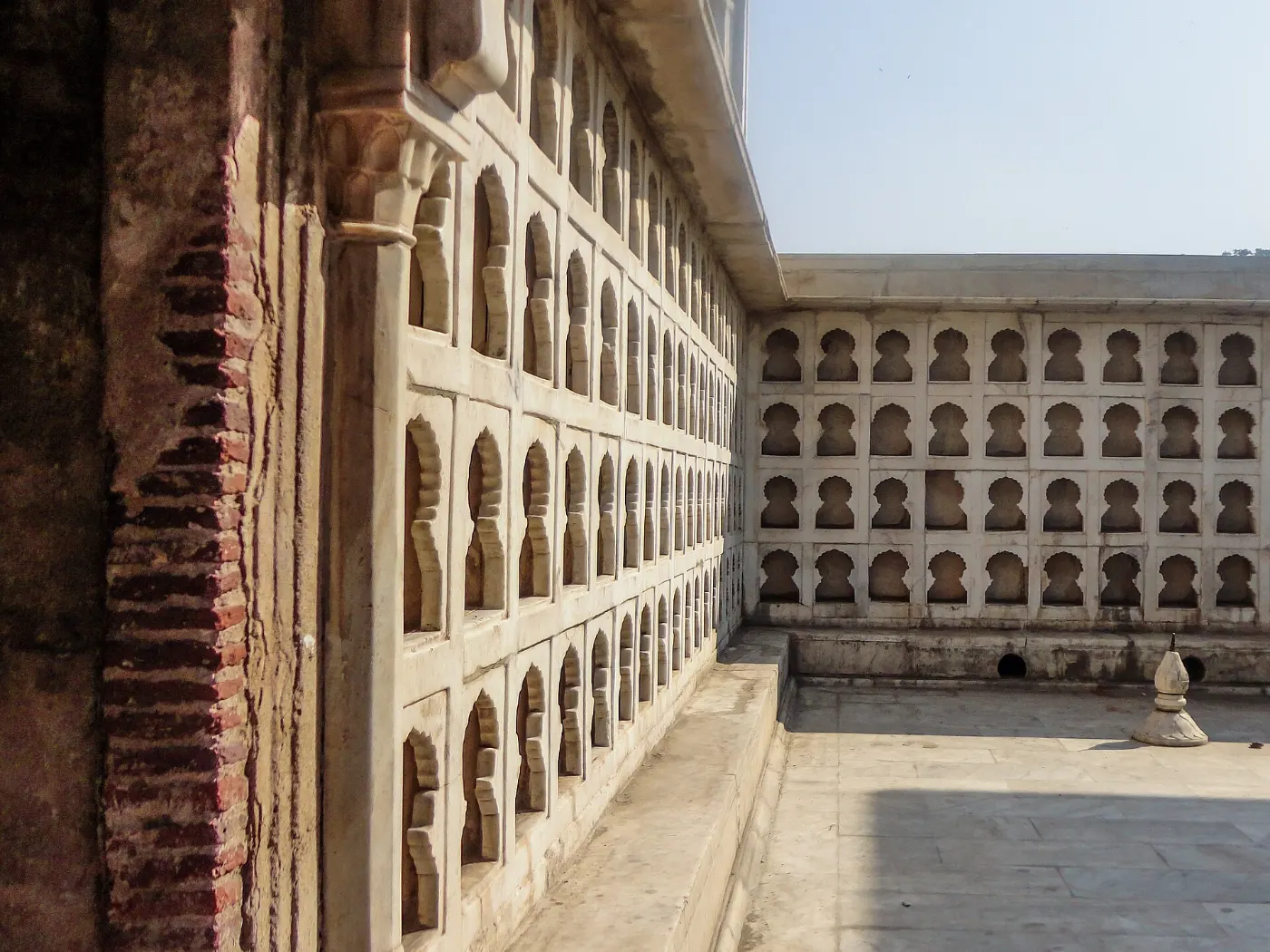
Photo Credit: AnoshNadeemButt, CC BY-SA 4.0, via Wikimedia Commons
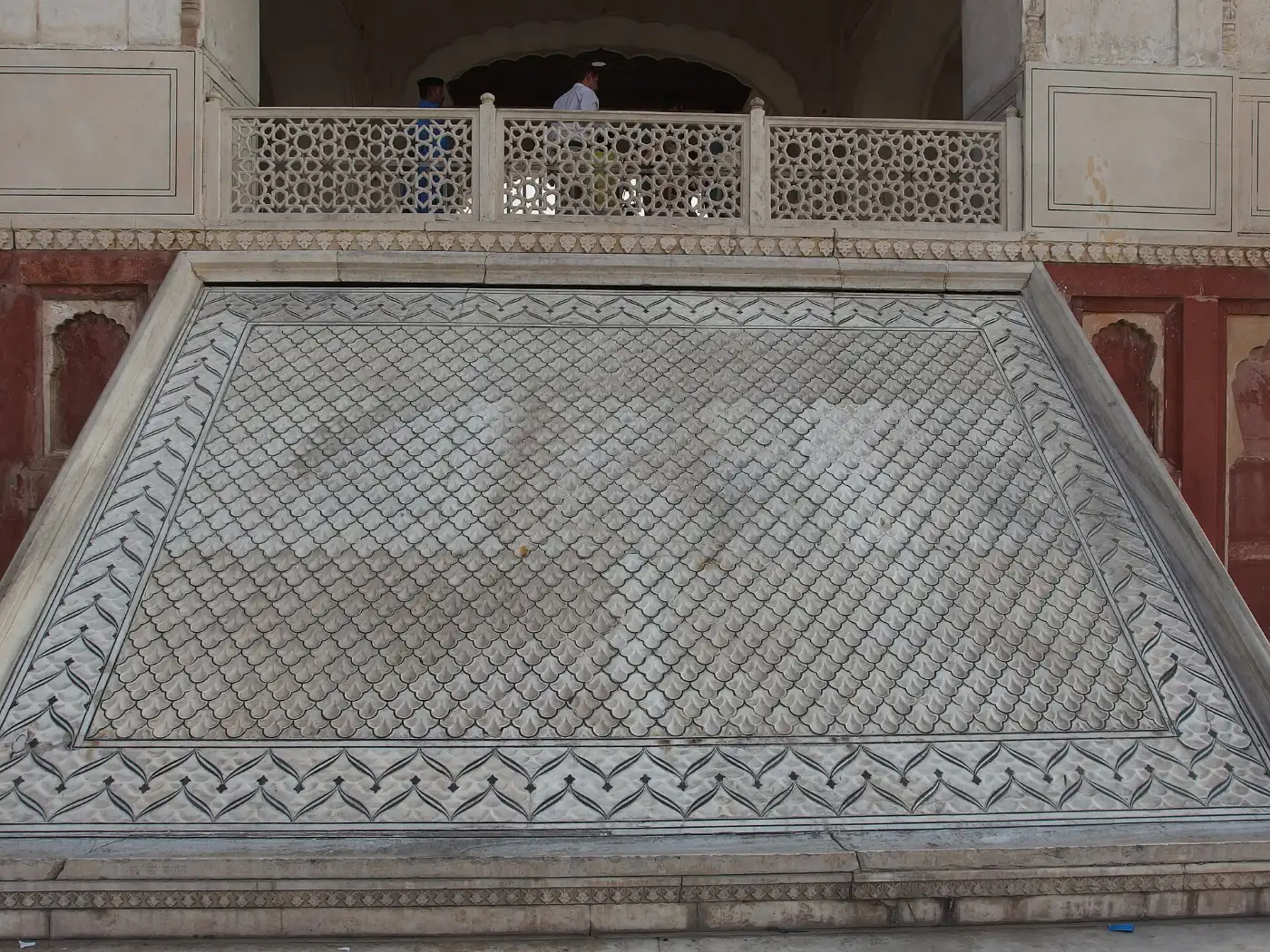
Photo Credit: Guilhem Vellut from Annecy, France, CC BY 2.0, via Wikimedia Commons
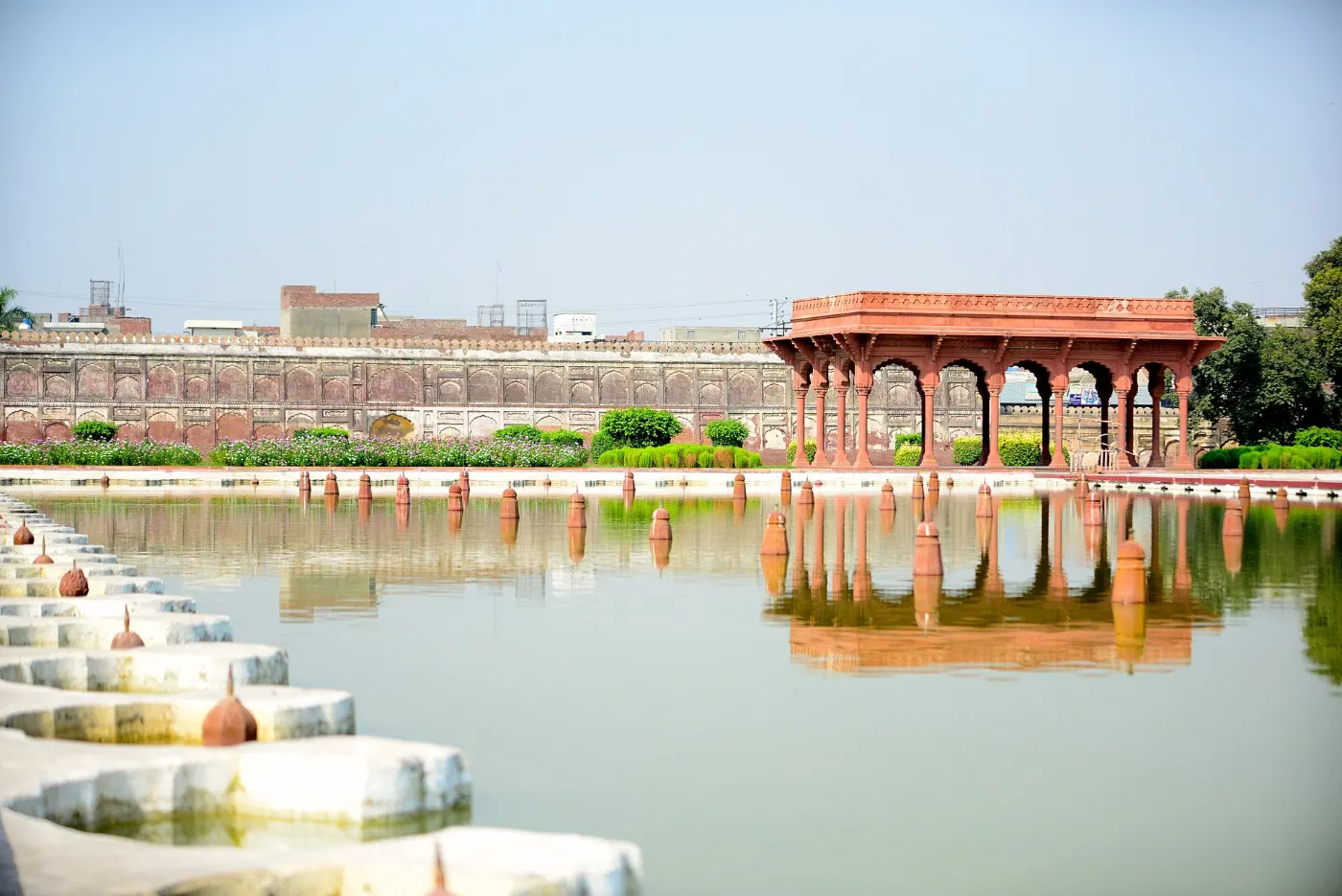
Photo Credit: Aun Muhammad, CC BY-SA 4.0, via Wikimedia Commons
Buildings Worth Finding
Shalimar is not just lawns and water. Keep an eye out for these buildings as you walk around:
- Naqar Khana: The drum house, where musicians announced the arrival of the emperor.
- Khwabgah: The emperor’s sleeping quarters. There is also a separate Khwabgah for the Begum, the empress.
- Hammam: The royal bath, a reminder that the court did not just visit for an afternoon but stayed here.
- Diwan-e-Khas-o-Aam: The hall where the emperor met both his special guests and ordinary people.
- Aramgah: A resting place for the royal family.
- Baradaris: Open summer pavilions with arched doorways on all sides, built to catch the cool breeze coming off the fountains.
- Gateways and minarets: Two gateways and small minarets at the corners of the high, decorated outer wall.
One of the garden’s old painted wooden doors is now kept in the Lahore Museum, if you want to see the kind of detail that once covered this place.
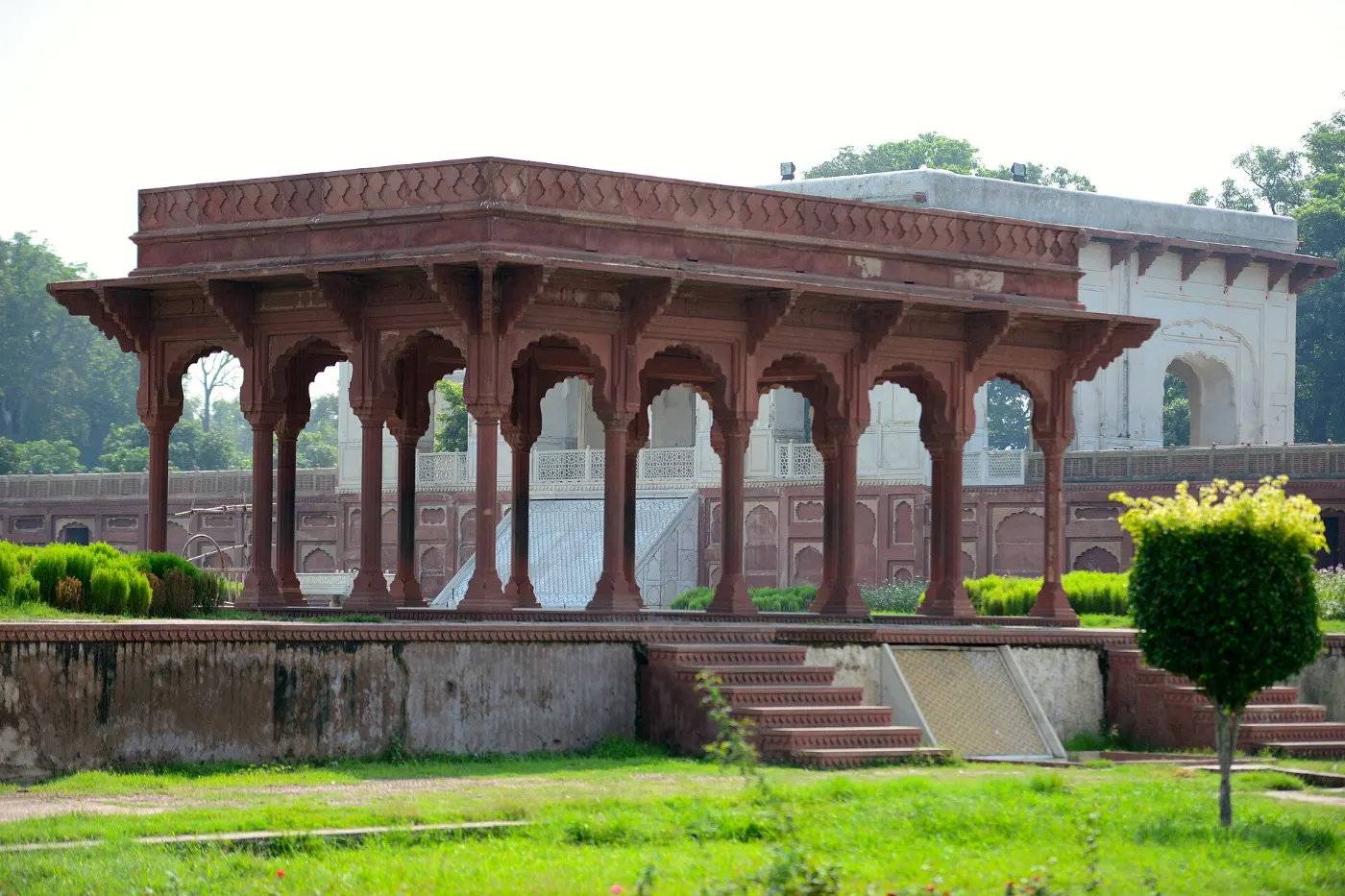
Photo Credit: Aun Muhammad, CC BY-SA 4.0, via Wikimedia Commons
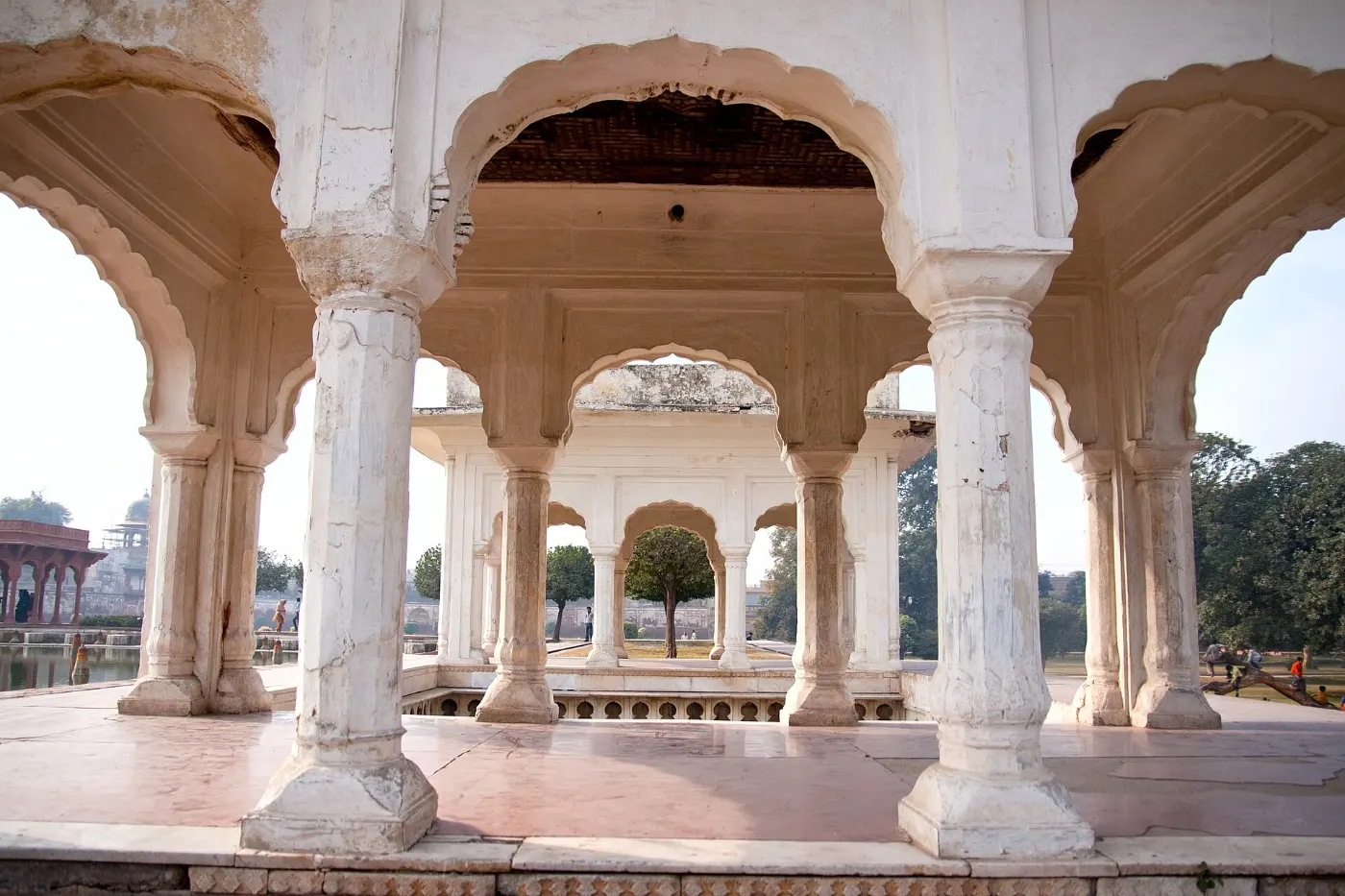
Photo Credit: Mustafa, CC BY-SA 3.0, via Wikimedia Commons
Chandni Raatain: Shalimar by Night
Here is something new. The Walled City of Lahore Authority now runs an evening experience called Chandni Raatain (moonlit nights) at Shalimar Gardens. It takes place on Saturdays from around 7 PM to 9:30 PM, and the ticket is Rs 2,500 per person.
You walk along candlelit paths, step inside the royal Khwabgahs on the upper terrace, see the Sawan Bhadon pavilions and the throne platform on the middle terrace, and enjoy live music, a ghazal session, classical dance and some theatrical storytelling about the Mughal court. Places are limited, so book online through WCLA before you go. If you have ever wondered how this garden looked to Shah Jahan’s guests after sunset, this is the closest you will get.
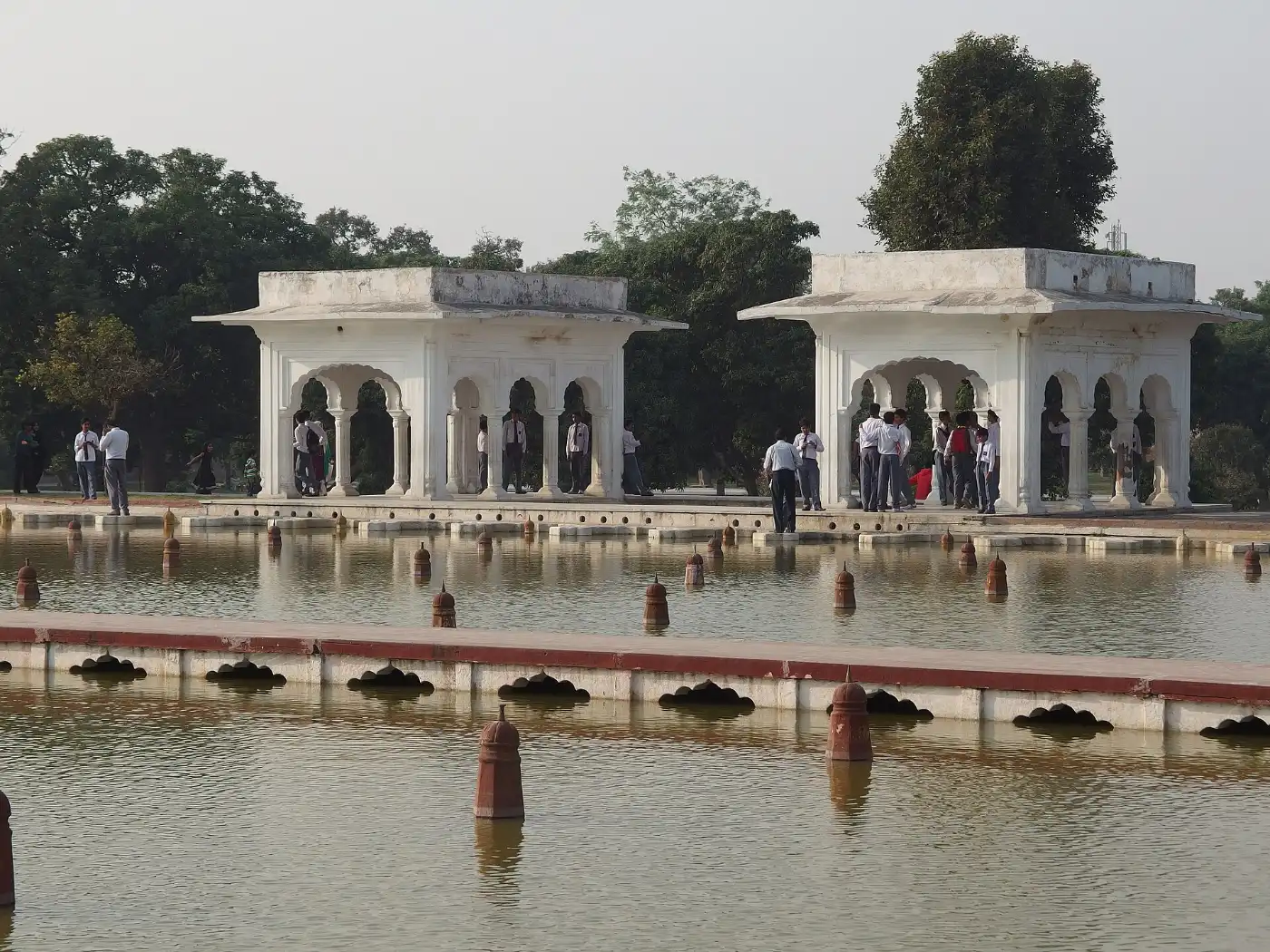
Photo Credit: Guilhem Vellut from Annecy, France, CC BY 2.0, via Wikimedia Commons
Visitor Information
- Location: GT Road, Baghbanpura, Lahore, about 5 km east of Delhi Gate of the Walled City.
- Timings: Open every day, roughly 8 AM to 6 PM. Hours can be shorter in winter, so try to arrive before 4 PM.
- Entry fee: Pakistani visitors pay a small fee at the gate, and foreigners pay a higher rate. Rates change from time to time, so check WCLA’s official pages before you go. Night events like Chandni Raatain have their own tickets.
- Time needed: 1.5 to 2 hours to see all three terraces without rushing.
- Best time to visit: October to March. Weekday mornings are the quietest. Sundays and Eid holidays get very crowded.
- Families: Very family friendly, with wide paths and plenty of open space for kids. There are steps between the terraces, so elderly visitors and wheelchair users may need some help.
- Photography: Phone and personal photos are fine. Professional shoots, such as pre-wedding or commercial shoots, need permission from WCLA.
- Parking: Paid parking is available near the main gate.
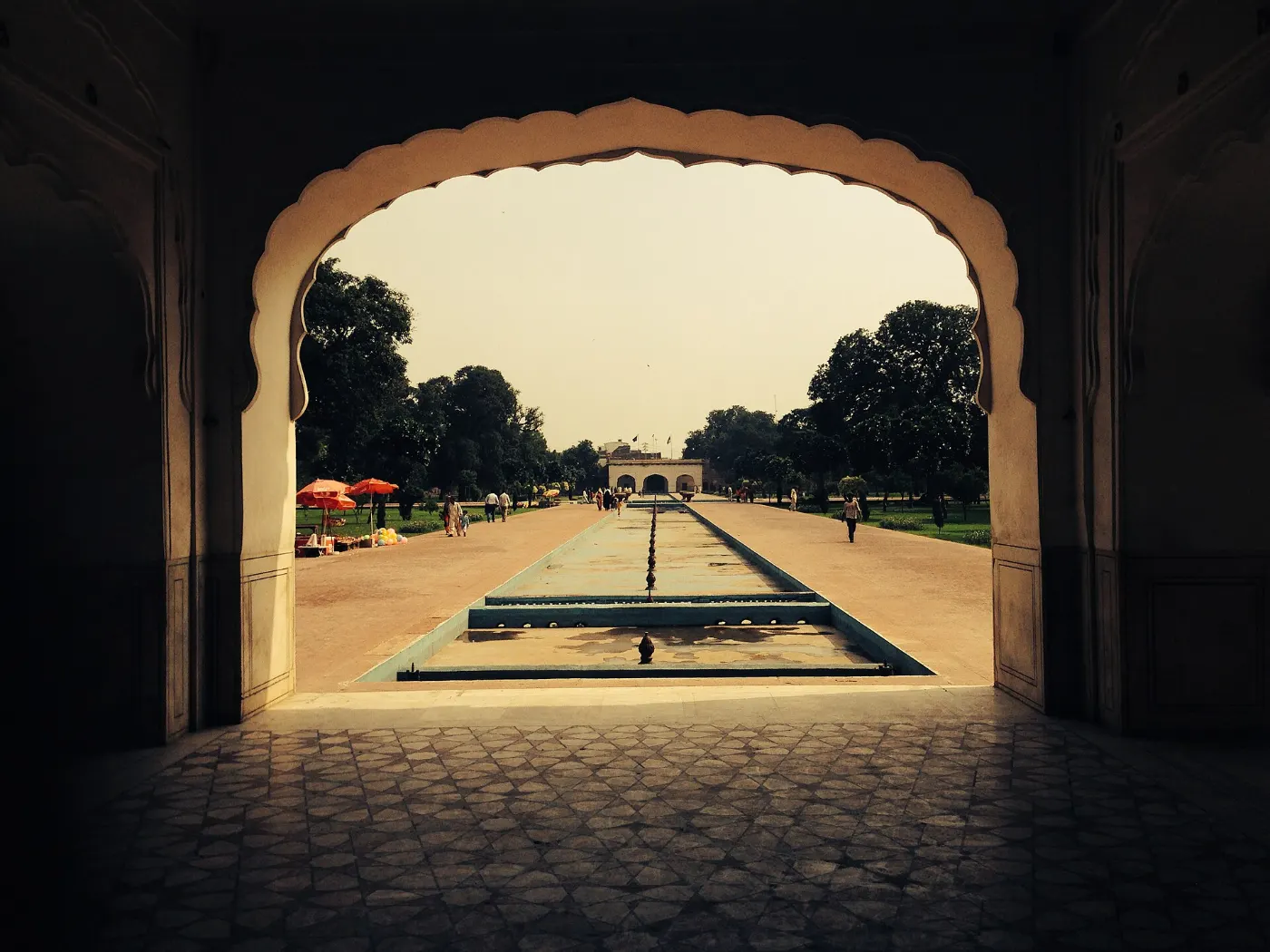
Photo Credit: C++and html, CC BY-SA 3.0, via Wikimedia Commons
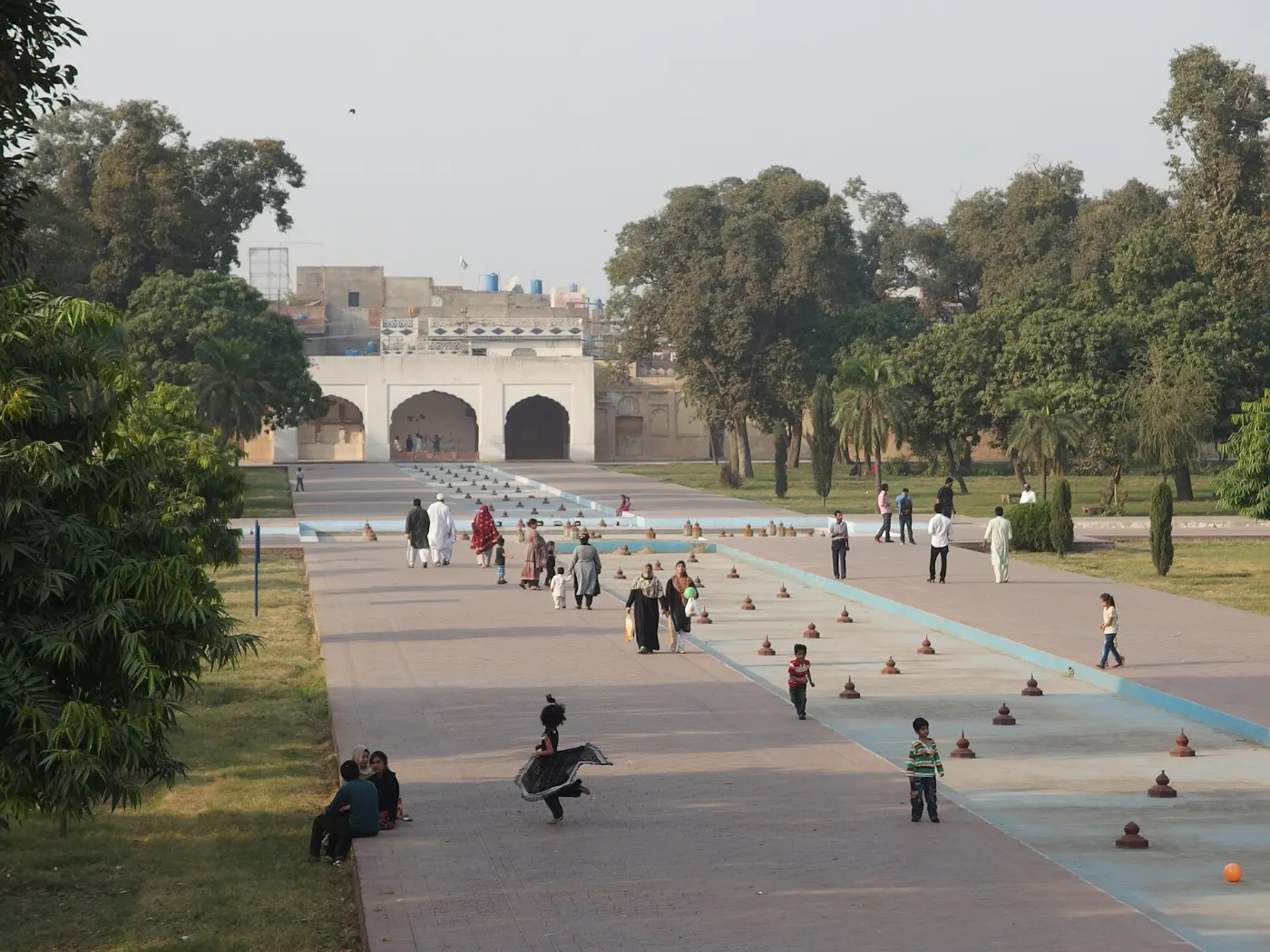
Photo Credit: Guilhem Vellut from Annecy, France, CC BY 2.0, via Wikimedia Commons
How to Get to Shalimar Gardens
By Orange Line Metro: This is the easiest way. Get off at Shalamar Garden station and the garden is right in front of you. The line runs straight along GT Road, so from Anarkali, Lakshmi Chowk or the Railway Station it is a short, cheap and air-conditioned ride. Fun fact: near the garden the track bends away from the middle of the road to protect its old trees.
By car, rickshaw or ride-hailing: Head east on GT Road towards Baghbanpura. From the Walled City it takes about 20 to 30 minutes depending on traffic. Every Careem, inDrive or Yango driver knows Shalimar Bagh.
Map: Open Shalimar Gardens in Google Maps for live directions from wherever you are in Lahore.
Places to See Nearby
- Shrine of Madho Lal Hussain: Right next door in Baghbanpura. The Mela Chiraghan, the festival of lights for the Sufi poet Shah Hussain, is now held here every spring.
- Gulabi Bagh Gateway and Tomb of Dai Anga: A short drive west on GT Road, both covered in beautiful Mughal tile work.
- Buddhu ka Awa: An old Mughal tomb near UET on GT Road, easy to add on your way back.
- Lahore Fort and Badshahi Mosque: About half an hour west. Doing Shalimar in the morning and the fort in the afternoon makes a perfect Mughal day.
- Tomb of Jahangir: Across the Ravi in Shahdara, the resting place of Shah Jahan’s father.
- Data Darbar: Lahore’s most famous Sufi shrine, a nice stop on your way back from GT Road.

Photo Credit: Akhtar Hassan, CC BY-SA 4.0, via Wikimedia Commons
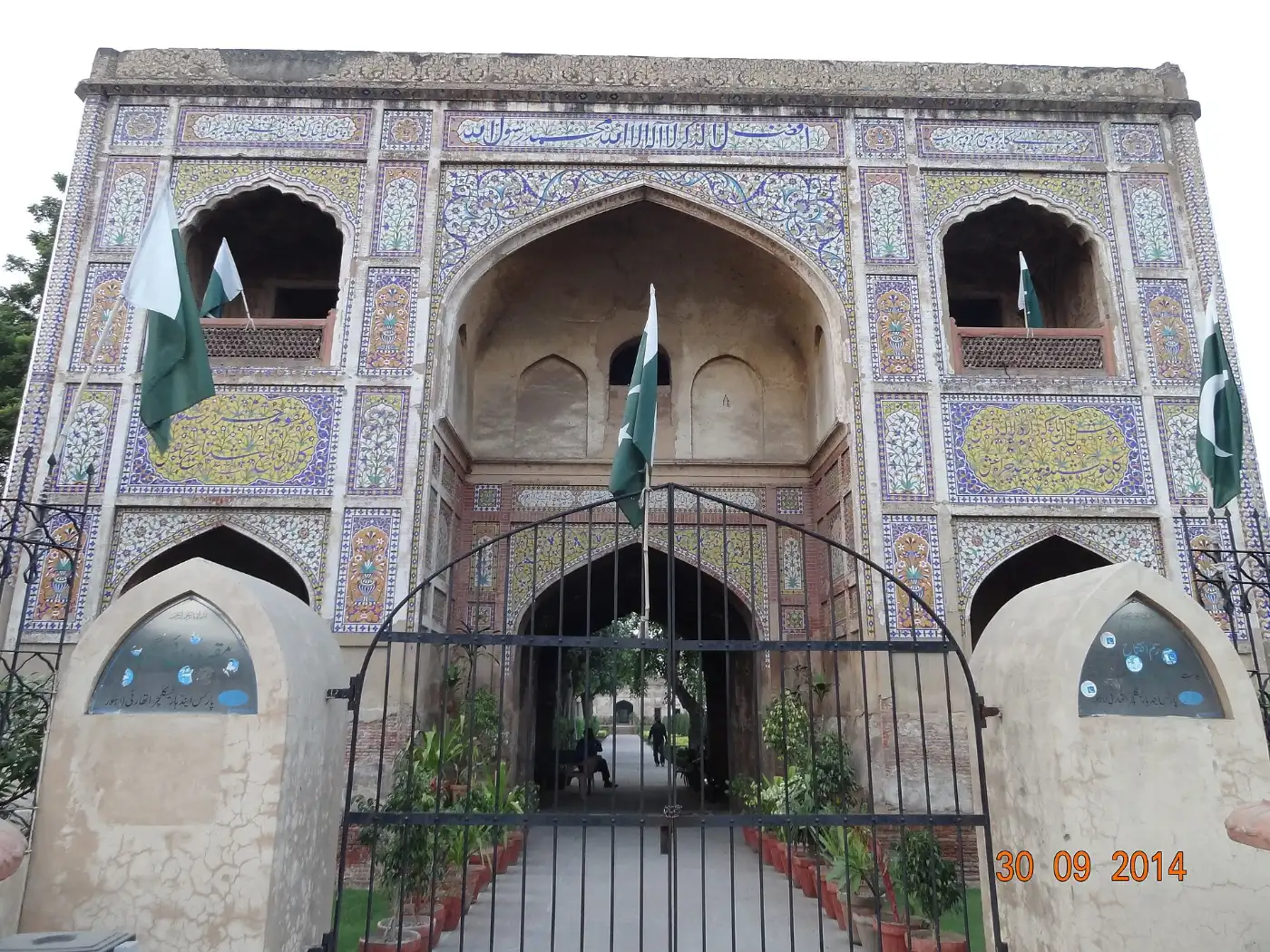
Photo Credit: Raseen Akhtar, CC BY-SA 3.0, via Wikimedia Commons
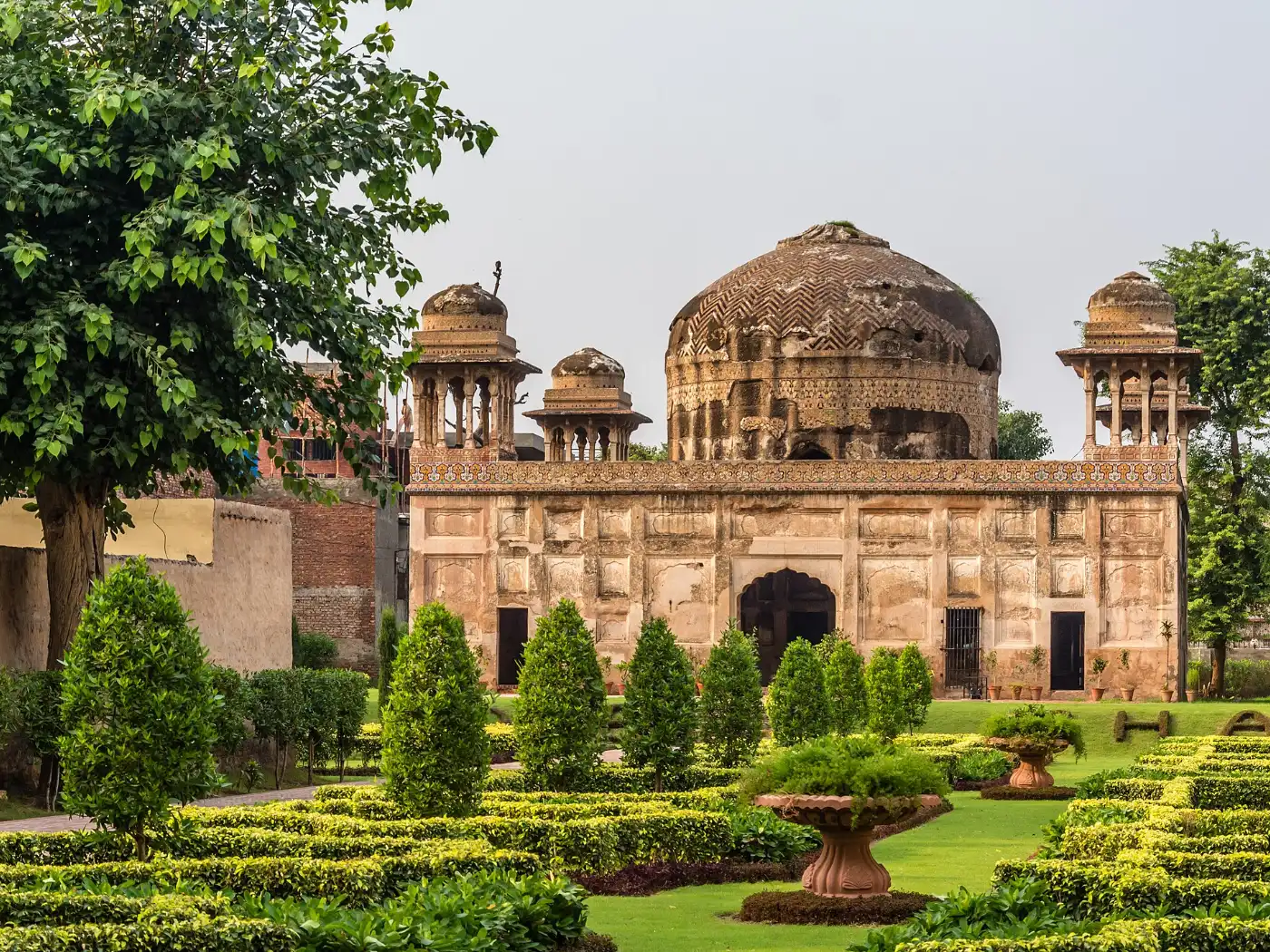
Photo Credit: Muhammad Ashar, CC BY-SA 3.0, via Wikimedia Commons
Tips for Visitors
- Go early: Morning light is softer for photos, and the garden is much quieter before noon.
- Ask about the fountains: They do not run all the time. Ask at the gate, or plan your trip around a weekend or a special event when they are more likely to be on.
- Wear comfortable shoes: You will walk a lot, and there are steps between the terraces.
- Carry water in summer: Lahore’s heat is no joke, even in the shade.
- Be kind to the monument: Do not climb on the cascades, pavilion walls or fountains, and please take your litter with you.
- Grab a chai after: The roadside dhabas on GT Road are good for chai, samosas and channay. For a proper Lahori dinner, head back towards the Walled City.
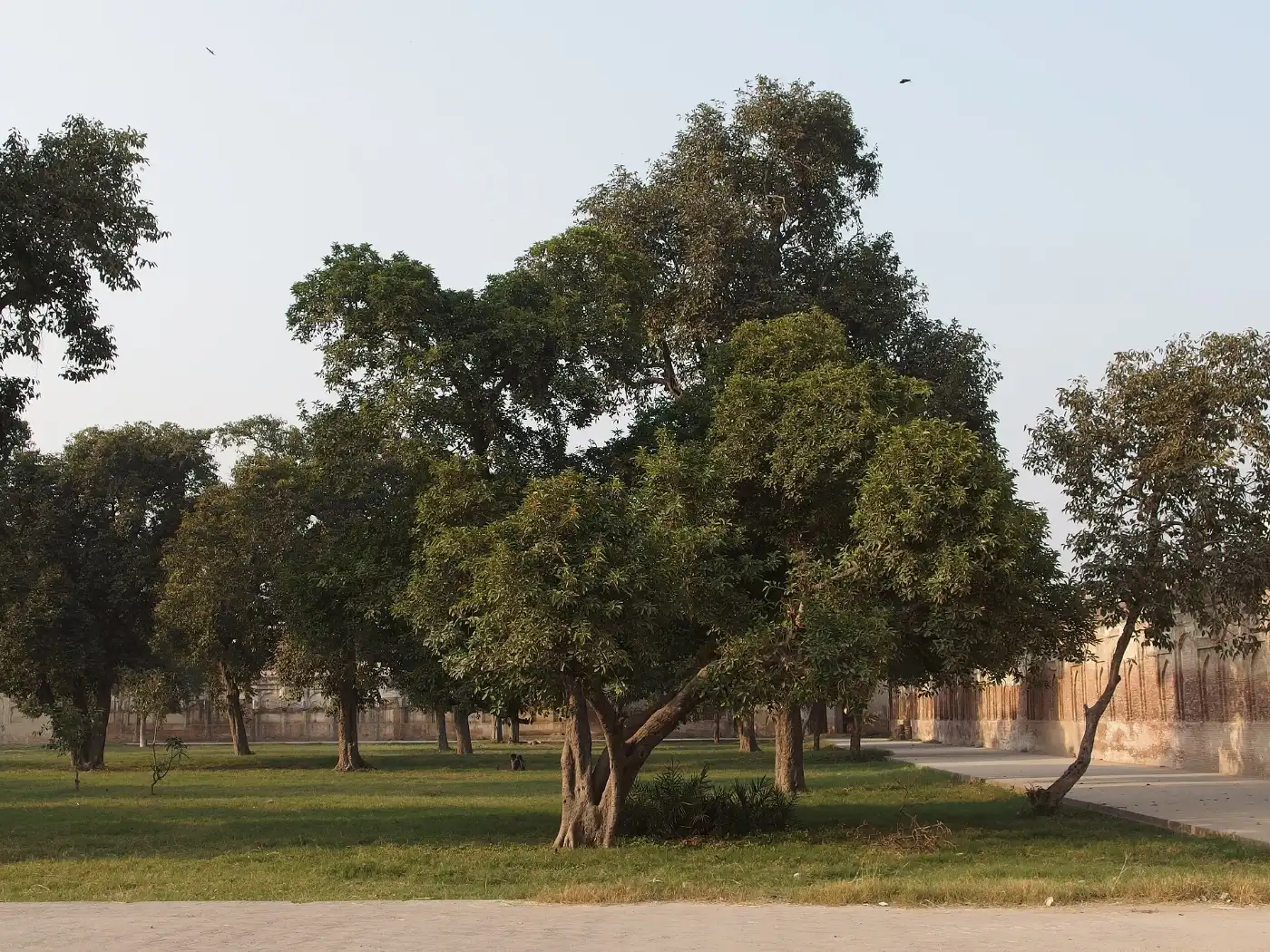
Photo Credit: Guilhem Vellut from Annecy, France, CC BY 2.0, via Wikimedia Commons
Frequently Asked Questions
Who built Shalimar Gardens in Lahore?
Mughal Emperor Shah Jahan built it between 1641 and 1642.
What are the timings of Shalimar Gardens?
It is open every day, roughly from 8 AM to 6 PM. Winter hours can be a little shorter.
Is Shalimar Gardens open on Sundays and Fridays?
Yes, it is open all week. Sundays and public holidays are the busiest days.
Which Orange Line station is closest to Shalimar Gardens?
Shalamar Garden station, right outside the garden on GT Road.
How much time do I need at Shalimar Gardens?
Plan for about 1.5 to 2 hours. Add more if you are a photographer or visiting with kids.
Can I visit Shalimar Gardens at night?
Yes, through WCLA’s Chandni Raatain evenings on Saturdays. You need to book a ticket in advance.
Final Word
Shalimar is not a place to rush through. Walk slowly, sit for a while by the big pool on Faiz Bakhsh, listen to the water, and remember that an emperor once sat in the same spot doing exactly the same thing. Add it to the top of your Lahore list, and if you can make it on a Saturday evening, try Chandni Raatain at least once.
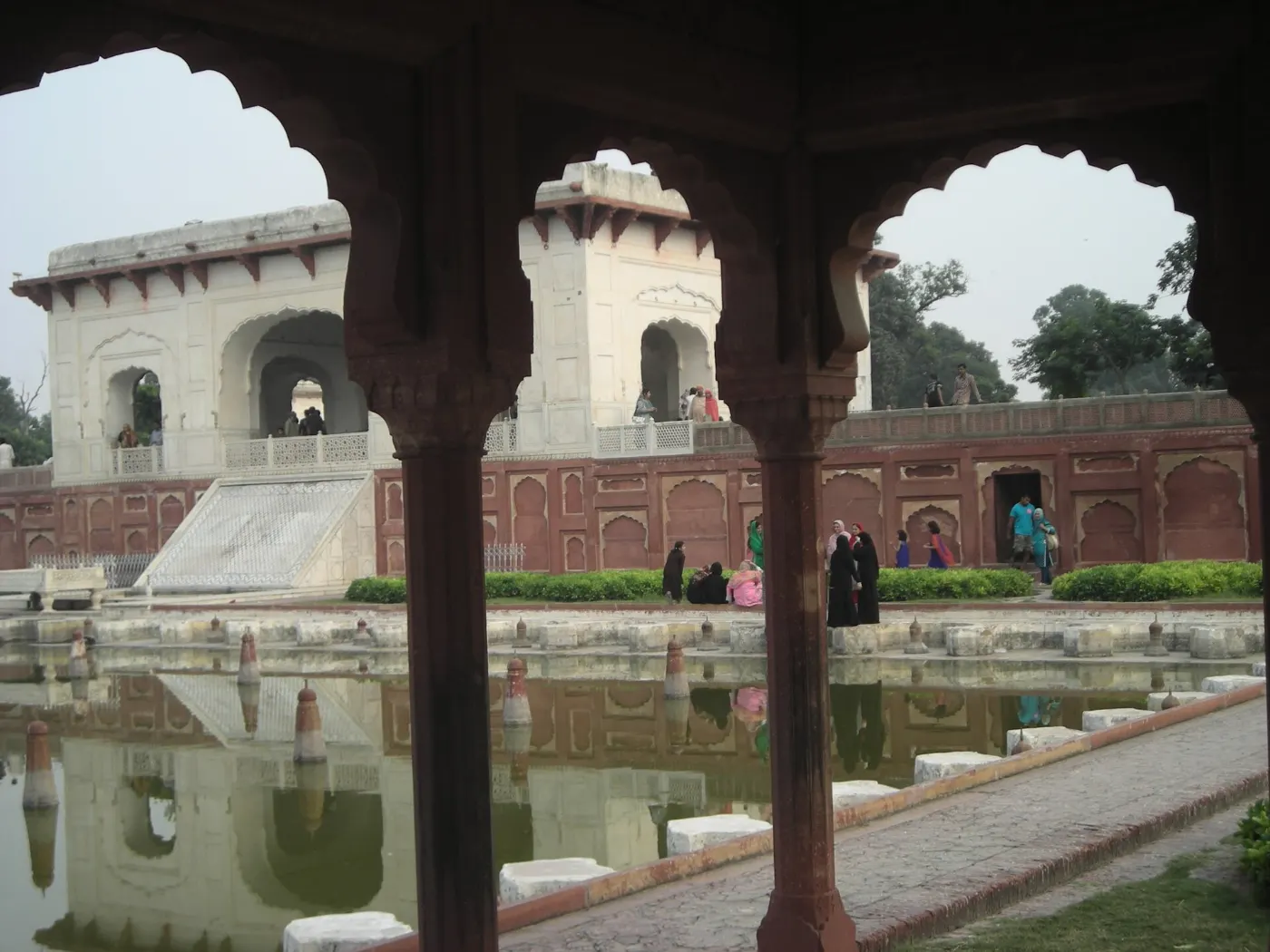
Photo Credit: Ibnazhar, CC BY-SA 4.0, via Wikimedia Commons