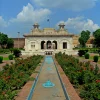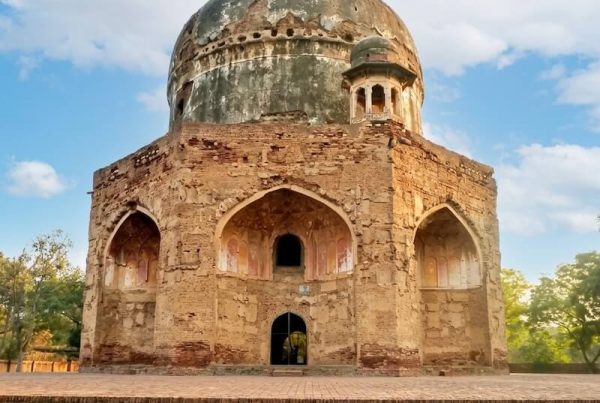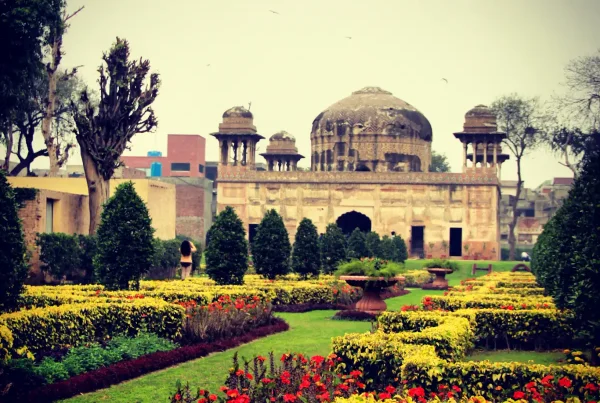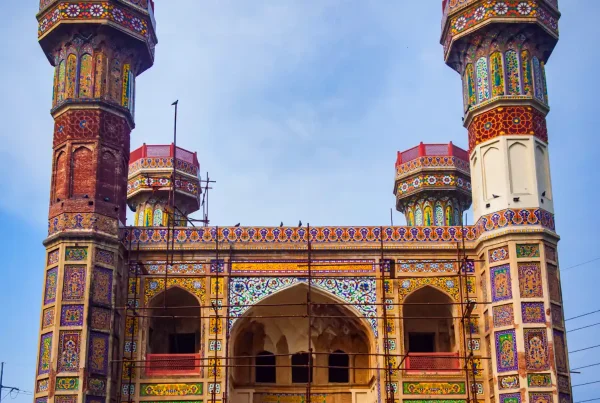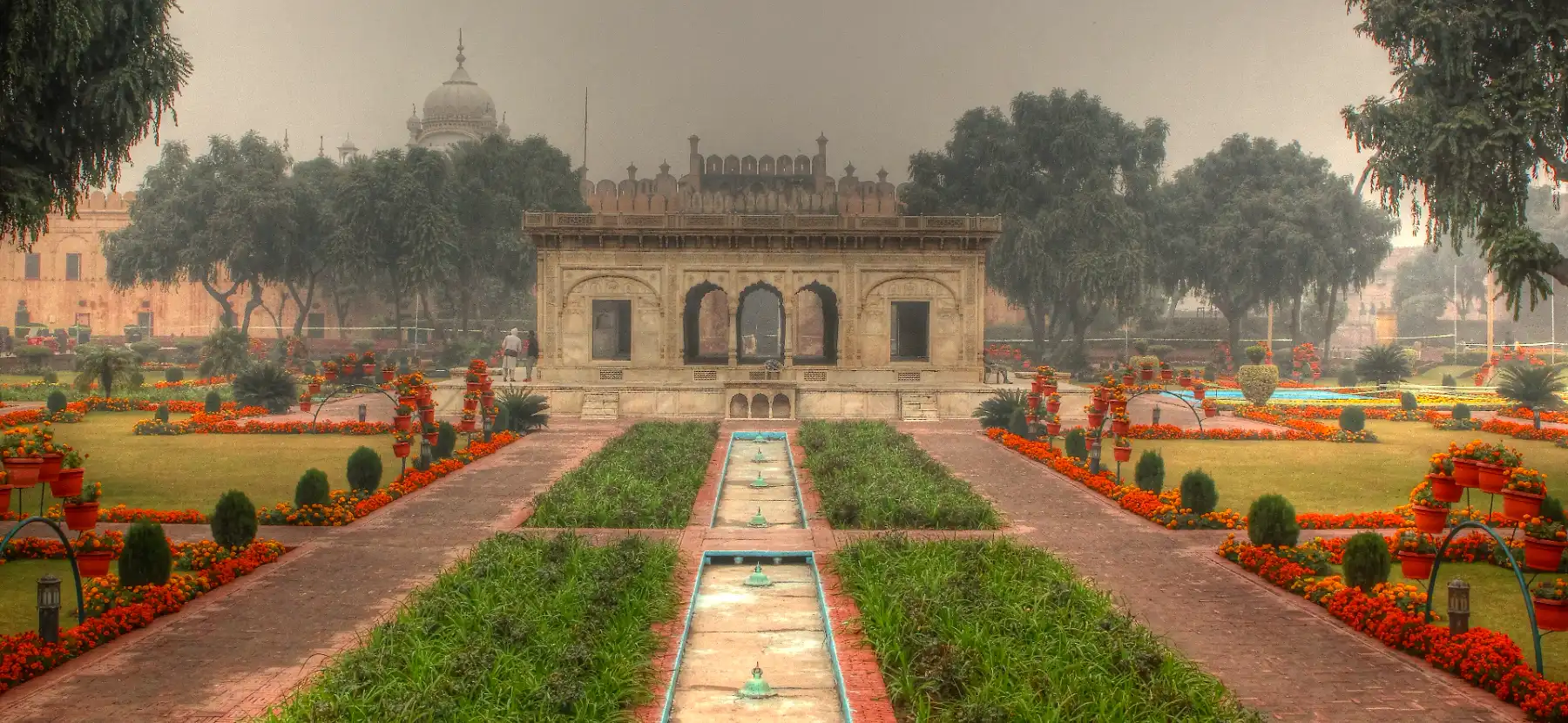
Between the giant gate of Lahore Fort and the red walls of Badshahi Masjid lies a small, peaceful garden. In the middle of it stands a white marble pavilion with graceful arches. This is Hazuri Bagh in Lahore, and its pavilion is known as the Hazuri Bagh Baradari.
Most visitors rush past it on their way to the fort or the mosque. However, this quiet garden has a fascinating story, linked to a Sikh Maharaja and the famous Koh-i-Noor diamond. In this guide, we will cover its history, what to see and how to enjoy your visit.
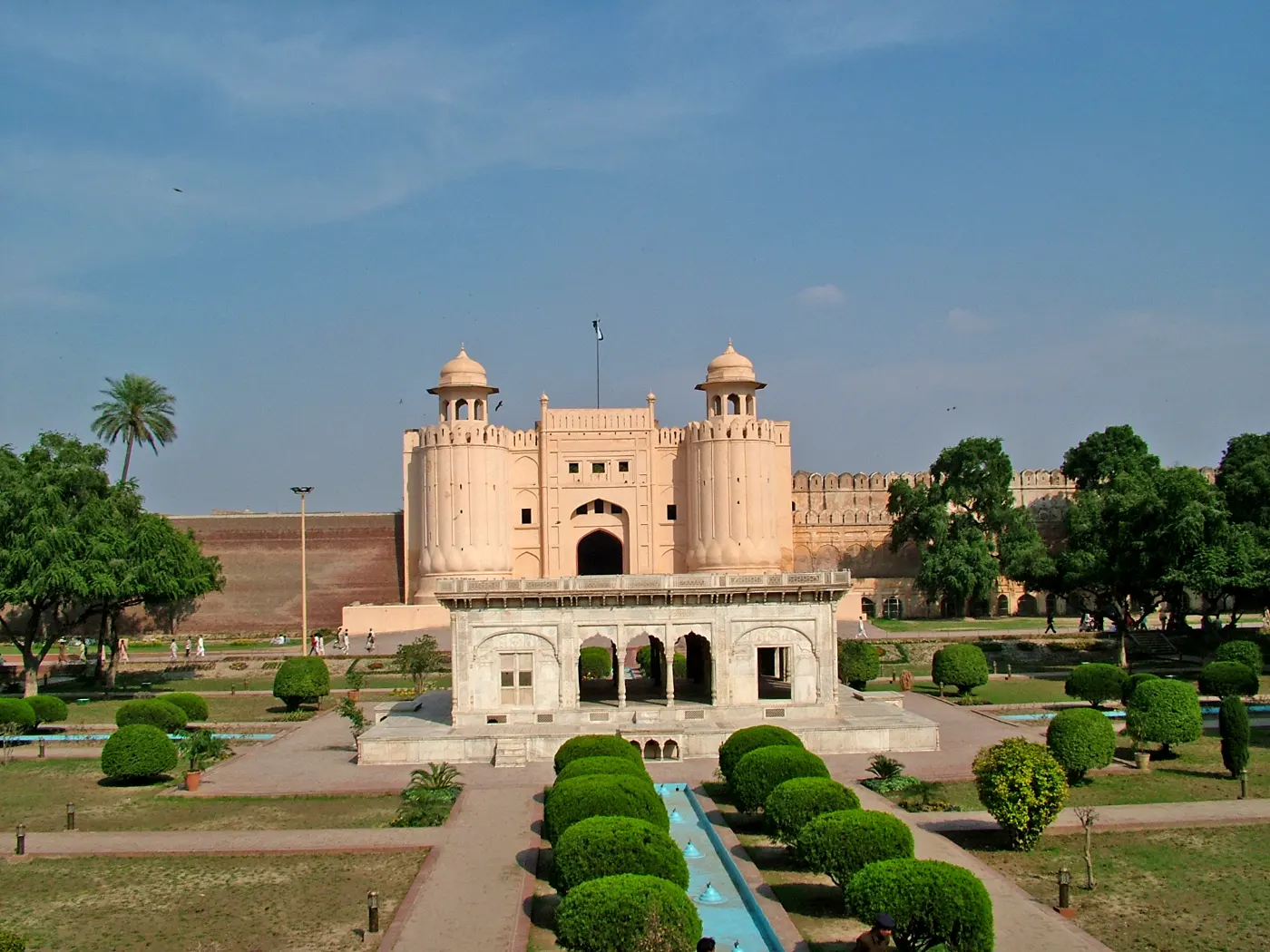
Photo Credit: Guilhem Vellut, CC BY 2.0, via Wikimedia Commons
History of Hazuri Bagh
Long before the garden, this spot was home to a Mughal caravanserai called Serai Alamgiri. Then, in the early 19th century, Maharaja Ranjit Singh turned the space into a formal garden in the Mughal style. In addition, his trusted minister, Faqir Azizuddin, supervised the work.
The name Hazuri Bagh roughly means “the garden of the royal presence”. Also, it sits in a perfect spot. To the east is the Alamgiri Gate of Lahore Fort, and to the west is Badshahi Masjid. Meanwhile, the Samadhi of Ranjit Singh lies to the north, and the Roshnai Gate to the south.
A Pavilion for the Koh-i-Noor
In 1813, Ranjit Singh took the famous Koh-i-Noor diamond from the Afghan ruler Shuja Shah Durrani. To celebrate, he built a marble pavilion in the centre of the garden. As a result, the baradari was ready by 1818.
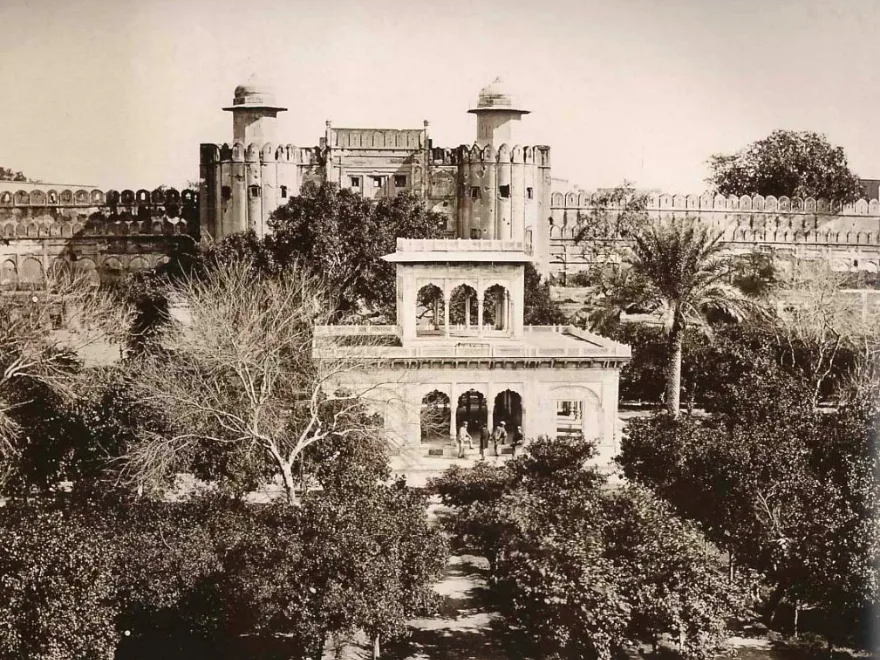
Photo Credit: Unknown photographer, Public domain, via Wikimedia Commons
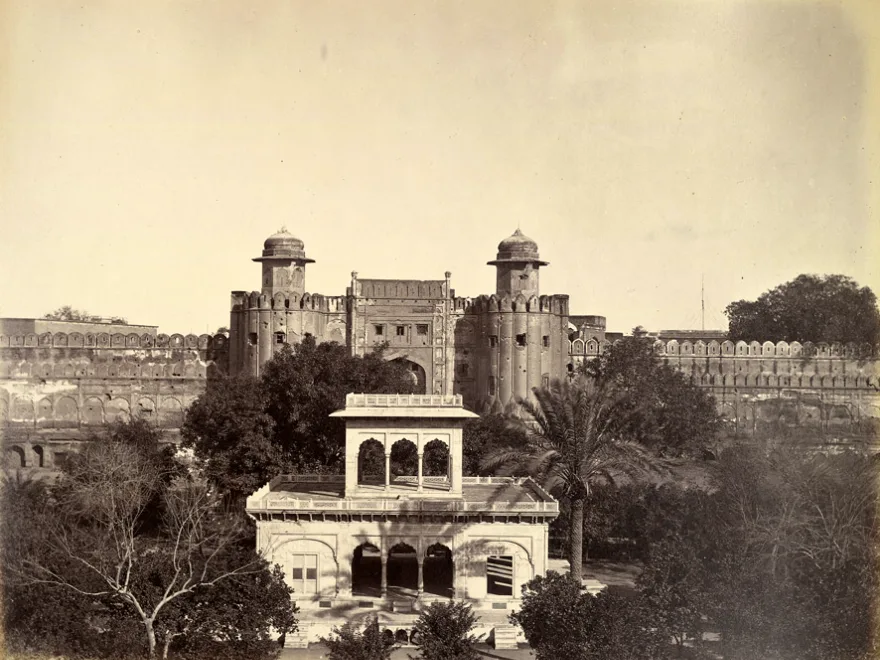
Photo Credit: Samuel Bourne, Public domain, via Wikimedia Commons
The Marble Baradari
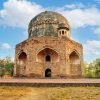
The baradari is a square pavilion made almost entirely of white marble. Interestingly, the builders took much of this marble from older Mughal tombs around Lahore. Meanwhile, Khalifa Nooruddin oversaw the work.
Inside, slender carved pillars hold up rows of delicate cusped arches. Also, the central hall once had a mirrored ceiling, and this is where Ranjit Singh held court. Moreover, below the floor there are basement chambers, which helped keep the space cool in summer.
Hazuri Bagh Lahore: Why It Matters
Although it is small, the baradari is one of the finest Sikh-era buildings in Lahore. In fact, it shows how Sikh rulers borrowed and adapted Mughal styles in their own buildings.
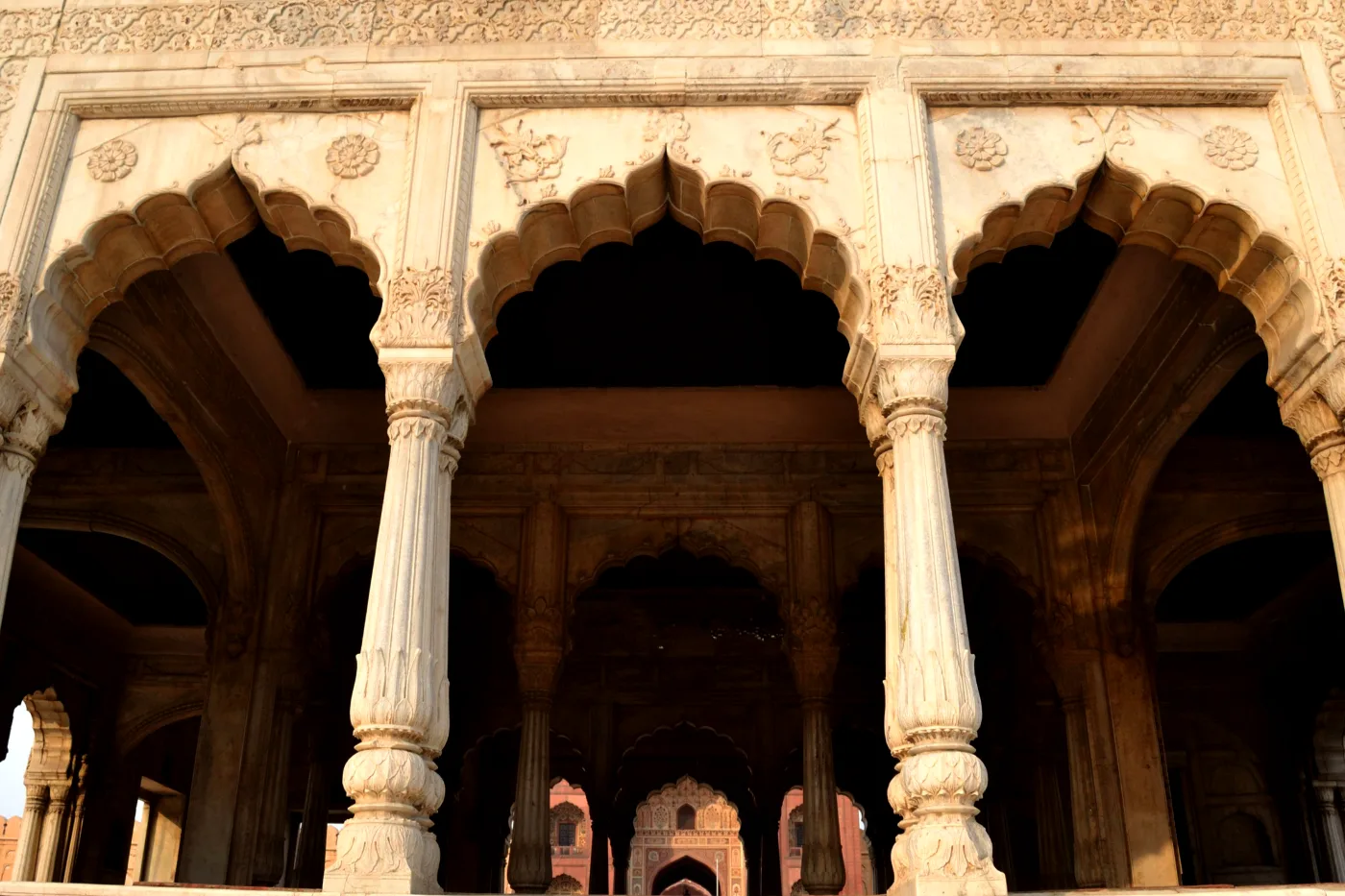
Photo Credit: Rohaan Bhatti, CC BY-SA 3.0, via Wikimedia Commons
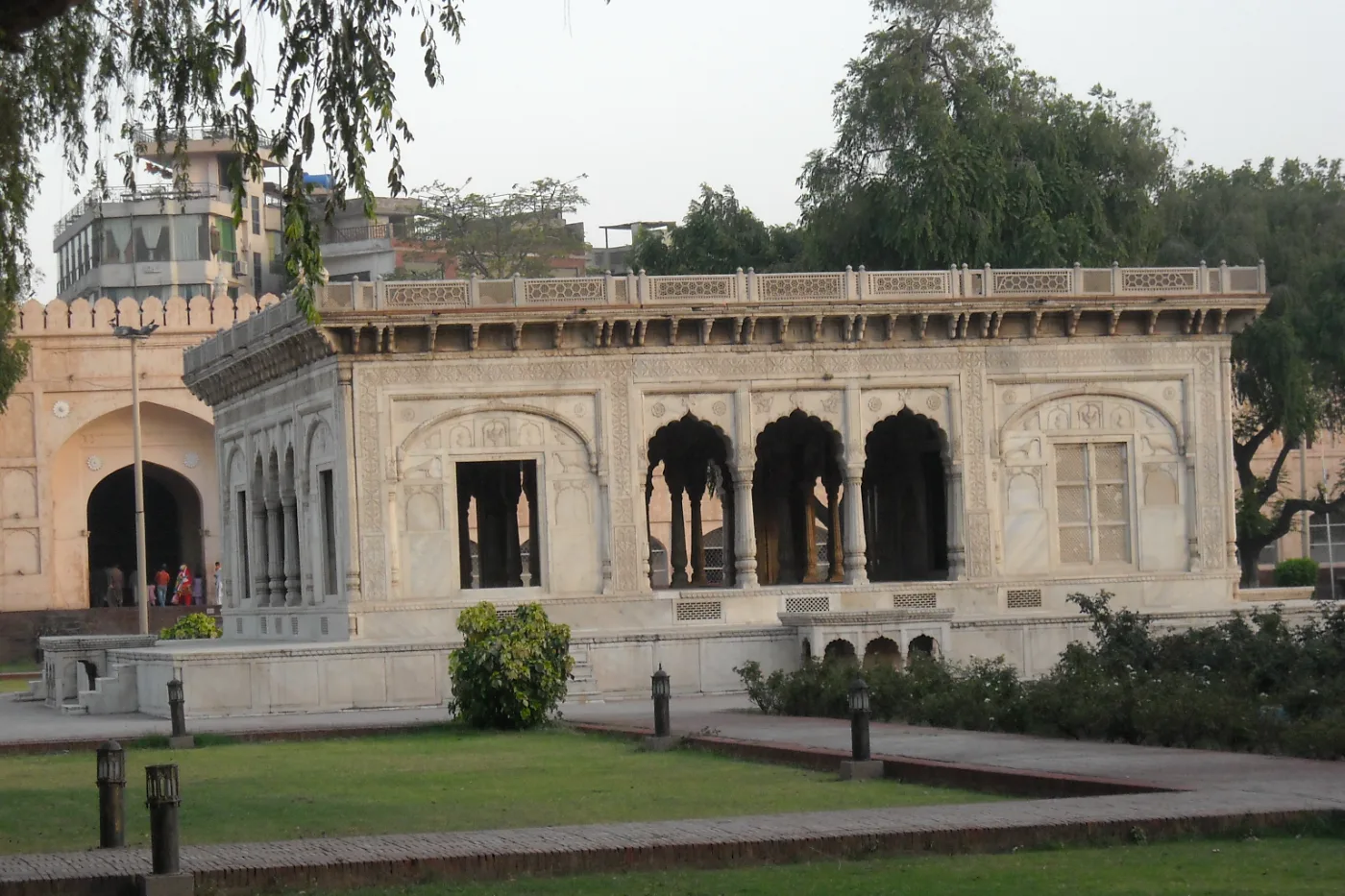
Photo Credit: 786.arslan.nawaz, CC BY-SA 3.0, via Wikimedia Commons
The Lost Upper Storey
However, if you compare old photos with the building today, you will notice something missing. Originally, the baradari had an upper storey. Then, in July 1932, that top storey collapsed, and some accounts blame a lightning strike. Sadly, it was never rebuilt.
So, the pavilion you see now is only the lower part of the original. Even so, it is still beautiful, especially when the white marble glows in the evening light.
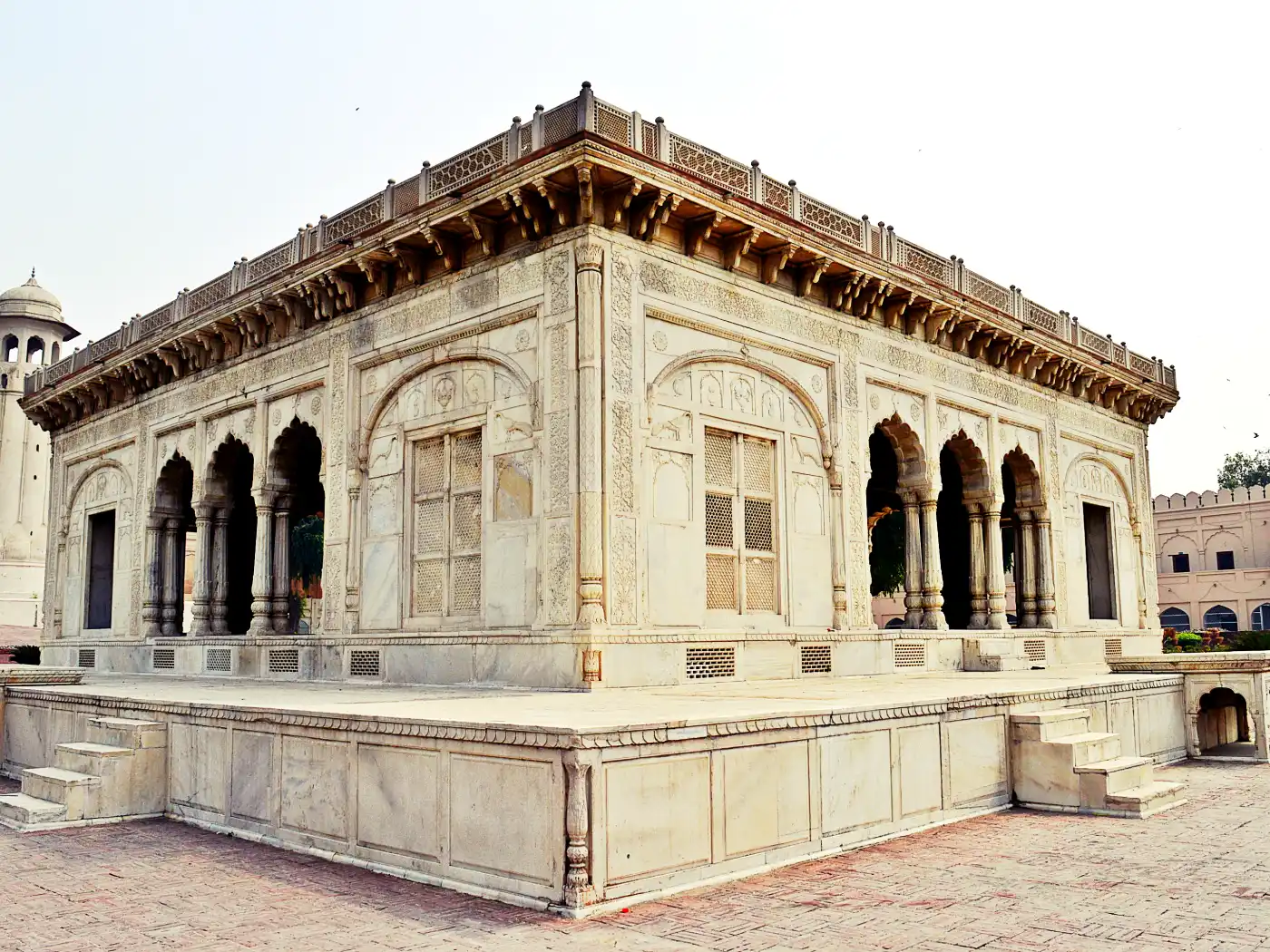
Photo Credit: Hassantahir101, CC BY-SA 3.0, via Wikimedia Commons
The Garden Today
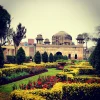
The garden follows the classic Mughal char bagh layout. Straight walkways divide it into neat sections, and a long water channel with small fountains leads towards the baradari. Also, flower beds and old shady trees fill the lawns.
Later, during the British period, workers cleaned up the garden and laid it out again according to its original plan. Today, Hazuri Bagh is well kept, and it makes a calm break between the busy fort and the mosque.
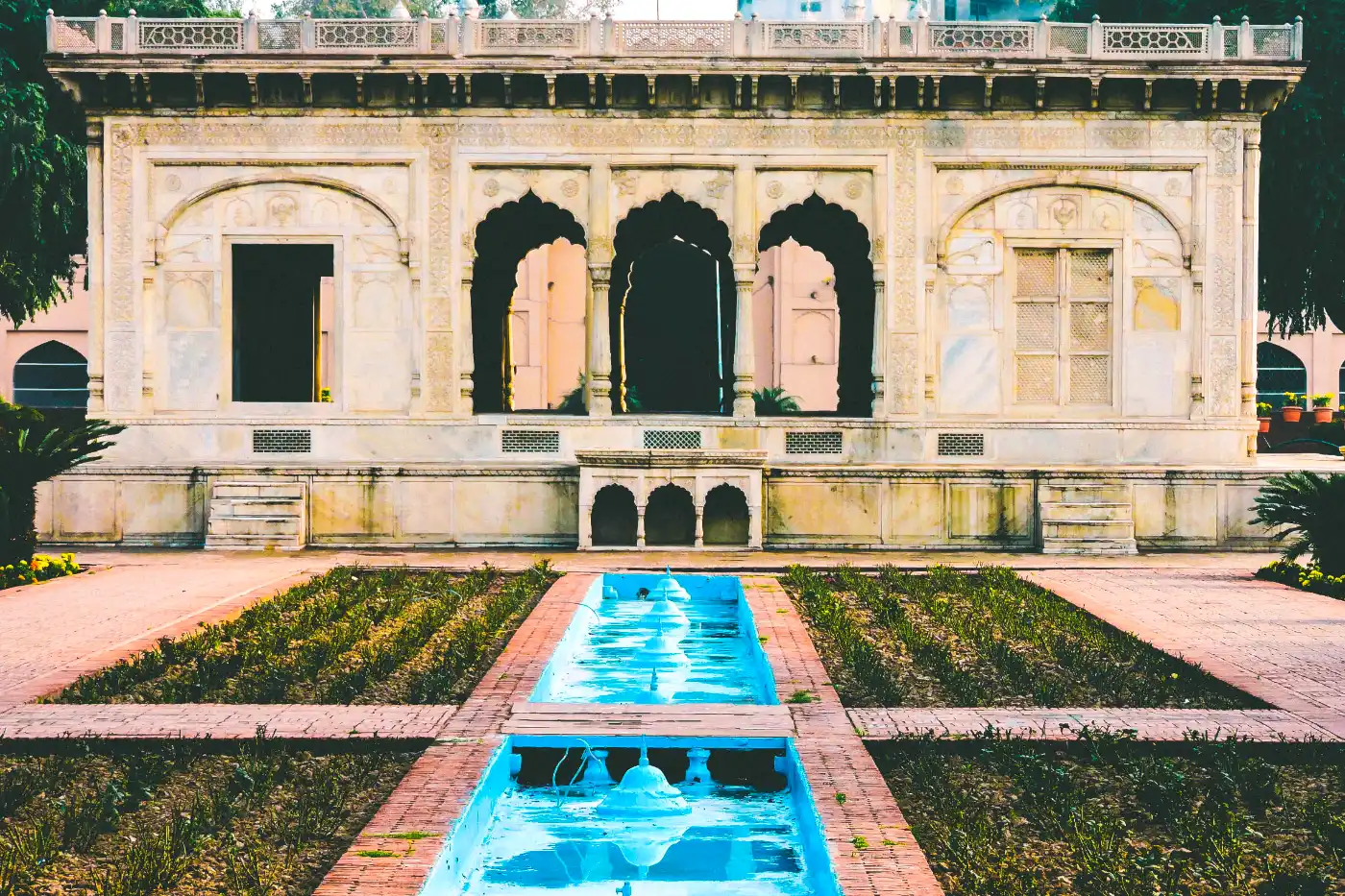
Photo Credit: iSanaUsman, CC BY-SA 4.0, via Wikimedia Commons
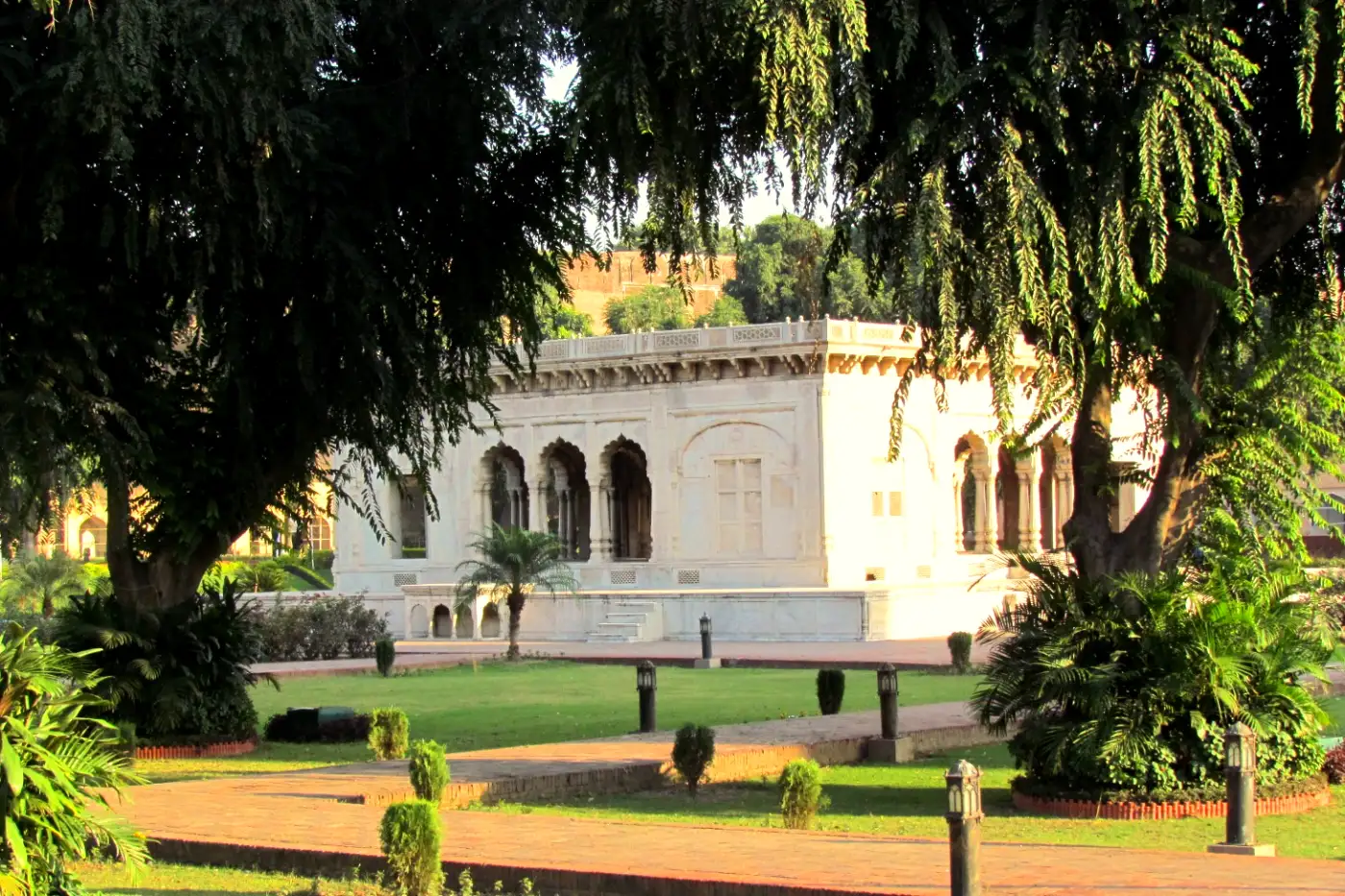
Photo Credit: Bilalhassan88, CC BY-SA 3.0, via Wikimedia Commons
Things to Do
- Sit by the baradari: Rest on the marble steps and look up at the arches.
- Take photos: For example, frame the baradari with the Alamgiri Gate or the Badshahi Masjid behind it.
- Spot peacocks: Peacocks are sometimes seen strolling on the lawns.
- Listen to storytellers: On some Sunday afternoons, local storytellers have been known to recite Punjabi tales like Heer Ranjha here.
- Visit at sunset: In addition, the golden light on the marble is lovely in the evening.
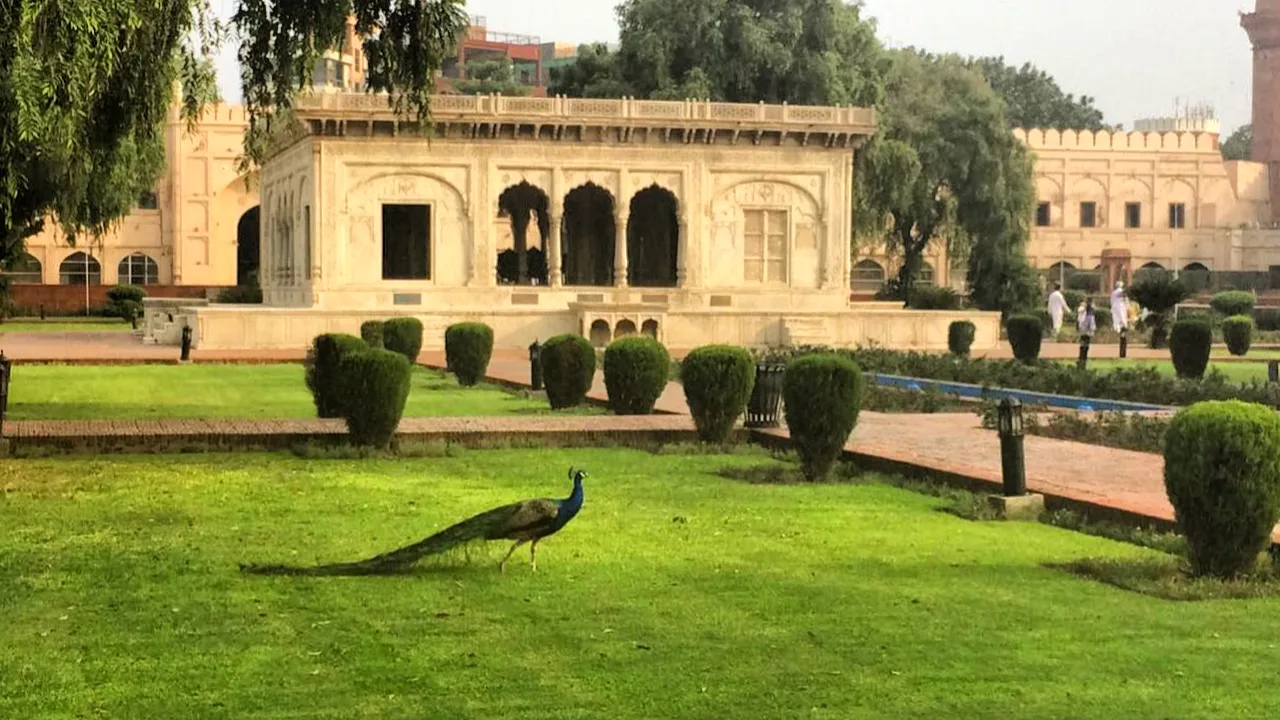
Photo Credit: Bushra Fatima, CC BY-SA 4.0, via Wikimedia Commons
Visitor Information
Hazuri Bagh Lahore: Timings and Entry
- Location: Between the Alamgiri Gate of Lahore Fort and Badshahi Masjid, in the old city of Lahore.
- Timings: Open daily during daylight hours. However, timings can change, so check before you go.
- Entry fee: The garden is usually free to walk into. Lahore Fort has its own ticket.
- Time needed: 20 to 40 minutes.
Good to Know
- Best time: Early morning or late afternoon, when it is cooler and quieter.
- Dress code: Dress modestly, since you will likely visit Badshahi Masjid too.
- Accessibility: The garden paths are mostly flat and easy to walk.
- Facilities: There are food stalls and shops nearby, especially around Fort Road.
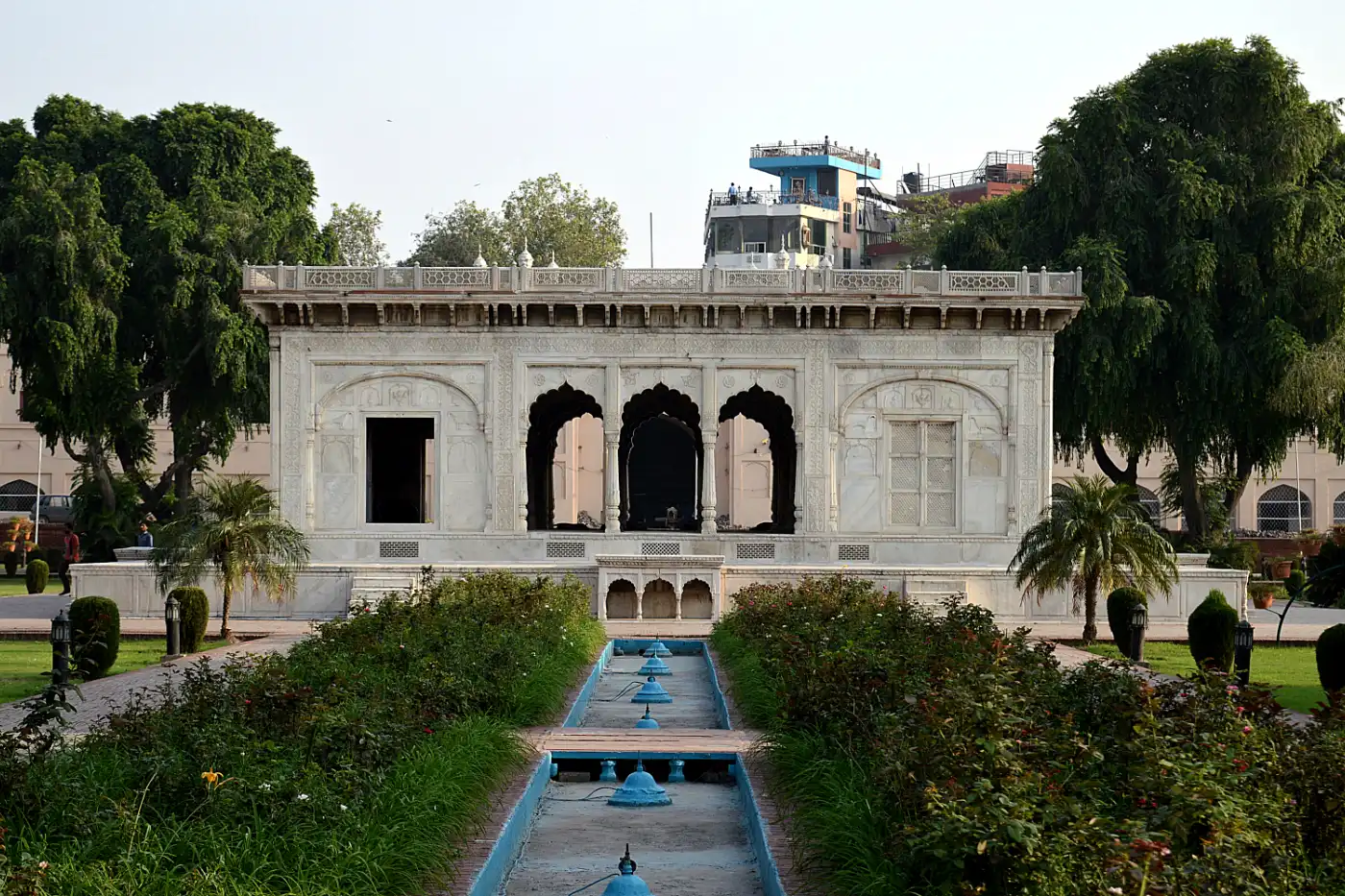
Photo Credit: Hassantahir101, CC BY-SA 3.0, via Wikimedia Commons
How to Get to Hazuri Bagh
By rickshaw or ride-hailing: Ask for Badshahi Masjid or Lahore Fort. Hazuri Bagh lies right between the two, so you will find it easily.
By Metro Bus: Get off at Azadi Chowk, near Minar-e-Pakistan. From there, it is a short walk across Greater Iqbal Park to the fort area.
By car: There is parking near Badshahi Masjid and on Fort Road. However, it fills up on weekends, so come early.
Map: Open Hazuri Bagh in Google Maps for live directions.
Places to See Nearby
Hazuri Bagh sits at the heart of Lahore’s grandest monuments, so everything is just steps away:
- Lahore Fort: Right next door, through the Alamgiri Gate.
- Badshahi Masjid: Just across the garden, one of the largest mosques in the world.
- Tomb of Allama Iqbal: Beside the steps of Badshahi Masjid.
- Gurdwara Dera Sahib: A short walk away, near the Samadhi of Ranjit Singh.
- Minar-e-Pakistan: Across the road in Greater Iqbal Park.
- Sunehri Masjid: The Golden Mosque, inside the Walled City.
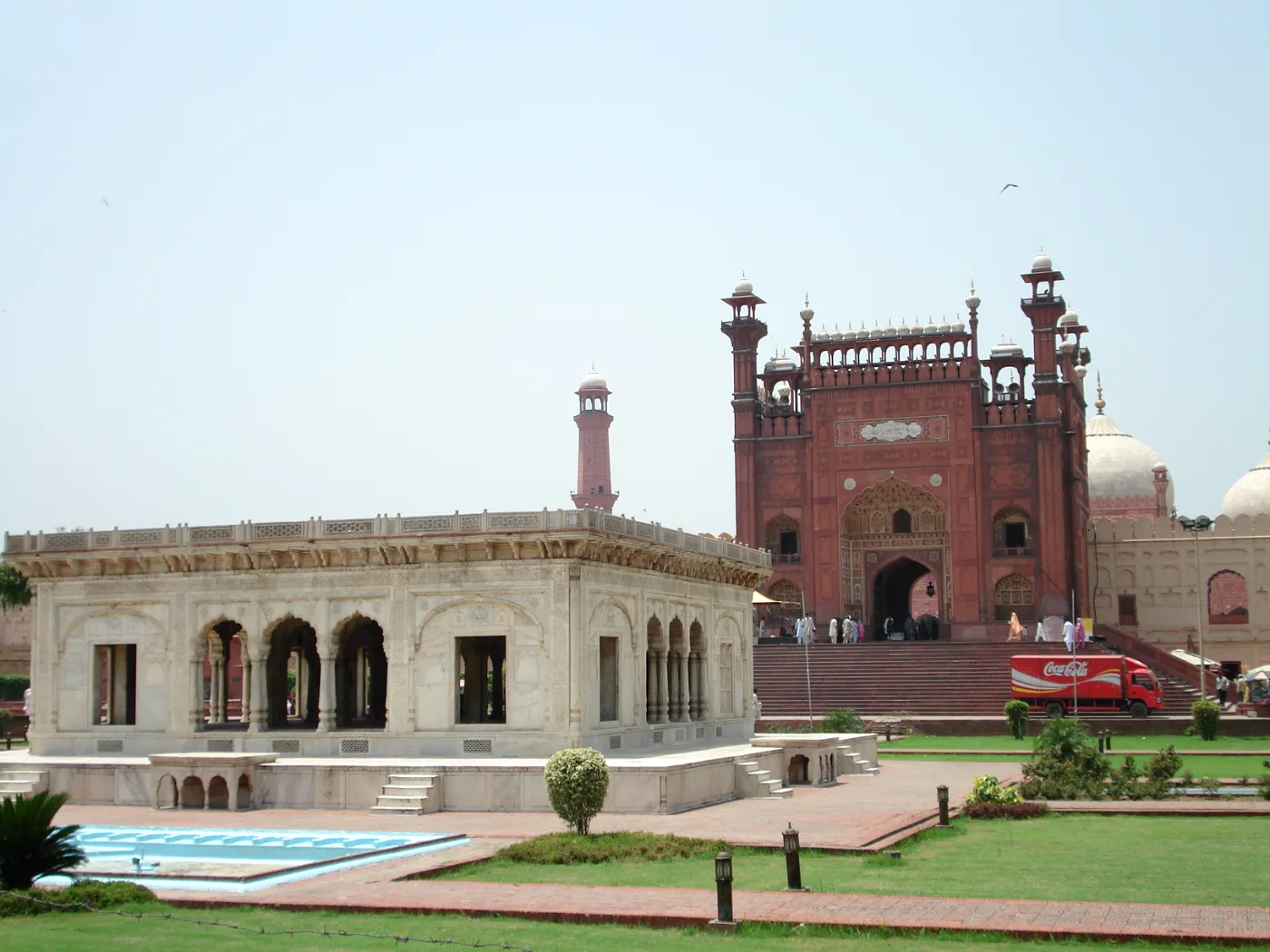
Photo Credit: Uroojmirza71, CC BY-SA 4.0, via Wikimedia Commons
Tips for Visitors
- First, plan Hazuri Bagh, Lahore Fort and Badshahi Masjid together as one trip.
- Go early in the morning to beat the crowds and the heat.
- Carry water in summer, because there is little shade on the walk to the fort.
- Look for old photos online to compare the missing upper storey.
- Keep the garden clean and stay off the flower beds.
- Finally, stay for sunset, when the marble and the red walls glow.
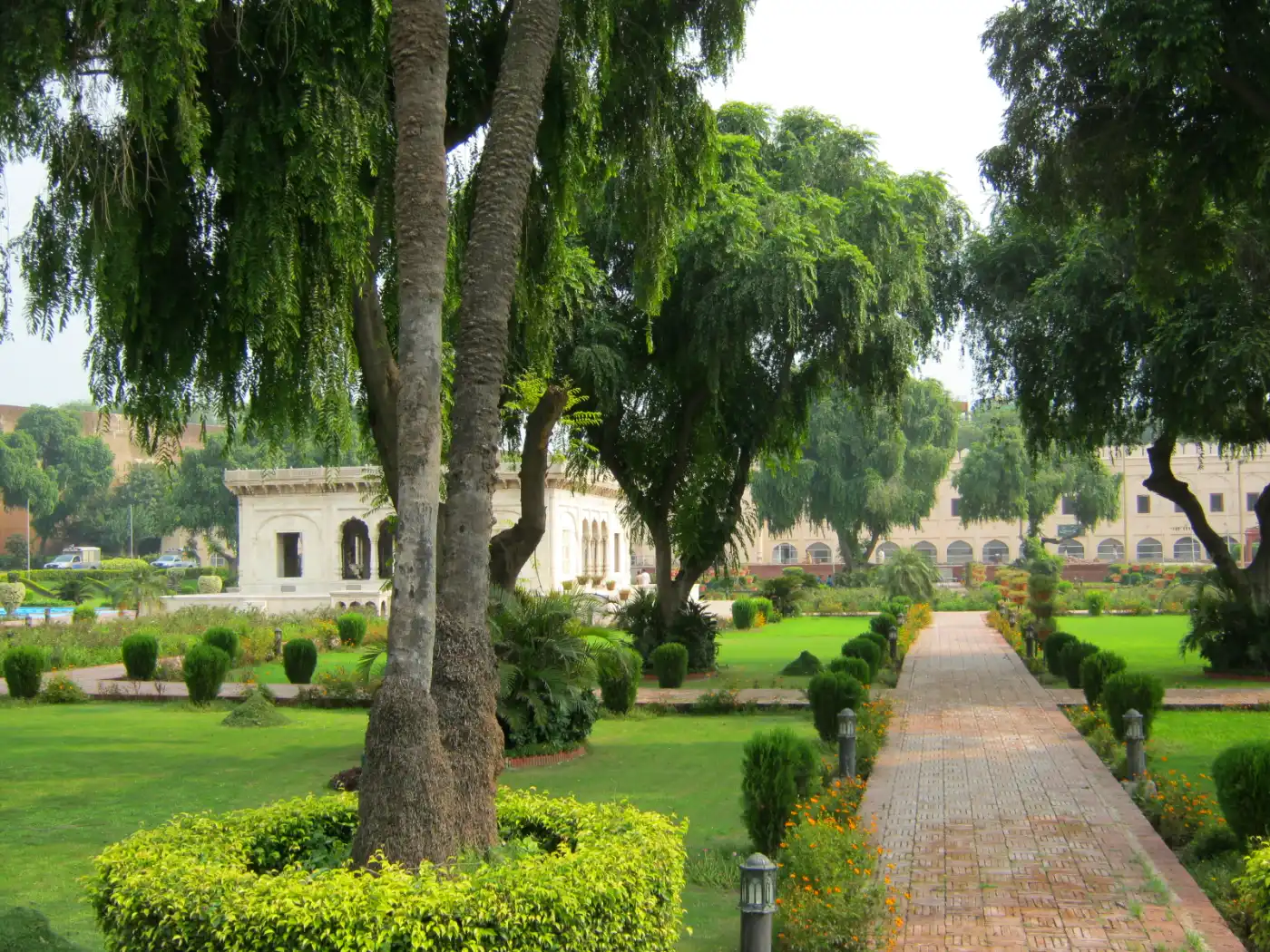
Photo Credit: Rana Ahsan Chohan, CC BY-SA 3.0, via Wikimedia Commons
Frequently Asked Questions
Who built Hazuri Bagh?
Maharaja Ranjit Singh laid out the garden in the early 19th century.
Why was the Hazuri Bagh Baradari built?
It was built in 1818 to celebrate Ranjit Singh’s capture of the Koh-i-Noor diamond.
What happened to the upper storey?
It collapsed in July 1932 and was never rebuilt.
Is there an entry fee for Hazuri Bagh?
The garden is usually free to enter. Lahore Fort has a separate ticket.
Where is Hazuri Bagh?
It is between the Alamgiri Gate of Lahore Fort and Badshahi Masjid.
Conclusion
In short, Hazuri Bagh in Lahore is easy to miss, but it is well worth a pause. Its marble baradari tells a story of Ranjit Singh, the Koh-i-Noor and old Lahore’s royal courts. So, on your next visit to the fort and the mosque, slow down, sit under its arches and enjoy one of the most beautiful views in the city.
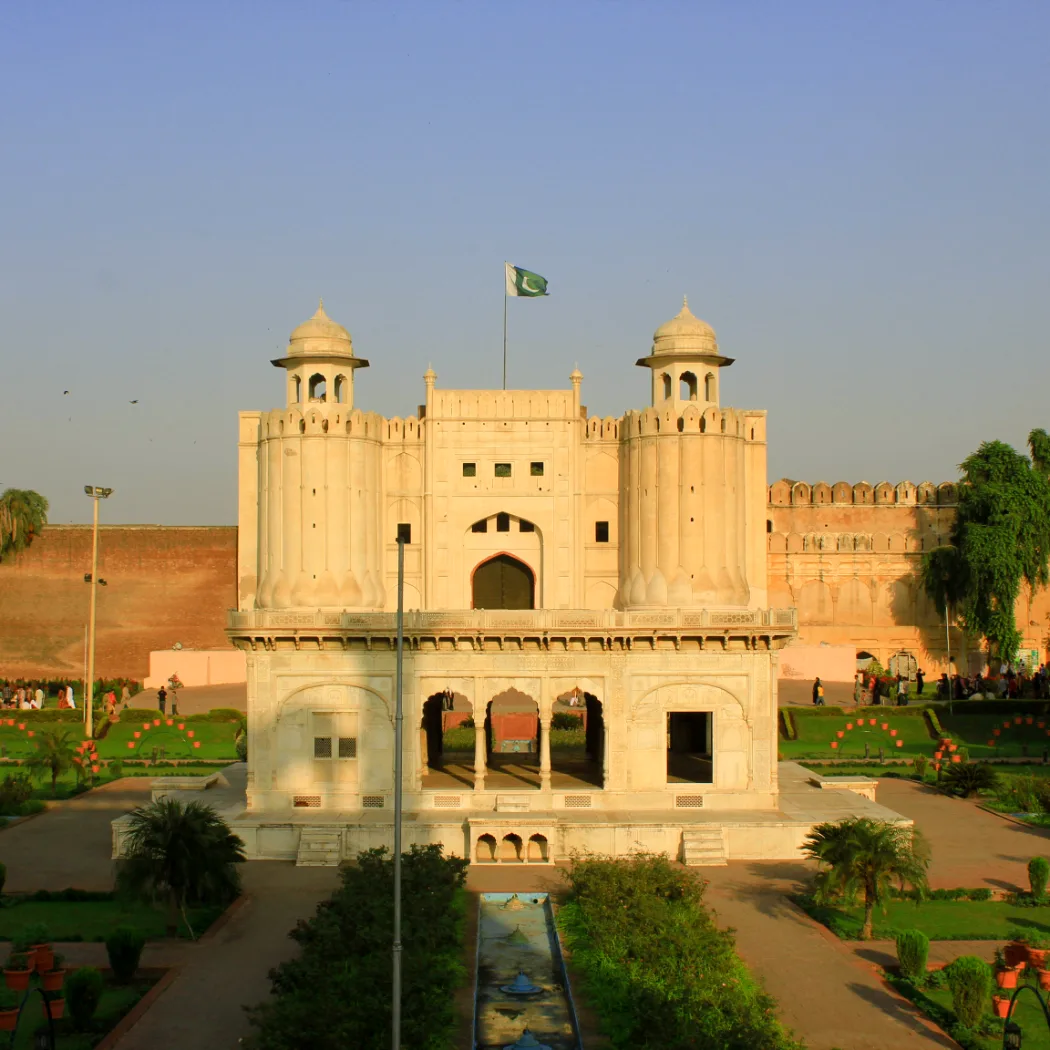
Photo Credit: Meemjee, CC BY-SA 3.0, via Wikimedia Commons
Cover photo: ClicksByMohammadOmer, CC BY-SA 3.0, via Wikimedia Commons (cropped and colour-enhanced)