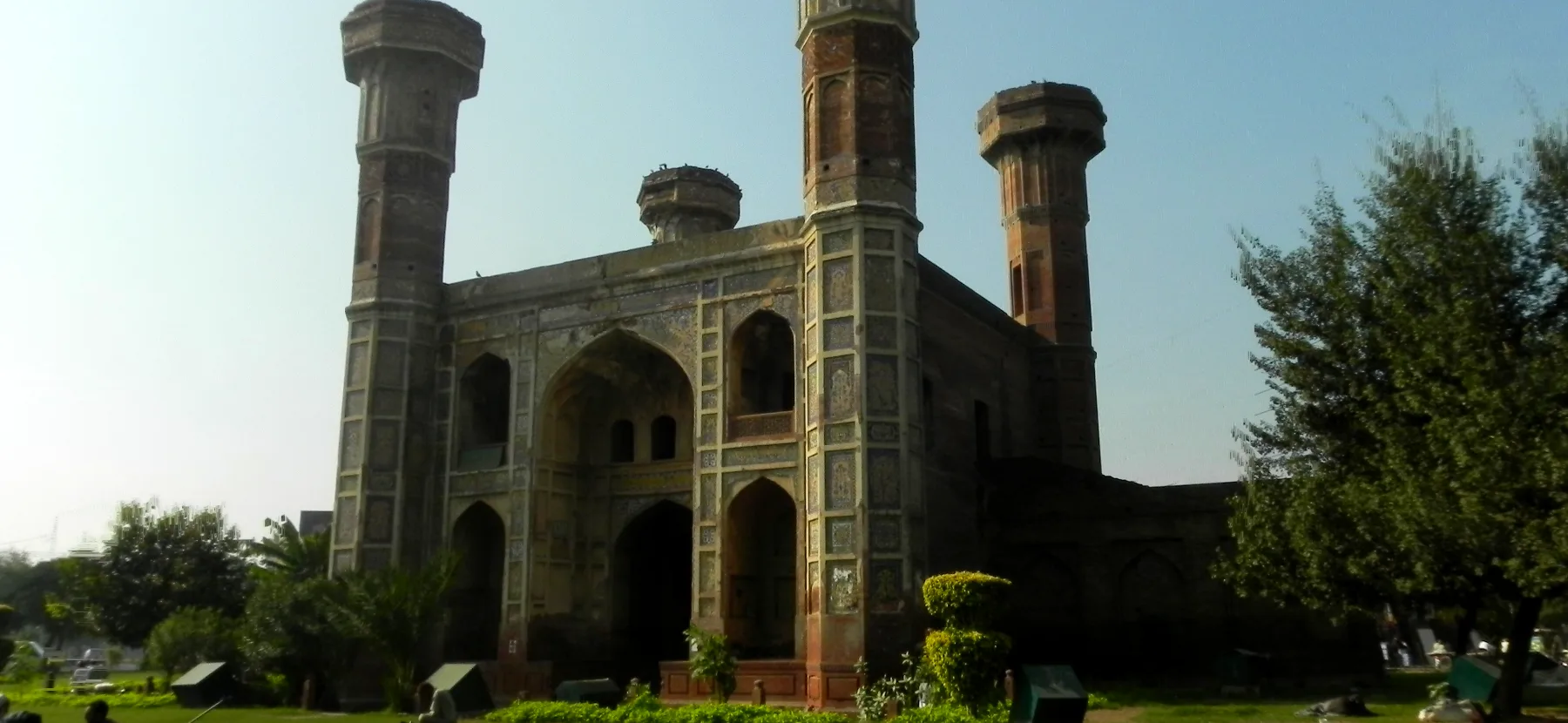
On busy Multan Road, cars and rickshaws swirl around a strange and beautiful old gateway. It has four tall towers that get wider at the top, and its walls shine with blue and green tiles. This is Chauburji in Lahore, one of the most recognisable Mughal monuments in the city.
Today, the Orange Line train glides right past it. Yet, almost 400 years ago, this gate opened into a grand royal garden. In this guide, we will look at the history of Chauburji in Lahore, its unusual design and how you can see it for yourself.
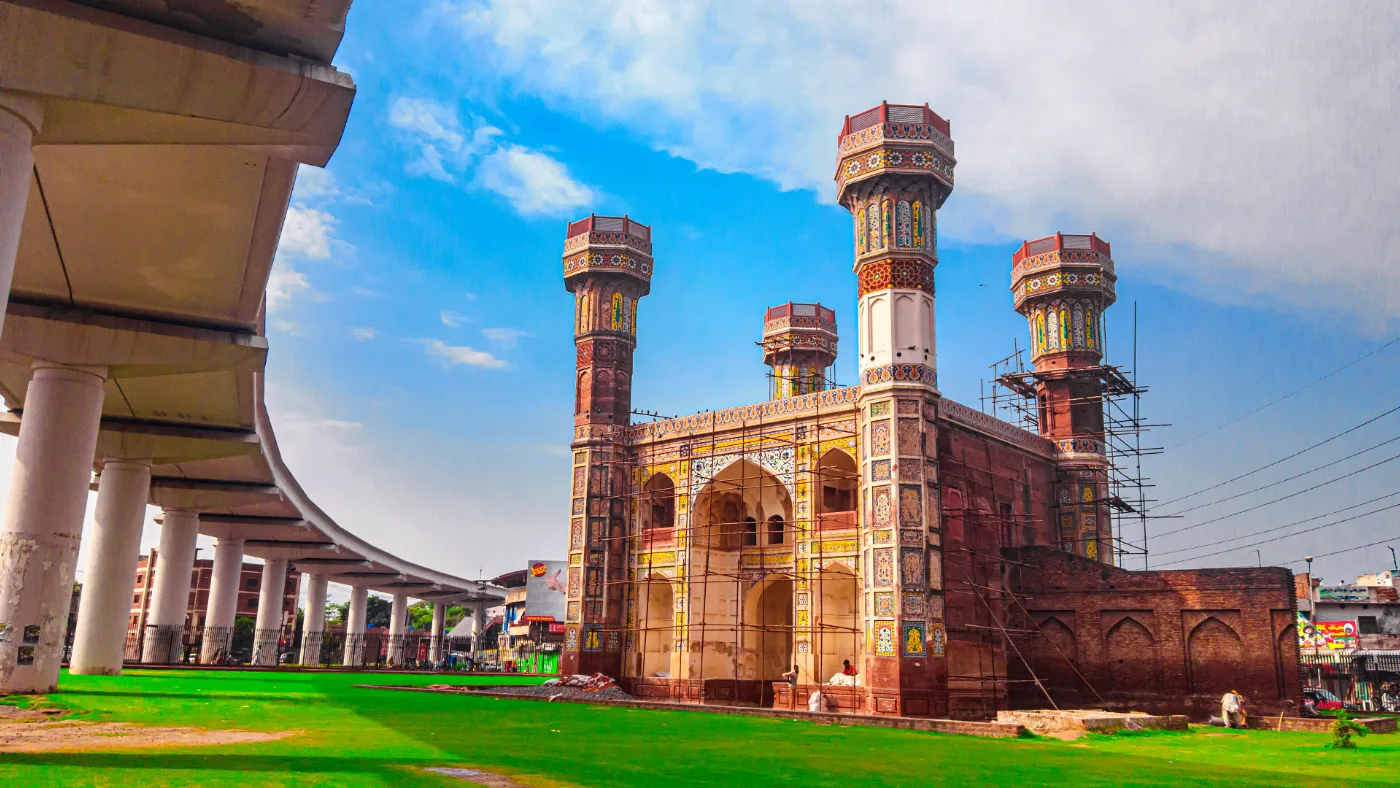
Photo Credit: Shahzaib Damn Cruze, CC BY-SA 4.0, via Wikimedia Commons
History of Chauburji
Chauburji was built in 1646, during the reign of Emperor Shah Jahan. It was never a building on its own. Instead, it was the main gateway to a large Mughal garden that stretched out behind it.
Who Built the Garden at Chauburji Lahore?
An old inscription on the gate names the garden’s owner as “Sahib-e-Zebinda Begam-e-Dauran”. Many people link this to Princess Zeb-un-Nisa, the poet daughter of Aurangzeb. However, she was only about eight years old in 1646. So, some historians believe it actually refers to her aunt, Princess Jahanara.
The Lost Garden
Sadly, the garden itself has disappeared. Floods from the Ravi River are believed to have destroyed most of it during Aurangzeb’s reign. Only the gate survived, and later generations simply called it Chauburji, meaning “four towers”.
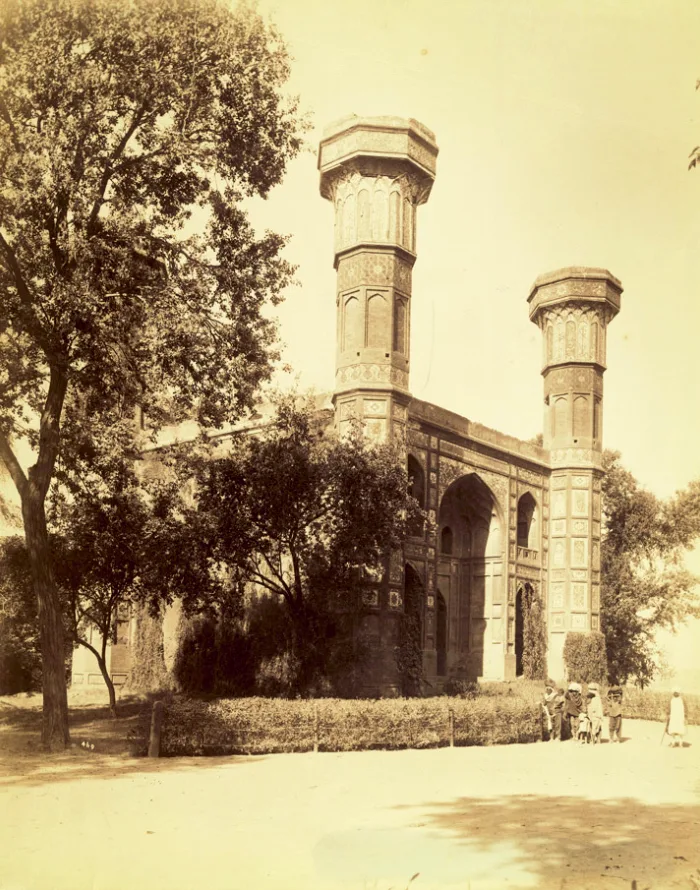
Photo Credit: British Library, Public domain, via Wikimedia Commons
The Four Towers and Architecture
First of all, you will notice the towers. Unlike most minarets, they get wider towards the top instead of narrower. In fact, this shape is said to be unique in the whole subcontinent. Some experts believe they were once topped with small domed pavilions.
Meanwhile, between the towers, a tall two-storey arch rises in the middle of the gate. Inside it, look for muqarnas, the honeycomb-like carving that hangs from the top of the arch. The whole structure is made of red brick, and it mixes Mughal, Central Asian and Persian styles.
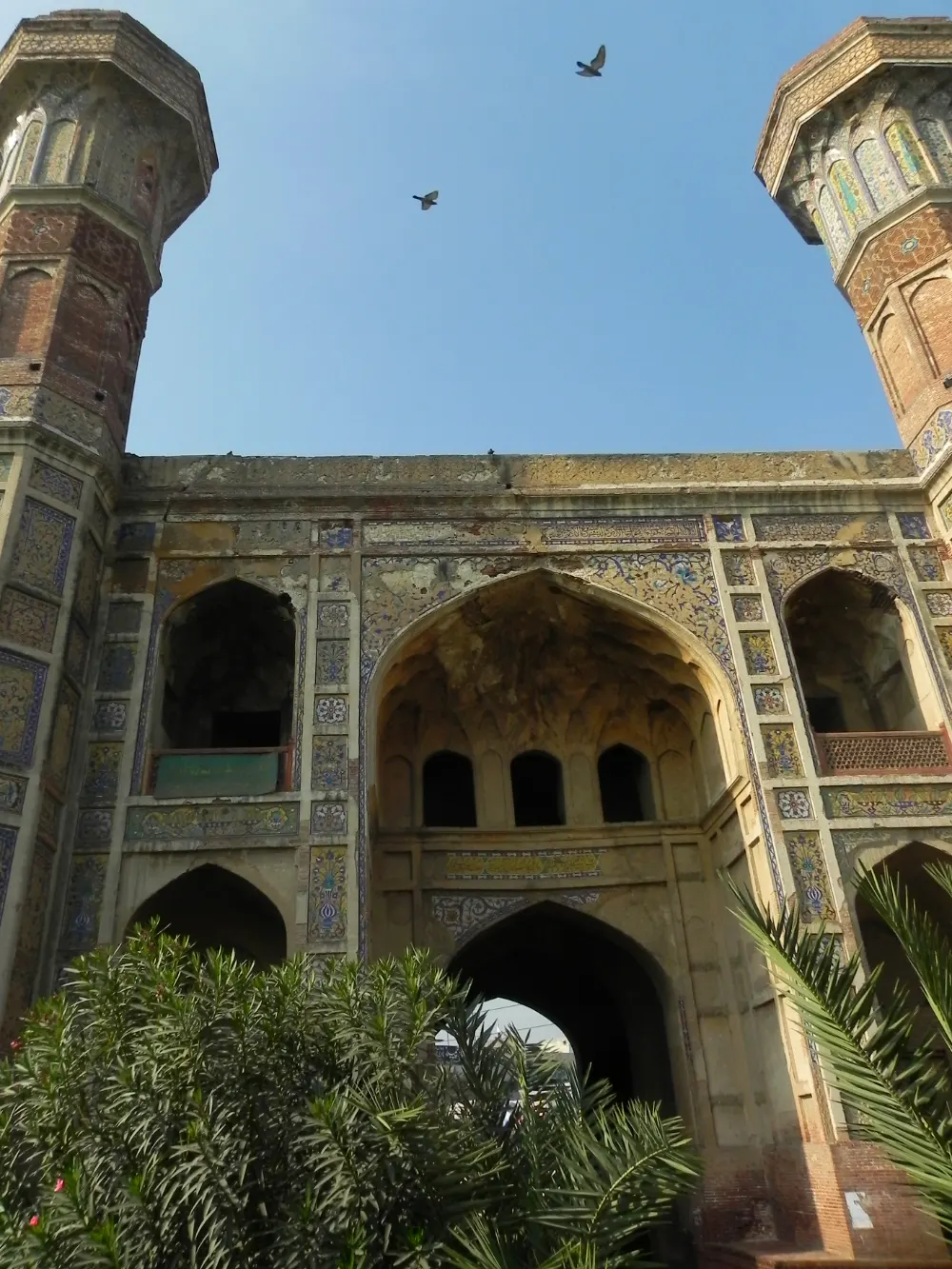
Photo Credit: Kiran Jan, CC BY-SA 3.0, via Wikimedia Commons
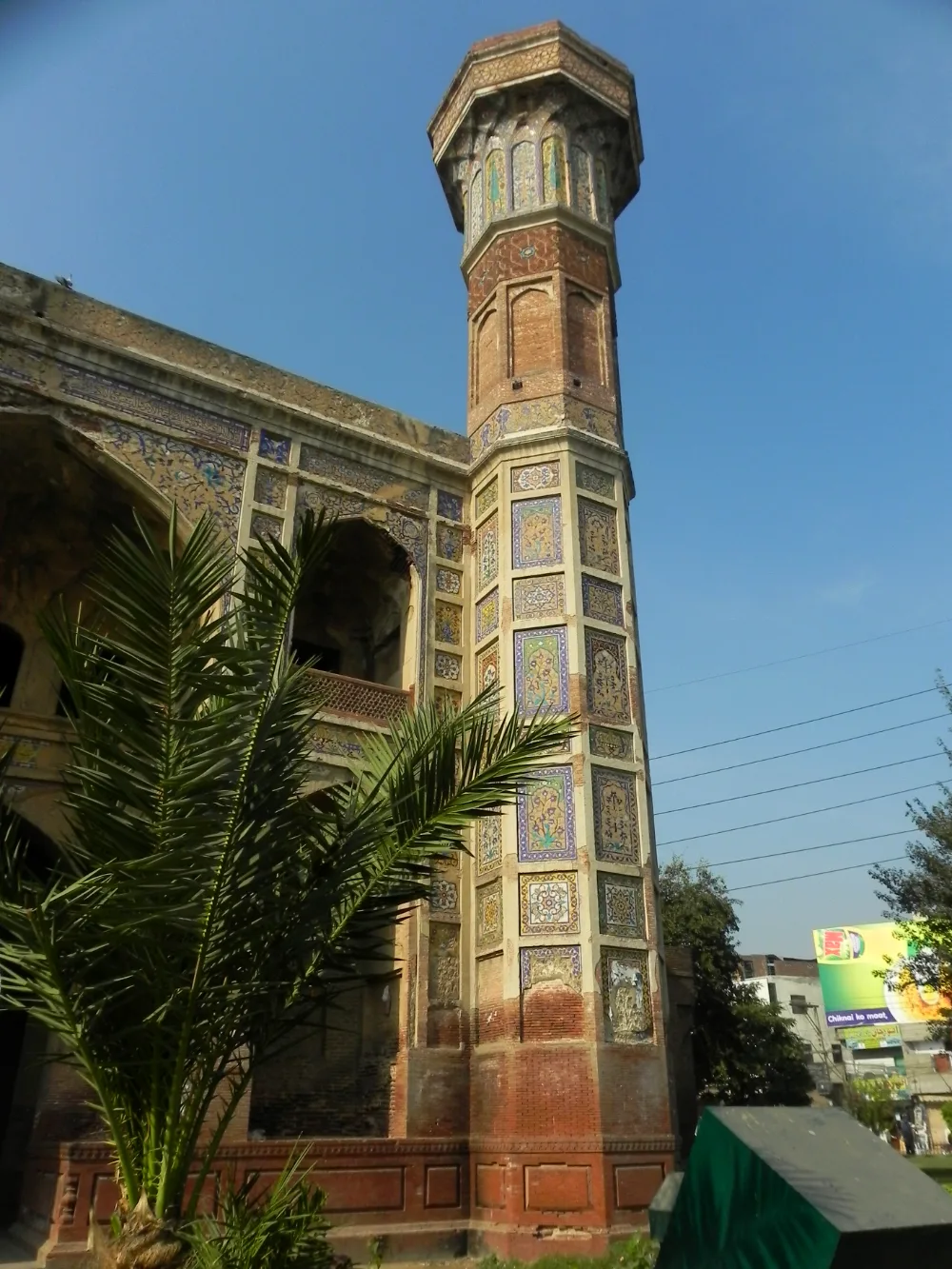
Photo Credit: Kiran Jan, CC BY-SA 3.0, via Wikimedia Commons
The Tile Work
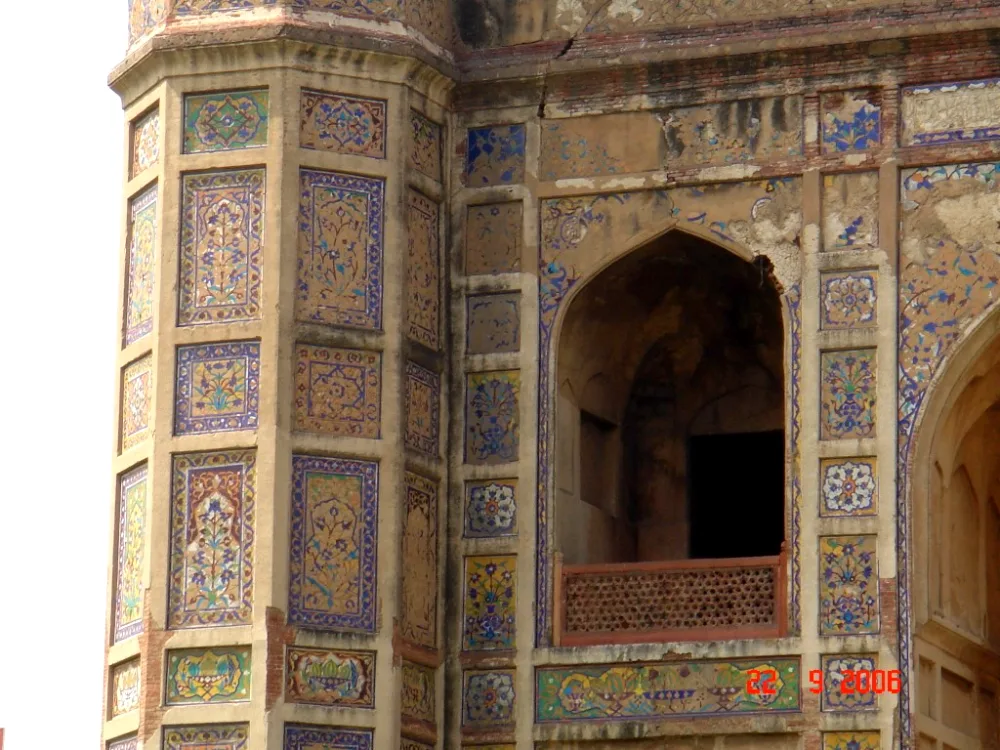
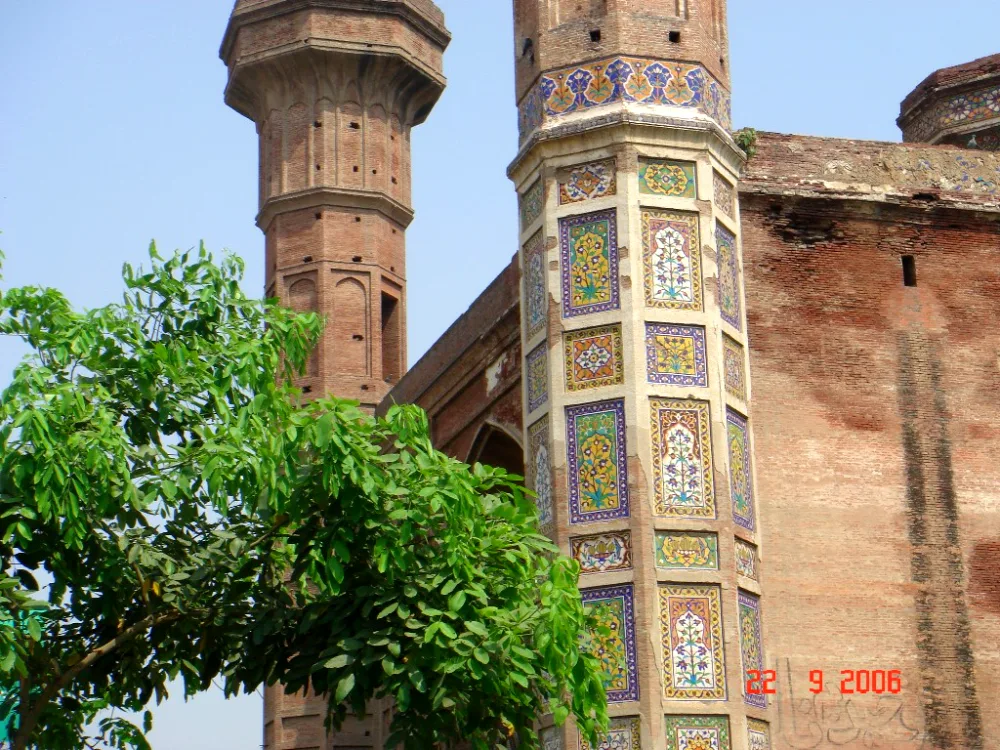
In its prime, Chauburji was covered in colourful kashi kari, the glazed tile work that Lahore is famous for. Panels of blue, green and yellow tiles formed flowers, vines and geometric patterns. Also, frescoes once decorated parts of the walls.
Unfortunately, much of the original tile work has been lost over the centuries. Still, if you look closely, you can see beautiful panels on the towers. Near the top of the gate, a verse of the Quran, Ayat-ul-Kursi, still survives in blue Arabic script.
Earthquake and Restoration
In 1846, a strong earthquake shook Lahore. As a result, the north-western tower of Chauburji collapsed and the central arch cracked. After that, the gate stood damaged and neglected for many years.
Later, the Department of Archaeology carried out repairs in the 1960s, and today all four towers stand again. Then, between 2018 and 2020, the Punjab Archaeology Department ran a major conservation project. During this work, workers repaired the brickwork and restored many of the tile panels. Today, Chauburji is a protected heritage monument.
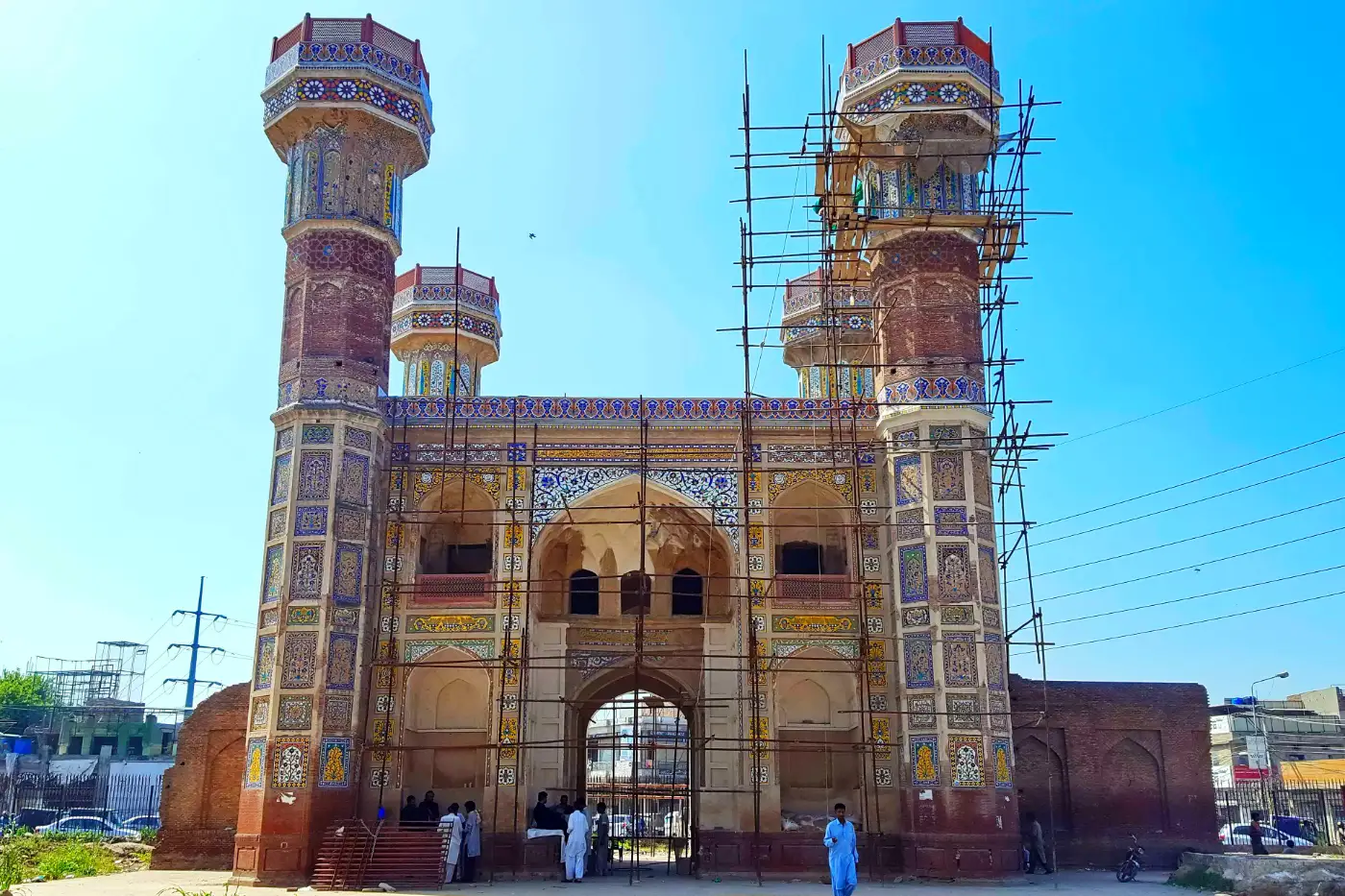
Photo Credit: Shahzaib Damn Cruze, CC BY-SA 4.0, via Wikimedia Commons
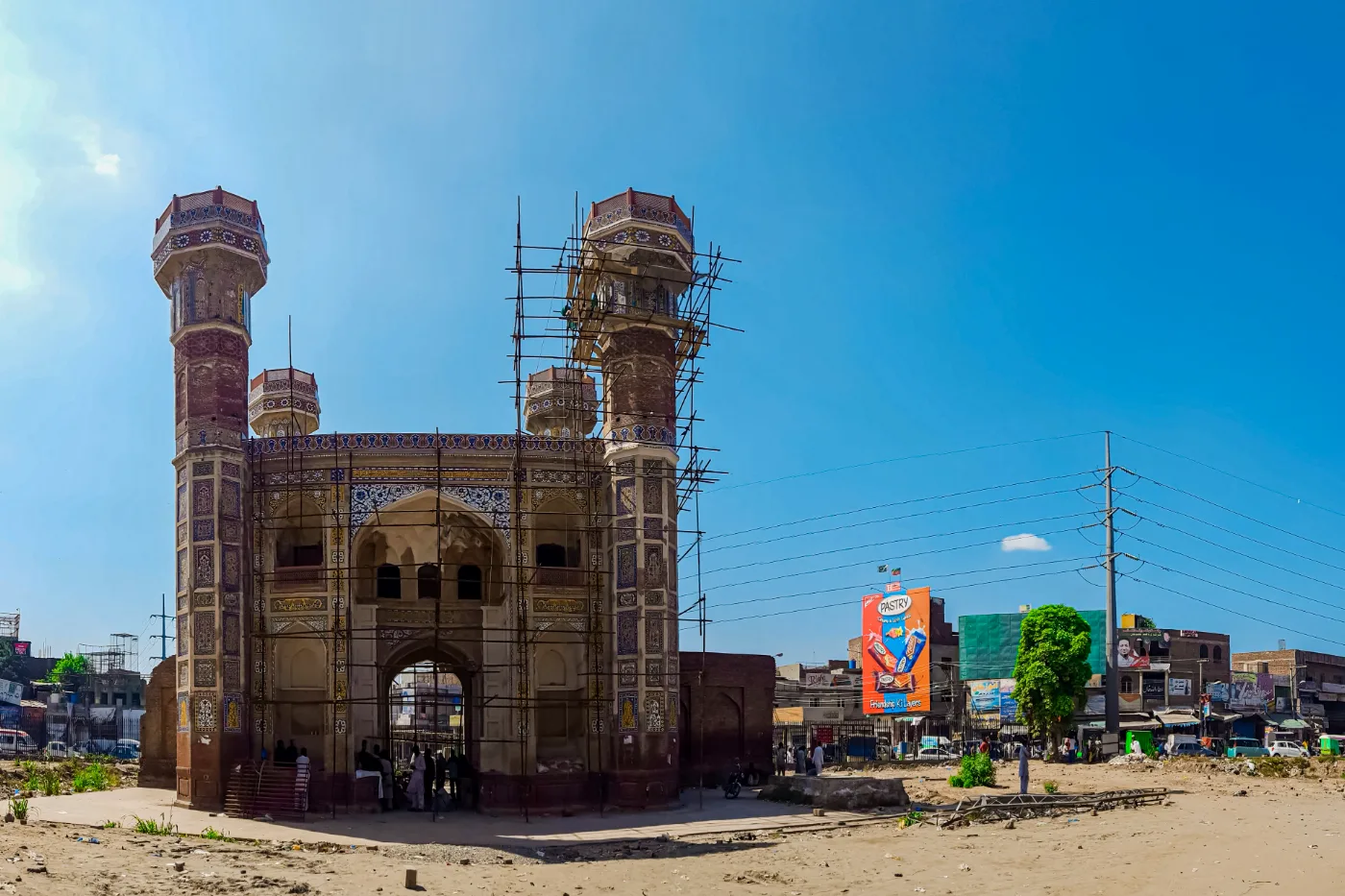
Photo Credit: Shahzaib Damn Cruze, CC BY-SA 4.0, via Wikimedia Commons
Chauburji and the Orange Line
When the Orange Line metro train was planned through Lahore, its route passed right next to Chauburji. Heritage campaigners worried that the construction could damage the old gate. So, in 2016, the Lahore High Court stopped work within 200 feet of several heritage sites, including Chauburji.
Eventually, the line was built as an elevated track beside the monument. Today, the Chauburji station sits nearby, and the sight of a modern train passing a 17th-century Mughal gate has become one of Lahore’s most striking views.
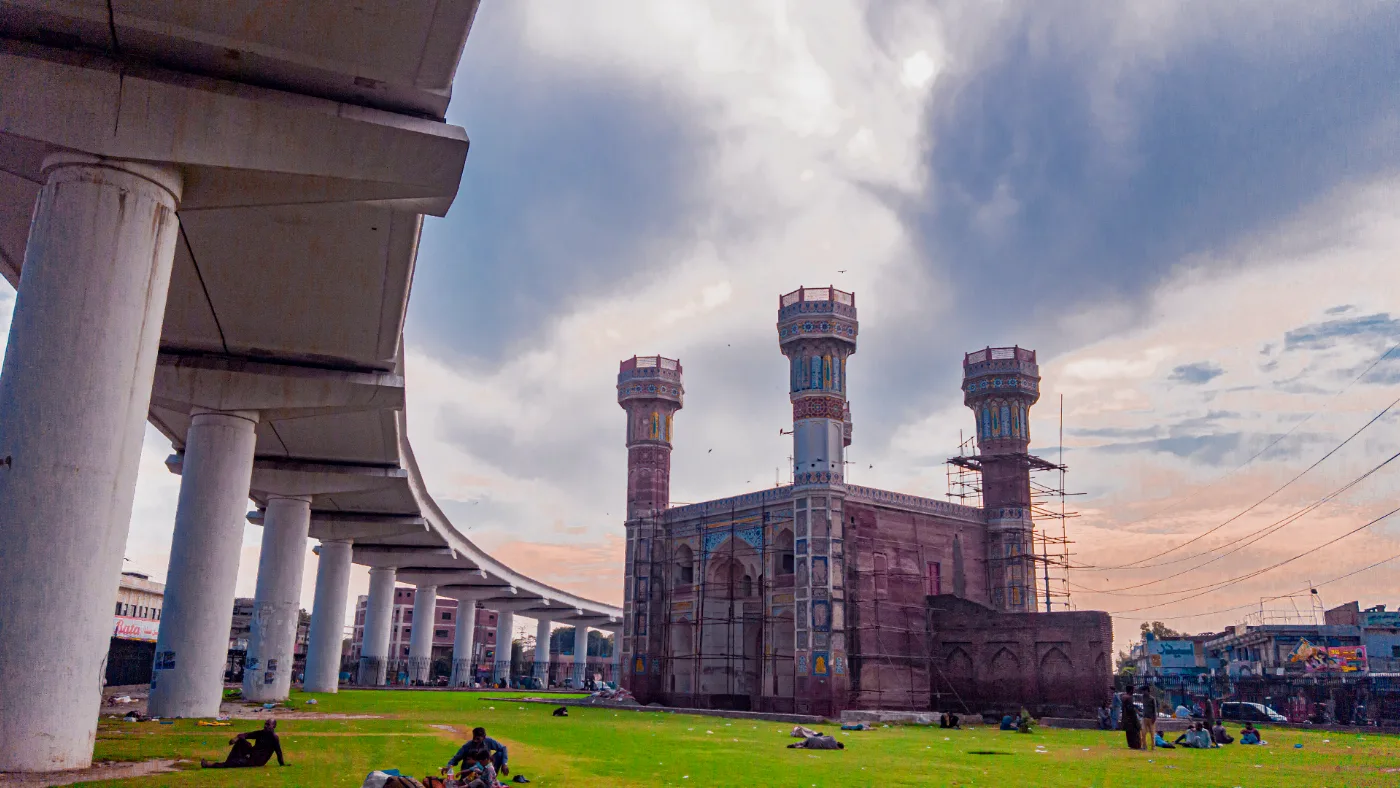
Photo Credit: Shahzaib Damn Cruze, CC BY-SA 4.0, via Wikimedia Commons
Visitor Information
Chauburji Lahore: Timings and Entry
- Location: On a green roundabout at Chauburji Chowk, where Multan Road meets Bahawalpur Road.
- Timings: You can see the gate from outside at any time. However, the fenced lawn around it is not always open, so check on the spot.
- Entry fee: Free.
- Time needed: 20 to 30 minutes.
Good to Know
- Best time: Early morning, when traffic is lighter and the light is soft. Also, late afternoon light makes the brick glow.
- Traffic: The roundabout is very busy, so cross the roads carefully.
- Photography: Great for photos, especially with the Orange Line in the frame.
- Facilities: There are no facilities at the monument. However, there are plenty of shops and food stalls nearby.
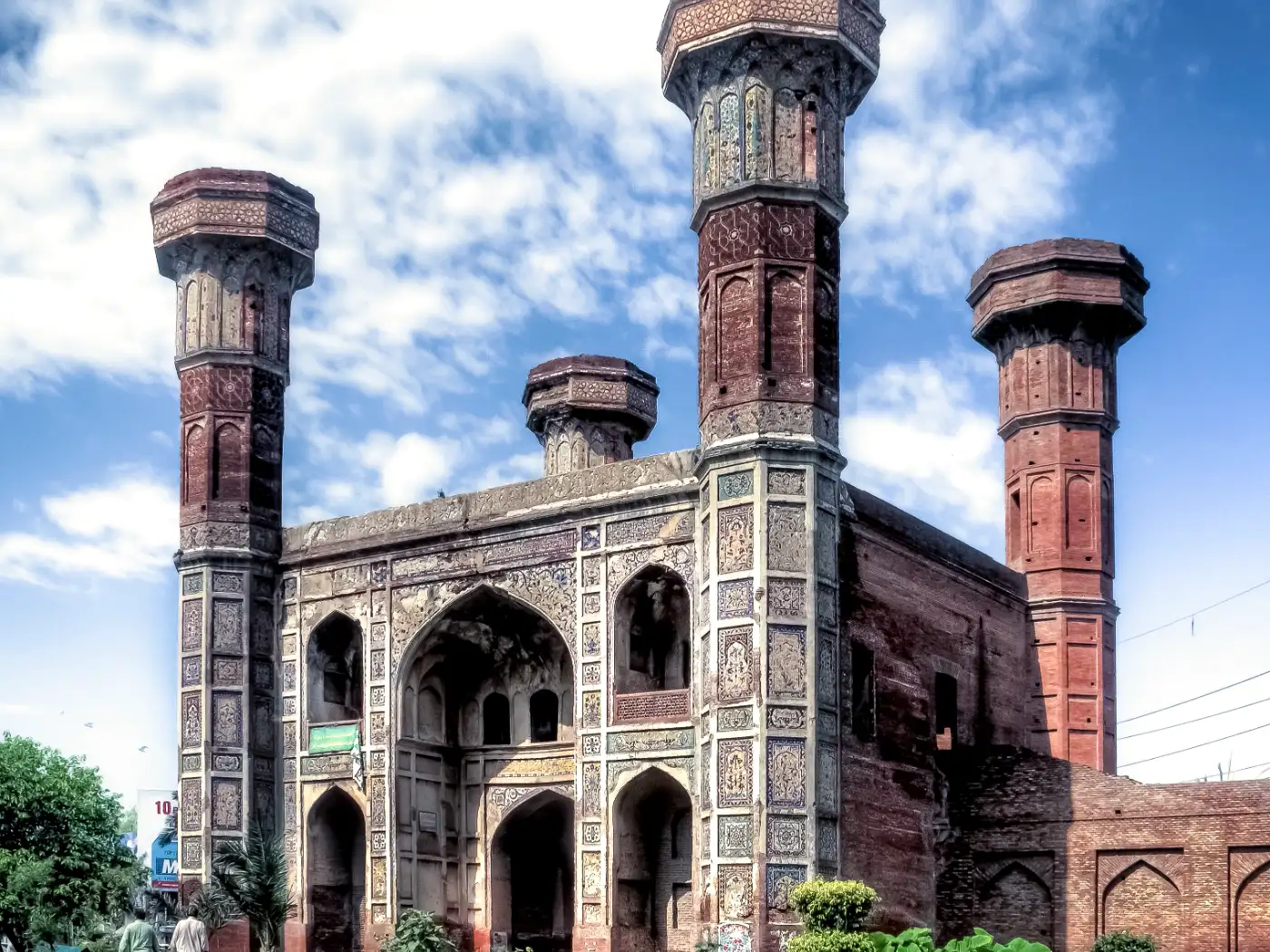
Photo Credit: Junaidalvi, CC BY-SA 3.0, via Wikimedia Commons
How to Get to Chauburji
By Orange Line: This is the easiest way. Get off at Chauburji station, and the gate is just a short walk away.
By rickshaw or ride-hailing: Ask for “Chauburji Chowk, Multan Road”. Careem, inDrive and Yango drivers all know it well.
By car: Parking right at the roundabout is difficult. So, it is better to park on a side road and walk.
Map: Open Chauburji in Google Maps for live directions.
Places to See Nearby
Chauburji is a quick stop, so it is easy to combine with other sights:
- Data Darbar: Lahore’s most famous Sufi shrine, a short drive towards the old city.
- Lahore Museum: About 15 minutes away on Mall Road, with a great Mughal collection.
- Lahore Fort and Badshahi Masjid: Around 20 minutes away, for the grandest Mughal sights in the city.
- Minar-e-Pakistan: Next to the fort, with a big park around it.
- Tomb of Zeb-un-Nisa: A small Mughal tomb in Nawankot, a little further down Multan Road.
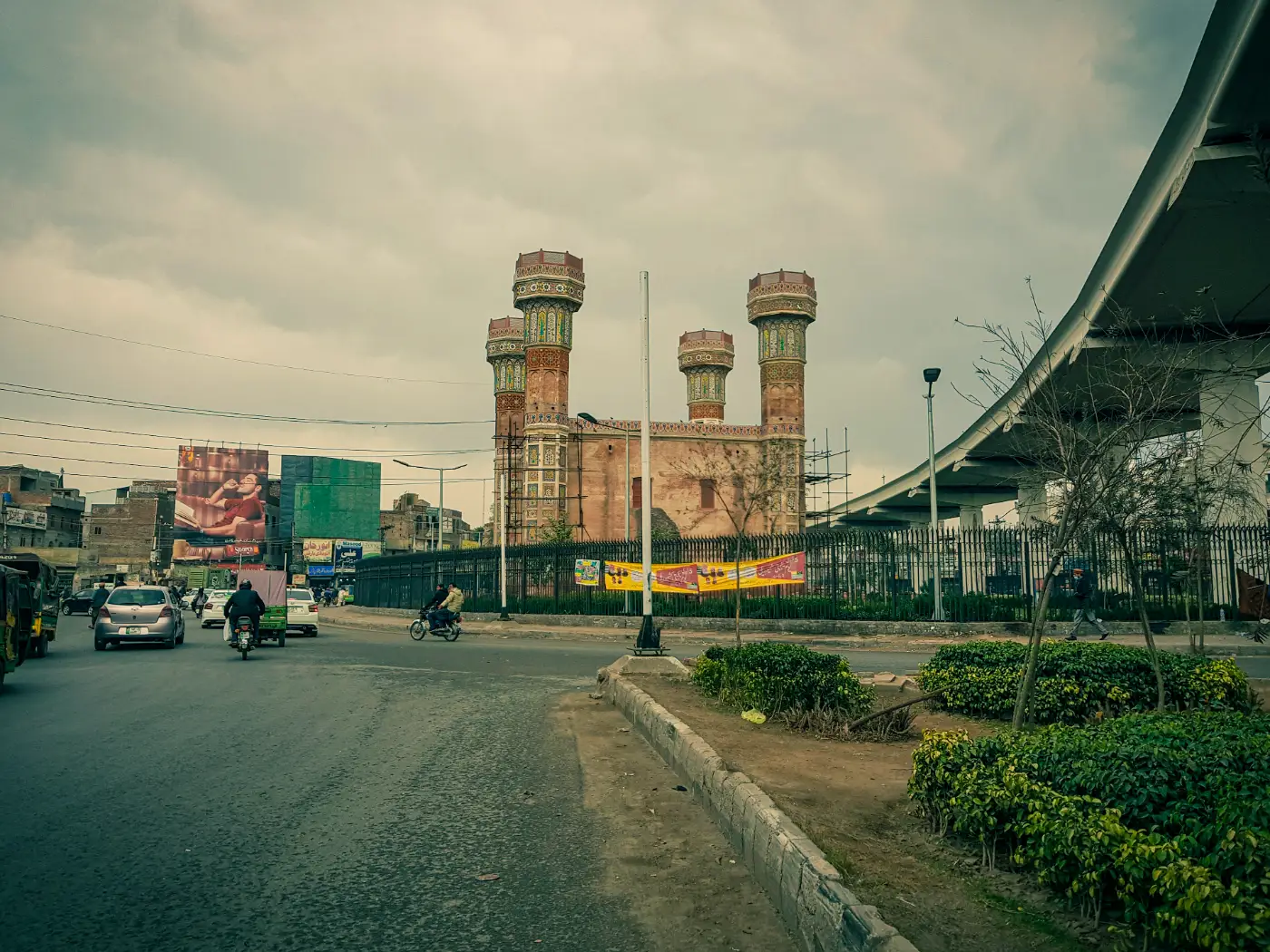
Photo Credit: Shahzaib Damn Cruze, CC BY-SA 4.0, via Wikimedia Commons
Tips for Visitors
- First, take the Orange Line for a fun ride and an easy arrival.
- Visit early in the morning to avoid the worst traffic.
- Look up at the towers to see how they widen at the top.
- Bring a zoom lens or use your phone’s zoom to see the tile panels.
- Cross the roundabout only at safe points, because traffic is heavy.
- Finally, combine Chauburji with Data Darbar or the Lahore Museum for a half-day trip.
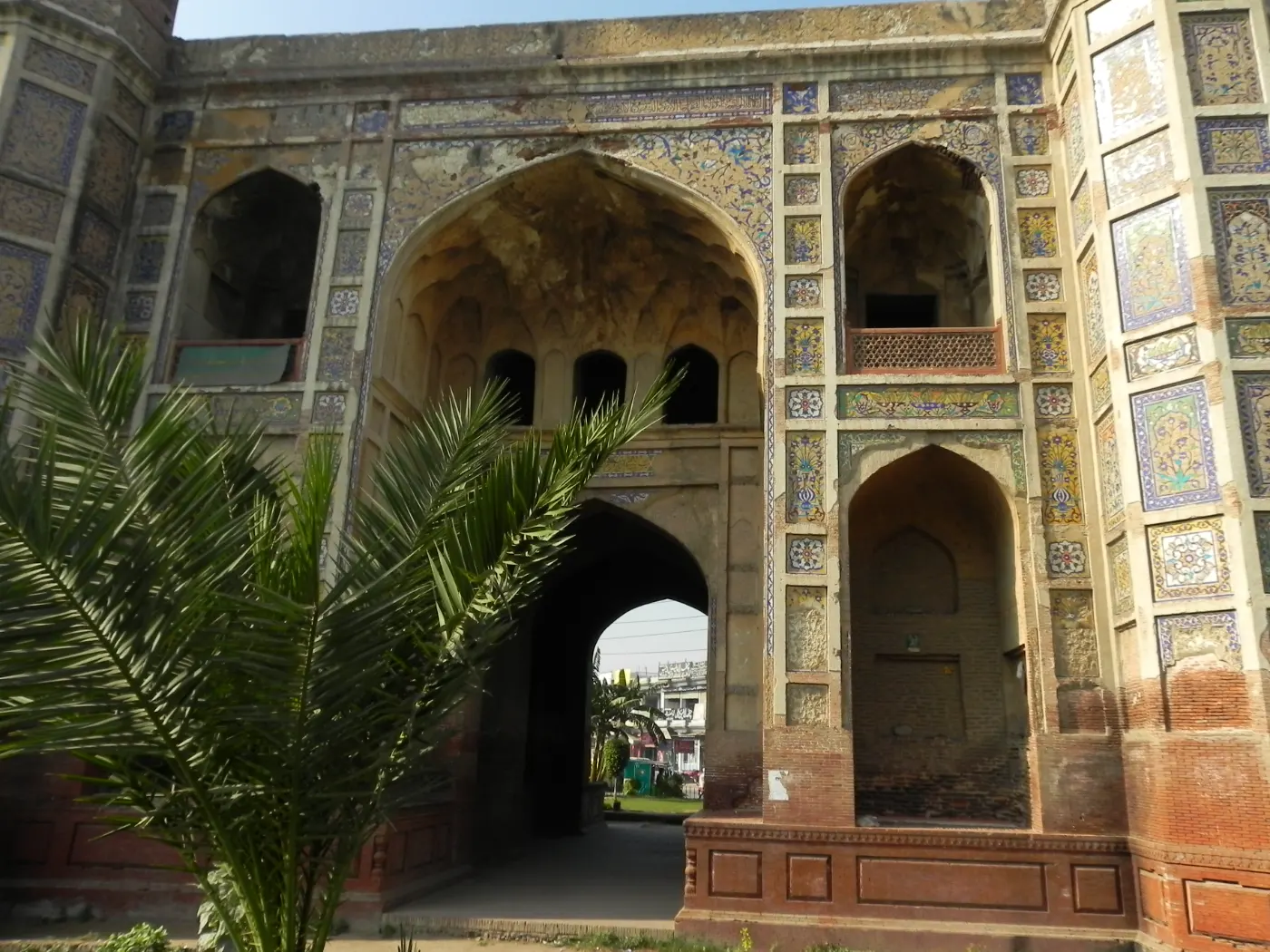
Photo Credit: Kiran Jan, CC BY-SA 3.0, via Wikimedia Commons
Frequently Asked Questions
What does Chauburji mean?
It means “four towers” in Urdu and Punjabi, after its four minarets.
When was Chauburji built?
It was built in 1646, during the reign of Mughal Emperor Shah Jahan.
What was Chauburji used for?
It was the gateway to a large Mughal garden, which has since disappeared.
Is there an entry fee for Chauburji?
No, it is free to see.
Which Orange Line station is near Chauburji?
Chauburji station, which is just a short walk from the gate.
Conclusion
In short, Chauburji is a small monument with a big story. It has survived floods, an earthquake and a metro line, and it still stands proudly on Multan Road. So, next time you pass through Chauburji Chowk, stop for a few minutes, look up at those unusual towers, and imagine the royal garden that once lay behind them.
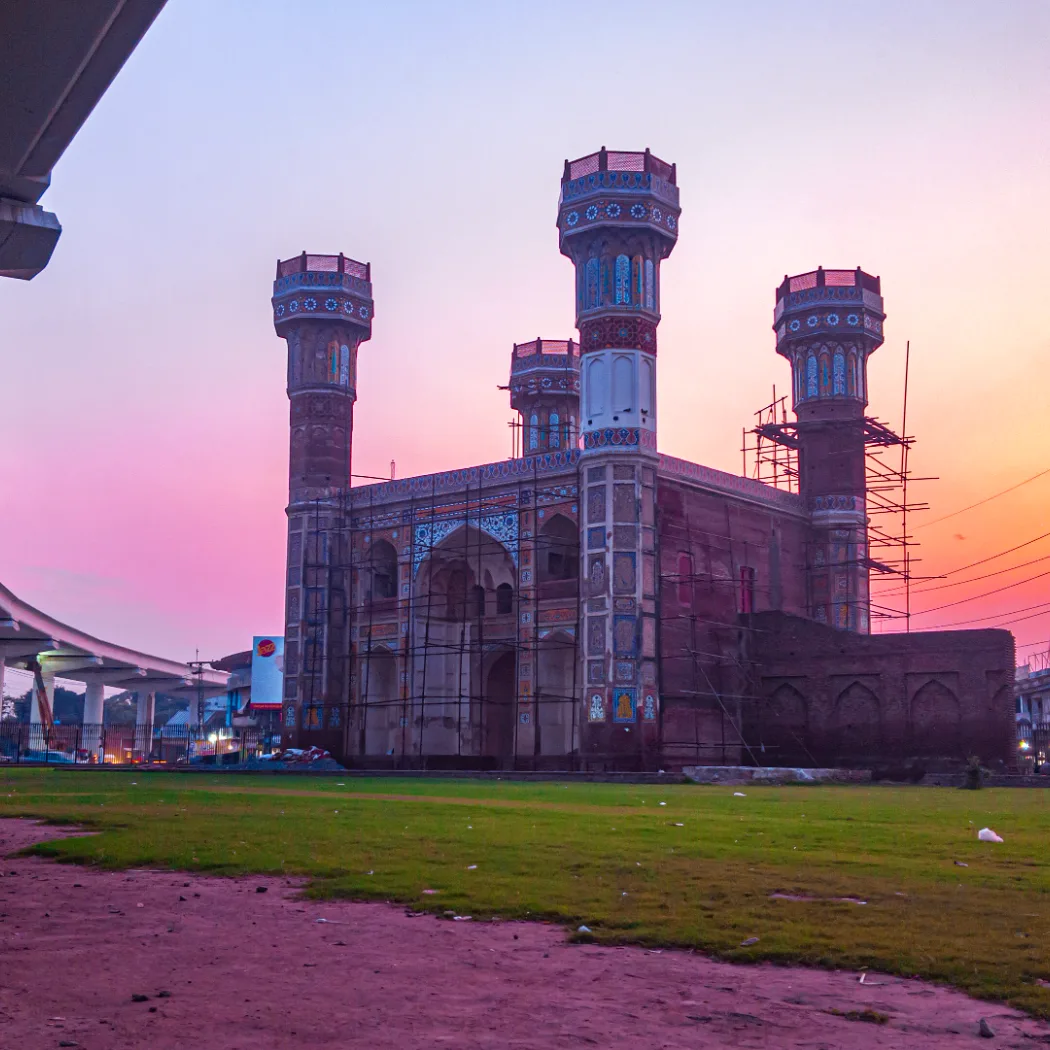
Photo Credit: Shahzaib Damn Cruze, CC BY-SA 4.0, via Wikimedia Commons
Cover photo: Kiran Jan, CC BY-SA 3.0, via Wikimedia Commons (cropped, colour-enhanced and retouched)