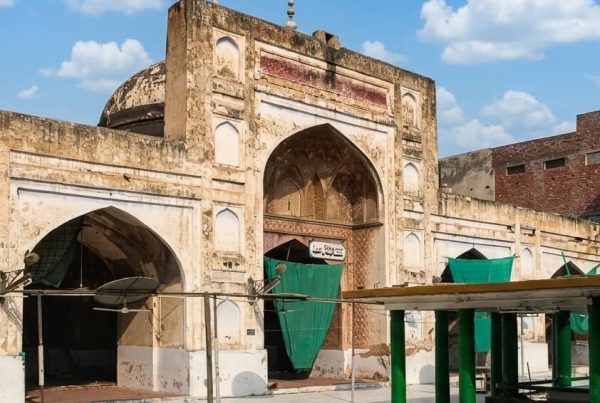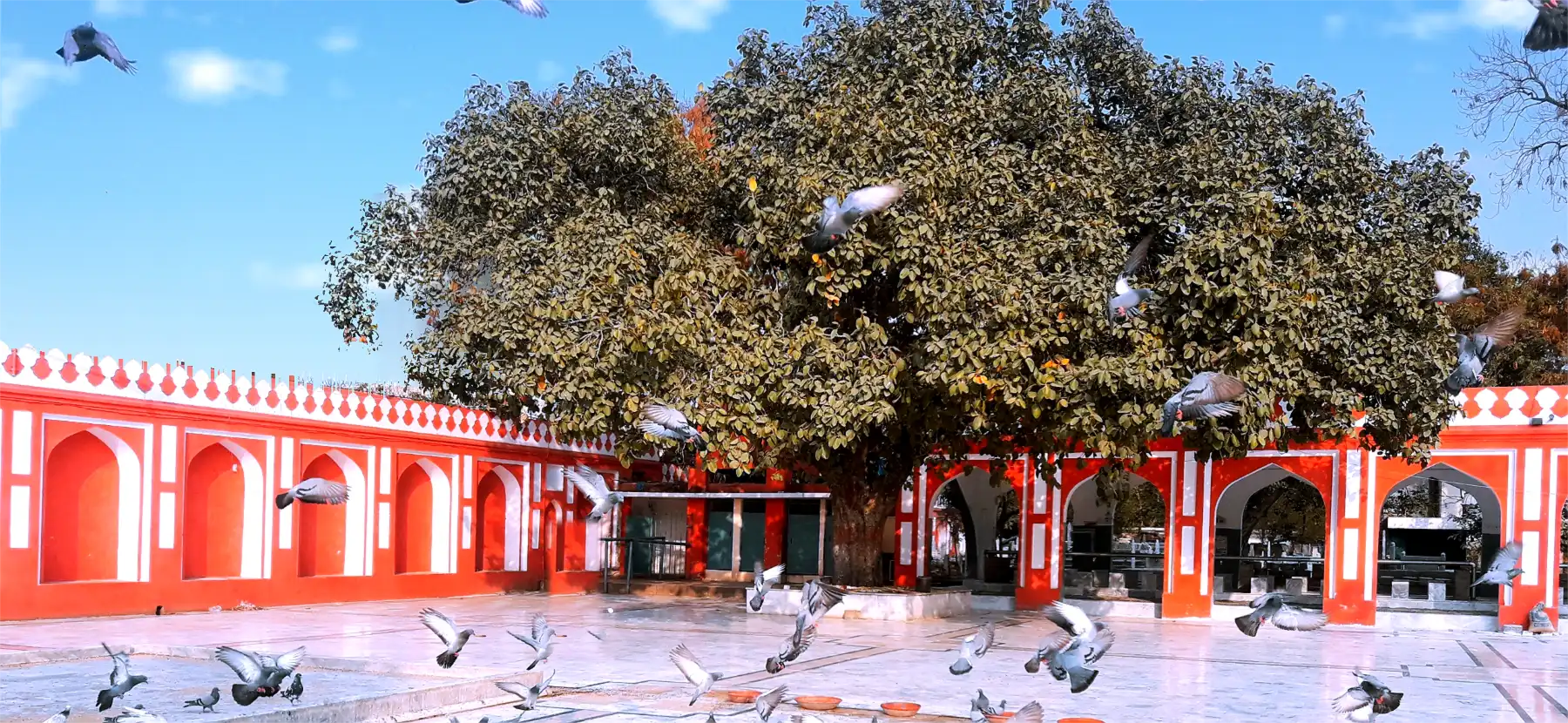
Walk into the Shrine of Mian Mir on any morning and the first thing you notice is the pigeons. Hundreds of them rise from the marble courtyard, circle the white dome and settle again. Meanwhile, devotees light small oil lamps and quietly pray. This is Mian Mir Shrine Lahore, the resting place of one of the most loved Sufi saints of the Mughal age.
Mian Mir was a teacher of princes. Even so, he lived like a poor man. Today Muslims and Sikhs both honour him. In this guide, we cover his story, what to see at the darbar, what to eat nearby and how to plan your visit.
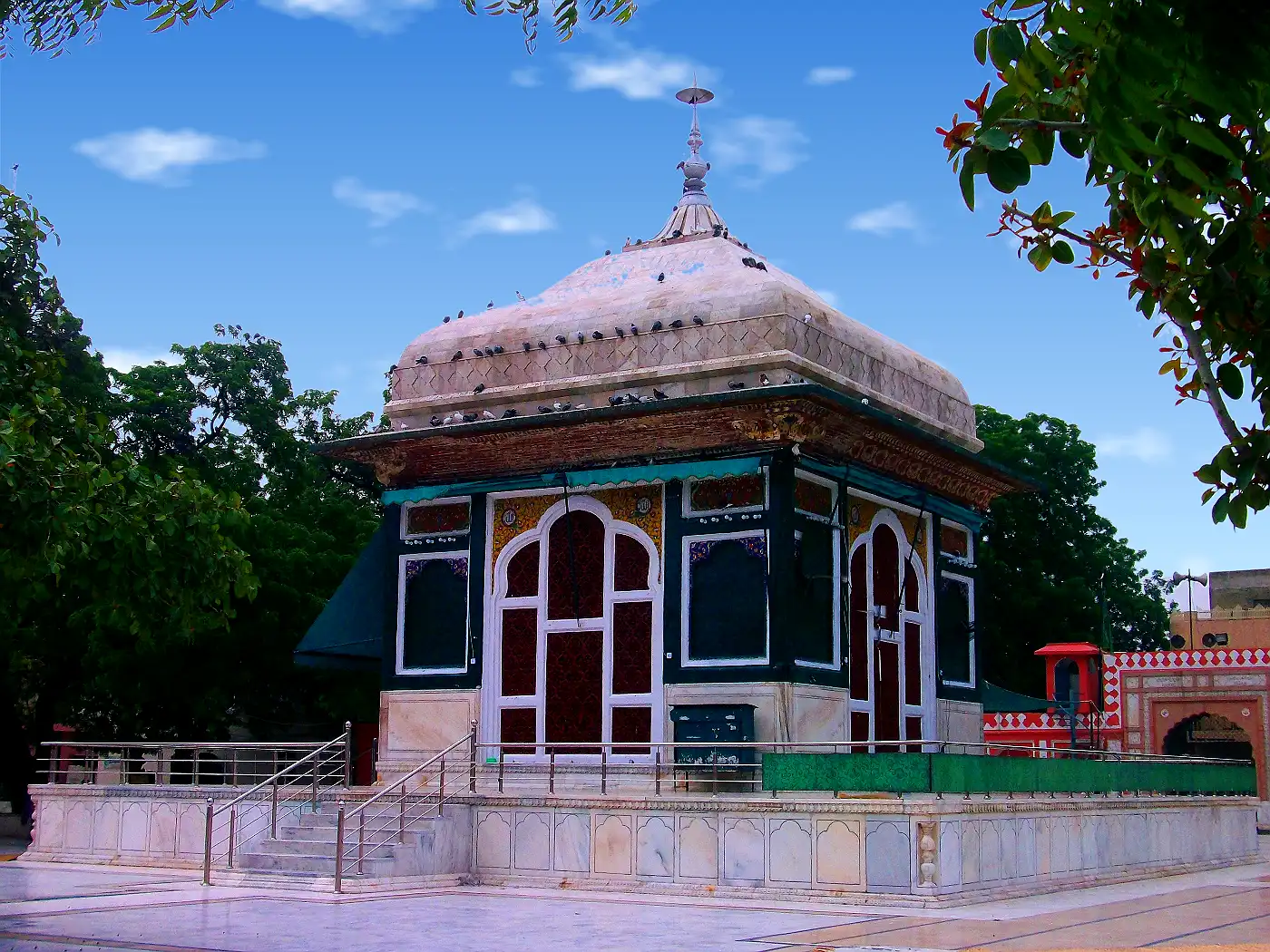
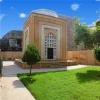
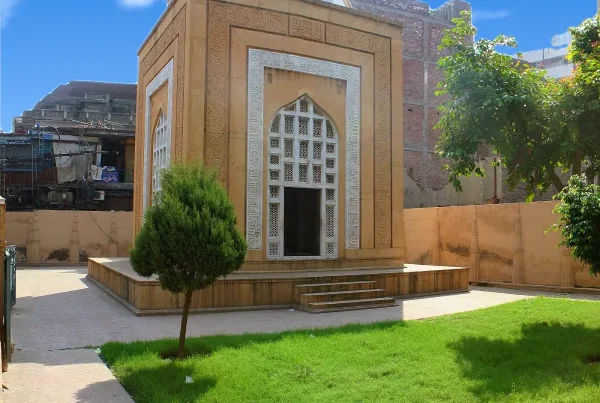
The tomb of Hazrat Mian Mir. Photo Credit: Muhammad Umair Mirza, CC BY-SA 4.0.
History of Mian Mir
To begin with, Hazrat Mian Mir, whose full name was Mir Muhammad, was born in Sindh around 1550. At about 25, he moved to Lahore and joined the Qadiri Sufi order. He spent the rest of his life here, teaching and praying in a simple home.
A Teacher of Princes
Soon enough, his fame reached the Mughal court. Emperor Jahangir respected him greatly. Later, Shah Jahan visited him twice with his son Dara Shikoh. According to one story, the emperor gave him a turban and prayer beads. However, Mian Mir kept only the beads and returned the turban.
Prince Dara Shikoh became his devoted student. In fact, he wrote a book about the saint and his followers, called Sakinat-ul-Auliya. When Mian Mir died in 1635, at about 85, Dara Shikoh read his funeral oration.
Building Mian Mir Shrine Lahore
Afterwards, Dara Shikoh ordered a grand tomb for his teacher. Builders completed it around 1640. However, after Aurangzeb defeated Dara Shikoh, he used much of the material collected for the shrine in his new Badshahi Masjid. That is why the tomb looks simpler than the prince had planned.
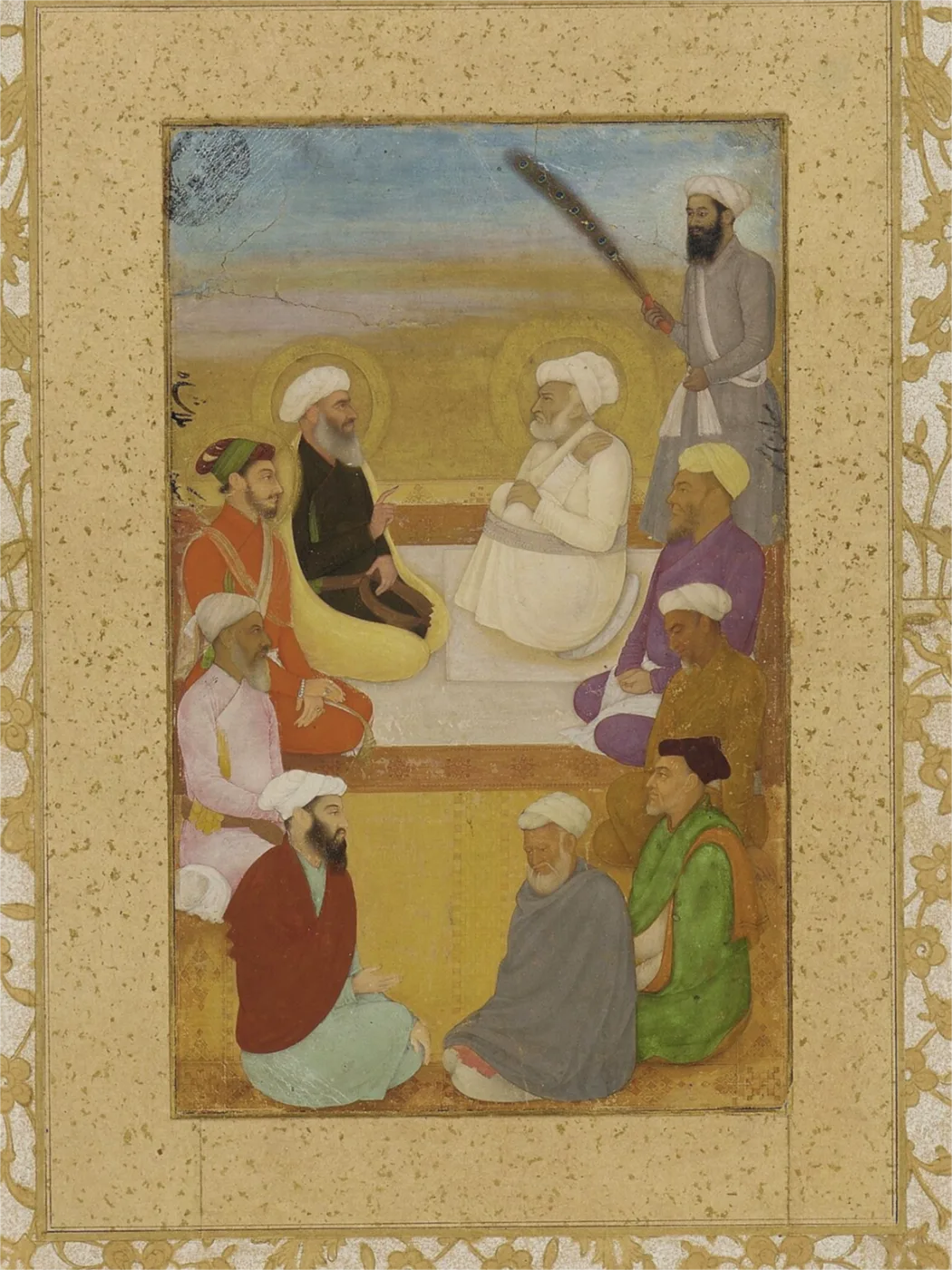
Dara Shikoh with Mian Mir and Mullah Shah, Mughal painting. Photo Credit: Unknown artist.
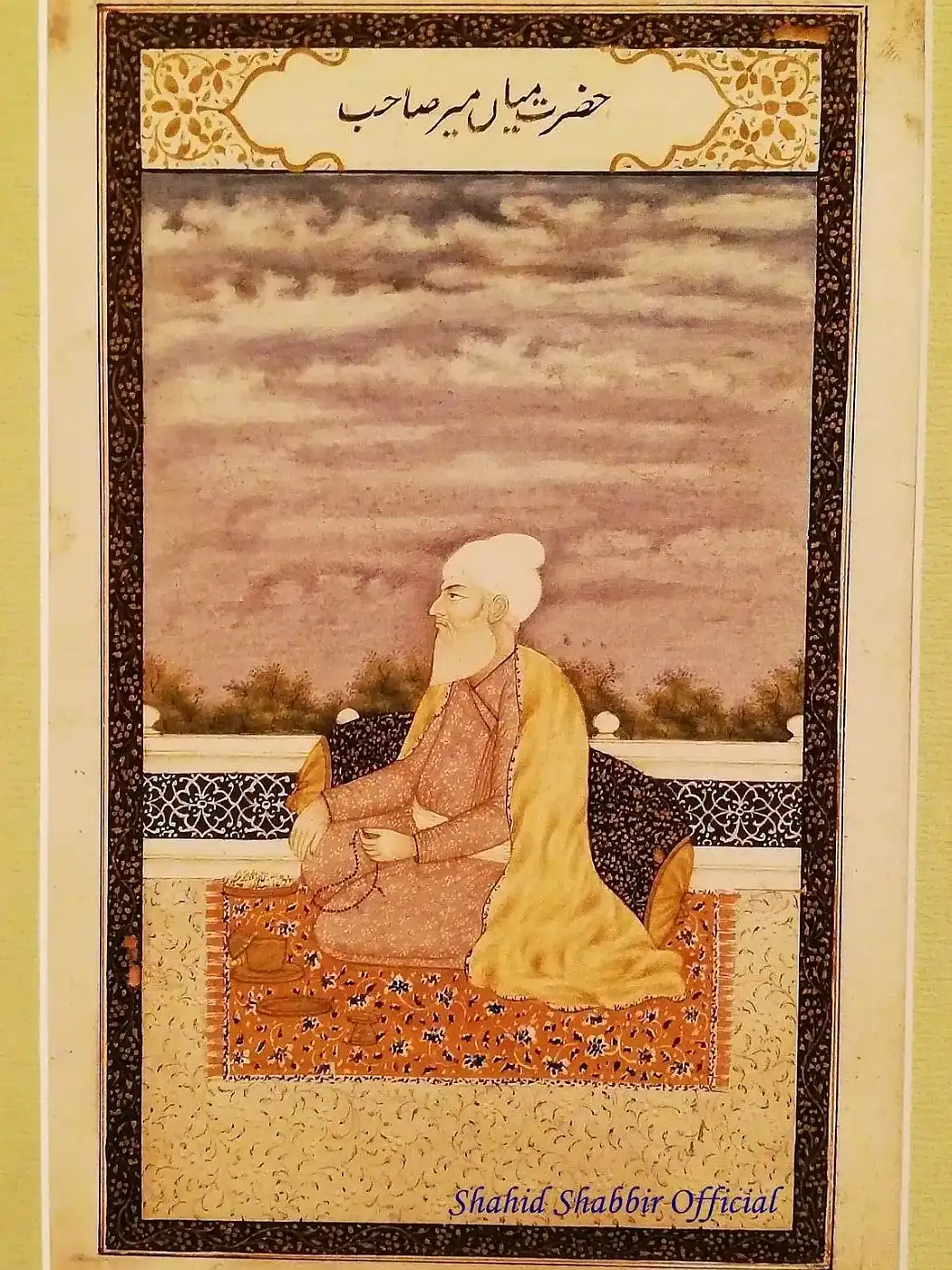
A miniature painting of Mian Mir. Photo Credit: Unknown artist. Photograph by Shahid Shabbir.
Mian Mir and the Golden Temple
Mian Mir is also part of Sikh history. A well-known tradition says that Guru Arjan Dev, the fifth Sikh Guru, was his close friend. According to this story, the Guru invited Mian Mir to lay the foundation stone of the Harmandir Sahib, the Golden Temple in Amritsar, in 1588.
However, historians point out that this account first appears in chronicles written two centuries later. Still, the friendship between the two holy men is remembered with love on both sides of the border. Even today, Sikh pilgrims from India sometimes visit the shrine, and Maharaja Ranjit Singh had parts of the tomb painted with floral designs.
Mian Mir Shrine Lahore and Interfaith Harmony
For this reason, people still call him a saint of harmony. His shrine remains a place where people of different faiths feel welcome.
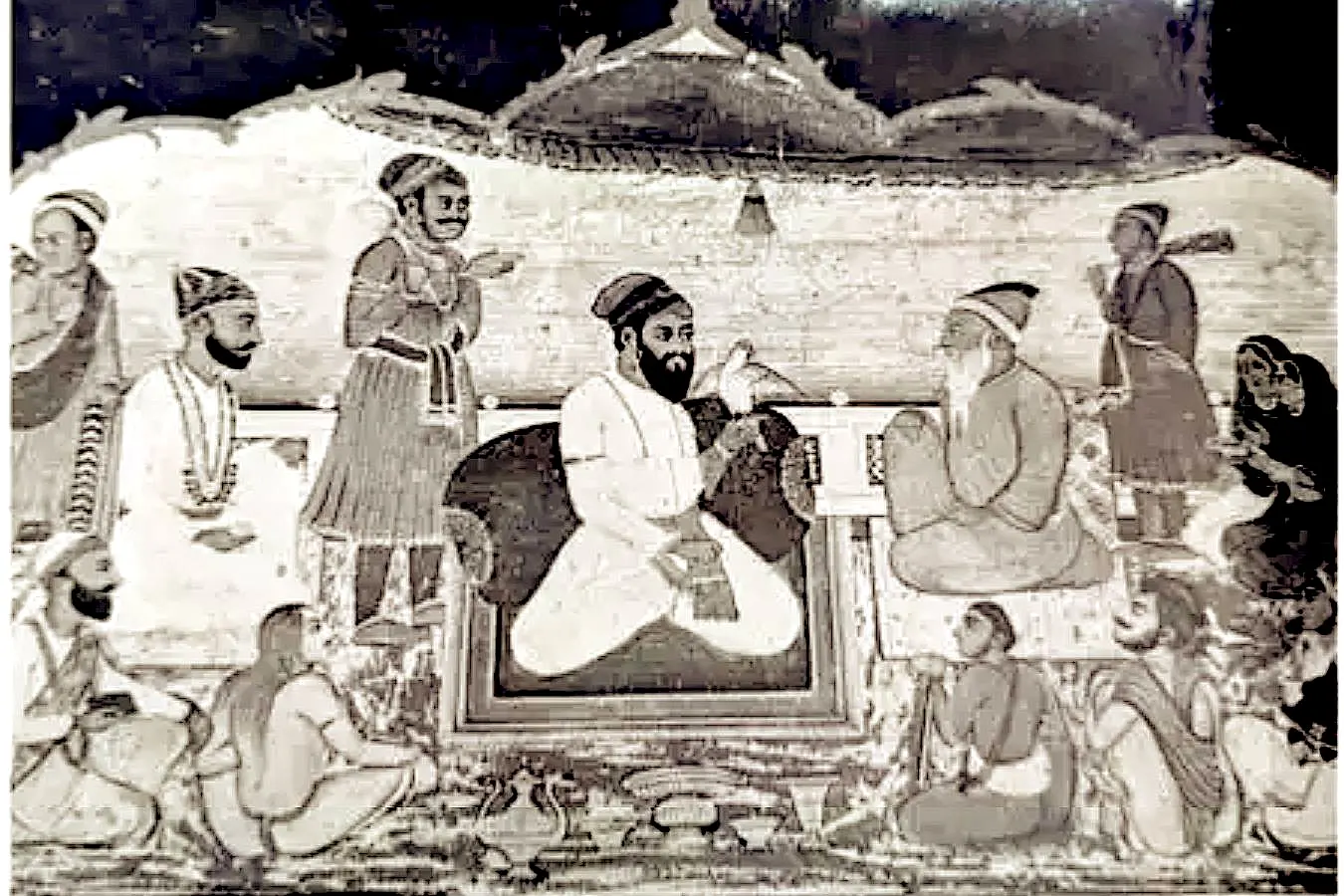
An old fresco of Guru Hargobind meeting Mian Mir. Photo Credit: Unknown artist.
Architecture of the Shrine
Today, Mian Mir Shrine Lahore sits inside a large walled square, about 60 metres on each side. In the middle, the tomb stands on a raised platform of white marble, roughly 16 metres square, with marble steps leading up to it.
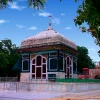
Above the grave chamber, there rises a pale dome with deep overhanging eaves, called chhajja. Around the courtyard, a line of small rooms, or cells, once housed dervishes and pilgrims. On the western side stands a mosque with five short domes. Finally, you enter the complex through a gateway that carries a Persian couplet above its arch.
Interestingly, Lahore Cantonment was first called Mian Mir Cantonment, after this very shrine.
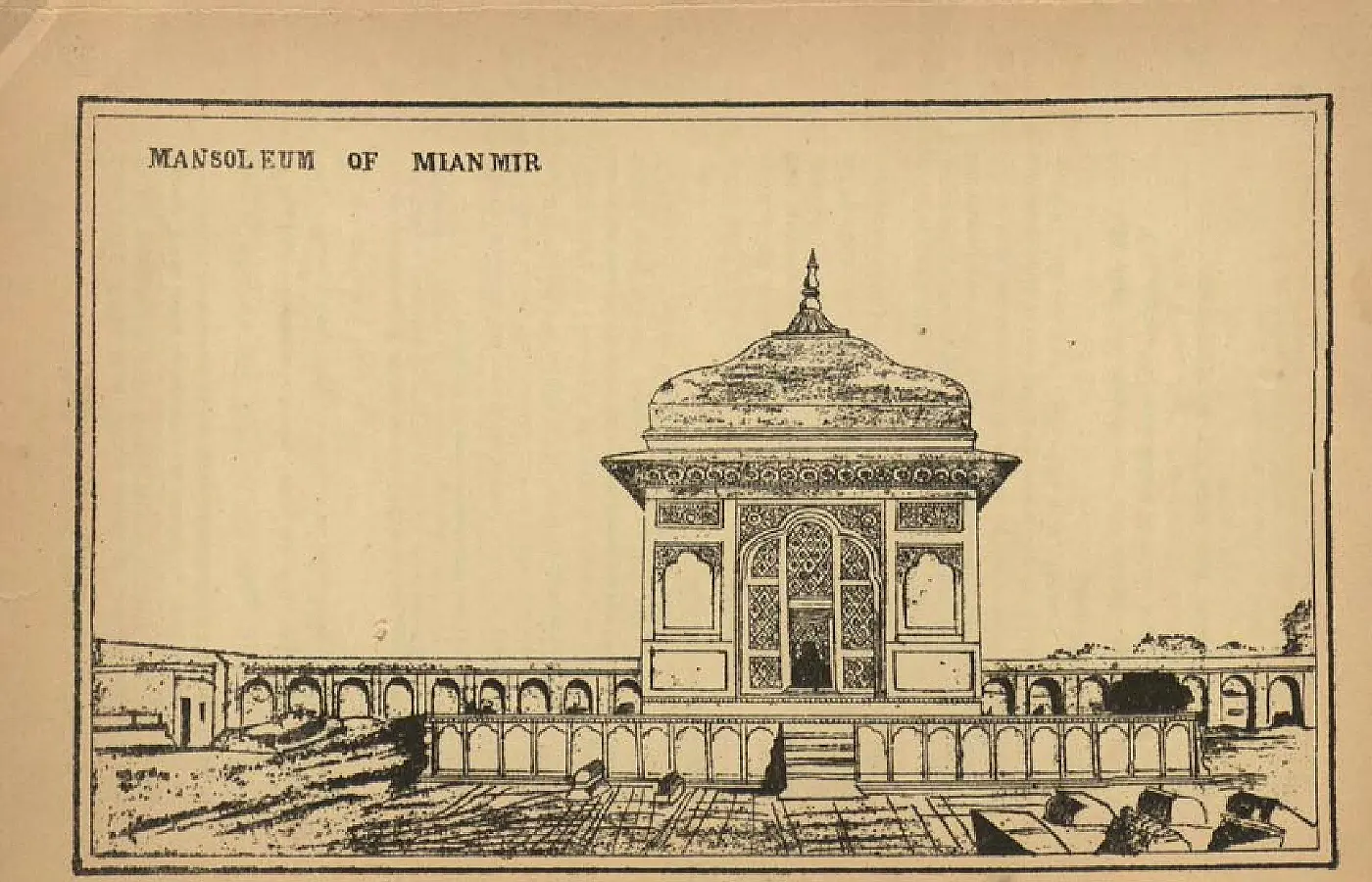
The mausoleum of Mian Mir in an 1892 lithograph. Photo Credit: Syad Muhammad Latif.
What to See at Mian Mir Shrine Lahore
The Tomb at Mian Mir Shrine Lahore
First, climb the marble steps and look into the grave chamber through its screened doors. Usually, devotees cover the grave with flower petals and green chadars. So please stay calm and quiet here, as many people come to pray.
Mirror Work Ceiling
Once inside, look up. The underside of the dome glitters with ayina kari, or mirror work, made of thousands of small pieces of glass. When the lamps are lit, the whole ceiling sparkles.
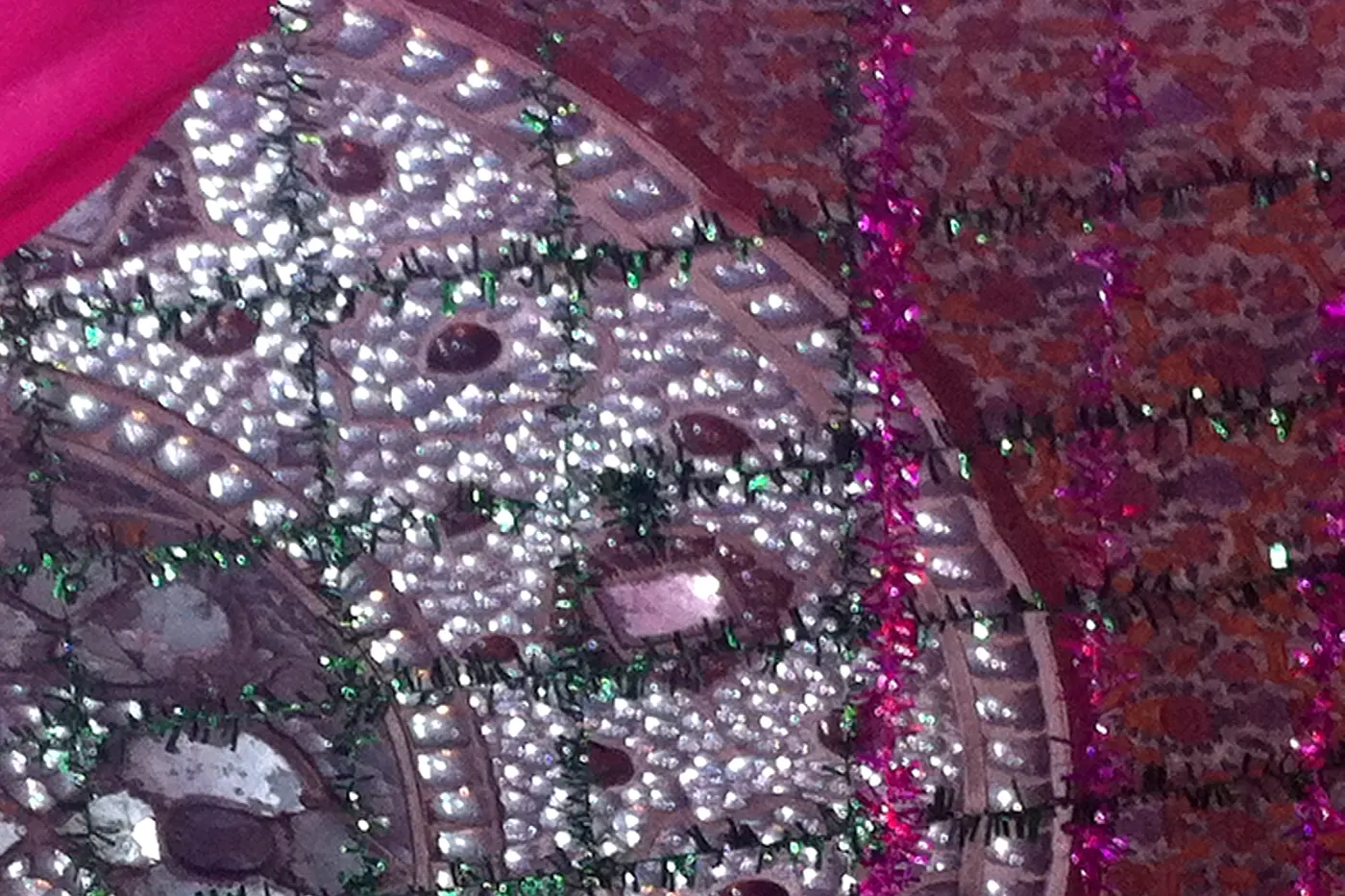
Mirror work inside the tomb. Photo Credit: Abdul Ahad Jajja, CC BY-SA 4.0.
The Oil Lamp Niches
In addition, along one wall, rows of small arched niches hold clay lamps called diyas. Then visitors light them and make a quiet prayer. On Thursday evenings, these niches glow with dozens of tiny flames.
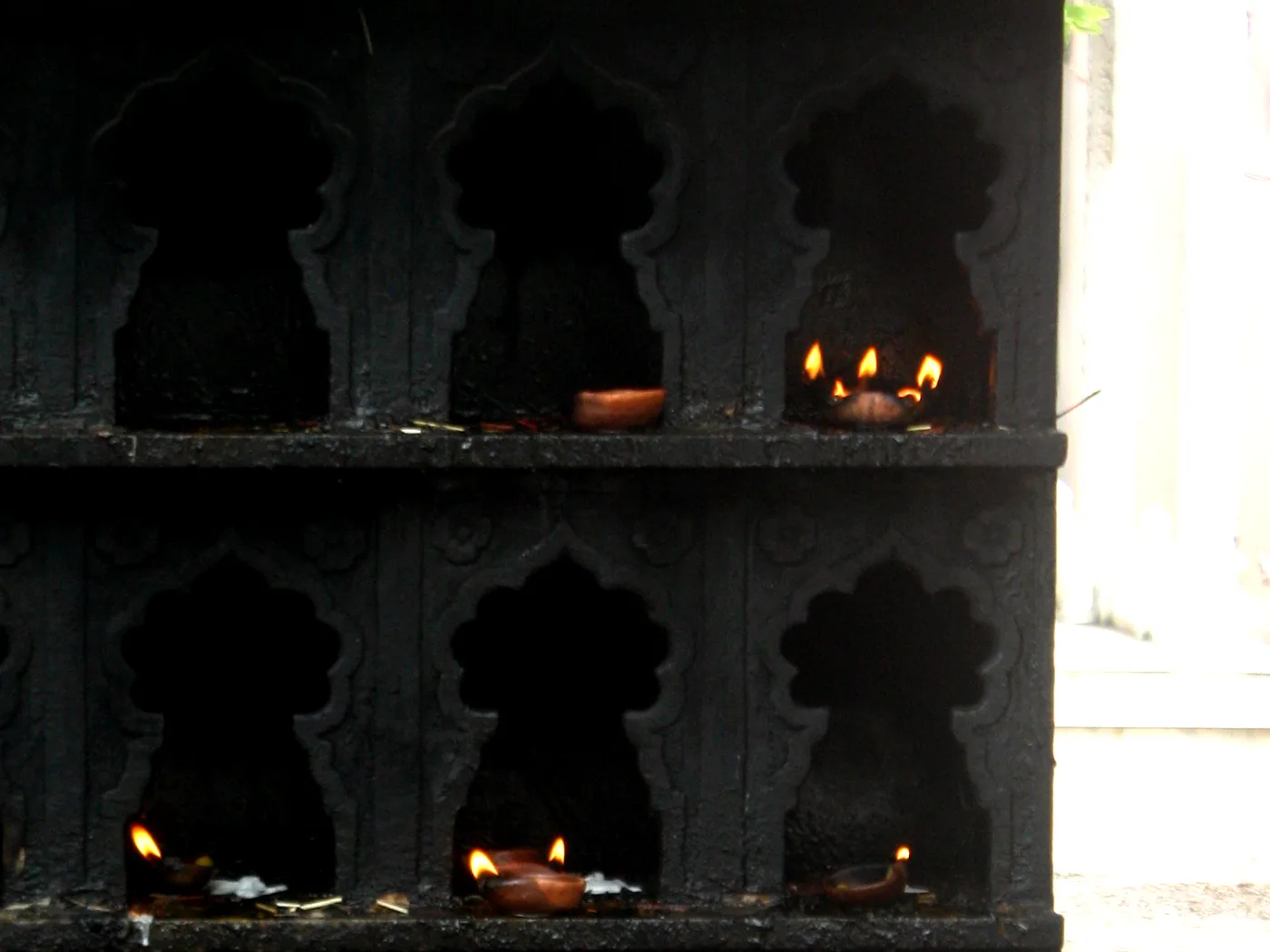
Oil lamps in the niches. Photo Credit: Sumbulnatalia, CC BY-SA 3.0.
Things to Do
- Feed the pigeons in the courtyard. You can usually buy grain from sellers near the entrance.
- Light a diya in the lamp niches.
- Notice the coloured threads that people tie for a mannat, or wish.
- Visit on a Thursday evening, when the shrine is busiest and most atmospheric.
- Walk next door to the tomb of Nadira Begum, Dara Shikoh’s wife.
If you visit during the annual Urs, you will also see qawwali, langar and huge crowds. The Urs takes place every year in the Islamic month of Rabi-ul-Awwal.
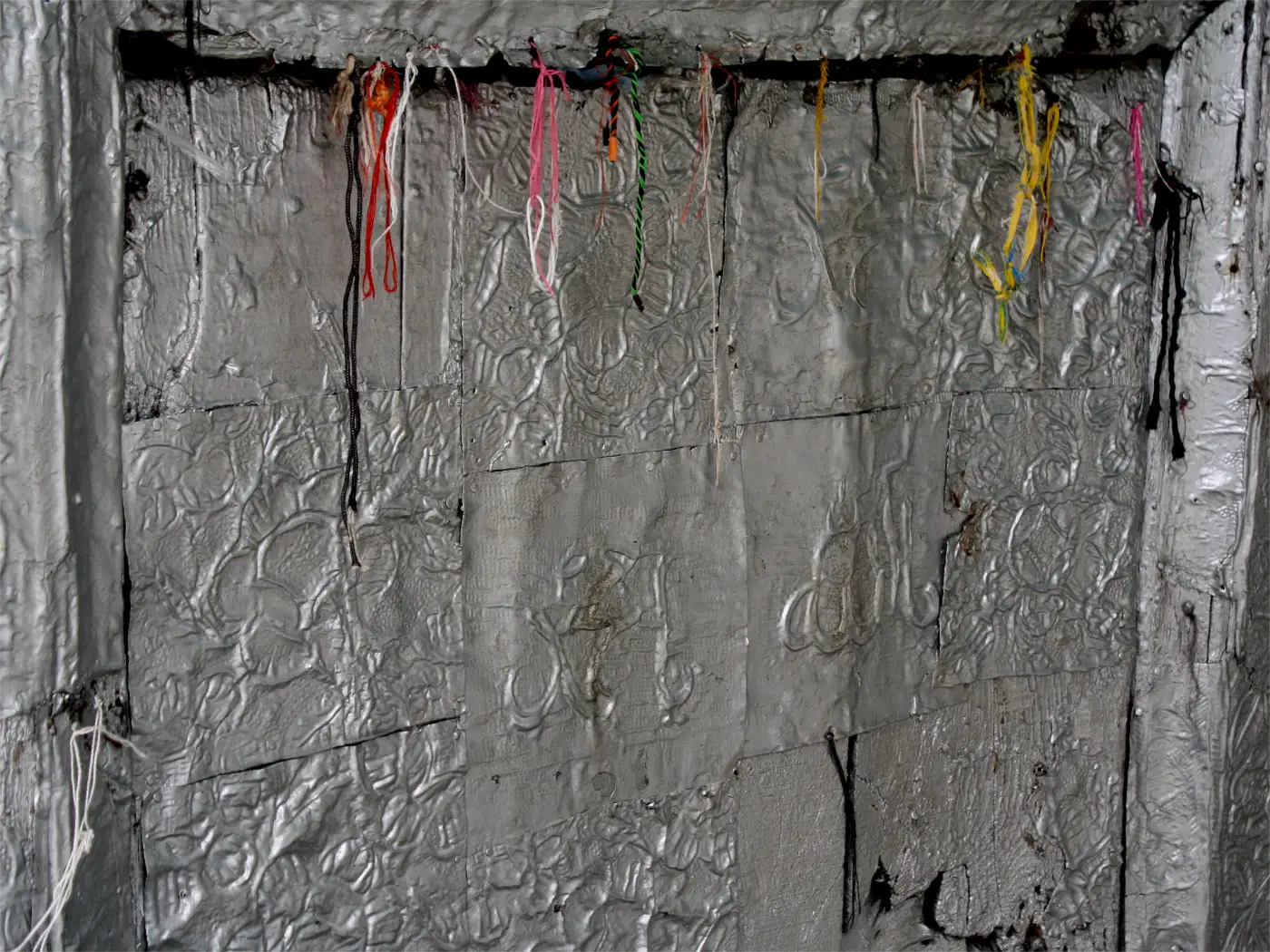
Threads tied for wishes. Photo Credit: Sumbulnatalia, CC BY-SA 3.0.
Food Nearby
Just like most Lahore shrines, Mian Mir has its own food traditions. Stalls outside sell qatlama, a crisp fried flatbread, and doodh badam, warm milk with almonds. Both of them taste best in the cool evening, so plan an evening visit.
For a proper Lahori breakfast, try halwa puri at one of the many shops in nearby Dharampura. Otherwise, the restaurants of Lahore Cantt and Mall Road are a short drive away.
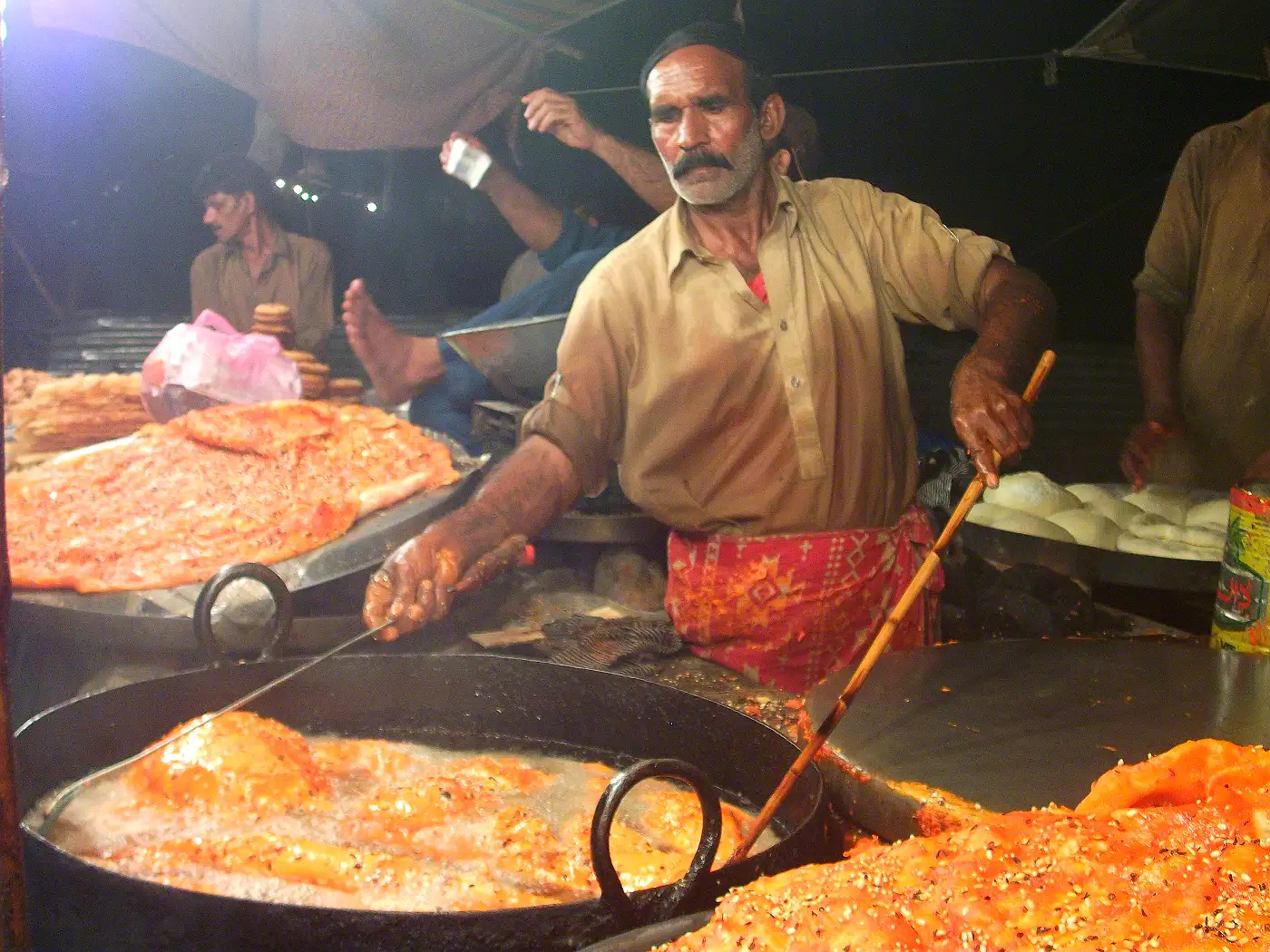
Qatlama being fried at a Lahore stall. Photo Credit: Muhammad Umair Mirza, CC BY-SA 4.0.
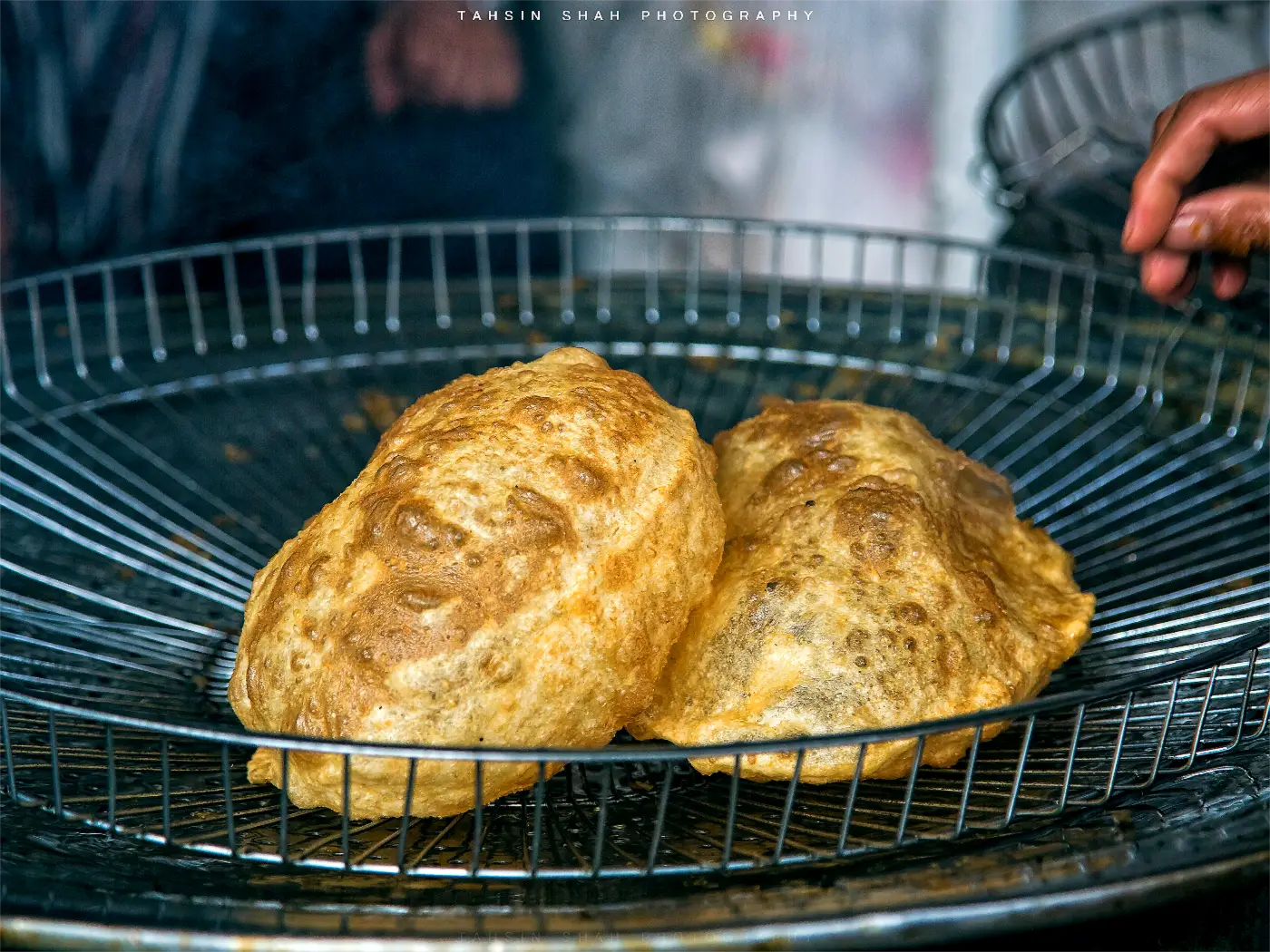
Halwa puri, a Lahori breakfast favourite. Photo Credit: Tahsin Shah, CC BY-SA 4.0.
Visiting Mian Mir Shrine Lahore
- Location: Darbar Hazrat Mian Mir, Alamganj, Dharampura, Lahore, close to Lahore Cantonment.
- Timings: Open daily from early morning until late at night. Timings and access change during the Urs, so check before you go.
- Entry fee: Free.
- Best time: October to March. Mornings are quiet, while Thursday evenings are lively.
- Time needed: 45 minutes to 1 hour.
- Parking: Limited street parking outside. Busy on Thursdays and during the Urs.
- Dress code: Wear modest clothes. Women should cover their heads, and everyone removes shoes before the marble area.
- Women and families: Families visit often. As at many shrines, women may not be allowed right beside the grave, so follow the staff’s guidance.
- Photography: Allowed in the courtyard. Avoid photographing people while they pray.
- Accessibility: The courtyard is flat, but the tomb platform has steps.
- Safety: Keep valuables safe in crowds, especially during the Urs.
The Punjab Auqaf Department manages the shrine.
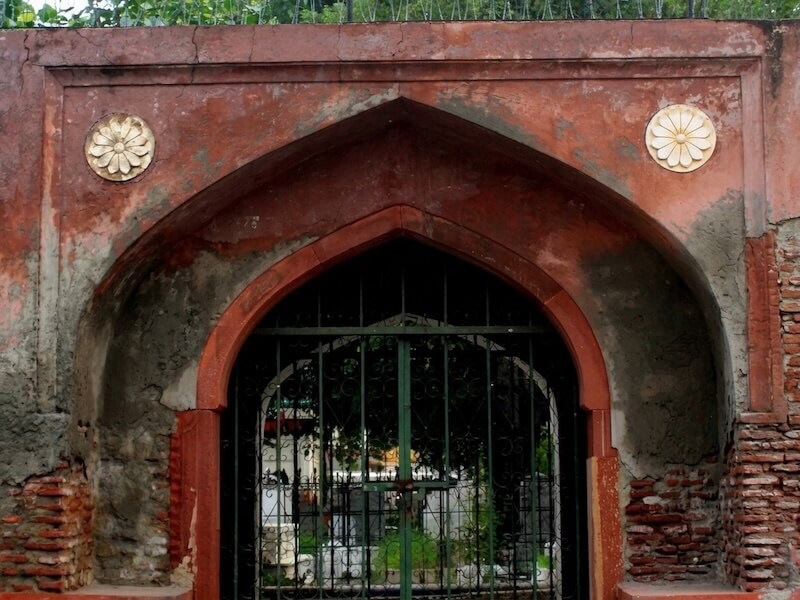
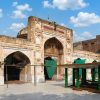
An old gateway in the shrine complex. Photo Credit: Sumbulnatalia, CC BY-SA 3.0.
How to Get There
First of all, the shrine lies in Dharampura, east of central Lahore. By Careem, inDrive or rickshaw, ask for Darbar Mian Mir, on Mian Mir Darbar Road. From Mall Road, the ride takes about 20 to 25 minutes, depending on traffic.
If you drive yourself, follow the canal or Dharampura road towards Lahore Cantonment. After that, park near the shrine gate and walk in.
Places Near Mian Mir Shrine Lahore
- Tomb of Nadira Begum: Right next door, the tomb of Dara Shikoh’s wife stands in the middle of an old water tank.
- Tomb of Mullah Shah: The shrine of Mian Mir’s favourite student is close by.
- Tomb of Ali Mardan Khan: A huge Mughal tomb in nearby Mughalpura.
- Shalimar Gardens: Shah Jahan’s royal garden, a short drive north-east.
- Bagh-e-Jinnah: Lahore’s grand old park on Mall Road.
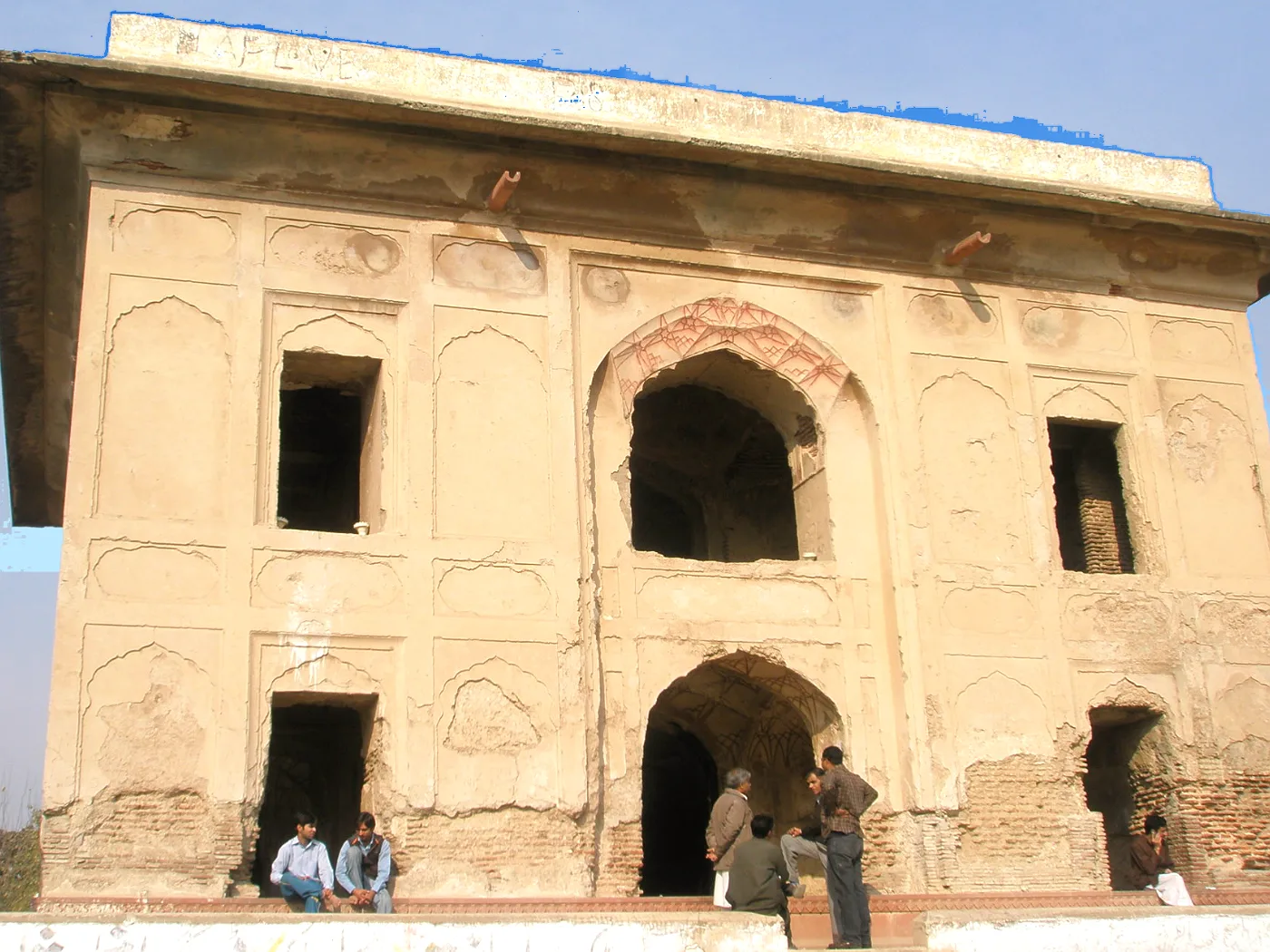
Tomb of Nadira Begum. Photo Credit: Asim inayat, CC BY-SA 3.0.
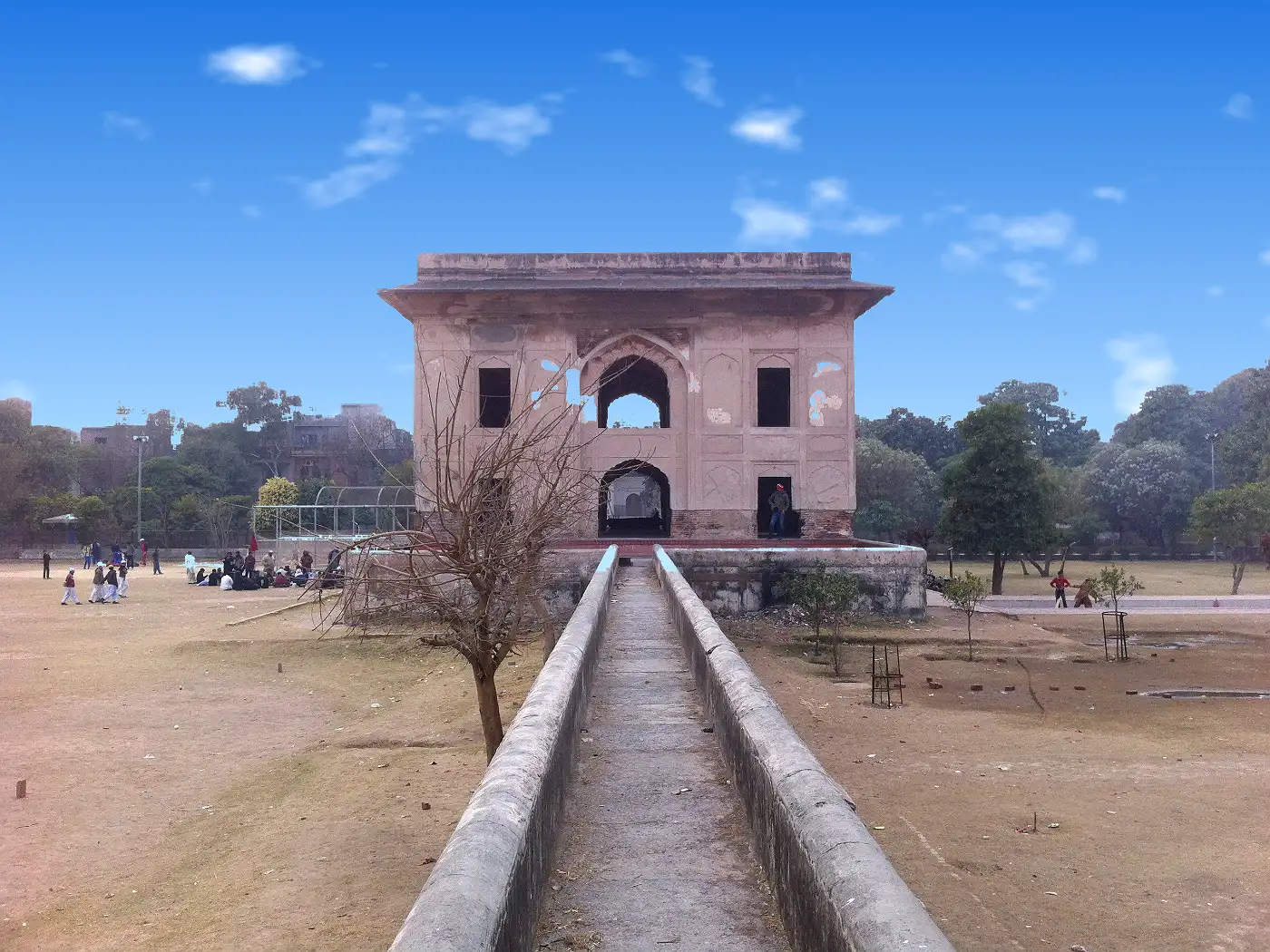
The water channel leading to Nadira Begum’s tomb. Photo Credit: Abdul Ahad Jajja, CC BY-SA 3.0.
Frequently Asked Questions
Who was Mian Mir?
He was a Sufi saint of the Qadiri order who lived in Lahore and died in 1635. Prince Dara Shikoh was his student.
Is there an entry fee at Mian Mir Shrine?
No. Entry is free for everyone.
Did Mian Mir lay the foundation of the Golden Temple?
A popular Sikh and Sufi tradition says so. However, the earliest records do not mention it, so historians treat it as a tradition.
When is the Urs of Mian Mir held?
Every year in the Islamic month of Rabi-ul-Awwal. Exact dates change each year.
Can women visit the shrine?
Yes. Women should cover their heads and follow the staff’s guidance near the grave.
Conclusion
The Shrine of Mian Mir is more than an old tomb. It is a living place full of pigeons, lamps, prayers and stories that connect Mughal princes, Sikh Gurus and ordinary Lahoris. So, come on a quiet morning or a busy Thursday evening, sit in the courtyard for a while, and feel the calm that has drawn people here for almost 400 years.
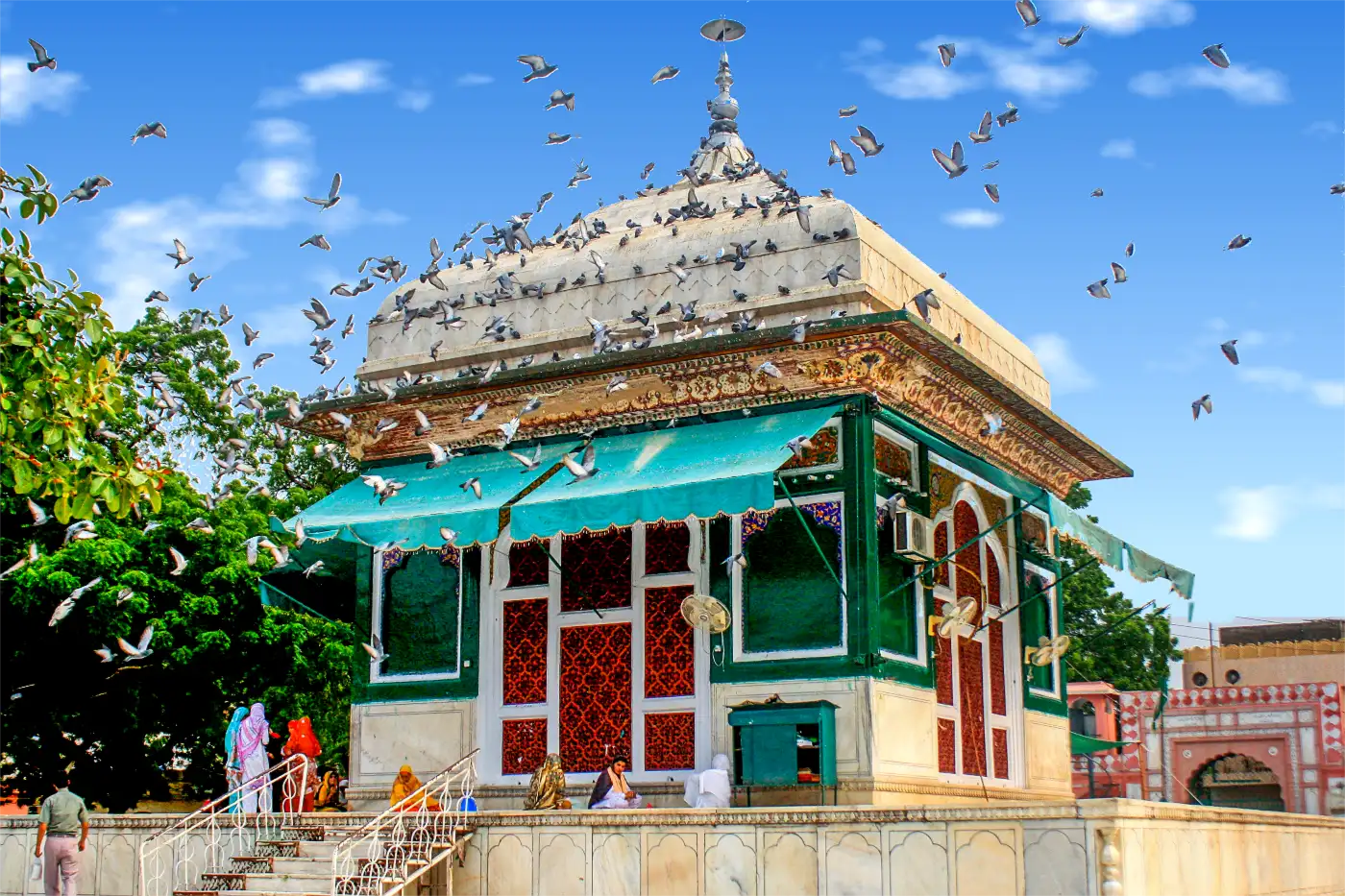
Pigeons over the dome of the shrine. Photo Credit: Sumbulnatalia, CC BY-SA 3.0.
Cover photo: Muhammad Umair Mirza, CC BY-SA 4.0 (edited).