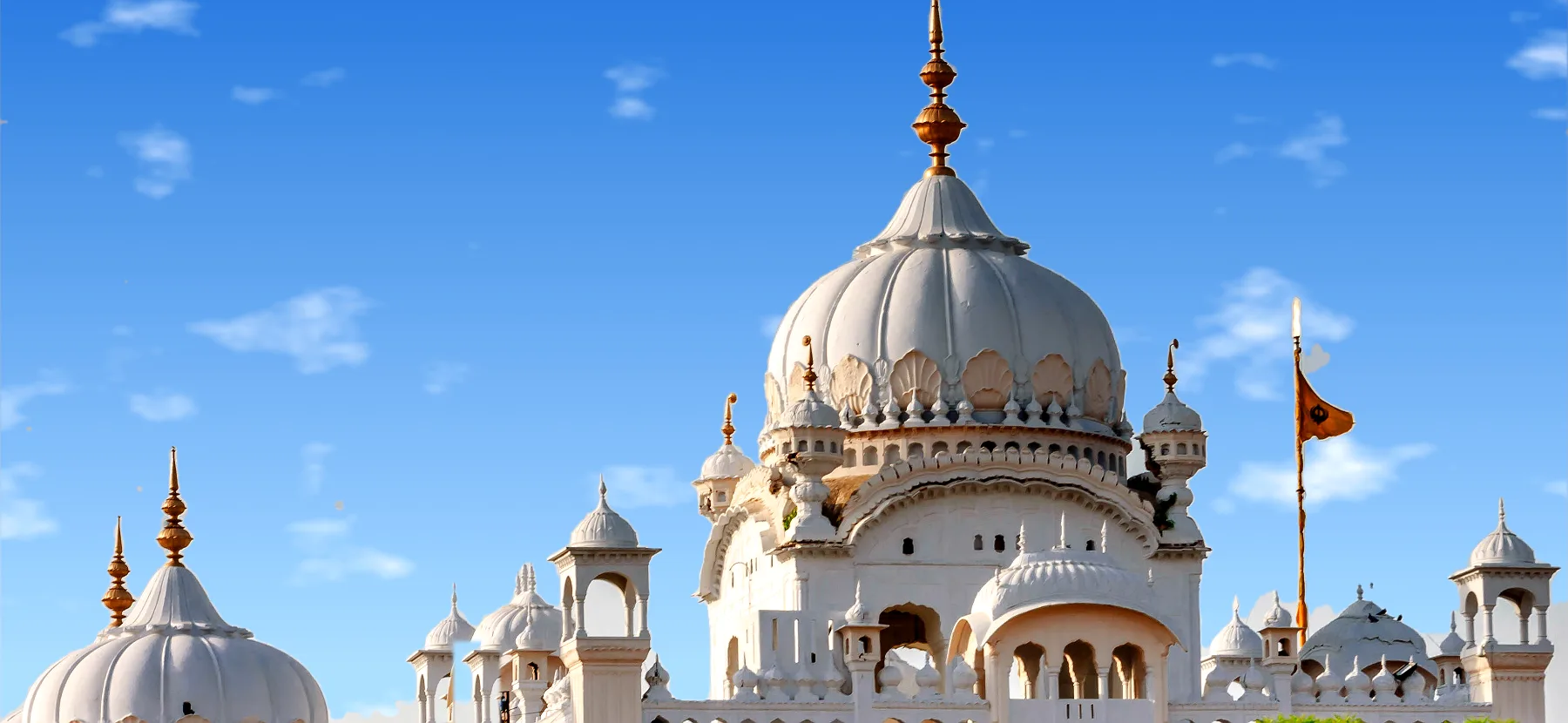
Stand in Hazuri Bagh and look north. Between the Badshahi Masjid and the walls of the Lahore Fort, you will see a white building with gilded, fluted domes shining in the sun. This, in fact, is the Samadhi of Ranjit Singh Lahore, the memorial of Maharaja Ranjit Singh, the ruler people still call Sher-e-Punjab, the Lion of Punjab.
In fact, it marks the spot where he was cremated in 1839. Today, it is also a sacred place for Sikhs and one of the most beautiful buildings in the Walled City. In this guide, we explain its story, what is inside and, most importantly, who can visit and how.
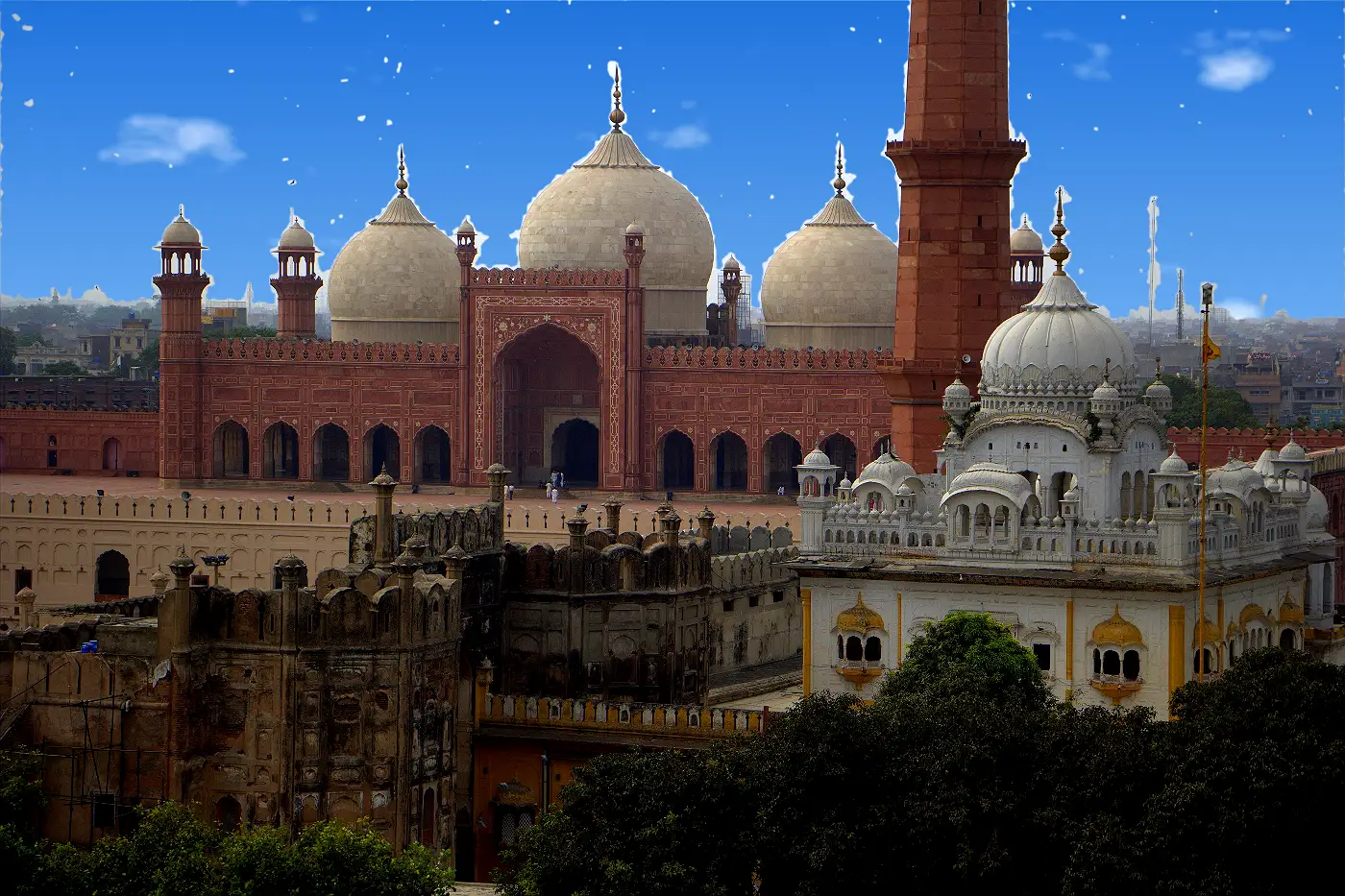
The samadhi beside Badshahi Masjid. Photo Credit: The Walled City of Lahore Authority, CC BY-SA 4.0.
History of the Samadhi of Ranjit Singh Lahore
To begin with, Ranjit Singh was born in 1780 in Gujranwala. In 1799, while still a young man, he took control of Lahore. Then, in 1801, he became Maharaja of Punjab. After that, for almost 40 years, he ruled a powerful Sikh kingdom from Lahore, with the fort as his palace.
Lahore Under the Lion of Punjab
Under Ranjit Singh, Lahore became the capital of an empire that stretched from the Khyber Pass to Kashmir. His court also included Sikhs, Muslims and Hindus. For example, the Fakir brothers, a Muslim family from Lahore, served him as ministers and doctors. Besides that, he owned the famous Koh-i-Noor diamond, which he wore on his arm.
Even today, many Lahoris remember him for repairing old Mughal buildings and building new gardens, including Hazuri Bagh.
His Death and Cremation
Finally, Ranjit Singh died on 27 June 1839. Then he was cremated just outside the fort, and sadly four of his queens and seven concubines died on the funeral pyre in the old practice of sati. Afterwards, his son Kharak Singh carried part of the ashes to Haridwar.
Building the Samadhi of Ranjit Singh Lahore
Kharak Singh started building the samadhi in August 1839, on the cremation spot itself. However, fighting at court and the early deaths of later rulers slowed the work. As a result, it was only completed under Ranjit Singh’s youngest son, Duleep Singh, around 1848. Later, after the British took Punjab in 1849, they carried out repairs that ended in 1851.
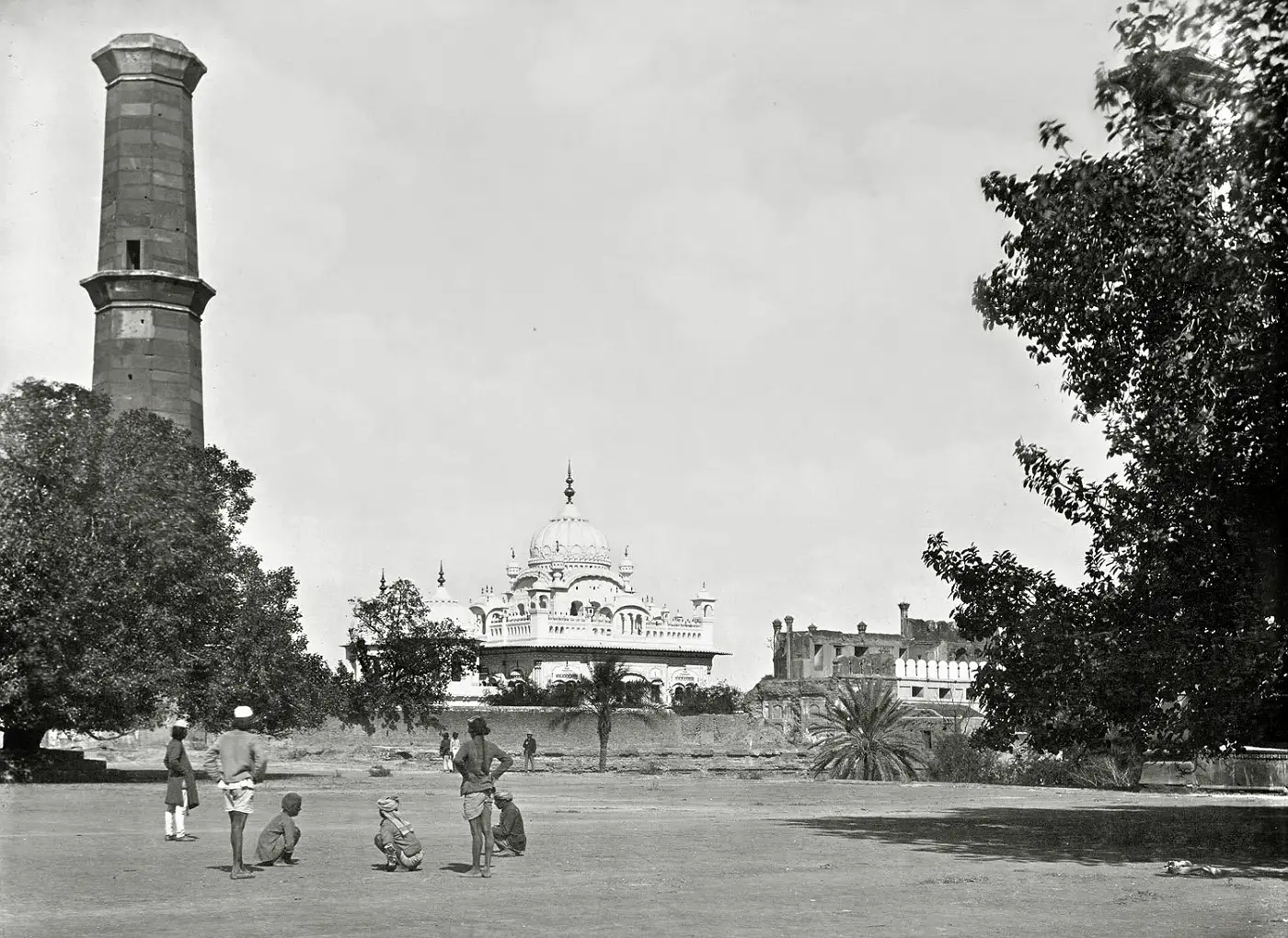
The samadhi in 1863, photographed by Samuel Bourne. Photo Credit: Samuel Bourne.
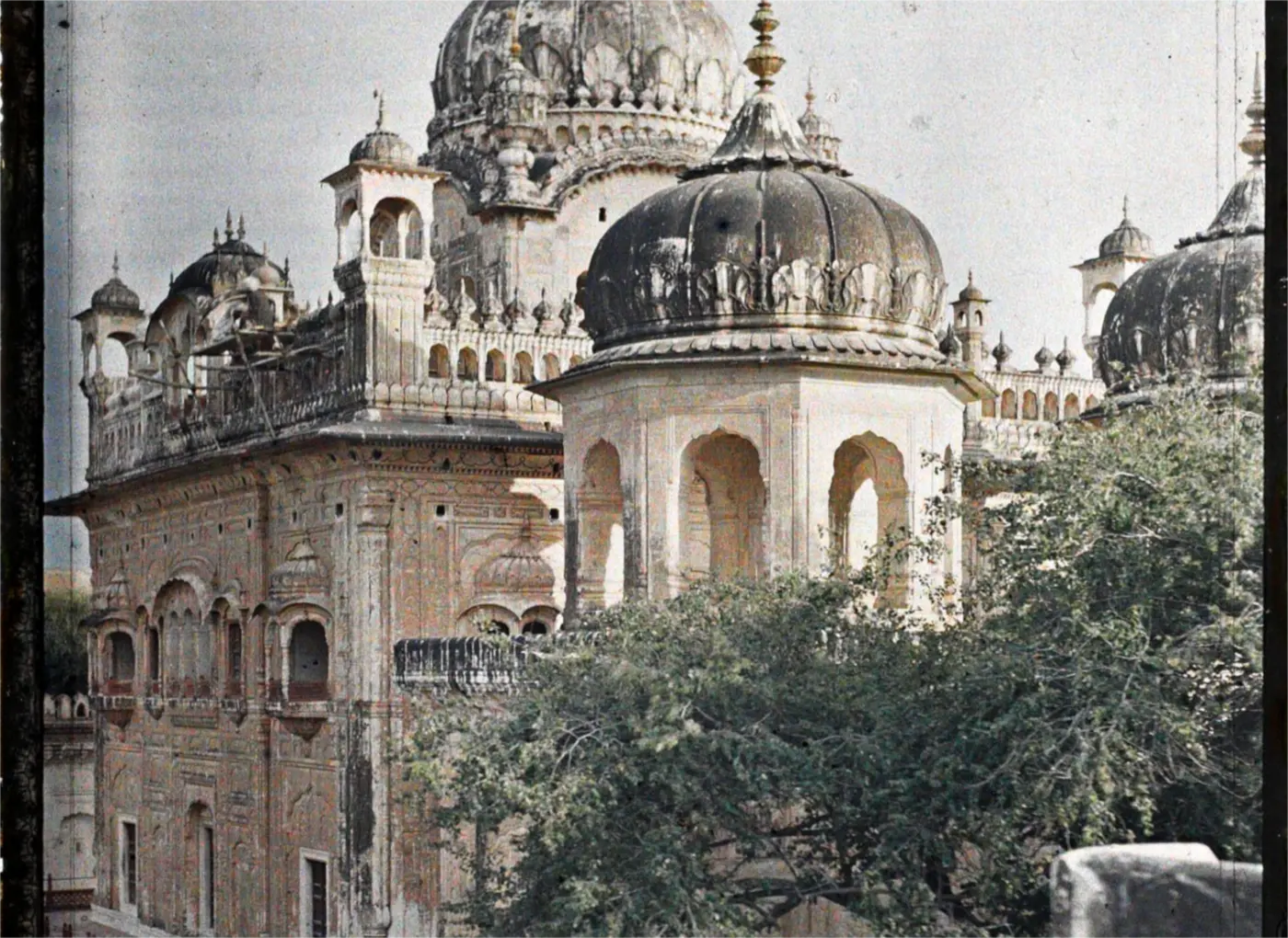
A rare colour photograph of the samadhi from 1914. Photo Credit: Stéphane Passet.
Architecture of the Samadhi
First of all, the samadhi mixes Sikh, Hindu and Islamic styles. From outside, you notice the gilded, fluted domes and small cupolas, along with a decorative balustrade running around the roof. Meanwhile, the doorway is framed in red sandstone, carved with Hindu figures such as Ganesh and Brahma.
Samadhi of Ranjit Singh Lahore: Marble and Glass
Inside, marble also covers almost every surface. The ceilings sparkle with glass mosaic work, while wooden panels hold pieces of coloured glass. In fact, historians believe some of the marble came from buildings inside the Lahore Fort next door.
Interestingly, early British writers did not like the building and called it a confused mix of styles. However, modern historians such as Nadhra Khan argue that it is a proud example of Sikh art, and the last major royal building of independent Punjab.
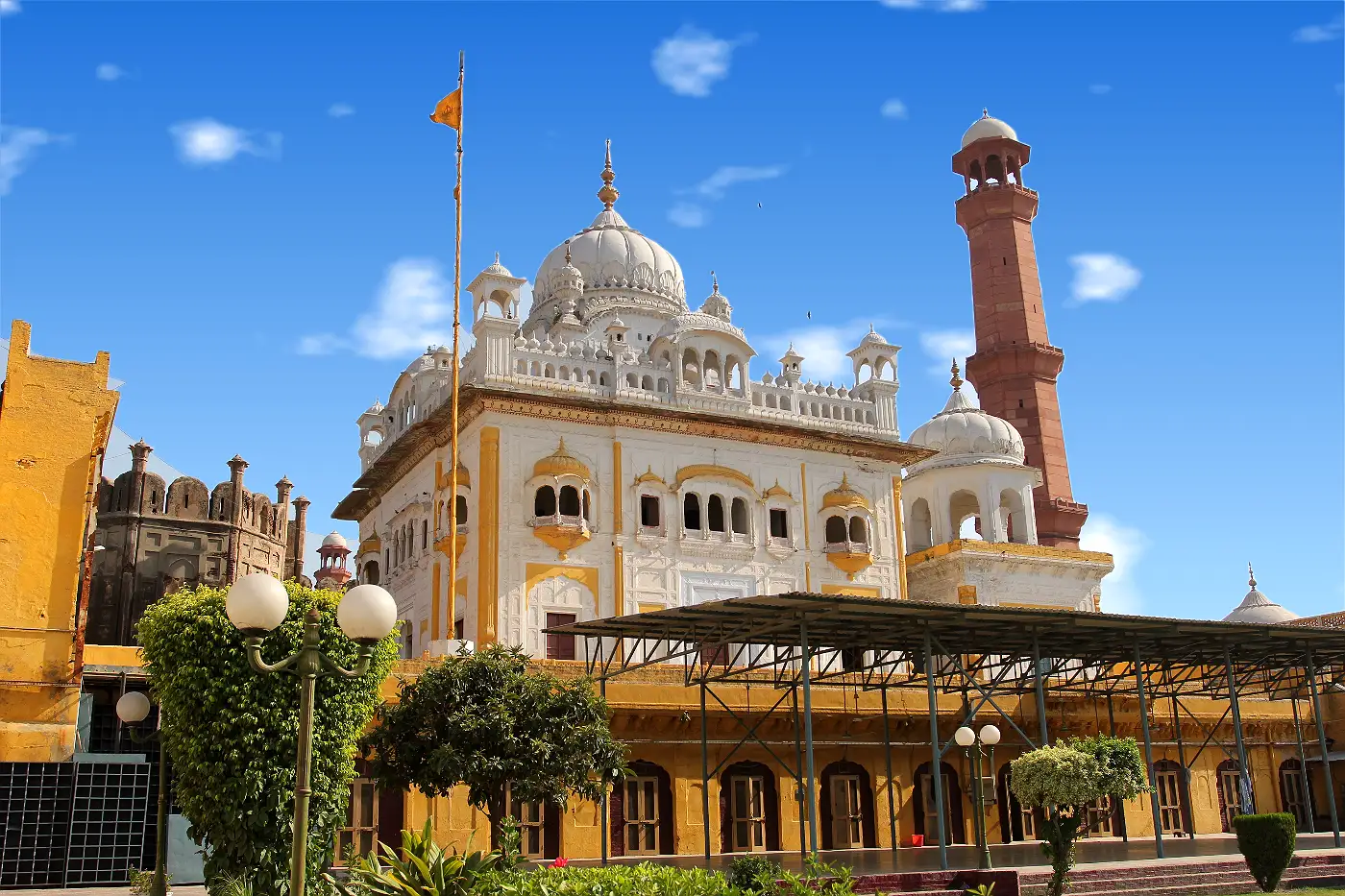
The gilded main dome of the samadhi. Photo Credit: The Walled City of Lahore Authority, CC BY-SA 4.0.
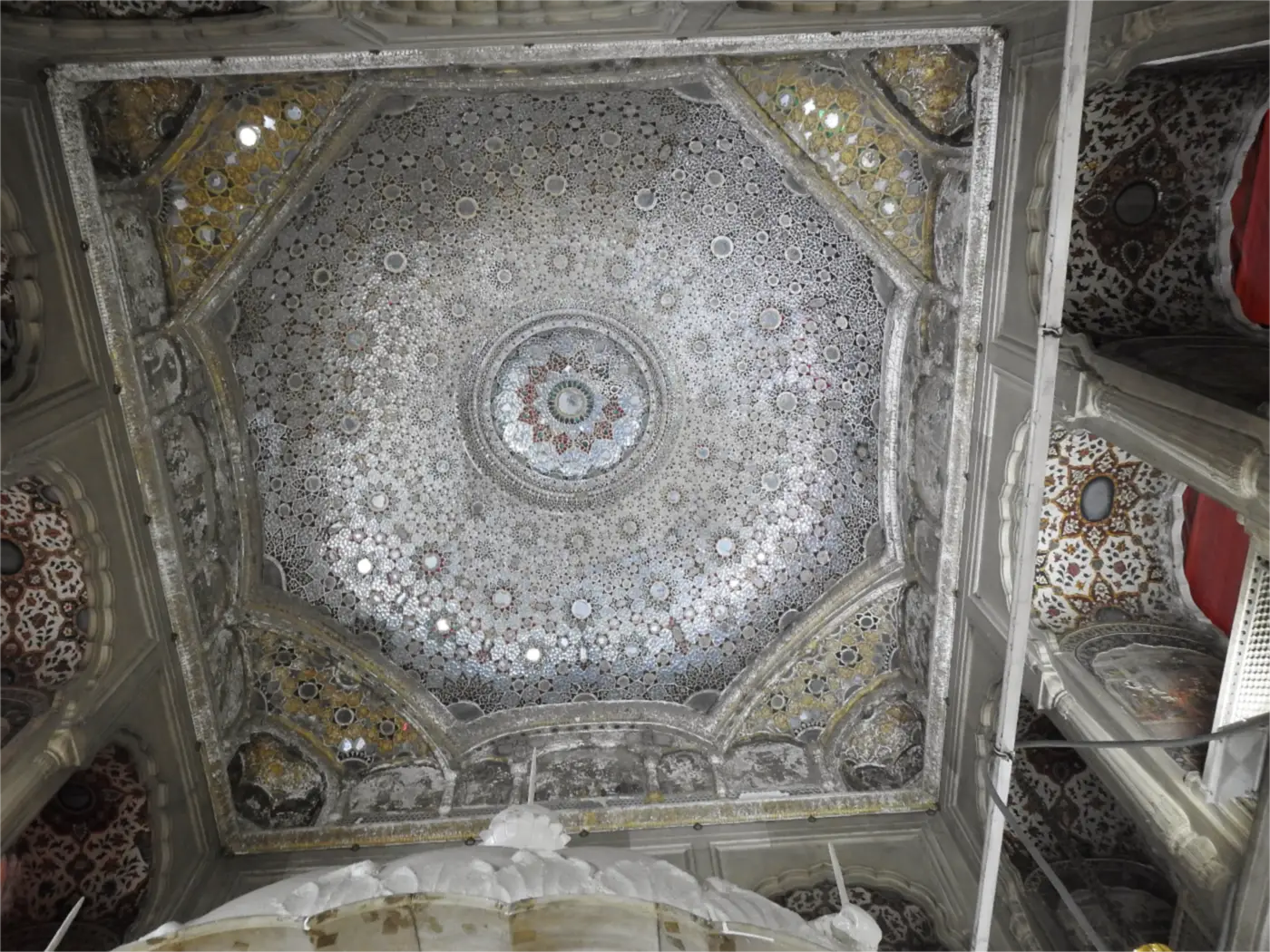
Glass mosaic on the ceiling. Photo Credit: Harvinder Chandigarh, CC BY 4.0.
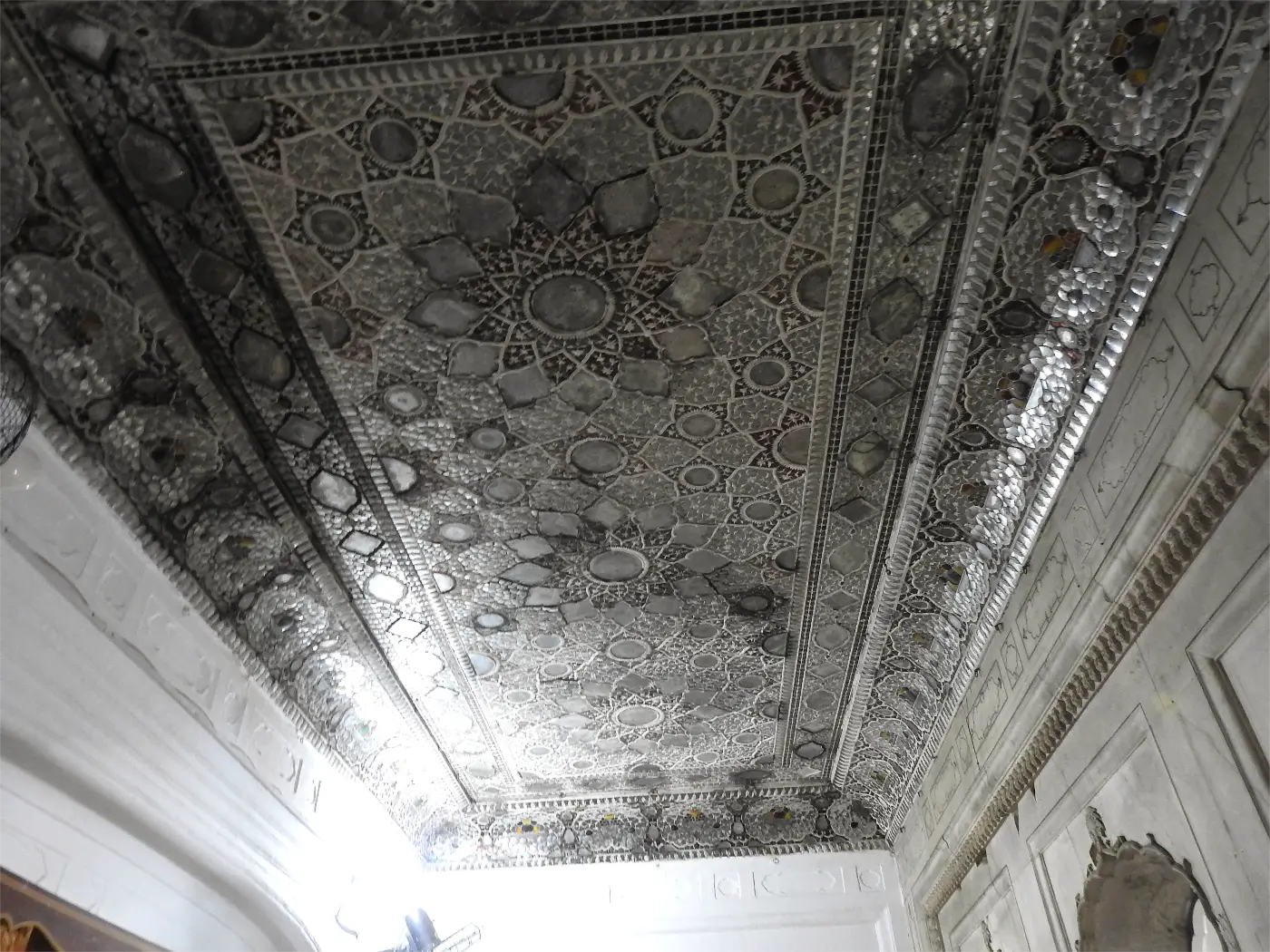
Decorated ceiling panels. Photo Credit: Harvinder Chandigarh, CC BY 4.0.
Inside the Samadhi of Ranjit Singh Lahore
The Lotus Urn of the Samadhi of Ranjit Singh Lahore
At the very centre, a marble pavilion inlaid with semi-precious stones stands over a lotus-shaped marble urn. Inside it, there are Ranjit Singh’s ashes. Around it, in addition, eleven smaller marble knobs remember the four queens and seven concubines who died with him.
The Frescoes
Meanwhile, the walls once glowed with frescoes painted between 1839 and 1849, in a mix of Pahari and Punjabi styles. Even so, about 48 panels survive across two levels. For example, they show the Sikh Gurus, scenes from old Indian epics and lovers from classical poetry.
Just to the west, there are also two smaller samadhis that honour Kharak Singh and his son, Kanwar Nau Nihal Singh. Incidentally, Nau Nihal Singh also built the famous Haveli Nau Nihal Singh in the old city.
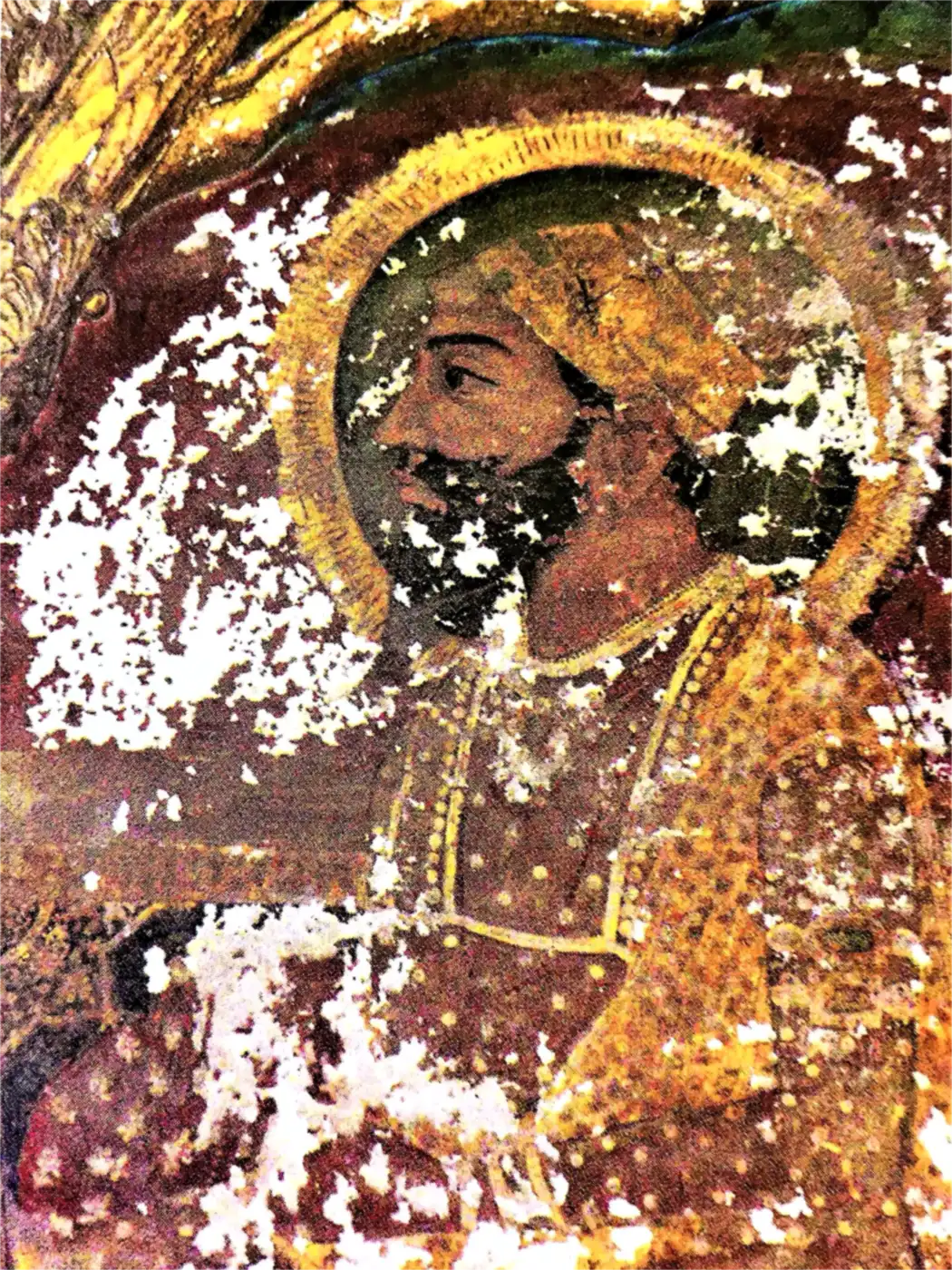
A fresco of Guru Ram Das from the samadhi. Photo Credit: Unknown artist.
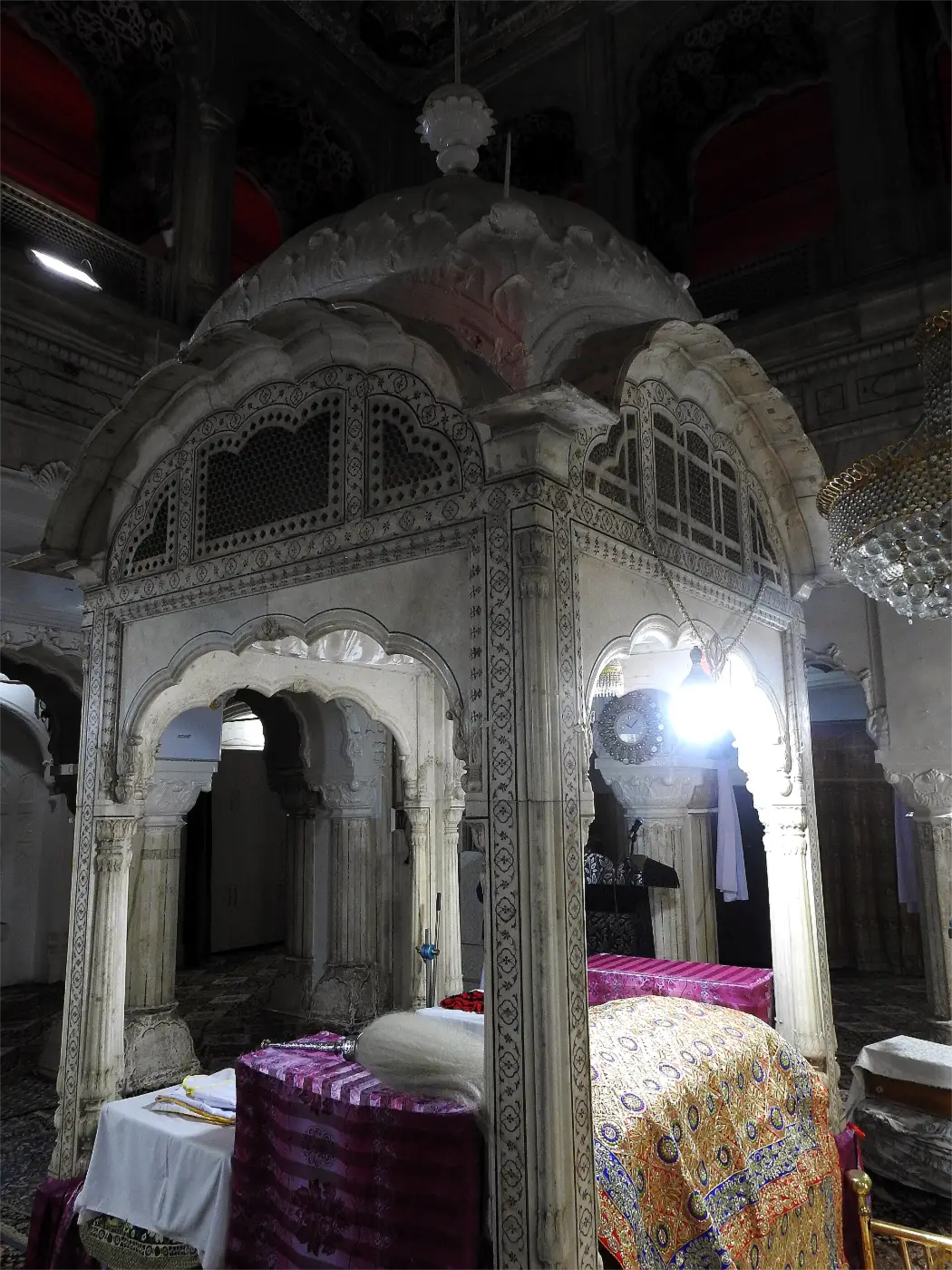
The marble pavilion over the urn. Photo Credit: Harvinder Chandigarh, CC BY 4.0.
Things to Do
- View the gilded domes from Hazuri Bagh, especially in the late afternoon light.
- Look across from the steps of Badshahi Masjid to see the samadhi, the fort and the mosque together.
- If you have permission to enter, study the ceiling mosaics and the frescoes of the Gurus.
- Visit the next-door Gurdwara Dera Sahib, linked to the martyrdom of Guru Arjan Dev.
Every year on 29 June, Sikh pilgrims gather here for the death anniversary of Maharaja Ranjit Singh. In addition, large groups arrive for Vaisakhi in April. So on these days, security is tight and the area is very busy.
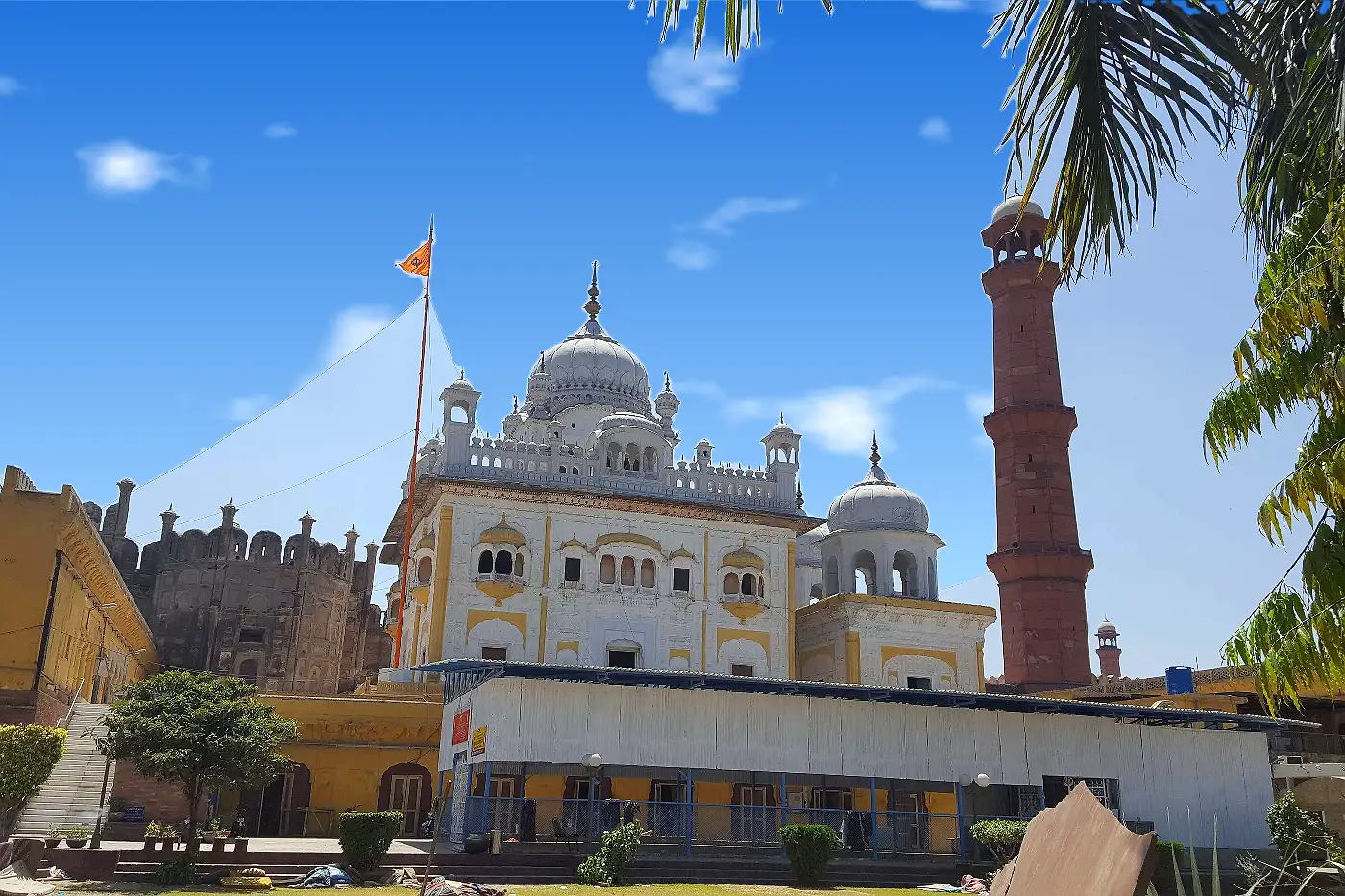
The samadhi with a minaret of Badshahi Masjid. Photo Credit: Shahzaib Damn Cruze, CC BY-SA 4.0.
Food Nearby
Luckily, the samadhi is only a short walk from Fort Road Food Street. In the evening, its rooftop restaurants also offer karahi, tikka, fish and a beautiful view of the lit-up Badshahi Masjid.
For breakfast, on the other hand, try halwa puri or siri paye at the old shops around Taxali Gate. Also, look out for chai stalls along Fort Road for a quick break.
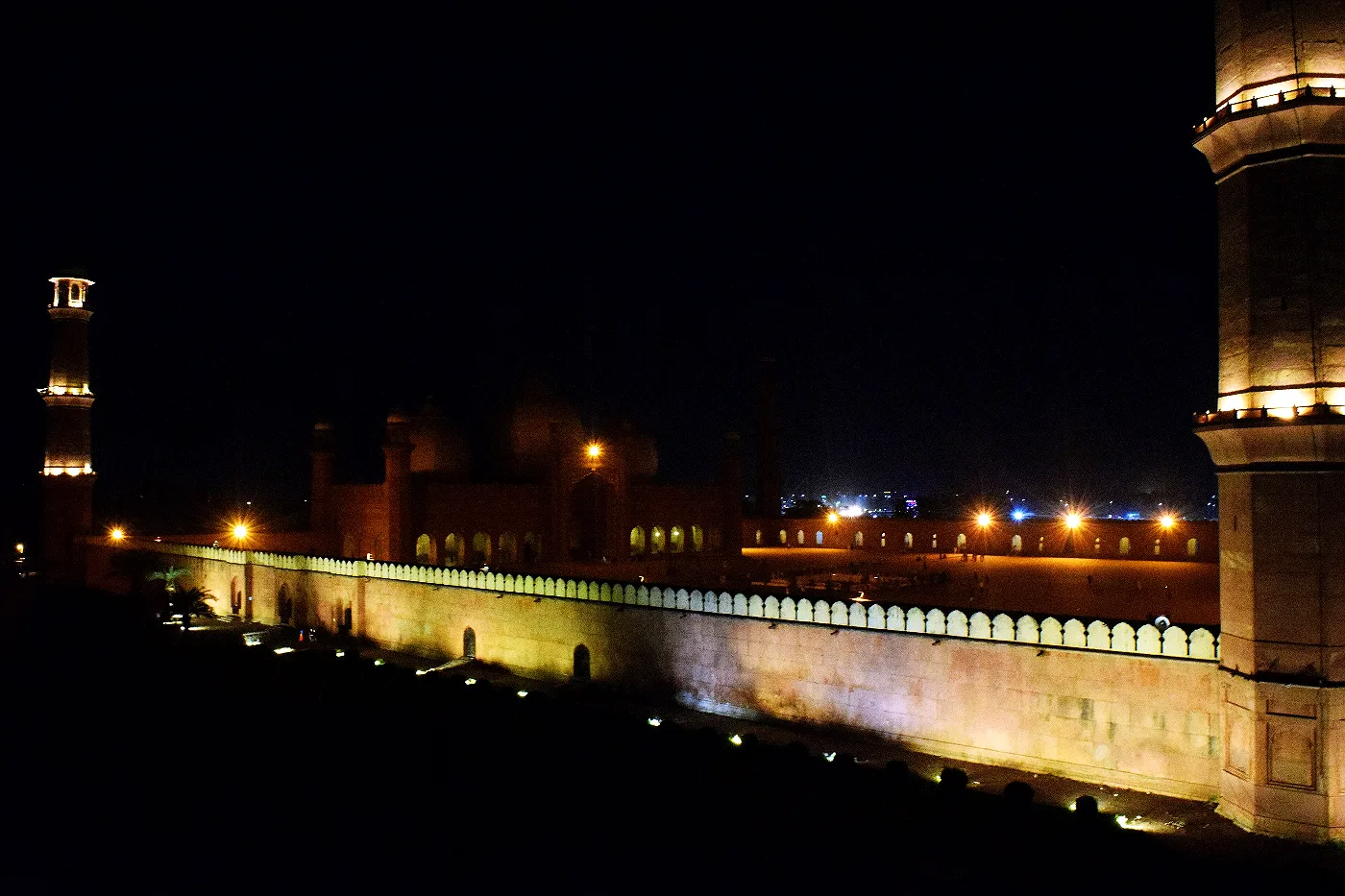
Badshahi Masjid seen from Fort Road Food Street. Photo Credit: Khadijareyaz, CC BY-SA 4.0.
Visiting the Samadhi of Ranjit Singh Lahore
- Location: Beside Gurdwara Dera Sahib, between Badshahi Masjid and the Lahore Fort, Walled City of Lahore.
- Who can enter: Entry is open to Sikh pilgrims. Other visitors usually need special permission from the Evacuee Trust Property Board (ETPB).
- Viewing from outside: Anyone can see the samadhi from Hazuri Bagh and the Badshahi Masjid area.
- Entry fee: There is no ticket for the samadhi itself. Hazuri Bagh and Badshahi Masjid are free to enter.
- Best time: October to March, in the morning or late afternoon.
- Time needed: 20 to 30 minutes for the outside view, or about an hour with permission to enter.
- Parking: Use the parking areas around Greater Iqbal Park and Fort Road, then walk.
- Dress code: If you enter, cover your head, remove your shoes and dress modestly.
- Photography: Ask staff before taking photos inside.
- Accessibility: Hazuri Bagh is flat and easy to walk, but the samadhi itself has steps.
Rules on entry can change, especially around Sikh festivals, so check with the ETPB before you go.
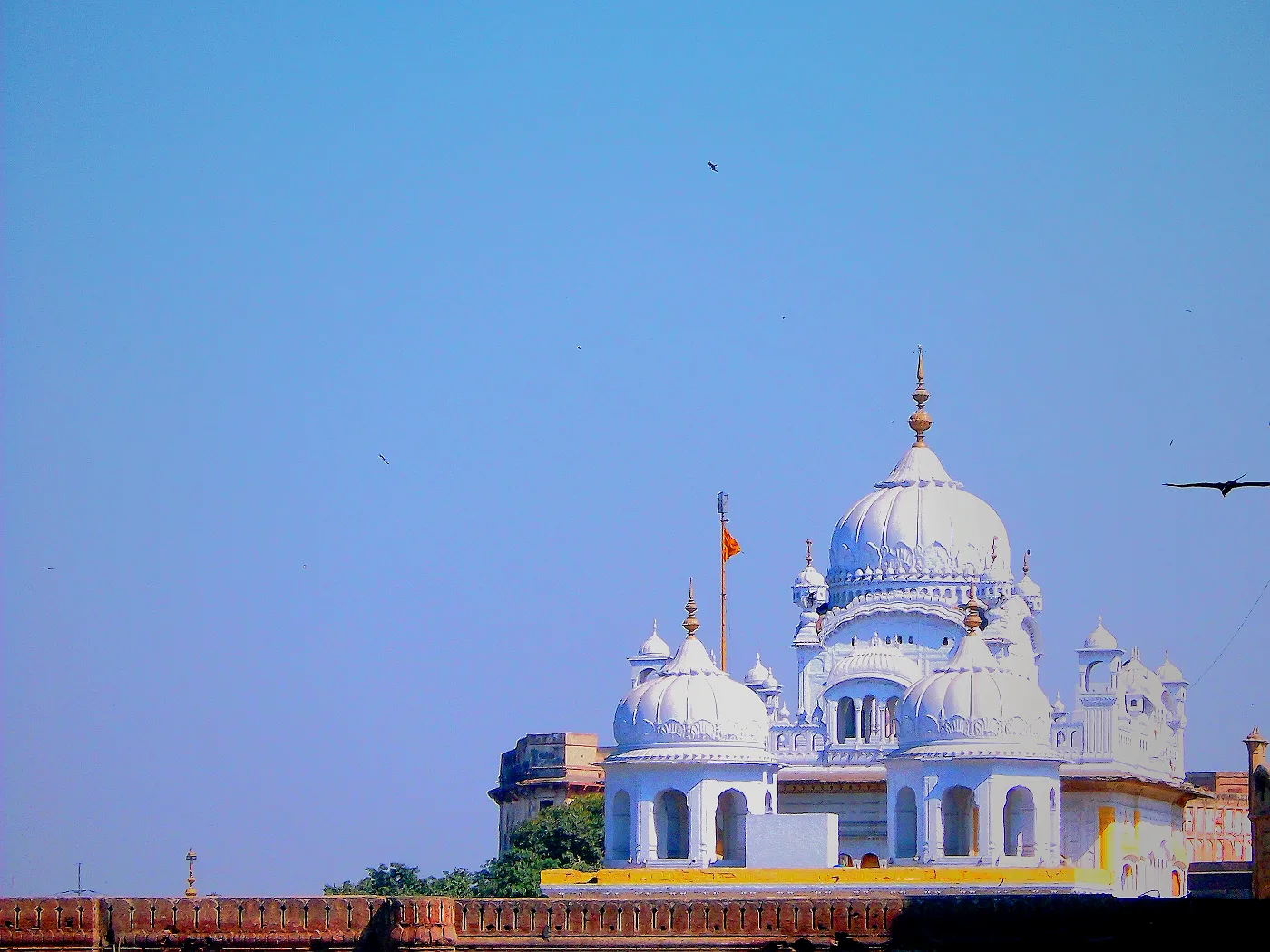
The domes of the samadhi. Photo Credit: Muhammad Umair Mirza, CC BY-SA 4.0.
How to Get There
First, note that the samadhi stands at the northern edge of the Walled City, next to Badshahi Masjid. By Careem, inDrive or rickshaw, ask for Badshahi Masjid or Hazuri Bagh, then walk through the garden.
By public transport, take the Metro Bus to Azadi Chowk. From there, it is then about a 10-minute walk past Minar-e-Pakistan and Greater Iqbal Park.
Places Near the Samadhi of Ranjit Singh Lahore
- Hazuri Bagh: the garden right in front, with Ranjit Singh’s marble baradari.
- Badshahi Masjid: one of the largest mosques in the world, just next door.
- Lahore Fort: the Mughal and Sikh palace, through the Alamgiri Gate.
- Tomb of Allama Iqbal: beside the steps of Badshahi Masjid.
- Minar-e-Pakistan: in Greater Iqbal Park, a short walk away.
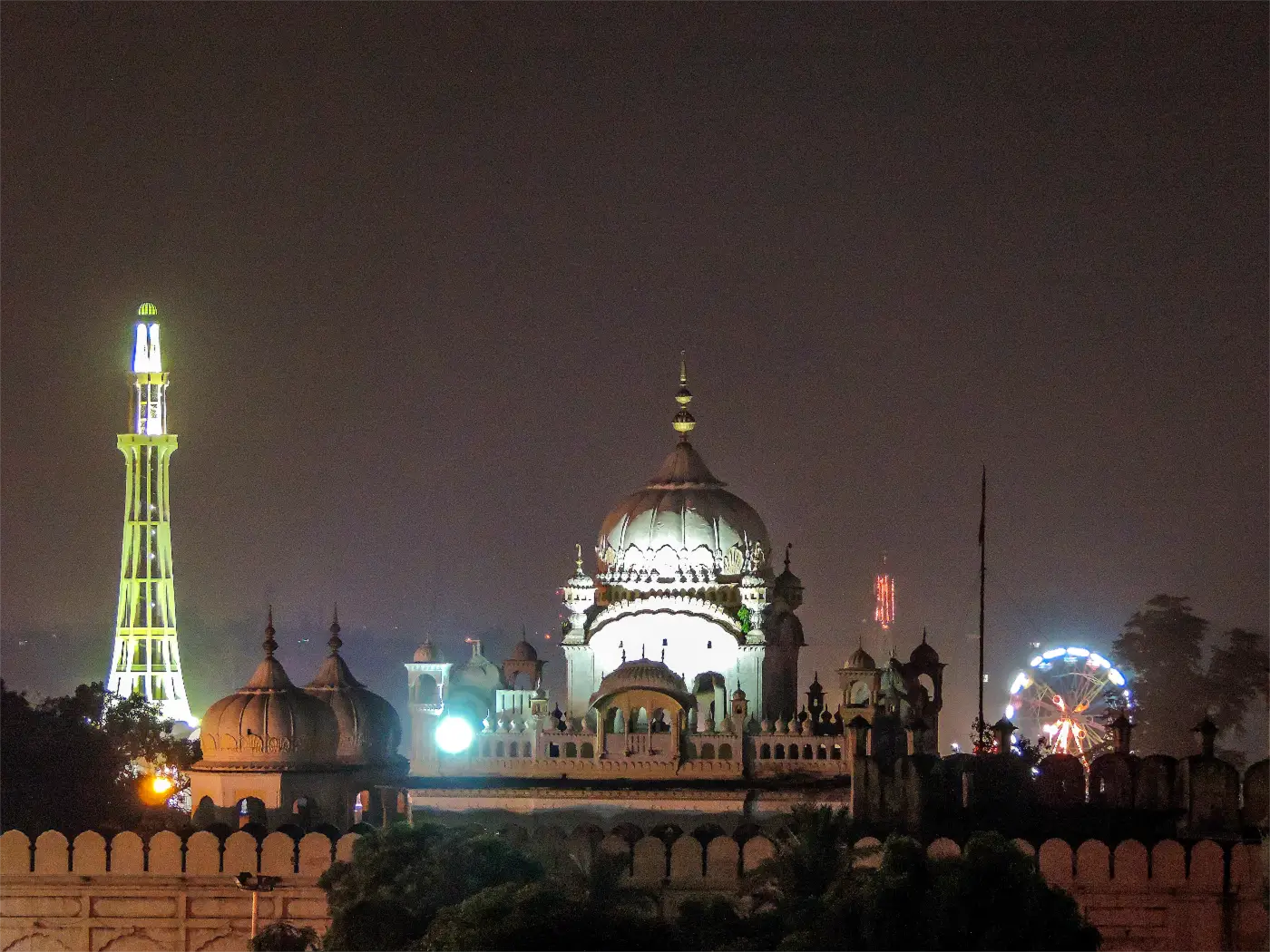
The samadhi and Minar-e-Pakistan at night. Photo Credit: Muhammad Ashar, CC BY-SA 3.0.
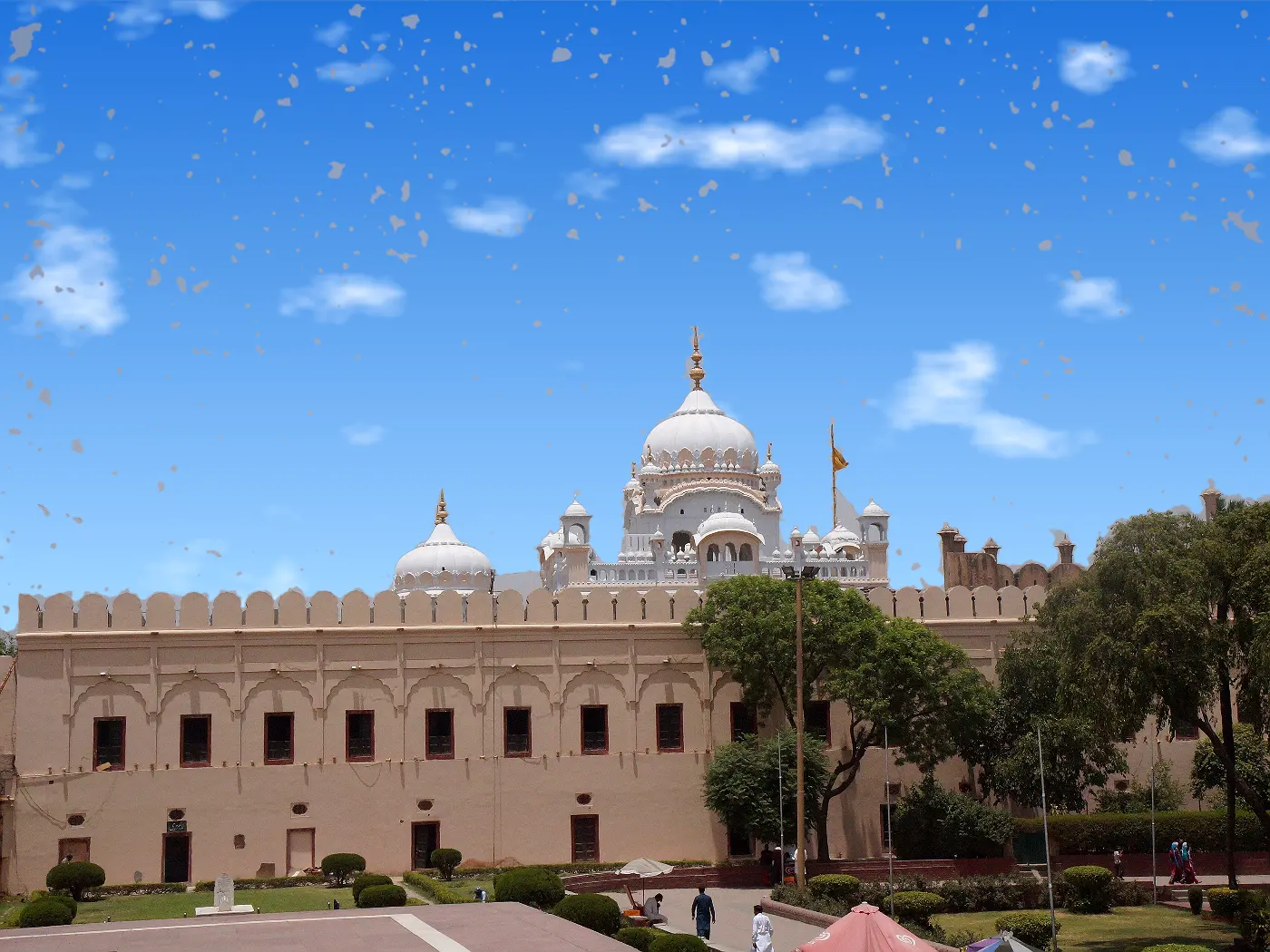
Gurdwara Dera Sahib and the samadhi. Photo Credit: Marium adil, CC BY-SA 3.0.
Frequently Asked Questions
Can Muslims or non-Sikh tourists visit the Samadhi of Ranjit Singh?
Entry is usually limited to Sikh pilgrims. Other visitors need special permission from the ETPB, but anyone can see it from Hazuri Bagh.
Is there an entry fee?
No. There is no ticket for the samadhi.
Who built the samadhi?
Kharak Singh began it in 1839, and it was completed under Duleep Singh around 1848.
Are Ranjit Singh’s ashes inside?
Yes. Part of his ashes rest in a lotus-shaped marble urn under the central pavilion.
When is the best day to see Sikh pilgrims here?
On 29 June, the death anniversary of Ranjit Singh, and during Vaisakhi in April.
Conclusion
In short, the Samadhi of Ranjit Singh is a small building with a big story. It also remembers the Lion of Punjab, his family and the women who died beside him, all in marble, glass and gold. So, even if you only see it from Hazuri Bagh, pause for a few minutes and take in this meeting point of Mughal, Sikh and British Lahore.
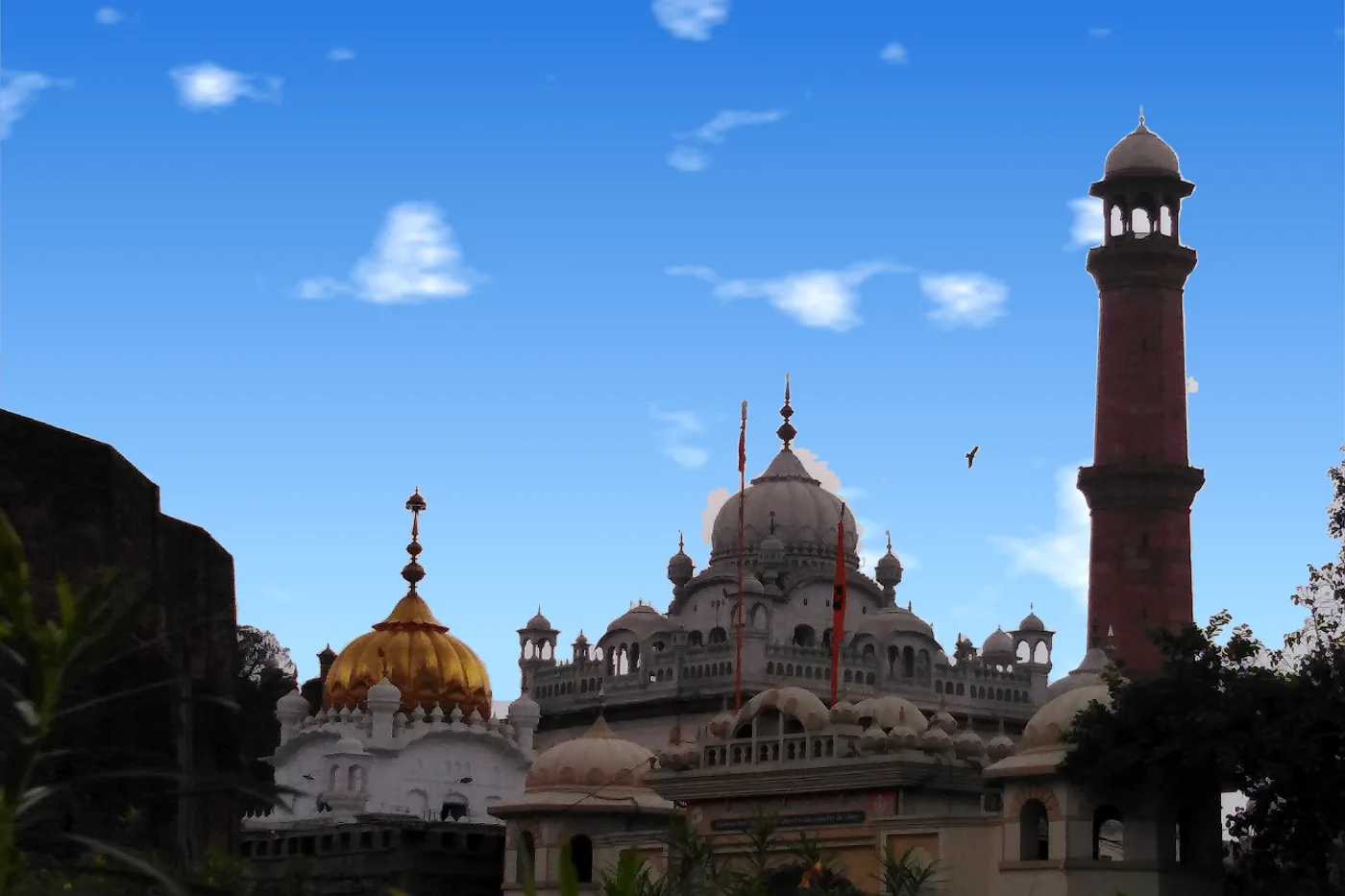
The samadhi and a minaret of Badshahi Masjid. Photo Credit: Ahmad Farooq 08, CC BY-SA 4.0.
Cover photo: Shahbaz Aslam429, CC BY-SA 3.0 (edited).