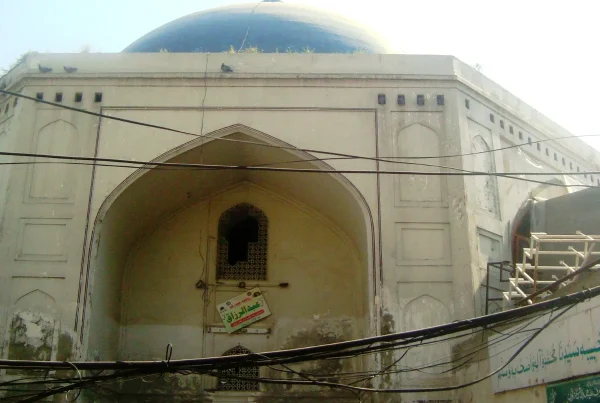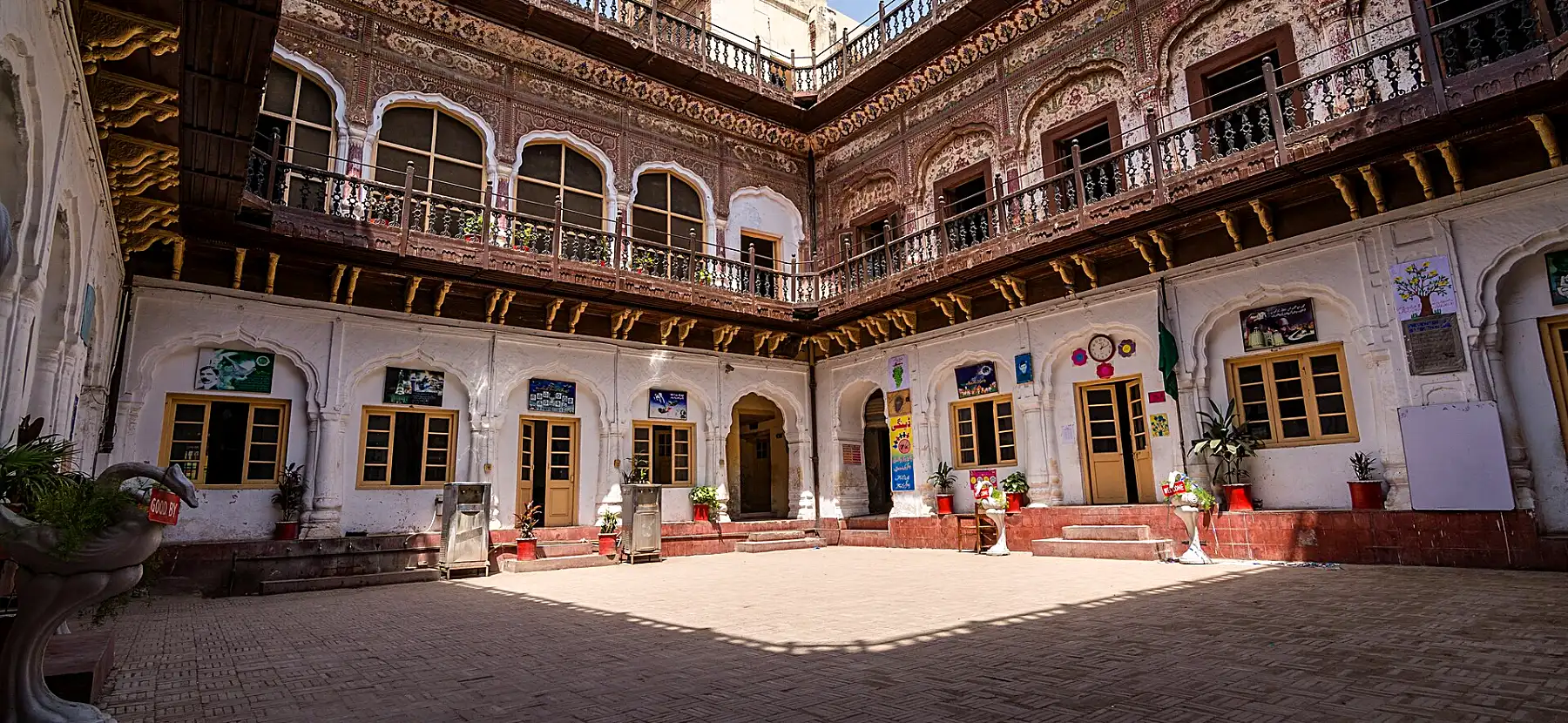
Deep inside the lanes of the Walled City, near Mori Gate, a tall brick building suddenly rises above the bazaar, covered from top to bottom in painted plaster, carved balconies and lattice screens. This is Haveli Nau Nihal Singh, the finest surviving Sikh-era haveli in Lahore.
It was built for the grandson of Maharaja Ranjit Singh, and for more than a century it has housed a girls’ school. So it is not a museum, but if you get the chance to look inside, its painted rooms are unforgettable.
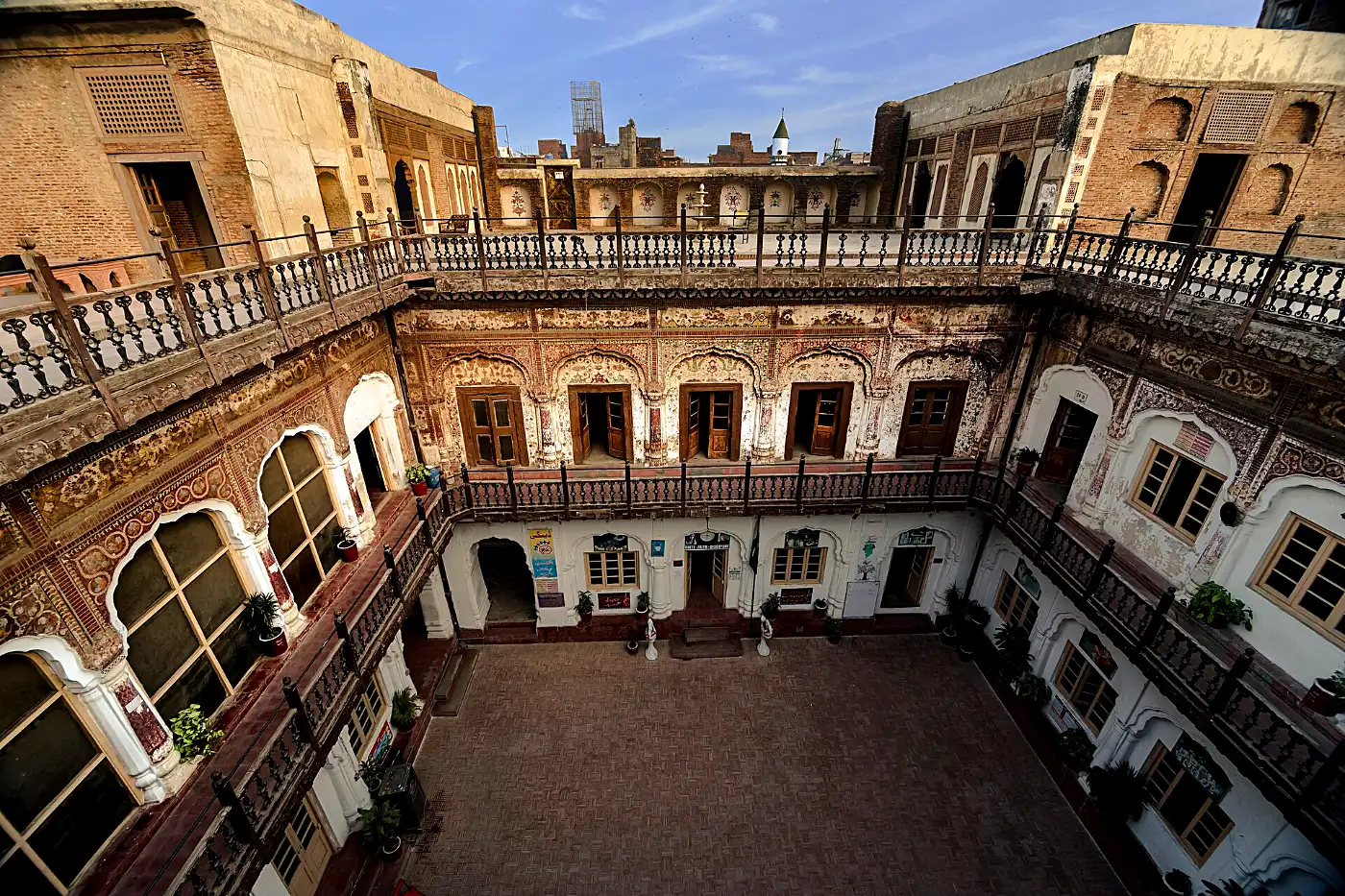
The inner courtyard seen from an upper gallery. Photo Credit: Shaguftakarim, CC BY-SA 4.0.
Quick facts
- Location: Walled City, near Mori Gate and Bhati Gate
- Timings: Working school; inside visits only with permission or a heritage tour (check before you go)
- Ticket: No ticket; access by permission
- Time needed: 30 minutes to 1 hour
- Best time: School holidays or a WCLA heritage walk
- Map: Open in Google Maps
Last checked: November 2026. Full details in Visitor Information.
History of Haveli Nau Nihal Singh
A Home for the Heir
Maharaja Ranjit Singh had the haveli built around 1836–37 for his grandson, Kanwar Nau Nihal Singh, who was expected to rule the Sikh Empire one day. However, Nau Nihal Singh died in 1840, on the very day of his father’s funeral, when part of a gateway at the Lahore Fort fell on him.
His mother, Chand Kaur, briefly claimed the regency. After giving it up in 1841, she retired to this haveli, and she was killed here in 1842.
From Palace to School
In the British period the haveli became the Victoria Girls’ High School, and it has stayed a school for well over a hundred years. It is protected under the Antiquities Act, and in recent years conservators have been working to save its fragile frescoes.
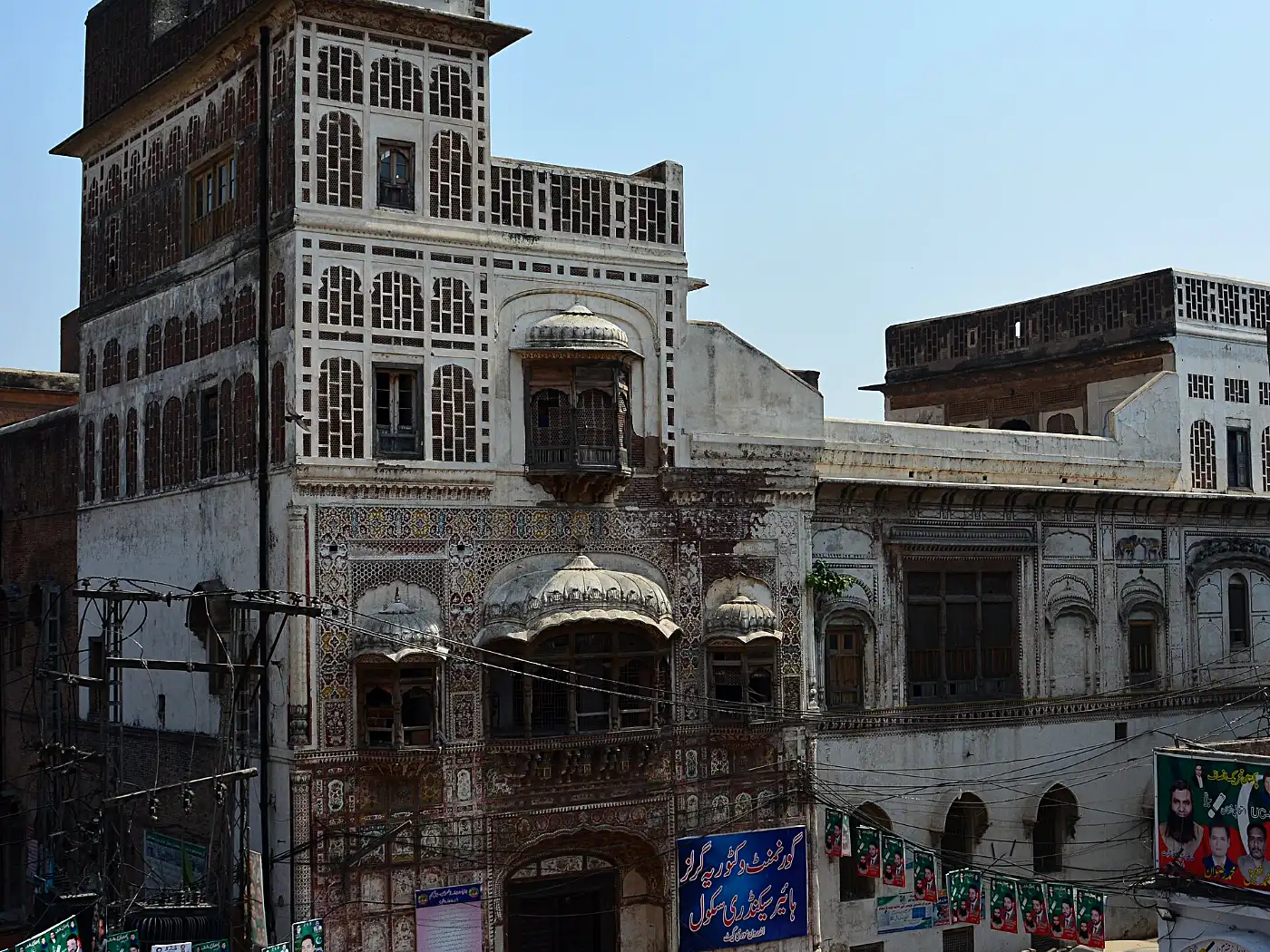
The haveli rising above the street, now Victoria Girls’ High School. Photo Credit: Aamir Khan Lodhi, CC BY-SA 4.0.
Architecture
The Painted Facade
The haveli has four storeys and a basement. Its western front is its glory: nearly every surface is covered in painted and moulded plaster in the Kangra style. Above the entrance hangs a large jharoka balcony with five arches, carved winged figures, parrots and fish, and a small bulbous dome.
The Rang Mahal
On the top level sits a small room called the Rang Mahal, or Sheesh Mahal. Its screens catch the breeze, and its ceilings sparkle with glass and mirror work.
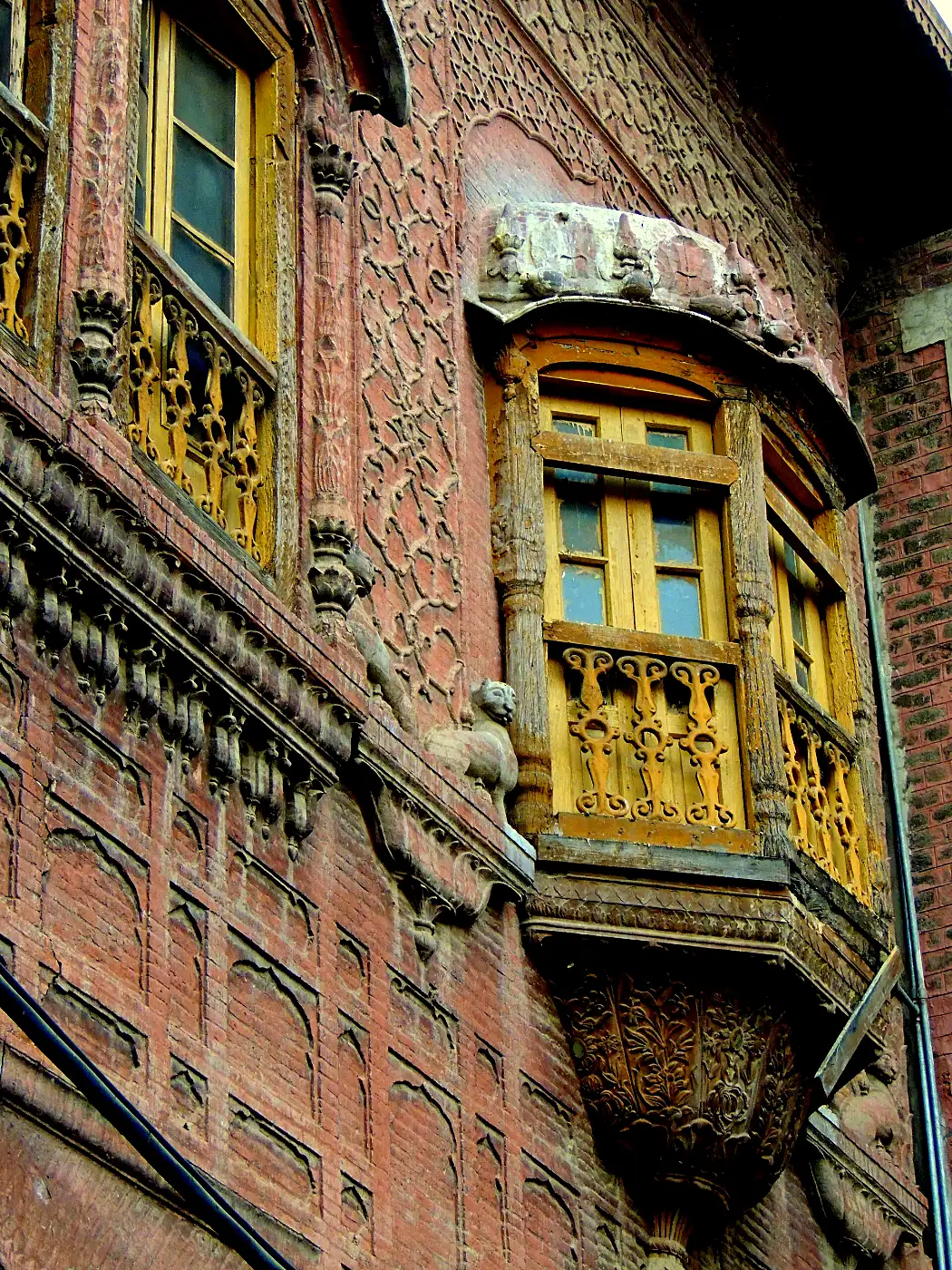
A carved jharoka on the painted walls. Photo Credit: The Walled City of Lahore Authority, CC BY-SA 4.0.
What to See in Haveli Nau Nihal Singh
Frescoes and Mirror Ceilings
Inside, ceilings of carved wood are inlaid with glass and mirrors in sun patterns. Walls hold small paintings set in false arches, in blues, golds, reds and oranges.
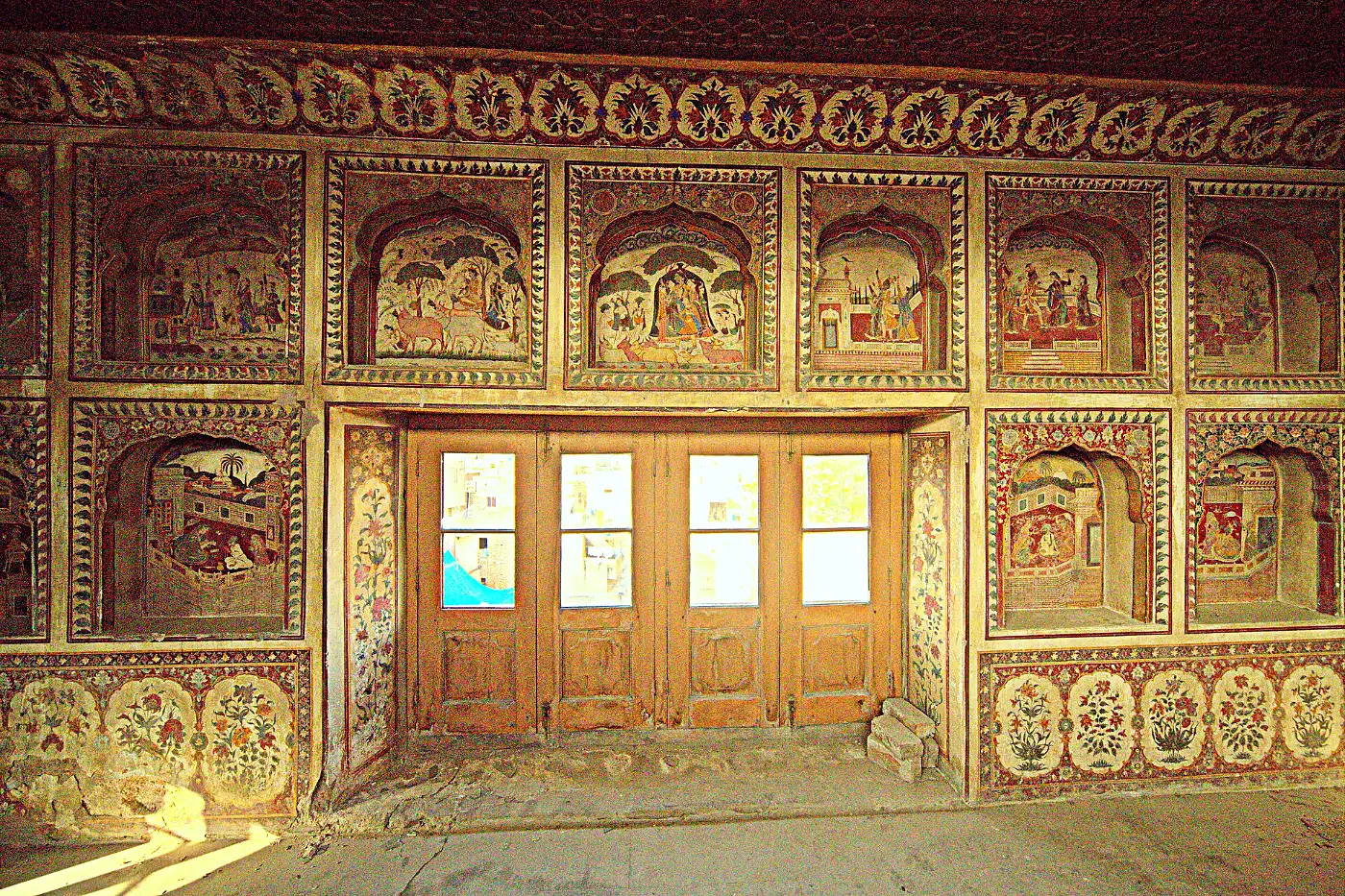
Painted wall panels inside the haveli. Photo Credit: The Walled City of Lahore Authority, CC BY-SA 4.0.
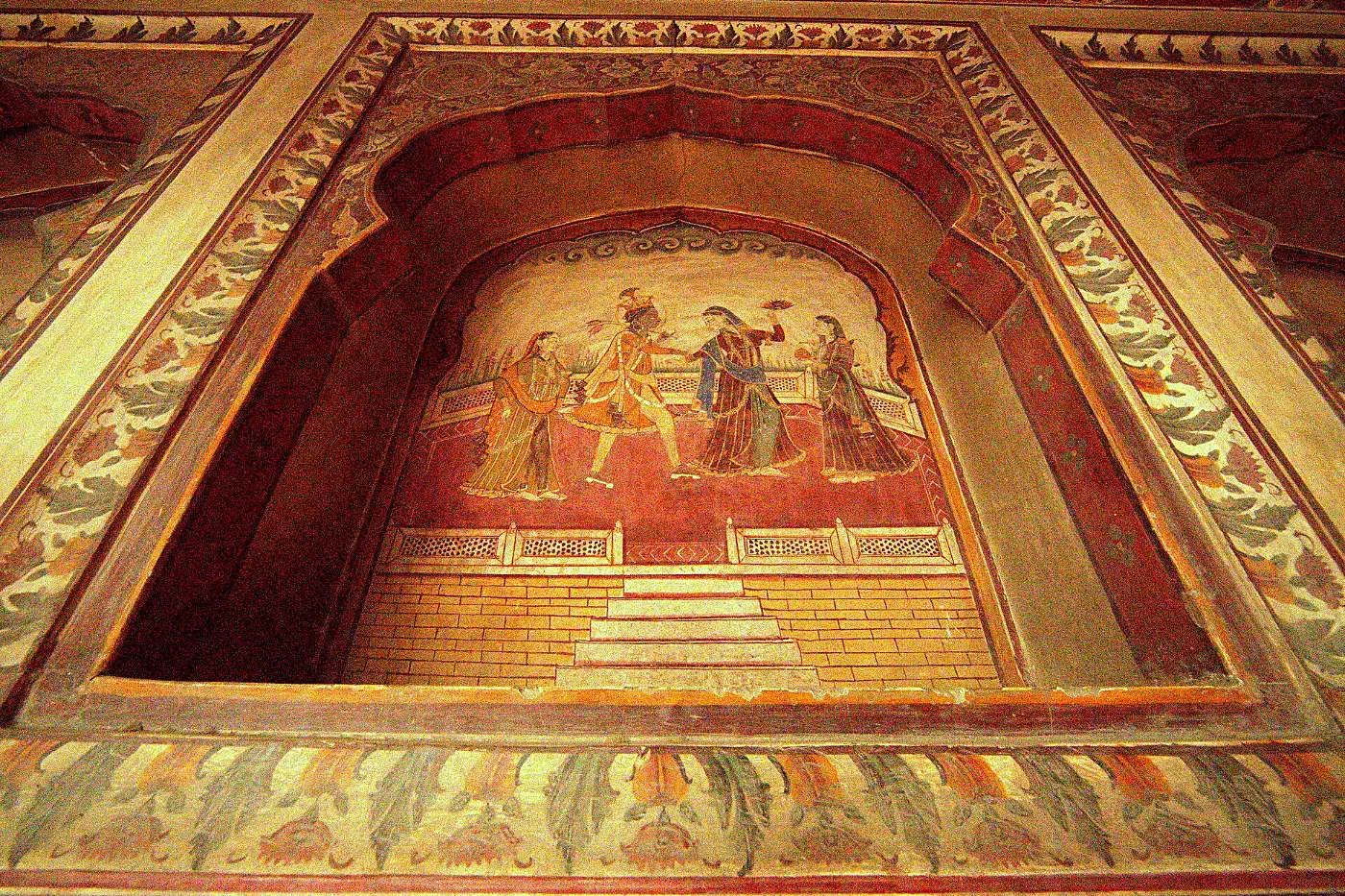
A ceiling fresco. Photo Credit: The Walled City of Lahore Authority, CC BY-SA 4.0.
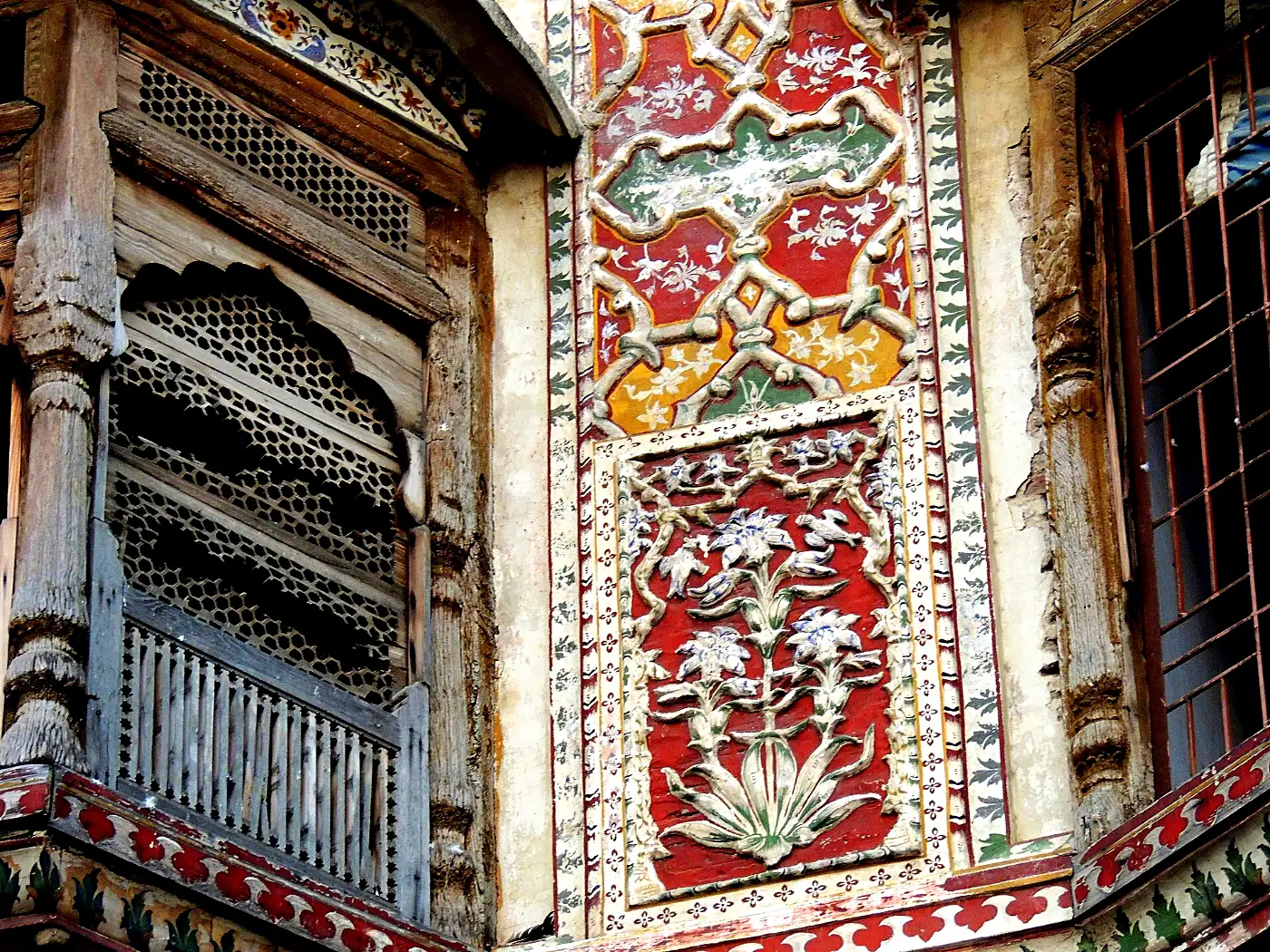
Fresco and lattice detail. Photo Credit: The Walled City of Lahore Authority, CC BY-SA 4.0.
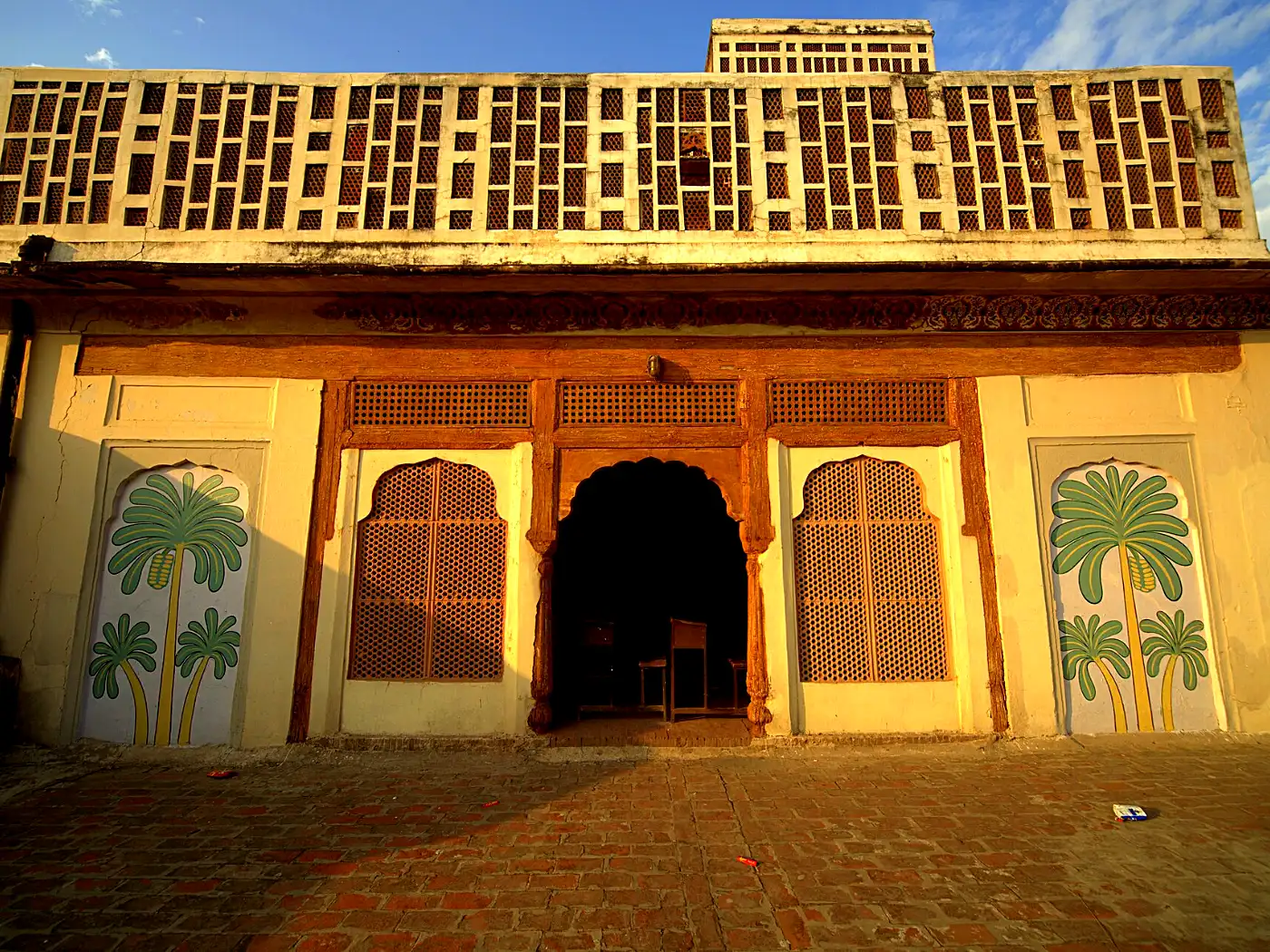
A painted room on the upper level. Photo Credit: The Walled City of Lahore Authority, CC BY-SA 4.0.
The Courtyard
The rooms open onto a two-storey courtyard ringed by galleries. Its lower walls are whitewashed today, but the upper levels still show how richly decorated the whole house once was.
Things to Do
- Join a heritage walk: The Walled City of Lahore Authority runs guided walks through the old city; ask whether the haveli is included.
- Admire the facade from the street: Even without going inside, the painted front is worth the detour. Stand back across the lane for the full view.
- Ask the school politely: On holidays or after hours, staff sometimes allow a short look at the courtyard. Respect a no.
- Pair it with Data Darbar: The shrine of Data Ganj Bakhsh is a short ride away near Bhati Gate.
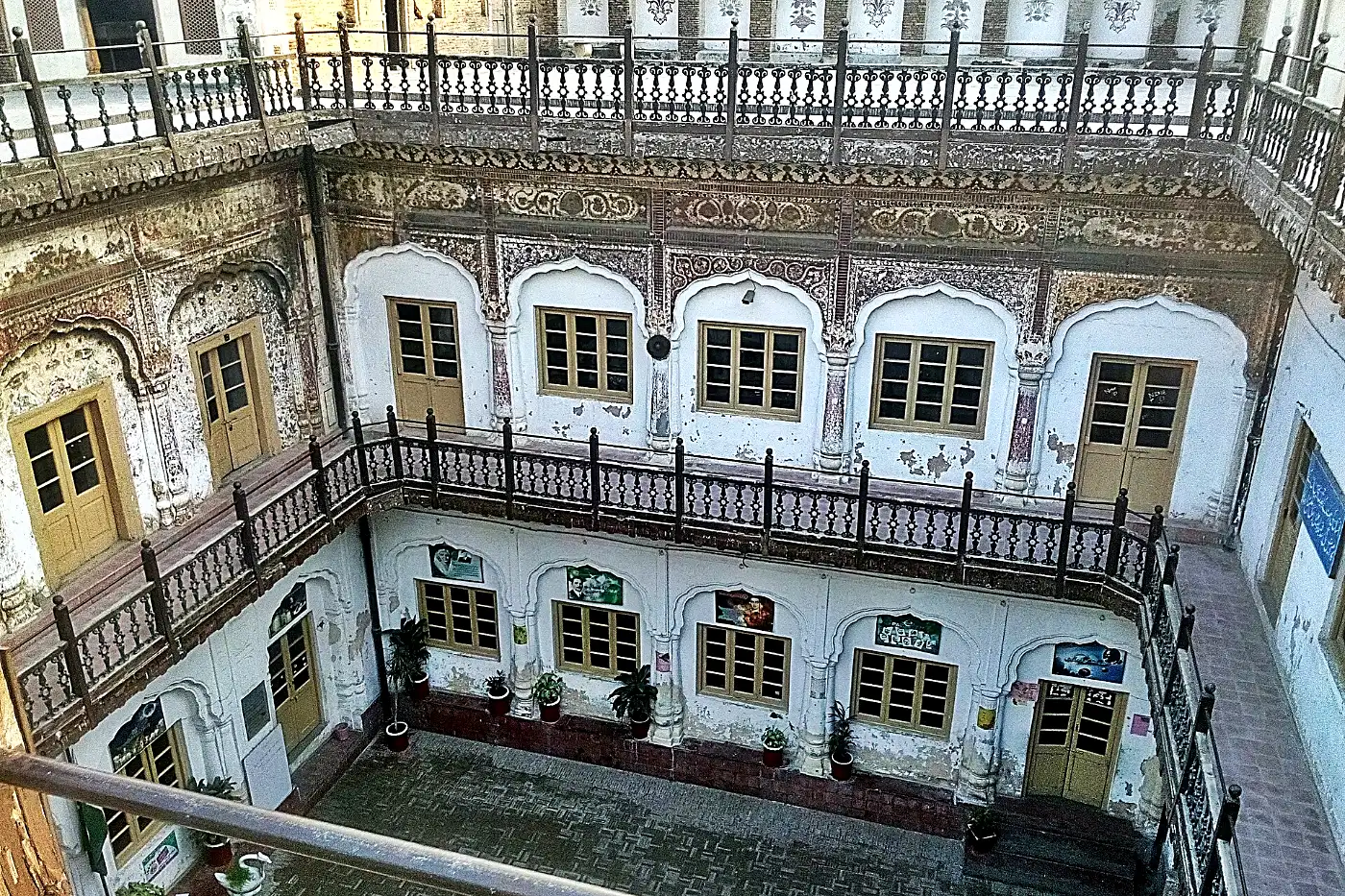
Galleries around the courtyard. Photo Credit: Muhammad Imran Saeed from City of London, CC BY 2.0.
Visitor Information
- Location: Walled City of Lahore, near Mori Gate, with Bhati Gate and Lohari Gate close by
- Timings: It is a working girls’ school, so it is not open like a museum. Visits are by permission or on organised tours; check before you go
- Ticket: No ticket
- Time needed: 30 minutes to 1 hour
- Best time: Weekends, school holidays or during a heritage walk
- Respect: Students and staff come first; never enter classrooms without permission
- Photography: Ask first, and do not photograph students
- Dress code: Modest clothes
- Accessibility: Steep, narrow stairs to the upper floors; the lanes outside are crowded
Last checked: November 2026. Timings and prices can change, especially in Ramadan and on public holidays.

A classroom under a carved ceiling. Photo Credit: Shaguftakarim, CC BY-SA 4.0.
How to Get There
Take a rickshaw or Careem to Bhati Gate or Lohari Gate, then walk into the Walled City towards Mori Gate. The lanes are narrow, so ask shopkeepers for Victoria School or Haveli Nau Nihal Singh. The nearest Orange Line stations are Lakshmi Chowk and Anarkali.
Places to Visit Nearby
- Data Darbar: The great Sufi shrine near Bhati Gate. See our Data Darbar guide.
- Lahore Fort: The Mughal fort where Nau Nihal Singh died. Read the Lahore Fort guide.
- Samadhi of Ranjit Singh: His grandfather’s memorial. See the Samadhi of Ranjit Singh.
- Badshahi Masjid: The Mughal mosque beside the Fort. Read the Badshahi Masjid guide.
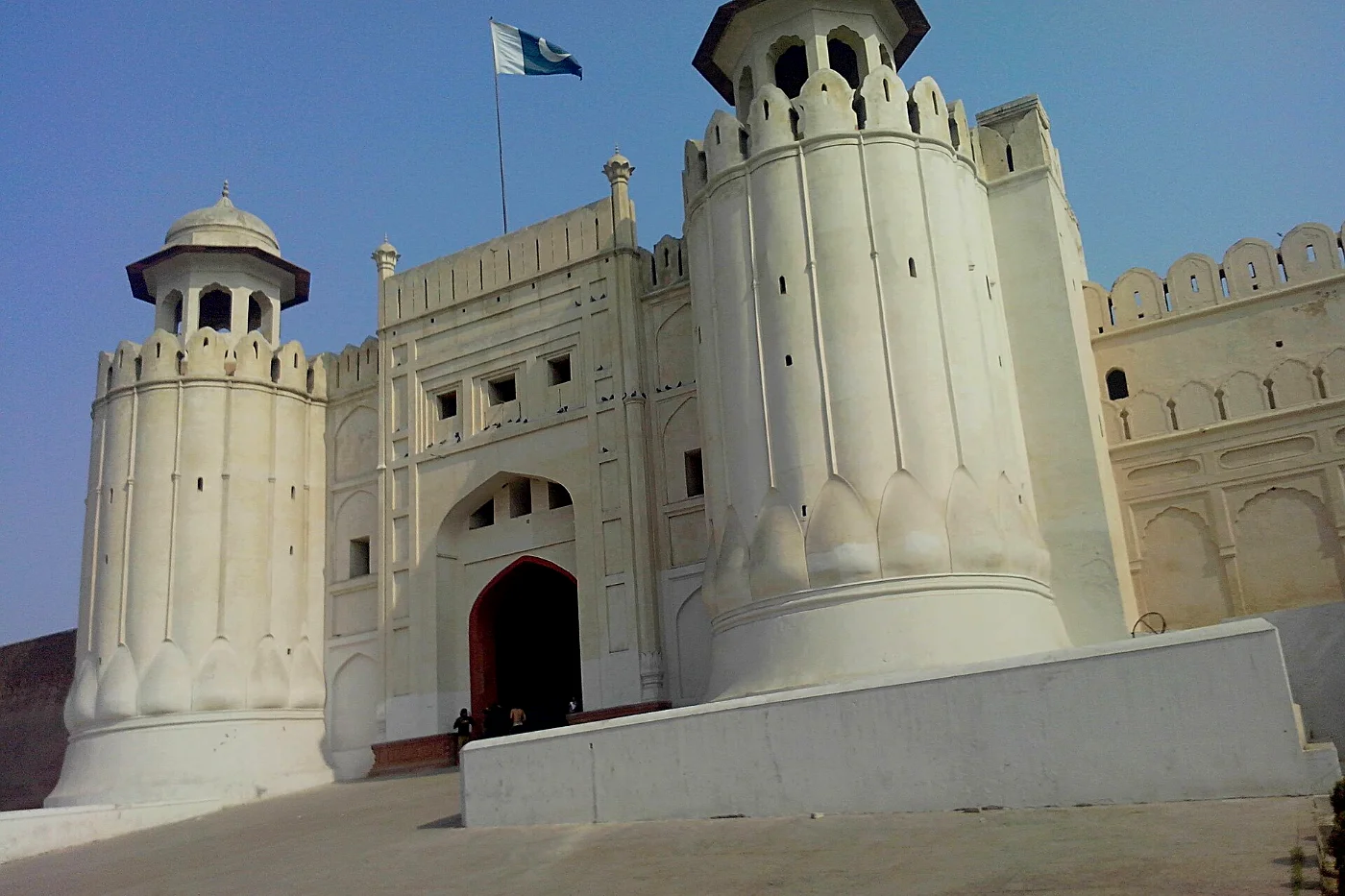
The Alamgiri Gate of the Lahore Fort. Photo Credit: AhsanAli1994, CC BY-SA 4.0.
Frequently Asked Questions
Where is Haveli Nau Nihal Singh?
It is inside the Walled City of Lahore, near Mori Gate, close to Bhati Gate and Lohari Gate.
Who built Haveli Nau Nihal Singh?
Maharaja Ranjit Singh had it built around 1836–37 for his grandson, Nau Nihal Singh.
Can tourists visit the haveli?
It is a working girls’ school, so visits are only by permission or on organised heritage tours.
What is the haveli used for today?
It houses the Government Victoria Girls’ High School.
Conclusion
Haveli Nau Nihal Singh is one of Lahore’s most beautiful secrets. Its painted walls and mirror ceilings show the art of the Sikh court at its peak, and the fact that girls still study here gives it a life few monuments have. So even if you only see the facade, it is worth finding in the lanes of the old city.
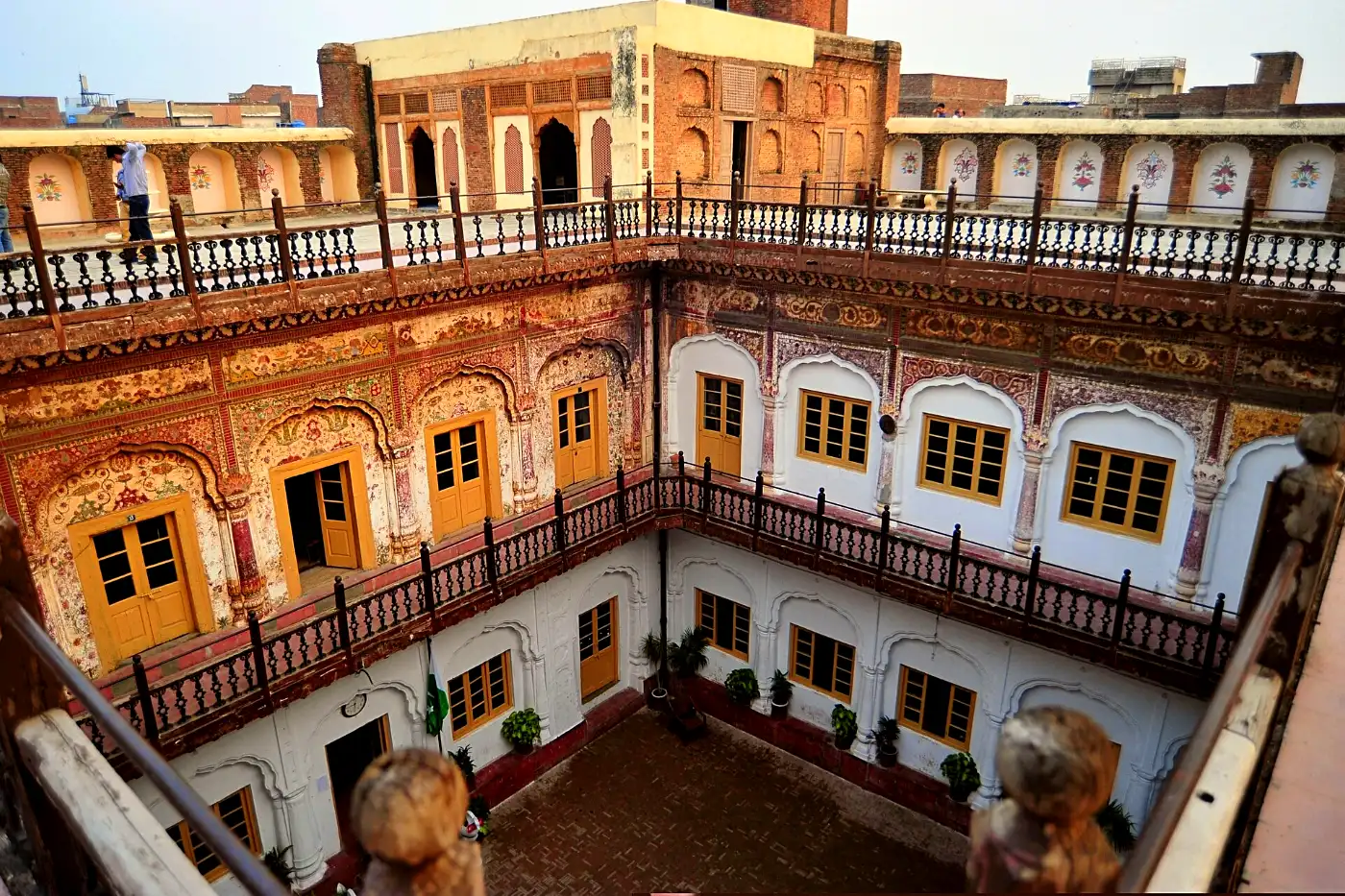
The upper floors around the courtyard. Photo Credit: The Walled City of Lahore Authority, CC BY-SA 4.0.
Cover photo: Muh.Ashar, CC BY-SA 4.0.