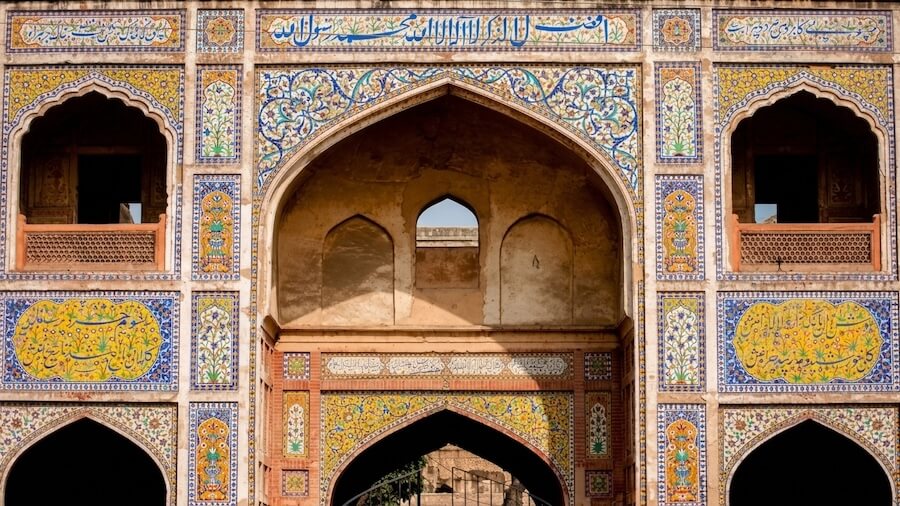
On busy GT Road, on the way to Shalimar Gardens, a tall gateway suddenly bursts into colour. Its walls are covered in blue, yellow and orange tiles, with flowers and Persian poetry. This is Gulabi Bagh in Lahore, and behind its gateway lies the quiet Tomb of Dai Anga.
Most drivers speed past without a second look. However, this little site holds some of the finest Mughal tile work in the city. In this guide, we will cover its history, the story of Dai Anga, what to see and how to plan your visit.
History of Gulabi Bagh
The gateway was built in 1655, during the reign of Emperor Shah Jahan. Its builder was Mirza Sultan Baig, a Persian nobleman who served as Amir-ul-Bahr, or admiral of the Mughal fleet.
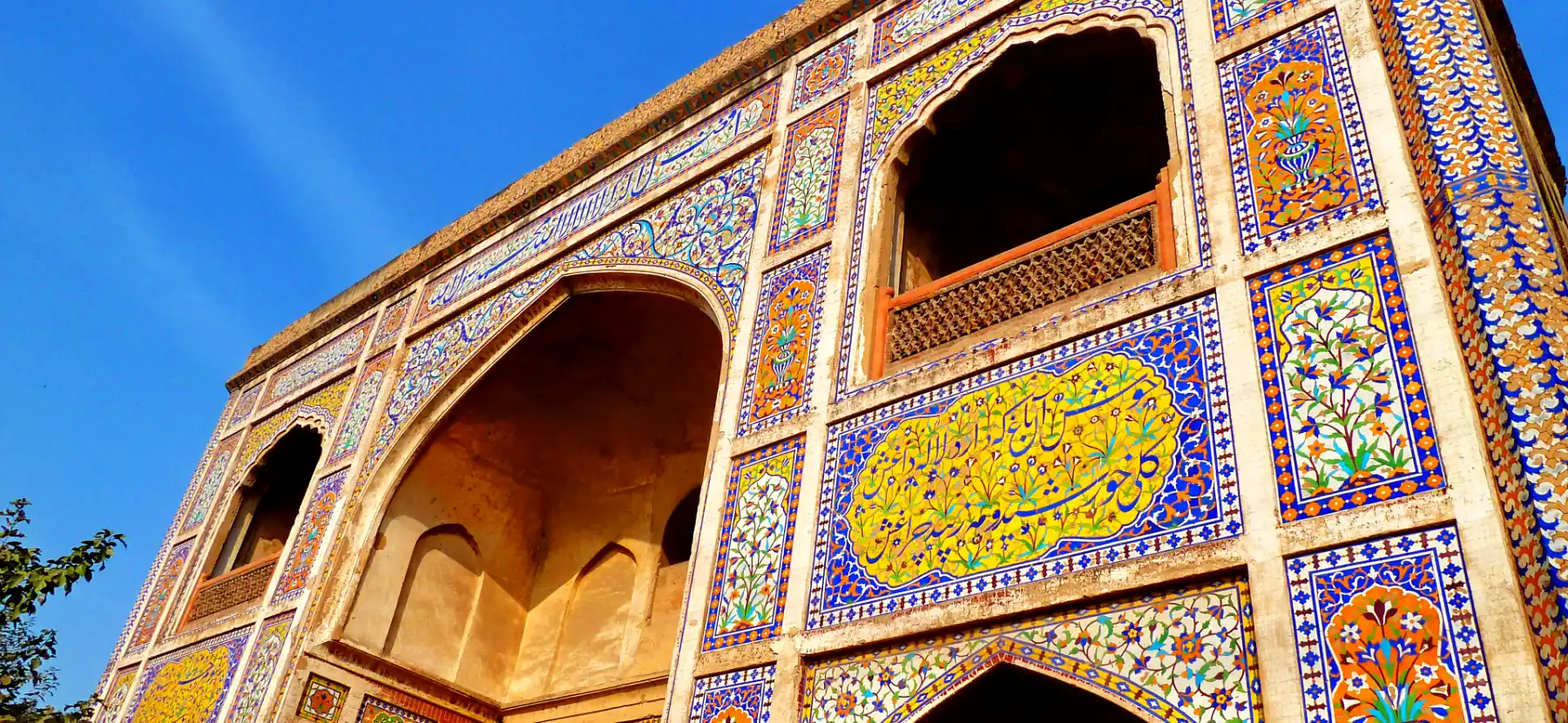
Originally, the gate opened into a large square pleasure garden. In fact, the name Gulabi Bagh means “Rose Garden”, and it appears in the last line of the inscription over the main arch. That same inscription also gives the date of construction.
From Garden to Tomb
Later, in 1671, the garden became the resting place of Dai Anga, and a tomb was built in its centre. Over the centuries, however, the city grew around it. As a result, only a narrow strip of the old garden now remains between the gateway and the tomb.
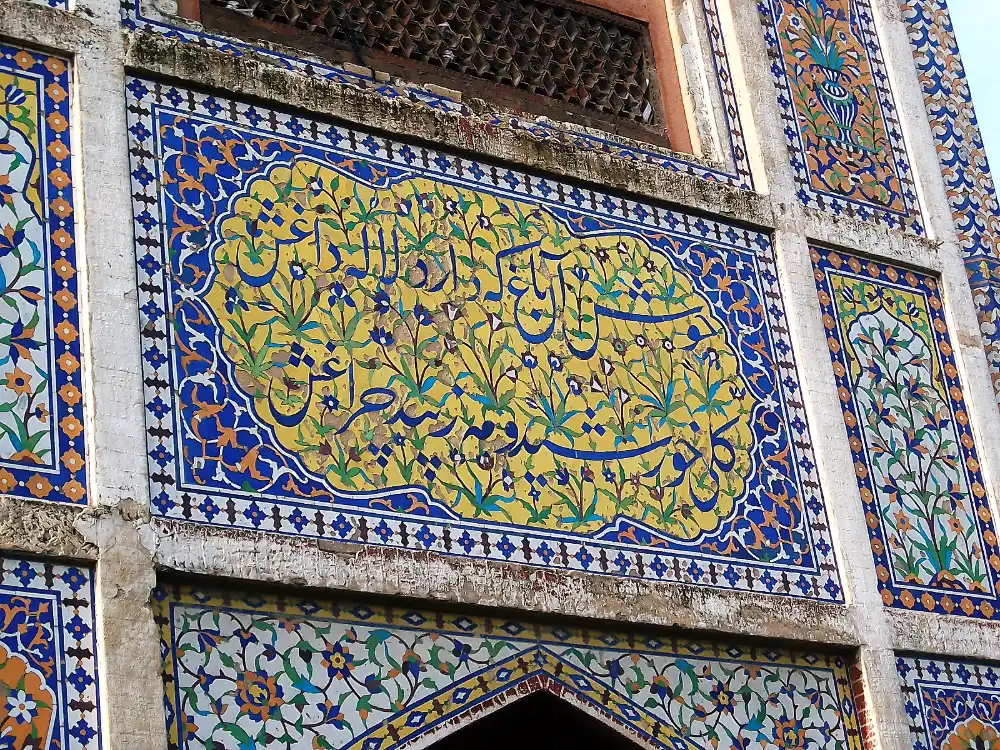
Photo Credit: M Umair Astro, CC BY-SA 3.0, via Wikimedia Commons
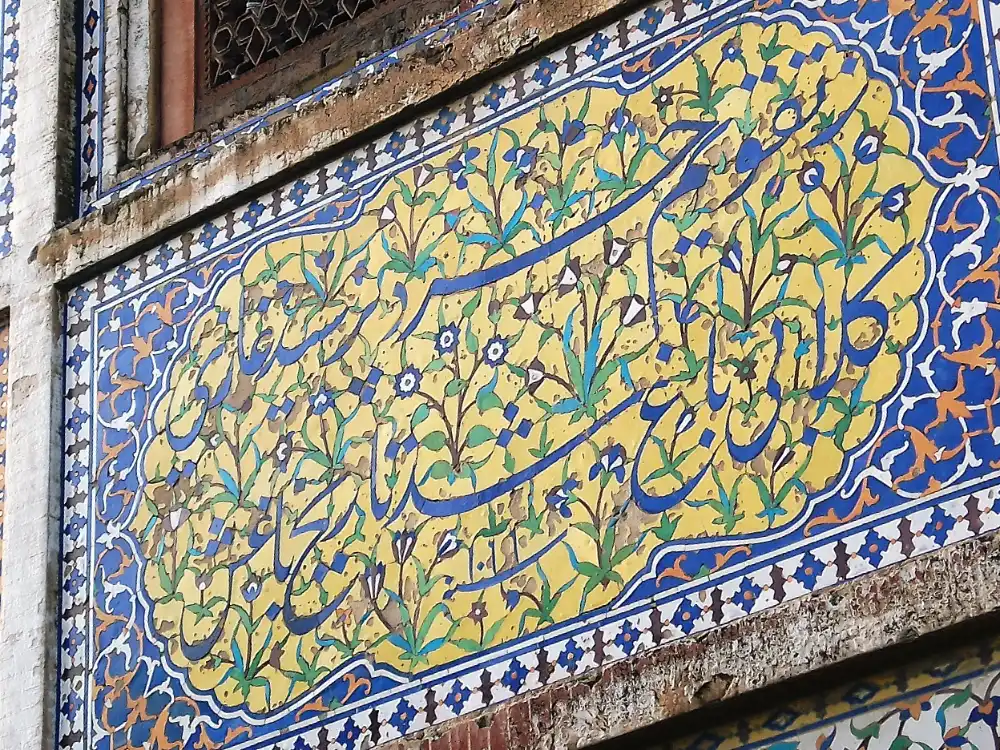
Photo Credit: M Umair Astro, CC BY-SA 3.0, via Wikimedia Commons
The Famous Tile Work
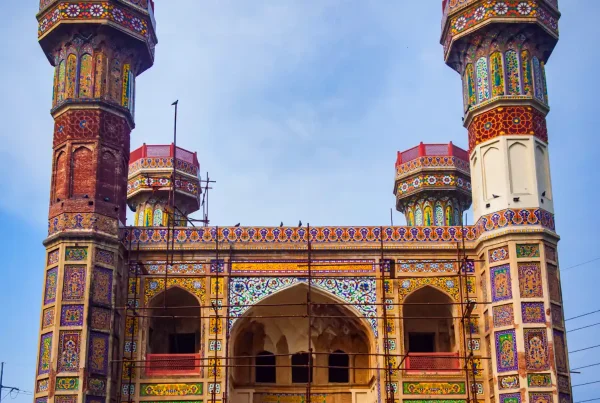
The real star of Gulabi Bagh is its tile work. The gateway is covered in kashi kari, a style of glazed tile mosaic that Lahore is famous for. Each panel is made of many small cut tiles, fitted together like a puzzle.
Look closely and you will see flowering trees, vases of flowers and rich geometric borders. In addition, beautiful Persian couplets in yellow and blue run across the front. Historians often call it one of the finest examples of Mughal tile mosaic in Lahore.
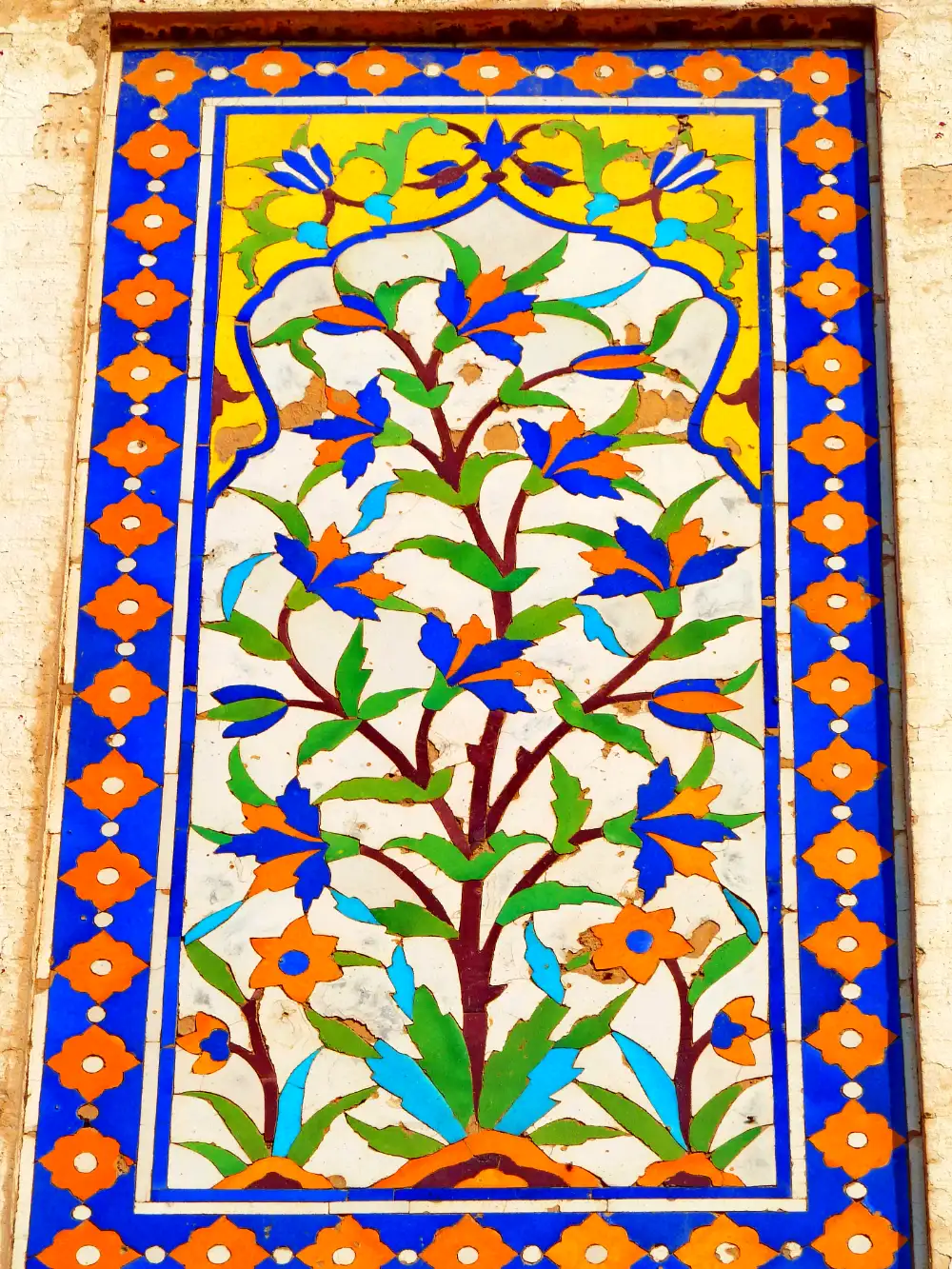
Photo Credit: Musab Bin Noor, CC BY-SA 3.0, via Wikimedia Commons
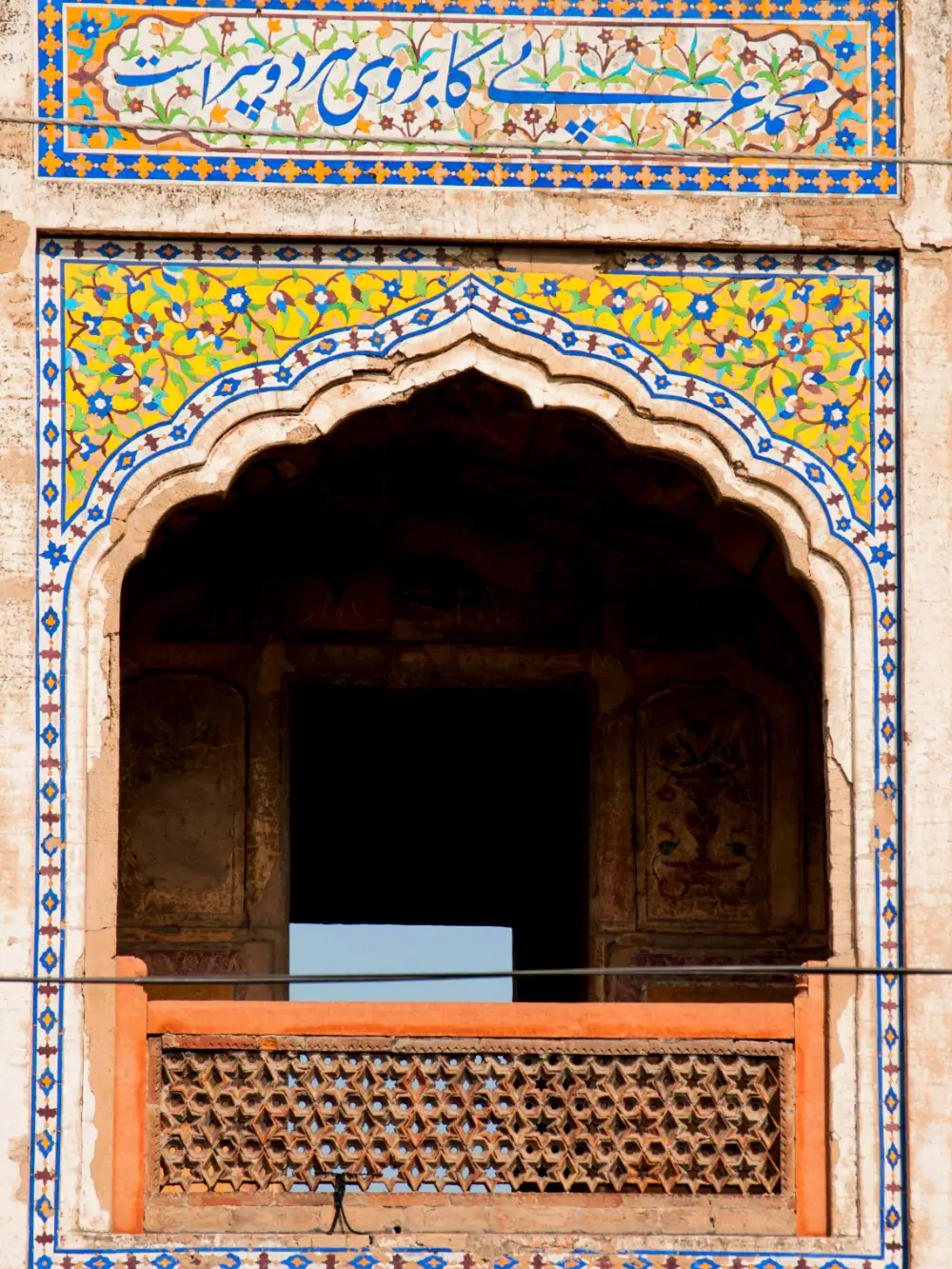
Photo Credit: Shahbaz Aslam429, CC BY-SA 3.0, via Wikimedia Commons
The Tomb of Dai Anga
Dai Anga was the wet nurse of Emperor Shah Jahan, so she was a respected member of the royal household. She was also the wife of Murad Khan, a magistrate under Emperor Jahangir. In addition, she built a beautiful mosque near today’s Lahore Railway Station, known as the Dai Anga Mosque.
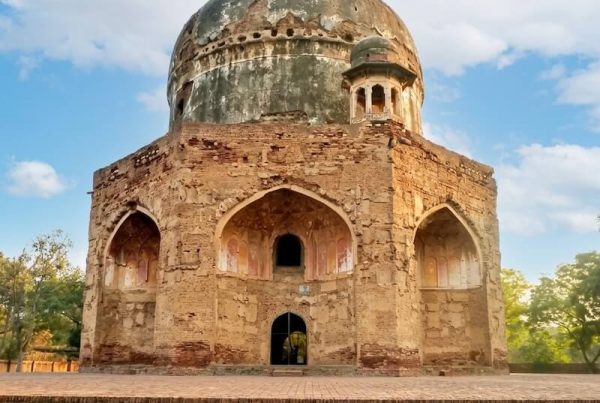
Her tomb stands on a raised platform in the middle of the garden. It is rectangular, with eight rooms arranged around a central chamber. Also, small domed pavilions sit on the corners, and some of their bases still show bits of the original tile work.
Gulabi Bagh Lahore: Who Is Buried Here?
Dai Anga lies in an underground crypt beneath the tomb, beside her daughter, Sultana Begum. However, the crypt is no longer open to the public.

Photo Credit: Shahbaz Aslam429, CC BY-SA 3.0, via Wikimedia Commons
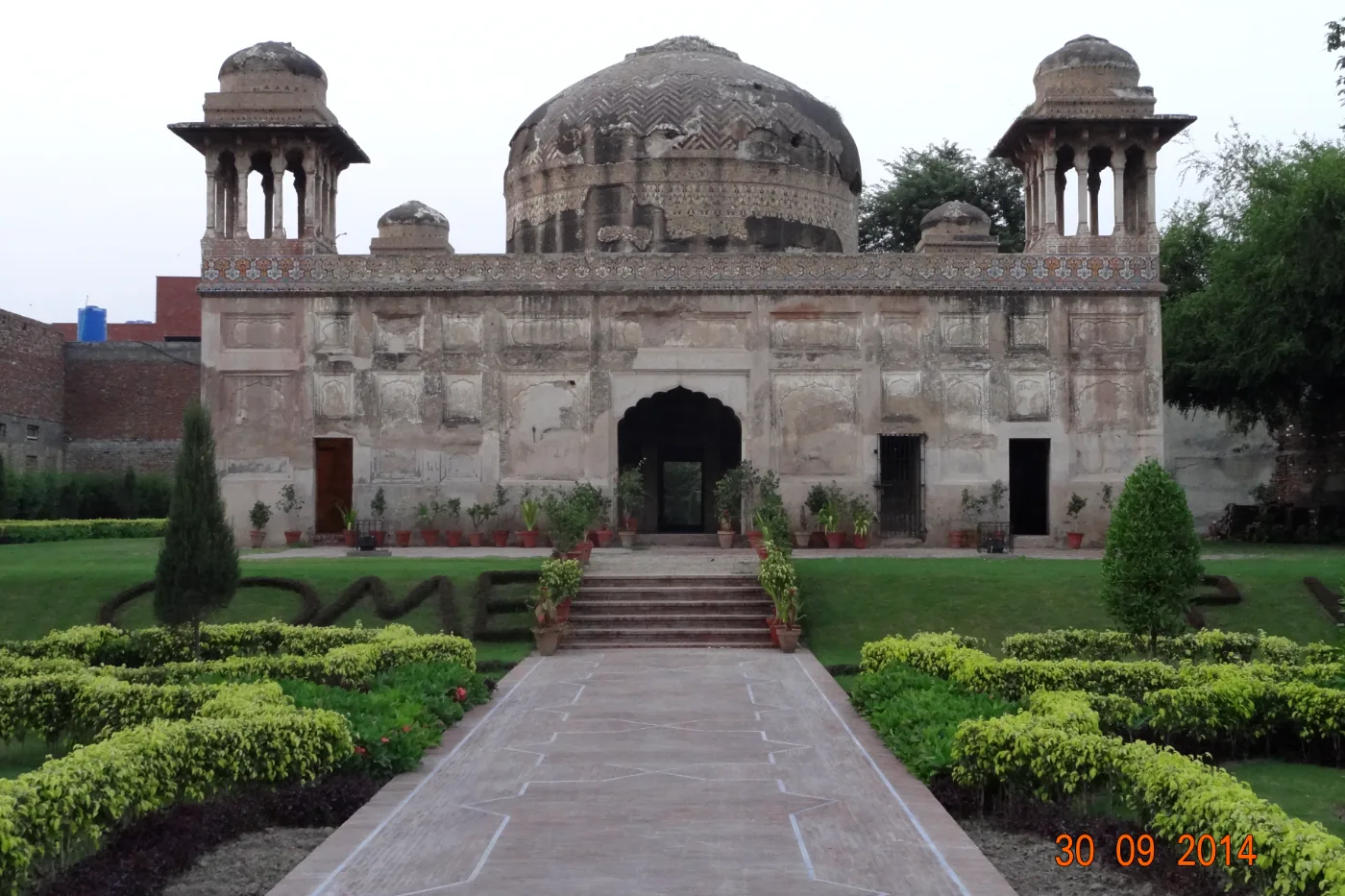
Photo Credit: Raseen Akhtar, CC BY-SA 3.0, via Wikimedia Commons
Inside the Tomb
Step inside, and look up. The central dome is painted with delicate frescoes in soft earthy colours. Meanwhile, carved Quranic verses decorate the central chamber, the work of the calligrapher Muhammad Saleh.
Much of the decoration has faded over time. Still, the patterns on the ceilings are beautiful, and the cool, quiet rooms feel a world away from the noisy road outside.
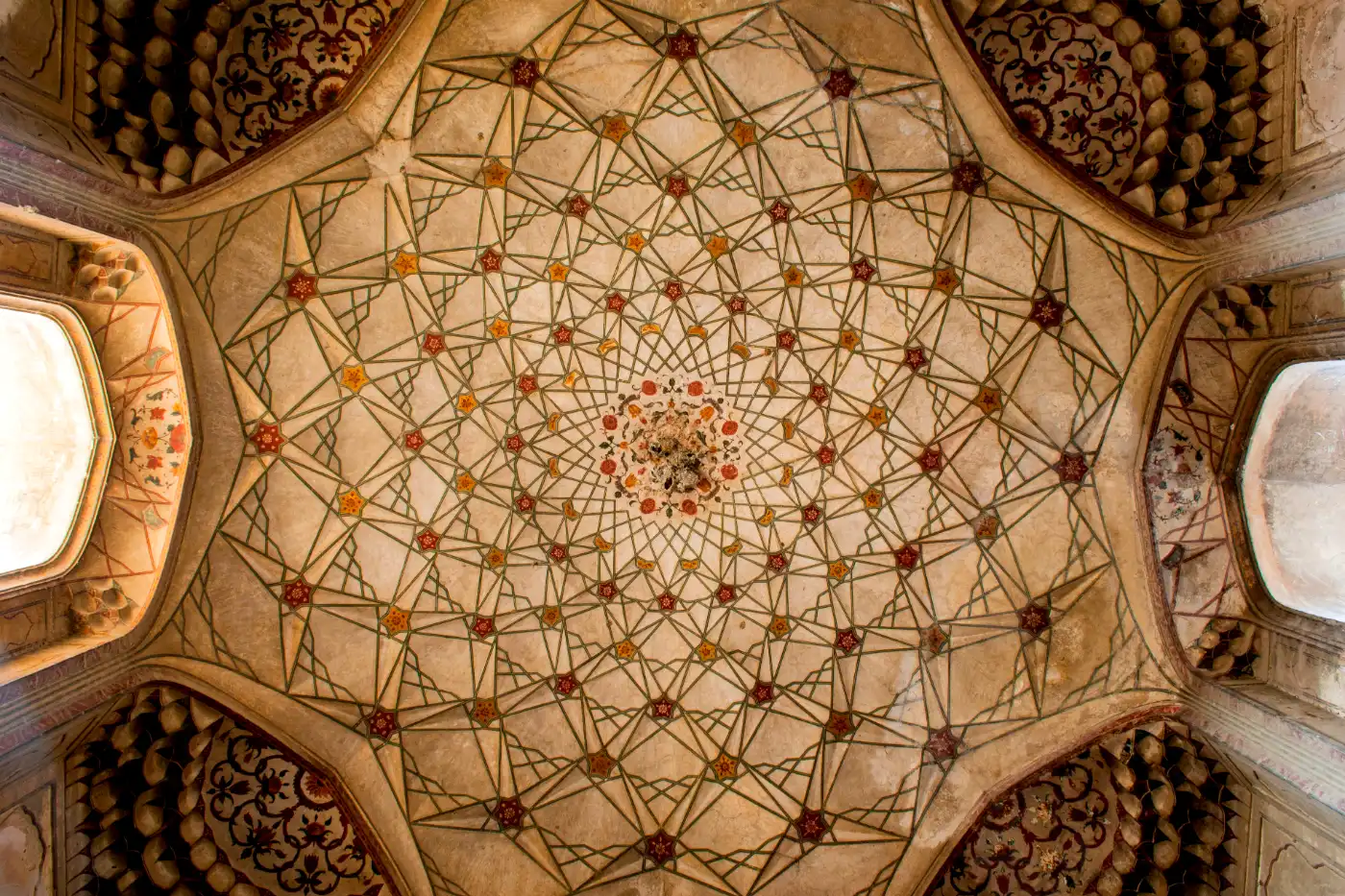
Photo Credit: Shahbaz Aslam429, CC BY-SA 3.0, via Wikimedia Commons
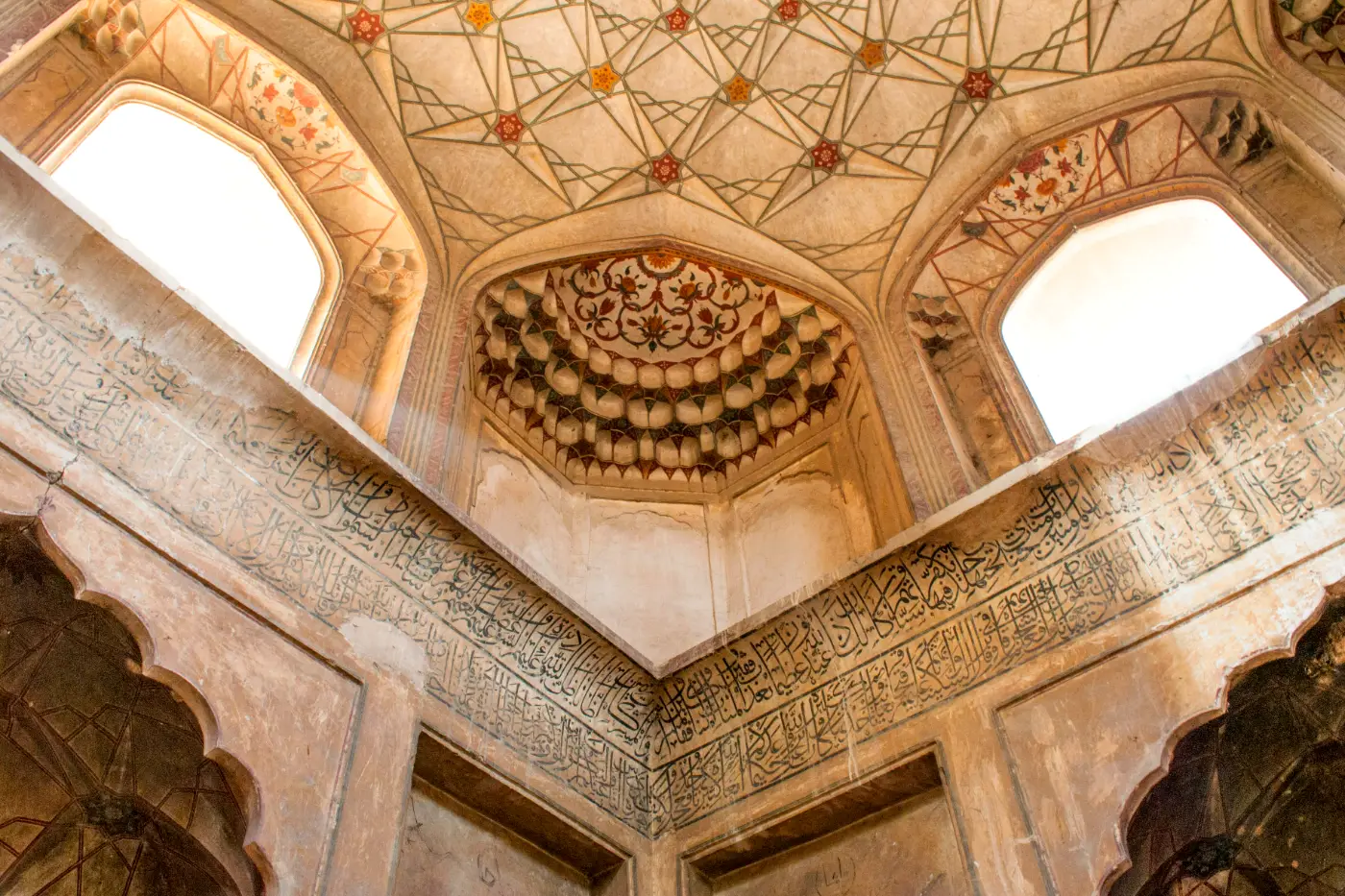
Photo Credit: Shahbaz Aslam429, CC BY-SA 3.0, via Wikimedia Commons
Gulabi Bagh Today
Gulabi Bagh is a protected monument under the Punjab Archaeology Department. In 2018, the department began a conservation project to repair the brickwork, frescoes and damaged tile work.
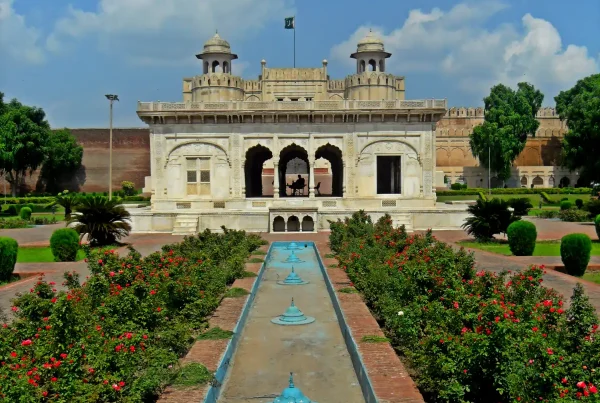
Later, the Orange Line metro route passed close to the site. So, in 2016, the Lahore High Court stopped construction within 200 feet of several heritage sites, including this tomb. Today, the small garden is neatly kept, with flower beds leading from the gateway to the tomb.
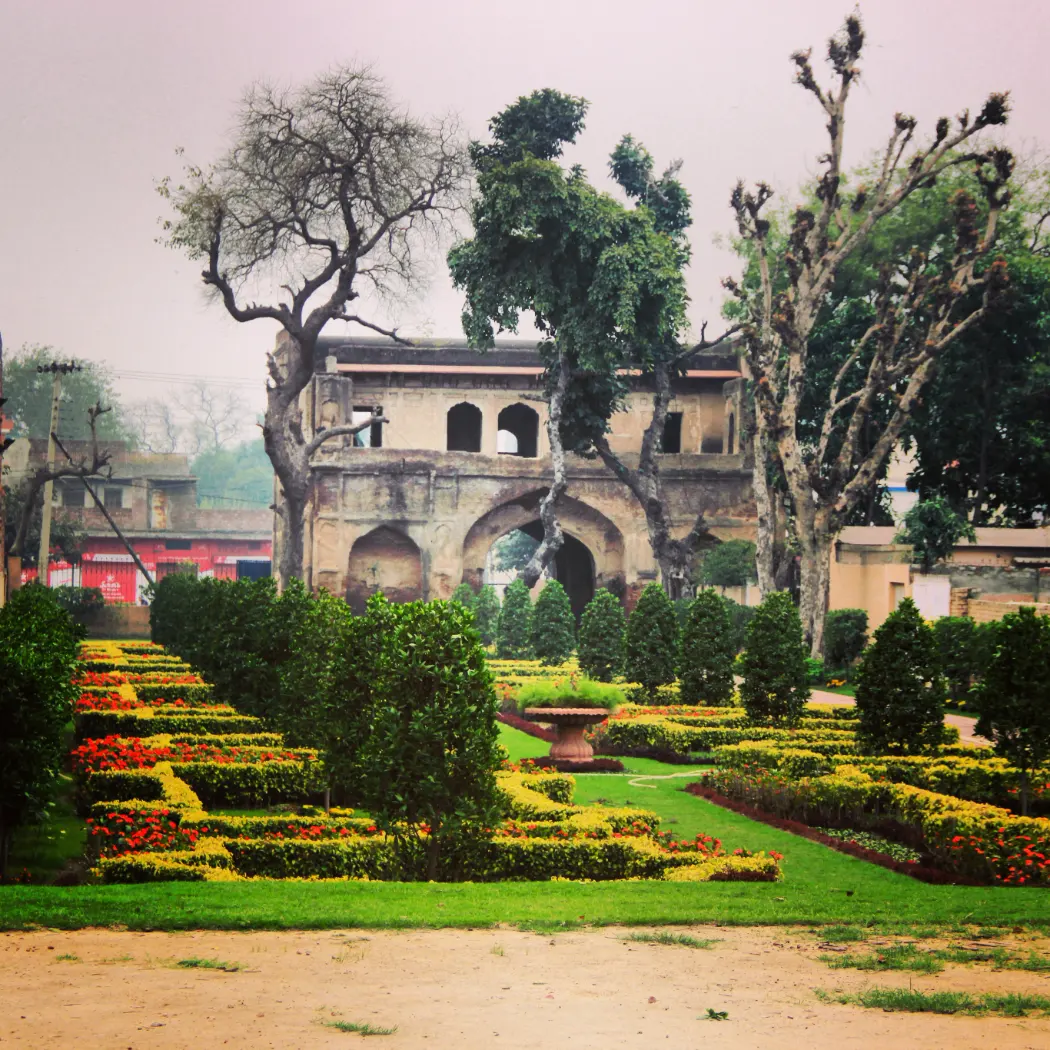
Photo Credit: Kkashaff, CC BY-SA 4.0, via Wikimedia Commons
Visitor Information
Gulabi Bagh Lahore: Timings and Entry
- Location: On GT Road in Begumpura, on the way from the city to Shalimar Gardens.
- Timings: Usually open during daylight hours. However, the gate is sometimes locked, so check before you go.
- Entry fee: Usually free.
- Time needed: 30 to 45 minutes.
Good to Know
- Best time: Morning light shows the tile colours best.
- Photography: Bring a zoom lens or use your phone’s zoom for the tile details.
- Crypt: The underground burial chamber is closed to visitors.
- Facilities: There are no facilities on site, but there are shops along GT Road.
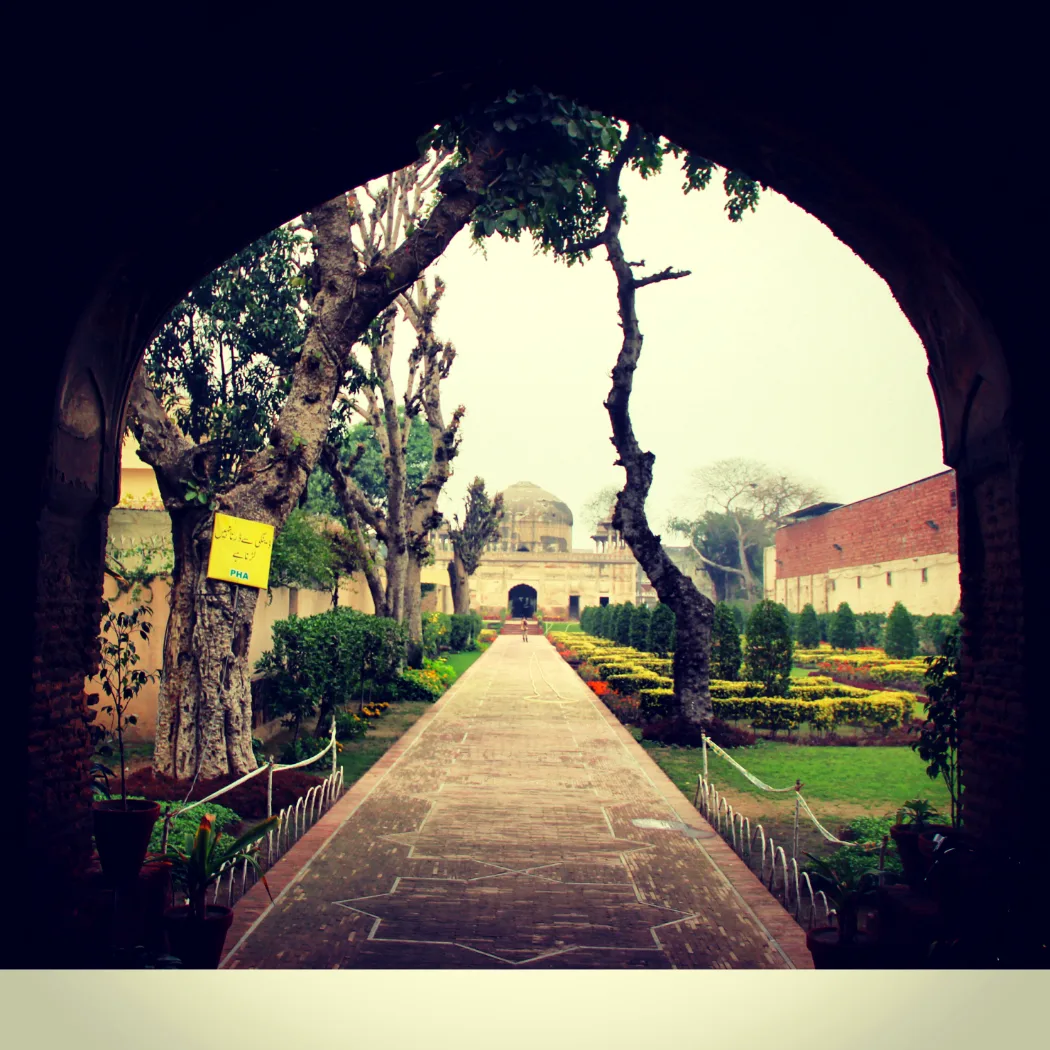
Photo Credit: Kkashaff, CC BY-SA 4.0, via Wikimedia Commons
How to Get to Gulabi Bagh
By rickshaw or ride-hailing: Ask for “Gulabi Bagh, GT Road” or “Dai Anga Tomb”. It is a short ride from Shalimar Gardens and the UET area.
By Orange Line: The Orange Line runs along GT Road. So, get off at the nearest station and take a short rickshaw ride or walk to the gate.
By car: GT Road is very busy, so park carefully on a side street nearby.
Map: Open Gulabi Bagh in Google Maps for live directions.
Places to See Nearby
Gulabi Bagh is on the old Mughal road towards Shalimar, so you can easily combine it with other sights:
- Shalimar Gardens: Shah Jahan’s grand garden of fountains, a few minutes further along GT Road.
- Tomb of Ali Mardan Khan: One of the tallest Mughal tombs in Lahore, just across GT Road in Mughalpura.
- Cypress Tomb (Saru Wala Maqbara): A small Mughal tomb close by in Begumpura, famous for its cypress tree tile design.
- Dai Anga Mosque: The mosque Dai Anga built near Lahore Railway Station, also covered in fine tile work.
- Lahore Fort and Badshahi Masjid: About 20 to 30 minutes away, depending on traffic.
- Chauburji: Another Mughal garden gateway, on Multan Road.
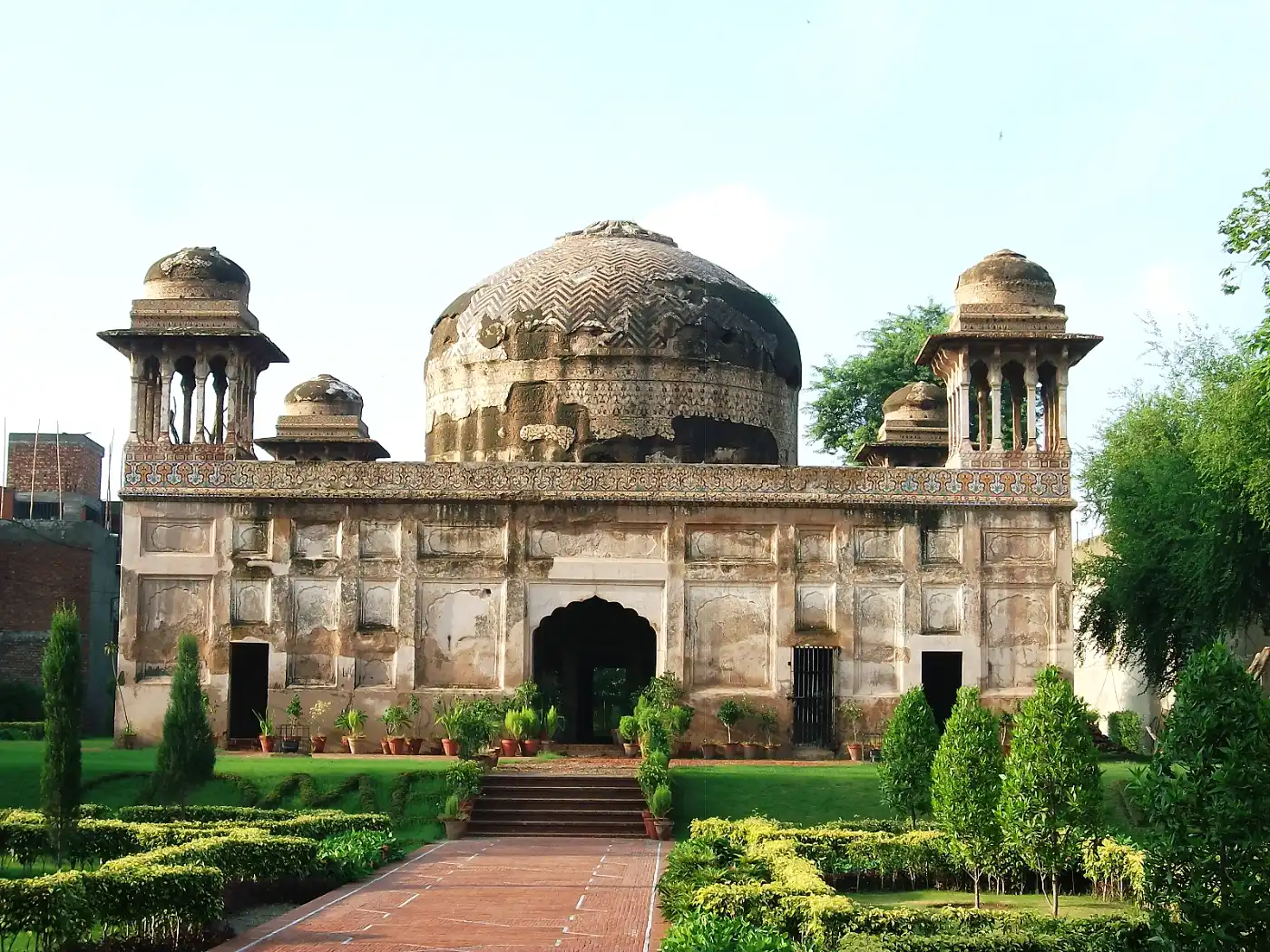
Photo Credit: M Umair Astro, CC BY-SA 3.0, via Wikimedia Commons
Tips for Visitors
- First, combine Gulabi Bagh with Shalimar Gardens for a half-day trip.
- Go in the morning, when the light makes the tiles glow.
- Stand back across the garden to see the whole gateway at once.
- Then, move close to study the small tile details.
- Be careful crossing GT Road, because traffic is heavy.
- Finally, respect the tomb as a place of burial and keep your voice low.
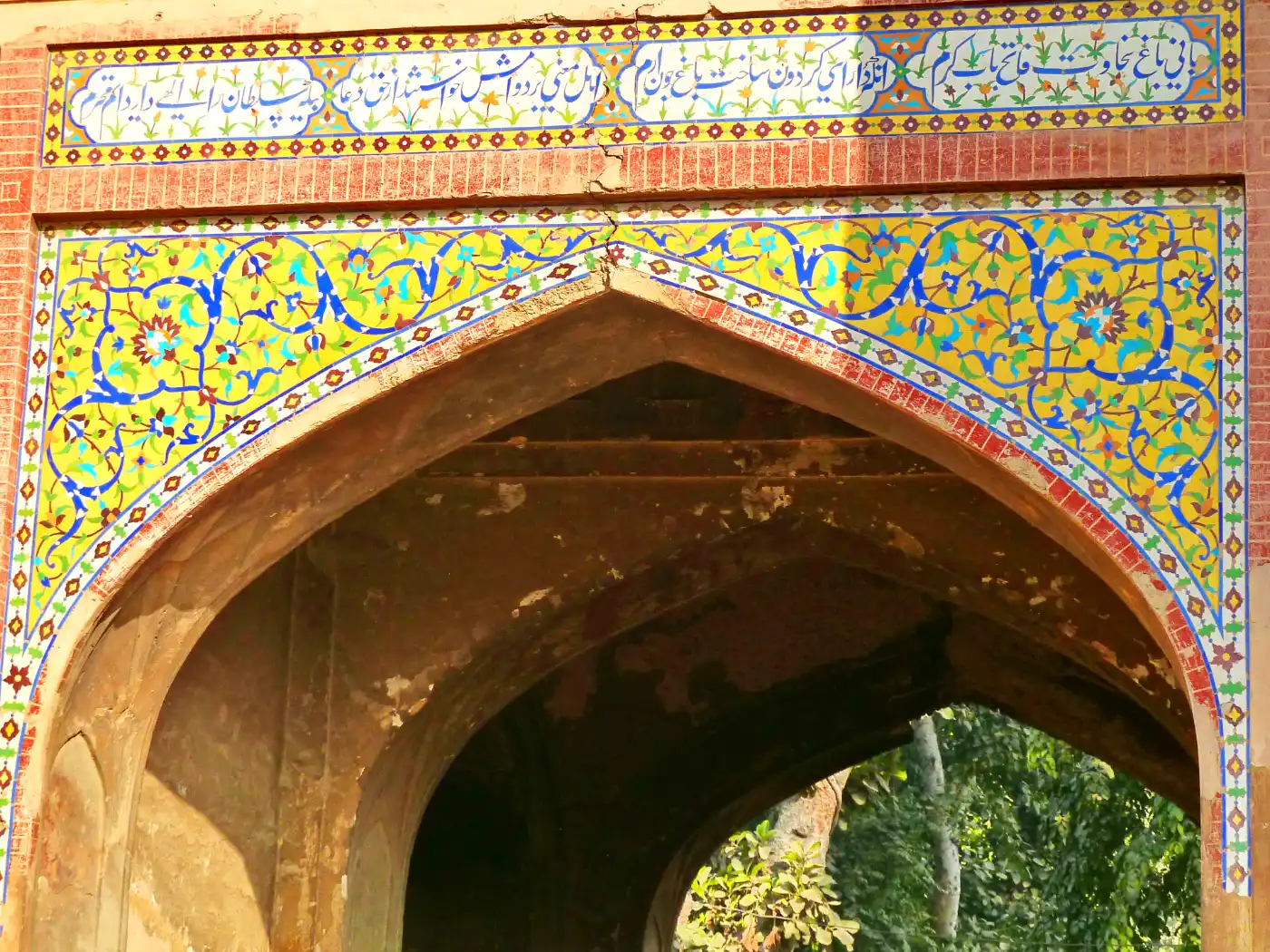
Photo Credit: Musab Bin Noor, CC BY-SA 3.0, via Wikimedia Commons
Frequently Asked Questions
Who built the Gulabi Bagh Gateway?
Mirza Sultan Baig, a Persian noble and admiral of Shah Jahan’s fleet, built it in 1655.
What does Gulabi Bagh mean?
It means “Rose Garden”.
Who was Dai Anga?
She was the wet nurse of Mughal Emperor Shah Jahan.
Is there an entry fee for Gulabi Bagh?
It is usually free to visit.
Where is Gulabi Bagh?
It is on GT Road in Begumpura, Lahore, on the way to Shalimar Gardens.
Conclusion
In short, Gulabi Bagh in Lahore is a small site with some of the most beautiful tile work in Lahore. Its colourful gateway and peaceful tomb tell the story of a Mughal admiral and a royal nurse. So, on your way to Shalimar Gardens, stop for a while, step through the gate and enjoy this hidden piece of Mughal art.
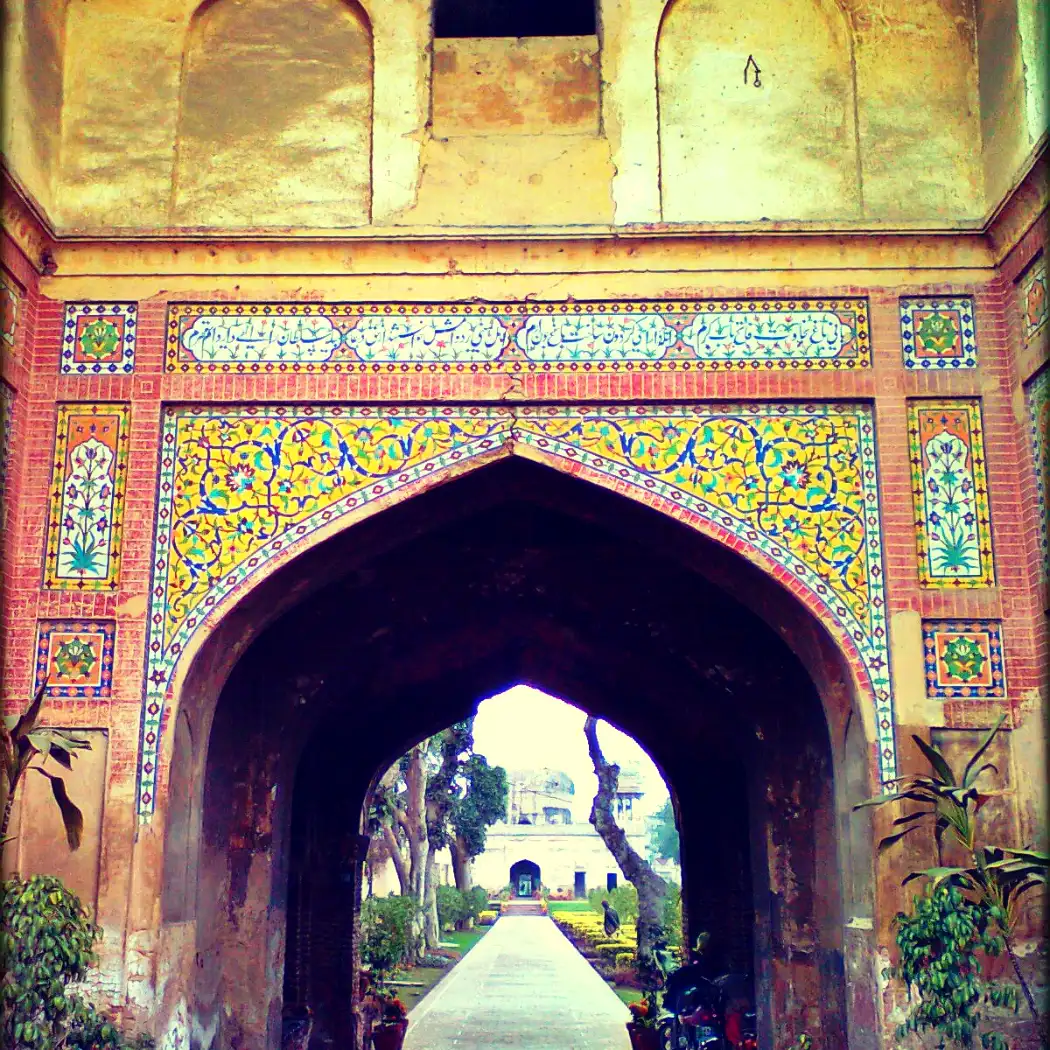
Photo Credit: DrSebi, CC BY-SA 3.0, via Wikimedia Commons
Cover photo: Musab Bin Noor, CC BY-SA 3.0, via Wikimedia Commons (cropped and colour-enhanced)