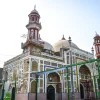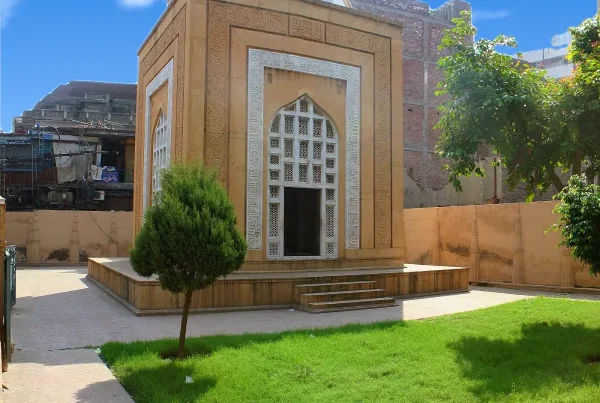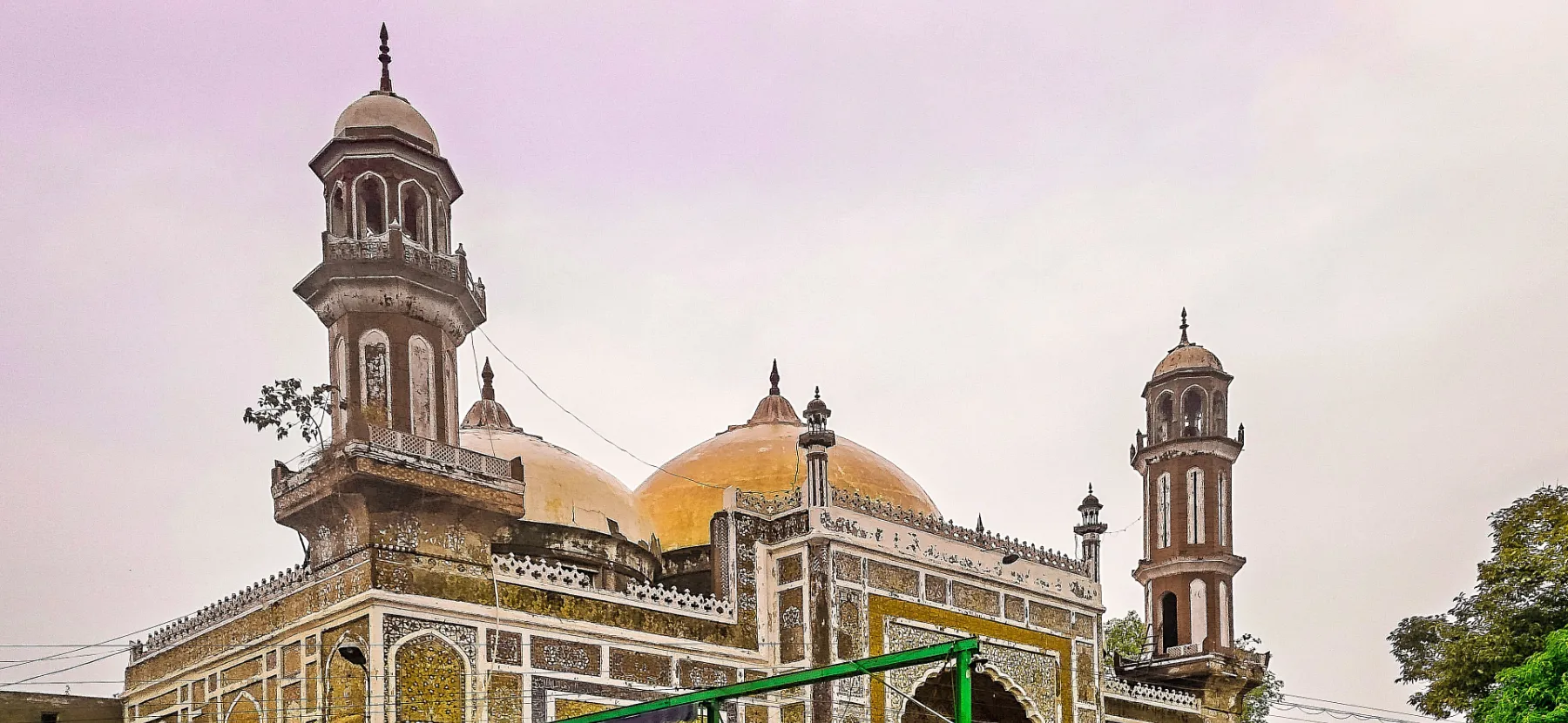
Just behind the busy Lahore Railway Station, down a narrow lane, stands a mosque that looks like a jewellery box. Almost every wall shines with blue, yellow and orange tiles. This is the Dai Anga Mosque Lahore, built in the time of Shah Jahan by the woman who nursed him as a baby.
However, few tourists come here, so it feels like a real discovery. In this guide, we cover its unusual history, the tile work you should not miss, and how to find it. So, if you love Mughal art, add it to your list.
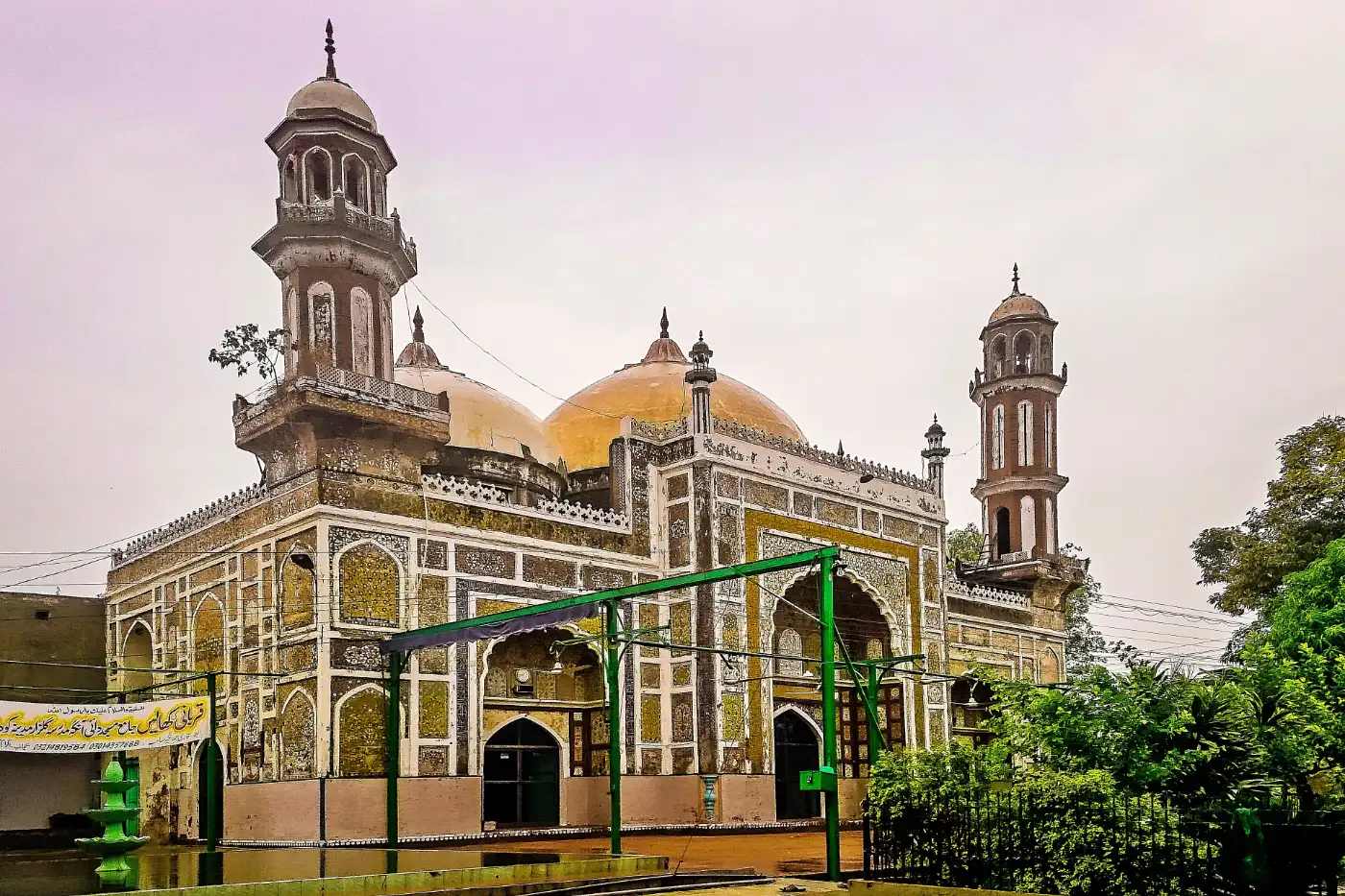
The tiled front of the mosque. Photo Credit: Kaleem Ullah, CC BY-SA 4.0.
History of Dai Anga Mosque Lahore
Who Was Dai Anga?
Dai Anga’s real name was Zeb-un-Nisa. She was the wet nurse of Emperor Shah Jahan, so the royal family treated her with great respect. In addition, her husband, Murad Khan, served as a magistrate under Emperor Jahangir. Sadly, her son, Muhammad Rashid Khan, a skilled archer, later died fighting for Prince Dara Shikoh.
Building the Mosque
Traditionally, the mosque is dated to 1635. However, its own inscriptions give the year 1649. Back then, it stood in Mohalla Dai Anga, a rich quarter where Mughal nobles lived. As a result, the mosque is now the only building left from that old neighbourhood.
A Mosque That Became an Office
In fact, the mosque’s later story is unusual. First, Maharaja Ranjit Singh used it to store gunpowder. Then, after the British took Punjab in 1849, Henry Cope, the editor of the Lahore Chronicle, lived in it. Later, he sold it to the Punjab and Delhi Railway Company, which turned it into an office for its traffic superintendent while building the railway station next door.
Returned as a Mosque
Finally, in 1903, after Lord Curzon spoke out against the misuse of old monuments, the building was given back to Lahore’s Muslims and repaired. Today, the Dai Anga Mosque Lahore is a protected monument of the Punjab Archaeology Department, and it is still used for daily prayers.
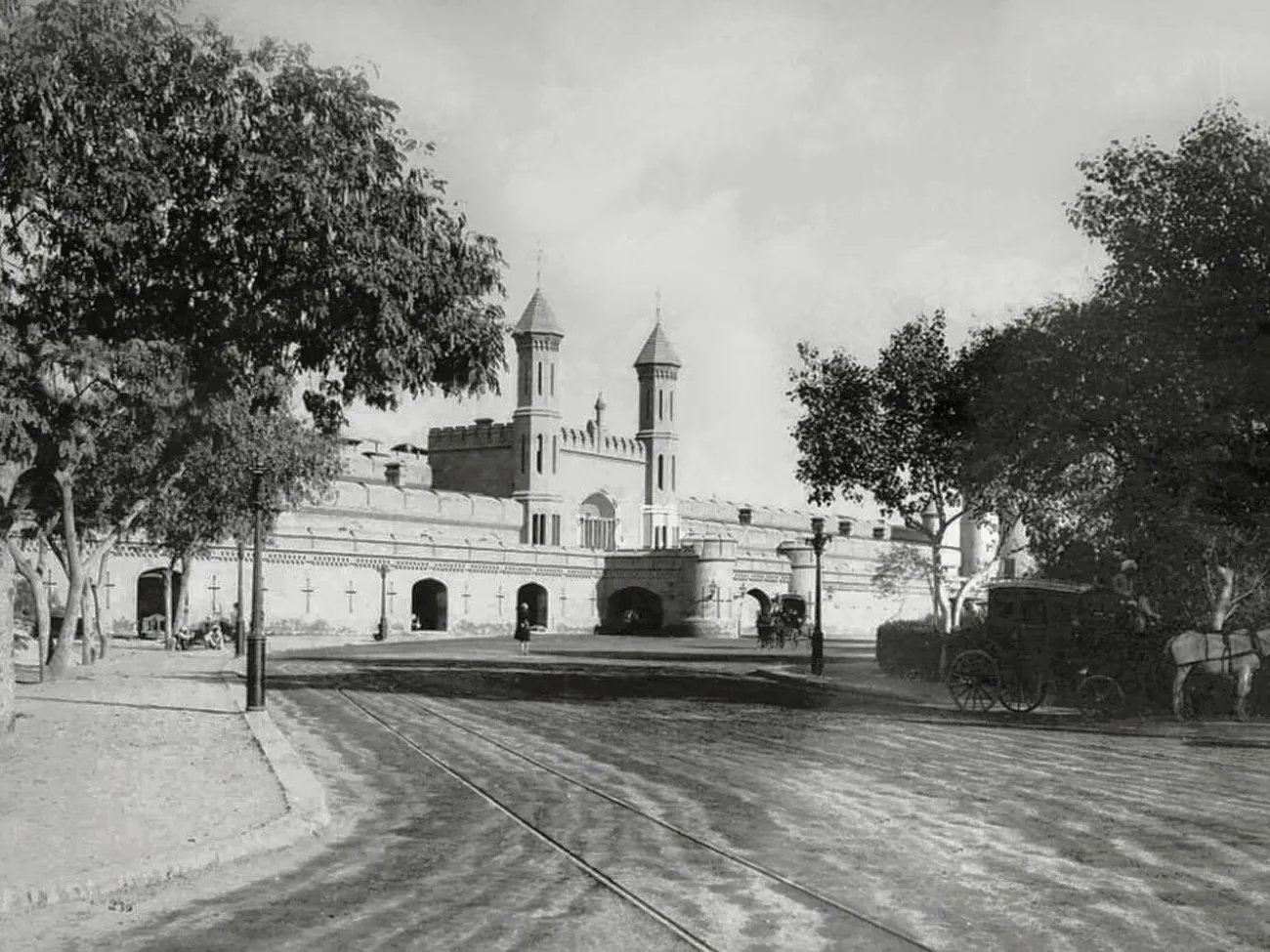
Lahore Railway Station in the 1870s. Photo Credit: Unknown photographer.
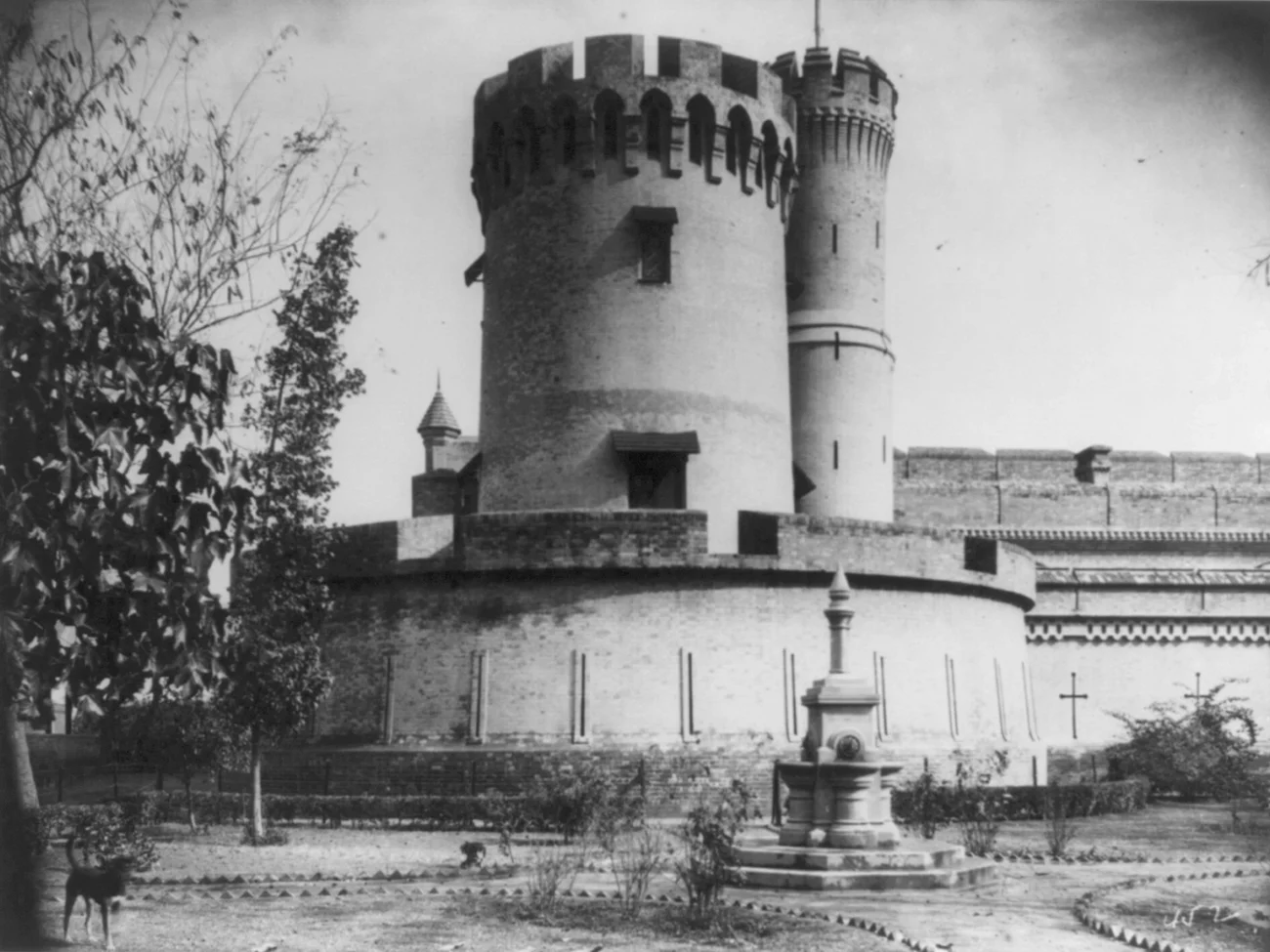
The fort-like towers of the station in 1895. Photo Credit: William Henry Jackson.
Architecture of the Mosque
First of all, the mosque is small, but it follows the plan of the great Mughal mosques. In fact, it is like a mini version of Badshahi Masjid. For example, a courtyard about 84 feet wide leads to a prayer hall with three sections.
Domes and Minarets
The central section has a dome about 19 feet across, and two smaller domes of about 16 feet sit on either side. Meanwhile, four slim minarets with red bands rise from the corners, so the mosque stands out above the surrounding houses.
Kashi Tile Work
Still, the real star is the tile work. Kashi kari, or glazed tile mosaic, covers the front in blue, yellow, orange and green. Together, the patterns show flowers, vases and calligraphy, much like Masjid Wazir Khan in the Walled City. Inside, however, the walls once had painted frescoes. Unfortunately, most of them have since been covered by modern tiles.
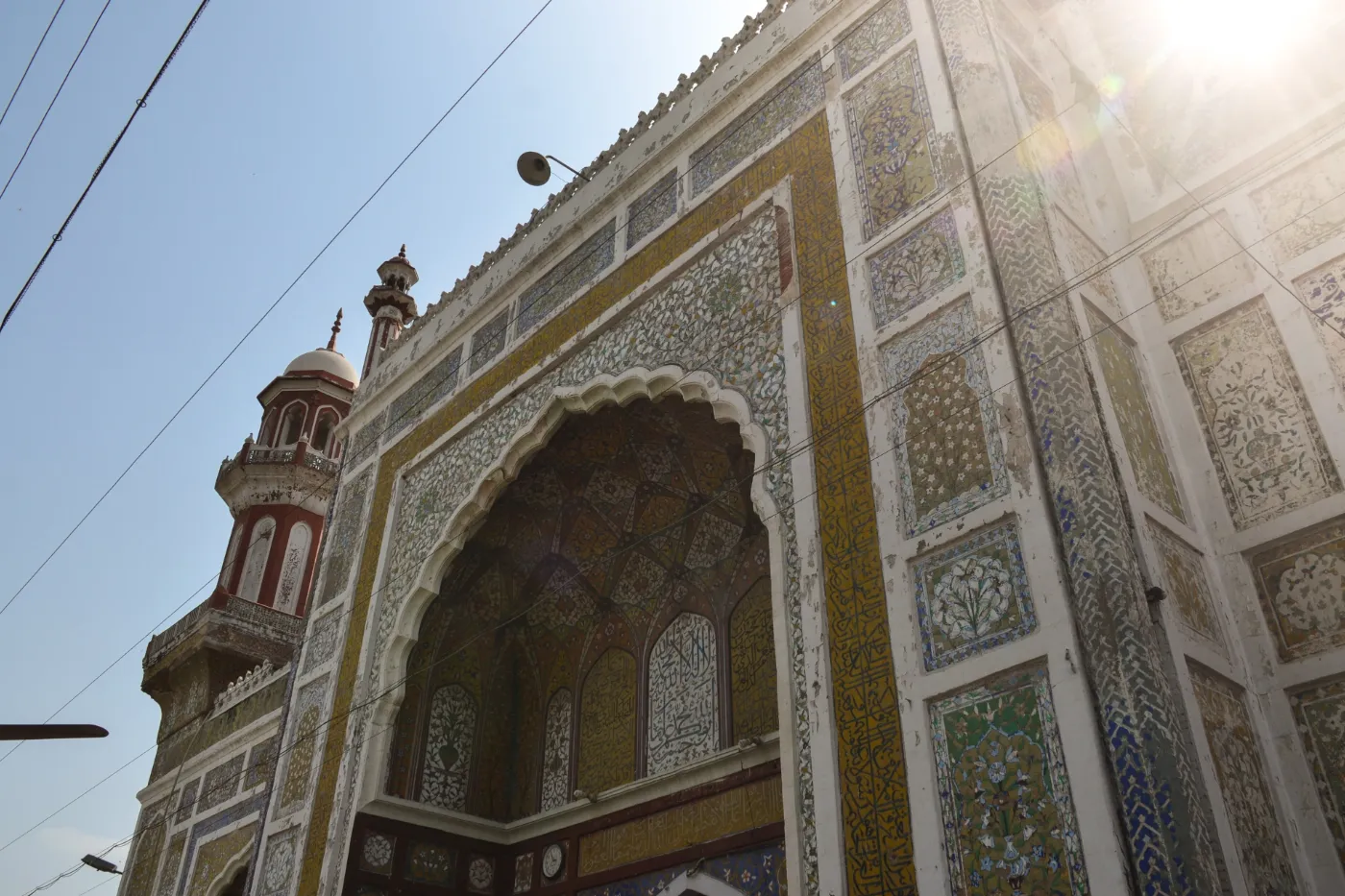
Tile panels on the front of the mosque. Photo Credit: Kumail Hasan, CC BY-SA 4.0.
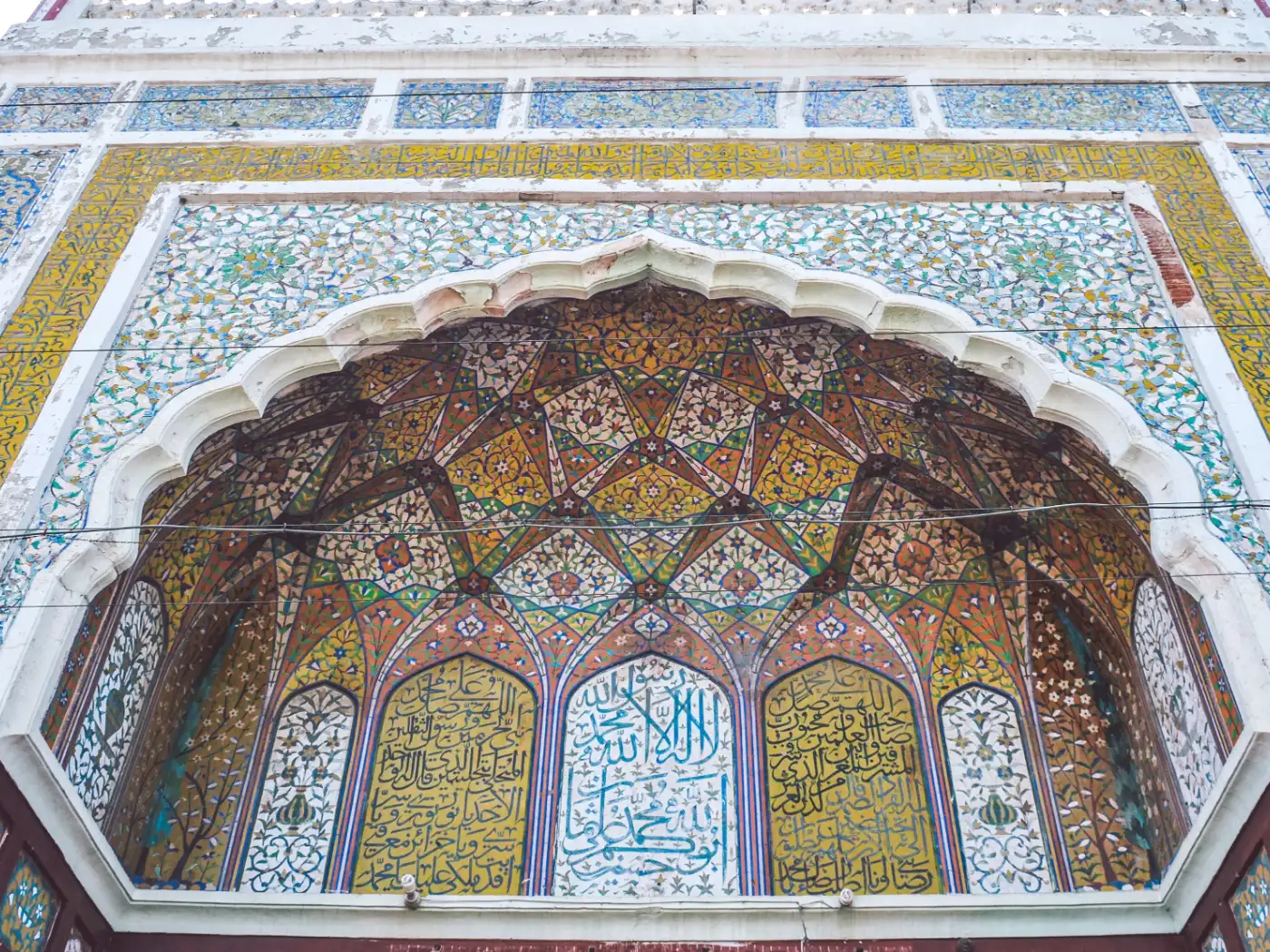
Tile mosaic inside a side arch. Photo Credit: Kumail Hasan, CC BY-SA 4.0.
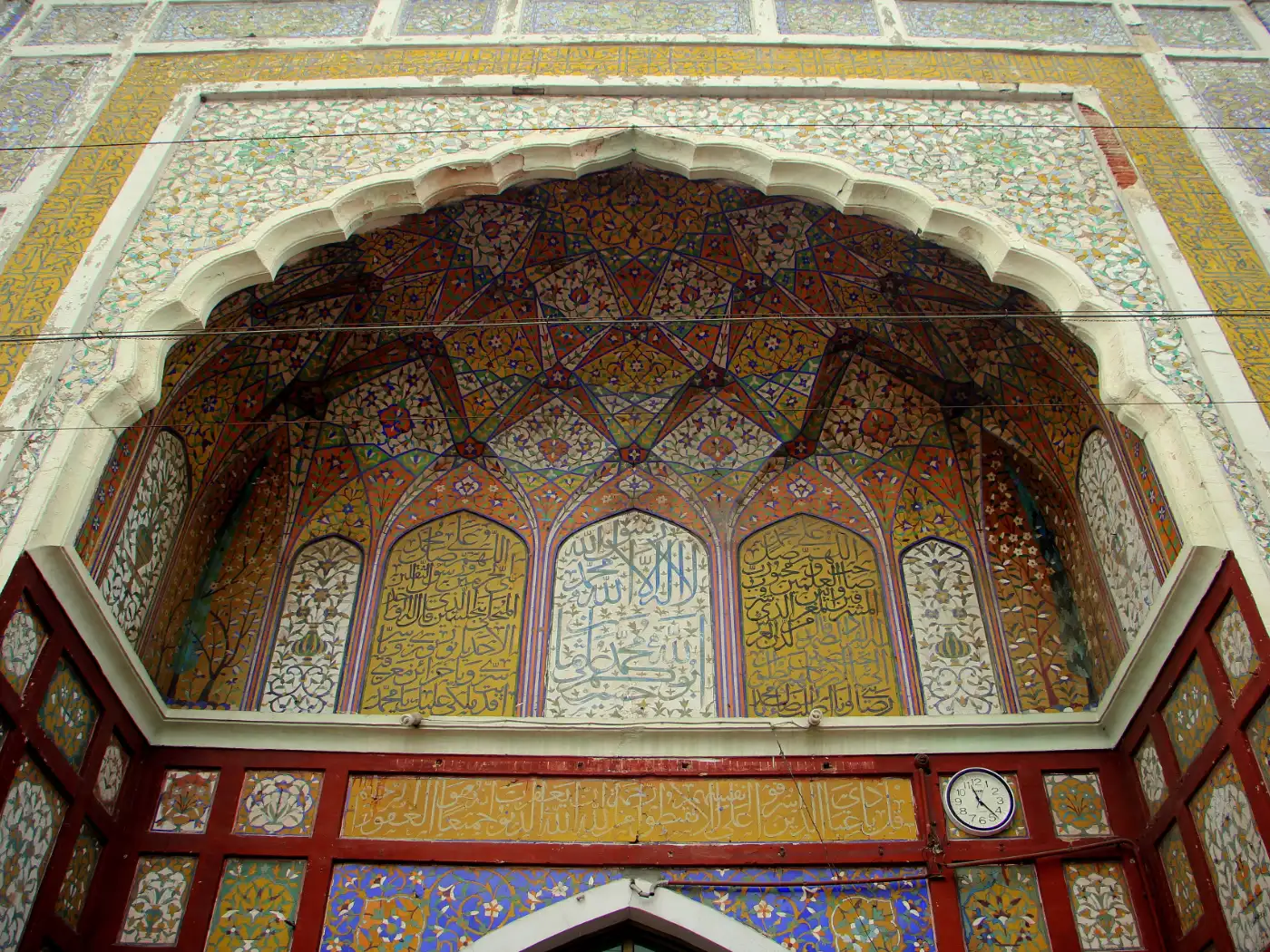
The painted muqarnas of the central arch. Photo Credit: The Walled City of Lahore Authority, CC BY-SA 4.0.
What to See
The Tiled Facade
Stand in the courtyard and look at the front of the prayer hall. Every panel has a different design; therefore, take your time. In particular, notice the tall central arch with its honeycomb-like muqarnas and bright calligraphy panels.
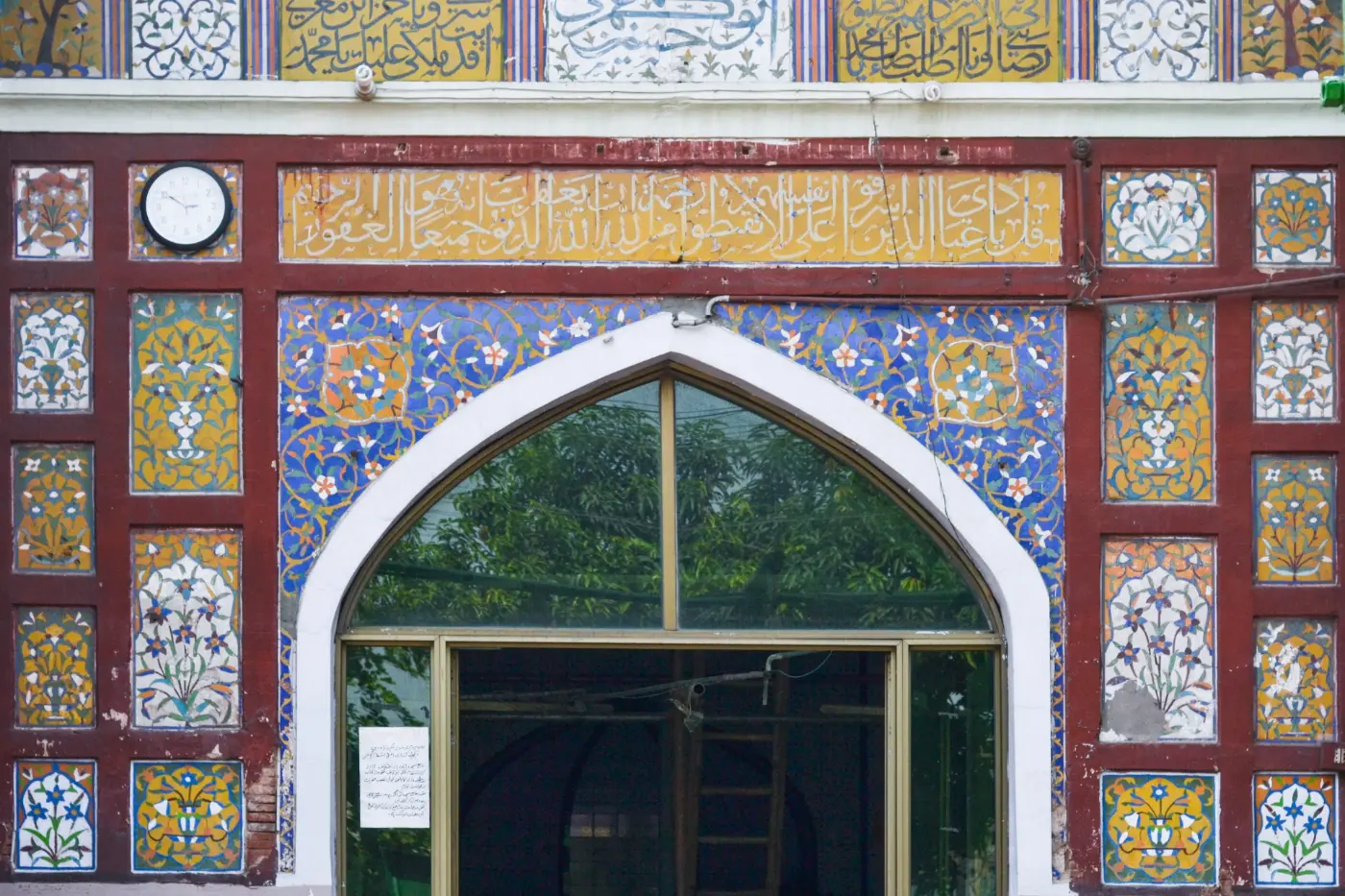
The main entrance to the prayer hall. Photo Credit: Kumail Hasan, CC BY-SA 4.0.
The Prayer Hall
Next, step inside, quietly. Inside, the prayer hall has white walls with blue and black painted patterns, and soft light falls through the arches. Also, if people are praying, wait at the back until they finish.
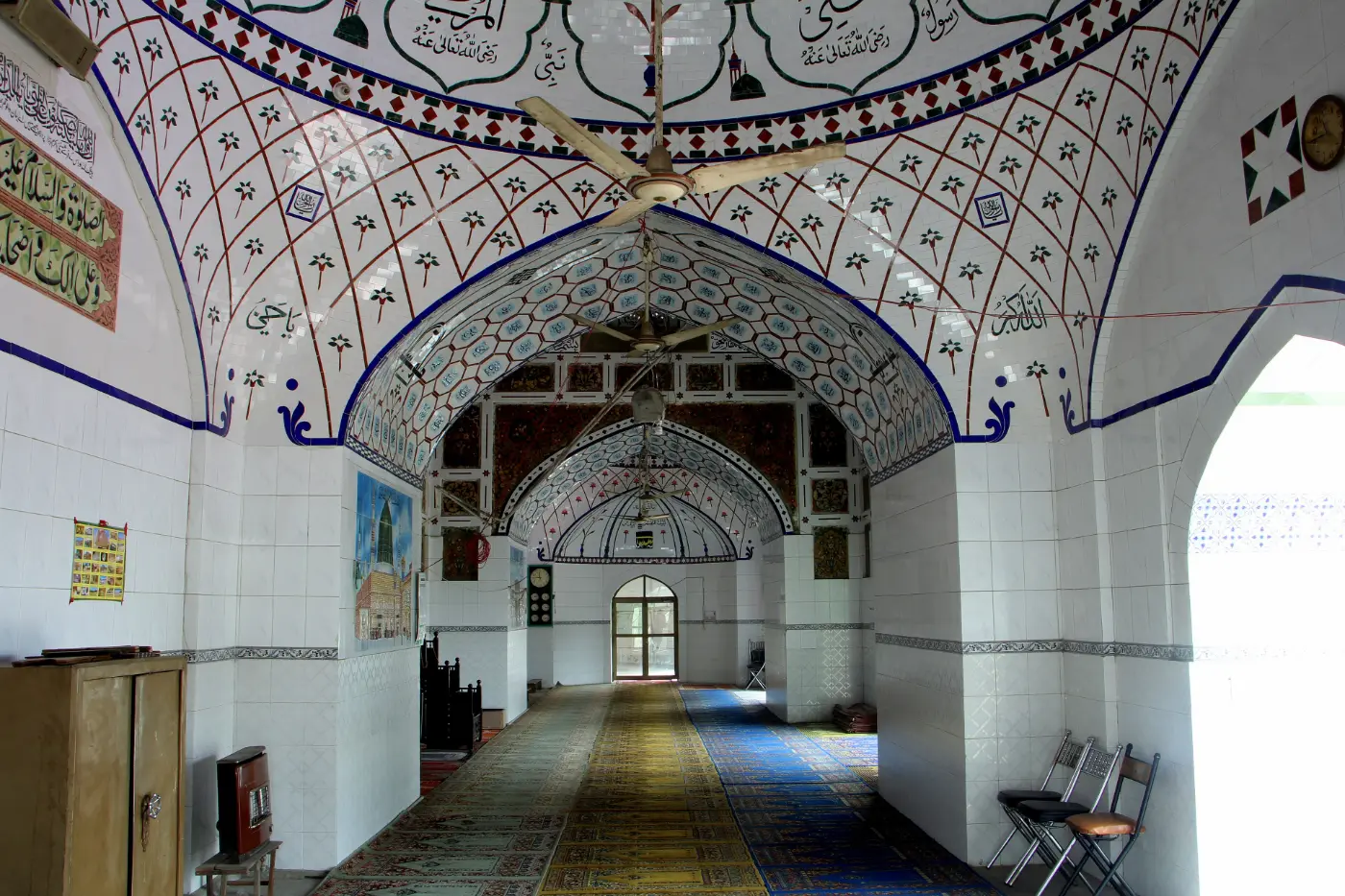
Inside the prayer hall. Photo Credit: The Walled City of Lahore Authority, CC BY-SA 4.0.
Entrance Gate and Courtyard
Finally, before you leave, look back at the entrance gate with its green calligraphy board. From the gate, you get the best full view of the mosque, with all four minarets in one frame.
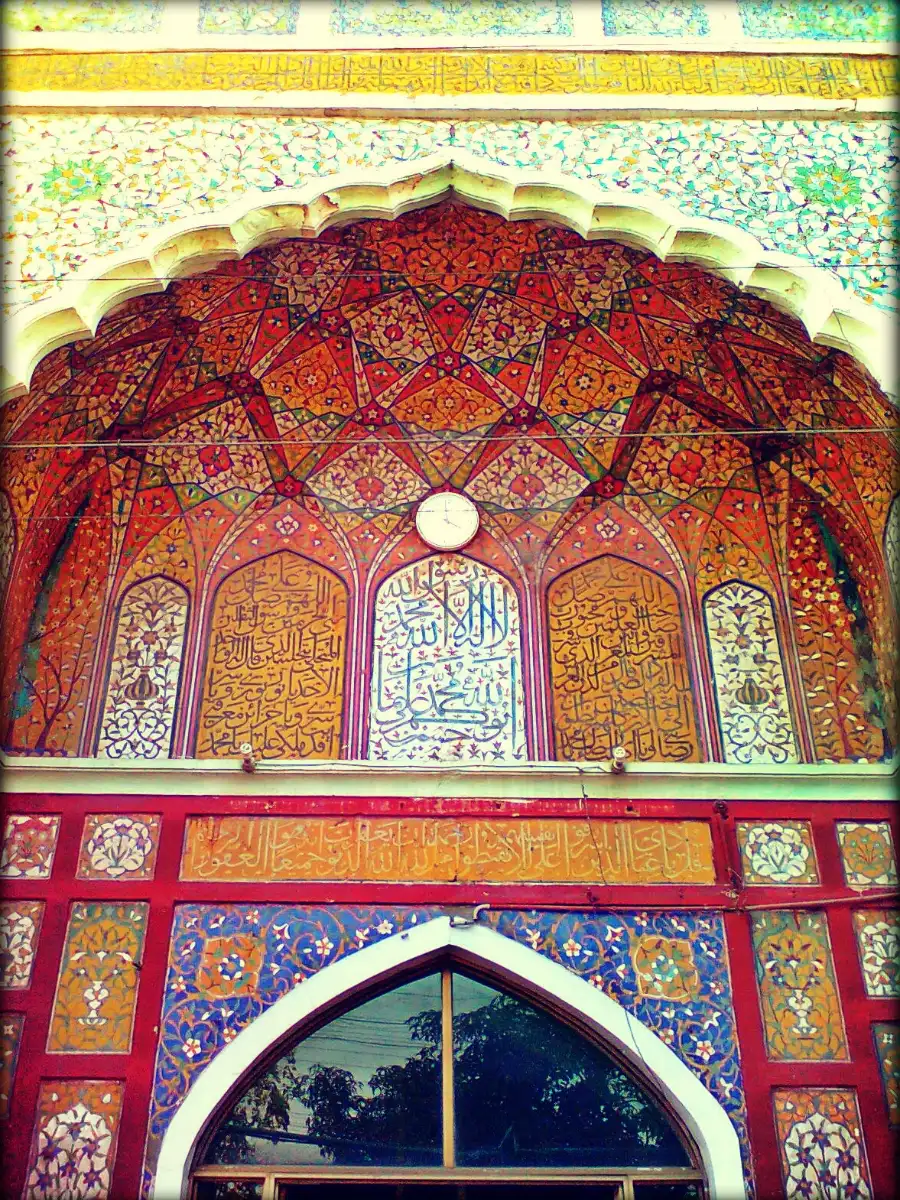
The colourful arch above the entrance. Photo Credit: DrSebi, CC BY-SA 3.0.
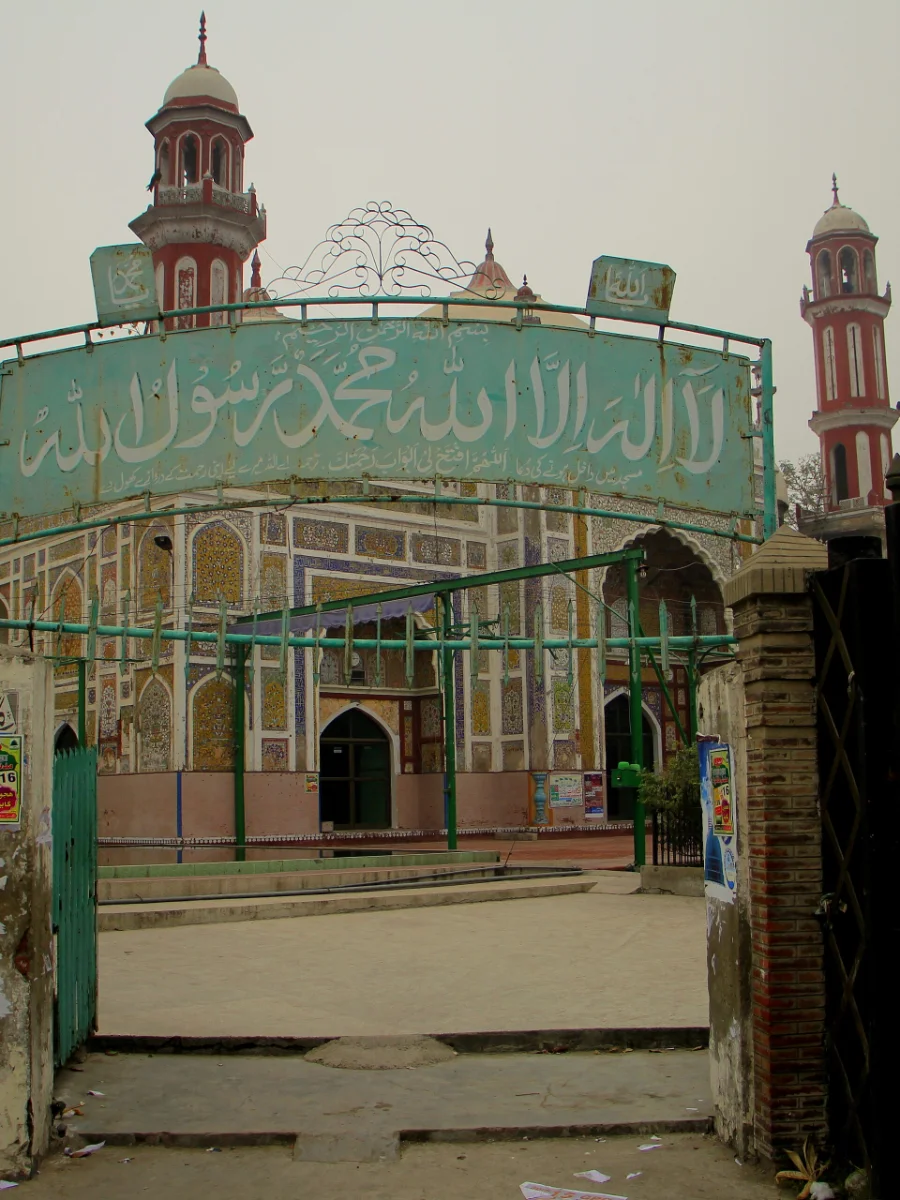
The entrance gate of the mosque. Photo Credit: The Walled City of Lahore Authority, CC BY-SA 4.0.
Things to Do
- First, photograph the tile panels; morning light shows the colours best.
- Next, offer a prayer, or simply sit in the courtyard for a few quiet minutes.
- After that, combine your visit with the historic Lahore Railway Station next door.
- Then visit Gulabi Bagh on GT Road, where Dai Anga herself is buried.
- Also, compare the tiles with those at Masjid Wazir Khan, built in the same period.
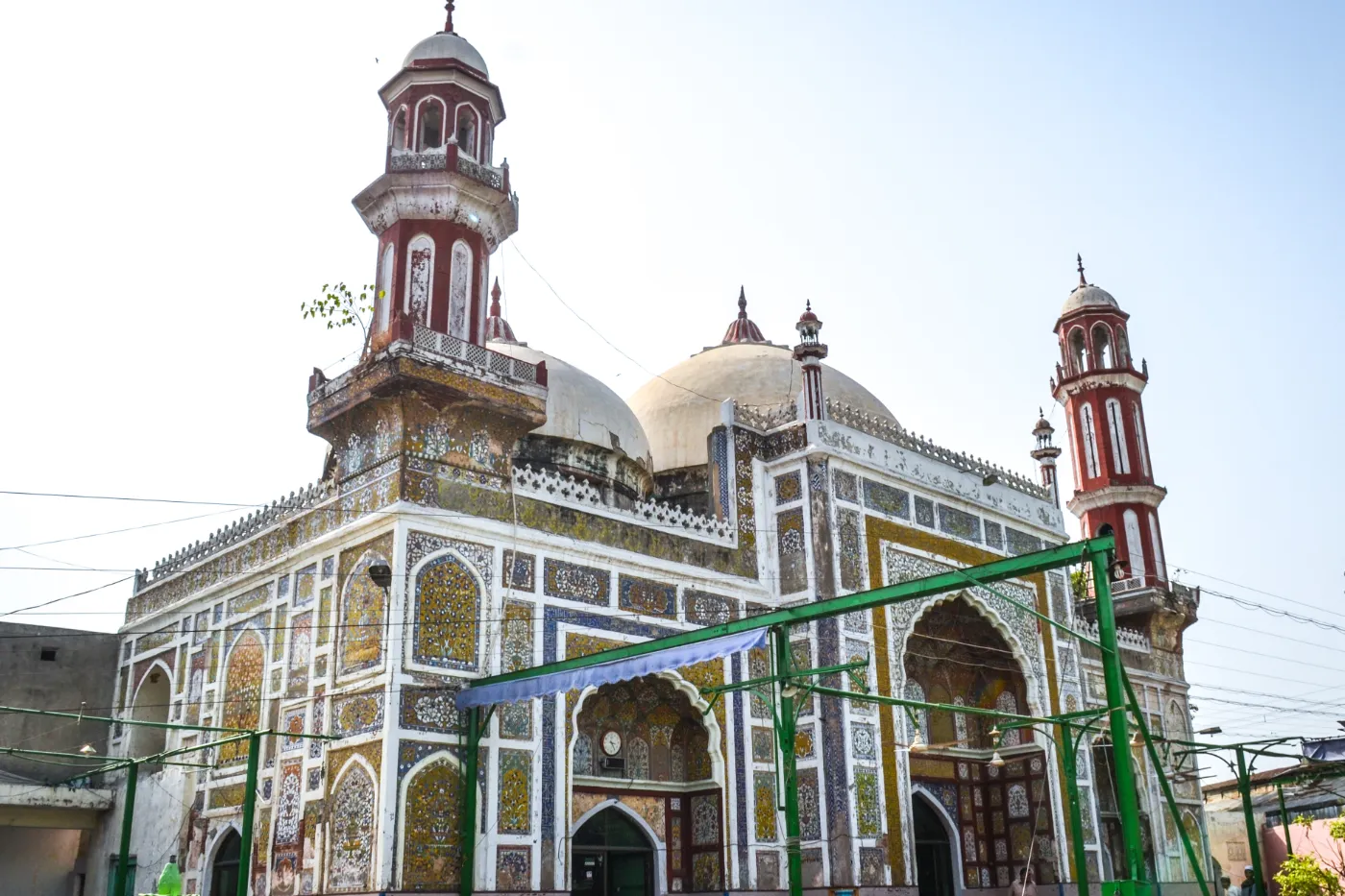
The mosque seen from the entrance. Photo Credit: Kumail Hasan, CC BY-SA 4.0.
Food Nearby
The area around Lahore Railway Station is full of simple dhabas and tea stalls. For example, you can try halwa puri and chanay in the morning, or nihari, daal chawal and tandoori roti at lunch. Also, look for fresh fruit chaat and a strong cup of doodh patti.
For a bigger choice, take a short rickshaw ride to Gawalmandi Food Street. Most meals near the station cost around PKR 300 to 1,000 per person.
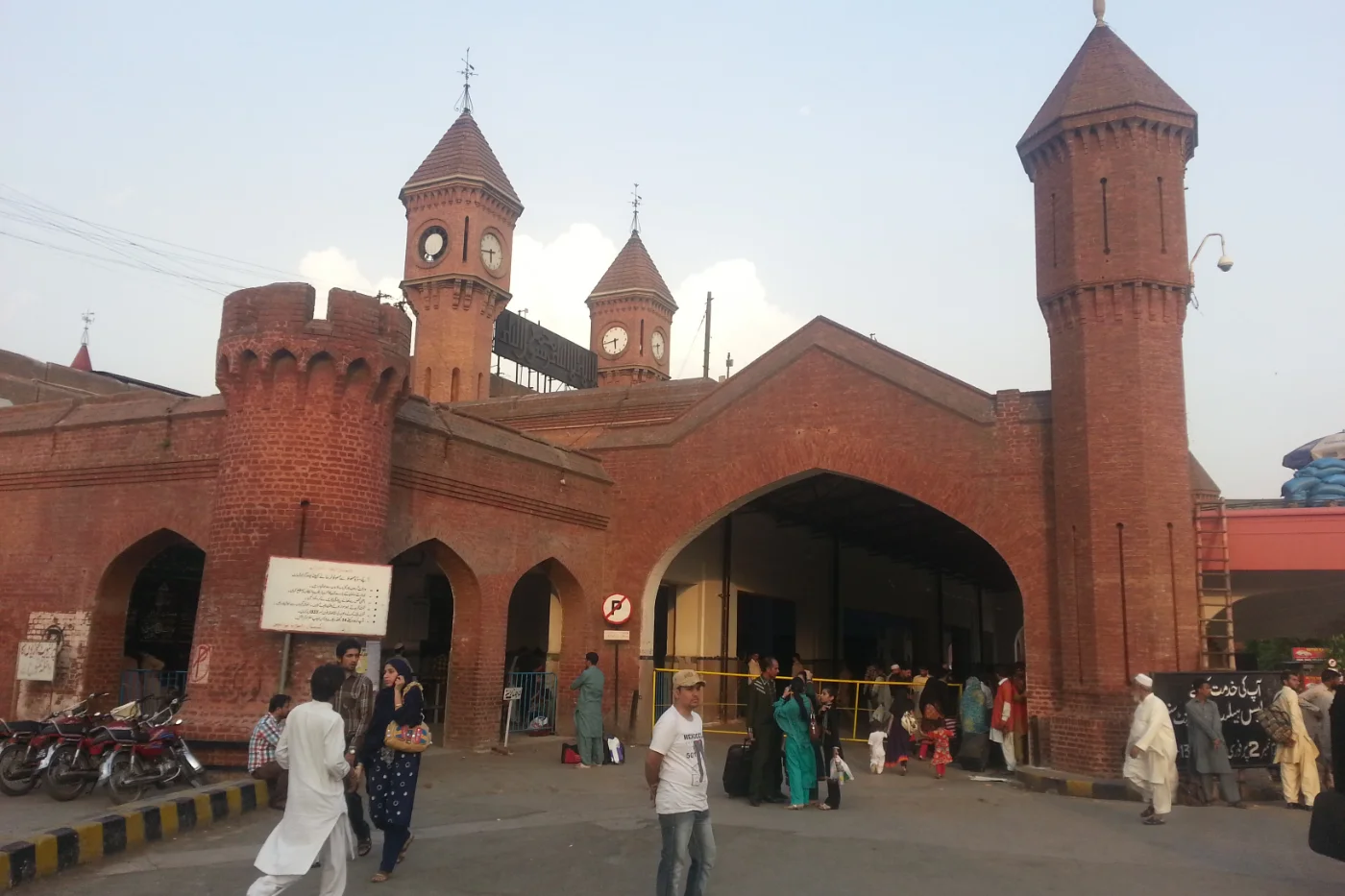
The busy entrance of Lahore Railway Station. Photo Credit: Aamir Khan Lodhi, CC BY-SA 4.0.
Visitor Information
Visiting Dai Anga Mosque Lahore
Before you visit Dai Anga Mosque Lahore, keep these points in mind.
- Location: Naulakha area, southeast of Lahore Railway Station.
- Timings: It is a working mosque, usually open from Fajr to Isha. Avoid prayer times, especially Friday afternoon.
- Ticket: Free for everyone.
- Best time: October to March, in the morning, when the light is soft.
- Time needed: 30 to 45 minutes.
- Dress code: Cover your arms and legs, cover your head, and remove your shoes before entering the prayer hall.
- Women: Women can visit the courtyard. However, ask the caretaker before entering the prayer hall.
- Photography: Allowed; however, do not photograph people while they pray.
- Accessibility: Because the lane is narrow and there are steps, wheelchair access is difficult.
- Safety: Since the station area is crowded, keep your phone and wallet safe.
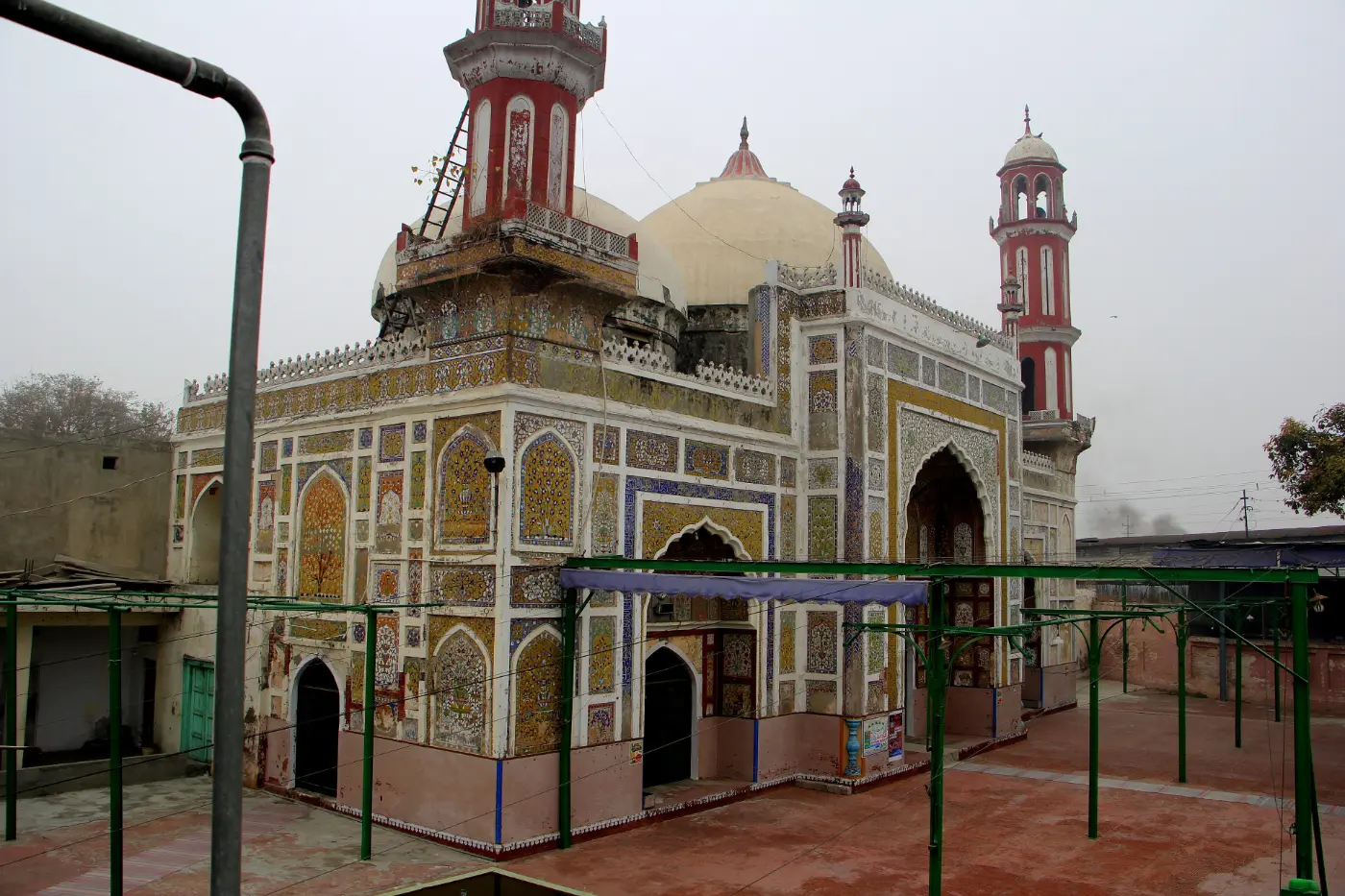
A side view of the mosque and its minarets. Photo Credit: The Walled City of Lahore Authority, CC BY-SA 4.0.
How to Get There
The mosque is in the Naulakha area, just southeast of Lahore Railway Station. By Careem, inDrive or rickshaw, ask for Dai Anga Masjid near the railway station. If the driver does not know it, ask for Boharwala Chowk on Nicholson Road, and then walk into the narrow lane on the left.
By public transport, take the Orange Line Metro Train to the Railway Station stop. From there, a short rickshaw ride or a 10 to 15 minute walk brings you to the mosque.
Places to Visit Near Dai Anga Mosque
- Lahore Railway Station: a red-brick, fort-like station from the British era, right next door.
- Gulabi Bagh and the Tomb of Dai Anga: her own tomb, on GT Road.
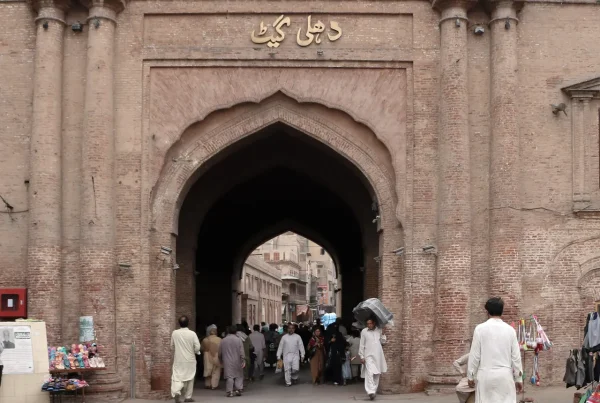
- Delhi Gate: the main gate of the Walled City, a short rickshaw ride away.
- Masjid Wazir Khan: another tile masterpiece, inside the Walled City.
- Shalimar Gardens: Shah Jahan’s royal garden, further along GT Road.
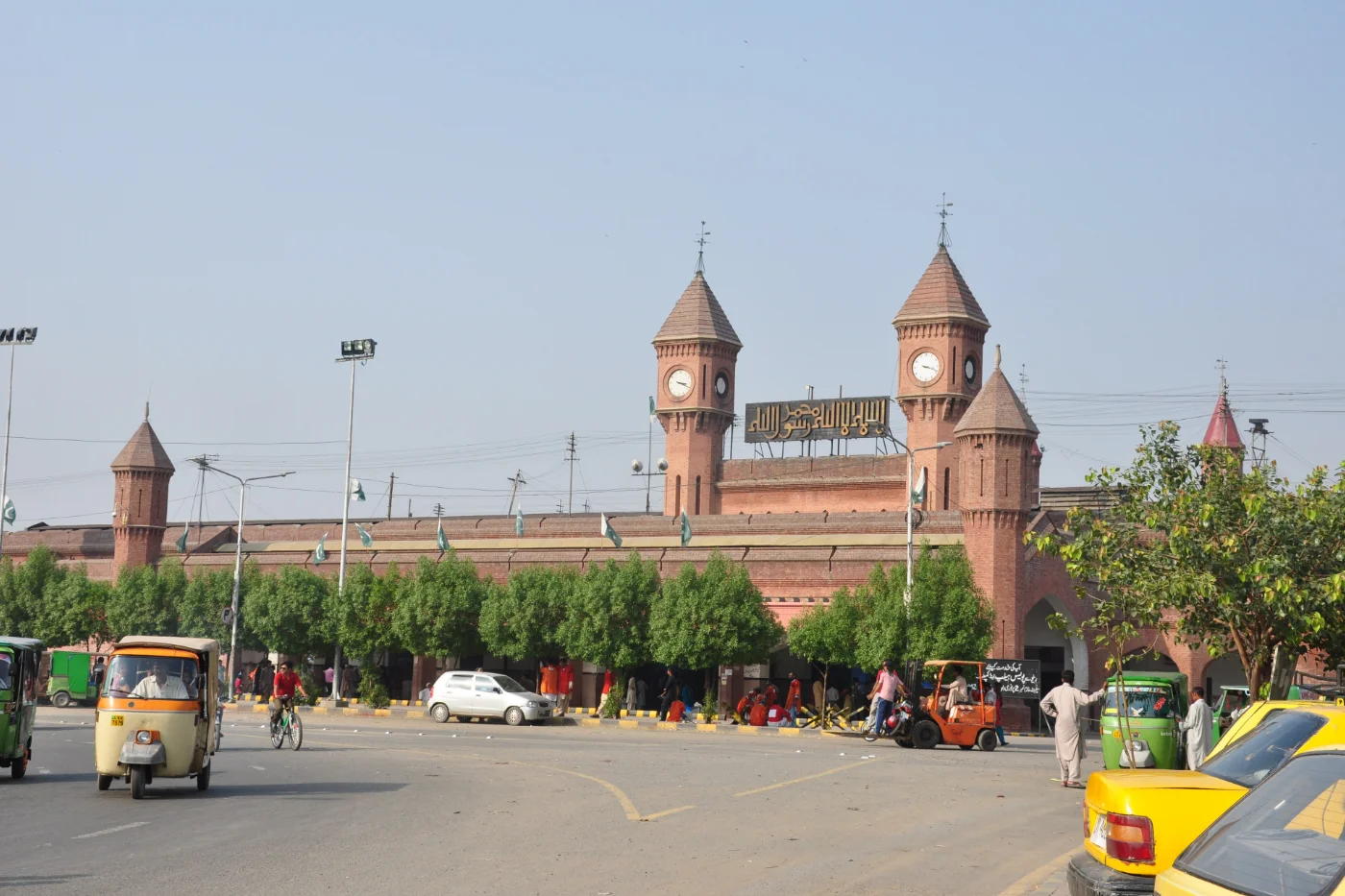
Lahore Railway Station today. Photo Credit: Nadeem Abbas Mushtaq, CC BY-SA 3.0.
Frequently Asked Questions
Who built the Dai Anga Mosque?
Dai Anga, the wet nurse of Mughal Emperor Shah Jahan, built it. Her real name was Zeb-un-Nisa.
When was Dai Anga Mosque built?
It is usually dated to 1635, but its inscriptions give 1649.
Where is Dai Anga Mosque in Lahore?
In short, it is in the Naulakha area, just southeast of Lahore Railway Station.
Is there an entry fee?
No. Entry is free, but please respect prayer times.
Is Dai Anga buried at the mosque?
No. Her tomb is at Gulabi Bagh on GT Road, in another part of Lahore.
Why was the mosque used as a railway office?
After 1849, the British sold it to the railway company, which used it as an office. In 1903, it was returned as a mosque.
Conclusion
In short, the Dai Anga Mosque Lahore is a small mosque with a big story. It survived a gunpowder store, a newspaper editor and a railway office, and its tiles still glow today. So, next time you are near the railway station, take a short detour and see this Mughal gem for yourself.
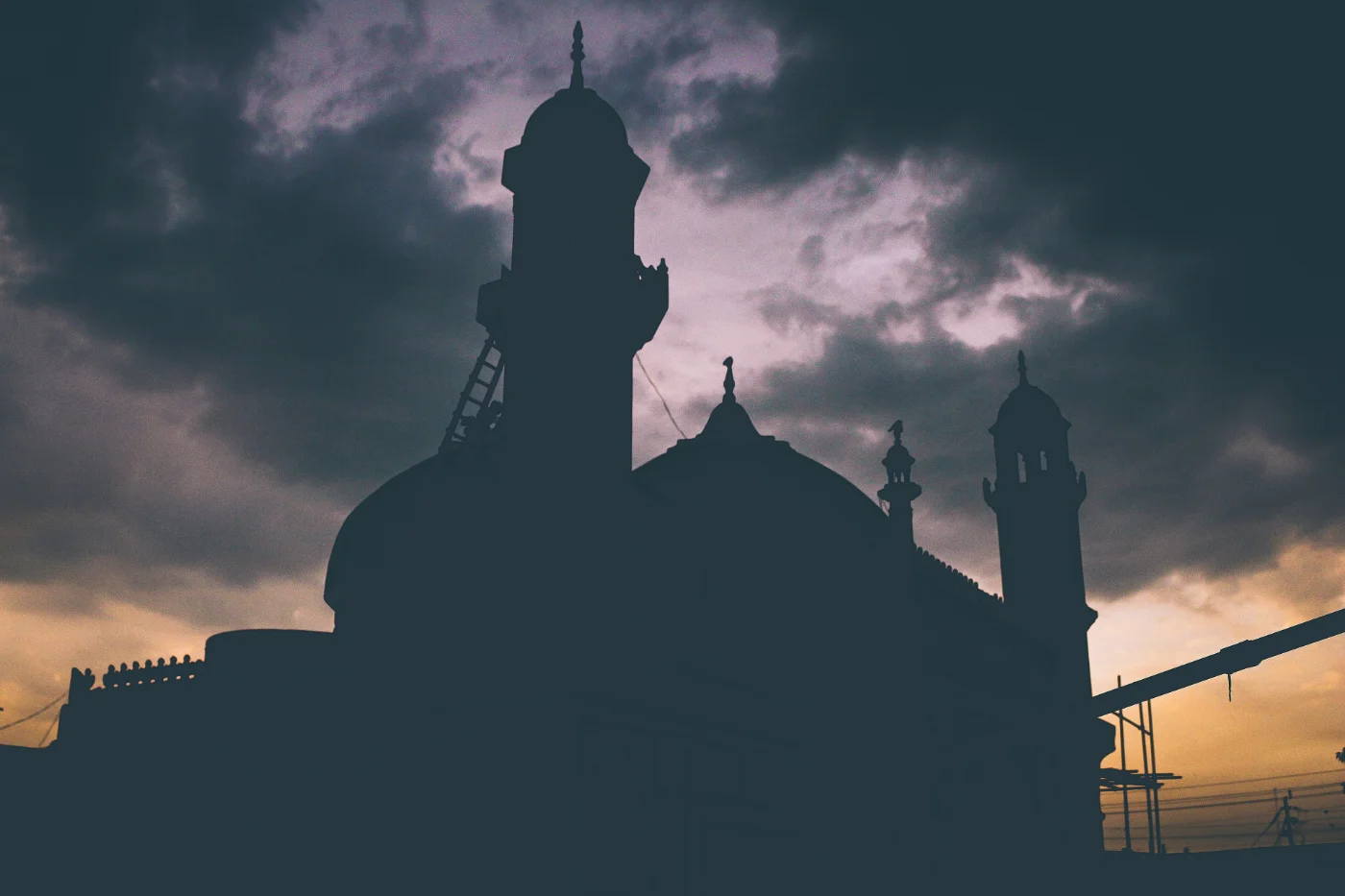
The mosque against a stormy sky after rain. Photo Credit: The Umer From Land Of Masochism, CC BY-SA 4.0.
Cover photo: Kaleem Ullah, CC BY-SA 4.0.