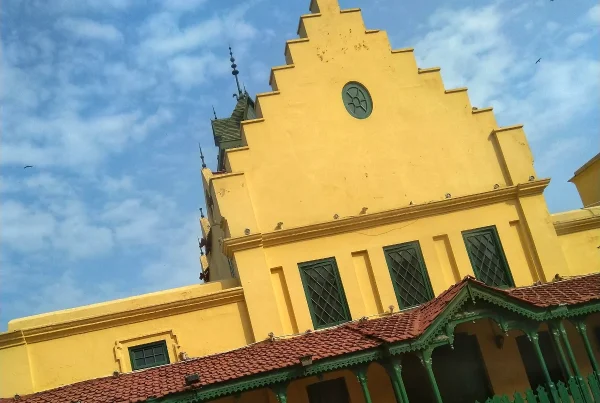
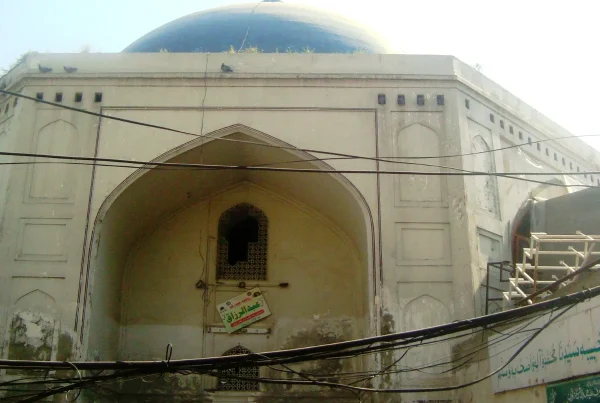
Inside Mochi Gate, in a narrow lane of the Walled City, stands Nisar Haveli, one of the most important imambargahs in Lahore. For most of the year it is a quiet old family house. However, on the 9th of Muharram, the city’s main Zuljanah procession sets off from its doors, and thousands of mourners fill the lanes to remember Imam Hussain and the martyrs of Karbala.
It is not a museum or a tourist monument. Instead, it is a living place of faith, so visit with respect and you will see a side of old Lahore that few outsiders notice.
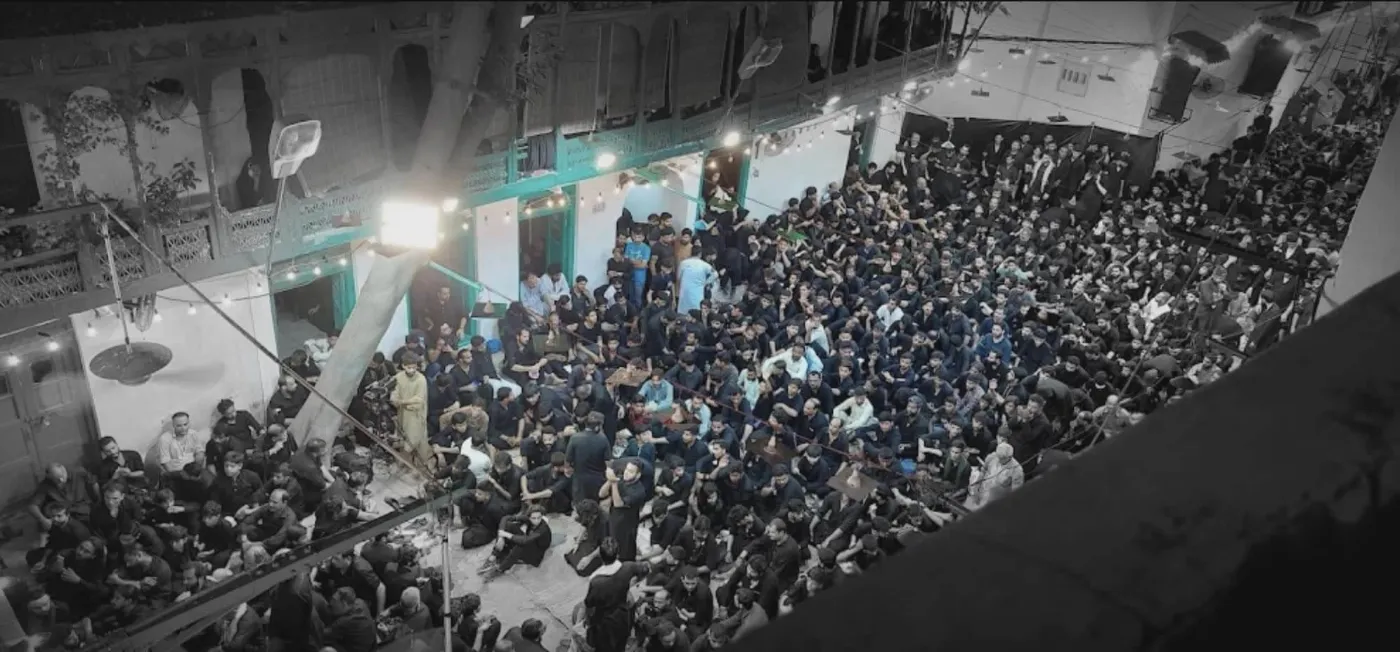
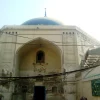
Nisar Haveli in the lanes of Mochi Gate. Photo Credit: Ameer Ali Haider.
Quick facts
- Location: Inside Mochi Gate, Walled City of Lahore
- Timings: Private imambargah; ask before entering. Busiest in Muharram (check before you go)
- Ticket: Free
- Time needed: 30 minutes
- Best time: Outside Muharram for a quiet look; 9th Muharram to see the procession
- Map: Open in Google Maps
Last checked: November 2026. Full details in Visitor Information.
History of Nisar Haveli
The Qizilbash Havelis
Nisar Haveli belongs to the Qizilbash family, one of the best-known families of old Lahore, and is named after Nawab Nisar Ali Khan Qizilbash. It was built on part of the land of the older Mubarak Haveli next door. According to the Walled City of Lahore Authority, three brothers, Mir Bahadur Ali, Mir Nadir Ali and Mir Bahar Ali, built Mubarak Haveli in the late Mughal period. Later the Qizilbash family owned both houses.
Where the Procession Begins
For about a century, Lahore’s oldest Muharram procession started from Mubarak Haveli. Later it moved to Nisar Haveli. Since then, the main Zuljanah procession leaves here on the evening of the 9th of Muharram, passes Mubarak Haveli and winds through the old city. Almost a day later, it reaches Karbala Gamay Shah outside Bhati Gate. It is often described as one of the oldest and largest Muharram processions in South Asia.
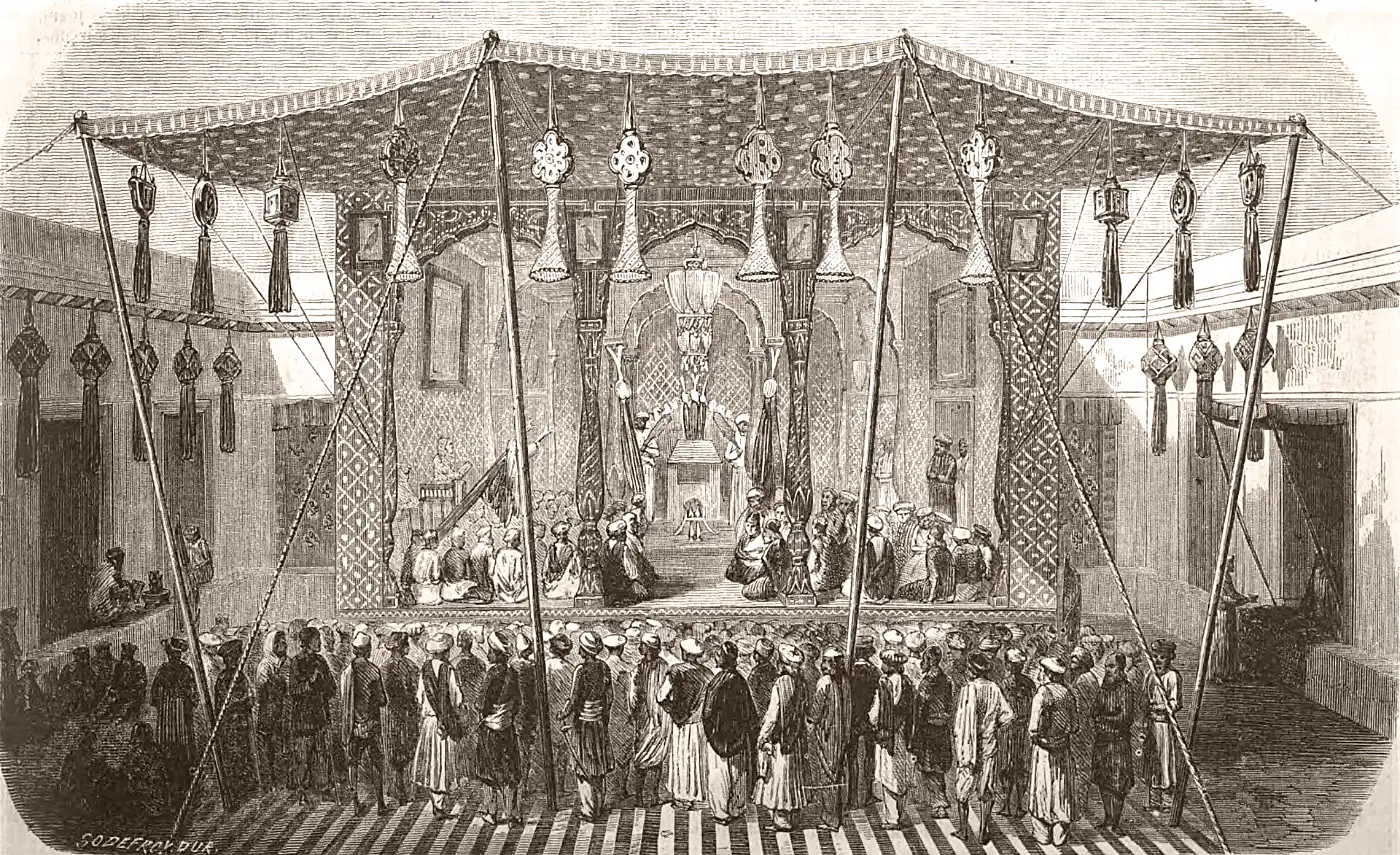
A Muharram procession in Lahore, from an 1857 illustration. Photo Credit: Unknown artist (1857).

Mourners during Muharram in the Walled City. Photo Credit: dawn.com.
What to See
The Haveli
Nisar Haveli is a traditional Walled City house built around inner courtyards, with brick walls and wooden doors and balconies. Its main hall is used for majalis, so it is laid out for large gatherings. During the first ten days of Muharram, majalis are held here every night.

Inside Nisar Haveli. Photo Credit: ghoomlo.pk.
Around Mochi Gate
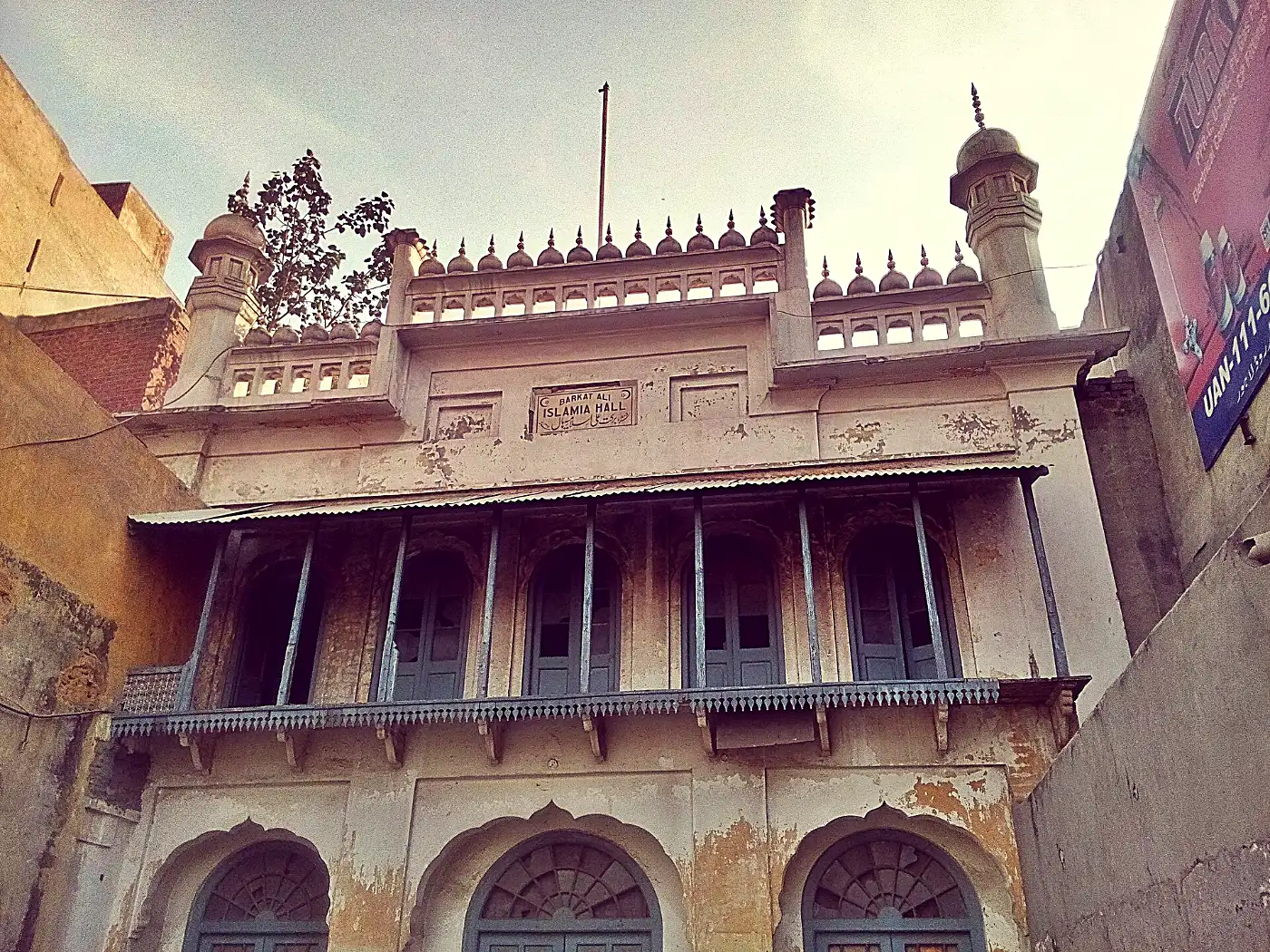
The neighbourhood is full of old buildings. Look out for Mubarak Haveli, Mohalla Chehl Bibian, several small imambargahs and the site of the Barkat Ali Islamia Hall, a well-known landmark of the area.
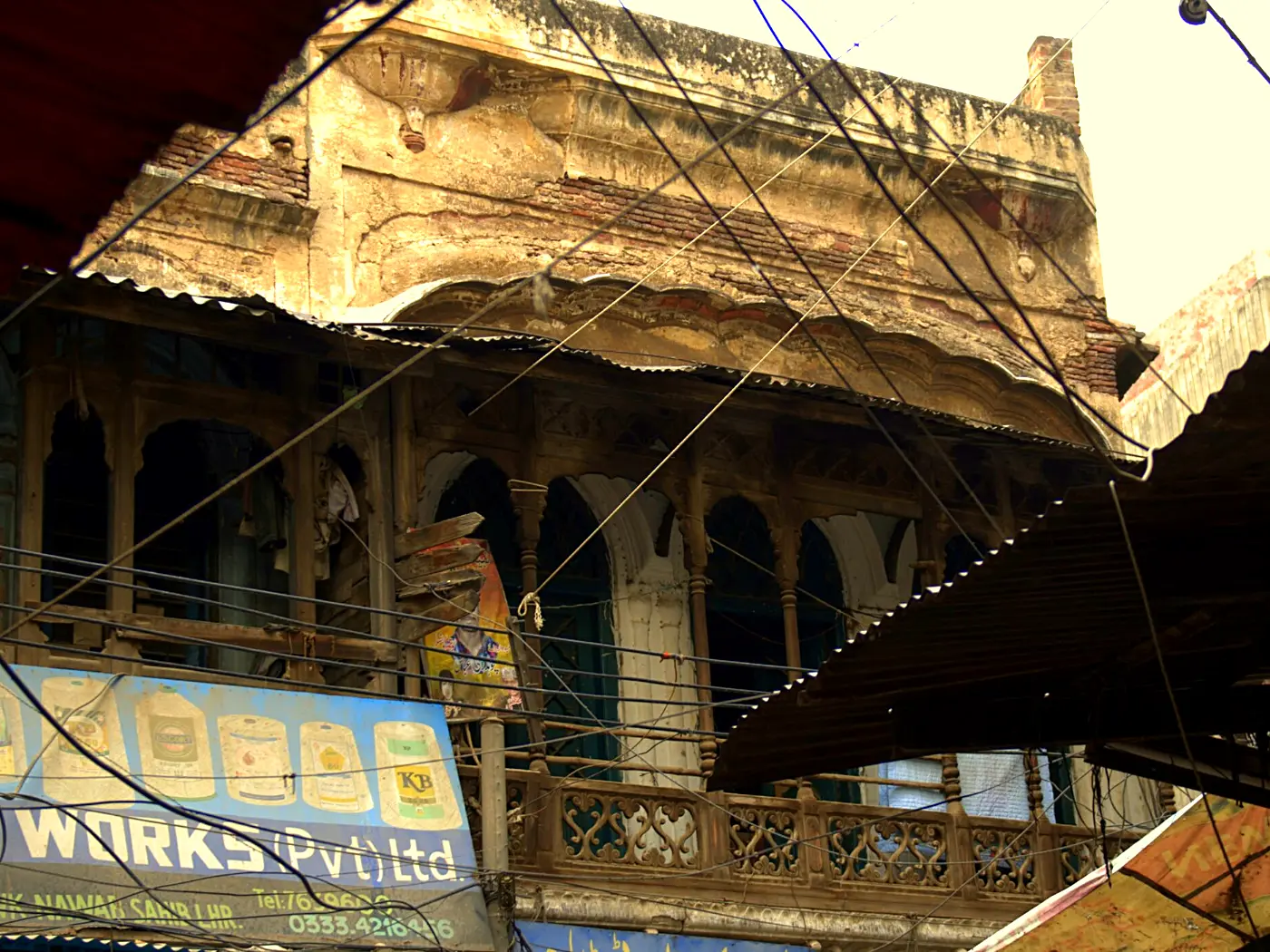
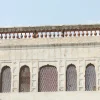
Old balconies in the Mochi Gate area. Photo Credit: The Walled City of Lahore Authority, CC BY-SA 4.0.
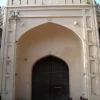
A carved facade inside Mochi Gate. Photo Credit: Muhammad Imran Saeed from City of London, CC BY 2.0.

The Barkat Ali Islamia Hall area. Photo Credit: dailytimes.com.pk.
Things to Do
- Ask before entering: It is a private religious place. Greet the caretakers and ask politely before stepping in or taking photos.
- Watch the 9th Muharram procession: If you come for it, stay with a local group, follow police directions and keep away from the front of the crowd.
- Accept a sabeel: During Muharram, stalls offer free water and milk drinks to everyone. It is a warm local tradition.
- Walk the old lanes: Explore Mochi Gate’s havelis, then continue to the spice and dry-fruit shops of the area.
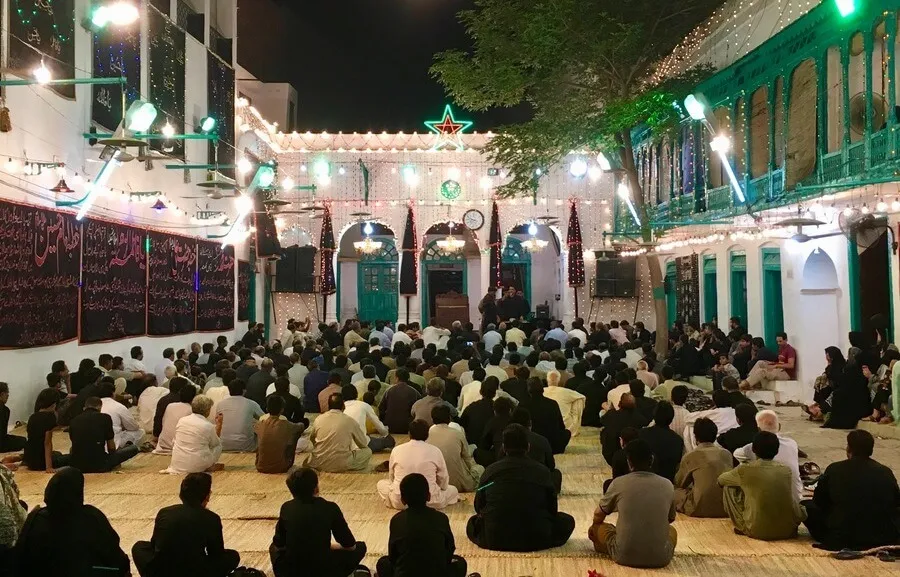
Muharram in the Walled City. Photo Credit: urbanduniya.com.
Visitor Information
- Location: Inside Mochi Gate, off Circular Road, Walled City of Lahore
- Timings: No fixed visiting hours; it is a private imambargah, so ask the caretakers
- Ticket: Free
- Time needed: About 30 minutes, longer with a walk around Mochi Gate
- Best time: Any calm day outside Muharram for a quiet look
- Muharram: Huge crowds, road closures and mobile signal suspensions are common on 9th and 10th Muharram; plan ahead
- Dress code: Modest clothes; women should cover their heads; remove shoes where asked
- Photography: Ask first, and never photograph mourners without permission
- Accessibility: Narrow lanes and steps; difficult for wheelchairs
Last checked: November 2026. Timings and prices can change, especially in Ramadan and on public holidays.
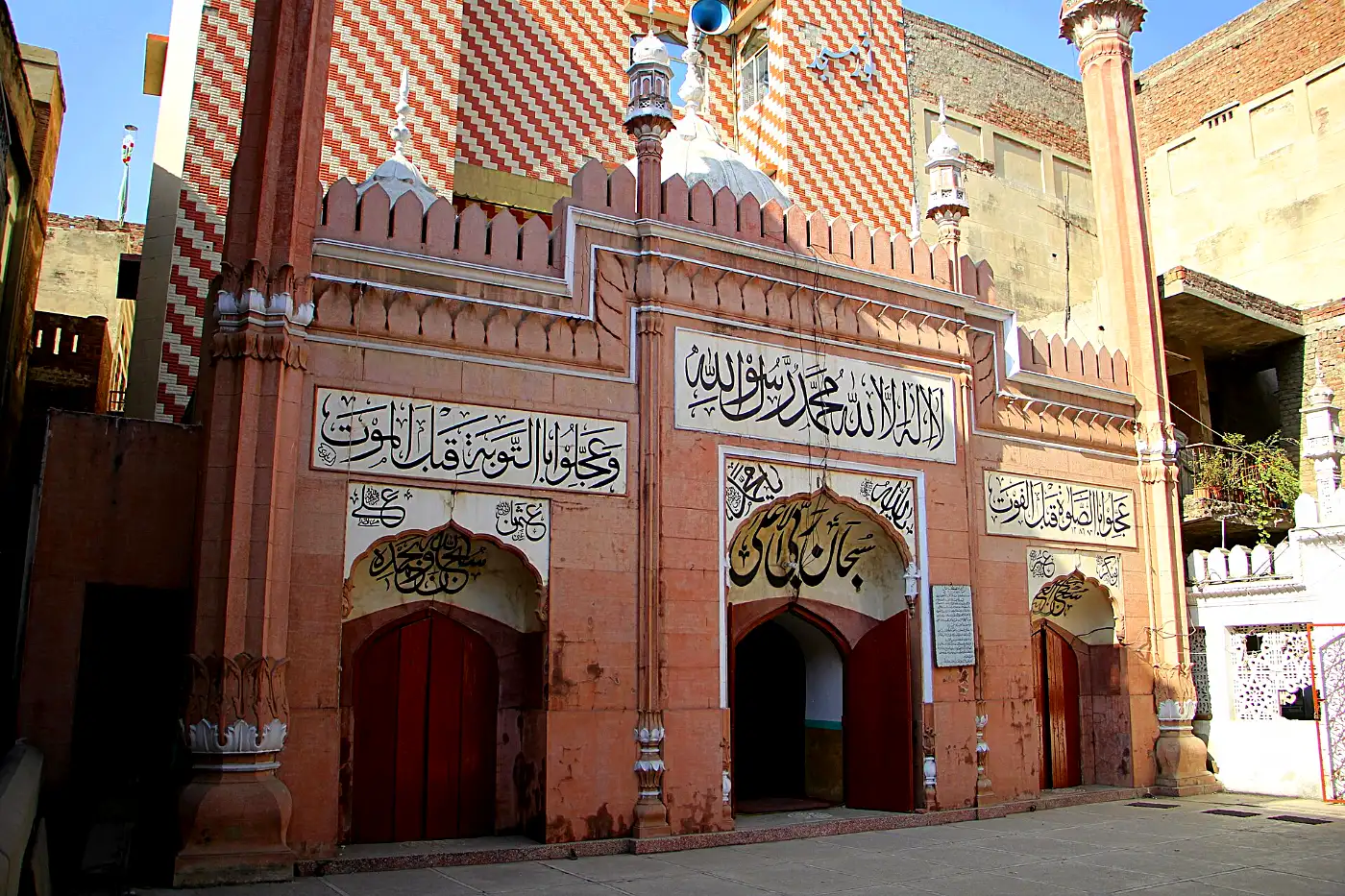
A historic building at Mochi Gate. Photo Credit: The Walled City of Lahore Authority, CC BY-SA 4.0.
How to Get There
Take a rickshaw, Careem, inDrive or Yango to Mochi Gate on Circular Road. Walk in through the gate, and Nisar Haveli is a few minutes away; any shopkeeper can point you there. During Muharram, roads around the Walled City close, so expect to walk further.
Places to Visit Nearby
- Masjid Wazir Khan: The tile-covered Mughal mosque near Delhi Gate. Read the Masjid Wazir Khan guide.
- Sunehri Masjid: The golden-domed mosque in Kashmiri Bazaar. See the Sunehri Masjid guide.
- Rang Mahal: The old bazaar and school on Shah Alam Road. Read about Rang Mahal.
- Shahi Hammam: The Mughal bathhouse inside Delhi Gate. See the Shahi Hammam guide.
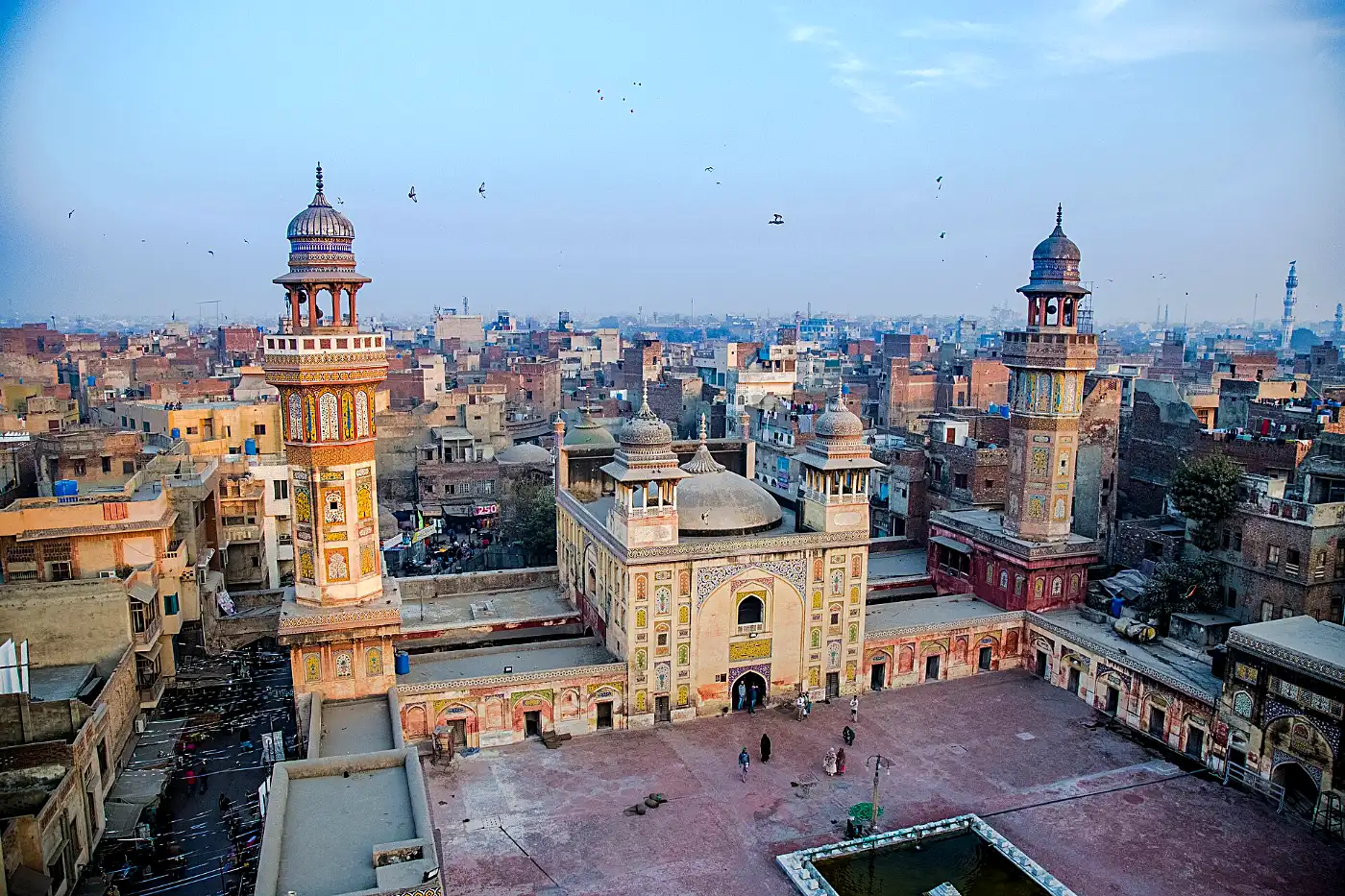
Masjid Wazir Khan above the old city. Photo Credit: Umair Khan, CC BY 2.0.
Frequently Asked Questions
Where is Nisar Haveli?
It is inside Mochi Gate in the Walled City of Lahore, next to Mubarak Haveli.
When does the Muharram procession leave Nisar Haveli?
The main Zuljanah procession sets off on the evening of the 9th of Muharram and reaches Karbala Gamay Shah the next day.
Can visitors go inside Nisar Haveli?
It is a private imambargah. Visitors are often welcomed respectfully, but always ask the caretakers first.
Who owns Nisar Haveli?
The Qizilbash family, after whom it is named, still looks after it.
Conclusion
Nisar Haveli is not grand to look at, but it sits at the heart of one of Lahore’s oldest traditions. So come with respect, ask before you enter and, if you can, see how the lanes of Mochi Gate come alive in Muharram. You will understand the old city in a way no museum can show you.
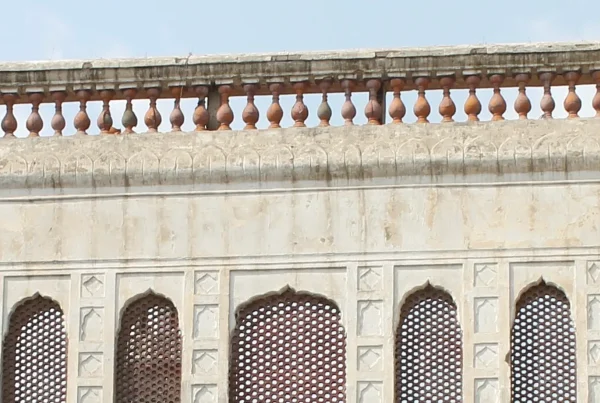
Old wooden balconies in the lanes near the haveli. Photo Credit: The Walled City of Lahore Authority, CC BY-SA 4.0.