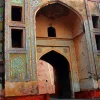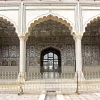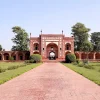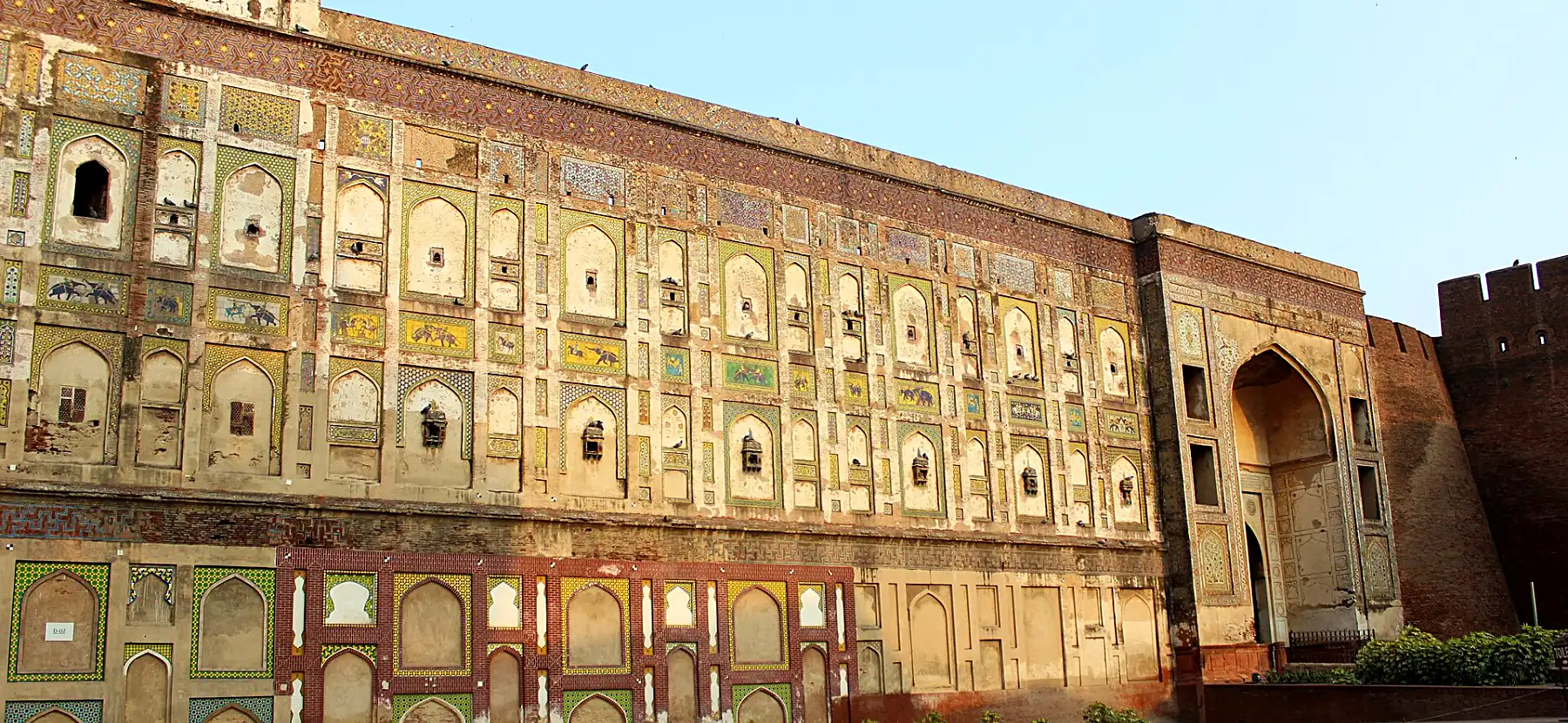
Most people walk into the Lahore Fort through the Alamgiri Gate and never see its best side. Behind the fort, along its northern and western walls, the brick is covered with hundreds of colourful tile pictures. For example, there are fighting elephants, polo players, camels, dragons and angels, all set in bright blue, yellow and green. This is the Picture Wall Lahore Fort, one of the largest murals in the world.
After a ten-year restoration that finished in 2026, the wall looks better than it has in a century. So, here is its story, what to look for, and how to see it.
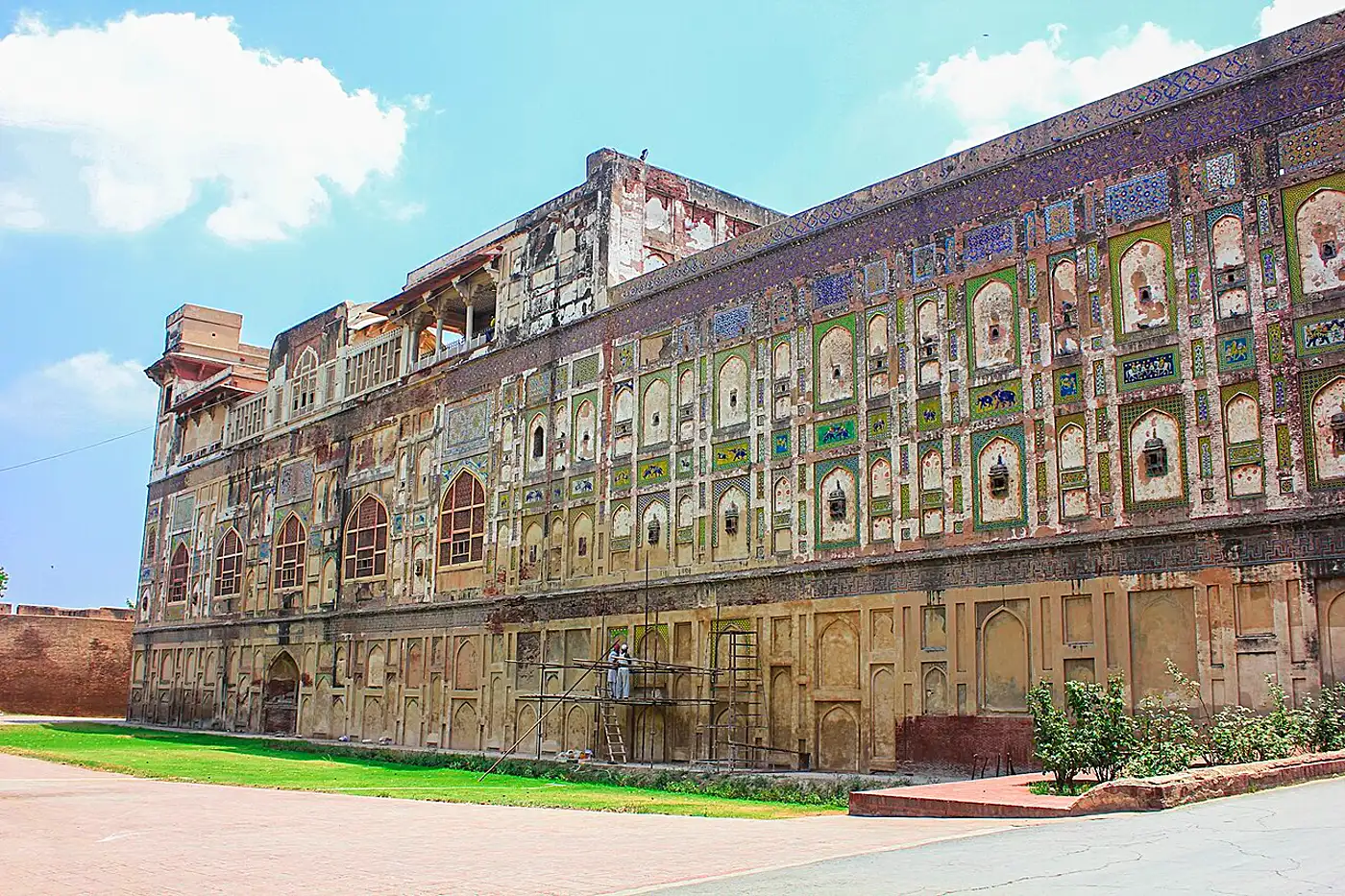
The Picture Wall seen from the lawns outside the fort. Photo Credit: Fazel rehman, CC BY-SA 3.0.
Quick facts
- Location: Northern and western walls of Lahore Fort
- Timings: About 8:30 am to 5:30 pm; night tours too
- Ticket: Included in the Lahore Fort ticket
- Time needed: About 45 minutes
- Best time: November to March, late afternoon
- Map: Open in Google Maps
Last checked: November 2026. Full details in Visitor Information.
History of the Lahore Fort Picture Wall
To begin with, Emperor Jahangir ordered the work in 1624-25, in the 19th year of his reign. Then his craftsmen covered the outer walls of the royal palaces with glazed tile pictures. Later, his son, Shah Jahan, extended the decoration and completed it in 1631-32.
In total, the wall is about 1,450 feet long and around 50 feet high. Also, it runs from the Hathi Pol, or Elephant Gate, along the northern side and wraps around the Shah Burj. Interestingly, the pictures face outwards. In Mughal times, the River Ravi flowed right below these walls, so people on the riverbank and on boats could see them.
How the Picture Wall of Lahore Fort Was Rediscovered
Later, the river moved away and the wall slowly faded. Then, from 1899, the Dutch scholar J. Ph. Vogel studied it closely. As a result, he recorded 116 panels of tile pictures in his book on the tile mosaics of Lahore Fort. In fact, the Picture Wall is one of the main reasons UNESCO added the Lahore Fort to its World Heritage List in 1981.
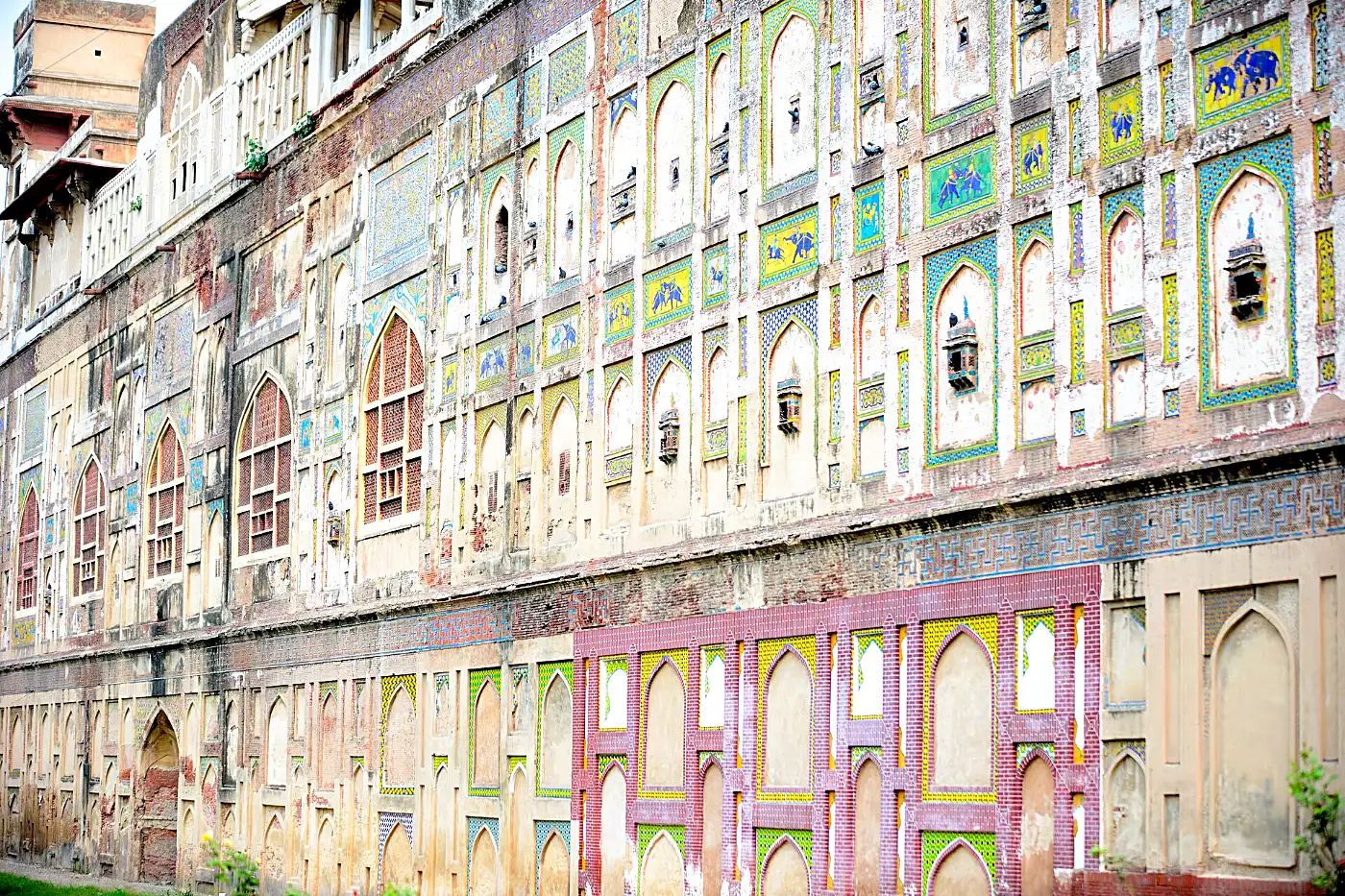
Rows of tiled panels on the northern wall. Photo Credit: Aun Muhammad, CC BY-SA 3.0.
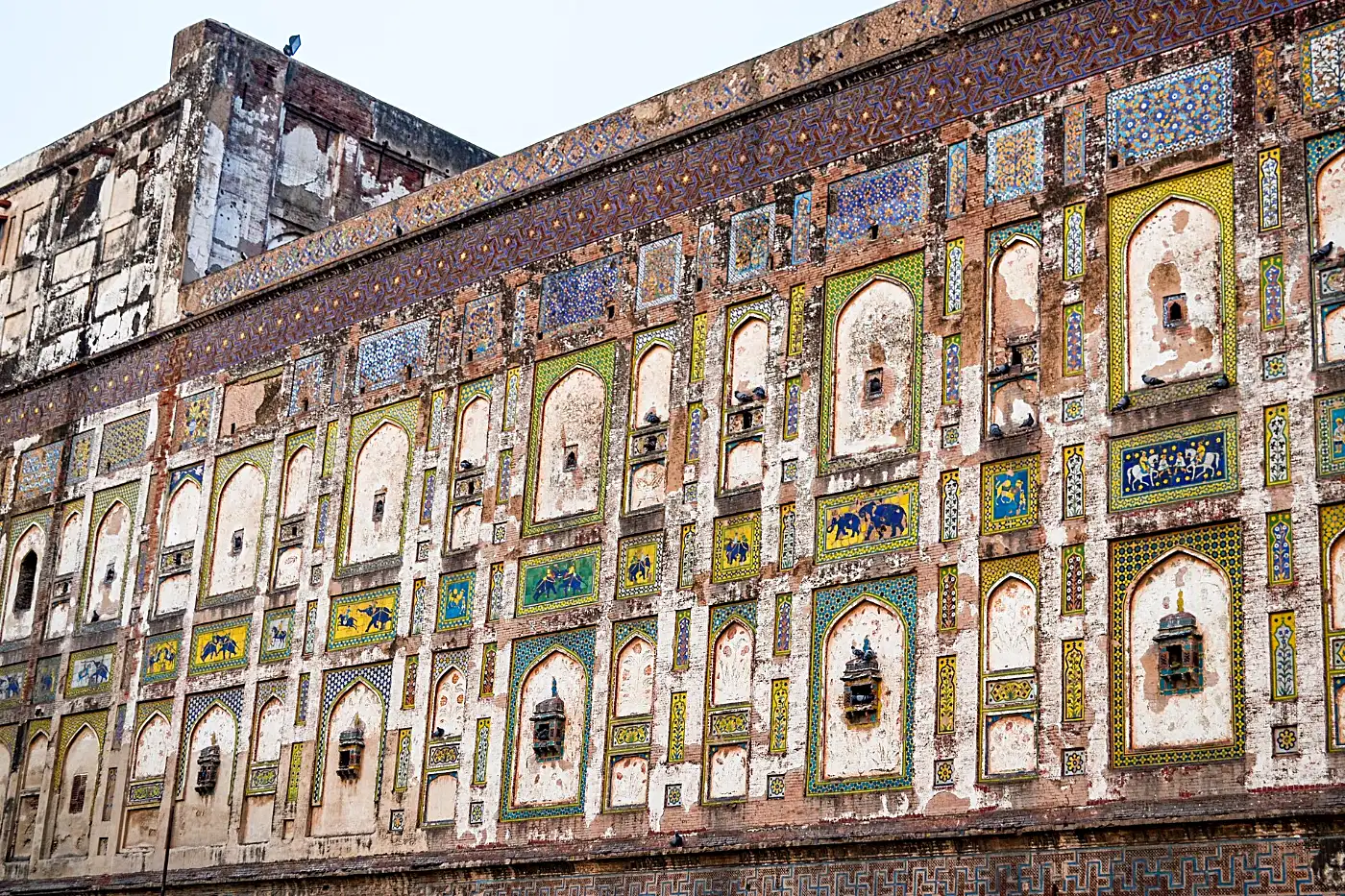
The northern facade above the old riverside. Photo Credit: Faizanahmad, CC BY-SA 4.0.
What the Panels Show
To start with, the panels do not tell one long story. Instead, each one is a small picture on its own, so you can enjoy them one by one. In general, most of them show the life and sports of the Mughal court.
Elephant Fights and Polo on the Picture Wall of Lahore Fort
Elephant fights were a favourite royal sport, so they appear again and again. For instance, look for two elephants locking trunks while riders on their backs wave goads. Similarly, another famous panel shows four horsemen playing chaughan, the Persian game we now call polo.
Angels, Dragons and Animals on the Lahore Fort Picture Wall
Also, look for winged angels and cup-bearers, and azhdahas, the winged dragons of Persian legend. In addition, there are camels with loads, horsemen, cranes and herons, hunting scenes, and even signs of the zodiac. Meanwhile, between them, floral and geometric patterns fill the gaps.
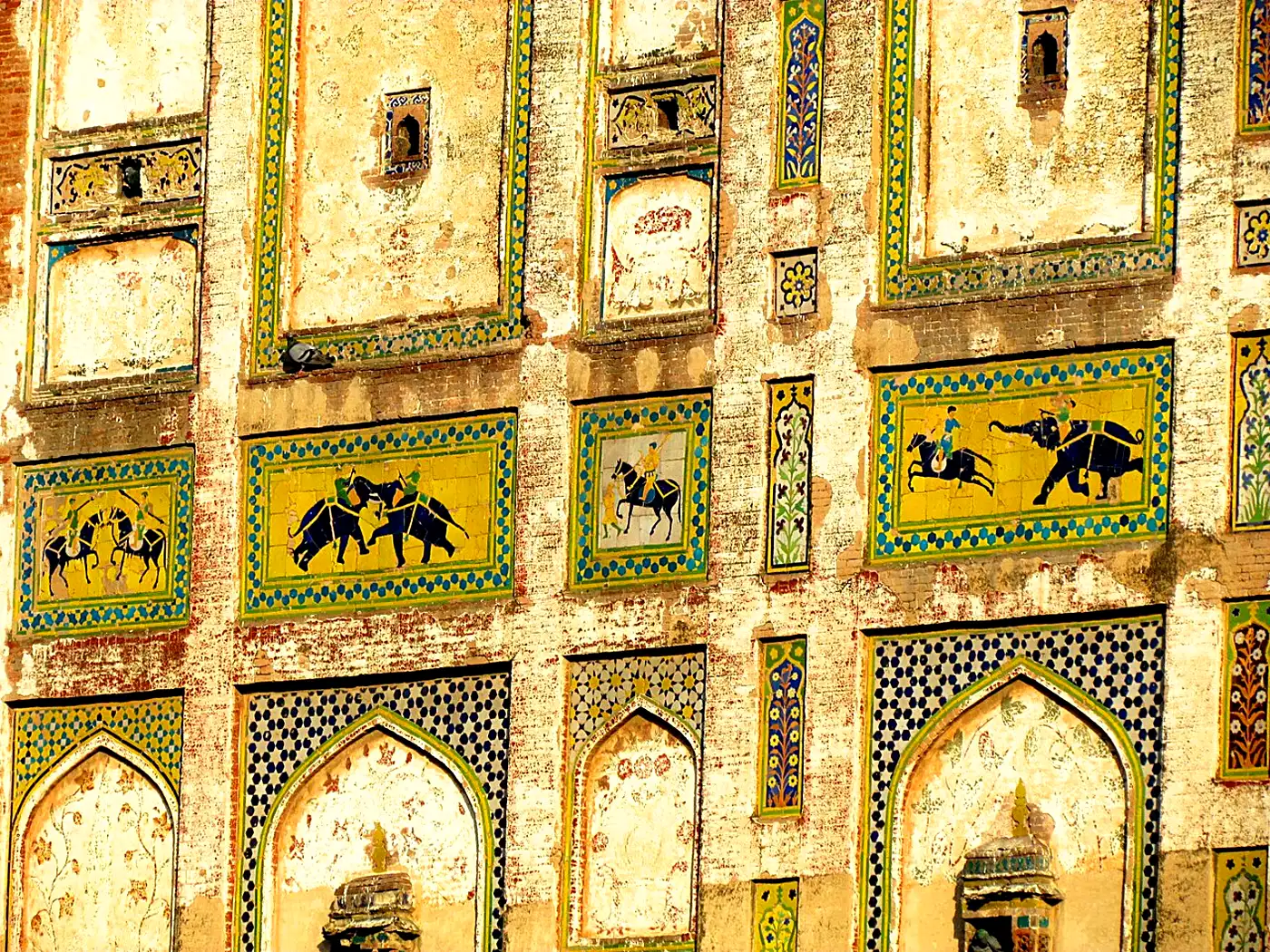
Panels of animals on the wall. Photo Credit: Bilalhassan88, CC BY-SA 3.0.
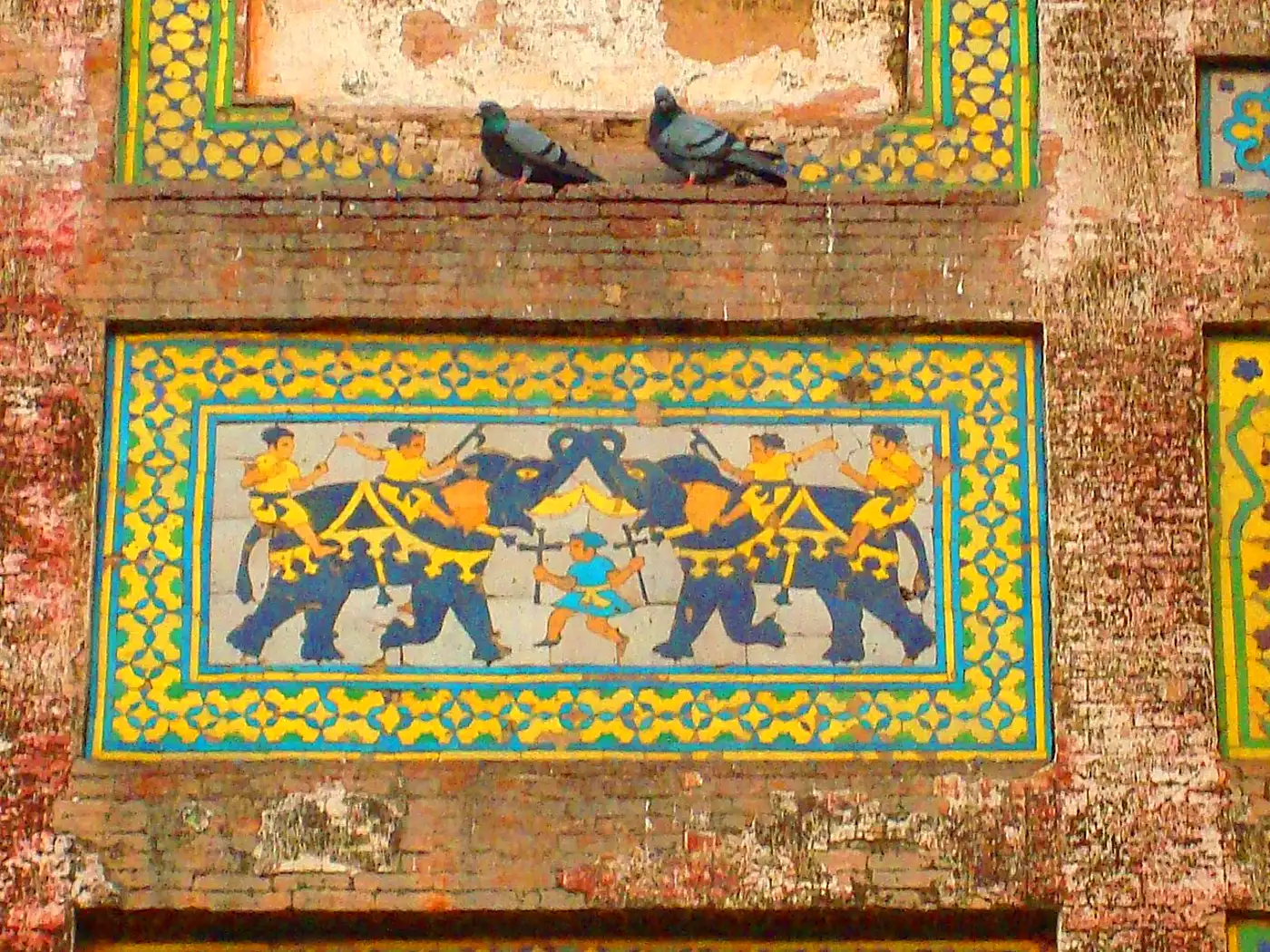
Elephants with riders in a tile panel. Photo Credit: Muhammad Haider Sajjad, CC BY-SA 4.0.
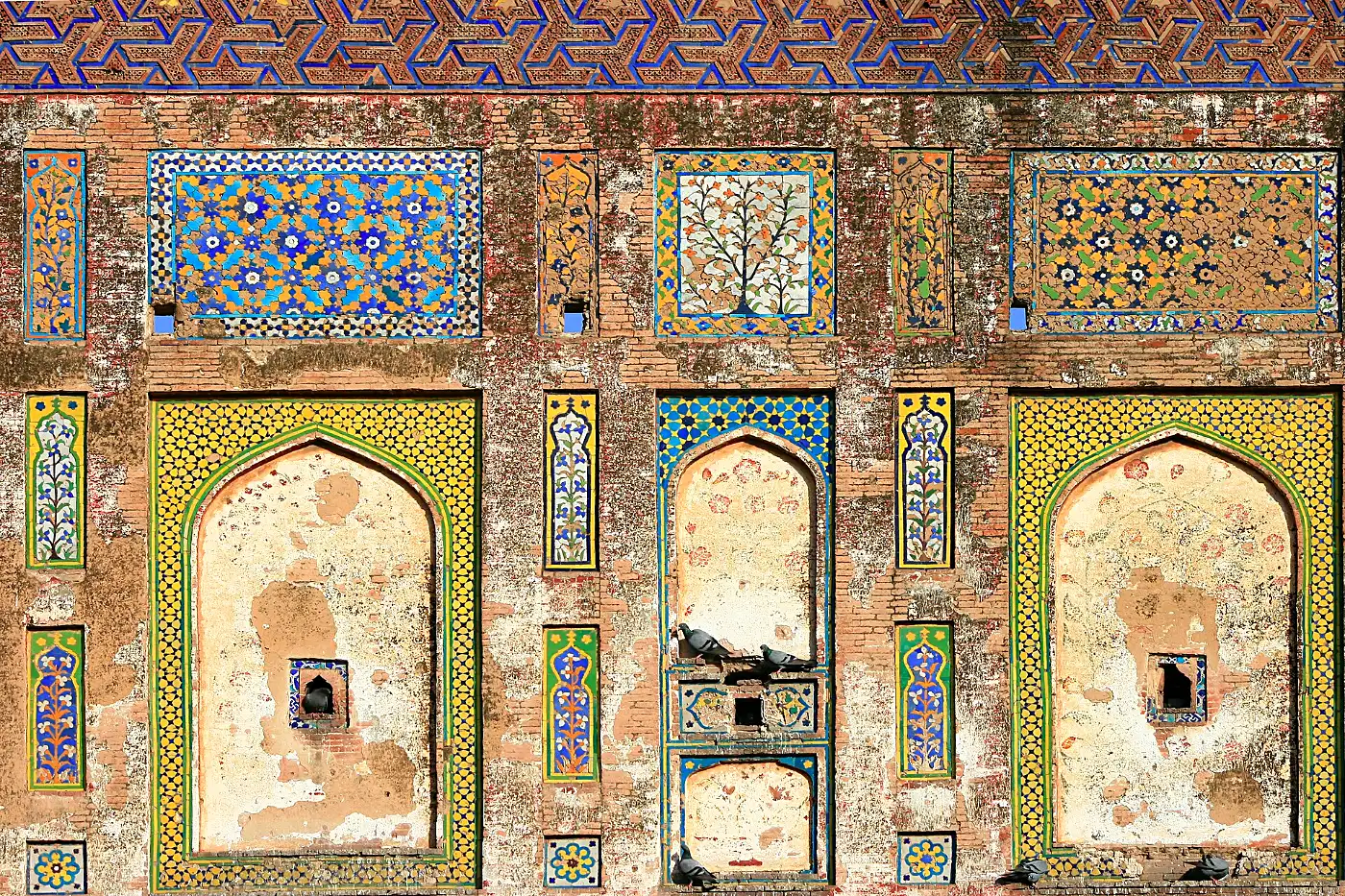
Tile panels near the Shah Burj Gate. Photo Credit: Aliraza Khatri, CC BY-SA 4.0.
Kashi Kari and Other Crafts
First of all, the main technique is kashi kari, or glazed tile mosaic. First, craftsmen cut small pieces of glazed tile in different colours. Then they fitted them together like a jigsaw, set into the brick wall. In fact, the name comes from Kashan in Iran, which was famous for its tiles.
However, tiles are only part of the story. Besides tiles, the wall also has fresco painting, brick patterns, carved filigree, marble and sandstone jali screens, and terracotta relief. So, walk slowly and look closely, because each section mixes these crafts in a different way.
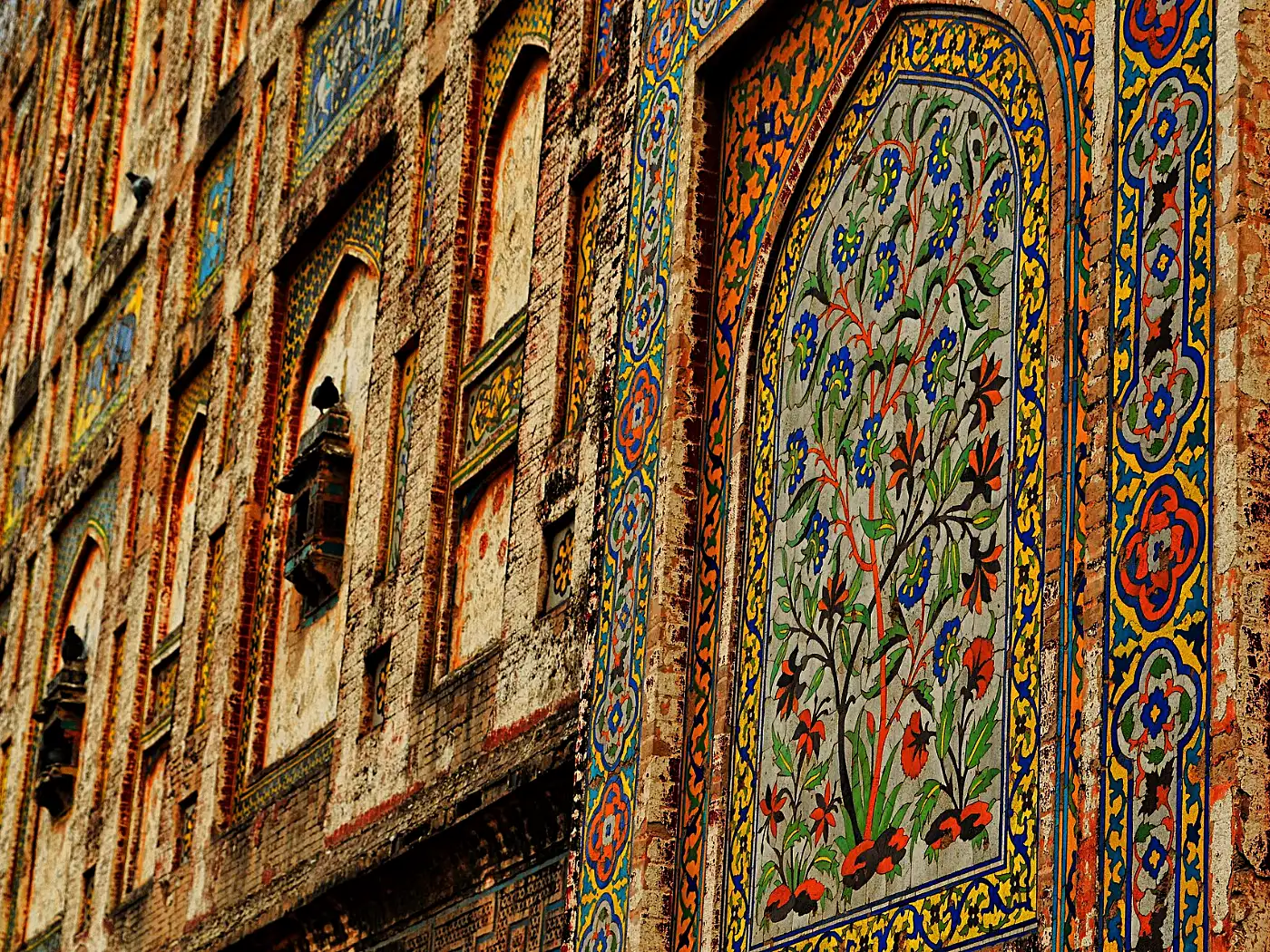
Kashi kari tile work up close. Photo Credit: Usmaan.khaled, CC BY-SA 4.0.
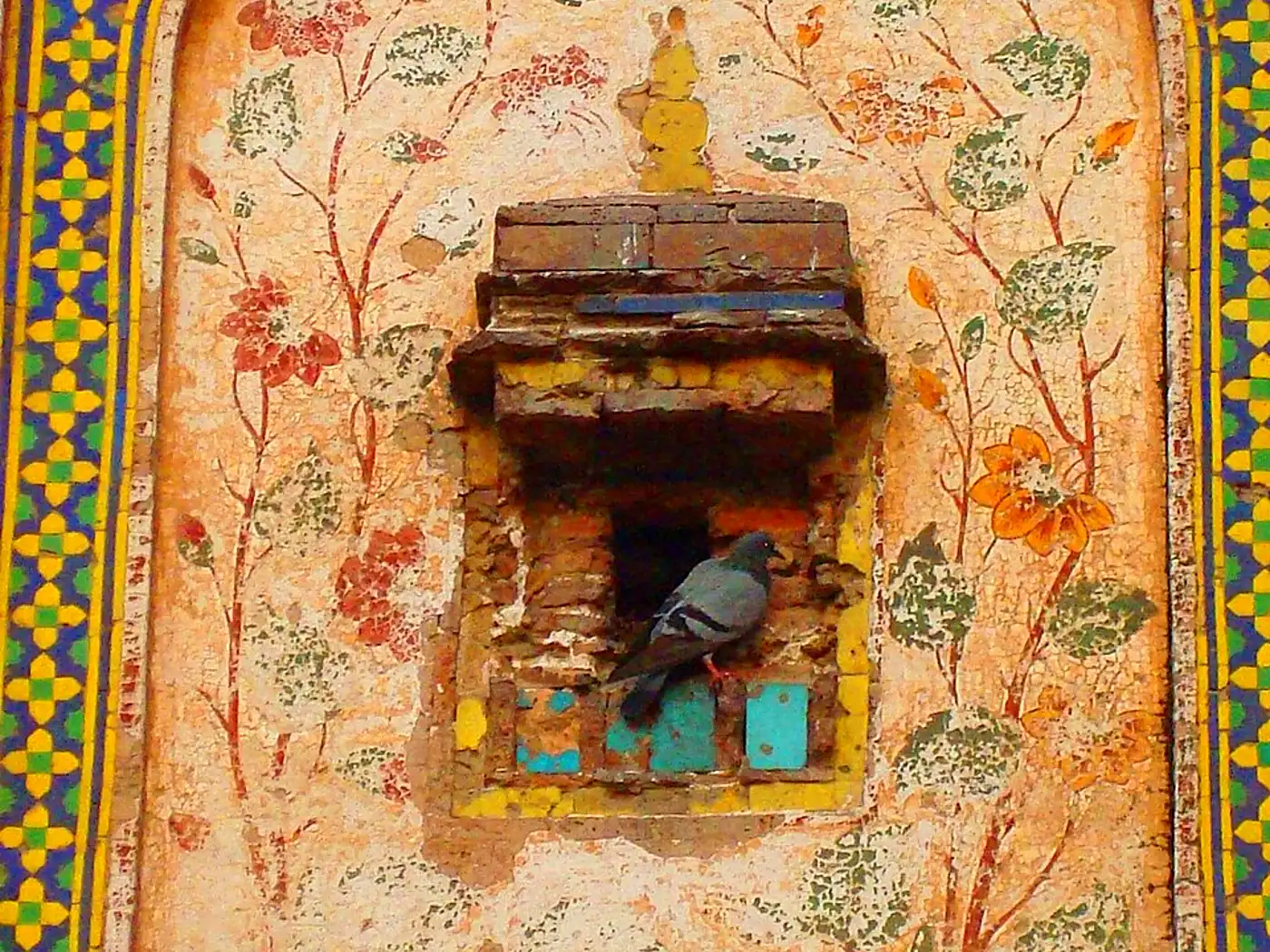
Fresco and tile work around a small niche. Photo Credit: Muhammad Haider Sajjad, CC BY-SA 4.0.
Shah Burj Gate and Hathi Pol
In addition, two gates sit within the Picture Wall. The Shah Burj Gate led into the private palaces around the Sheesh Mahal. Above all, its towering arch is covered with tile panels of trees, flowers and vases, and it is one of the most photographed spots in the fort.
Meanwhile, the Hathi Pol, or Elephant Gate, was the royal entrance. Behind it, a wide staircase with low, broad steps let the emperor ride up to his palace on an elephant.
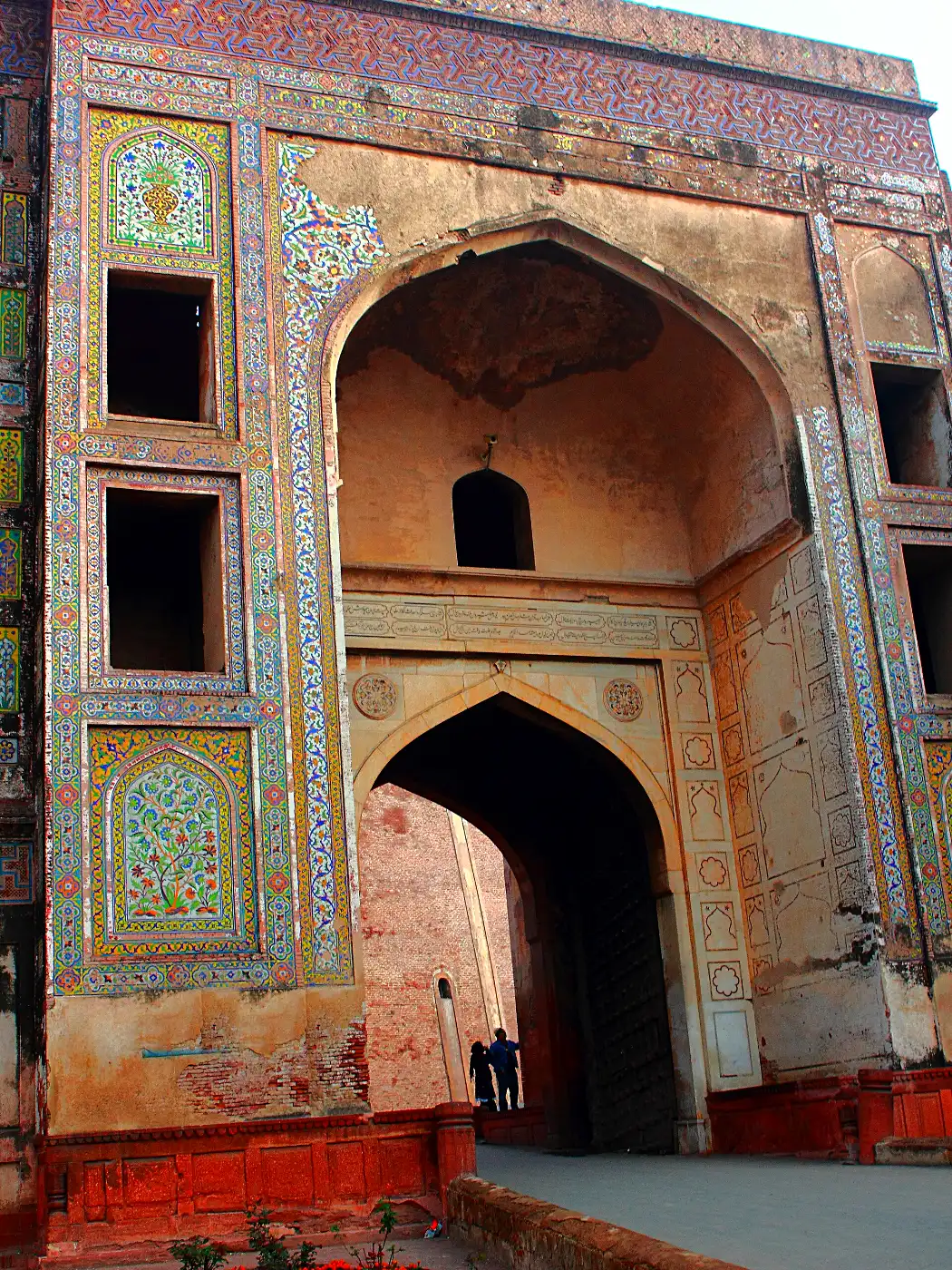
The Shah Burj Gate. Photo Credit: ClicksByMohammadOmer, CC BY-SA 3.0.
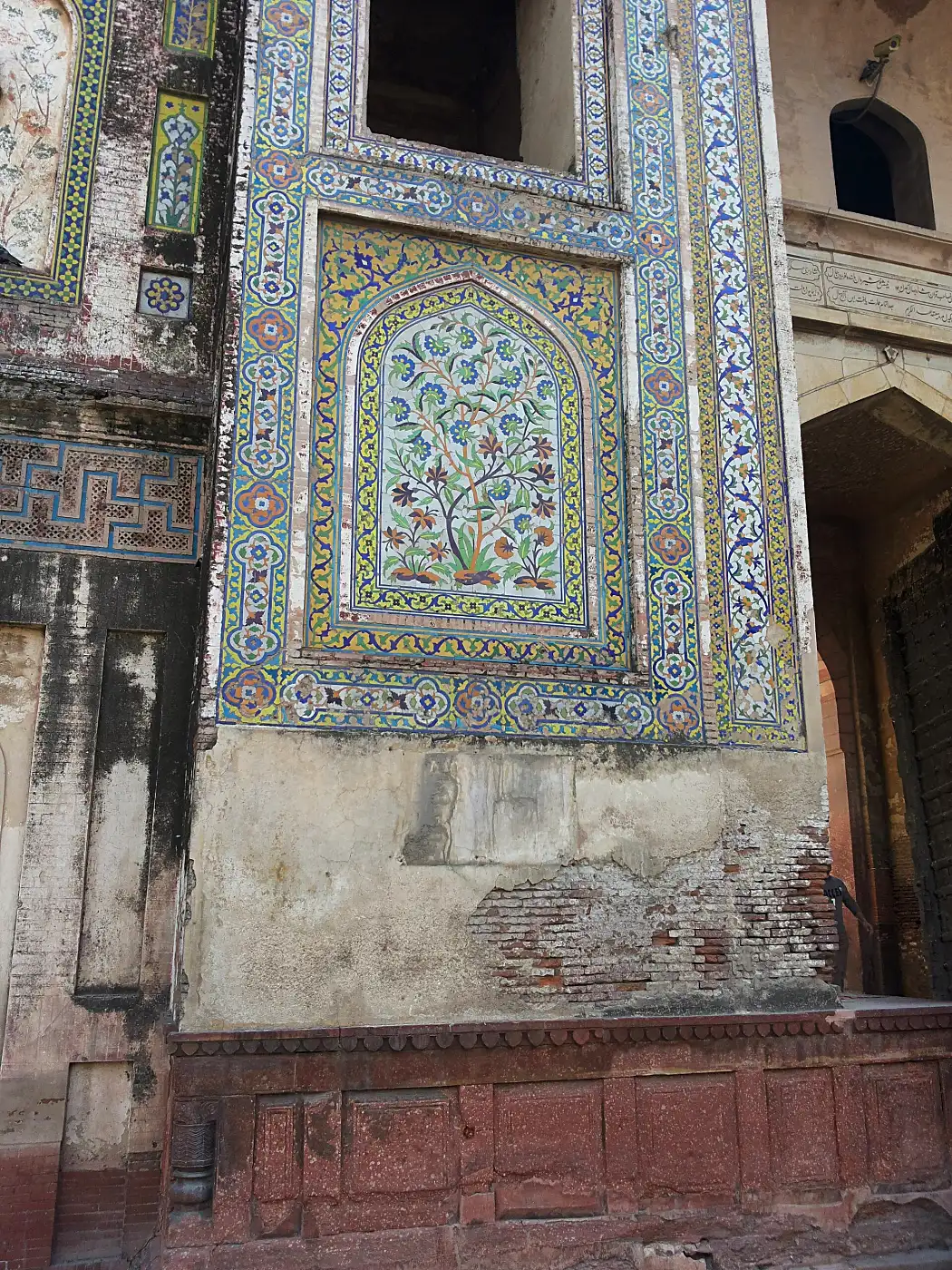
A floral tile panel on the Shah Burj Gate. Photo Credit: Drdolittle13, CC BY-SA 3.0.
The 2015-2026 Restoration
Over the centuries, rain, seepage and poor drainage badly damaged the wall. As a result, many tiles fell, and later repairs covered some panels with cement. So, in September 2015, the Aga Khan Cultural Service-Pakistan began a full study of the wall with the Walled City of Lahore Authority.
First, the team scanned and documented every panel. Then, in 2018, conservation began on the western section, followed by the north-west. Finally, in April 2026, the team finished the northern section. Moreover, the US, German and Norwegian embassies also supported the work. Importantly, the conservators kept as much original tile as possible instead of replacing it. In May 2026, UNESCO praised the project as a landmark for conservation in Pakistan.
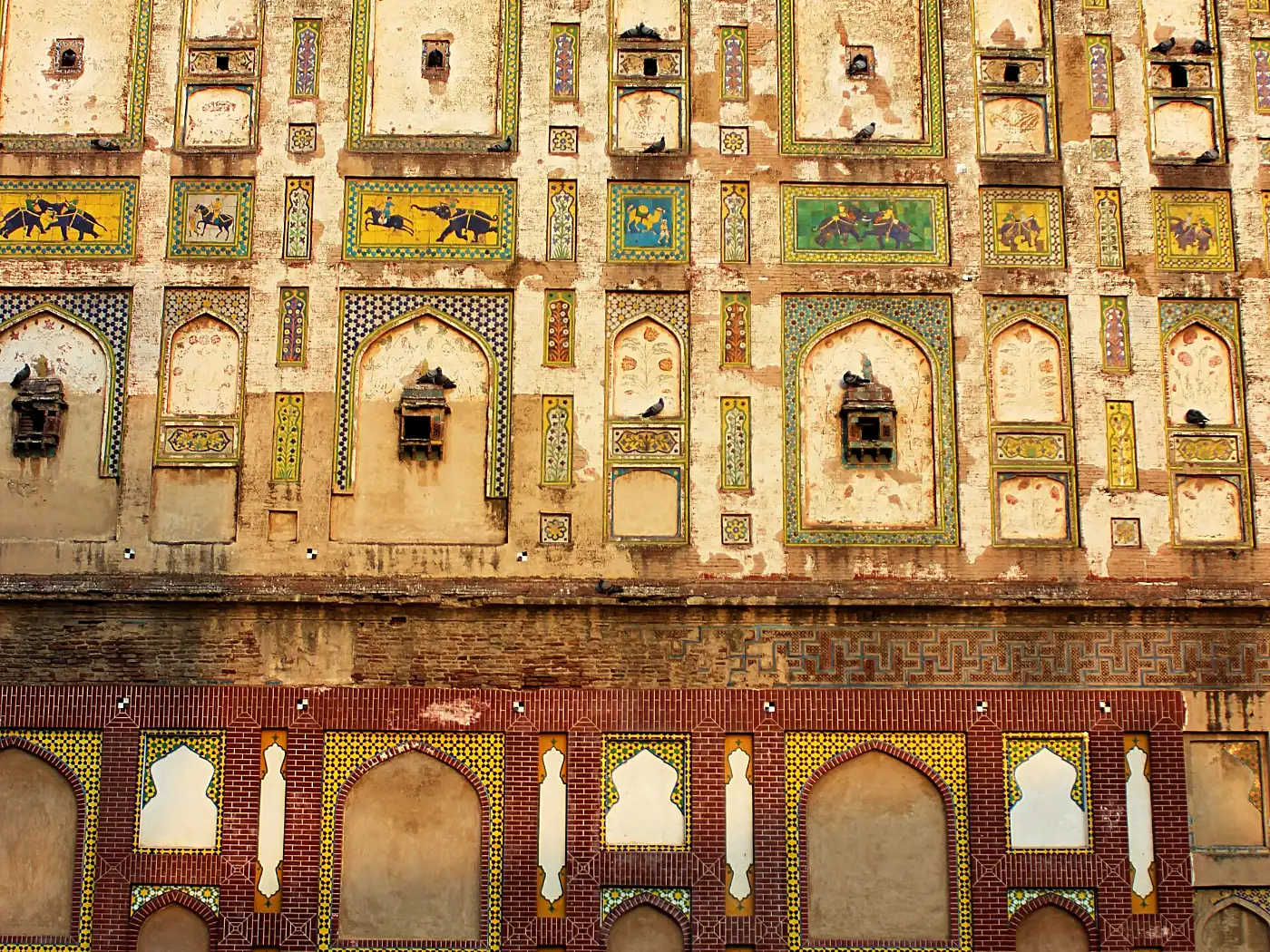
A restored section of the wall. Photo Credit: Azhar, CC BY-SA 4.0.
Things to Do
- Spot the scenes: Look for an elephant fight, a polo match and an angel as you walk the wall.
- Bring a zoom: Many panels sit high up, so a phone with good zoom helps.
- Best photo spot: The tiled Shah Burj Gate, from the lawn in front of it.
- Combine with: The Sheesh Mahal and Naulakha Pavilion, right behind the wall.
- Night tour: The wall is lit up on evening tours.
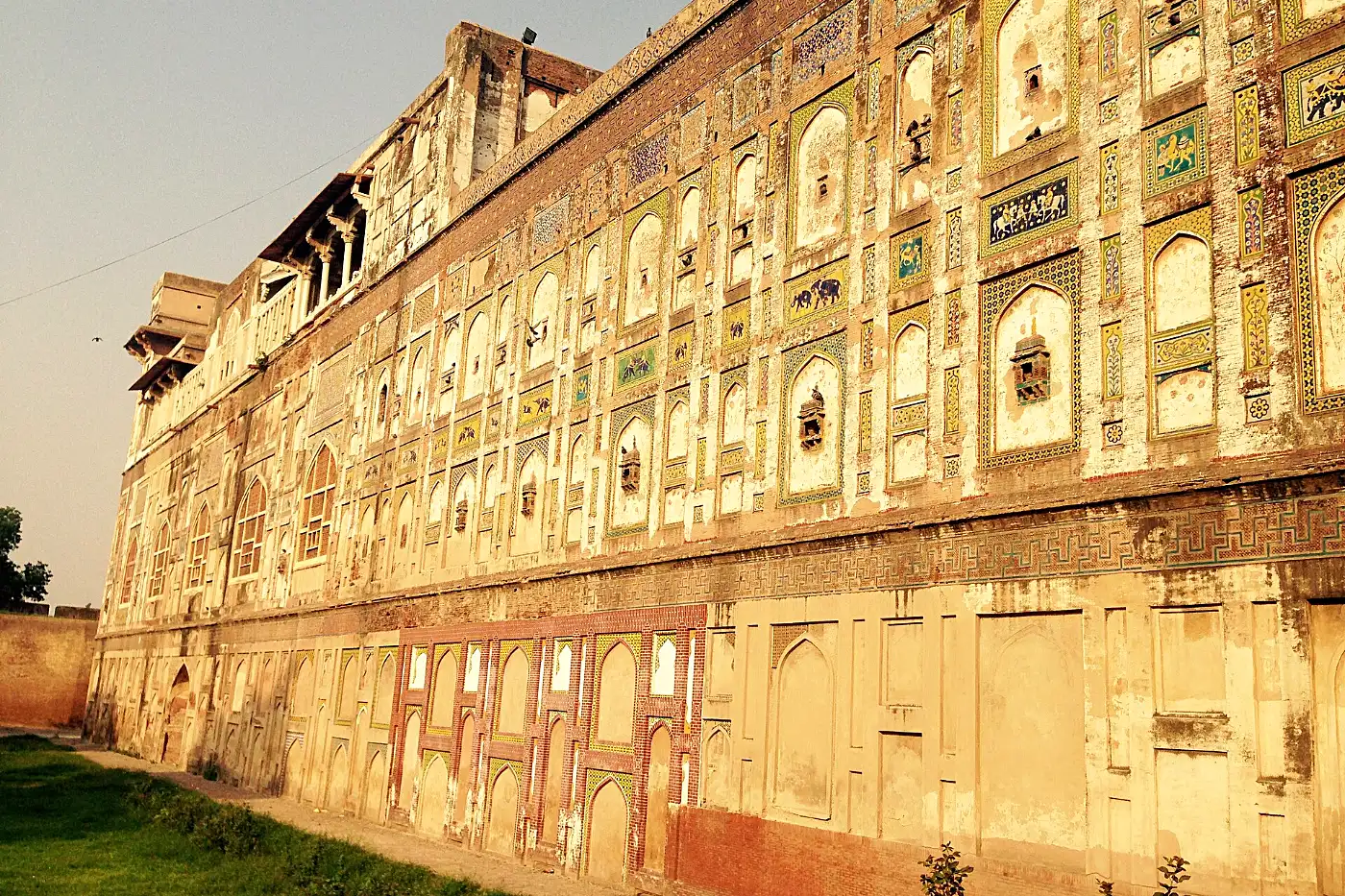
The Picture Wall outside the Shah Burj block. Photo Credit: C++and html, CC BY-SA 3.0.
Food Nearby
When you finish, walk to Fort Road Food Street, just outside the fort near the Badshahi Mosque. There, rooftop restaurants serve karahi, tikka and fresh naan with views of the mosque. For something cheaper, the lanes of the Walled City have halwa puri, nihari, lassi and chai. Small eateries cost around PKR 500 to 1,500 per person, while rooftop restaurants cost more.
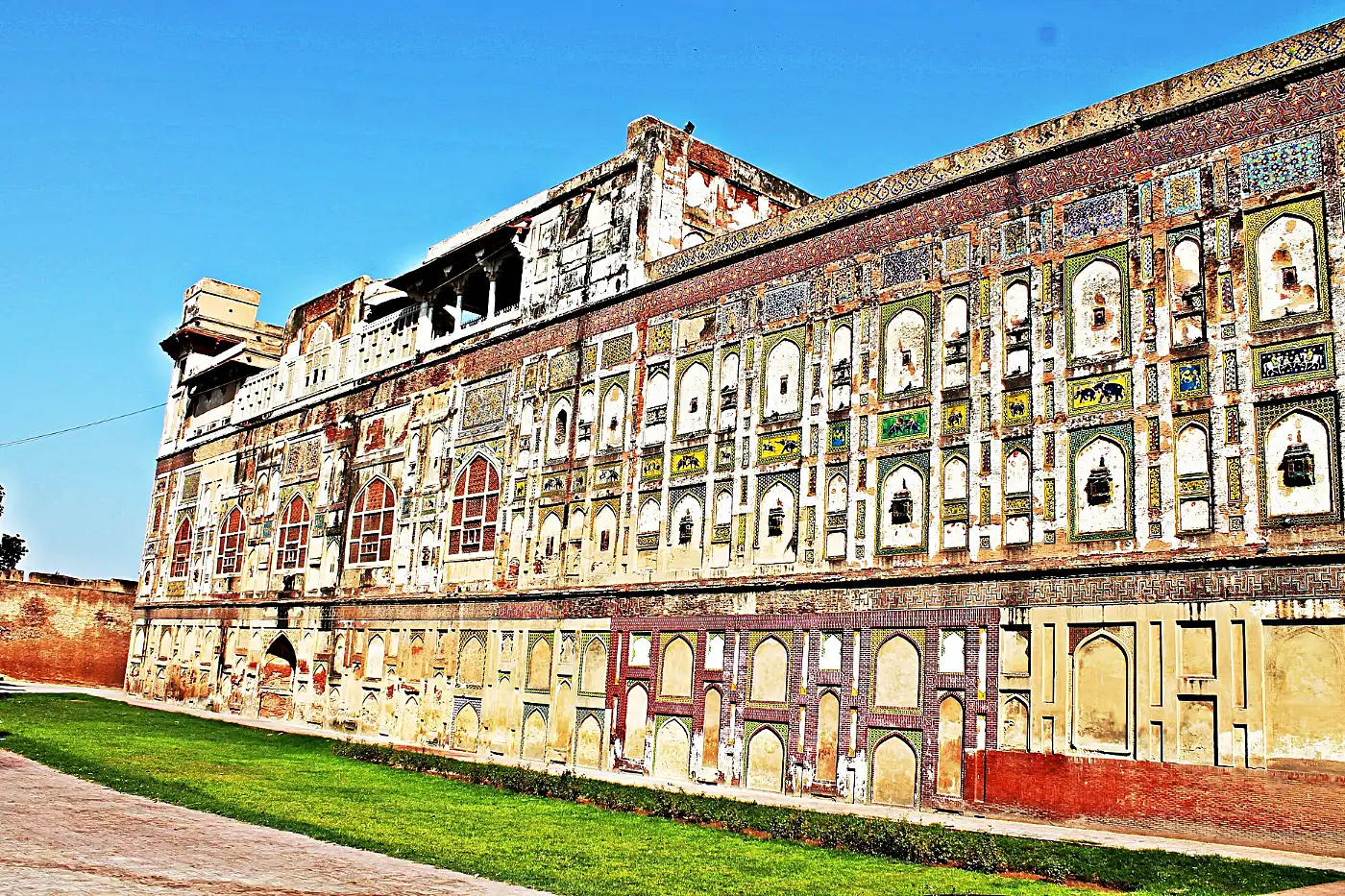
The Picture Wall on a clear day. Photo Credit: Shabi Abdullah, CC BY-SA 4.0.
Visitor Information
Visiting the Picture Wall Lahore Fort
- Location: Northern and western outer walls of Lahore Fort, Walled City, Lahore.
- Timings: The fort usually opens daily from about 8:30 am to 5:30 pm. Check before you go, especially in Ramadan.
- Tickets: The wall is part of the Lahore Fort ticket. Prices change, so check at the counter.
- Night tours: In October 2026, the Walled City of Lahore Authority announced evening visits that include the Picture Wall, at PKR 1,000 for Pakistani adults, PKR 500 for children aged 3 to 10 and PKR 2,000 for foreigners.
- Best time: November to March. The wall faces north and west, so late afternoon light suits it best.
- Time needed: About 45 minutes for the wall, or 3 hours with the rest of the fort.
- Photography: Allowed. Please do not touch or climb on the panels.
- Accessibility: The path along the wall is mostly flat, so it suits elderly visitors better than the inner palaces.
- Families: Safe and family-friendly, and children enjoy spotting the animals.
Last checked: November 2026. Timings and prices can change, especially in Ramadan and on public holidays.
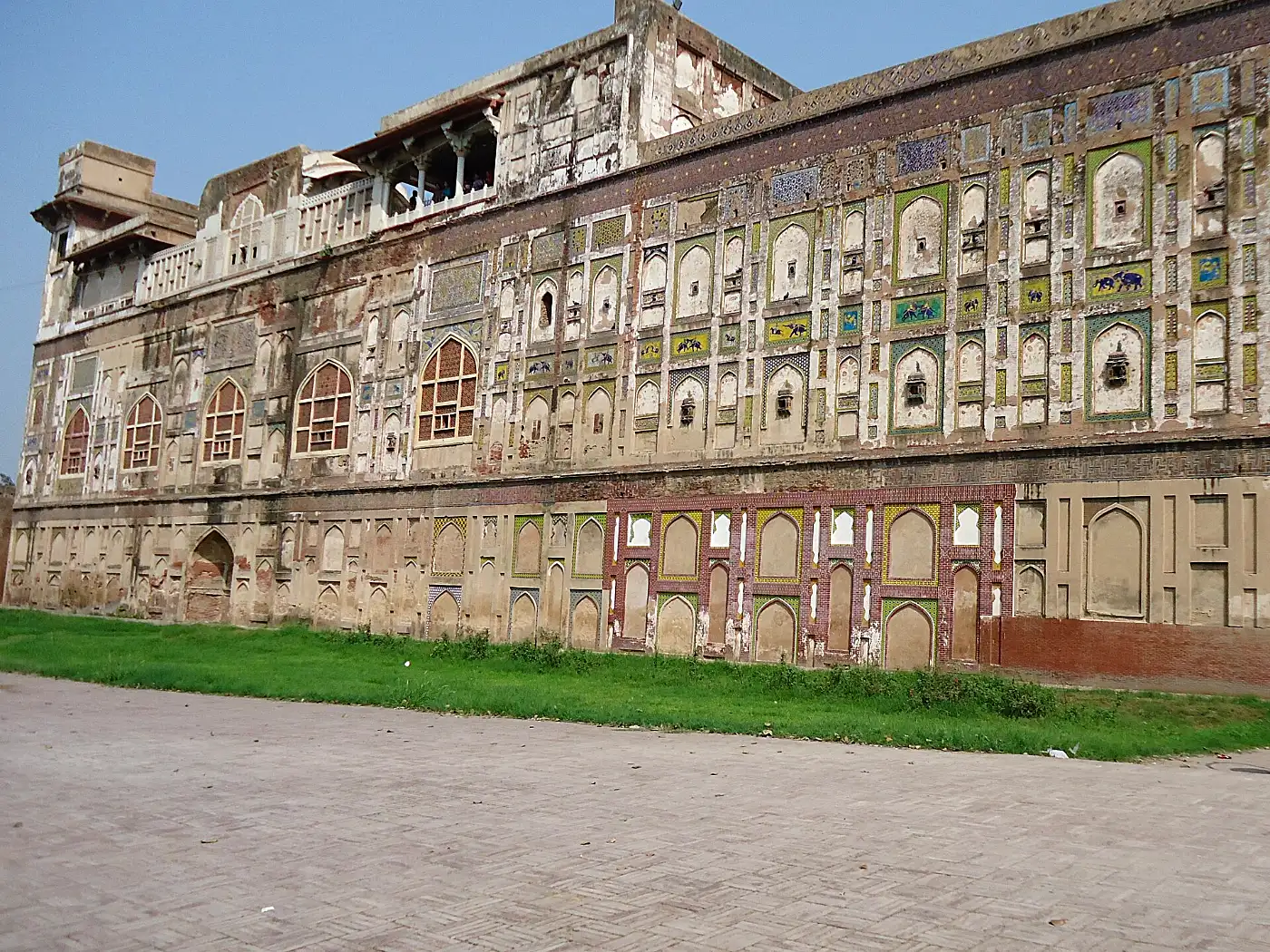
The wall from the visitor path. Photo Credit: Nahid Asad, CC BY-SA 3.0.
How to Get There
The Picture Wall is part of the Lahore Fort in the old city, next to the Badshahi Mosque. First, take a rickshaw, Careem or inDrive to the fort entrance near Hazuri Bagh. Alternatively, ride the Metro Bus to Azadi Chowk and walk about 15 minutes past Minar-e-Pakistan. Inside, ask the staff for the Picture Wall or the Shah Burj, at the north-west corner of the fort.
You can also join the Punjab Tourism sightseeing bus, which stops at the fort.
Places to Visit Nearby
- Sheesh Mahal: Shah Jahan’s Palace of Mirrors, right behind the wall.
- Lahore Fort: the whole Shahi Qila, with the Diwan-e-Aam and Moti Masjid.
- Badshahi Mosque: the grand Mughal mosque across Hazuri Bagh.
- Hazuri Bagh: the marble baradari garden at the fort gate.
- Samadhi of Ranjit Singh: the golden-domed Sikh memorial nearby.
- Minar-e-Pakistan: the national monument in Greater Iqbal Park.
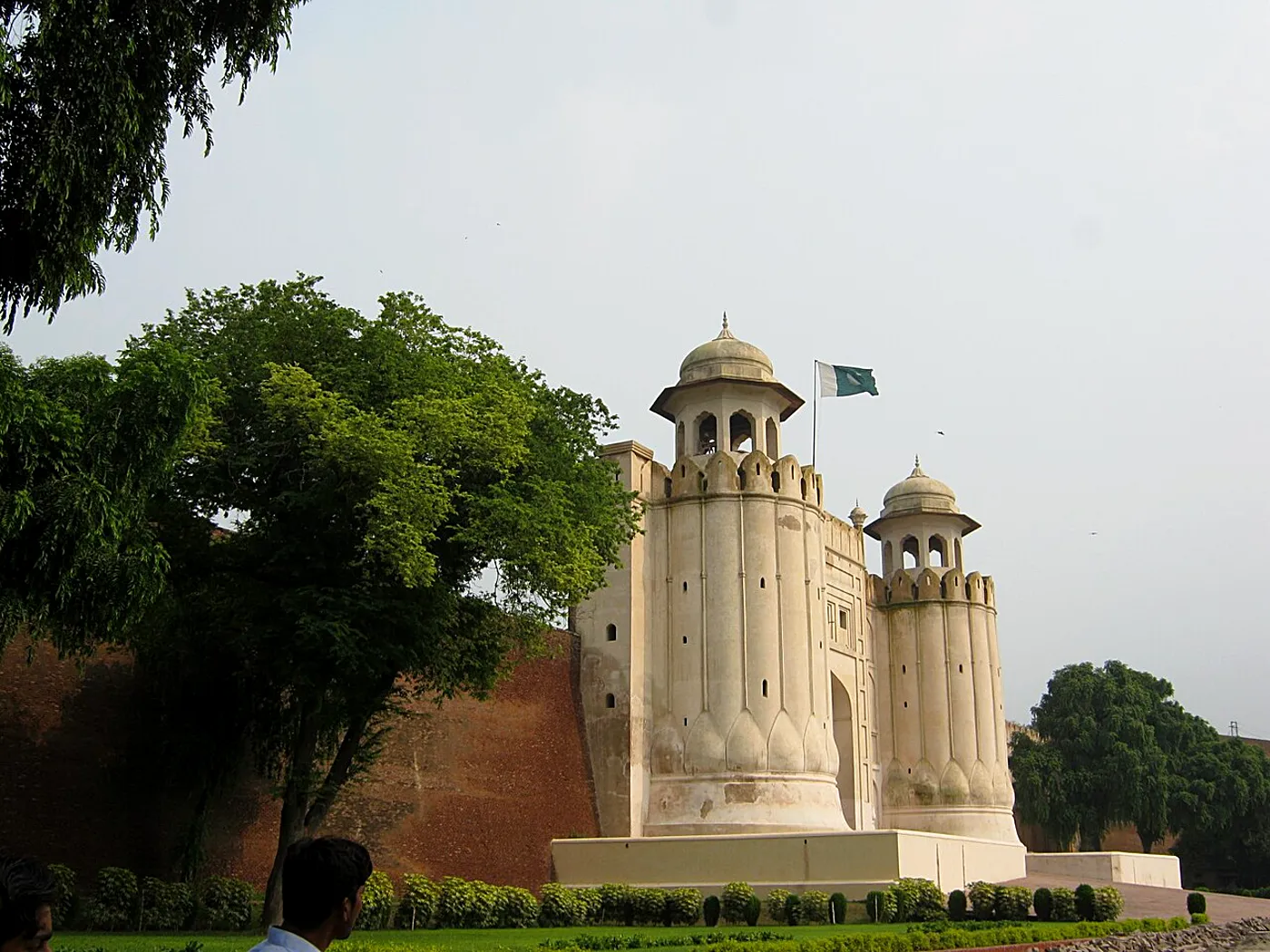
The Alamgiri Gate of Lahore Fort. Photo Credit: Rana Ahsan Chohan, CC BY-SA 3.0.
Frequently Asked Questions
Who built the Picture Wall Lahore Fort?
Emperor Jahangir began it in 1624-25, and Shah Jahan completed it in 1631-32.
How long is the Picture Wall of Lahore Fort?
In short, it is about 1,450 feet long and around 50 feet high, which makes it one of the largest murals in the world.
Do I need a separate ticket for the Picture Wall at Lahore Fort?
Usually not. The Picture Wall is part of the Lahore Fort visit. Still, check at the counter, since rules can change.
Can I see the Picture Wall of Lahore Fort at night?
Yes. The Walled City of Lahore Authority runs night tours that include the Picture Wall and the Sheesh Mahal.
Is the Picture Wall Lahore Fort restoration finished?
Yes. The last major section, on the northern side, was completed in April 2026.
Conclusion
The Picture Wall Lahore Fort is like a 400-year-old picture book, written in tiles instead of ink. Today, thanks to the recent restoration, its elephants, horsemen and angels are brighter than they have been in generations. So, next time you visit Shahi Qila, do not stop at the main gate. Walk around to the back, look up, and take your time.
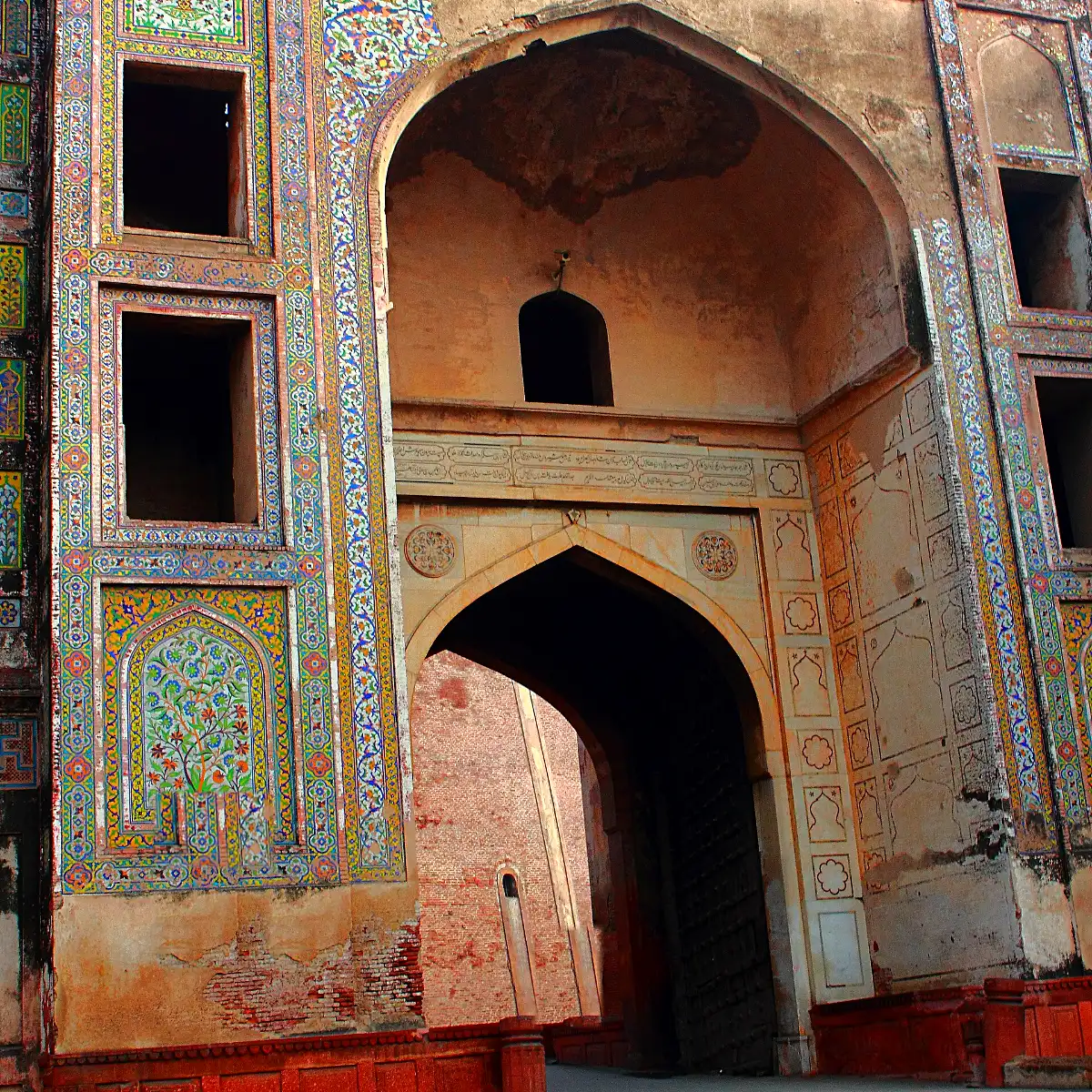
The tiled Shah Burj Gate. Photo Credit: ClicksByMohammadOmer, CC BY-SA 3.0.
Cover photo: Azhar, CC BY-SA 4.0.