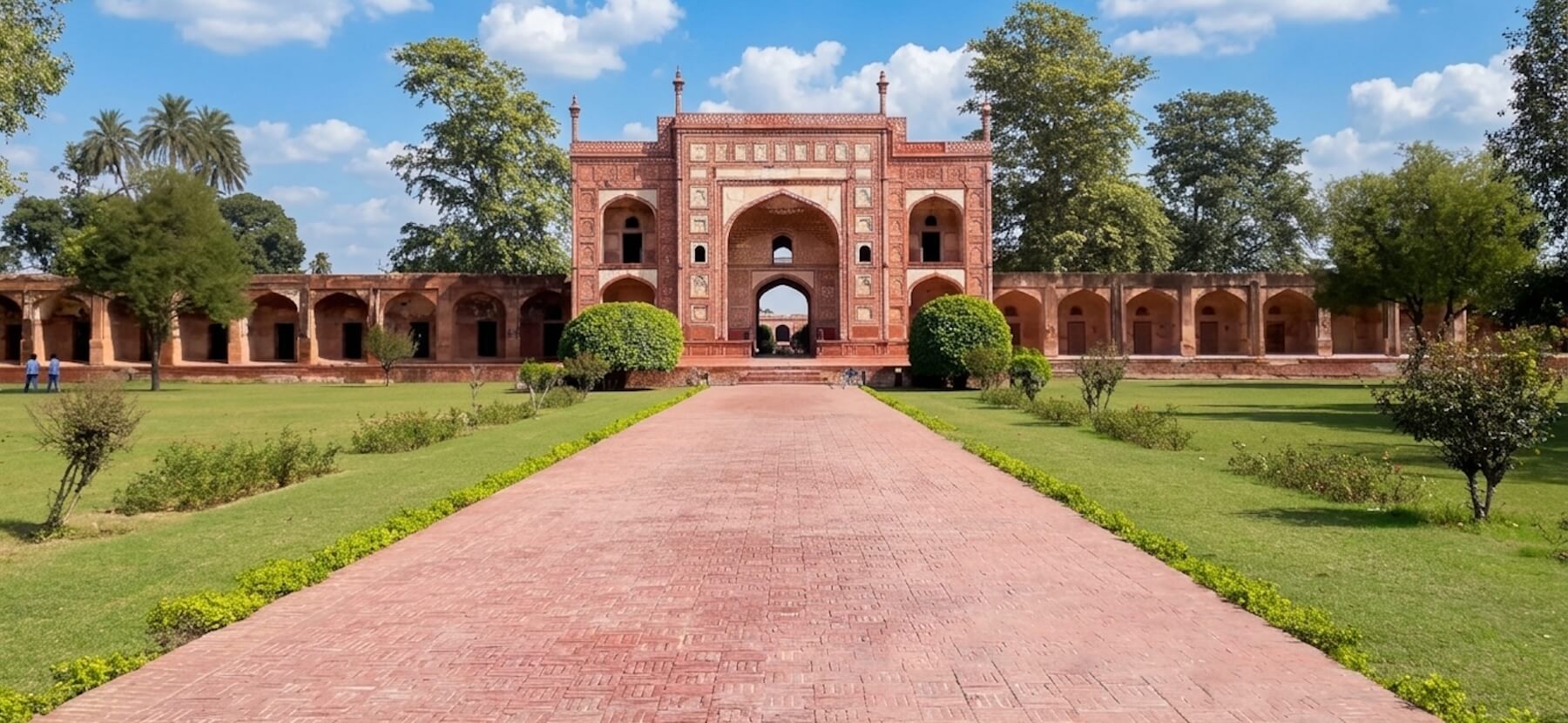
Across the River Ravi, in Shahdara, a huge walled courtyard lies between two royal Mughal tombs. There, long rows of arched rooms line its sides, and two grand gateways face each other across the lawns. In short, this is the Akbari Sarai Lahore, a caravan inn where travellers, traders and tomb keepers once stayed.
Sadly, most visitors walk through it quickly on their way to the Tomb of Jahangir. However, it deserves a slower look. In this guide, we share its story, what to see, and how to plan your visit.
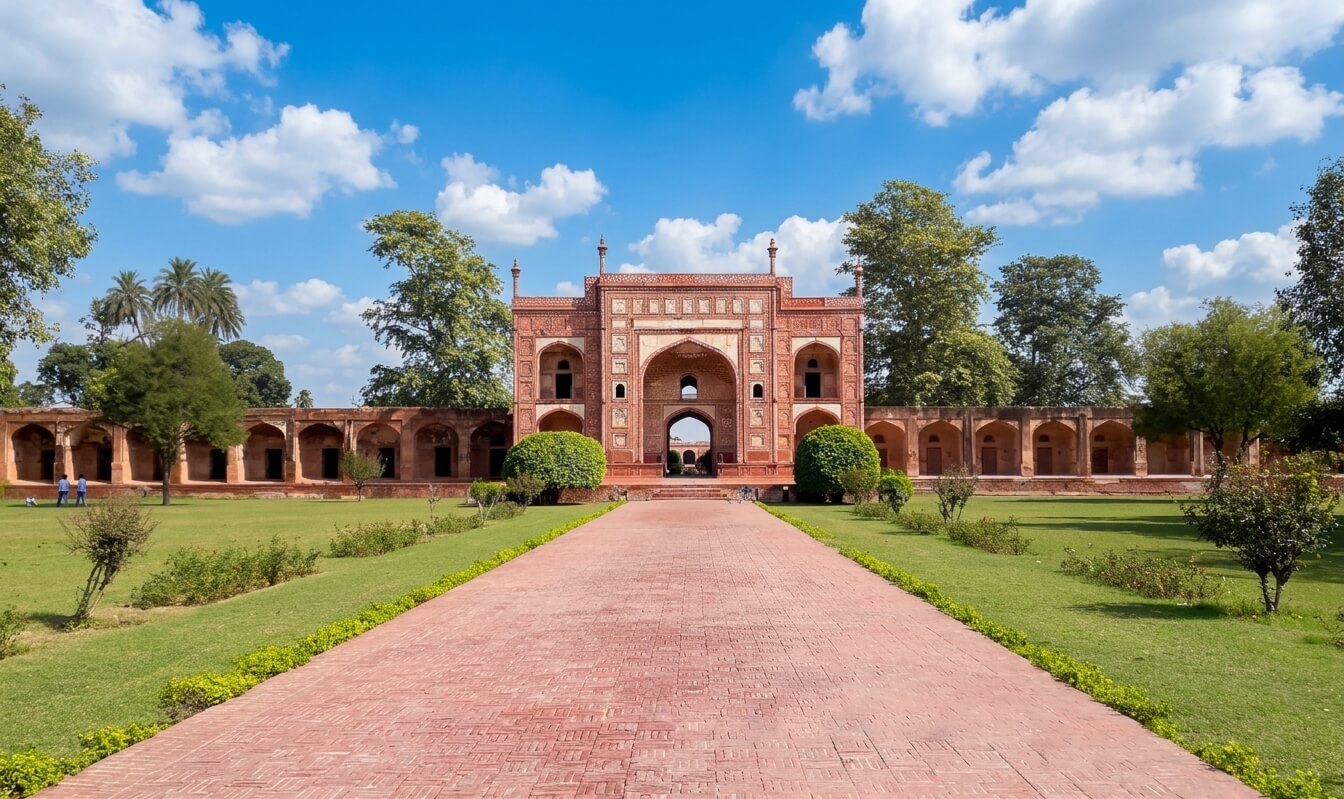
The gateway and cells of Akbari Sarai. Photo Credit: King Eliot, CC BY-SA 4.0.
History of Akbari Sarai Lahore
Despite its name, Akbari Sarai was not built in Emperor Akbar’s time. In fact, work began under Islam Shah Suri in the mid-1550s, and the mosque inside dates from that period. Then, in Shah Jahan’s reign in the mid-1600s, the builders added the rows of cells and the great gateways.
A Caravan Inn and Post Station
Back then, Shahdara was the main entry point to Lahore for travellers coming from Kabul and Kashmir. So, the sarai gave them a safe place to rest, store their goods and feed their animals. In addition, it served as a dak chowki, or mail station, and later housed the caretakers of Jahangir’s tomb. In his court history, the Padshahnama, Abdul Hamid Lahori called it Jilu Khana-e-Rauza, the “attached court of the tomb”.
Damage and Recognition
Later, under Sikh rule, Ranjit Singh turned the sarai into a cantonment for his general Musa Farangi. Then, in the British era, the new railway line nearby turned it into a rail depot, which badly damaged it. Even so, it remains the best-preserved sarai in Pakistan. In 1993, Akbari Sarai Lahore was added to UNESCO’s tentative list of World Heritage Sites, together with the tombs of Jahangir and Asif Khan.
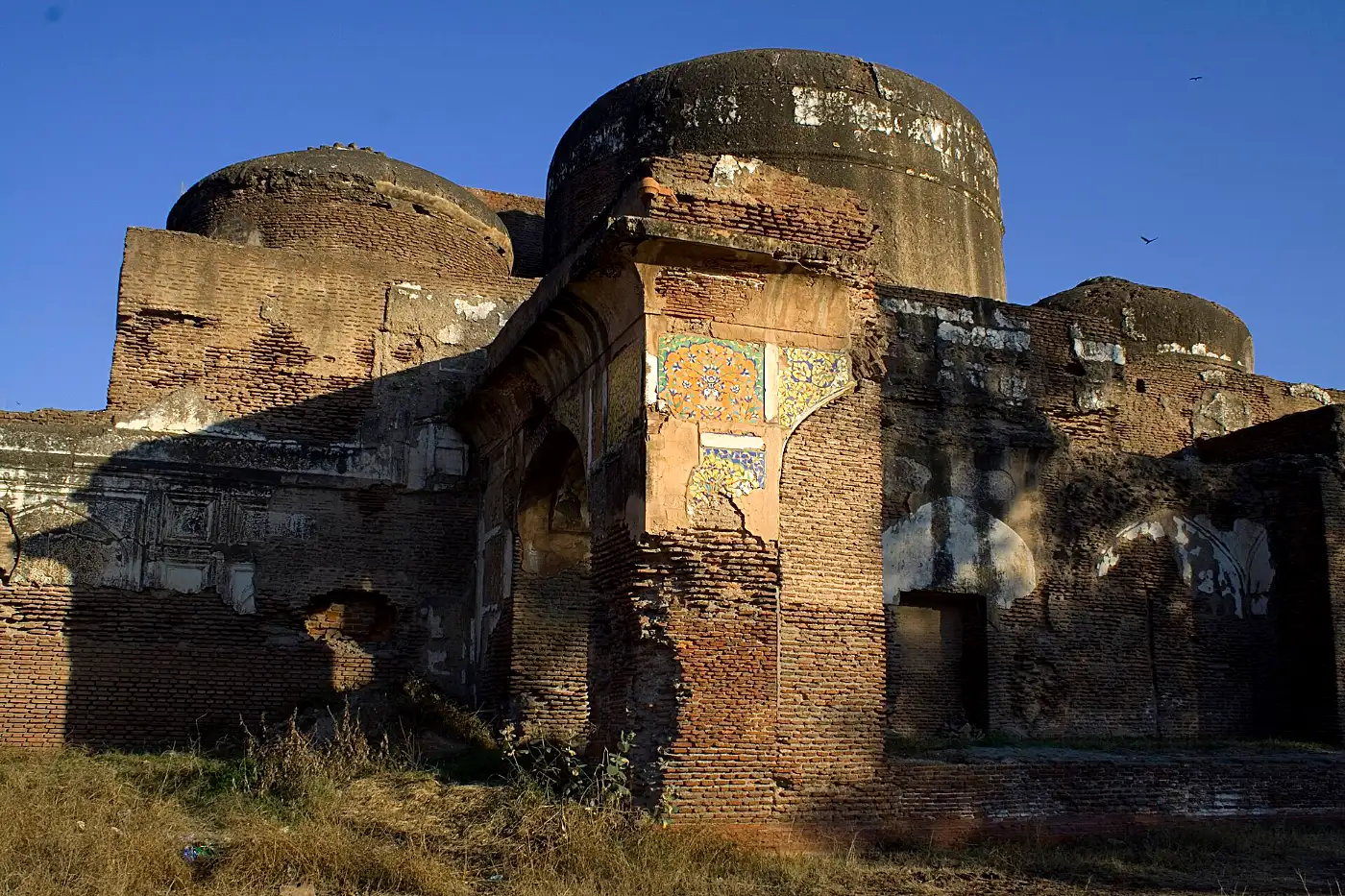
A ruined corner tower. Photo Credit: Meemjee, CC BY-SA 3.0.
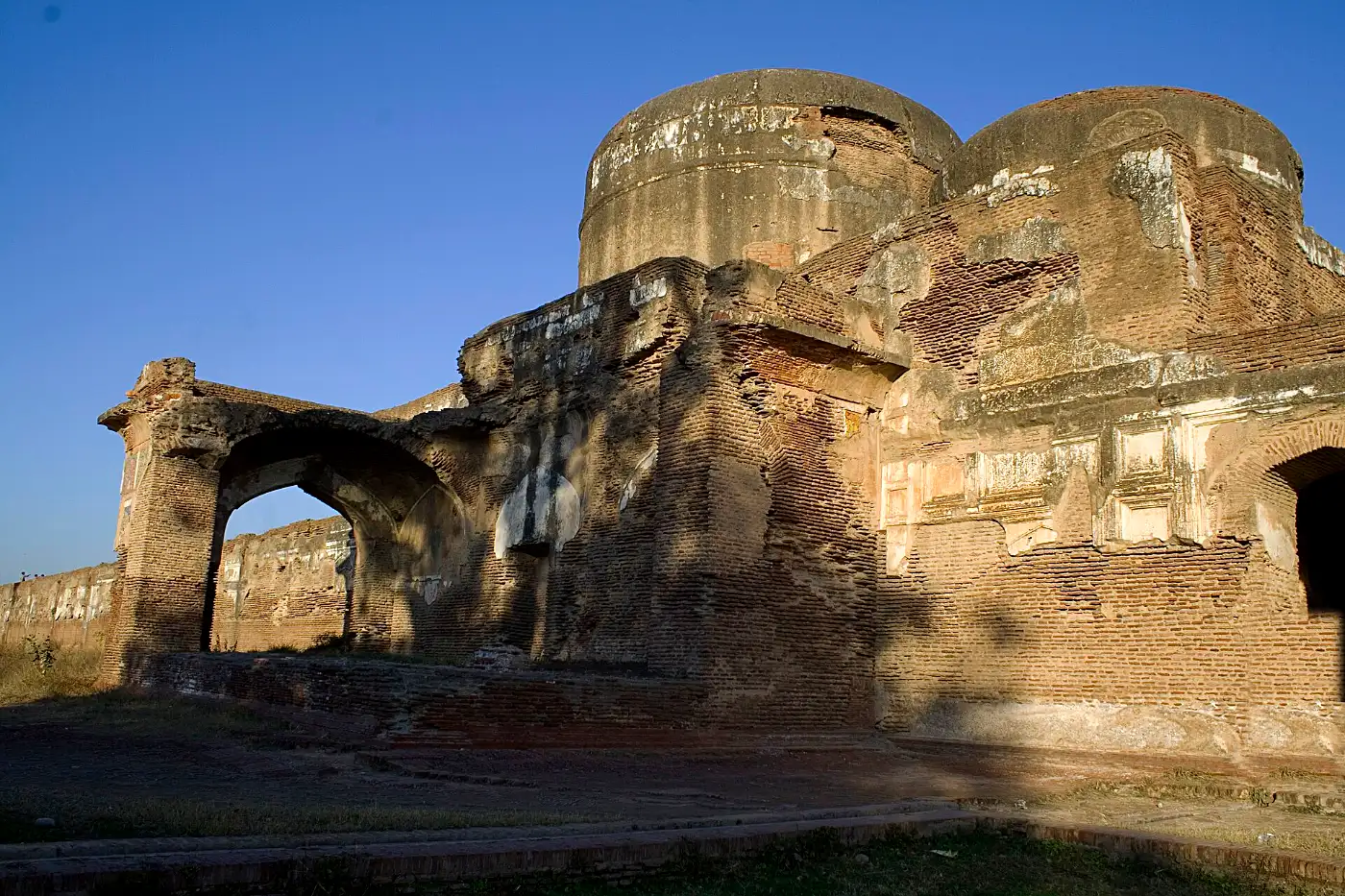
Old chambers at a corner of the sarai. Photo Credit: Meemjee, CC BY-SA 3.0.
Architecture of the Sarai
First of all, the size is impressive. The sarai covers about 12 acres and measures roughly 797 by 610 feet. As a result, it feels much more like a giant walled park than a building.
The Gateways
Two large gateways, one on the north and one on the south, mark the main entrances. Built of red sandstone with white marble inlay, they also rise high so that travellers could see them from far away. In addition, the main arch opens towards Jahangir’s tomb, and it is decorated with fine pietra dura stone inlay.
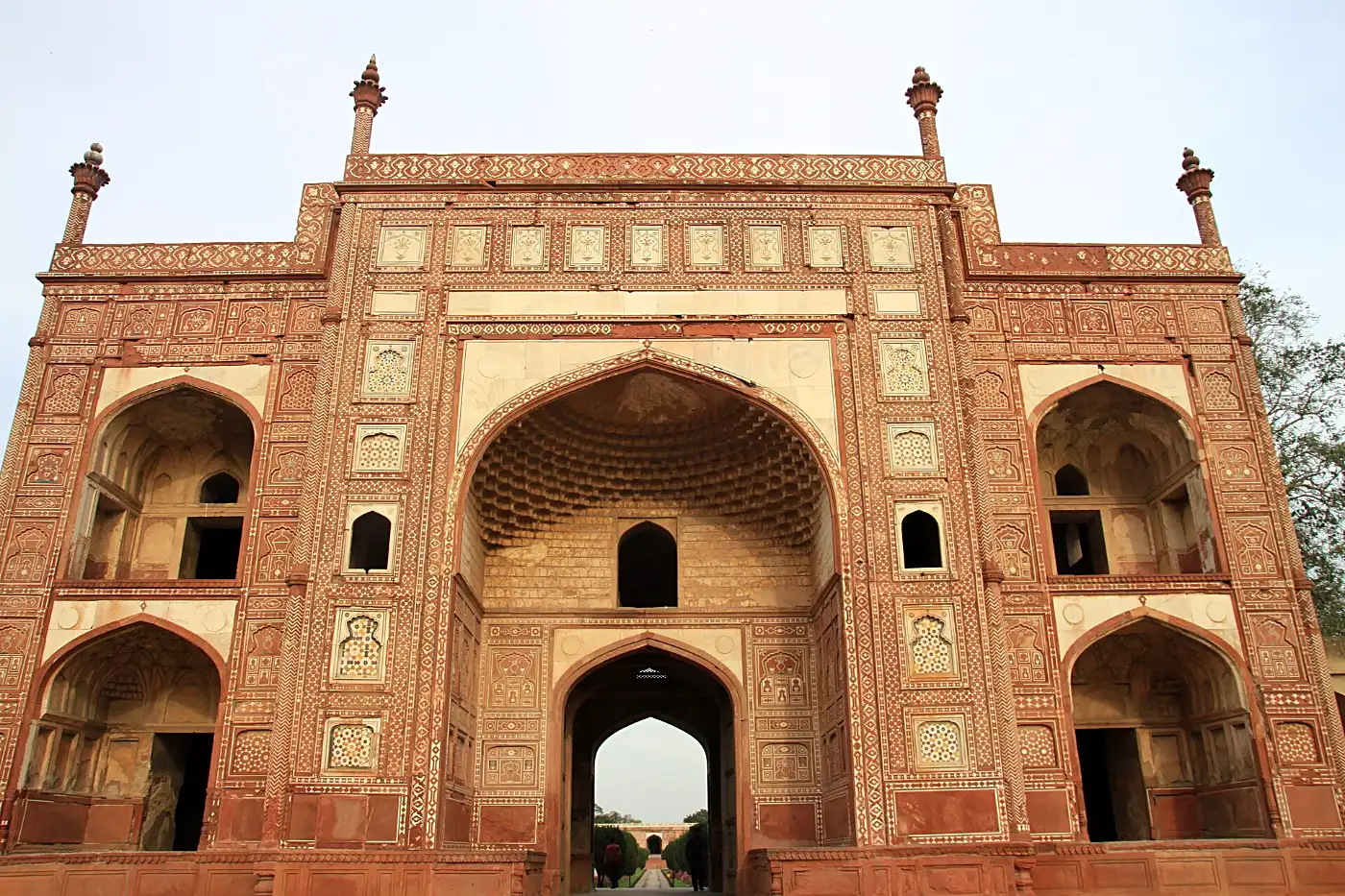
The main gateway of the sarai. Photo Credit: DanishKausar, CC BY-SA 3.0.
The 180 Cells
Meanwhile, about 180 arched cells line the four sides of the courtyard. In the past, travellers lived in them and stored their luggage inside. Also, look at the corner towers, which hold the most elaborate rooms in the sarai.
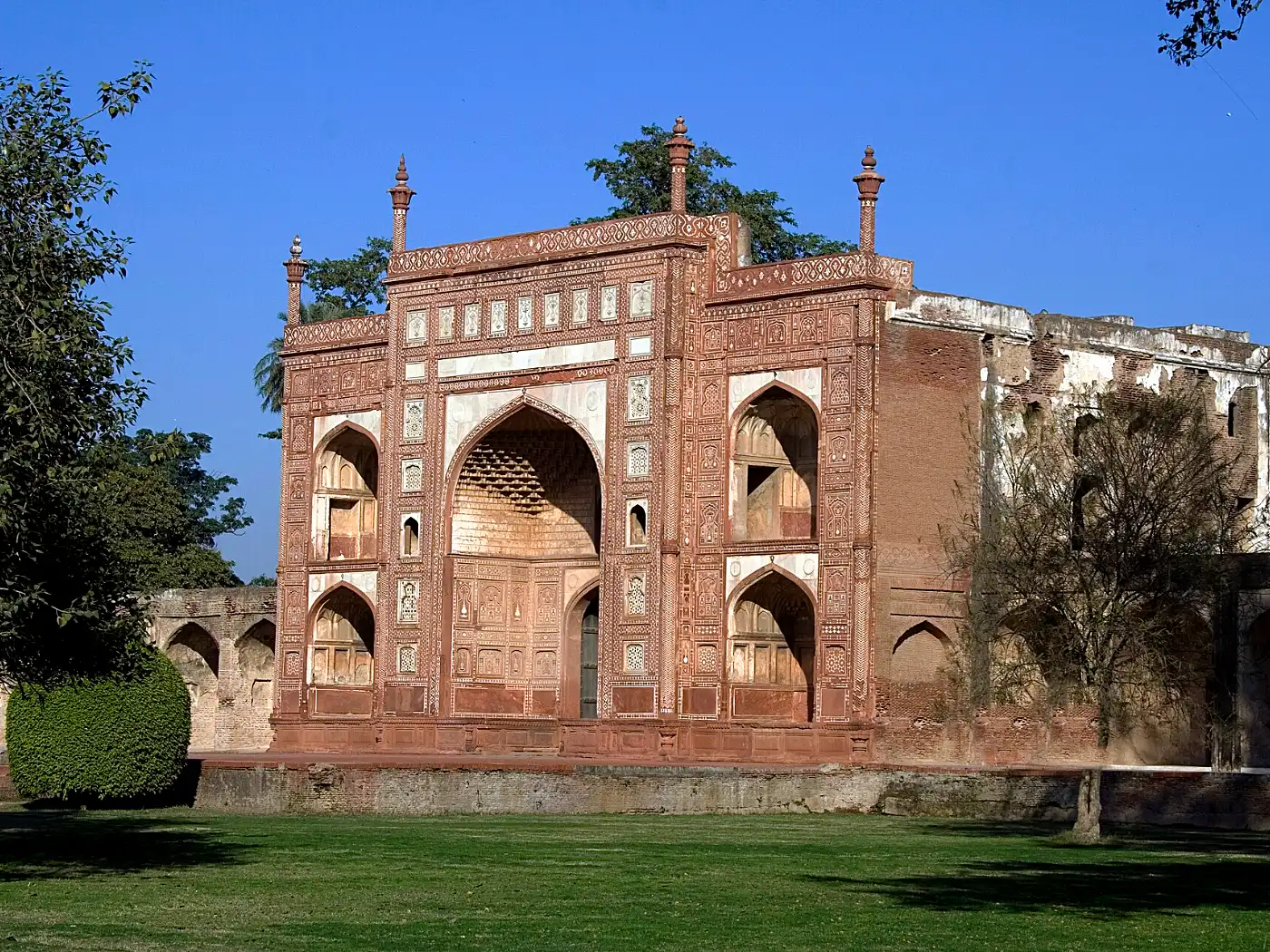
A gateway seen from the lawns. Photo Credit: Meemjee, CC BY-SA 3.0.
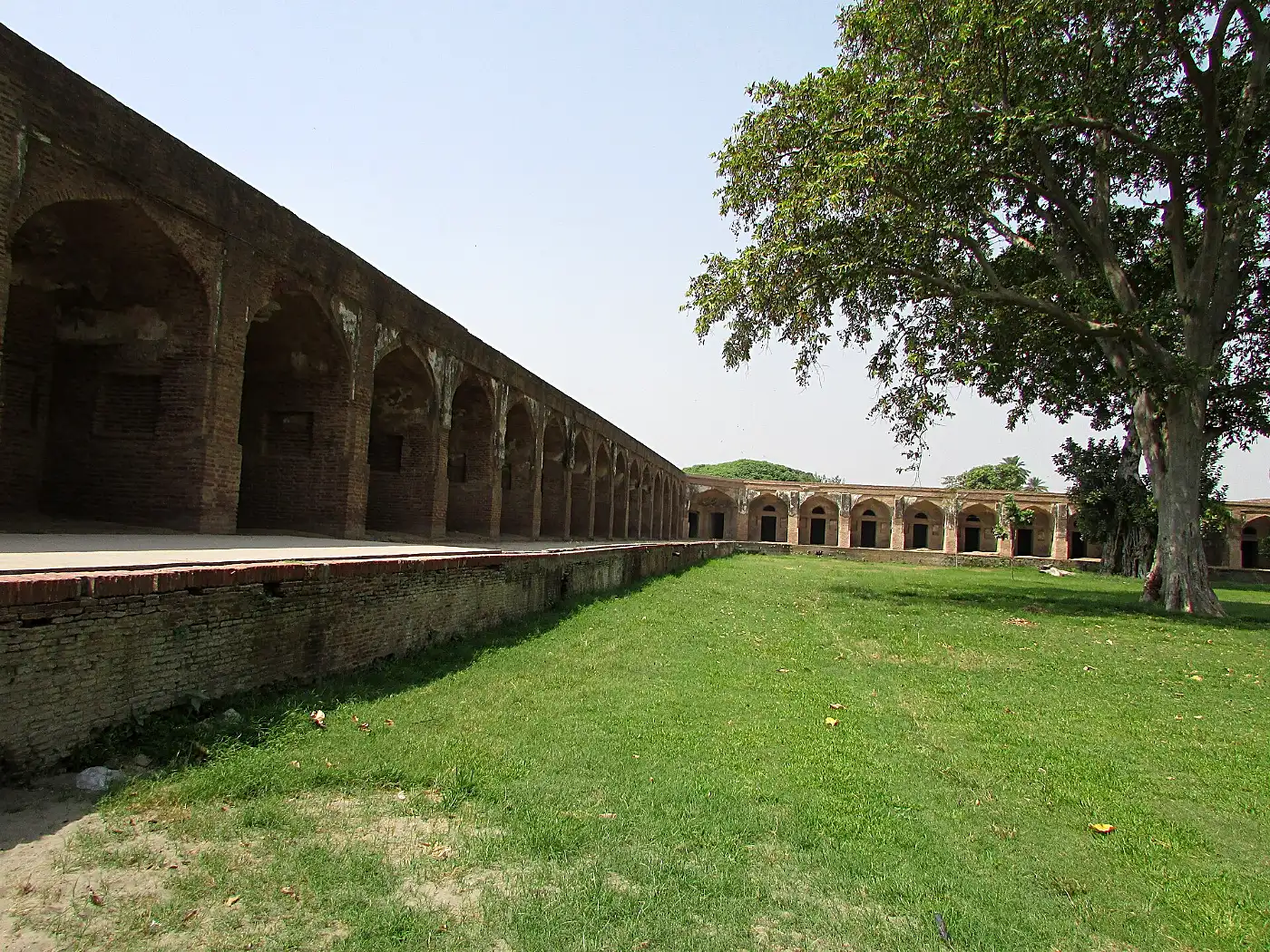
Long rows of cells around the courtyard. Photo Credit: Zahidali219, CC BY-SA 4.0.
The Mosque
On the west side of the courtyard stands a small three-domed mosque of red sandstone. Interestingly, it dates from the Suri period, so it is older than most of the sarai around it. For example, its arches are framed with bands of red and white stone in zigzag and floral patterns. Today, it is still used for prayers; therefore, enter quietly and remove your shoes.
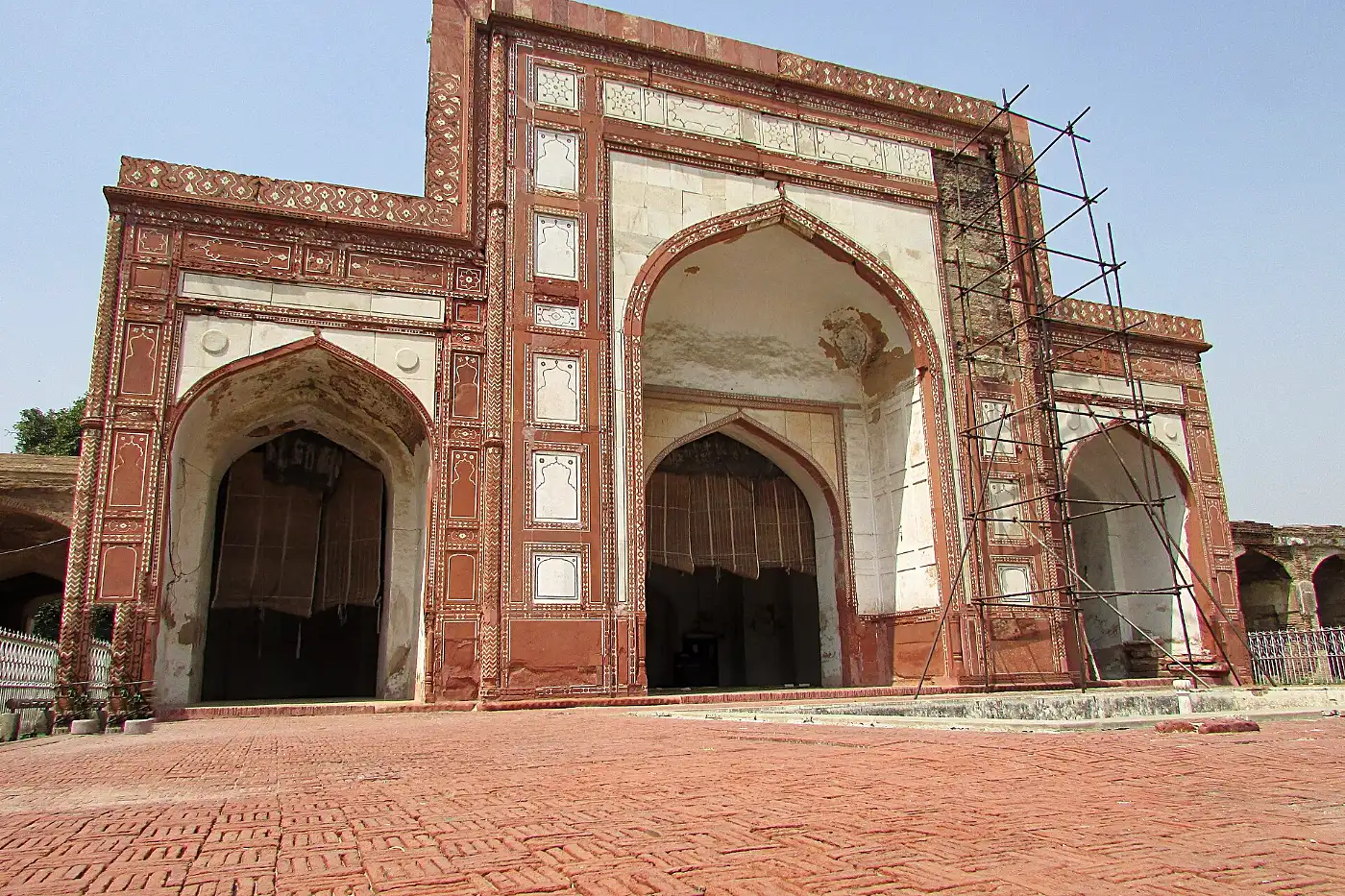
The facade of the mosque. Photo Credit: Zahidali219, CC BY-SA 4.0.
Carvings and Tile Work
Step inside the gateways and look up. There, the arches are covered in carved plaster, fresco painting and honeycomb muqarnas. Also, some panels still show traces of glazed kashi tiles in blue, yellow and green. Although time has faded them, these details still show how grand the sarai once was.

Carved plaster inside a gateway. Photo Credit: Kumail Hasan, CC BY-SA 4.0.
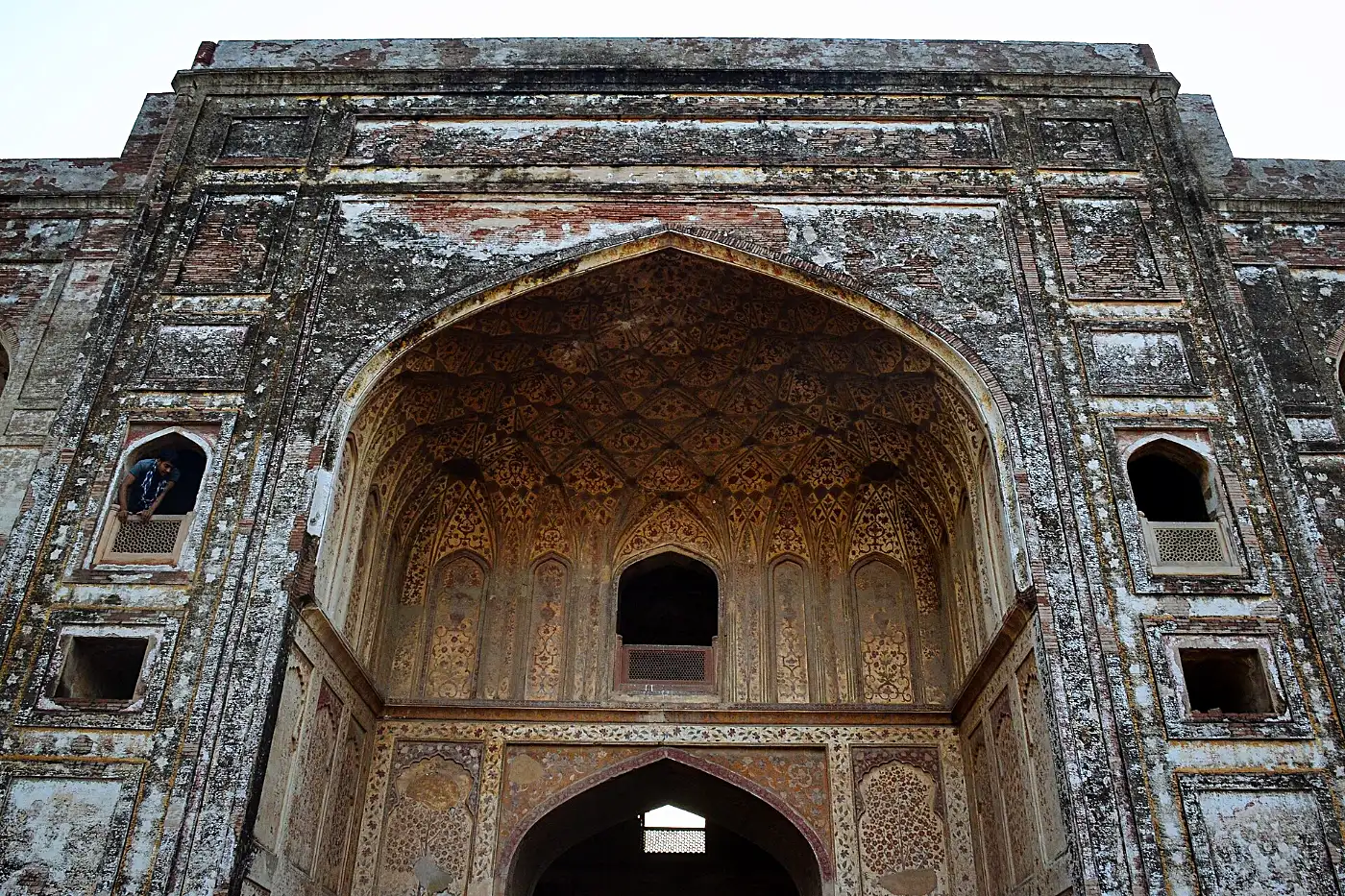
Traces of tile work on the western gateway. Photo Credit: Kumail Hasan, CC BY-SA 4.0.
Things to Do
- First, walk along the rows of cells and peek inside the old rooms.
- Next, admire the carved plaster and tile work inside the gateways.
- After that, visit the small Suri-era mosque on the west side.
- Then walk east to the Tomb of Jahangir and west to the Tomb of Asif Khan.
- Finally, relax on the lawns, which are popular for picnics.
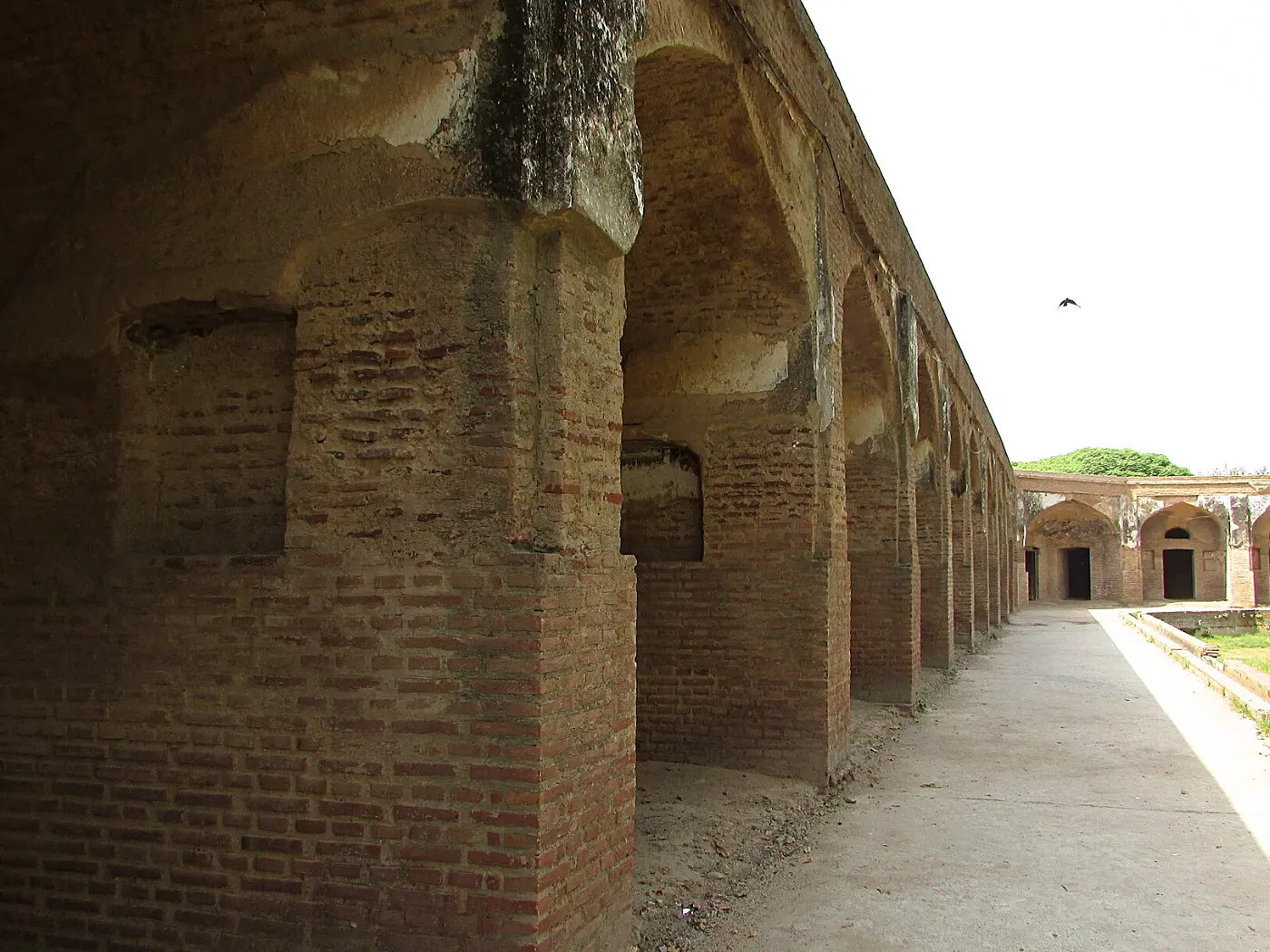
The corridor in front of the cells. Photo Credit: Zahidali219, CC BY-SA 4.0.
Food Nearby
There are only a few small stalls near the Shahdara tombs; therefore, bring water and snacks with you. For example, tea stalls near the entrance serve doodh patti and biscuits.
For a proper meal, however, head back across the Ravi to the Walled City or Lakshmi Chowk for karahi, nihari and tikka. Expect to pay around PKR 300 to 1,500 per person.
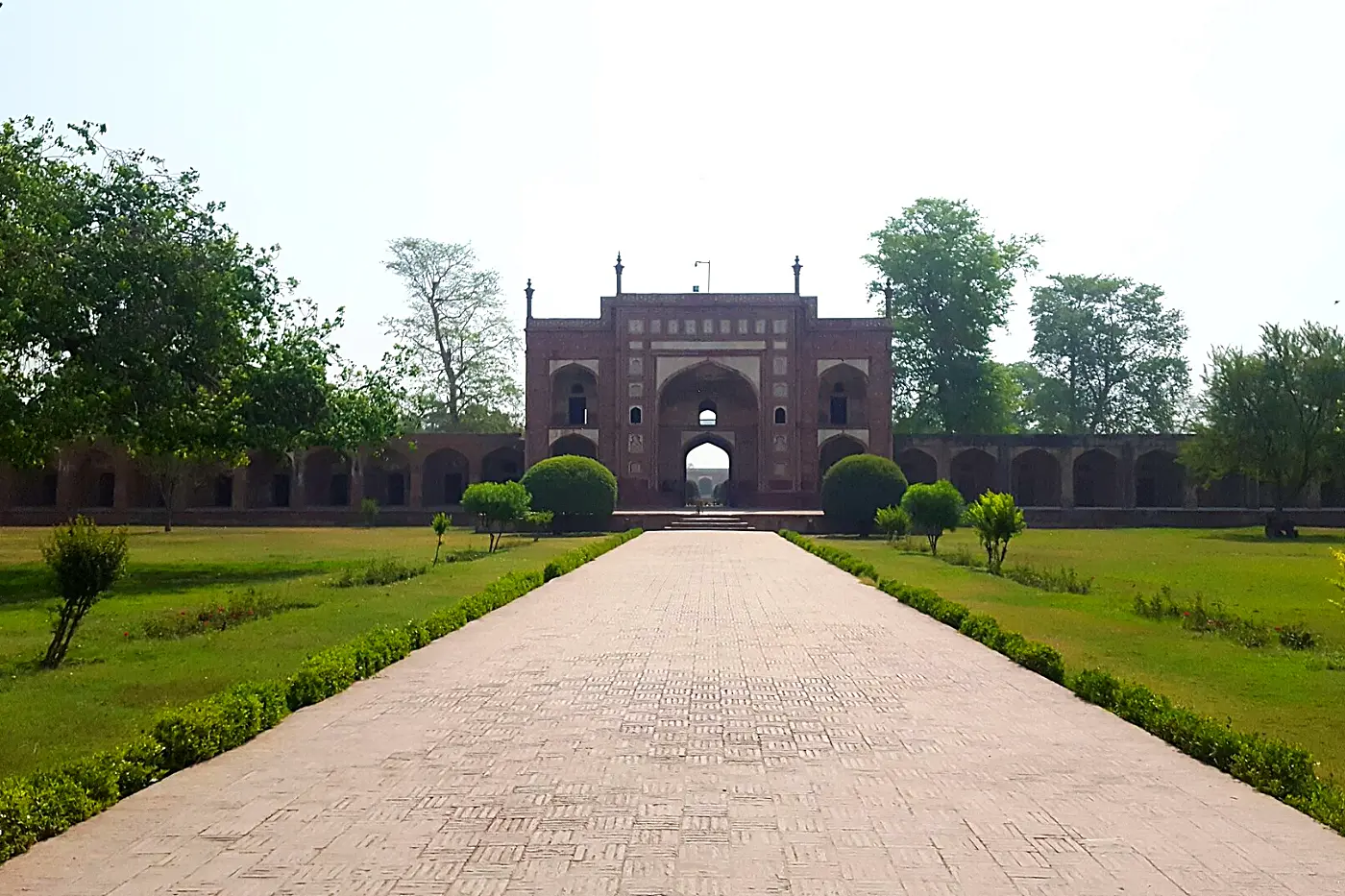
The garden path to the gateway. Photo Credit: Shahzaib Damn Cruze, CC BY-SA 4.0.
Visitor Information
Visiting Akbari Sarai Lahore
Before you visit Akbari Sarai Lahore, keep these points in mind.
- Location: Shahdara Bagh, between the tombs of Jahangir and Asif Khan, on the north bank of the Ravi.
- Timings: Usually open during daylight hours, every day; however, check before you go, as timings can change.
- Ticket: Usually, you enter through the Jahangir’s tomb complex, which charges a small entry fee. Carry cash and your CNIC.
- Best time: October to March, in the morning or late afternoon.
- Time needed: 1 to 2 hours, or half a day with both tombs.
- Families and women: Family-friendly, because of the large lawns.
- Dress code: Wear modest clothes; also, cover your head and remove shoes in the mosque.
- Accessibility: The paths are mostly flat; however, some parts are uneven and broken.
- Safety: Above all, stay away from crumbling walls in the ruined corners.

The avenue leading to the gateway. Photo Credit: SohaibTahirST, CC BY-SA 3.0.
How to Get There
Basically, Akbari Sarai is in Shahdara, just across the River Ravi from central Lahore. By Careem, inDrive or rickshaw, ask for Jahangir’s Tomb, Shahdara. Usually, the drive from the Walled City takes 20 to 40 minutes, depending on traffic on the Ravi bridge.
Alternatively, buses and wagons along GT Road stop near Shahdara Morr. From there, simply take a rickshaw for the last part.
Places to Visit Near Akbari Sarai
- Tomb of Jahangir: the emperor’s grand tomb, right through the eastern gate.
- Tomb of Asif Khan: the tomb of Mumtaz Mahal’s father, just west.
- Tomb of Noor Jahan: the empress’s tomb, a short walk away across the railway line.
- Kamran’s Baradari: a Mughal pavilion in the Ravi, nearby.
- Lahore Fort: across the river, about 20 minutes by car.
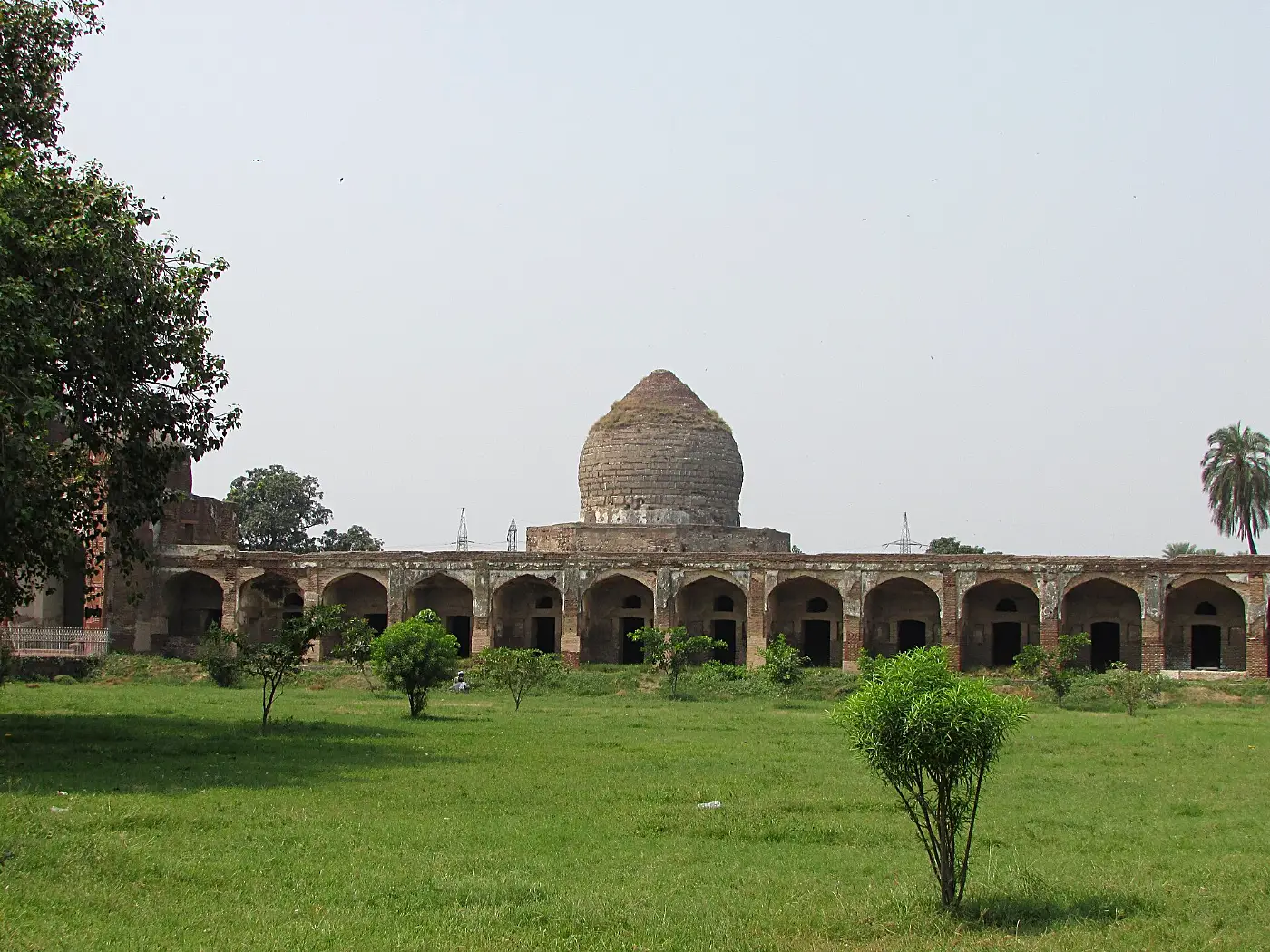
The cells, with the dome of Asif Khan’s tomb behind. Photo Credit: Zahidali219, CC BY-SA 4.0.
Frequently Asked Questions
Was Akbari Sarai built by Akbar?
No. Despite the name, it was begun under Islam Shah Suri in the 1550s and completed under Shah Jahan.
Where is Akbari Sarai?
It is in Shahdara Bagh, Lahore, between the tombs of Jahangir and Asif Khan.
Is there a separate ticket for Akbari Sarai?
No. Instead, you usually enter through the Jahangir’s tomb complex, which has one small entry fee.
How many rooms does Akbari Sarai have?
In total, it has about 180 cells around its courtyard.
Is Akbari Sarai a UNESCO site?
Partly. In fact, it has been on UNESCO’s tentative list since 1993, together with the tombs of Jahangir and Asif Khan.
How long do I need to visit?
In general, allow 1 to 2 hours for the sarai, or half a day with both tombs.
Conclusion
In short, Akbari Sarai Lahore is a peaceful, giant courtyard full of Mughal history. After all, it sheltered travellers on the road from Kabul, guarded an emperor’s tomb, and survived soldiers and railway workers. So, when you visit Jahangir’s tomb, slow down and explore the sarai too.
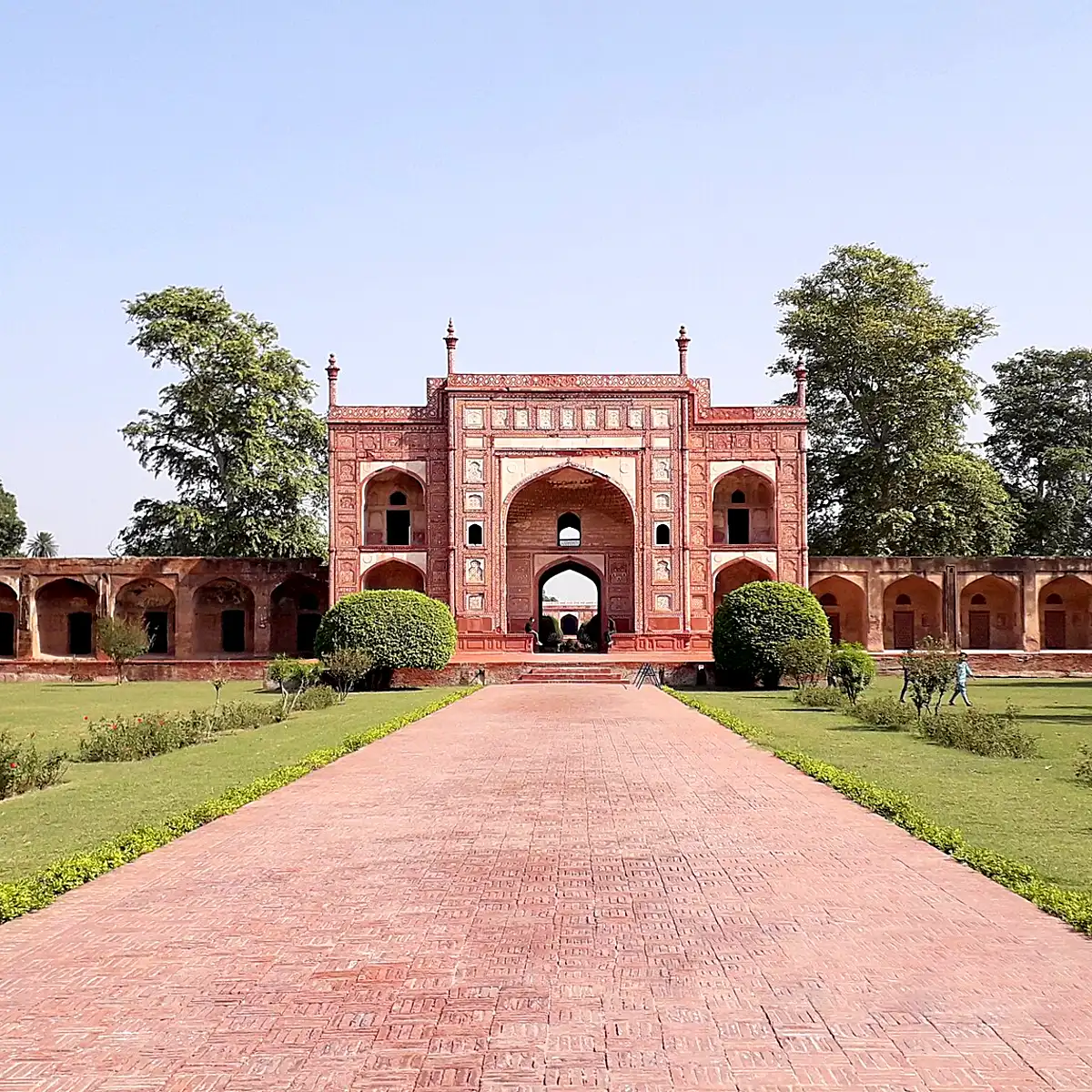
The gateway seen down the garden path. Photo Credit: King Eliot, CC BY-SA 4.0.
Cover photo: King Eliot, CC BY-SA 4.0.