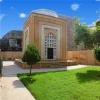
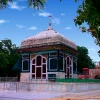
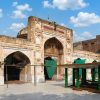
Walk through the busy lanes of Anarkali Bazaar, past shops full of shoes, bangles and fabric, and you suddenly reach a quiet little square. In the middle stands a small building of yellow stone with white marble screens. This is the Qutbuddin Aibak Tomb Lahore, the grave of the man who founded the Delhi Sultanate more than 800 years ago.
Most people know Qutbuddin Aibak (Qutb-ud-Din Aibak) as the sultan who started the Qutb Minar in Delhi. However, few know that he died in Lahore after a fall while playing polo, and that he lies right here. So, if you are shopping in Anarkali, take ten minutes and step into this small piece of history.
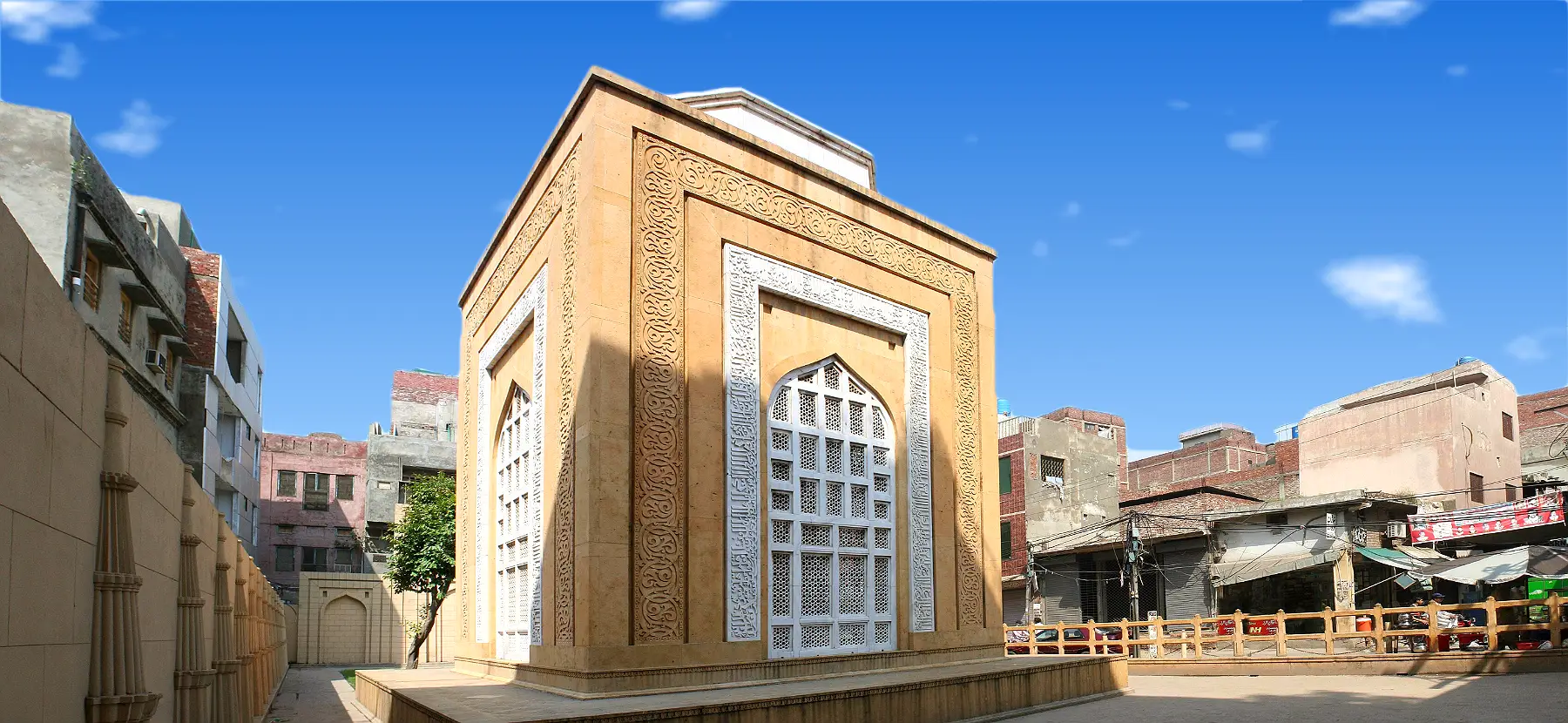
Photo Credit: Tahir8088, CC BY-SA 3.0 (edited).
History of the Qutbuddin Aibak Tomb
To begin with, Qutbuddin Aibak came from a Turkic family in Central Asia. As a boy, he was sold as a slave. Later, Sultan Muhammad Ghori bought him, and Aibak soon became one of his most trusted generals. In fact, he helped Ghori win the Second Battle of Tarain in 1192 and then ruled the conquered lands of north India for him.
The First Sultan of Delhi
Ghori was killed in 1206. After that, Aibak became an independent ruler and made Lahore his capital. As a result, he is remembered as the founder of the Mamluk, or Slave, dynasty, the first ruling family of the Delhi Sultanate.
He also started the Quwwat-ul-Islam Mosque and the Qutb Minar in Delhi. Today, both are part of a UNESCO World Heritage Site. Besides that, people called him Lakh Bakhsh, the giver of lakhs, because he was so generous.
Death on the Polo Ground
In 1210, Aibak was playing chaugan, an early form of polo, in Lahore. During the game, his horse fell on him and the saddle crushed his chest. Sadly, he died soon after, and his men buried him close to the spot. Even today, historians disagree about the first tomb. Some say it had a fine dome, while others think it was only a simple grave.
Rebuilding the Qutbuddin Aibak Tomb Lahore
Over the centuries, the grave was almost forgotten. Under Sikh and British rule, houses and shops grew around it, and it sat hidden in a narrow street. Then, in the 1970s, Prime Minister Zulfikar Ali Bhutto ordered a new tomb, and the Department of Archaeology built the one you see today. Today, it is also a protected monument.
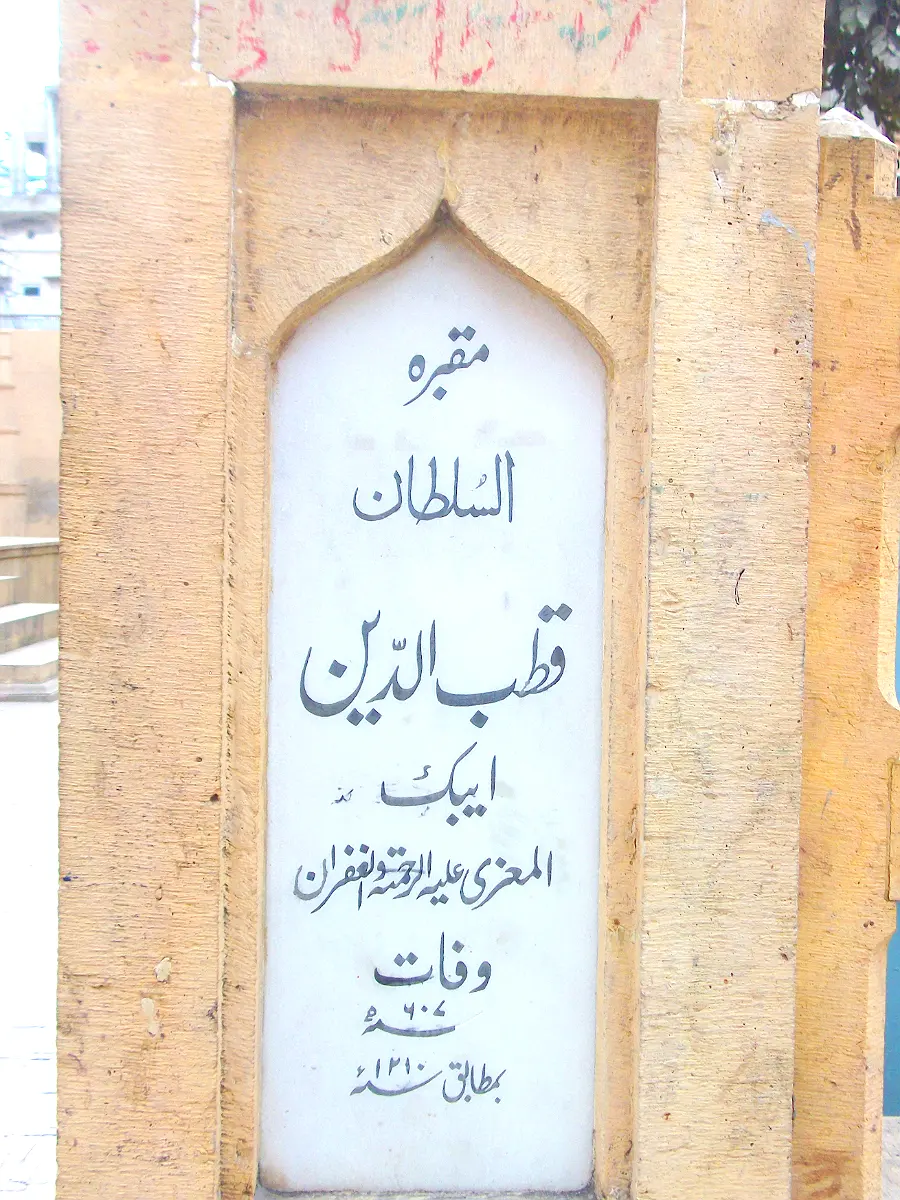
The Urdu plaque at the entrance of the tomb. Photo Credit: Muhammad Umair Mirza, CC BY-SA 4.0.
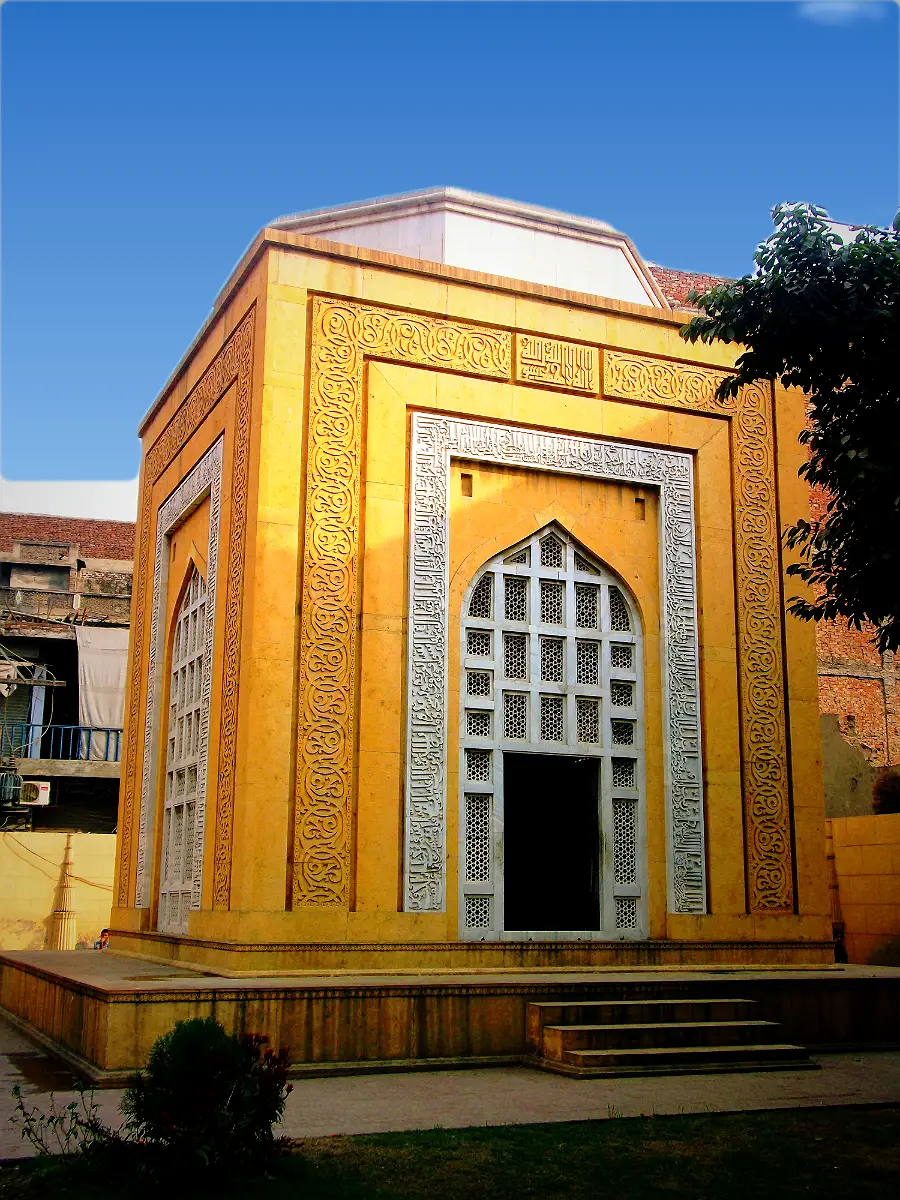
The front of the tomb with its marble jali. Photo Credit: Muhammad Umair Mirza, CC BY-SA 4.0.
Architecture of the Tomb
First of all, do not expect a huge Mughal mausoleum. The Qutbuddin Aibak Tomb Lahore is a small, square building on a low platform. Even so, it is beautifully made. Warm yellow stone covers the walls, and each side has a tall arched panel filled with a white marble jali, a stone screen cut with small openings.
Carvings and Calligraphy
Then, around each panel, you will see wide bands of carving. Some show curling floral patterns, while others carry Arabic calligraphy. The style looks back to early Sultanate buildings in Delhi, so it feels quite different from the Mughal tombs elsewhere in Lahore.
A New Building Over an Old Grave
Because it was rebuilt in the 1970s, the building itself is not old. Still, the grave inside belongs to a ruler who died in 1210. That is why it is one of the oldest royal graves in Lahore, older than the Mughal tombs by about 400 years.
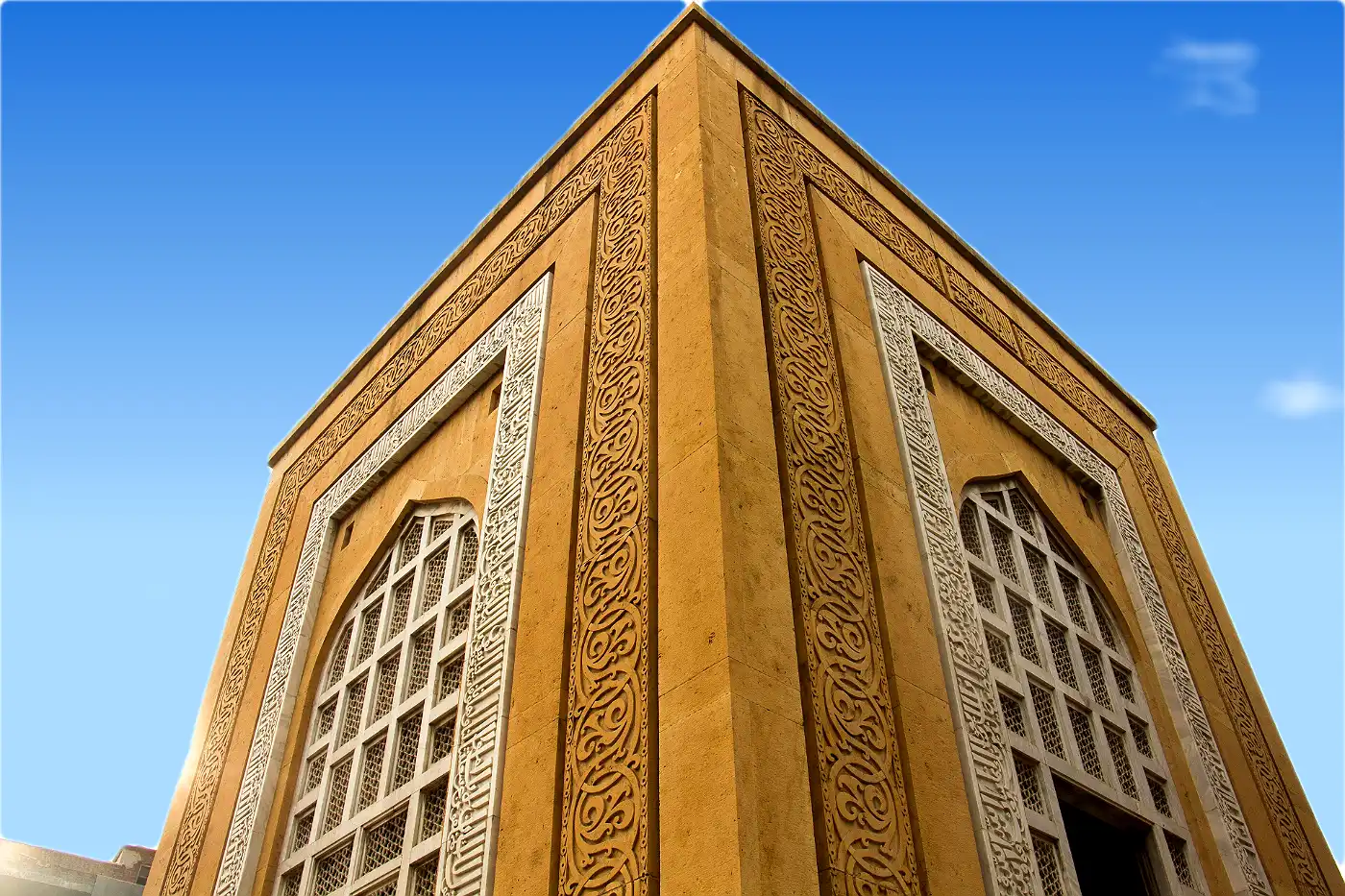
Carved bands on a corner of the tomb. Photo Credit: MariyamAftab, CC BY-SA 4.0.
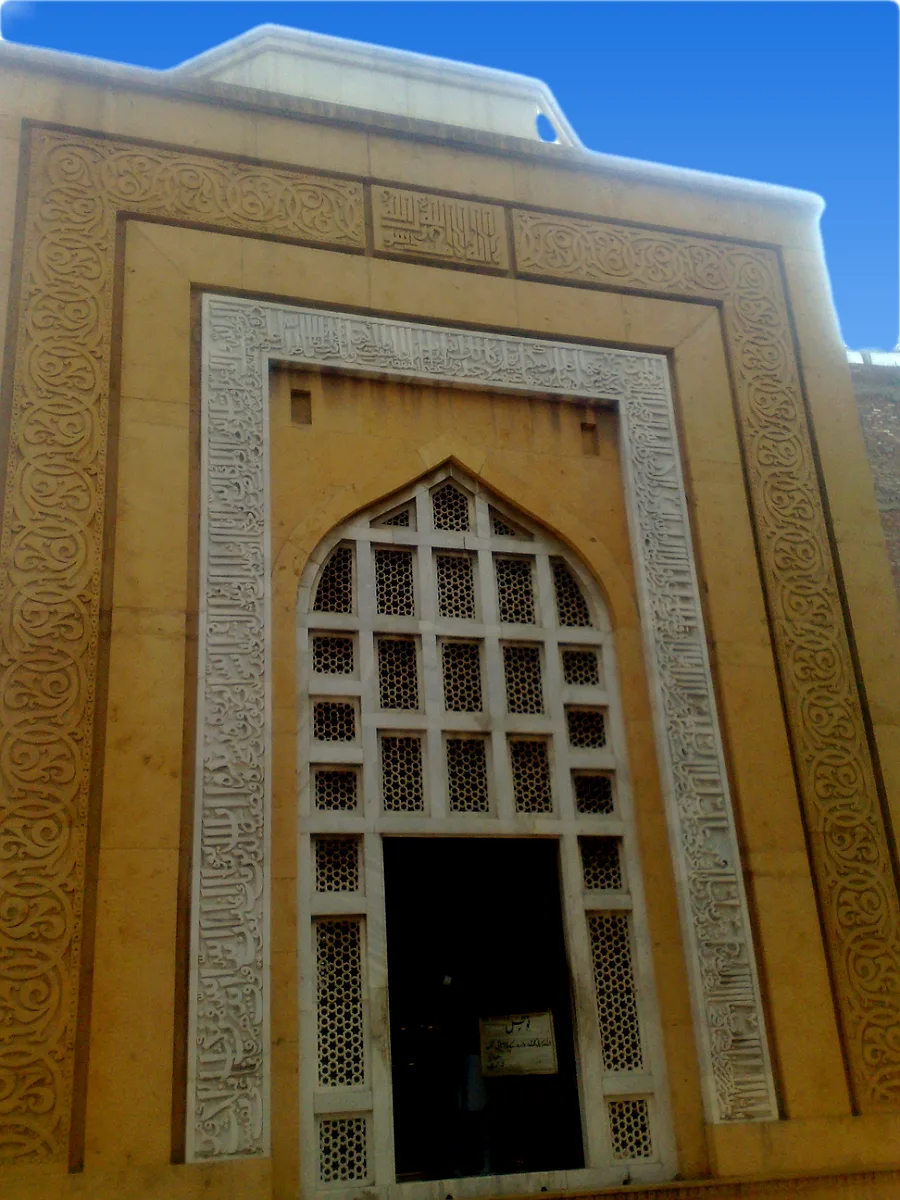
One of the four jali panels of the tomb. Photo Credit: Omarjhawarian, CC BY-SA 3.0.
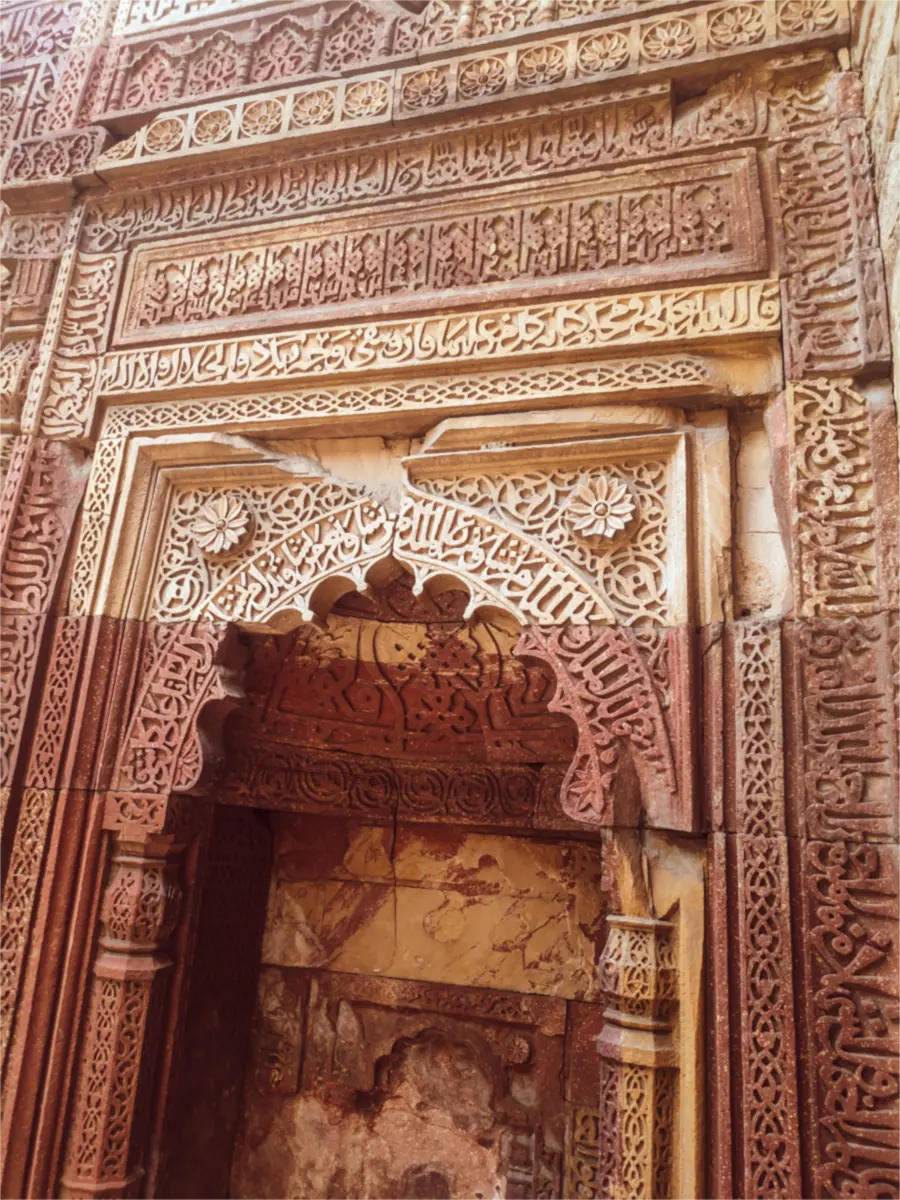
Calligraphy and floral carving on the walls. Photo Credit: 900pattern, CC BY-SA 4.0.
What to See at the Tomb
The Grave Chamber
Step inside through the low door, and the noise of Anarkali fades. In the centre of the chamber, the grave rests on a stepped platform of white marble with carved sides. Usually, a black cloth with silver calligraphy covers it. Meanwhile, sunlight comes through the jali screens and throws small spots of light on the marble floor.
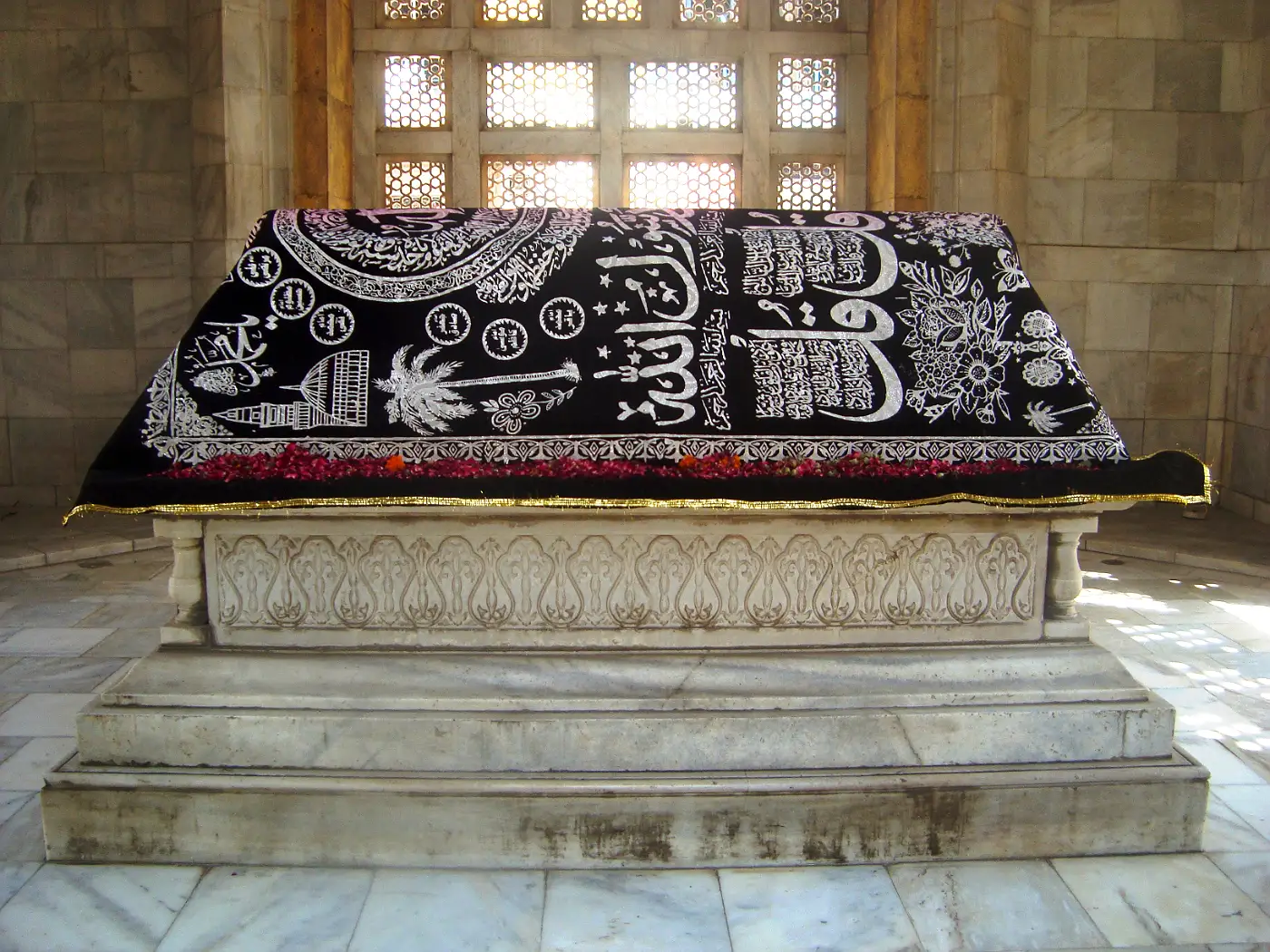
The grave of Sultan Qutbuddin Aibak. Photo Credit: Ibnazhar, CC BY-SA 3.0.
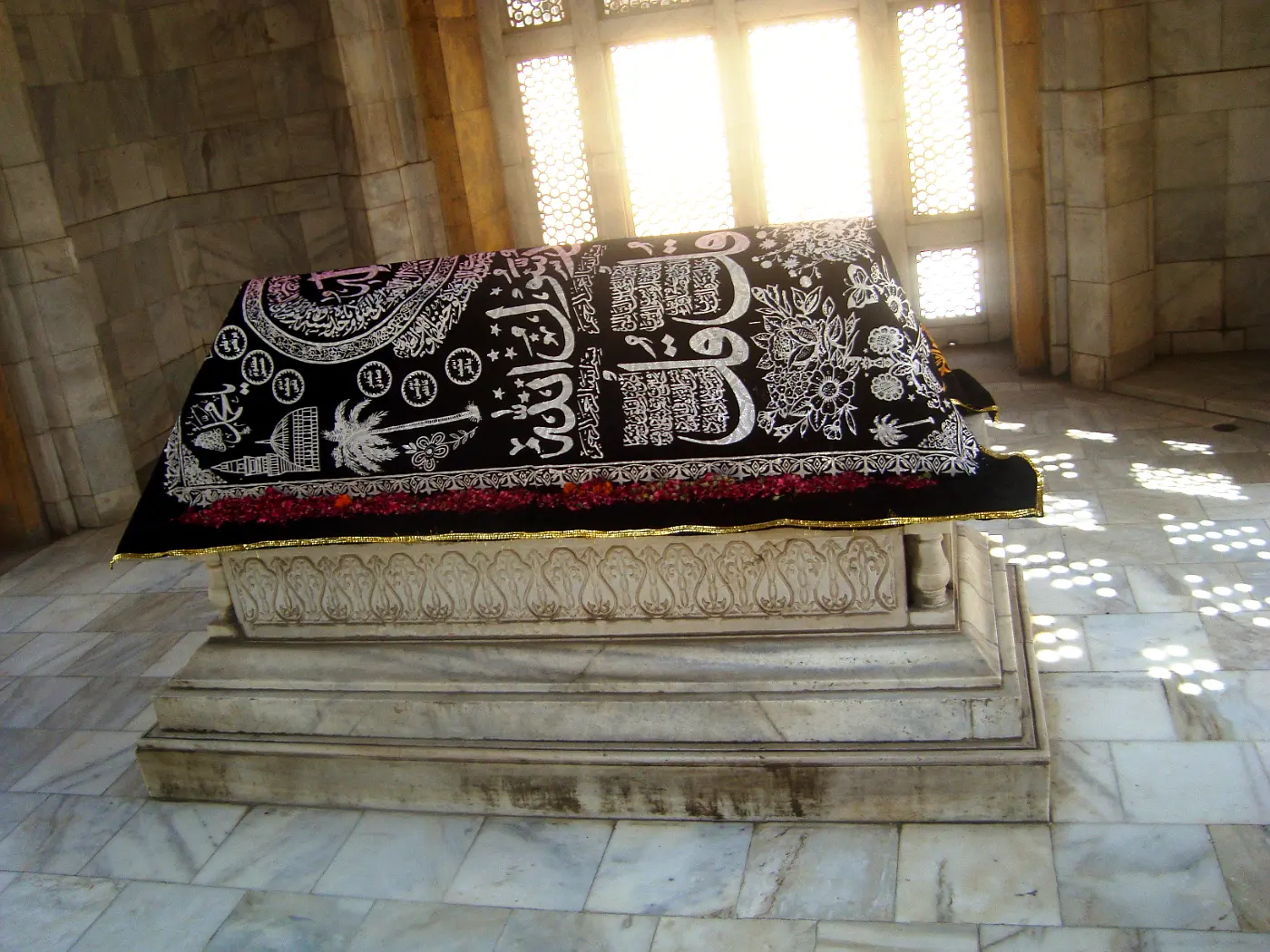
Light through the jali screens on the grave. Photo Credit: Ibnazhar, CC BY-SA 3.0.
The Carved Wooden Door
Next, look closely at the wooden door. For instance, it has star and diamond shapes framed by floral borders. Up close, the detail is surprisingly fine, so it is worth a photo.
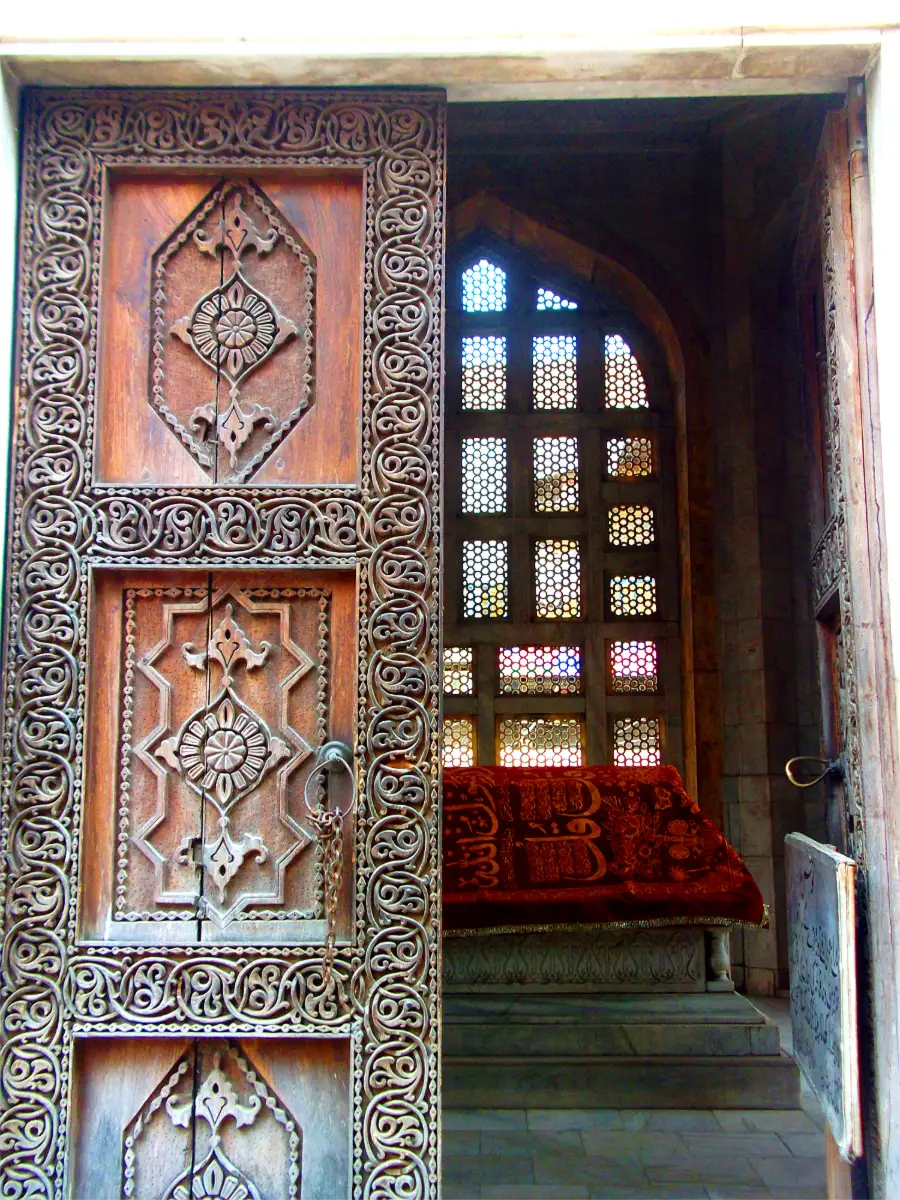
The carved wooden door of the tomb. Photo Credit: Muhammad Umair Mirza, CC BY-SA 4.0.
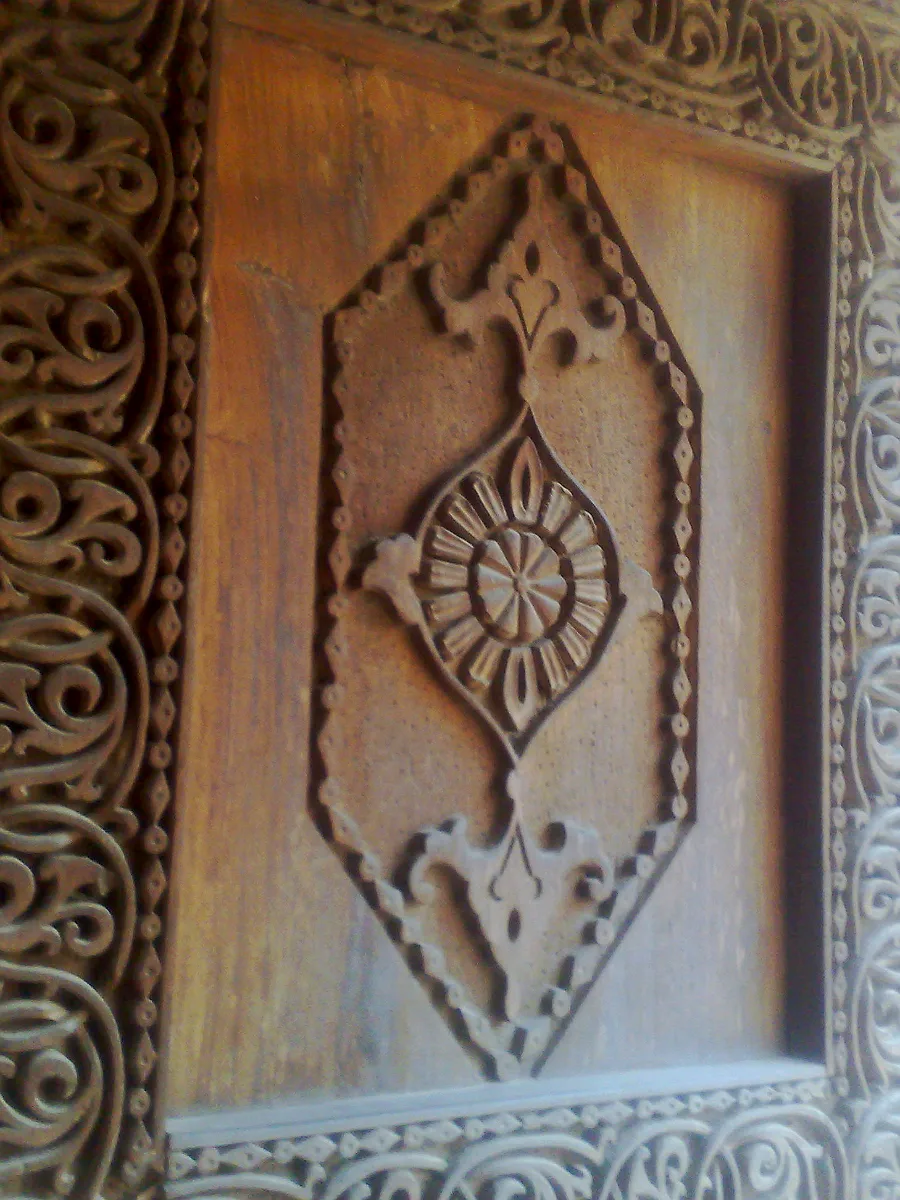
Close view of the door carving. Photo Credit: Omarjhawarian, CC BY-SA 3.0.
The Platform and Stone Railings
Finally, walk around the platform. Low railings of the same yellow stone surround the site, and a small garden with trees and grass softens the square. In addition, a plaque near the entrance gives the sultan’s name and date of death in Urdu.
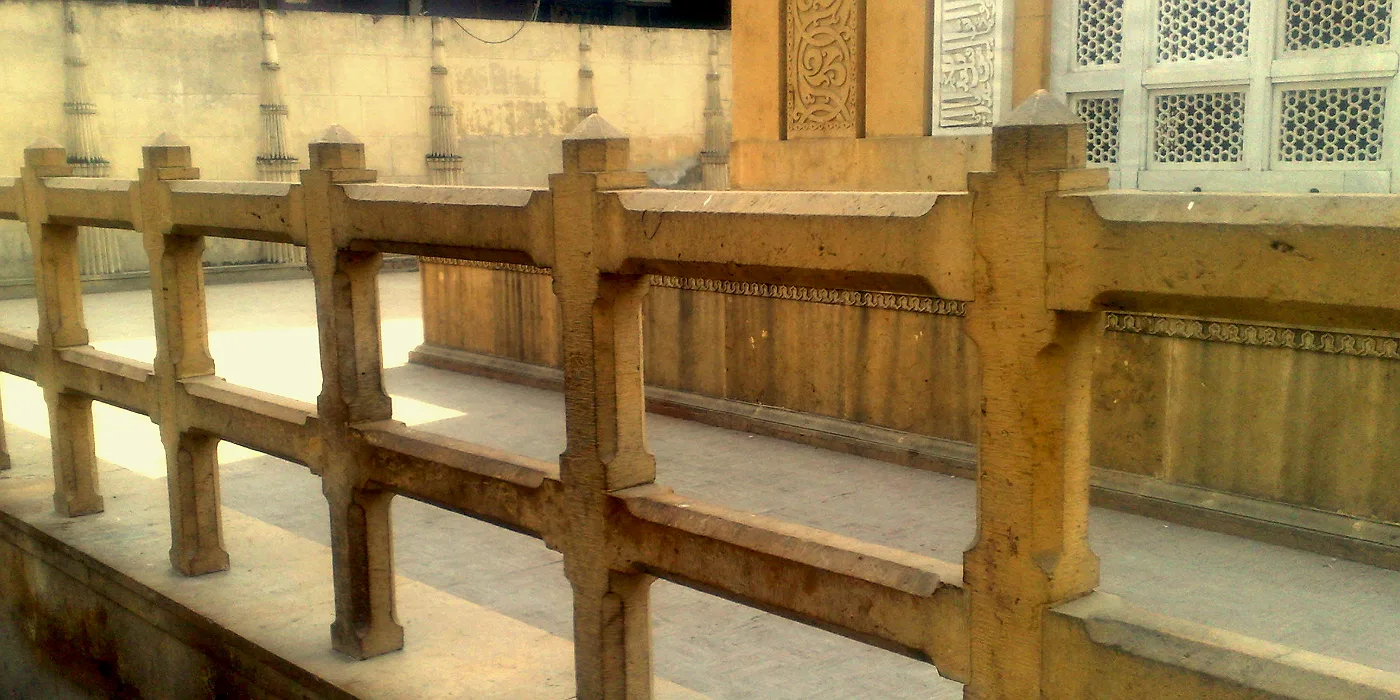
Stone railings around the tomb platform. Photo Credit: Omarjhawarian, CC BY-SA 3.0.
Things to Do
- Offer Fatiha at the grave, quietly and with respect.
- Photograph the carvings and jali patterns in the soft morning light.
- Sit for a few minutes in the little garden, a rare quiet spot in Anarkali.
- Pair your visit with shopping in Anarkali for shoes, cloth, bangles and books.
- Then walk to the Lahore Museum to see objects from many eras of Lahore’s past.
- Come back after dark, when lights make the yellow stone glow.
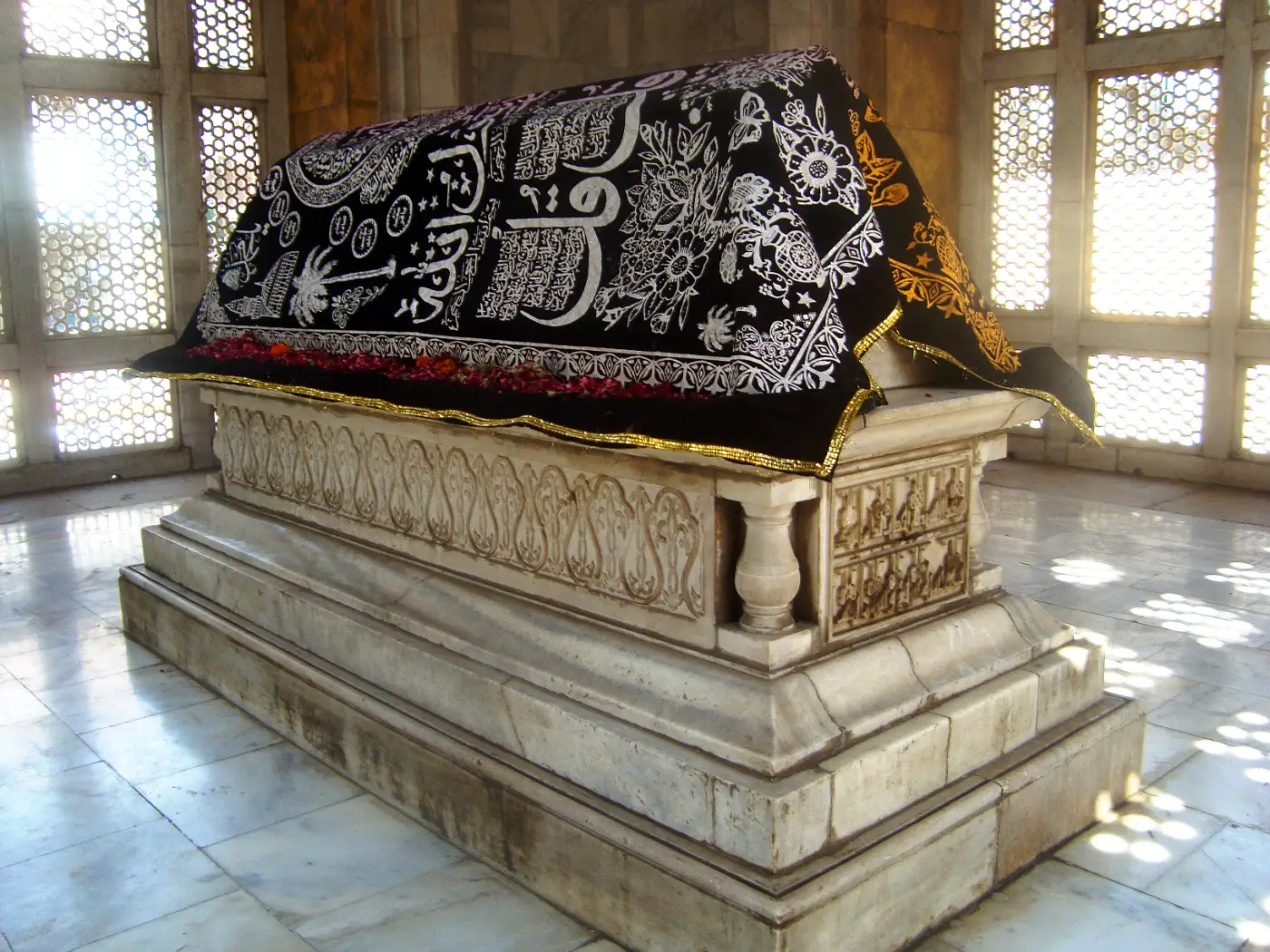
A side view of the grave inside the chamber. Photo Credit: Ibnazhar, CC BY-SA 3.0.
Food Nearby
Anarkali is one of the best places in Lahore to eat on a budget. For example, the lanes around the tomb have stalls selling samosas, pakoras, dahi bhallay and chaat. Also, look for fresh jalebi and a cup of doodh patti.
For a proper meal, head to Old Anarkali at the Mall Road end of the bazaar. Its food street serves fried fish, karahi, nihari, paye and lassi. Expect to pay around PKR 400 to 1,500 per person, depending on what you order.
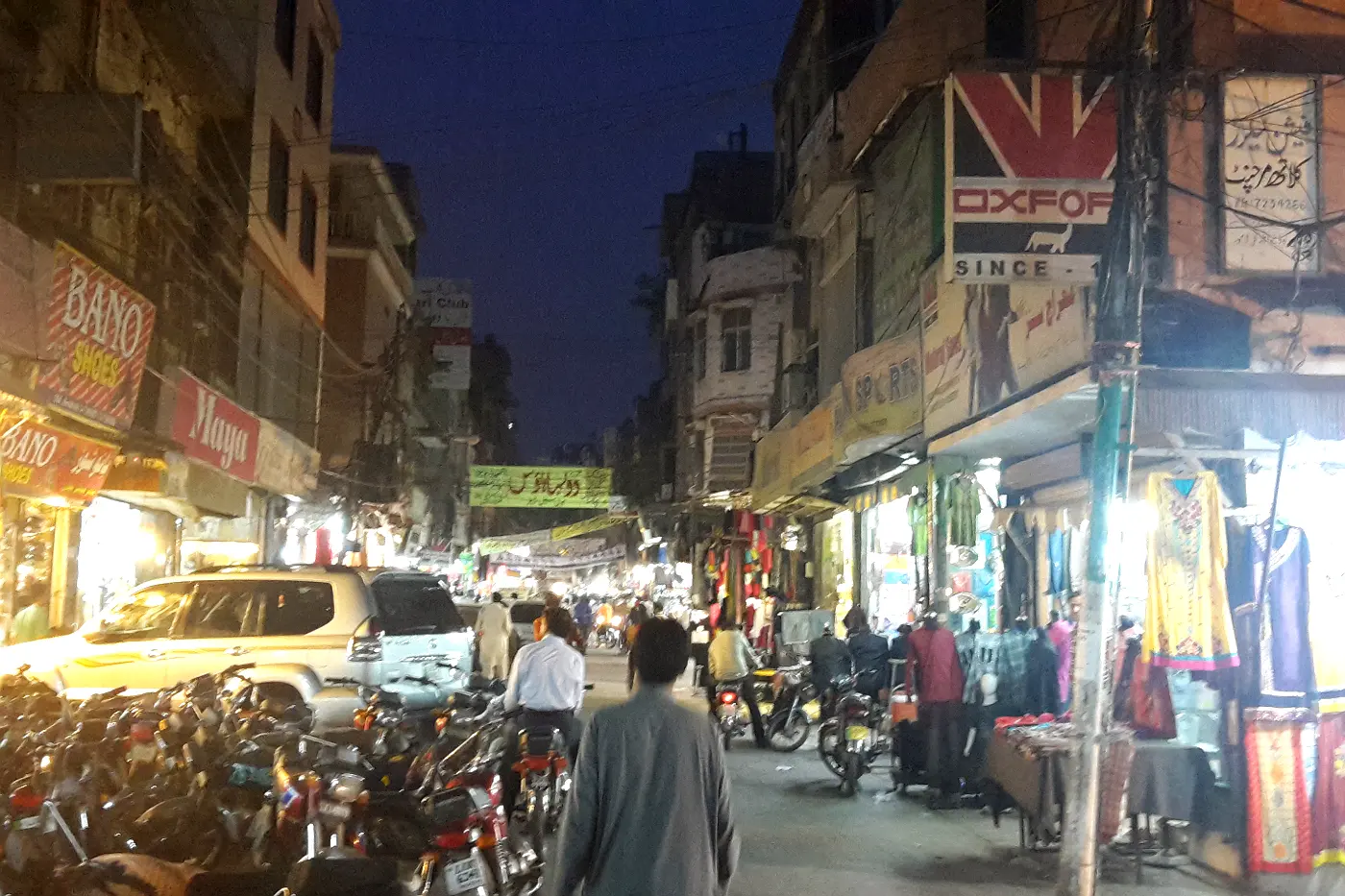
Anarkali Bazaar on a busy evening. Photo Credit: Ali lahoti, CC BY-SA 4.0.
Visitor Information
Visiting the Qutbuddin Aibak Tomb Lahore
Before you visit the Qutbuddin Aibak Tomb Lahore, keep these points in mind.
- Location: Aibak Road, inside Anarkali Bazaar, Lahore.
- Timings: Usually open daily during daylight hours. Timings are not fixed, so check before you go.
- Ticket: Free for both locals and foreigners.
- Best time: October to March. Weekday mornings are quietest, before the bazaar fills up.
- Time needed: 15 to 30 minutes.
- Parking: Very limited. Instead, park near Nila Gumbad or on Mall Road and walk.
- Families and women: Safe and family-friendly, though the bazaar does get very crowded.
- Dress code: Also, wear modest clothes, and cover your head and remove your shoes before entering the grave chamber.
- Photography: Allowed outside. Inside, be respectful of visitors who are praying.
- Accessibility: There are a few steps up to the platform, and the crowded lanes are hard for wheelchairs.
- Safety: Keep your phone and wallet close, as pickpockets work in busy bazaars.
During Muharram processions and big holidays, some Anarkali roads may close, so plan around them.
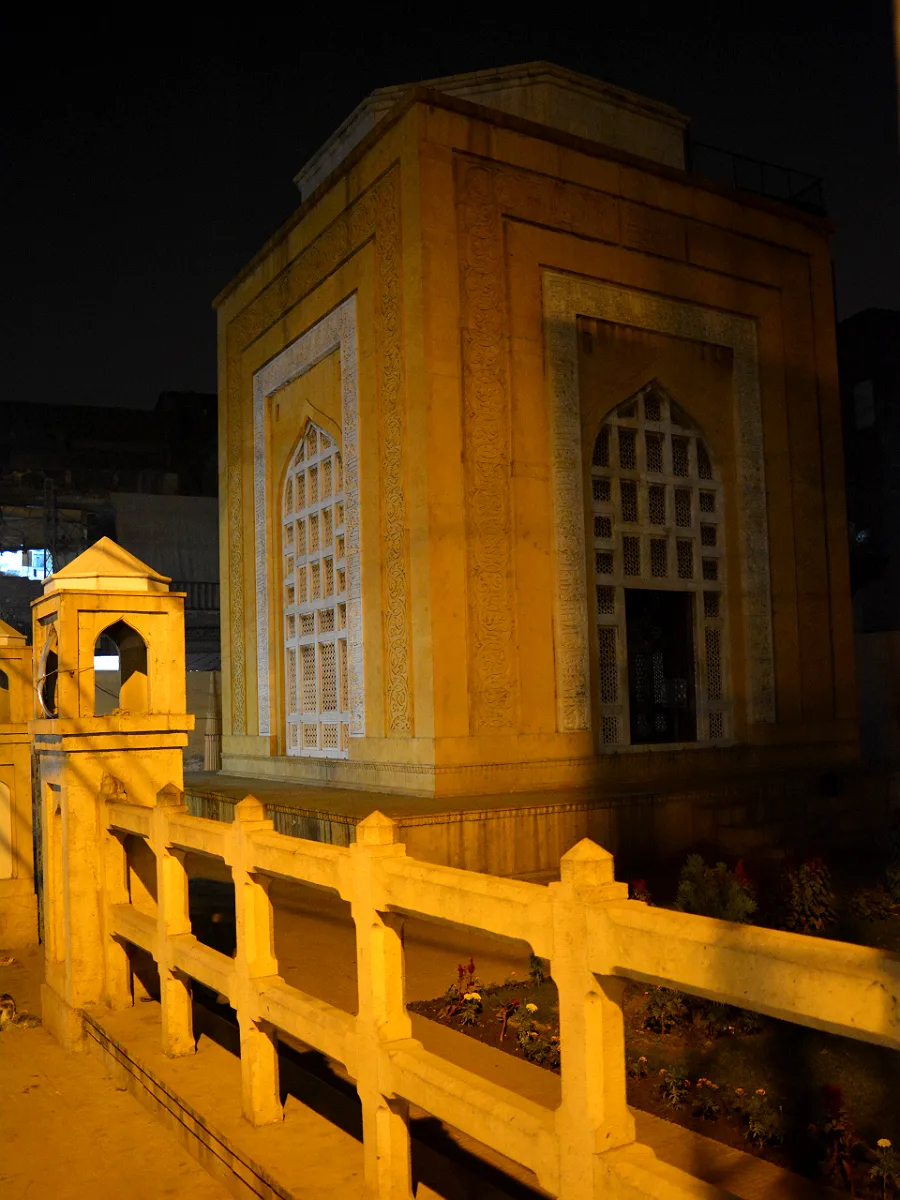
The tomb lit up at night. Photo Credit: Aamir Khan Lodhi, CC BY-SA 4.0.
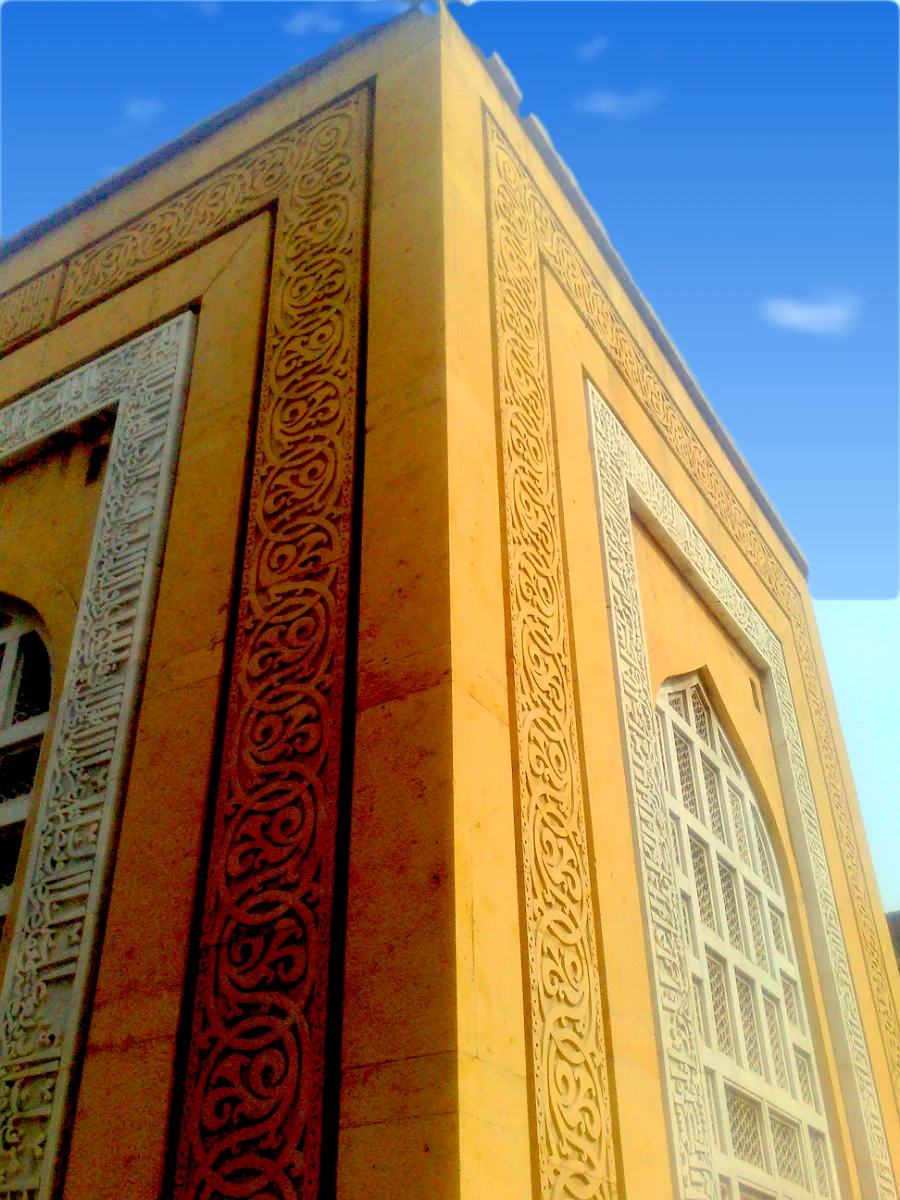
The carved corner of the tomb. Photo Credit: Omarjhawarian, CC BY-SA 3.0.
How to Get There
Basically, the tomb stands on Aibak Road in the middle of Anarkali Bazaar, close to Nila Gumbad and Mall Road. By Careem, inDrive or rickshaw, ask for Qutbuddin Aibak Tomb or Nila Gumbad. Cars cannot always enter the bazaar, so expect a short walk.
By public transport, take the Orange Line Metro Train to Anarkali station. From there, it is a walk of about 10 to 15 minutes through the bazaar. Alternatively, a rickshaw from Mall Road takes only a few minutes.
Places to Visit Near Aibak's Tomb
- Nila Gumbad: the blue-domed mosque at the head of Anarkali, a few minutes’ walk away.
- Lahore Museum: Kipling’s “Wonder House” on Mall Road, about 1 km away.
- Data Darbar: the shrine of Data Ganj Bakhsh, about 2 km away.
- Bagh-e-Jinnah: the old Lawrence Gardens, further along Mall Road.
- Chauburji: a Mughal gateway with four towers, about 3 km away.
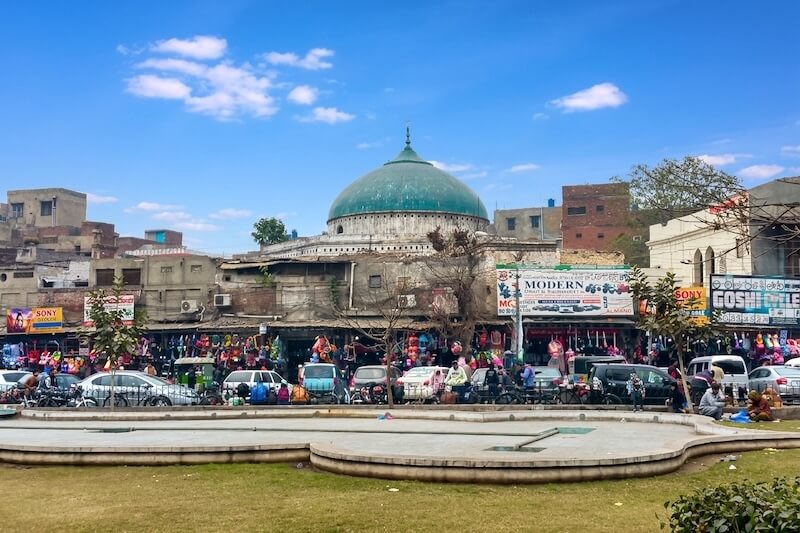
Nila Gumbad at the head of Anarkali. Photo Credit: Aqamjad, CC BY-SA 4.0.
Frequently Asked Questions
Where is Qutbuddin Aibak buried?
He is buried in Lahore, in a tomb on Aibak Road inside Anarkali Bazaar.
How did Qutbuddin Aibak die?
He fell from his horse while playing chaugan, an early form of polo, in Lahore in 1210.
Is the Qutbuddin Aibak Tomb Lahore open on Fridays?
Yes, it is usually open on Fridays too, although it gets busier after Juma prayers.
Is there an entry fee?
No. Entry is free for everyone.
What are the timings of the tomb?
It is usually open during daylight hours every day, but timings can change, so check before you go.
Is the tomb building original?
No. The present building dates from the 1970s, but the grave inside belongs to the sultan who died in 1210.
How far is it from the Lahore Museum?
It is about 1 km, or a 10 to 15 minute walk through Anarkali.
Conclusion
In short, the Qutbuddin Aibak Tomb Lahore is small, but its story is huge. After all, here lies the slave who became a king, the man who began the Qutb Minar, and the first Sultan of Delhi. So, next time you shop in Anarkali, step off the busy road and say hello to one of Lahore’s oldest residents.
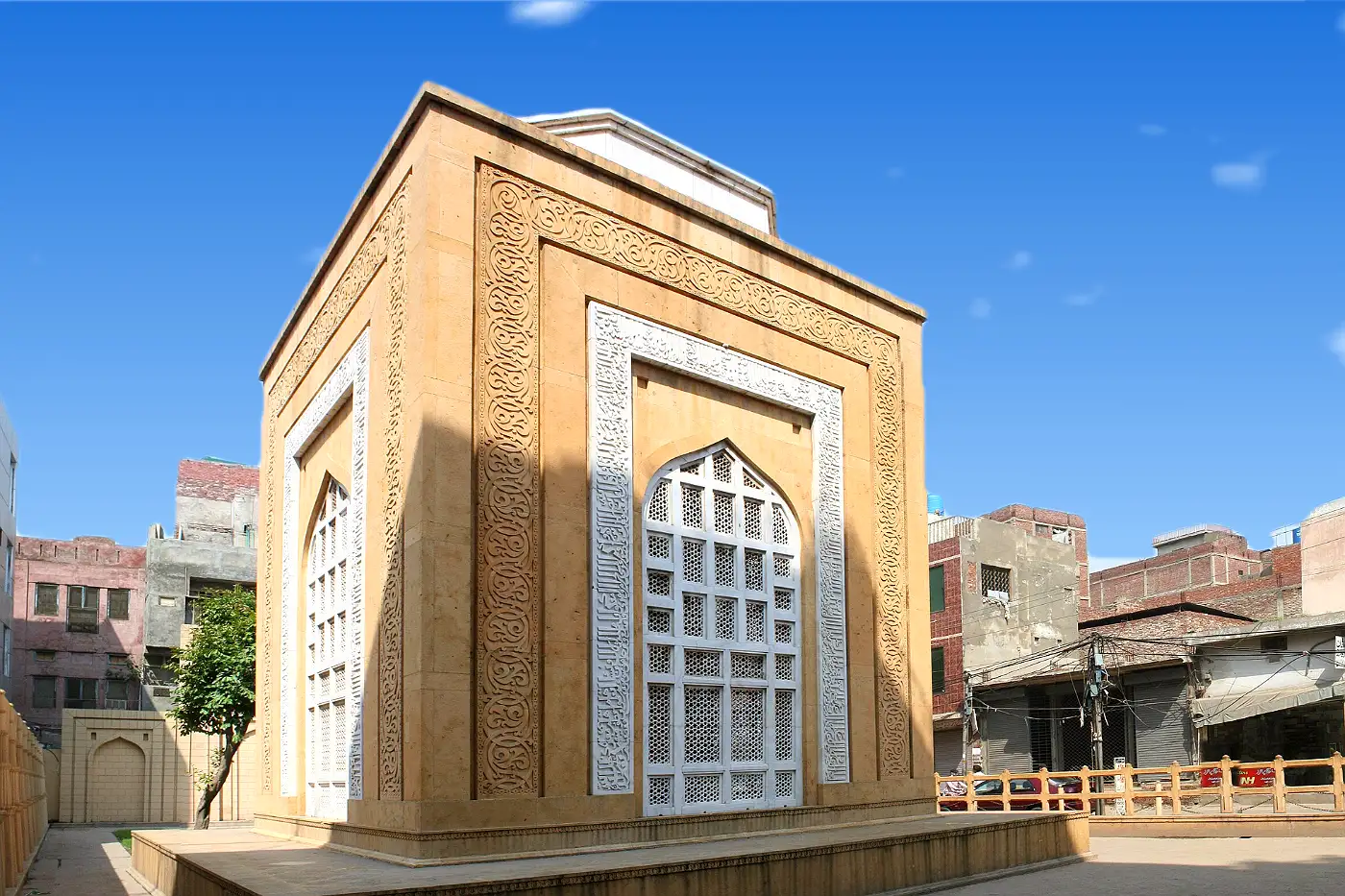
The tomb seen from Aibak Road. Photo Credit: Tahir8088, CC BY-SA 3.0.
Cover photo: Tahir8088, CC BY-SA 3.0 (edited).