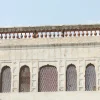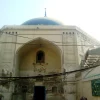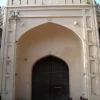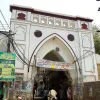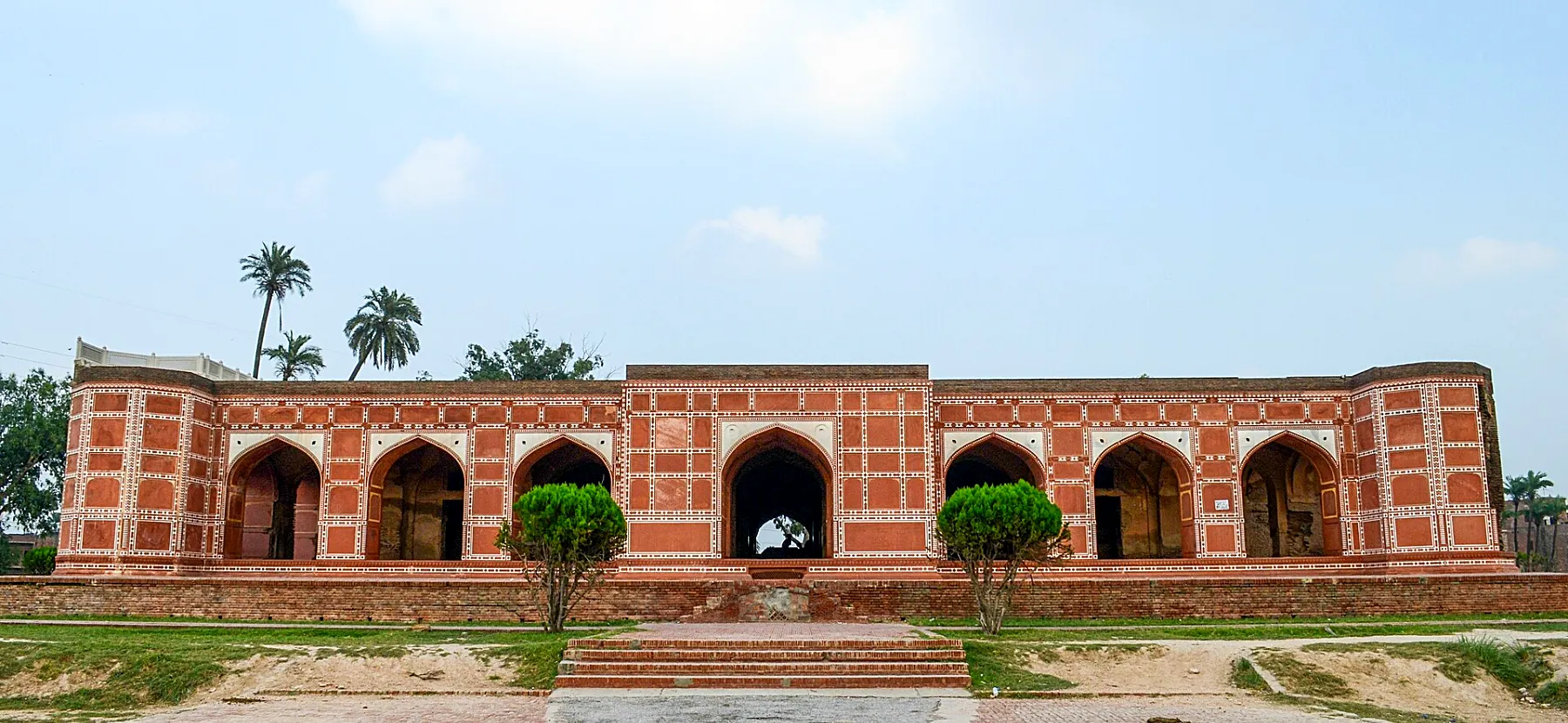
Noor Jahan, also written Nur Jahan, was the most powerful woman of the Mughal Empire. Coins carried her name, and for years she helped her husband, Emperor Jahangir, run an empire. Today she rests in Shahdara, Lahore, in a low red sandstone building surrounded by palm trees and open fields.
The Tomb of Noor Jahan is quieter and plainer than her husband’s tomb nearby. Still, its long arcades and the simple marble graves inside carry a strong sense of history, and its story is one of the most moving in Lahore.
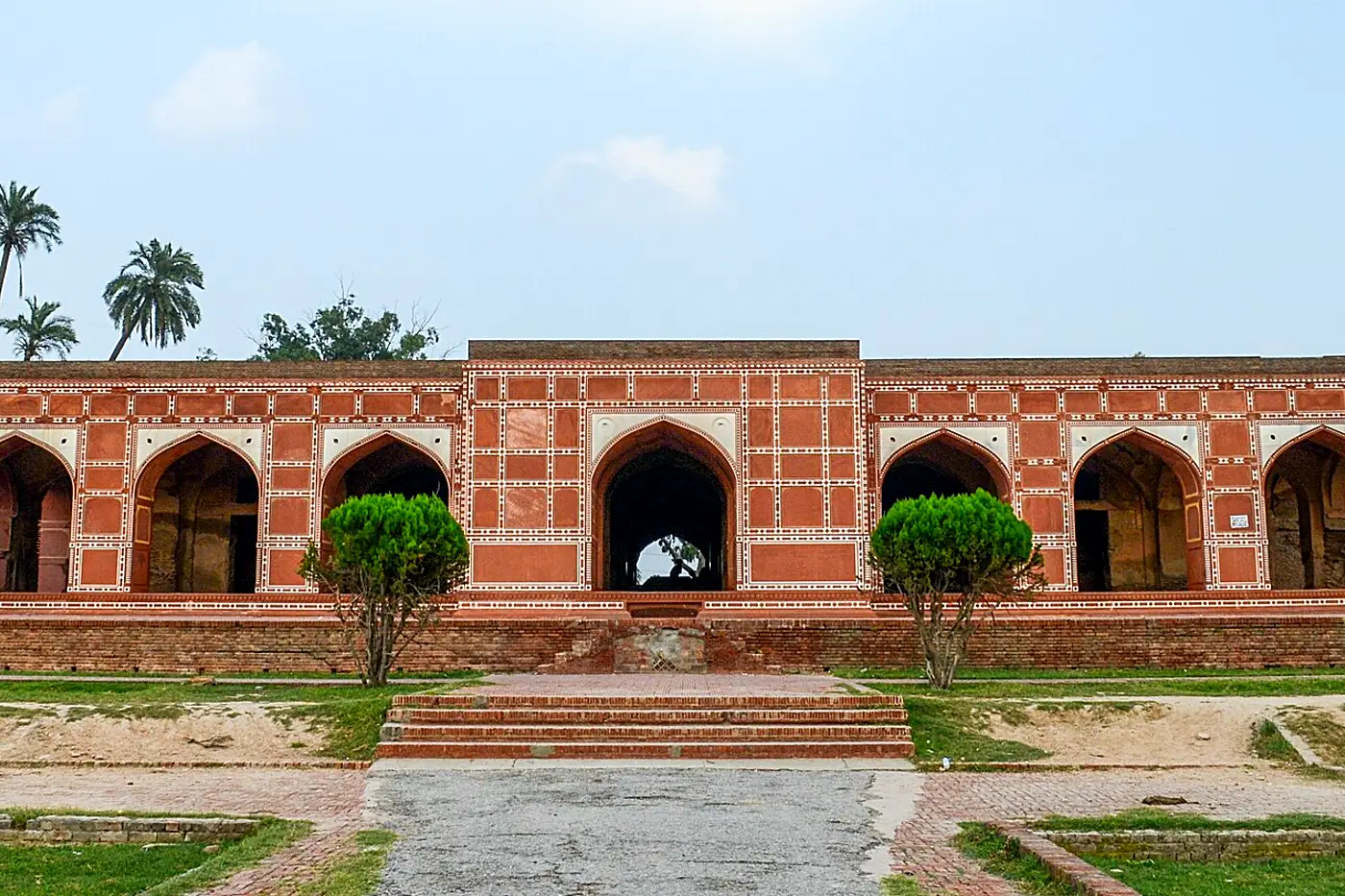
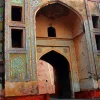
The arched facade of the tomb after recent repairs. Photo Credit: Faizanahmad, CC BY-SA 4.0.
Quick facts
- Location: Shahdara, across the Ravi, just south-west of the Tomb of Jahangir
- Timings: Daily, roughly sunrise to sunset (check before you go)
- Ticket: Free or a small fee (check at the gate)
- Time needed: 30 to 45 minutes
- Best time: October to March, morning or late afternoon
- Map: Open in Google Maps
Last checked: November 2026. Full details in Visitor Information.
Who Was Noor Jahan?
She was born in 1577 in Kandahar and named Mehr-un-Nissa. Her father, Mirza Ghiyas Beg, was a Persian noble who rose to become a chief minister at the Mughal court, known as Itimad-ud-Daulah. Her brother, Asif Khan, later became one of the most powerful men in the empire.
In 1611 she married Emperor Jahangir, who gave her the title Noor Jahan, meaning Light of the World. After that, she issued royal orders, traded, hunted and built gardens and buildings. She also wrote Persian poetry.
Her Last Years in Lahore
When Jahangir died in 1627, her power ended. She then moved to Lahore and lived quietly for 18 years, close to her husband’s grave. She died in 1645 at the age of 68 and was buried in the tomb she most likely planned herself.
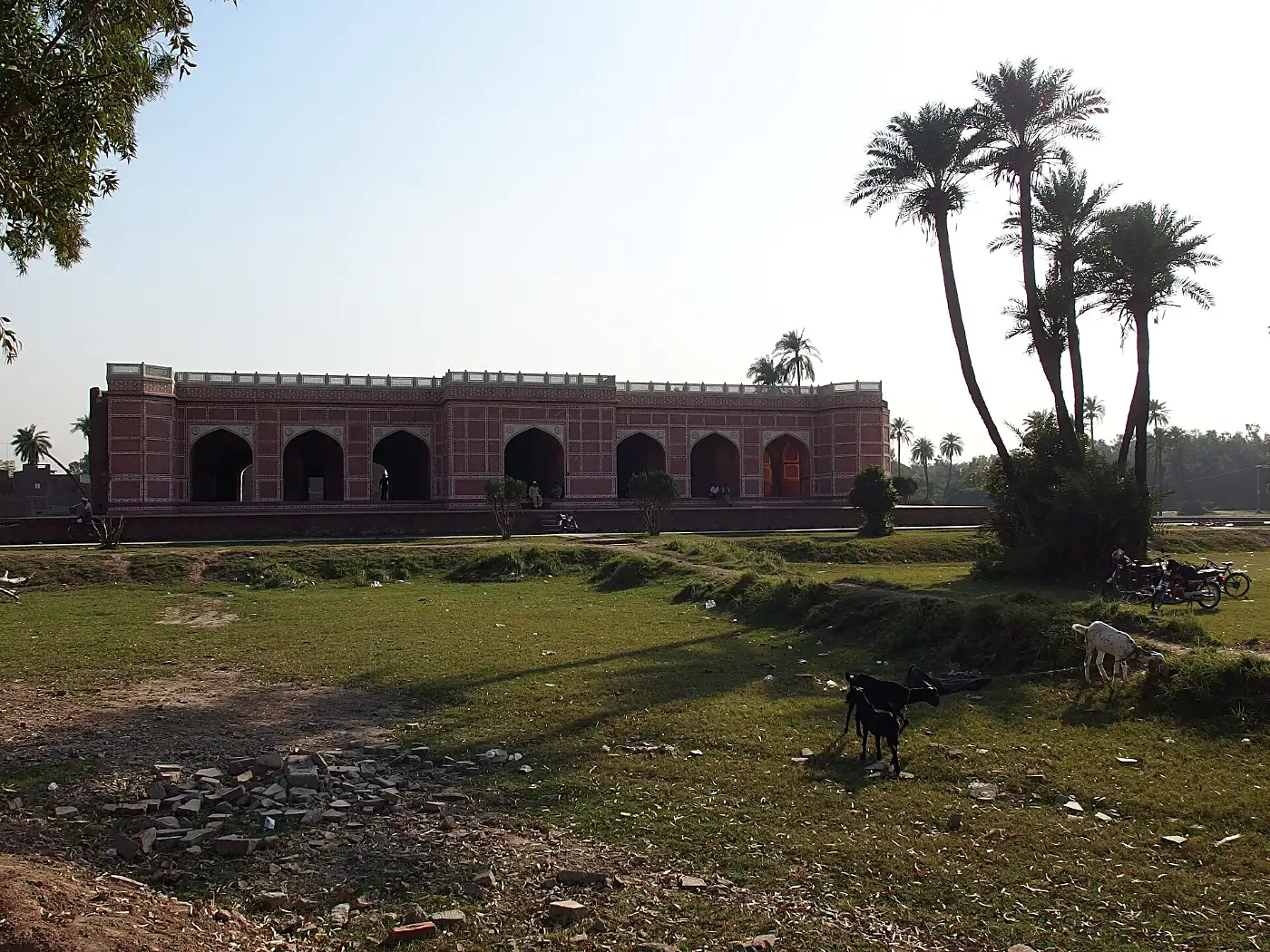
The tomb before the latest repairs. Photo Credit: Guilhem Vellut from Annecy, France, CC BY 2.0.
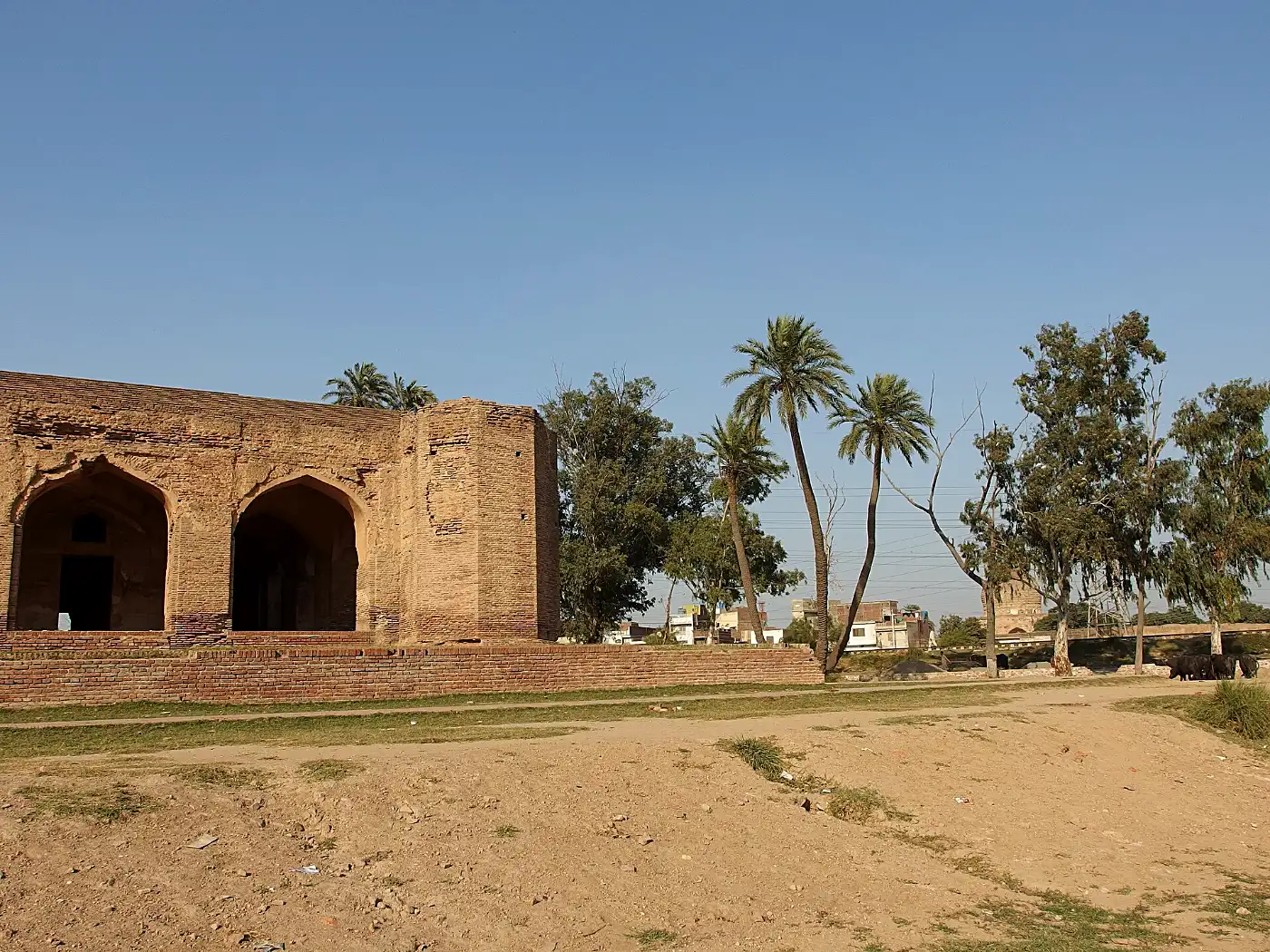
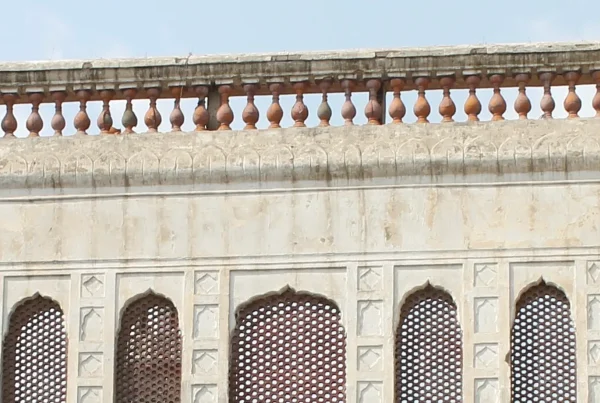
A weathered corner of the building. Photo Credit: Guilhem Vellut from Annecy, France, CC BY 2.0.
Architecture
A Low Platform Tomb of Noor Jahan
The tomb is a square building, about 124 feet on each side and around 20 feet high, raised on a low platform. Each side has seven arched openings, and the central arch stands forward from the rest. Like Jahangir’s tomb, it has no dome.
Tradition says it took four years to build and cost three lakh rupees. It once stood in the middle of a large charbagh garden, but that garden is gone today.
Lost Decoration
Originally the walls were faced with marble and inlaid with flowers in semi-precious stones. However, in the Sikh period most of the marble and stones were stripped away. Later, the British railway line was laid between this tomb and Asif Khan’s, cutting it off from the rest of the complex.
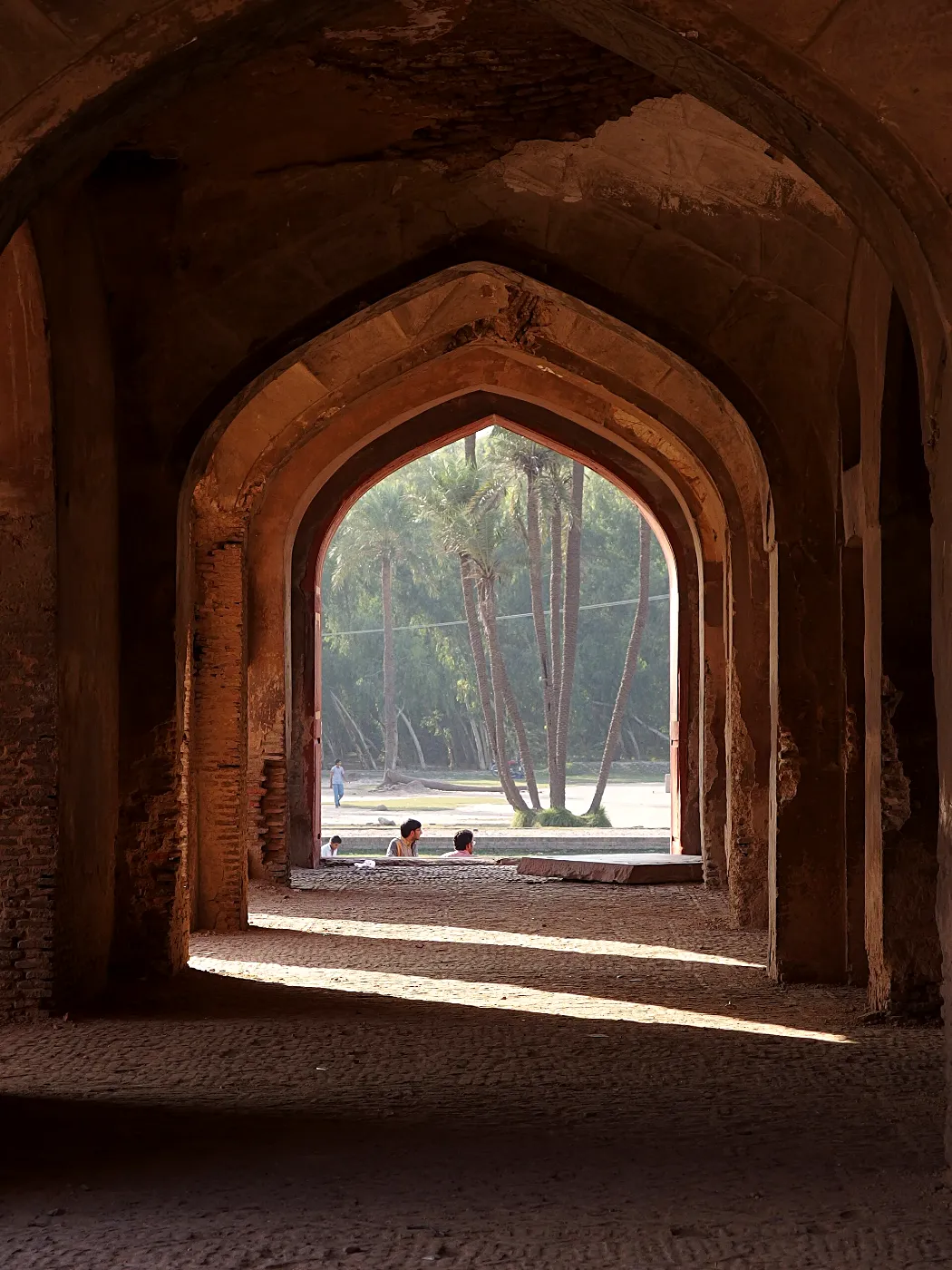
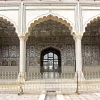
A vaulted passage looking out to the palms. Photo Credit: Guilhem Vellut from Annecy, France, CC BY 2.0.
What to See
The Graves of Noor Jahan and Ladli Begum
In the central chamber lie two white marble graves. One belongs to Noor Jahan, and the other to her daughter, Ladli Begum, from her first marriage. The marble was added in 1912 by Hakim Ajmal Khan of Delhi.
Her epitaph asks that no lamp or rose be placed on the grave of this poor stranger. It is a humble line for an empress, and many visitors find it the most touching part of the visit.
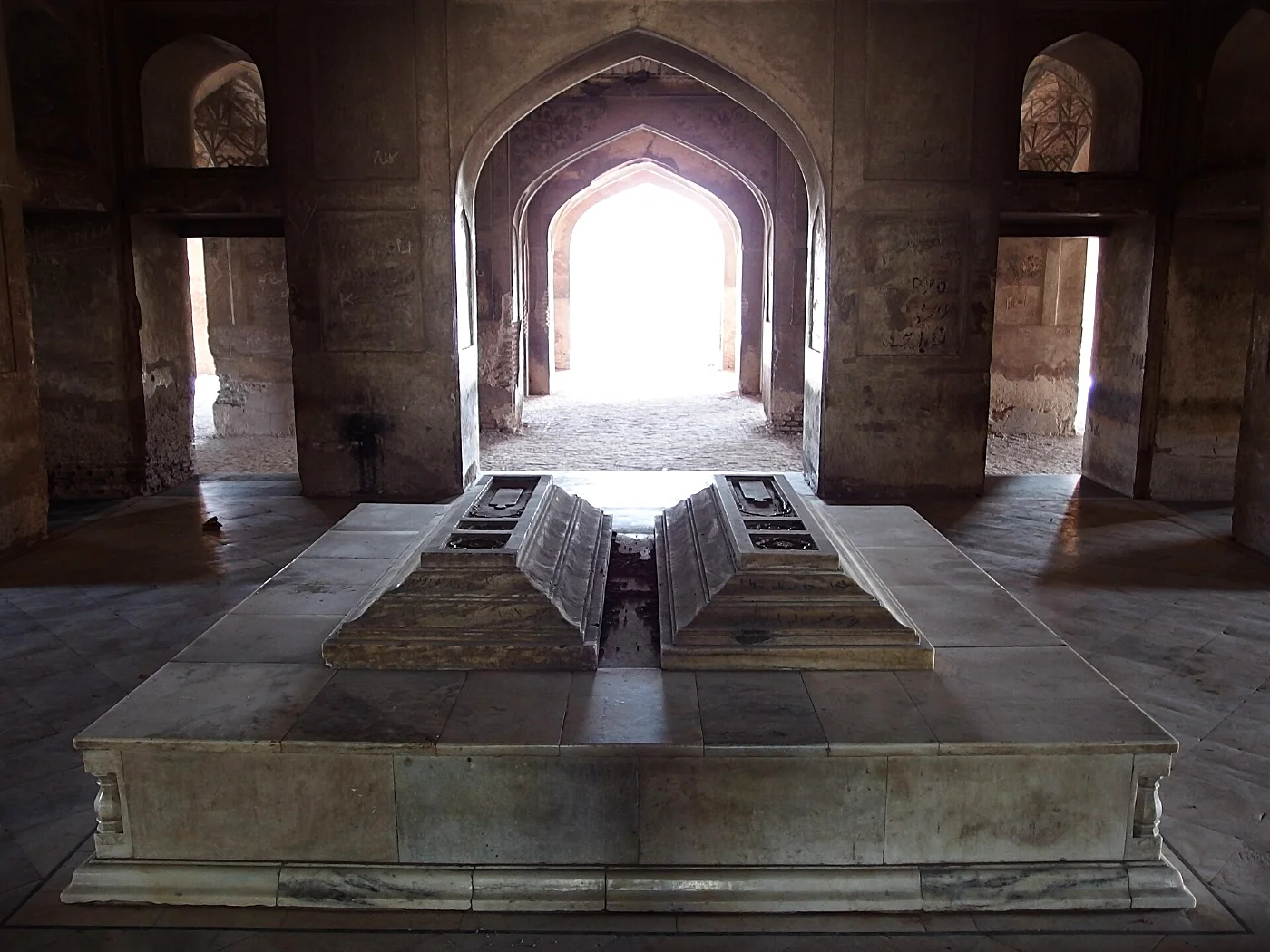
The central chamber with the two graves. Photo Credit: Guilhem Vellut from Annecy, France, CC BY 2.0.
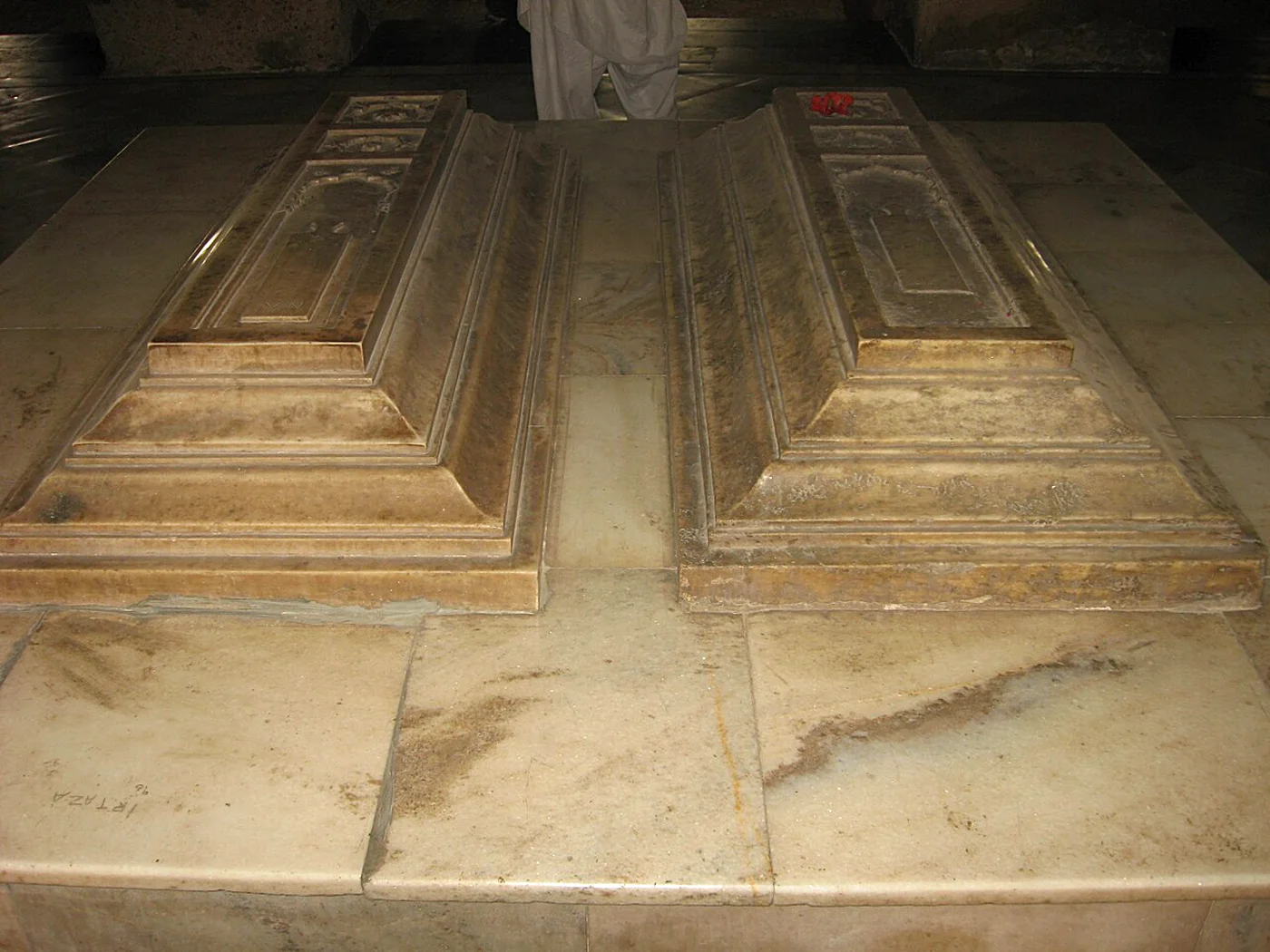
The marble cenotaphs up close. Photo Credit: Shaun Metcalfe from United Kingdom, CC BY 2.0.
Traces of the Old Art
Walk slowly through the corridors and look at the ceilings. You can still spot honeycomb-style cornices, bits of fresco and carved panels that hint at how colourful the tomb once was.
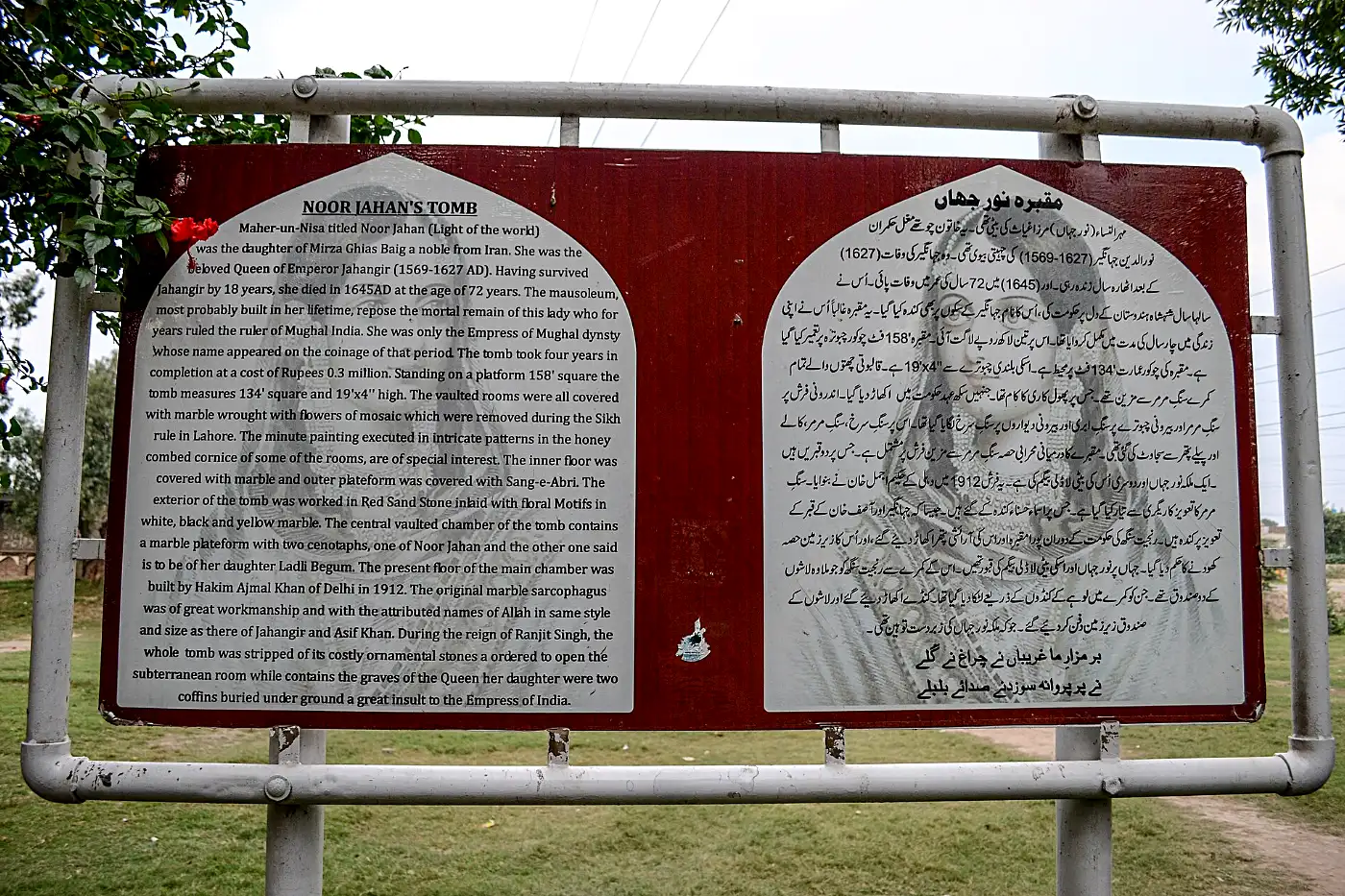
The information board near the tomb. Photo Credit: Faizanahmad, CC BY-SA 4.0.
Things to Do
- Read the epitaph first: Then stand in the chamber for a moment; it makes the visit far more meaningful.
- Circle the building: Walk all four sides to see the arches and the repaired and unrepaired sections.
- Visit the whole family: Combine this stop with the Tomb of Jahangir, the Tomb of Asif Khan and the Akbari Sarai.
- Go late afternoon: The low sun turns the red stone warm, and the palms make good photos.
- Cross the railway carefully: Use the marked crossing or the road, not the tracks.
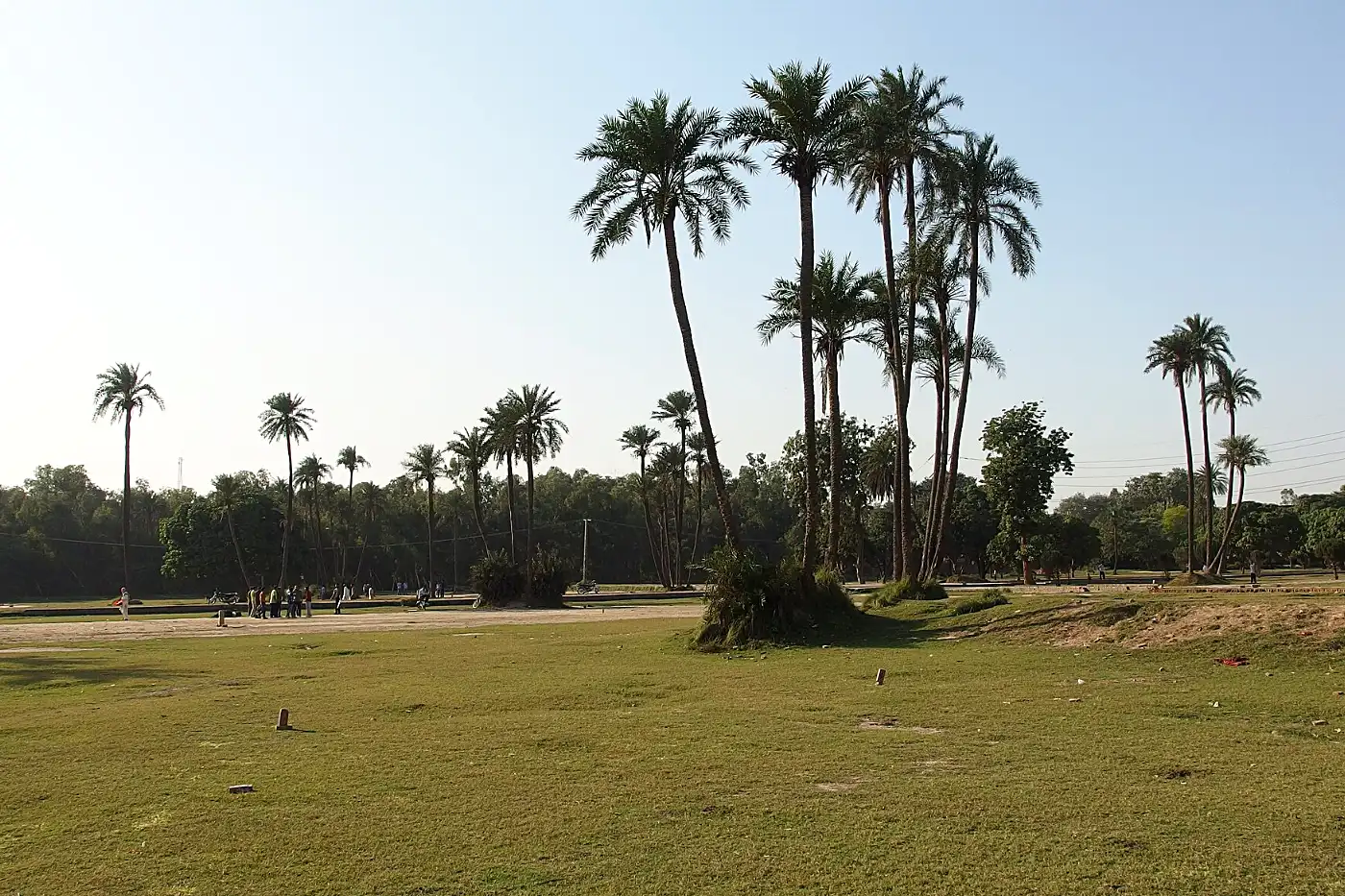
The palm grove where the old garden once was. Photo Credit: Guilhem Vellut from Annecy, France, CC BY 2.0.
Food Nearby
There is nothing to eat at the tomb, so bring water. On GT Road in Shahdara, small dhabas sell daal, chanay, fresh naan and tea, and fruit chaat stalls are common in the evening.
For a bigger meal, cross back over the Ravi to the Walled City, where the food streets near the Badshahi Masjid are about 20 minutes away.
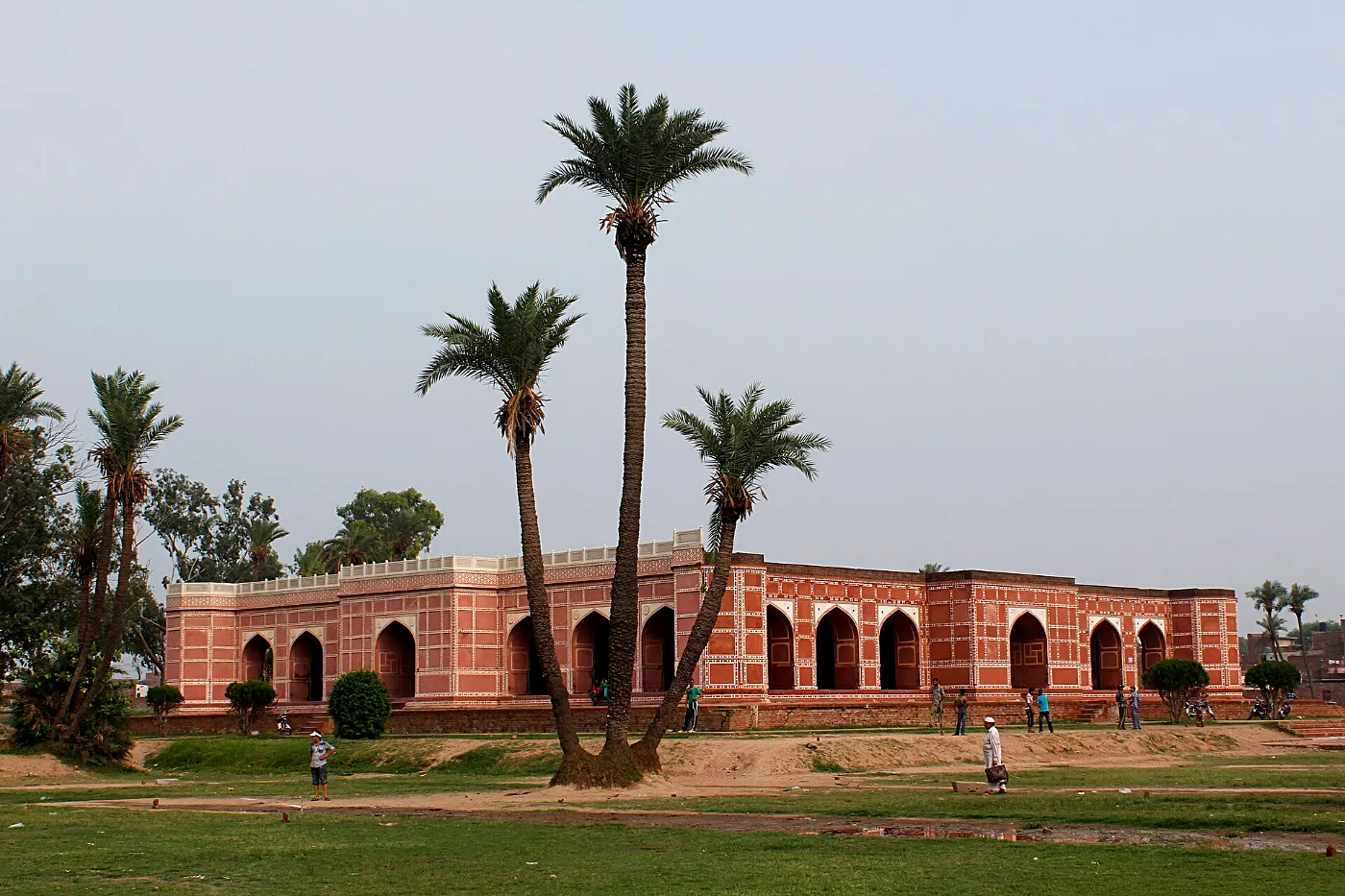
The tomb seen across its lawns. Photo Credit: SohaibTahirST, CC BY-SA 3.0.
Visitor Information
- Location: Shahdara, west bank of the River Ravi, south-west of the Tomb of Jahangir across the railway line
- Timings: Usually open daily from about sunrise to sunset; restoration can change this, so check before you go
- Ticket: Free or a small fee, paid at the gate
- Time needed: 30 to 45 minutes here, half a day for the whole Shahdara Complex
- Best time: October to March, morning or late afternoon
- Families and women: Generally safe in daylight; it is quieter than Jahangir’s tomb, so go in a group if possible
- Dress code: Modest clothes; show respect inside the grave chamber
- Photography: Allowed for personal use; drones need permission
- Accessibility: Mostly flat ground, but the platform has steps and uneven paths
Last checked: November 2026. Timings and prices can change, especially in Ramadan and on public holidays.
How to Get There
Drive or take a Careem or inDrive across the Ravi Bridge on GT Road to Shahdara. The tomb is close to Jahangir’s tomb, on the other side of the railway line, and reached by a local road from GT Road.
By public transport, take the Metro Bus to its Shahdara terminal and then a rickshaw for the last few minutes. Many visitors see Jahangir’s tomb first and then walk over.
Places to Visit Nearby
- Tomb of Jahangir: Her husband’s grand tomb with four minarets, a short walk away. See our Tomb of Jahangir guide.
- Tomb of Asif Khan: Her brother’s domed tomb, just across the railway line. Read about the Tomb of Asif Khan.
- Akbari Sarai: The Mughal caravanserai between the two tombs. See the Akbari Sarai guide.
- Kamran Baradari: A Mughal pavilion in the River Ravi. Read about Kamran Baradari.
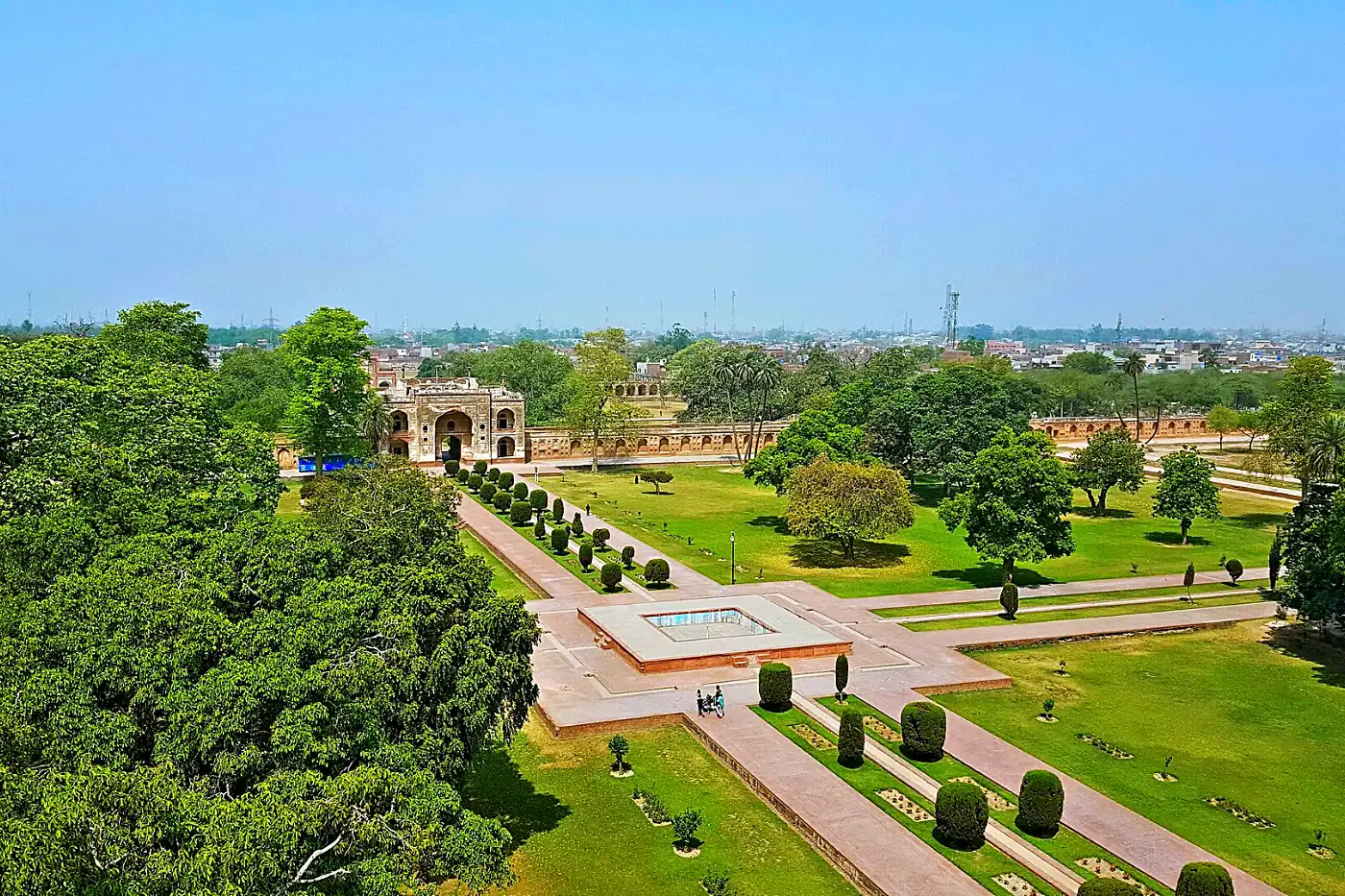
An aerial view of the nearby Tomb of Jahangir. Photo Credit: Shahzaib Damn Cruze, CC BY-SA 4.0.
Frequently Asked Questions
Where is the Tomb of Noor Jahan?
It is in Shahdara, Lahore, on the west bank of the River Ravi, close to the tombs of Jahangir and Asif Khan.
Who is buried in the Tomb of Noor Jahan?
Empress Noor Jahan and her daughter, Ladli Begum, are buried side by side in the central chamber.
When did Noor Jahan die?
She died in Lahore in 1645, 18 years after Emperor Jahangir.
Is there a ticket?
Entry is free or costs a small fee. Check at the gate, as charges can change during restoration.
Can I visit the Tomb of Jahangir on the same trip?
Yes. It is a short walk away, and the whole Shahdara Complex fits into half a day.
Conclusion
The Tomb of Noor Jahan has lost most of its marble, but not its story. Stand by the two simple graves, read her humble epitaph and remember that she once helped rule an empire. Then walk over to Jahangir’s tomb, and the two visits together will stay with you long after you leave Shahdara.
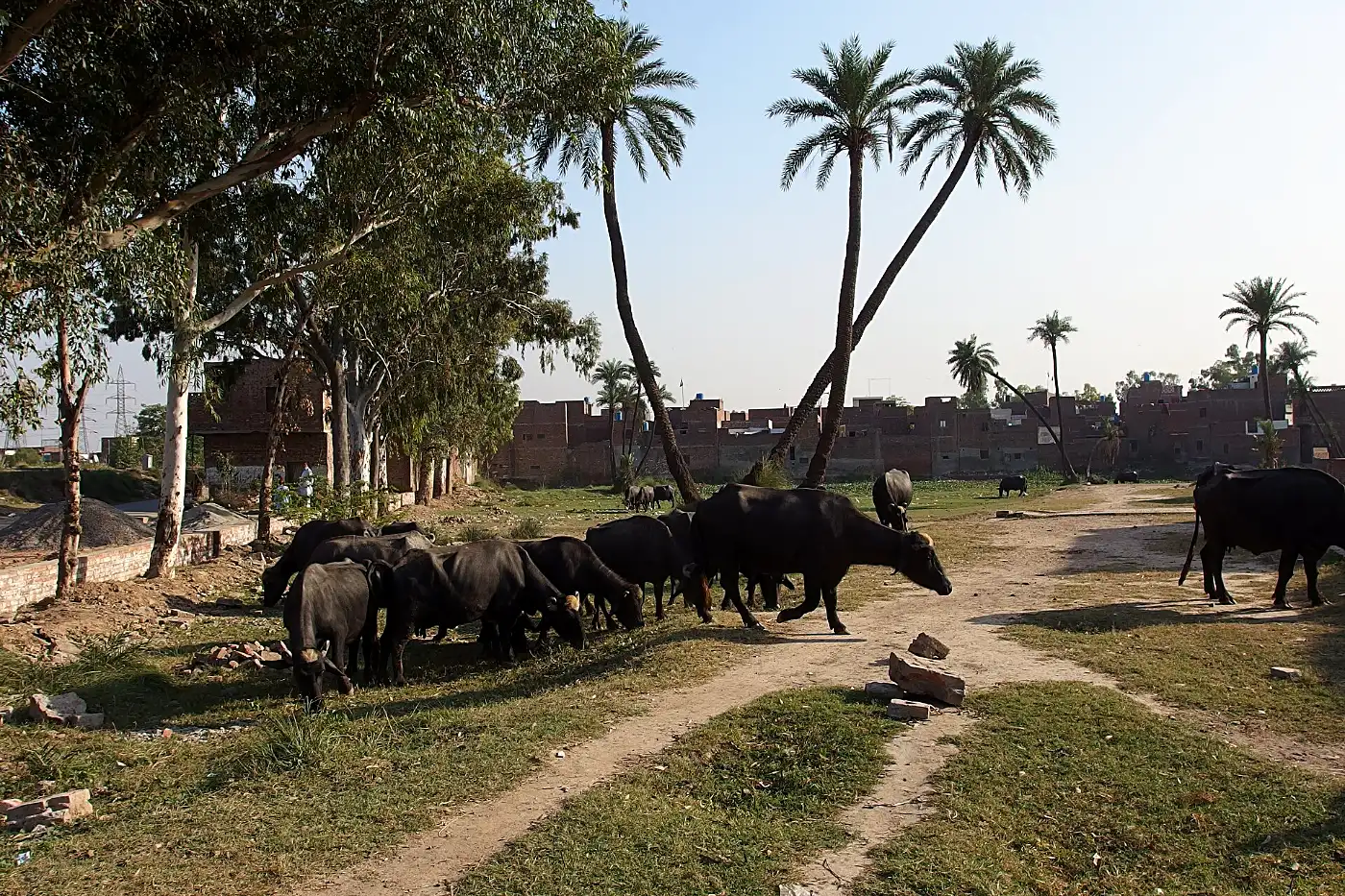
Buffaloes grazing near the tomb in the fields of Shahdara. Photo Credit: Guilhem Vellut from Annecy, France, CC BY 2.0.
Cover photo: Faizanahmad, CC BY-SA 4.0.