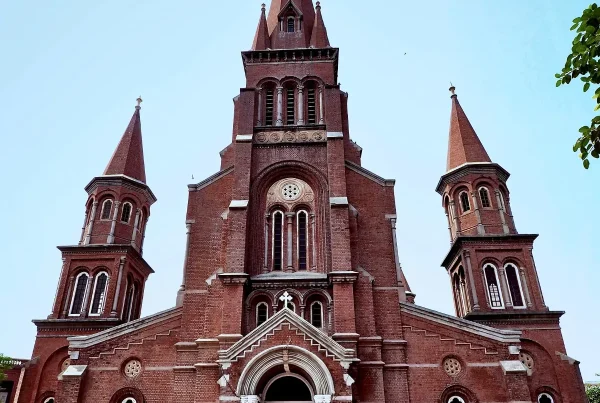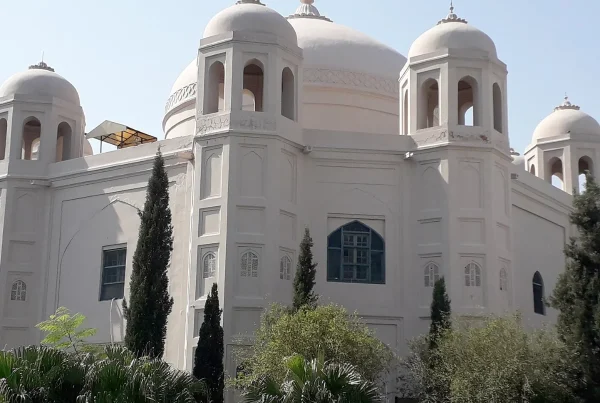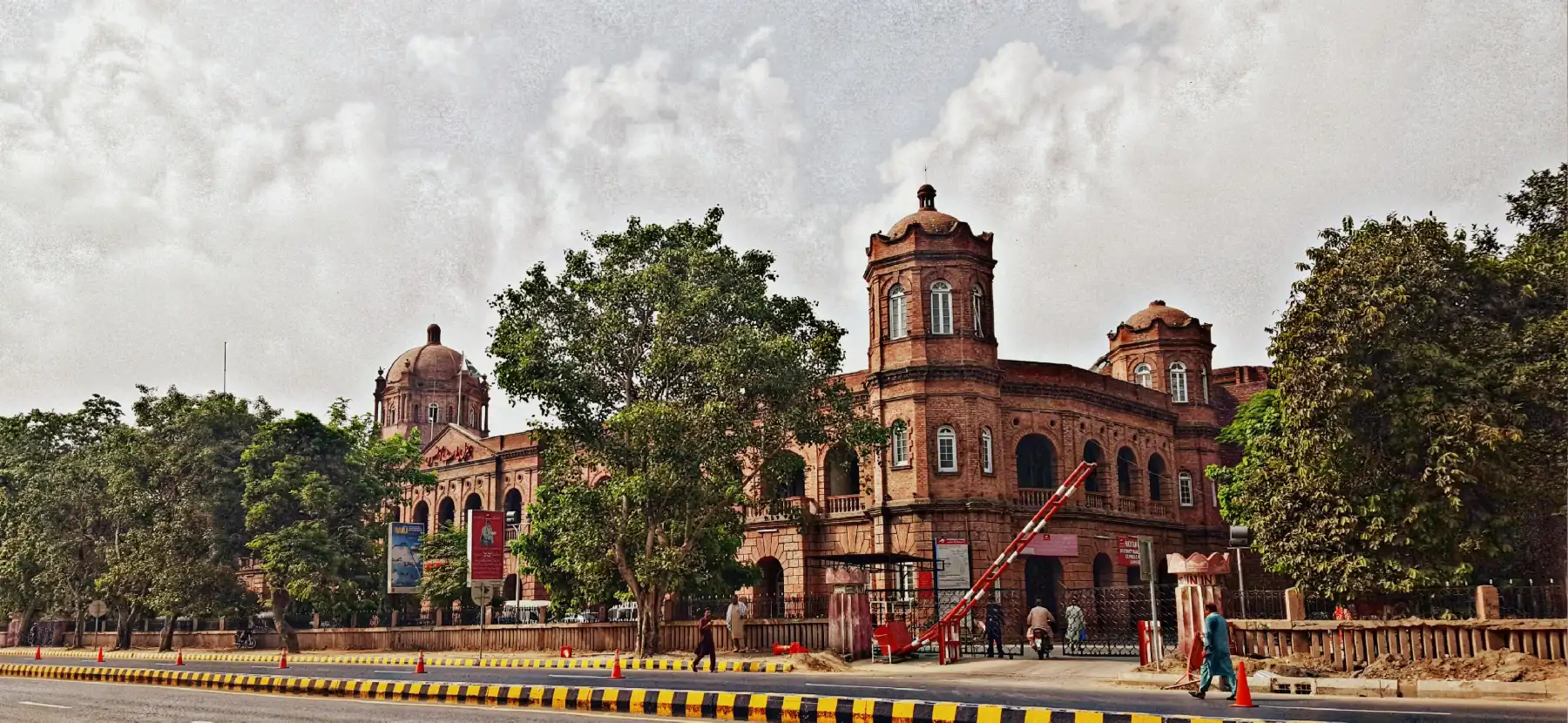
If the Walled City is Lahore’s old heart, Mall Road is its grand British-era avenue. Shaded by huge trees, it also runs past red-brick museums, Gothic colleges, courts and cathedrals, all within a few kilometres. In other words, a walk along Mall Road Lahore is like a free open-air museum of the city’s colonial past.
Officially, it is called Shahrah-e-Quaid-e-Azam, but every Lahori simply says “Mall Road”. In this guide, we walk you through its history, its best buildings, where to eat and how to plan your visit.
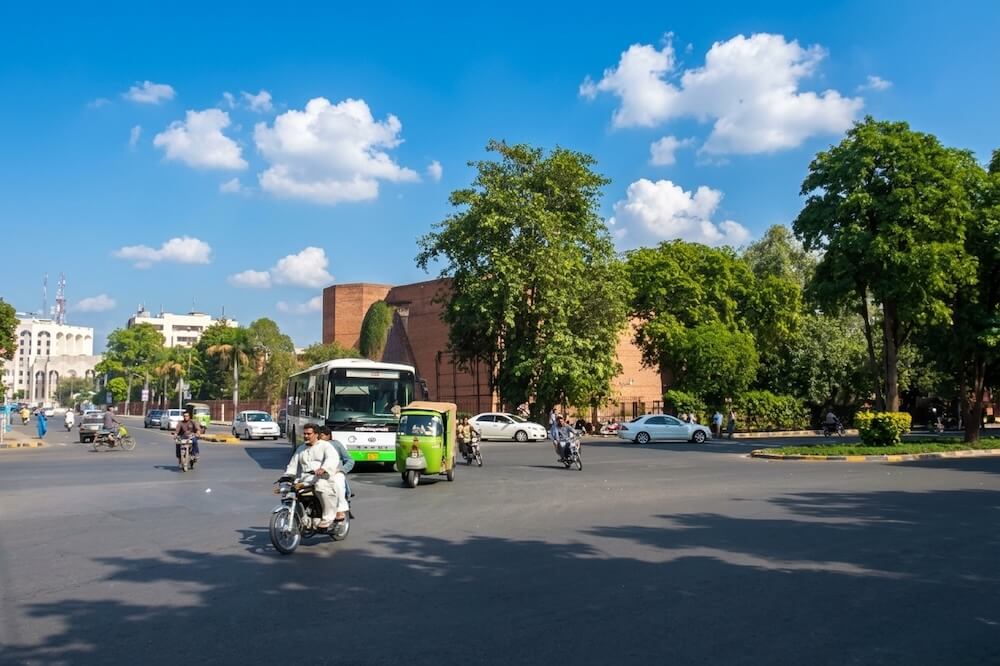
Tree-lined Mall Road. Photo Credit: Guilhem Vellut, CC BY 2.0.
History of Mall Road Lahore
To begin with, the British laid out Mall Road after the revolt of 1857. In short, they wanted a grand road that linked the Walled City in the west with the new civil lines and the Mian Mir Cantonment in the east. Today, the road runs for about 6.5 km.
A Road of Two Halves
First, the western part, called the Lower Mall, became home to schools, courts and the museum. Meanwhile, the eastern part, towards Charing Cross and beyond, gained the post office, churches, clubs and the Governor’s House. As a result, the style changes as you walk: Neoclassical and Gothic buildings in the west slowly give way to Indo-Saracenic domes in the east.
The 1864 Punjab Exhibition
In fact, one of the earliest big buildings on the Mall was the hall built for the 1864 Punjab Exhibition. Later on, it became Tollinton Market, and it still stands today.
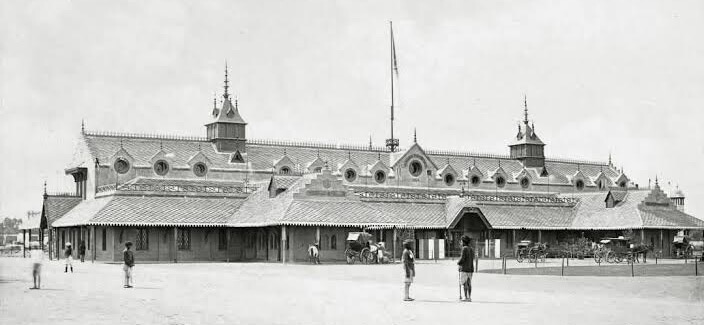
The Punjab exhibition hall British India Lahore in (1864). Photo Credit: Annie Khan, Lahore – City of Peace n Love.
From Lawrence Road to the Upper Mall
At first, the British described the new route of 1851 simply as the direct road from Anarkali to Mian Mir. In fact, maps from before 1876 call the eastern stretch Lawrence Road. Back then, the “Old Mall” was only the short western part, from the Deputy Commissioner’s court to the Multan Road junction. Later, the two roads were joined into one, and the names Lower Mall and Upper Mall stuck.
Why did the road head so far east? First, the British set up their cantonment around Anarkali. However, a military base inside a busy bazaar felt unsafe. So, according to old accounts, Sir Charles Napier picked a new site about five miles east during a morning ride with the Lawrence brothers. That site became the Mian Mir Cantonment, and the Mall grew into the link between the army lines and the old city.
Sir Ganga Ram and the 1920s
The road kept its first line until about 1920. After that, the engineer Sir Ganga Ram reshaped much of the eastern part around the GPO crossing. He also gave the Mall area buildings such as the Ganga Ram Trust Building and the old Hailey College of Commerce. Meanwhile, the 1930s added Art Deco blocks like Mall Mansions and Zaman Plaza, as well as the grand Punjab Assembly (1935).
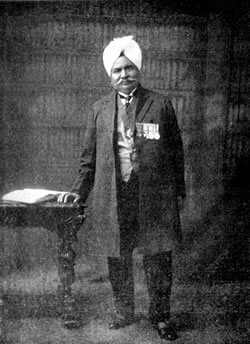
Sir Ganga Ram, a famous Punjabi philanthropist. Photo Credit: Unknown photographer.
After 1947
After independence, Queen Victoria’s statue left Charing Cross for the Lahore Museum. Officially, the road became Shahrah-e-Quaid-e-Azam. Then, in 1974, the Summit Minar rose at Charing Cross to mark the Islamic Summit held in Lahore. For decades, cafes and restaurants on the Mall were also where writers, artists and politicians met. For example, Zulfikar Ali Bhutto held press conferences at the old Indus Hotel.
Over time, traffic and neglect took a toll. As a result, in the late 1980s, heritage groups and concerned citizens began restoring old buildings on the Mall. In 2026, the Punjab authorities also announced a plan to bring the historic facades back to their original look.
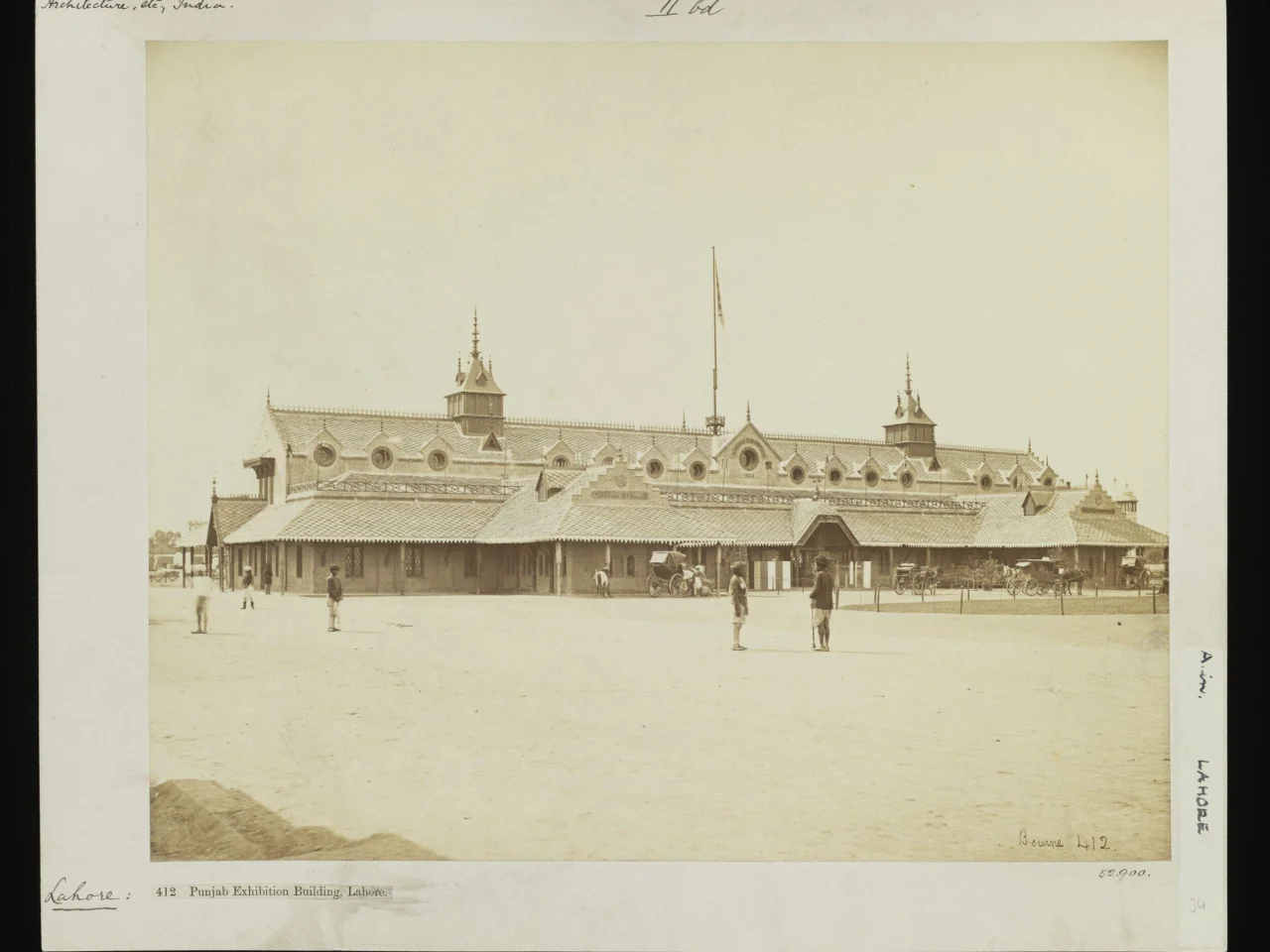
The Punjab Exhibition building in 1864. Photo Credit: Samuel Bourne.
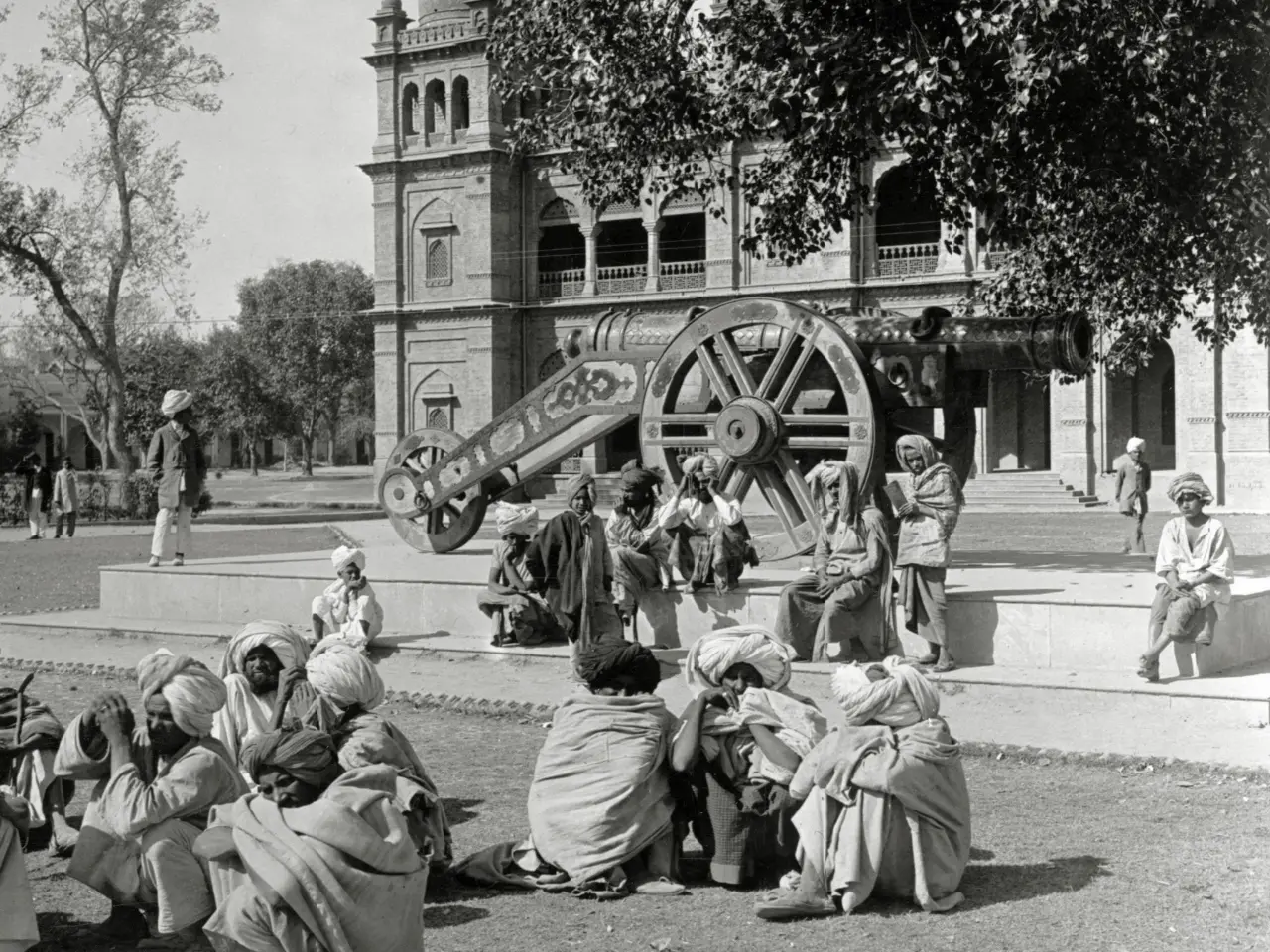
The Zamzama Gun in the late 19th century. Photo Credit: Unknown photographer.
Landmarks Along Mall Road
So, here are the landmarks you should not miss, roughly from west to east.
Zamzama Gun and the Lahore Museum
First, stop at the Zamzama Gun, the huge bronze cannon in the middle of the road. Locally, Lahoris call it Bhangian Wali Toap, and it was cast in 1757. In fact, Rudyard Kipling’s novel Kim opens with Kim sitting on this very gun. Meanwhile, right behind it stands the red-brick Lahore Museum, which Kipling’s father once ran.
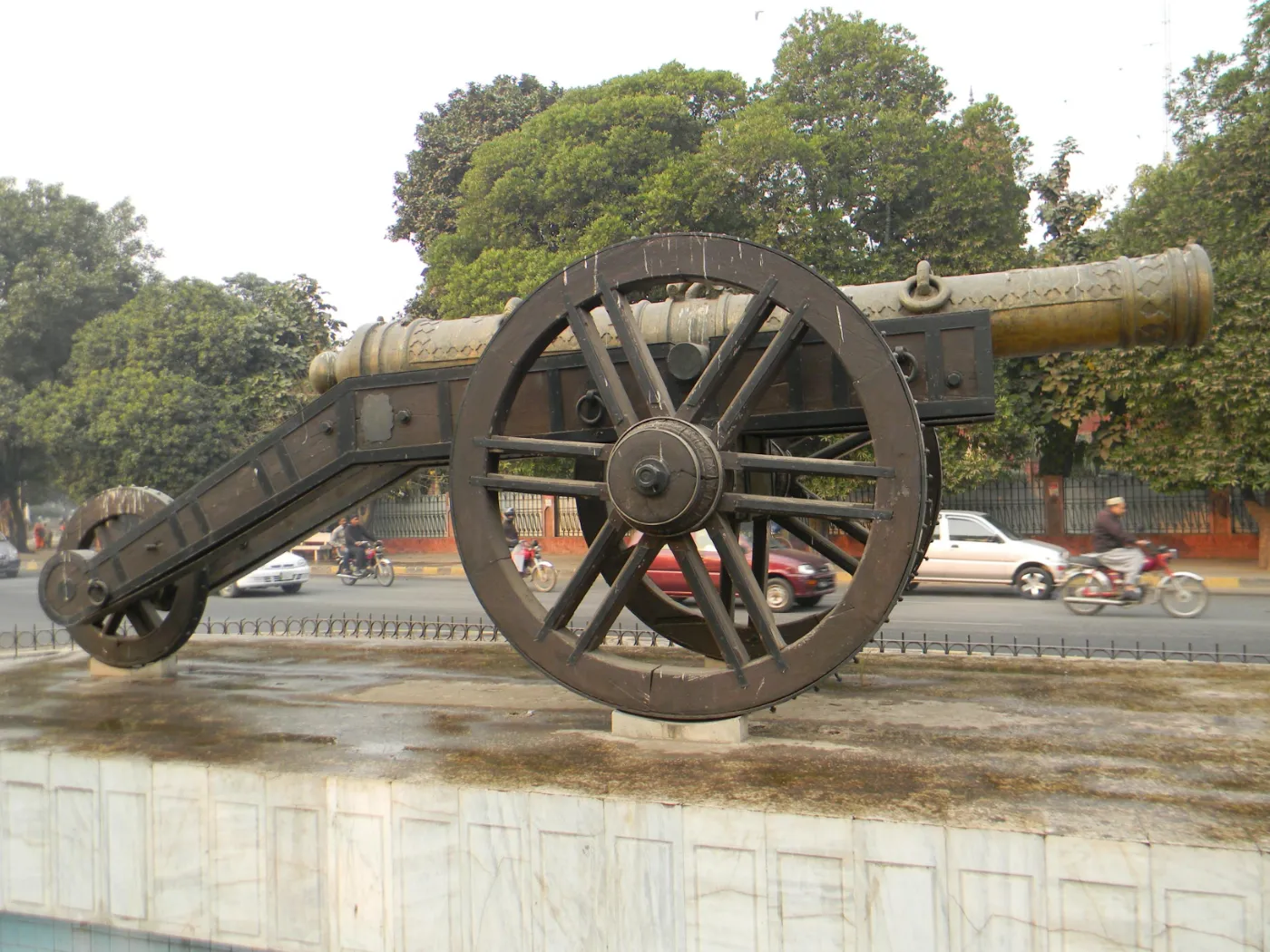
The Zamzama Gun today. Photo Credit: Khalid Mahmood, CC BY-SA 3.0.
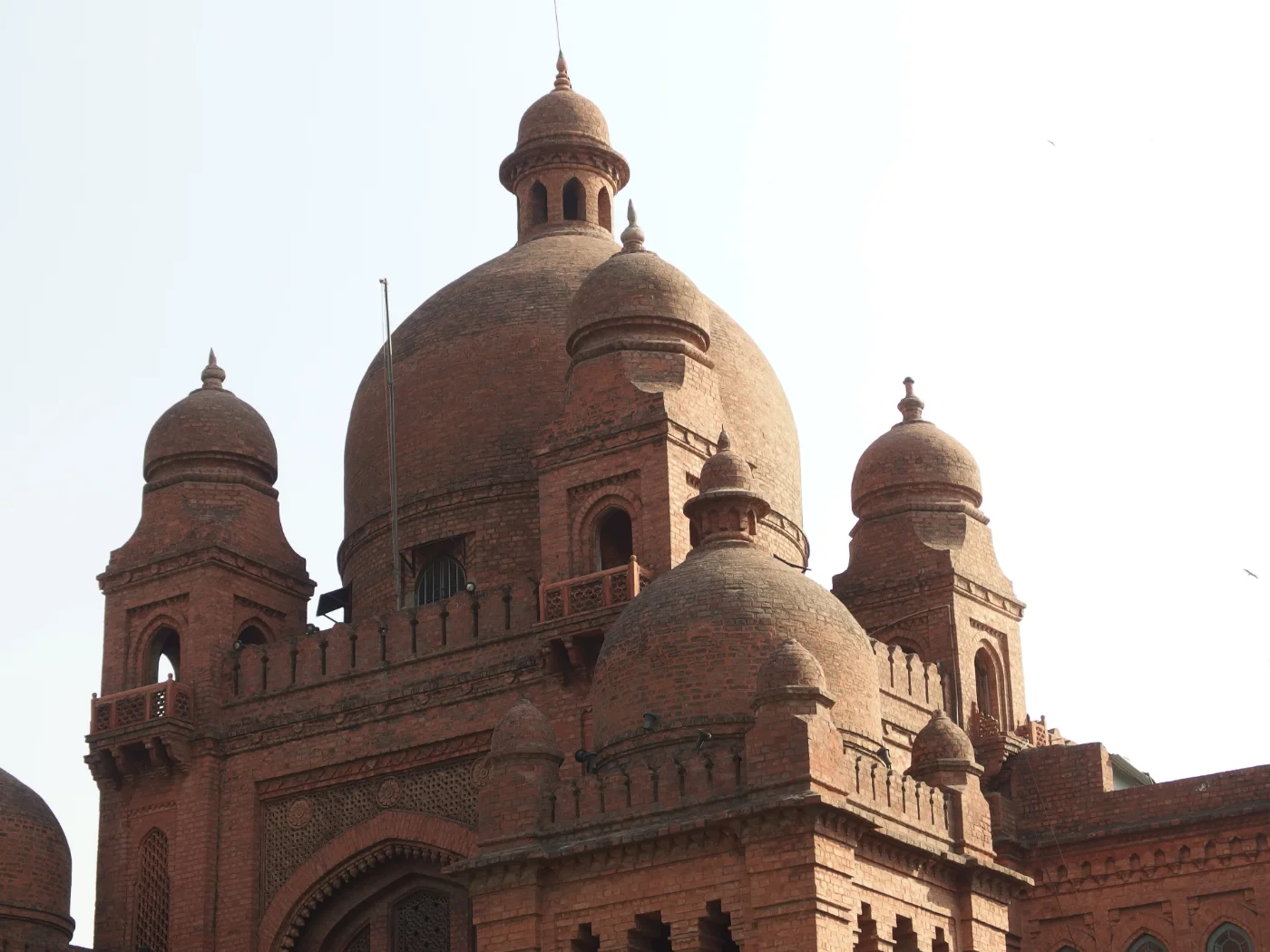
The domes of the Lahore Museum. Photo Credit: Guilhem Vellut, CC BY 2.0.
Tollinton Market
Next, look across the road at Tollinton Market, the long building with red roofs and a small clock tower. Interestingly, it was first built as the hall for the 1864 Punjab Exhibition, and today it houses a heritage museum.
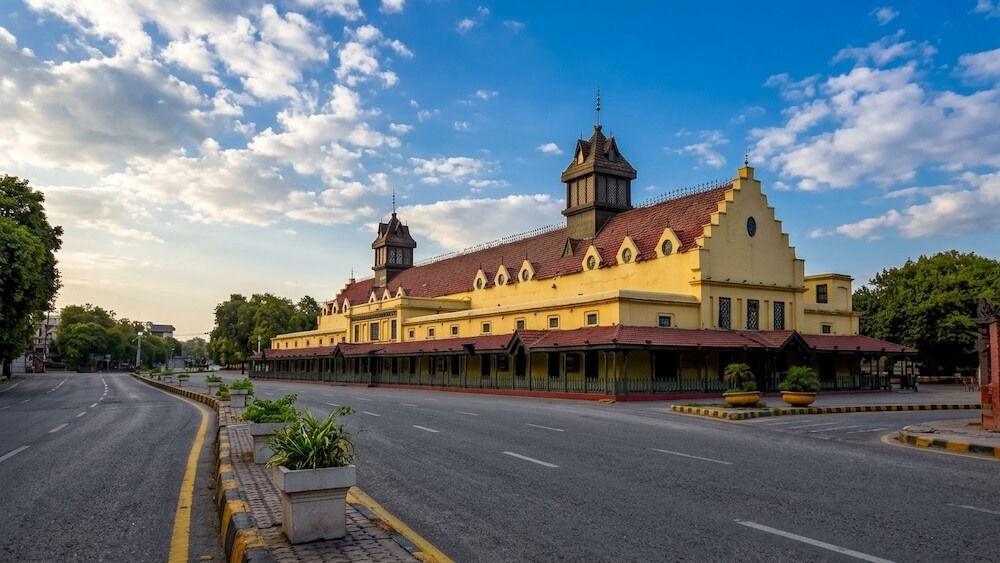
Tollinton Market. Photo Credit: Shahzaib Damn Cruze, CC BY-SA 4.0.
Government College University
Then, on the north side of the Lower Mall, you will see the Gothic clock tower of Government College, founded in 1864. Over the years, many famous Pakistanis studied here, including the poet Allama Iqbal.
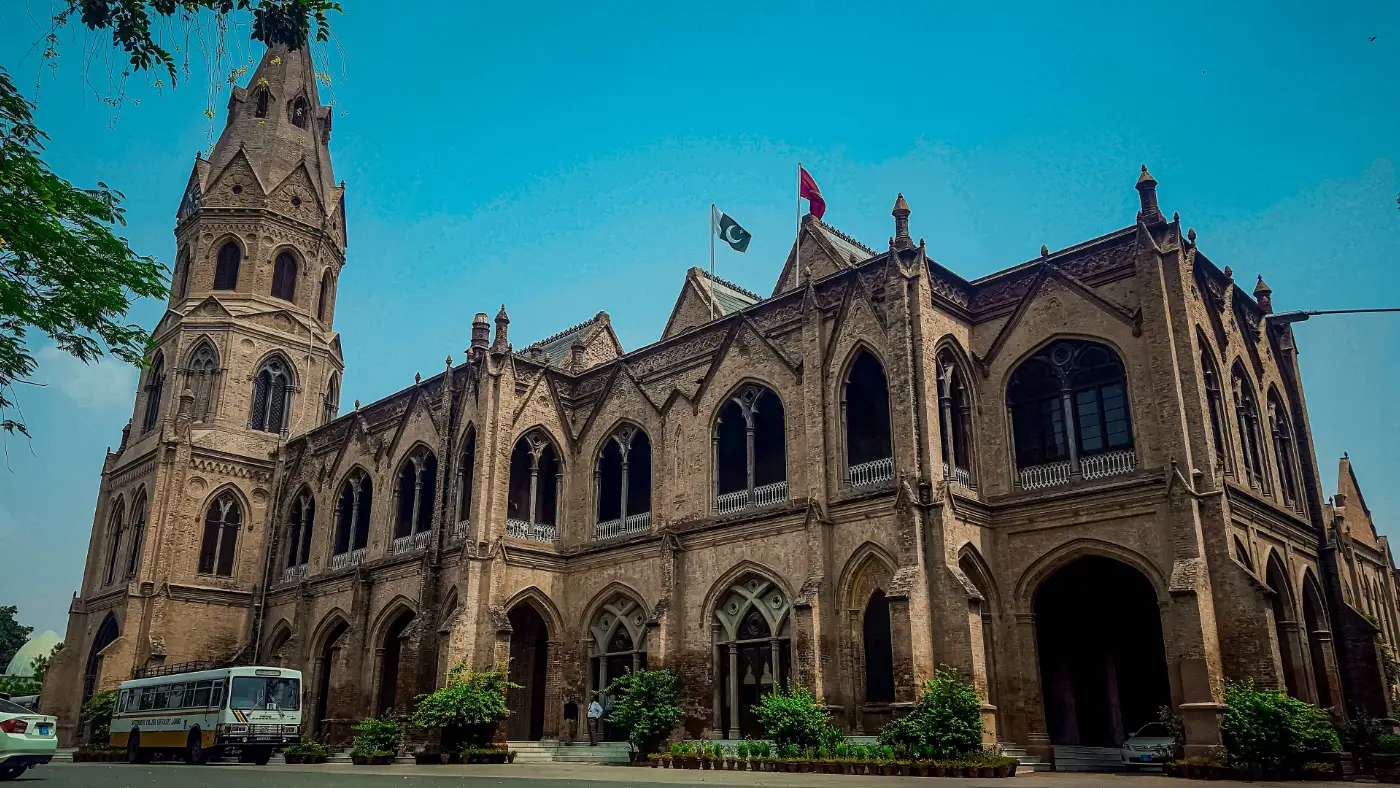
The clock tower of Government College. Photo Credit: Shahzaib Damn Cruze, CC BY-SA 4.0.
The GPO and the Lahore High Court
Further east, the General Post Office (GPO) is a grand red-brick building with domes and a clock tower. In addition, the Lahore High Court nearby, first built as the Chief Court, has fine red-brick arches and slim towers.Its story goes back to the Chief Court of the Punjab, which the British set up in 1866. The present red-brick building was finished in about 1889, and in 1919 the court became the Lahore High Court. Mian Muhammad Shah Din, the first Muslim judge of the Chief Court, later built the Shahdin Building on the Mall too. Today, the court is a protected building, and restorers repair its walls with lime and brick powder, just like the old builders did. However, it is a working court, so admire it from the road.
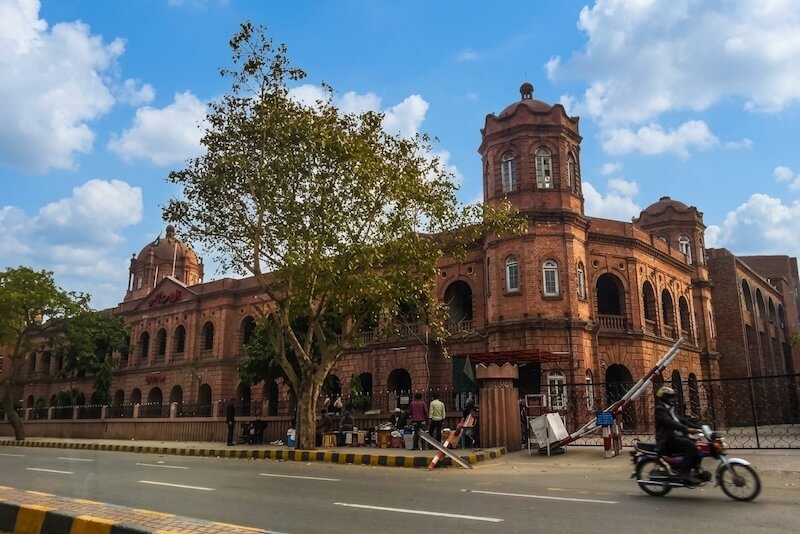
The General Post Office. Photo Credit: Muhammad Saqib Khan, CC BY-SA 3.0.
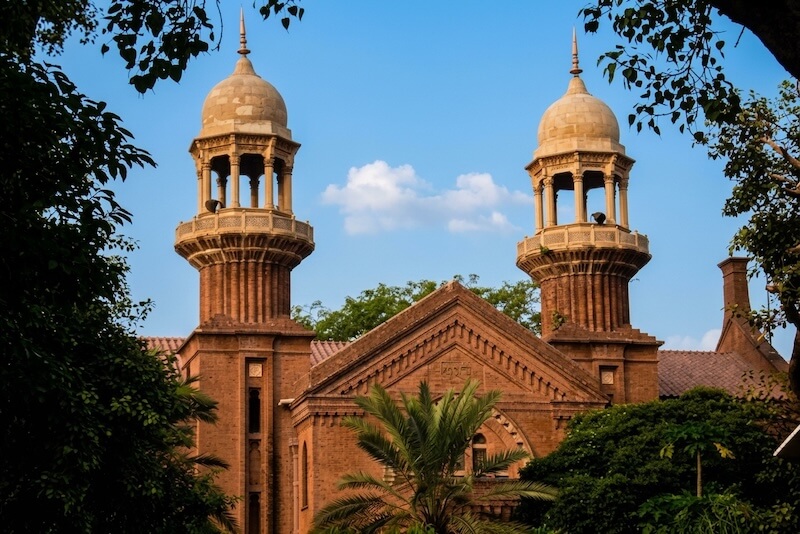
The Lahore High Court. Photo Credit: MariyamAftab, CC BY-SA 4.0.

The Lahore High Court (then the Chief Court) in the 1880s, with the statue of Lord Lawrence. Photo Credit: Unknown photographer.
Cathedral Church of the Resurrection
Also, look out for the tall Gothic towers of the Cathedral Church of the Resurrection. Indeed, it is one of the finest churches in Pakistan, and it still holds regular services. Nearby, on Lawrence Road, the red-brick Sacred Heart Cathedral is the city’s Catholic cathedral.
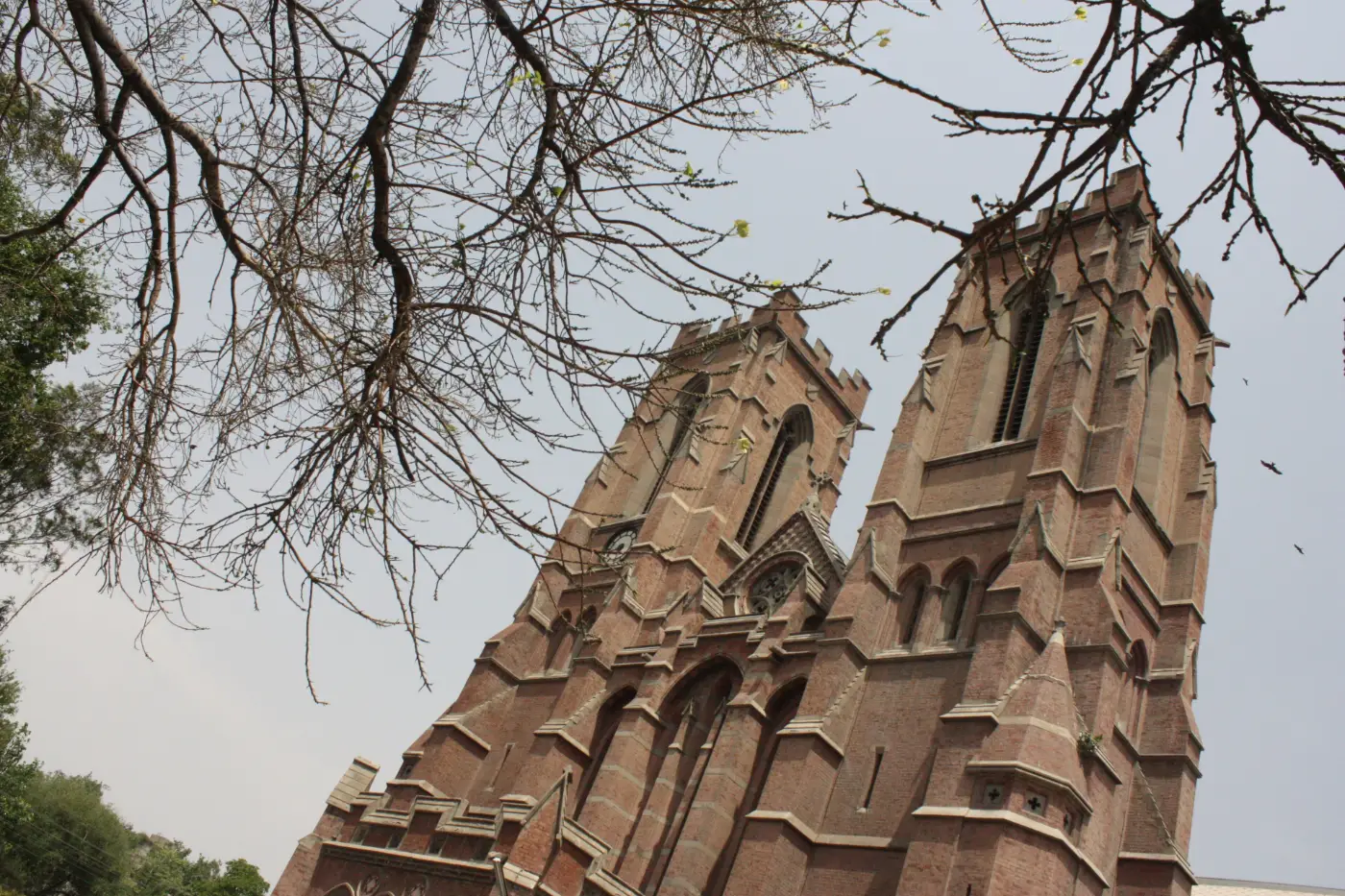
The Cathedral Church of the Resurrection. Photo Credit: Horizan123, CC BY-SA 4.0.
Charing Cross and the Punjab Assembly
Finally, you reach Charing Cross, named after the junction in London. In the past, a marble canopy here held a statue of Queen Victoria, which now sits in the Lahore Museum. Today, the canopy stands in front of the Punjab Assembly, a grand building from the 1930s. Just beyond, by contrast, the curved roof of WAPDA House is a modern landmark of the 1960s.
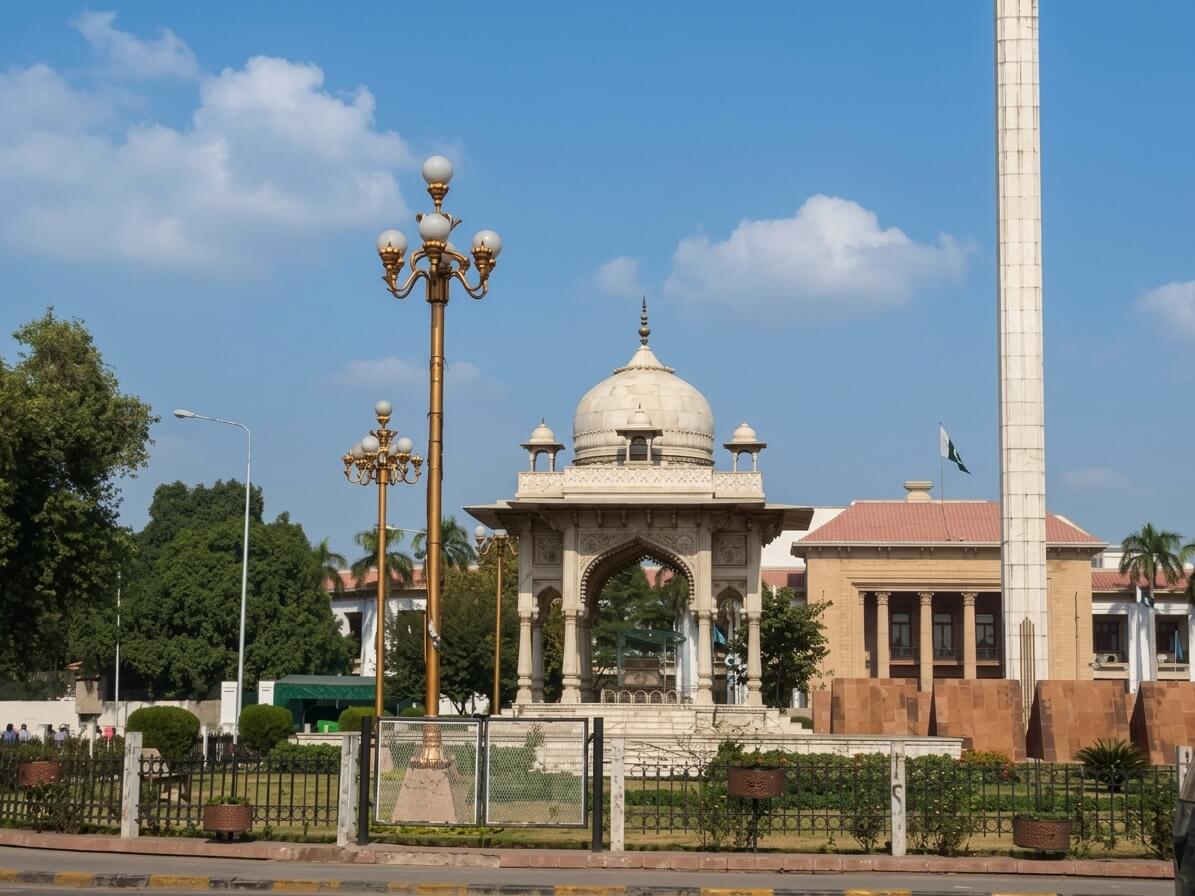
The marble canopy at Charing Cross. Photo Credit: Guilhem Vellut, CC BY 2.0.
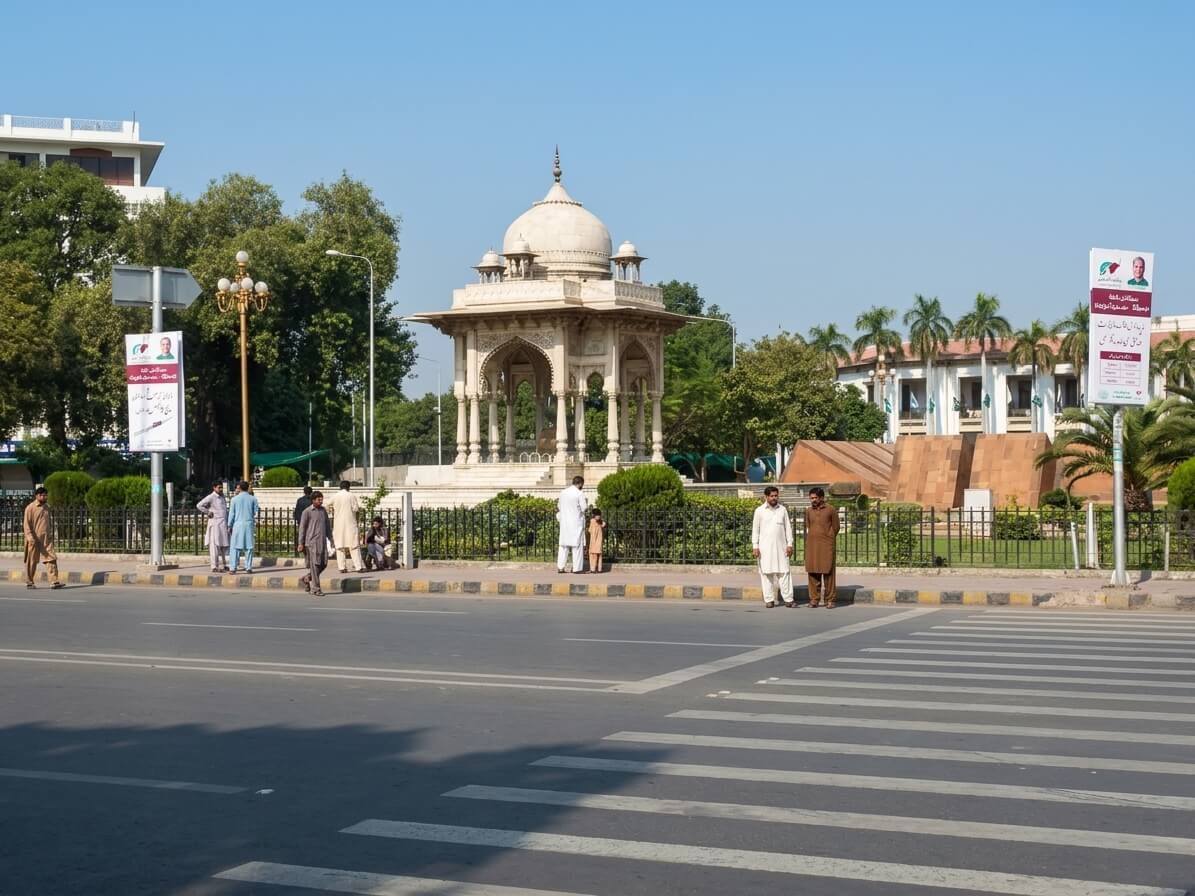
Charing Cross and the Punjab Assembly. Photo Credit: Guilhem Vellut, CC BY 2.0.
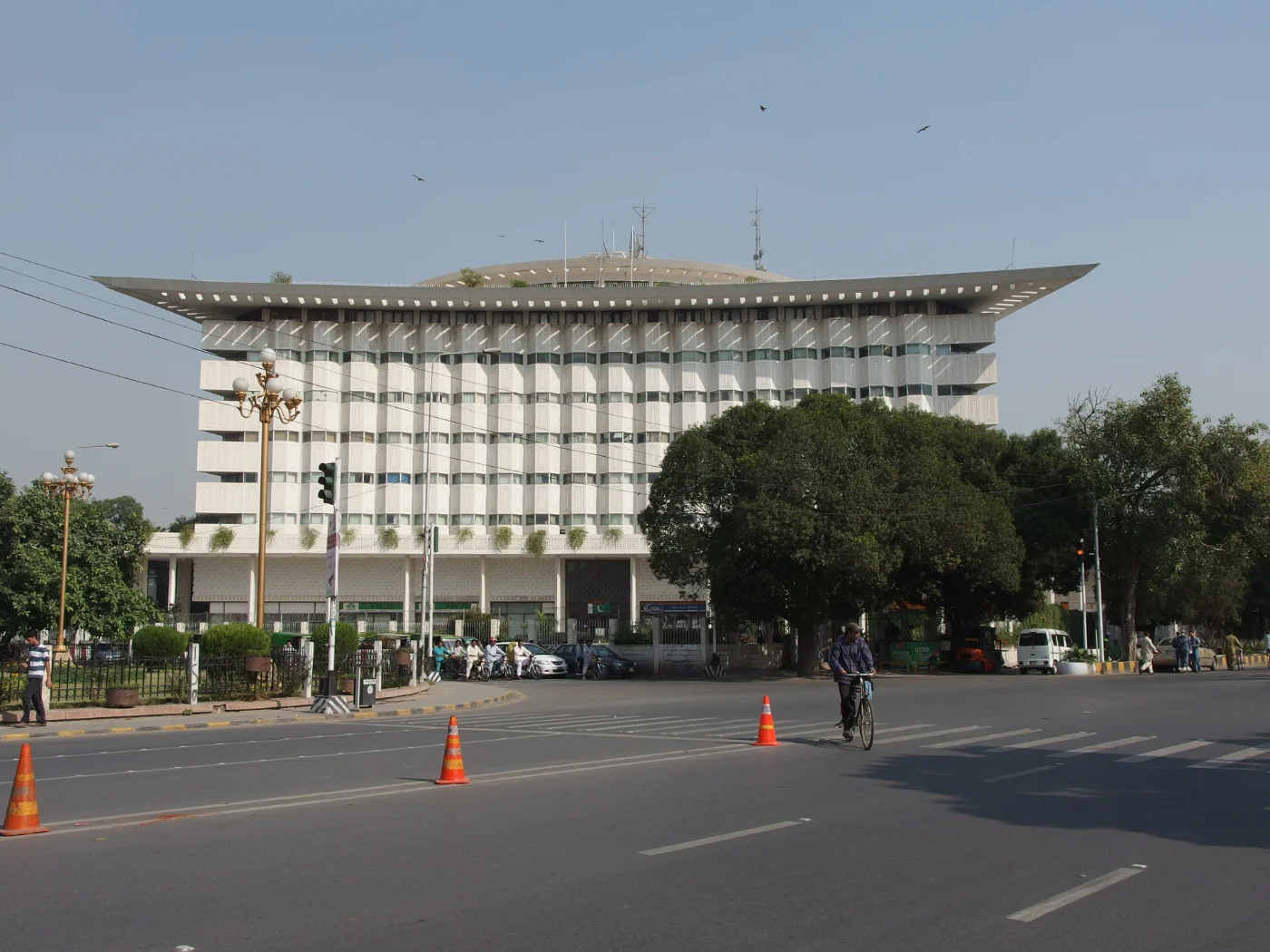
WAPDA House. Photo Credit: Guilhem Vellut, CC BY 2.0.
Lahore Gymkhana Club
Further east on the Upper Mall stands the Lahore Gymkhana Club. Its story began in 1878, when it opened as the Lahore and Mian Mir Institute inside Lawrence Hall and Montgomery Hall, in today’s Bagh-e-Jinnah. Later, in 1906, the members renamed it the Lahore Gymkhana. Then, in January 1972, the Punjab government took over the old halls, so the club moved to its golf grounds on the Upper Mall.
Today, the club spreads over about 117 acres, with a golf course, one of the oldest cricket grounds in the subcontinent, tennis courts and a large library. However, it is a members-only club, so most visitors only see its gates and greenery from the road.
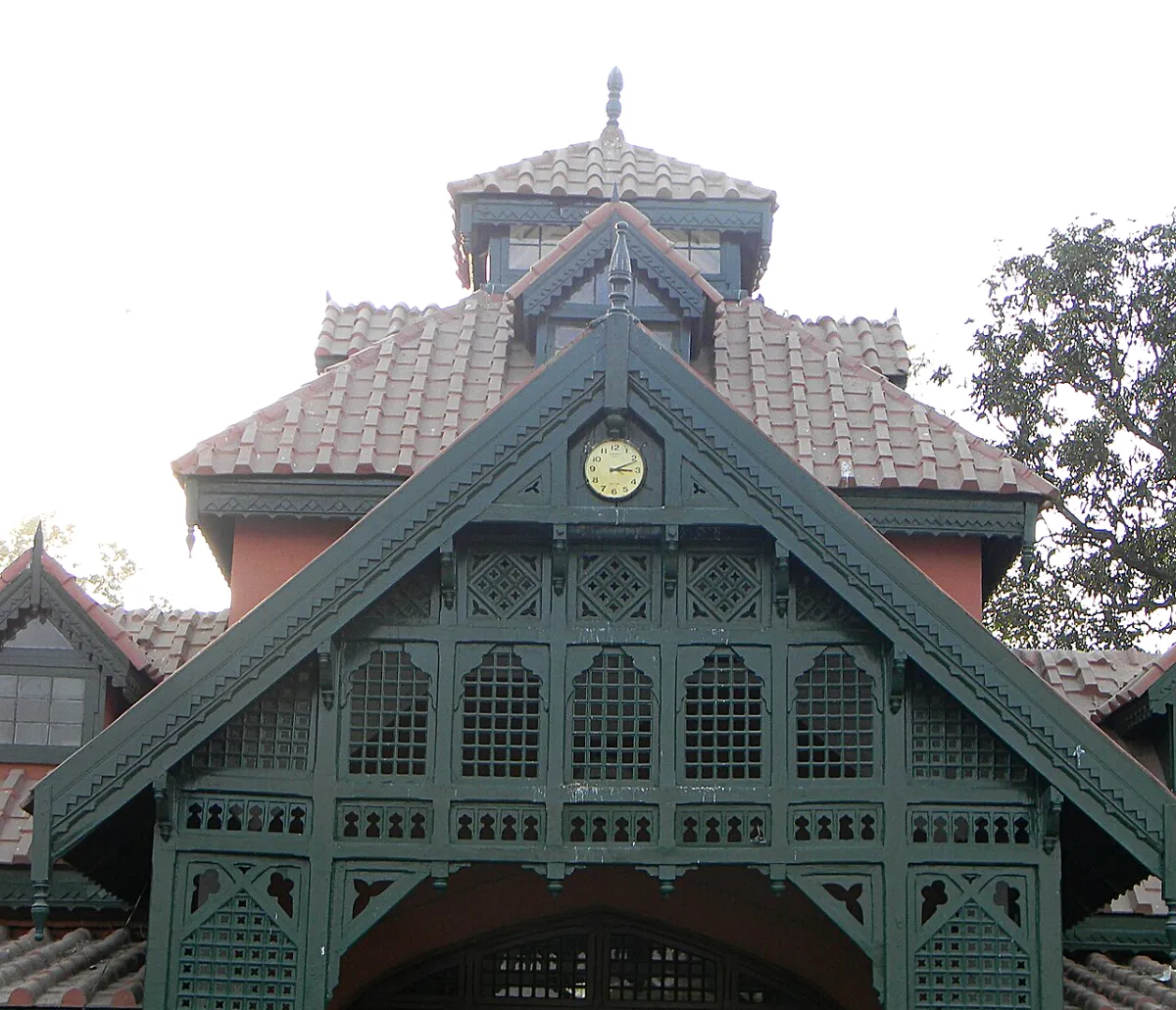
The Lahore Gymkhana Club. Photo Credit: Khalid Mahmood, CC BY-SA 3.0.
Avari Hotel
Close to the Lahore Zoo and Alhamra, the Avari Lahore is one of the city’s best-known five-star hotels. In fact, the site has a long hotel history. Nedou’s Hotel opened here in the early 1900s, on the land of the old Punjab Club. The Avari Lahore itself opened in 1978. Even if you are not staying, you can stop by for tea or a meal at one of its restaurants.
Madar-e-Millat Park
Madar-e-Millat means “Mother of the Nation”, the title Pakistanis gave to Fatima Jinnah, the sister of Quaid-e-Azam. So, the small park named after her on Mall Road is a fitting green stop on a road named after her brother. Above all, it is a good place to rest your feet in the middle of a long walk. Madar-e-Millat Park is an urban public park located in G.O.R. – I, Lahore, managed by the Parks and Horticulture Authority (PHA).
Things to Do
- First, walk the Lower Mall from the Zamzama Gun to the GPO, and admire the buildings on the way.
- Then, spend a few hours in the Lahore Museum.
- Next, visit the heritage museum inside Tollinton Market.
- Relax in Bagh-e-Jinnah or take the kids to the Lahore Zoo, both near Charing Cross.
- Shop in Anarkali Bazaar, just off the Mall, and see the Tomb of Qutbuddin Aibak.
- Finally, come back in the evening, when many buildings are lit up.
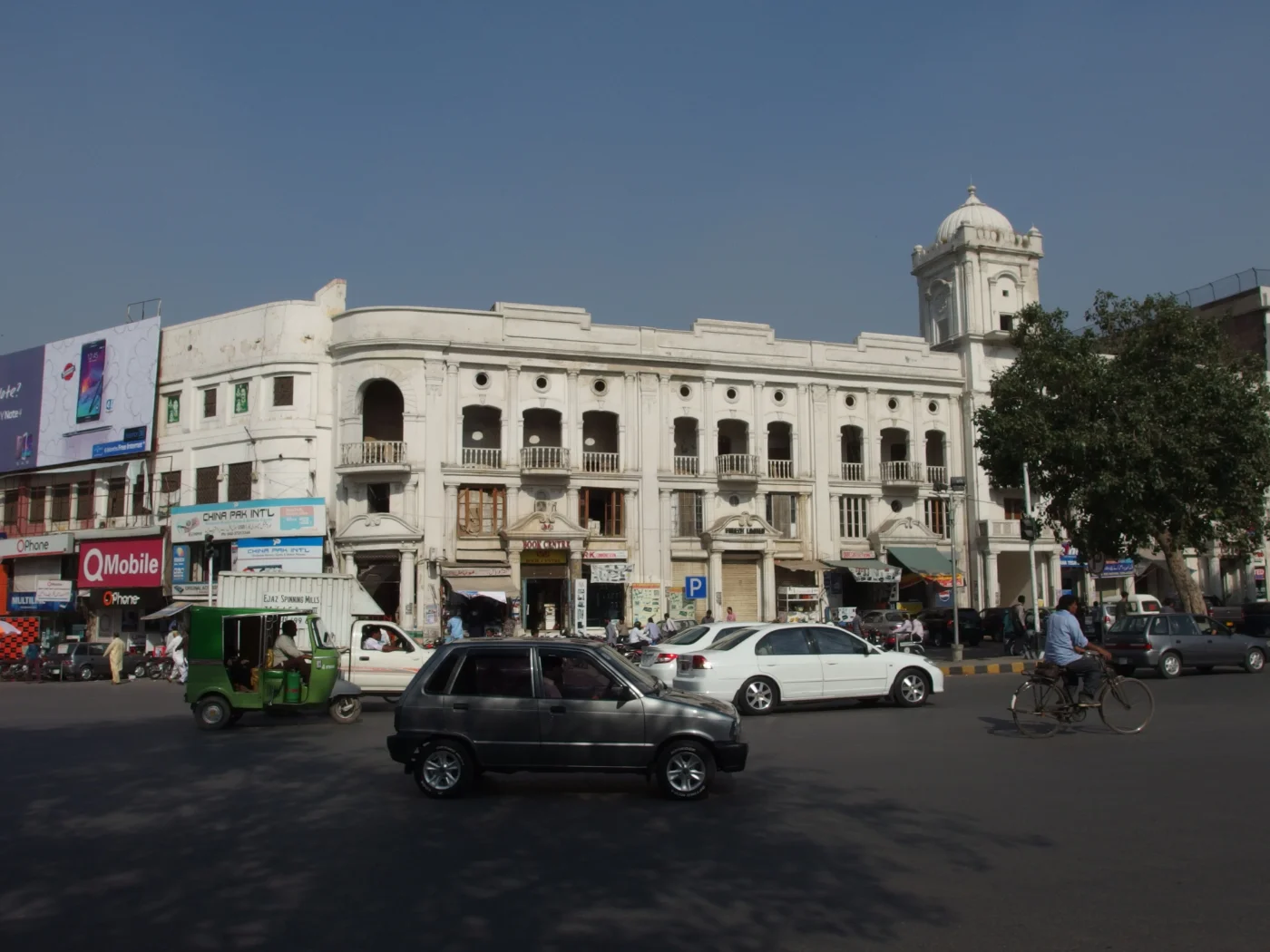
Colonial buildings along the Mall. Photo Credit: Guilhem Vellut, CC BY 2.0.
Shopping on Mall Road
Mall Road is not only about old buildings. In fact, two of Lahore’s busiest markets sit right on it or just off it.
Panorama Centre
Panorama Shopping Centre is a favourite with Lahoris for men’s clothing. Shop after shop sells shalwar kameez, shirts, trousers, jackets and shoes at mid-range prices. There are also watch dealers and small gift stalls. As always, bargaining is normal, so ask politely for a better price.
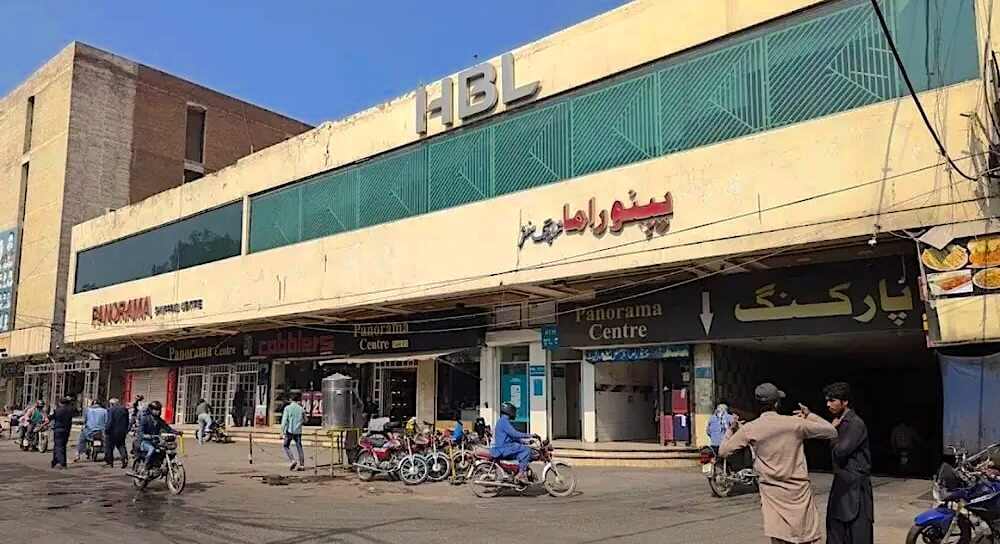
Panorama Shopping Centre on Mall Road. Photo Credit: Sunni Person, CC BY-SA 3.0.
Hall Road Electronics Market
Hall Road starts at Regal Chowk on the Mall and runs towards McLeod Road. The British once built halls here for meetings and events, and that is how the road got its name. Since the 1970s, however, it has been the city’s main electronics market, and many call it the largest in Punjab.
Here, you will find mobile phones, laptops, TVs, CCTV cameras, cables, UPS units and solar gear, both retail and wholesale. Before you pay, test the product and ask about the warranty.
Food on Mall Road
Of course, Mall Road has plenty of places to eat. For example, Pak Tea House, near Neela Gumbad at the Anarkali end, is a historic cafe where famous writers and poets once met over tea. Also, the side streets of Anarkali are full of chaat, samosas and cold drinks.
For a proper meal, head to Old Anarkali Food Street for fried fish, karahi and nihari. Alternatively, there are modern cafes and bakeries along the Upper Mall. Expect to pay around PKR 300 to 2,000 per person.
Chaman Ice Cream
For dessert, do as Lahoris do and stop at Chaman Ice Cream on Beadon Road, just off the Mall. Muhammad Sadiq started it in the 1970s, and since then it has been a family favourite. Try the pista, khajoor-akhrot or tutti frutti flavours. Also, expect a crowd on hot summer nights.
Visitor Information
Visiting Mall Road Lahore
Before you visit Mall Road Lahore, keep these points in mind.
- Location: Mall Road runs about 6.5 km from the Lower Mall near the Civil Secretariat to the Mian Mir Bridge in the east.
- Timings: The road is open all day. However, museums and offices have their own hours, and most close on certain days, so check before you go.
- Ticket: Walking the road is free. Instead, only places such as the Lahore Museum charge a ticket.
- Best time: October to March, in the early morning or late afternoon.
- Time needed: 2 to 3 hours for a walk on the Lower Mall, or a full day with museums.
- Parking: Limited. Instead, use paid parking near the museum or Charing Cross.
- Families and women: Generally safe, busy and family-friendly during the day.
- Photography: Fine from the road. However, do not photograph the High Court, the Assembly or the Governor’s House closely, as security is strict.
- Accessibility: Footpaths are wide in places; however, crossings can be busy.
- Safety: Above all, Mall Road often closes for rallies and protests, especially near Charing Cross, so check the news before you go.
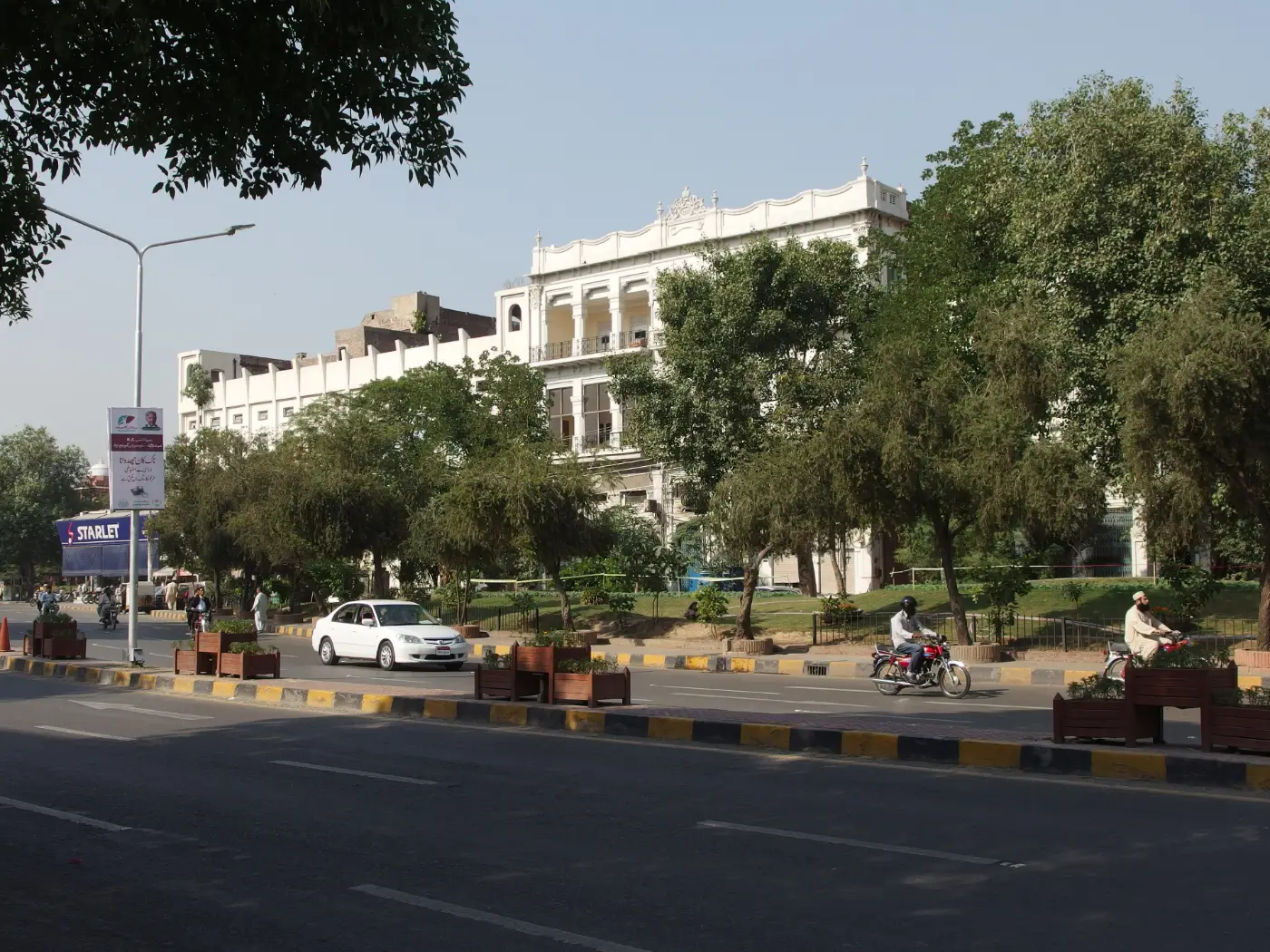
Mall Road on a quiet morning. Photo Credit: Guilhem Vellut, CC BY 2.0.
How to Get There
Mall Road is right in the centre of Lahore; therefore, it is easy to reach. By Careem, inDrive or rickshaw, ask for the Lahore Museum (for the Lower Mall) or Charing Cross (for the Upper Mall).
By public transport, take the Orange Line Metro Train to its Anarkali or GPO stops, which are close to the Lower Mall. Then, simply walk east along the road.
Places to Visit Near Mall Road
- Lahore Museum: Kipling’s “Wonder House”, right on the Mall.
- Tomb of Qutbuddin Aibak: inside Anarkali Bazaar, off the Lower Mall.
- Bagh-e-Jinnah: the old Lawrence Gardens, near Charing Cross.
- Lahore Zoo: a family favourite since 1872, next to Bagh-e-Jinnah.
- Data Darbar: Lahore’s most famous Sufi shrine, near the western end.
- Chauburji: a Mughal gateway, a short drive from the Lower Mall.
- Tomb of Anarkali: the legendary white Mughal tomb, inside the Civil Secretariat on the Lower Mall.
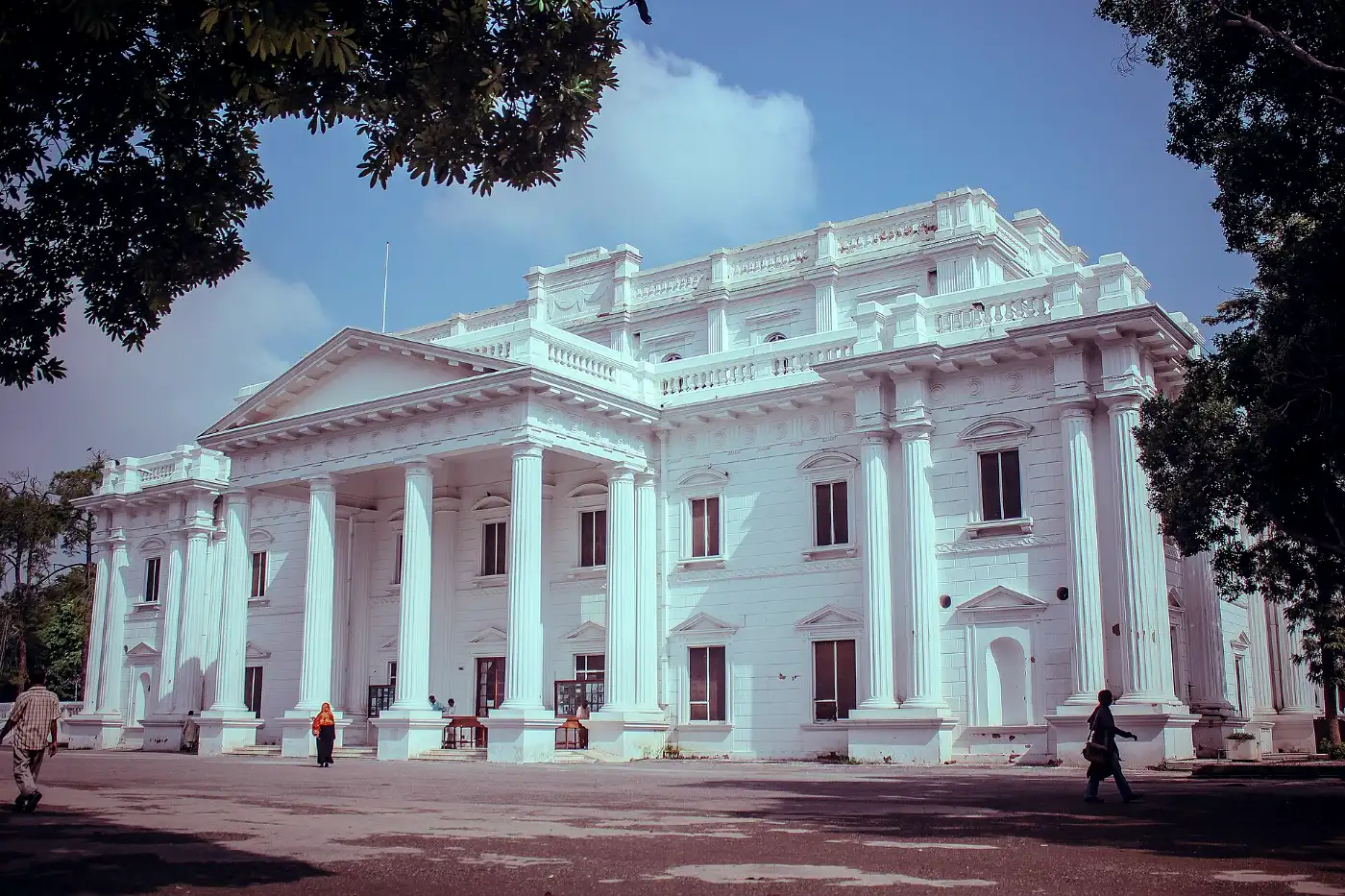
Quaid-e-Azam Library in Bagh-e-Jinnah. Photo Credit: Mahadalisajid, CC BY-SA 3.0.
Frequently Asked Questions
What is the official name of Mall Road Lahore?
In fact, its official name is Shahrah-e-Quaid-e-Azam, but everyone calls it Mall Road.
How long is Mall Road?
Altogether, it is about 6.5 km long, from the Lower Mall near the Civil Secretariat to the Mian Mir Bridge.
What are the famous buildings on Mall Road?
The Lahore Museum, Zamzama Gun, Tollinton Market, Government College, the GPO, the Lahore High Court, the Cathedral and the Punjab Assembly.
Is Mall Road good for walking?
Yes, especially the Lower Mall between the museum and the GPO. Go early in the morning, when traffic is lighter.
Why is it called Charing Cross?
Simply because the British named the junction after Charing Cross in London, it kept the name.
Is there an entry fee for Mall Road?
No. Walking the road is free; however, some museums charge a ticket.
Conclusion
In short, Mall Road Lahore is the best place to see the city’s British-era face. Indeed, in one walk you can pass a famous cannon, a museum, a Gothic college, a cathedral and the Punjab Assembly. So, pick a cool morning, put on comfortable shoes and enjoy the stroll.
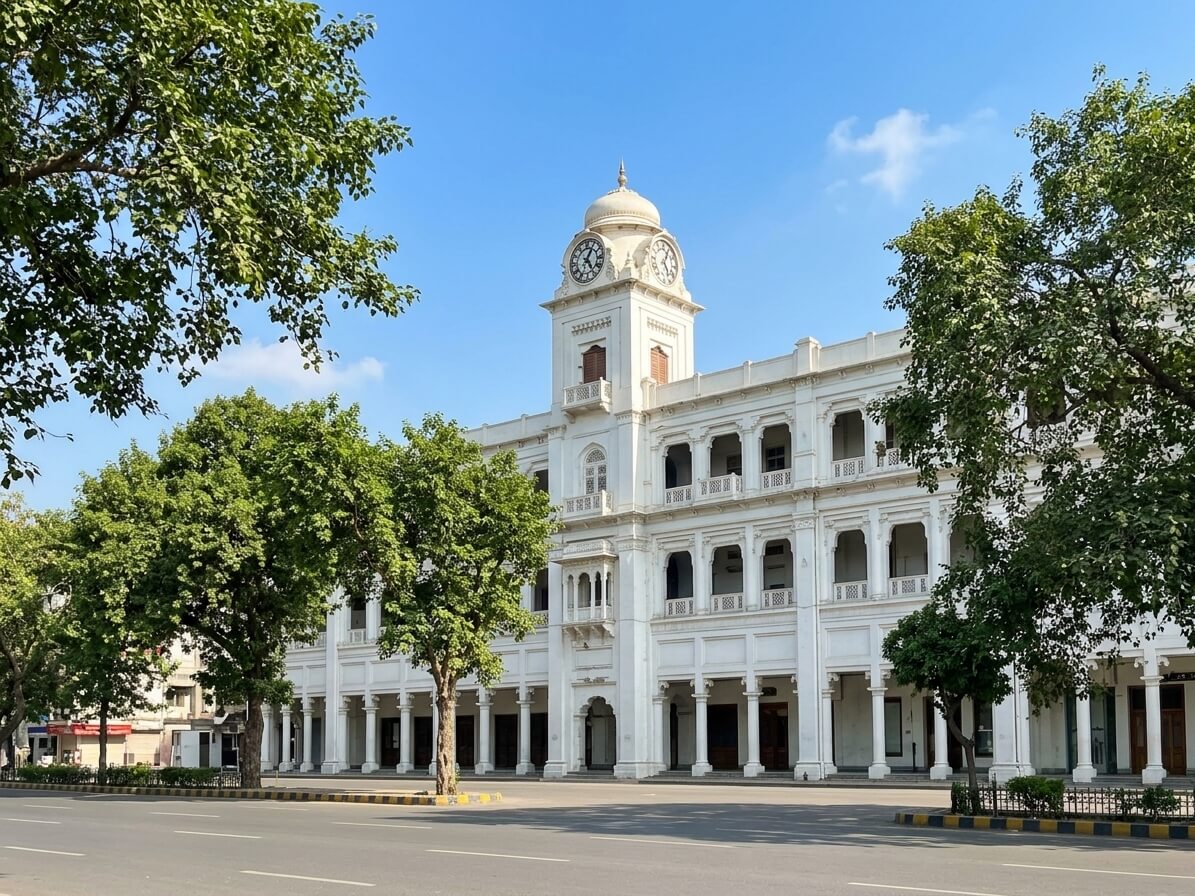
Morning on Mall Road. Photo Credit: Guilhem Vellut, CC BY 2.0.
Cover photo: Shahzaib Damn Cruze, CC BY-SA 4.0.