Every Lahori knows the name Anarkali, from the famous bazaar and from the old love story of Prince Salim and a court dancer. However, few have seen the building that started it all. Hidden inside the Punjab Civil Secretariat, near Mall Road, stands the white, eight-sided Tomb of Anarkali Lahore.
It is one of the oldest Mughal tombs in the city, and it has had a strange life: a royal tomb, a Sikh prince’s home, a church and now a government archive. In this guide, we share its story, what you can see, and how to get permission to visit.
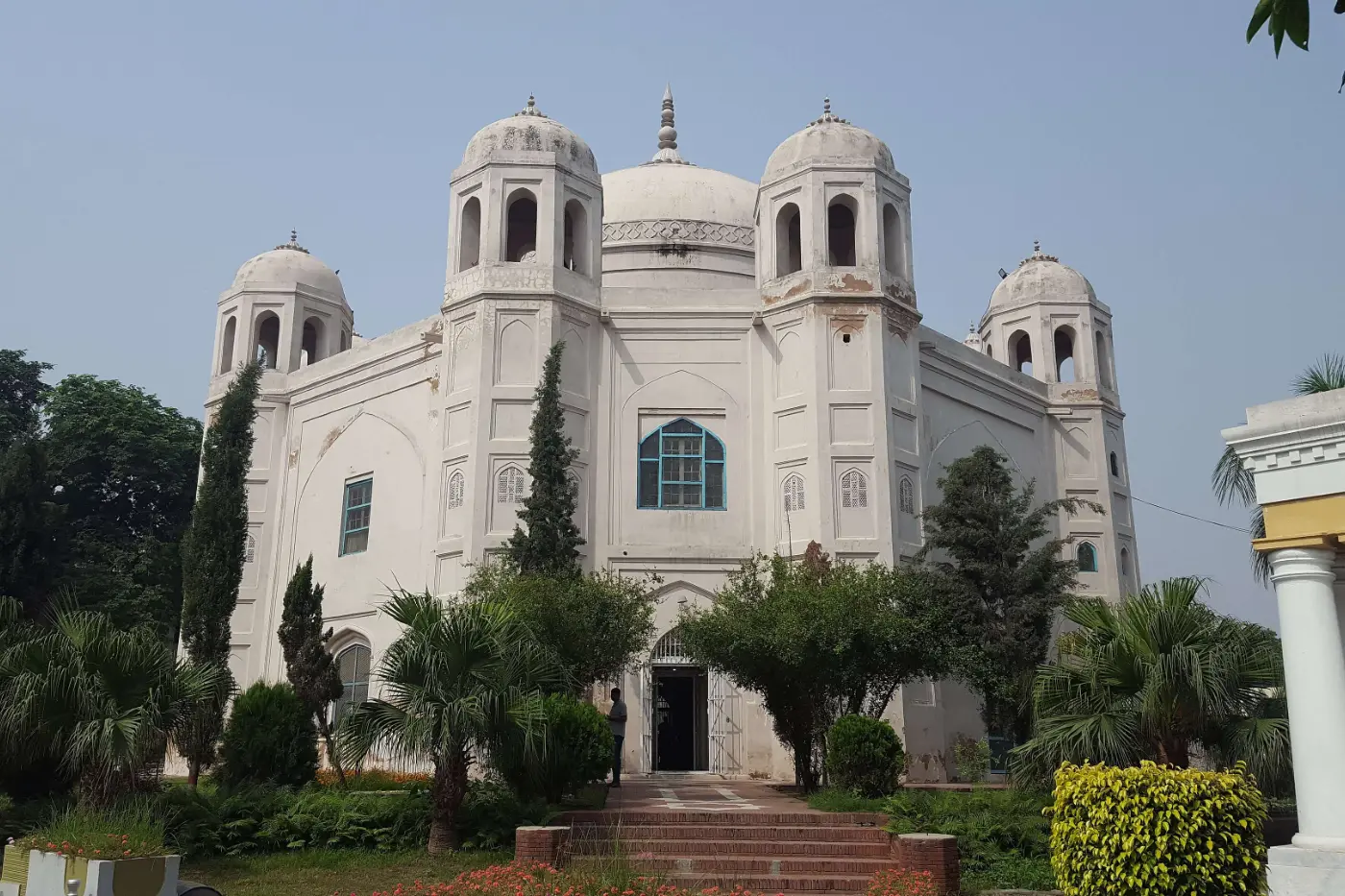
The tomb inside the Civil Secretariat. Photo Credit: Shahzaib Damn Cruze, CC BY-SA 4.0.
History of the Tomb of Anarkali Lahore
The Legend of Anarkali
According to the popular legend, Anarkali, meaning “pomegranate blossom”, was a beautiful court dancer. Soon, Prince Salim, the future Emperor Jahangir, fell in love with her. When Emperor Akbar found out, the story says, he had her bricked up alive in a wall. Later, a heartbroken Jahangir built this tomb in her memory.
History or Myth?
However, historians are not sure that Anarkali ever existed. No Mughal records confirm the story, and much of it comes from later plays and films. In fact, some scholars think the tomb belongs to a Mughal noblewoman instead. Even so, the building dates from either 1599 or 1615, and Lahoris have called it Anarkali’s tomb for centuries.
From Tomb to Church to Archive
The tomb’s later life is just as dramatic. First, under Sikh rule, Prince Kharak Singh used it, and it later became a home for the wife of General Ventura, a European officer of Ranjit Singh. Then, the British used it as offices from 1847. In 1851, they turned it into St James’ Church, and people called it Lahore’s “Protestant Cathedral”. Finally, in 1891, the church moved out and the building became the Punjab Record Office. Today, it houses the Punjab Archives.
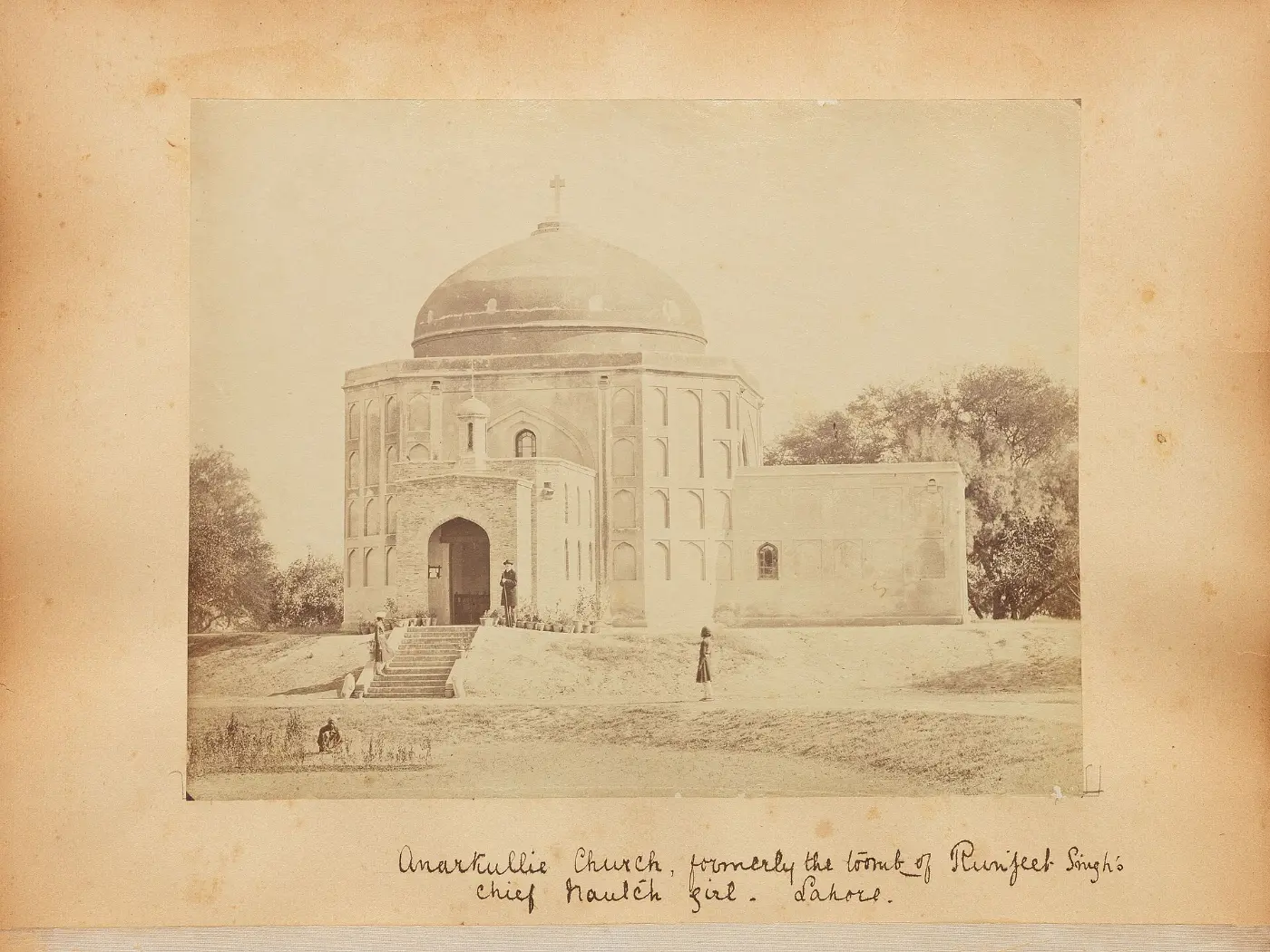
The tomb in the 1880s. Photo Credit: Unknown photographer.
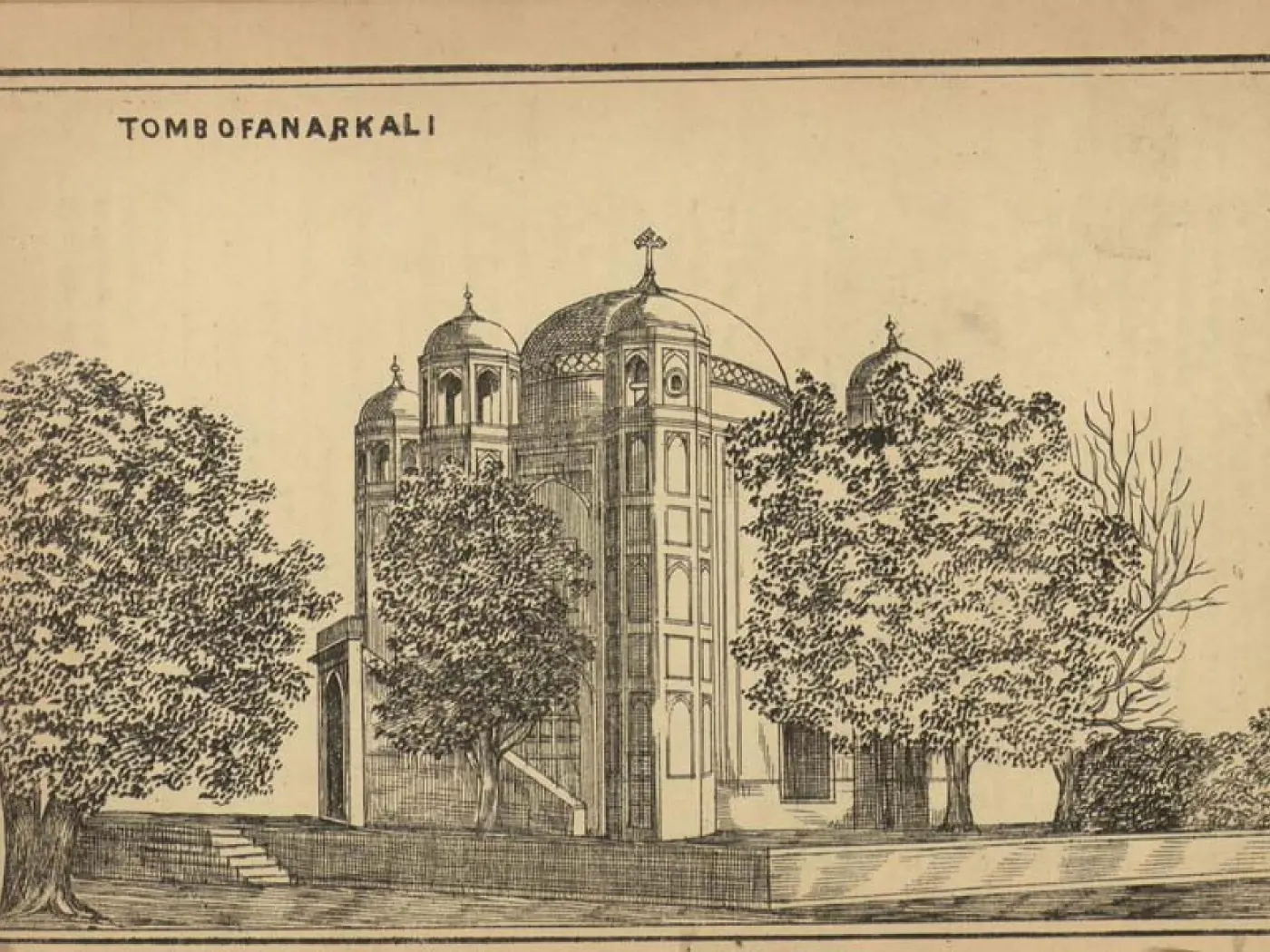
A 19th-century lithograph of the tomb. Photo Credit: Syad Muhammad Latif.
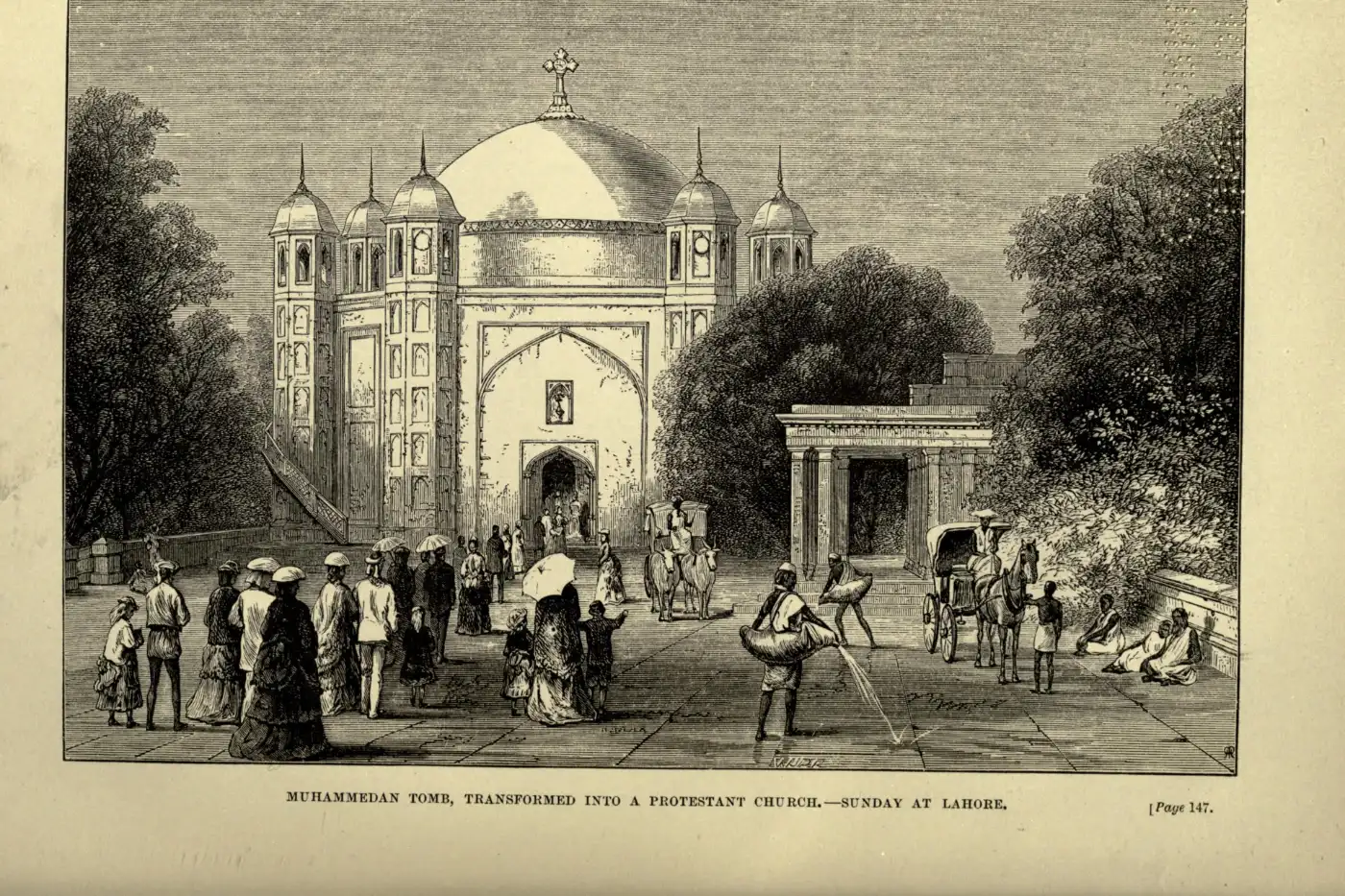
The tomb when it was used as a church. Photo Credit: J. Duguid.
Architecture of the Tomb
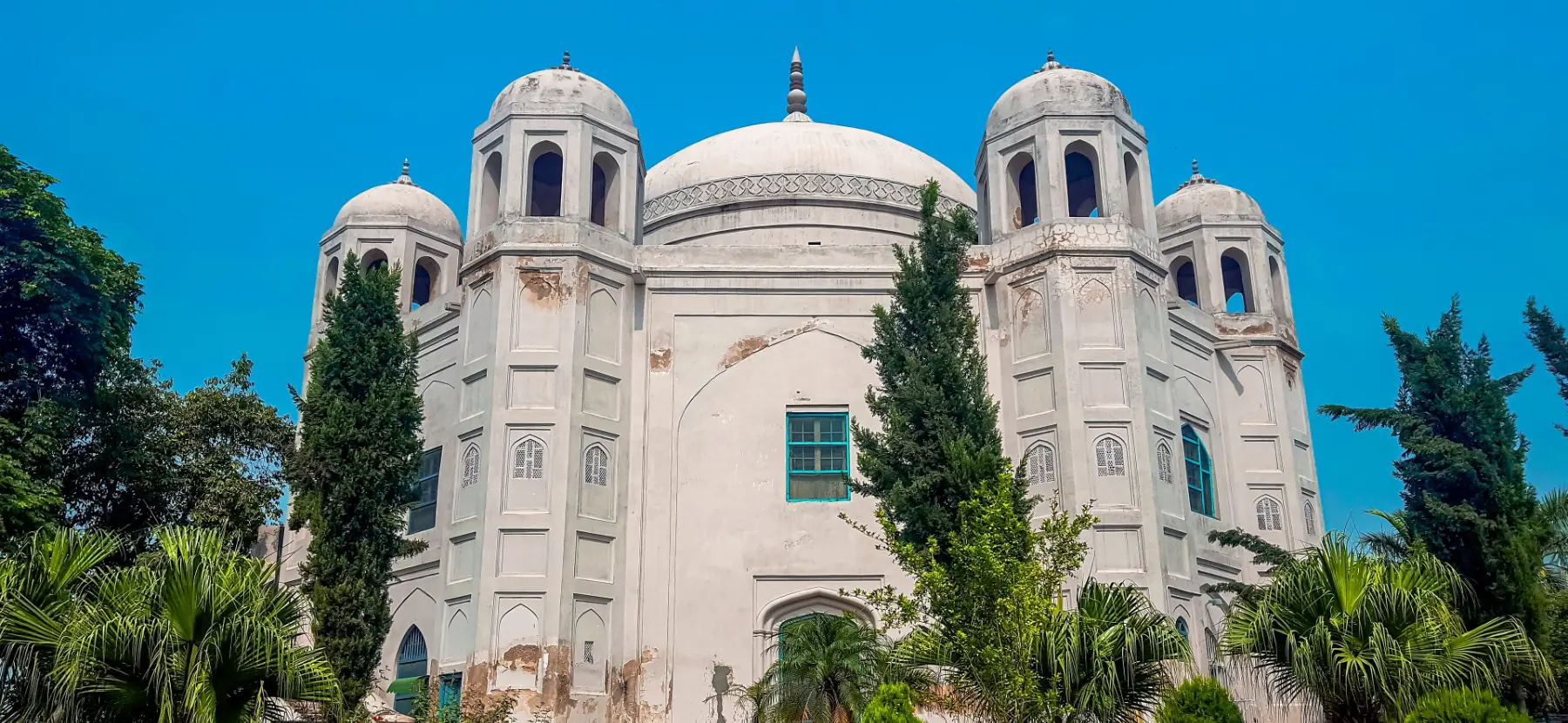
The Tomb of Anarkali Lahore is octagonal, meaning it has eight sides. Also, at each corner stands a tower with its own small domed kiosk on top. In the centre, a large double dome rests on eight arches. In fact, it is one of the earliest Mughal buildings with this type of dome.
Changes Over Time
Originally, the big side arches were open, and a garden surrounded the tomb. Later, the British filled in the arches to use the building as a church. Today, the whole tomb is painted white, so it looks very different from the red-brick and tiled Mughal buildings elsewhere in Lahore.
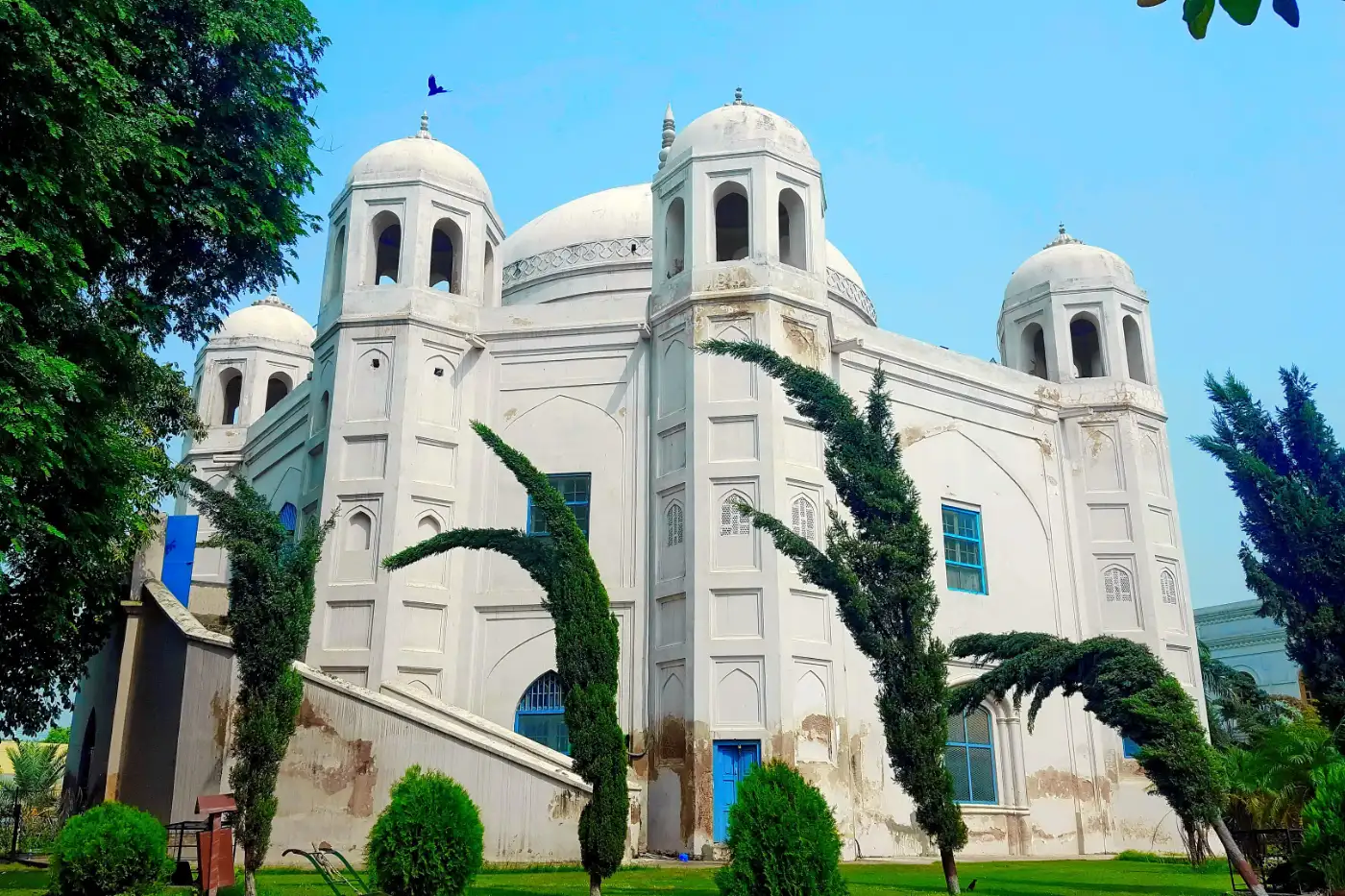
The corner towers and domed kiosks. Photo Credit: Shahzaib Damn Cruze, CC BY-SA 4.0.
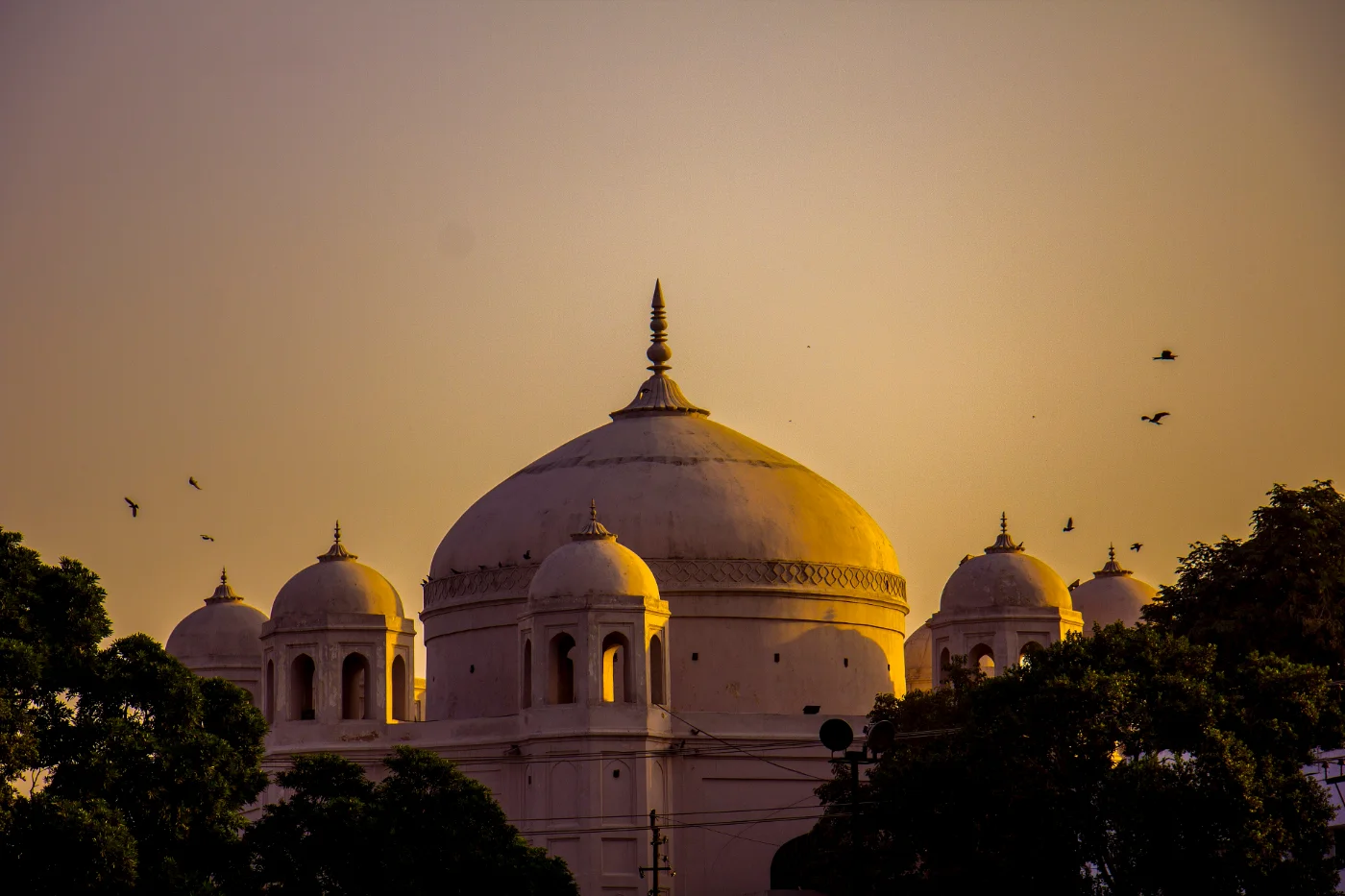
The dome at sunset. Photo Credit: MariyamAftab, CC BY-SA 4.0.
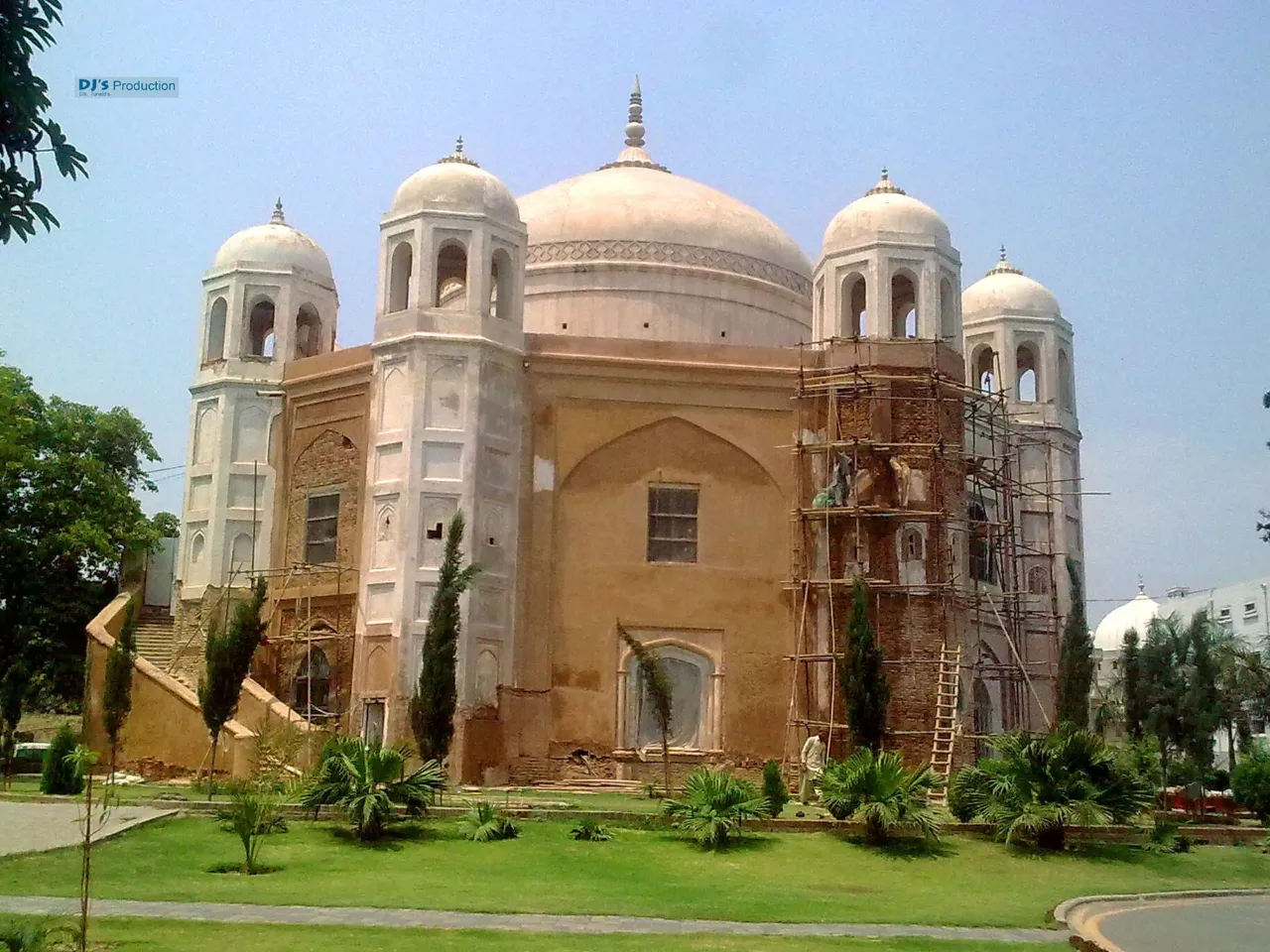
The tomb during restoration work. Photo Credit: Junaidahmadj, CC BY-SA 3.0.
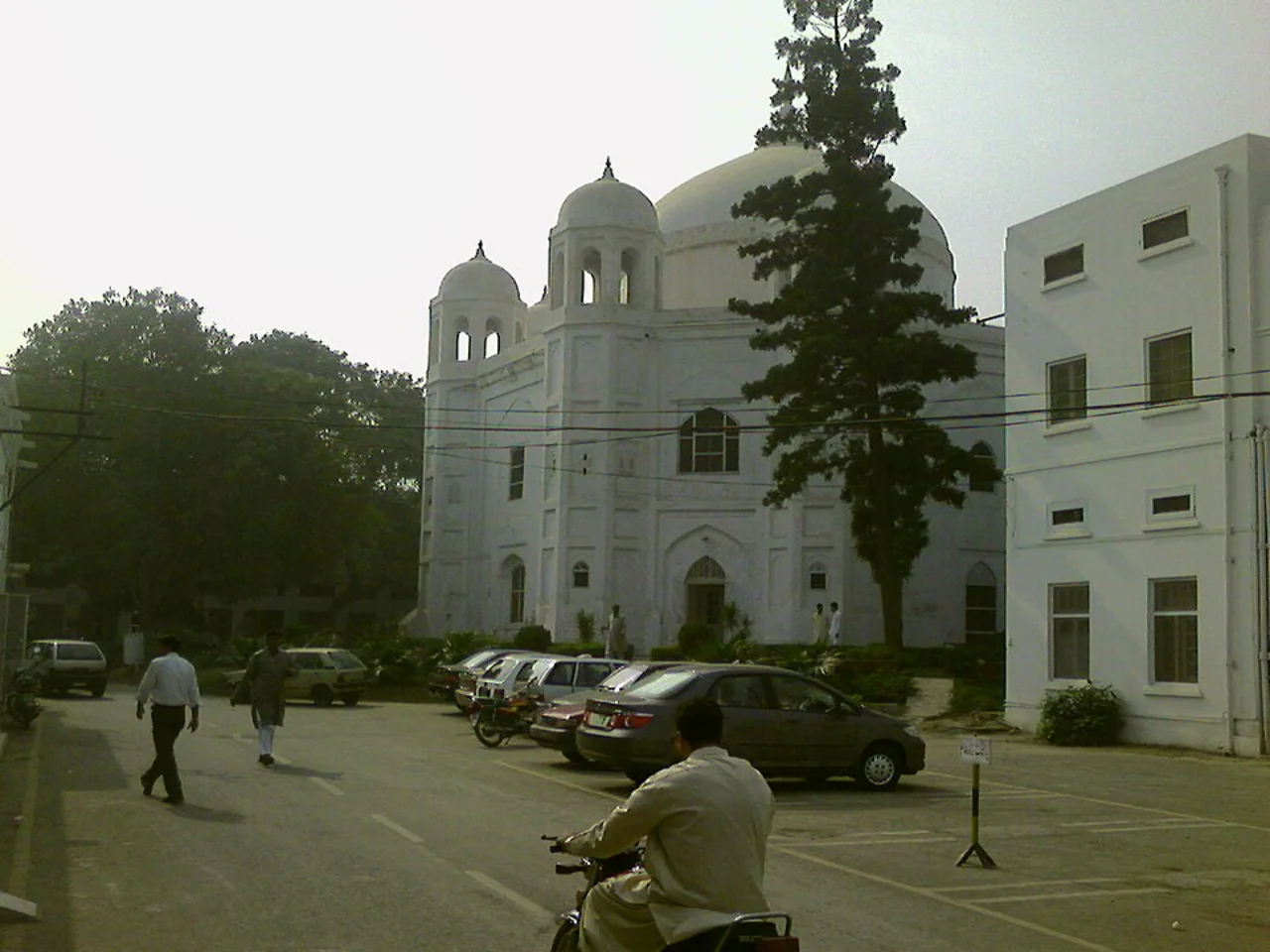
The tomb in 2008. Photo Credit: Muhammad Imran Saeed, CC BY 2.0.
Inside the Tomb
Inside, the tomb feels more like a small museum. For example, old maps, portraits and documents hang on the walls, and wooden display cases fill the hall, because the Punjab Archives keeps part of its collection here.
The Marble Cenotaph
The real treasure is the white marble cenotaph. It is carved with the 99 names of Allah and a Persian couplet. In the 19th century, writers praised it as some of the finest carving in the world. Interestingly, the British moved it from the centre to the side when the building became a church, and it remains there today.
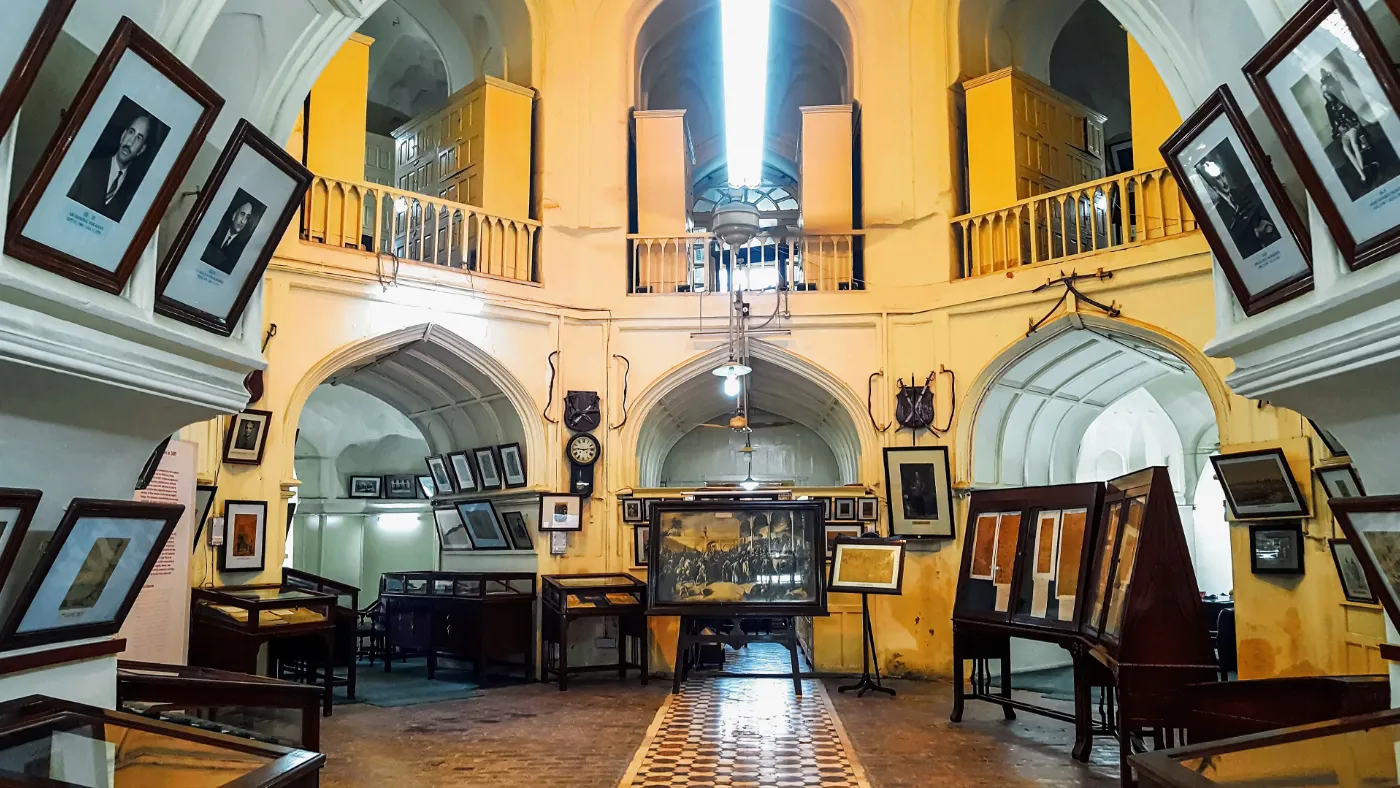
Inside the tomb, home of the Punjab Archives. Photo Credit: Shahzaib Damn Cruze, CC BY-SA 4.0.
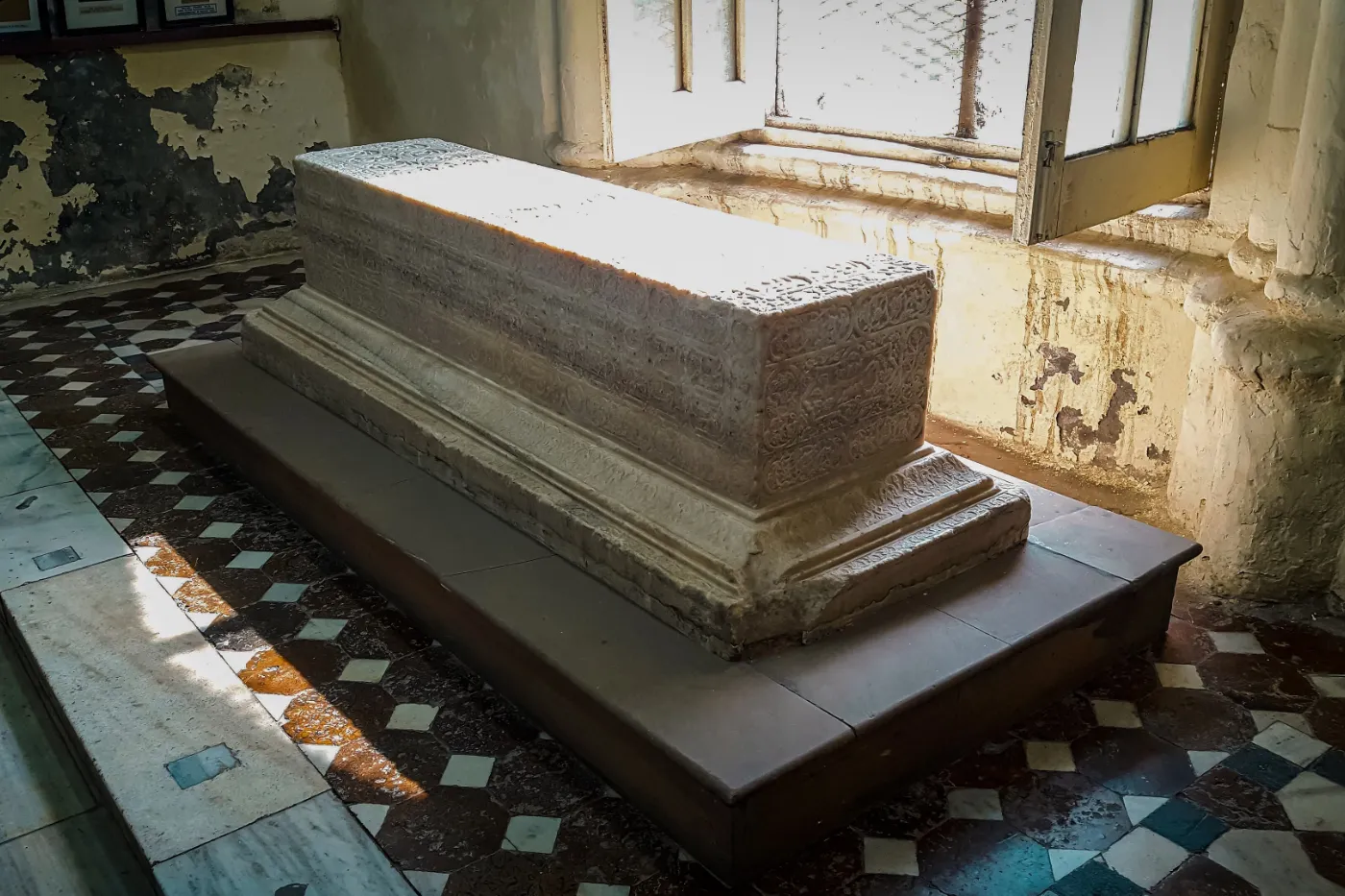
The carved marble cenotaph. Photo Credit: Shahzaib Damn Cruze, CC BY-SA 4.0.
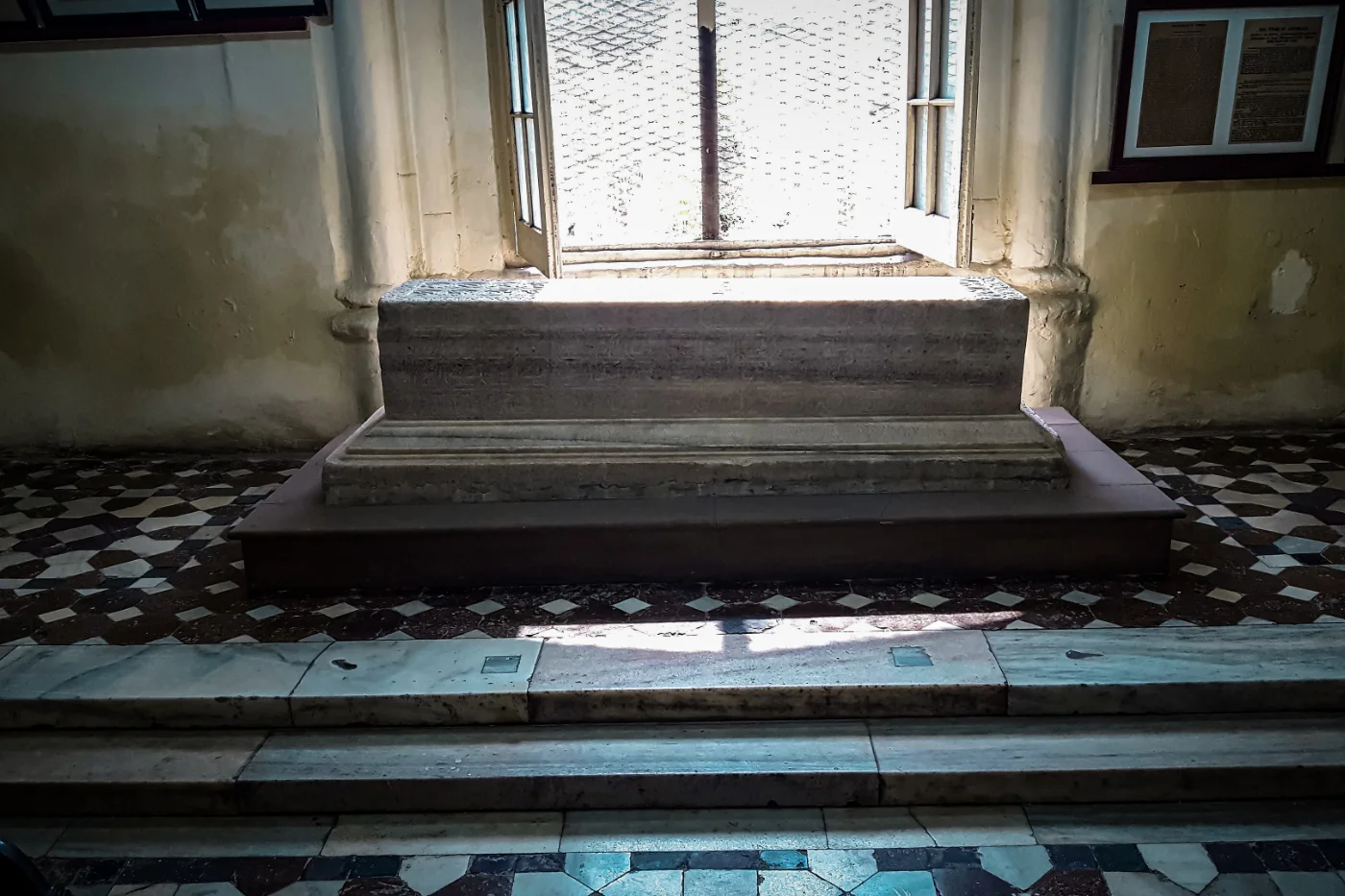
The cenotaph platform. Photo Credit: Shahzaib Damn Cruze, CC BY-SA 4.0.
Things to Do
- First, admire the octagonal shape and corner towers from the lawns of the Secretariat.
- Next, look closely at the carving on the marble cenotaph.
- Then, browse the old maps and documents of the Punjab Archives, if you are allowed inside.
- Afterwards, walk to Anarkali Bazaar, named after the same legend, for shopping and food.
- Then visit the Tomb of Qutbuddin Aibak inside the bazaar.
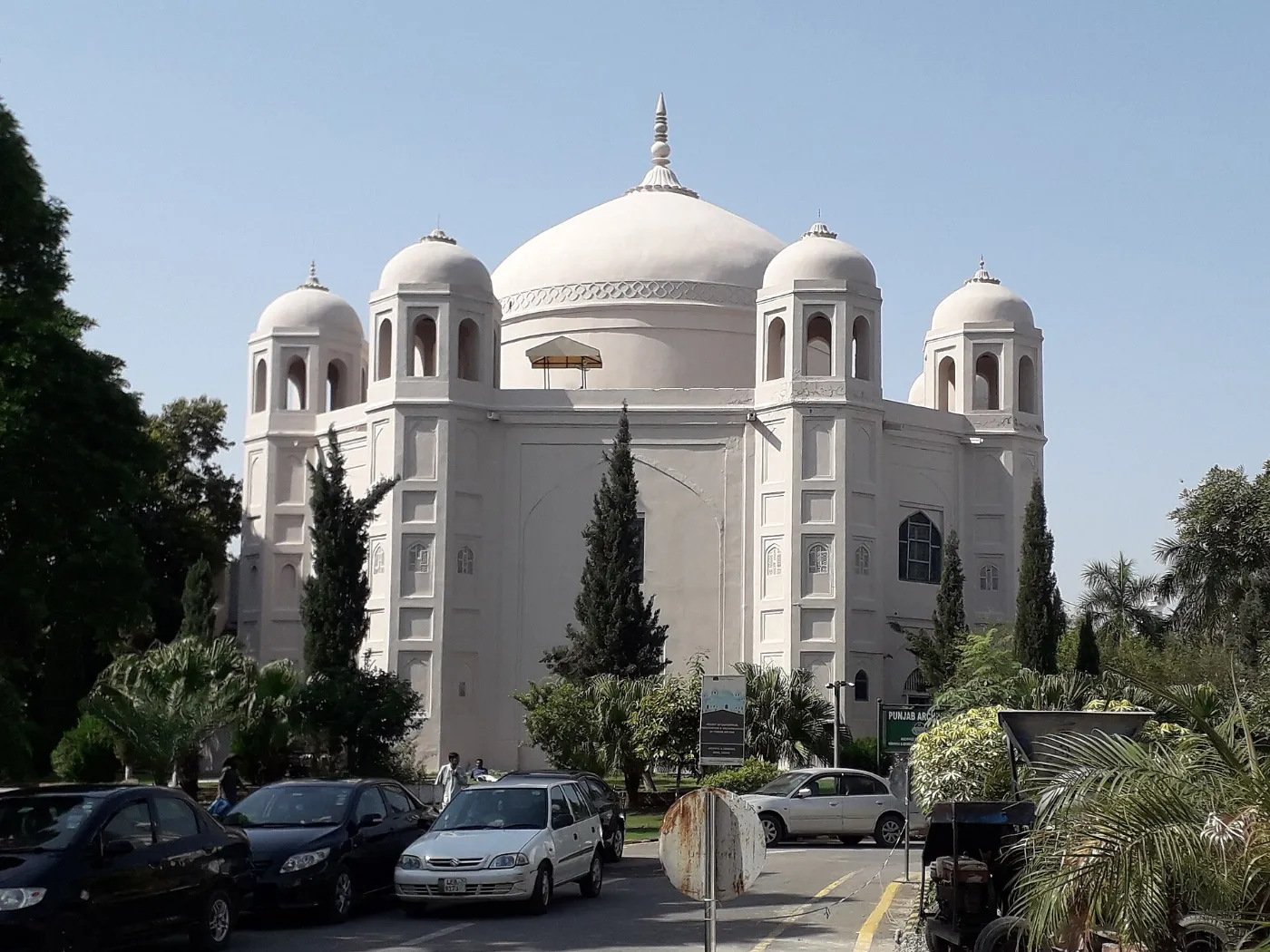
The tomb seen from the front. Photo Credit: King Eliot, CC BY-SA 4.0.
Food Nearby
The Secretariat has no public food stalls, so plan to eat outside. Fortunately, Anarkali Bazaar is only a short walk away. There, for example, you can try samosas, chaat, dahi bhallay and fresh jalebi.
For a full meal, head to Old Anarkali Food Street for fried fish, karahi and nihari. Also, Pak Tea House on Mall Road is a classic spot for chai. Expect to pay around PKR 300 to 1,500 per person.
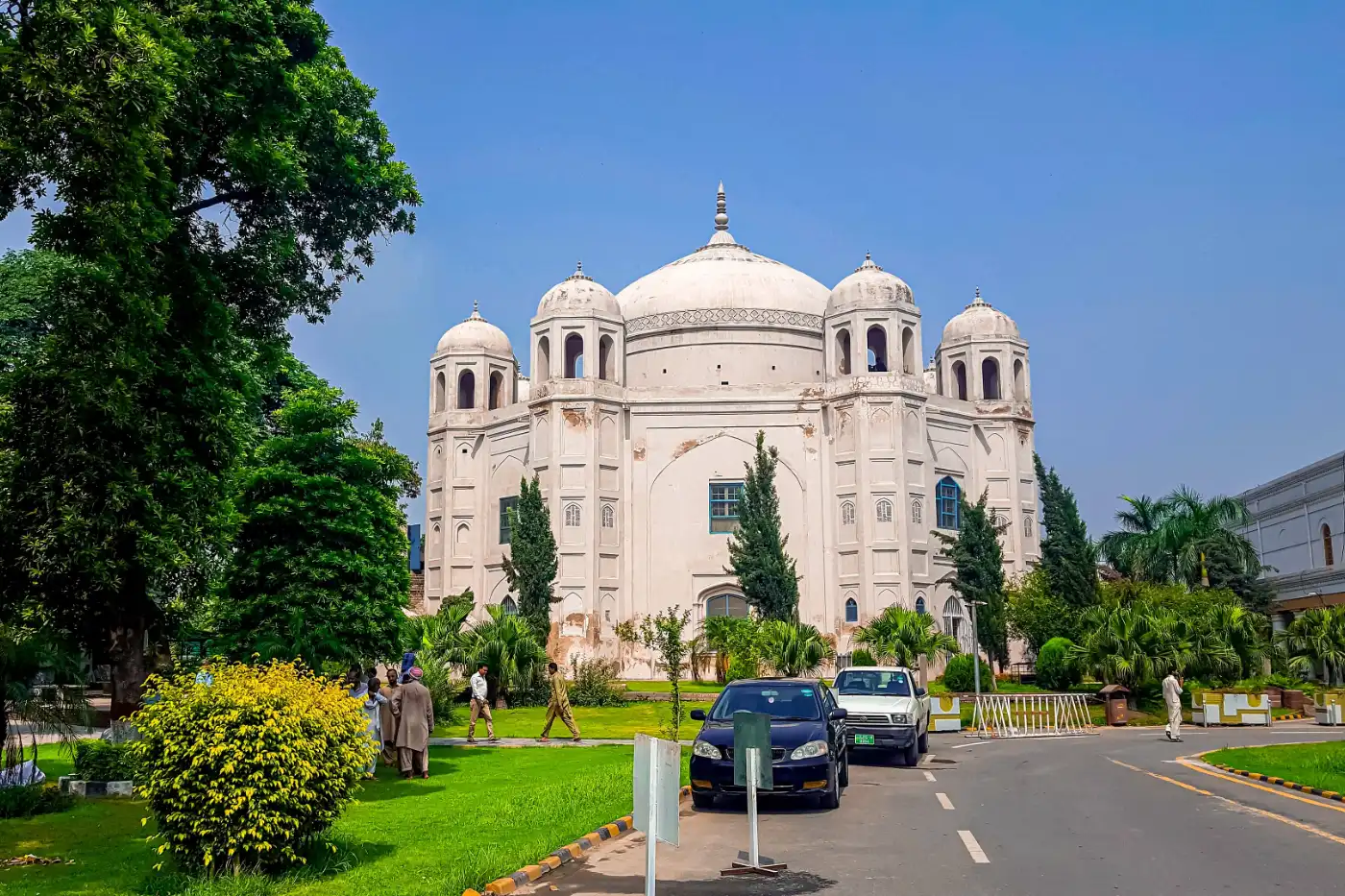
The tomb across the Secretariat lawns. Photo Credit: Shahzaib Damn Cruze, CC BY-SA 4.0.
Visitor Information
Visiting the Tomb of Anarkali Lahore
Before you visit the Tomb of Anarkali Lahore, keep these points in mind.
- Location: Inside the Punjab Civil Secretariat, Lower Mall, Lahore, behind the Chief Secretary’s office.
- Access: Because the tomb is part of a government office, public access is limited. Visitors usually need permission at the Secretariat gate or from the Punjab Archives.
- Timings: Only during government office hours on working days. The gates are closed in the evening and on holidays.
- Ticket: No ticket, but bring your original CNIC (foreigners need a passport).
- Time needed: 30 to 45 minutes.
- Photography: Ask before taking photos, because security staff may not allow it.
- Dress code: Wear modest clothes, as it is both a grave and an office.
- Families and women: Families can visit if permission is given. Still, it is not set up as a tourist site.
- Accessibility: The Secretariat grounds are flat, but there are steps into the tomb.
Rules can change at any time, so check with the Punjab Archives before you go.
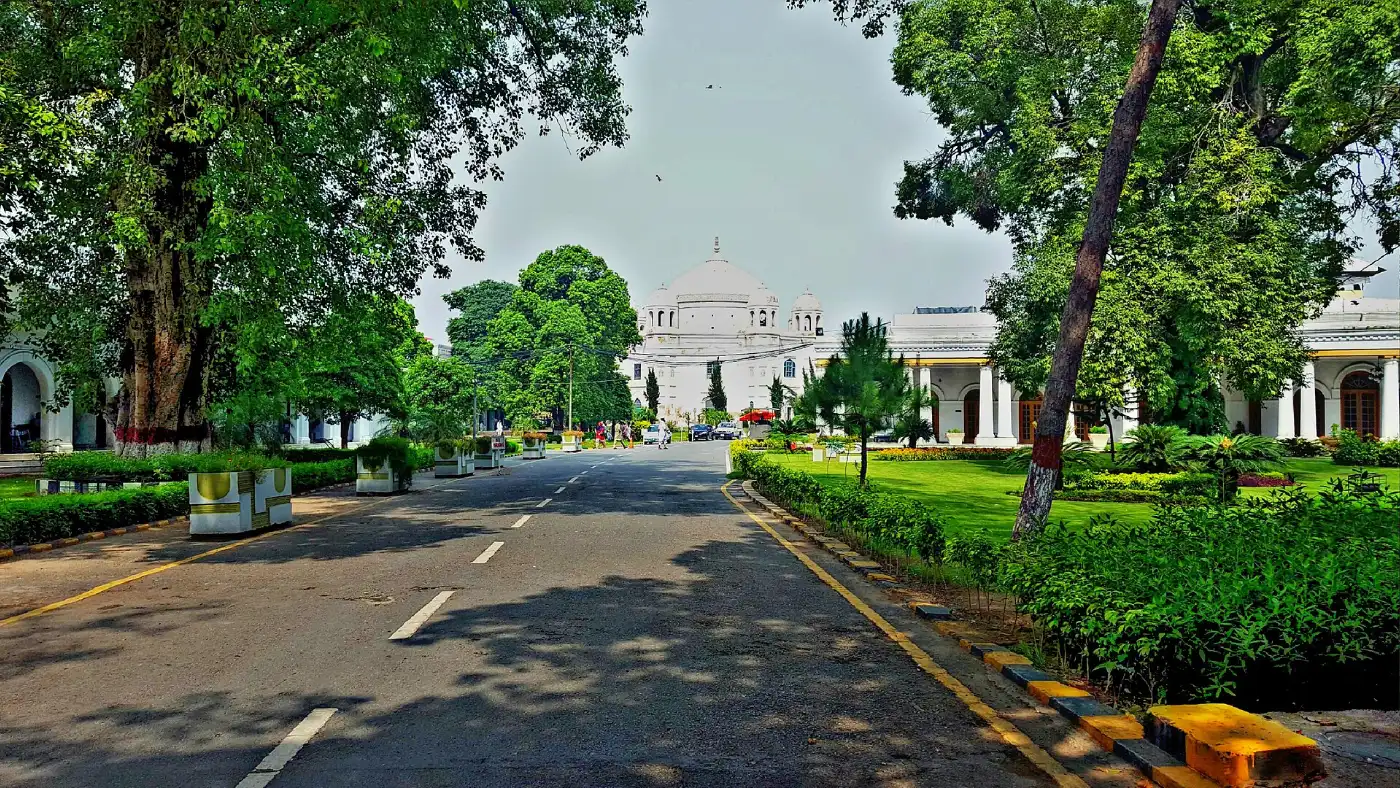
The road inside the Civil Secretariat. Photo Credit: Shahzaib Damn Cruze, CC BY-SA 4.0.
How to Get There
The Civil Secretariat is on the Lower Mall, close to Anarkali Bazaar and the Lahore Museum. By Careem, inDrive or rickshaw, ask for the Civil Secretariat, Lower Mall, and then walk to the gate.
By public transport, take the Orange Line Metro Train to the Anarkali stop. From there, it is a walk of about 10 to 15 minutes.
Places to Visit Near the Tomb of Anarkali
- Tomb of Qutbuddin Aibak: the grave of the first Delhi Sultan, inside Anarkali Bazaar.
- Mall Road: Lahore’s grand colonial avenue, right outside.
- Lahore Museum: Kipling’s Wonder House, a short walk away.
- Data Darbar: Lahore’s most famous Sufi shrine, a short drive away.
- Chauburji: the Mughal gateway of four towers, on Multan Road.
- Sacred Heart Cathedral: a red-brick Catholic cathedral from 1907, on Lawrence Road.
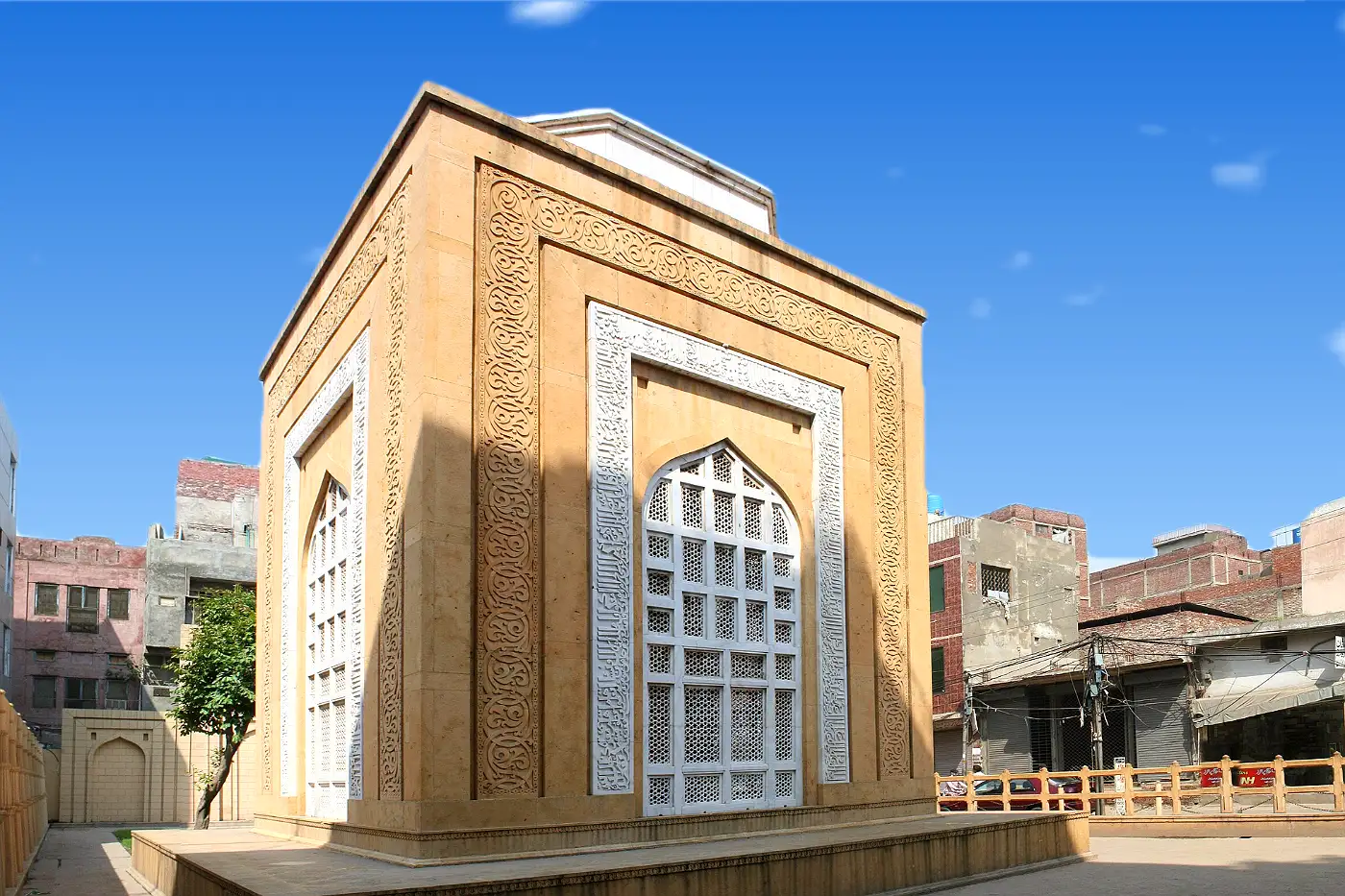
The Tomb of Qutbuddin Aibak in Anarkali. Photo Credit: Tahir8088, CC BY-SA 3.0.
Frequently Asked Questions
Where is the Tomb of Anarkali?
It is inside the Punjab Civil Secretariat on the Lower Mall in Lahore, near Anarkali Bazaar.
Can the public visit the Tomb of Anarkali?
Access is limited because it houses the Punjab Archives. You usually need permission and your original CNIC, and you can only go during office hours.
Was Anarkali a real person?
Historians are not sure. The love story with Prince Salim is mostly legend, and some scholars think the tomb belongs to another Mughal woman.
When was the Tomb of Anarkali built?
It dates from either 1599 or 1615.
Why was the tomb used as a church?
After the British took Punjab, they turned it into St James’ Church in 1851. It became the Punjab Record Office in 1891.
Is Anarkali Bazaar named after the tomb?
Yes. The bazaar and the whole area take their name from Anarkali and her tomb.
Conclusion
In short, the Tomb of Anarkali Lahore is a place where history and legend meet. Whether or not Anarkali was real, this white, eight-sided tomb has survived as a Mughal tomb, a home, a church and an archive. So, if you can get permission, it is well worth a visit.
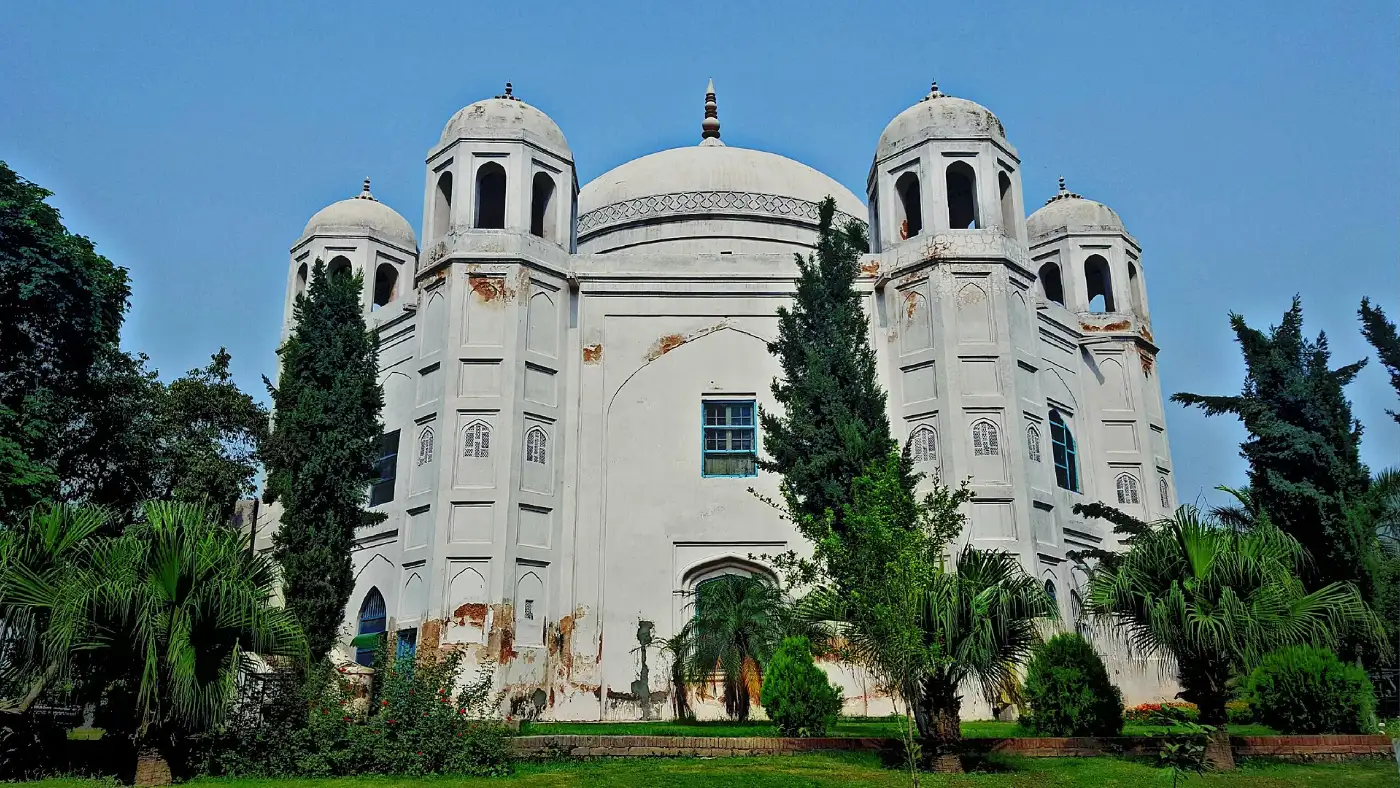
The tomb under a clear blue sky. Photo Credit: Shahzaib Damn Cruze, CC BY-SA 4.0.
Cover photo: Shahzaib Damn Cruze, CC BY-SA 4.0.