Most railway stations are built for trains. Lahore’s, however, was built for trains and for war. Indeed, with its thick red-brick walls, round towers and battlements, Lahore Railway Station looks more like a fort than a place to catch the Karachi express.
Even so, it is one of the busiest and most loved landmarks in the city. In this guide, we explain why it was built this way, what to look for when you visit, and how to make the most of a trip to Lahore Railway Station, whether you are catching a train or simply admiring it.
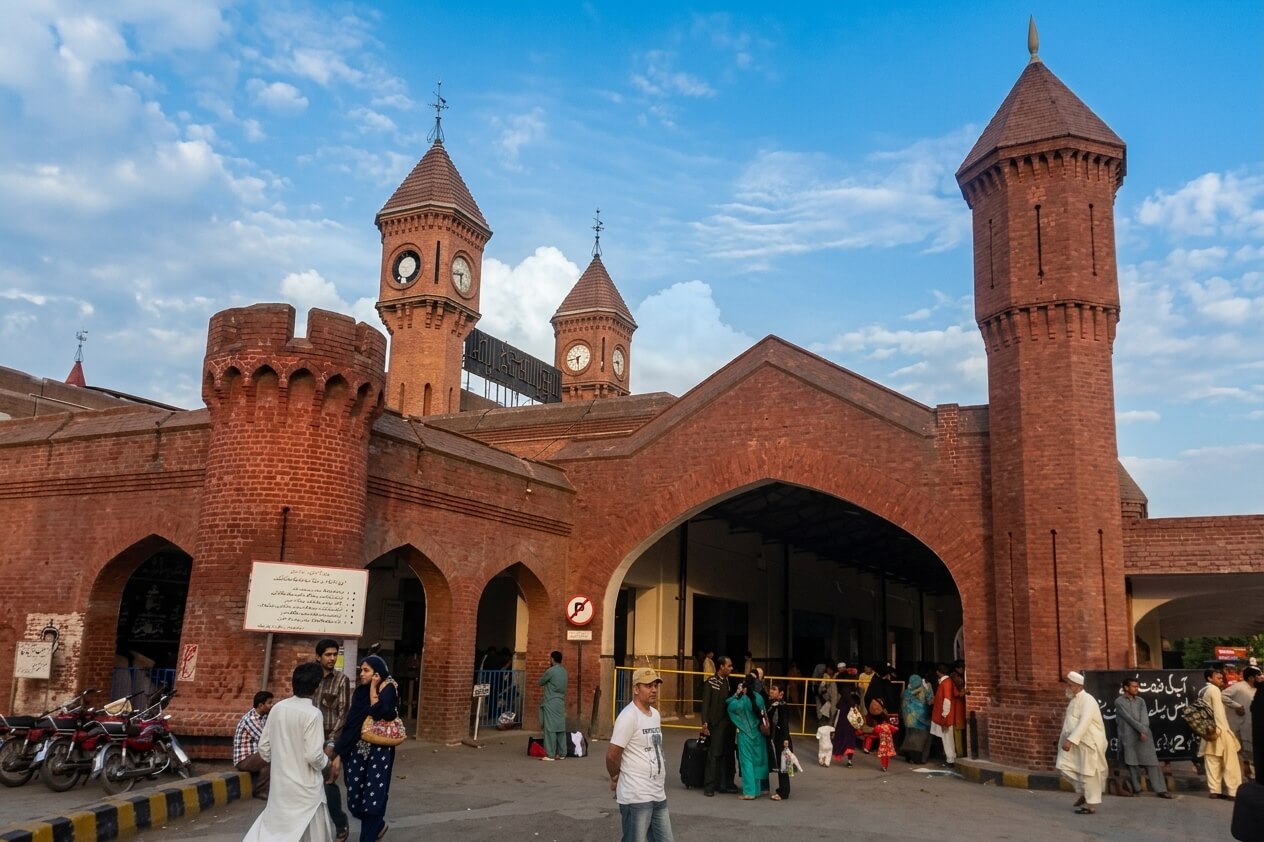
The main entrance of the station. Photo Credit: Aamir Khan Lodhi, CC BY-SA 4.0.
History of Lahore Railway Station
To begin with, the British started work on the station soon after the revolt of 1857. In other words, they wanted a station that could also defend the city if another uprising came. So, Mian Mohammad Sultan Chughtai, a local contractor who had worked for the Mughals, built it between 1859 and 1860, and it opened in 1860.
Railway Offices in a Mughal Mosque
In those early years, the railway company even used the nearby Dai Anga Mosque as an office. Later, in 1903, the mosque was returned to Lahore’s Muslims.
Dark Days and Big Moments
The station has also seen painful history. In 1928, during a protest against the Simon Commission near the station, police beat the leader Lala Lajpat Rai. Then, in 1947, during Partition, the station saw terrible violence as trains full of refugees crossed the new border. Today, however, it is a busy, peaceful hub where millions of passengers start and end their journeys.
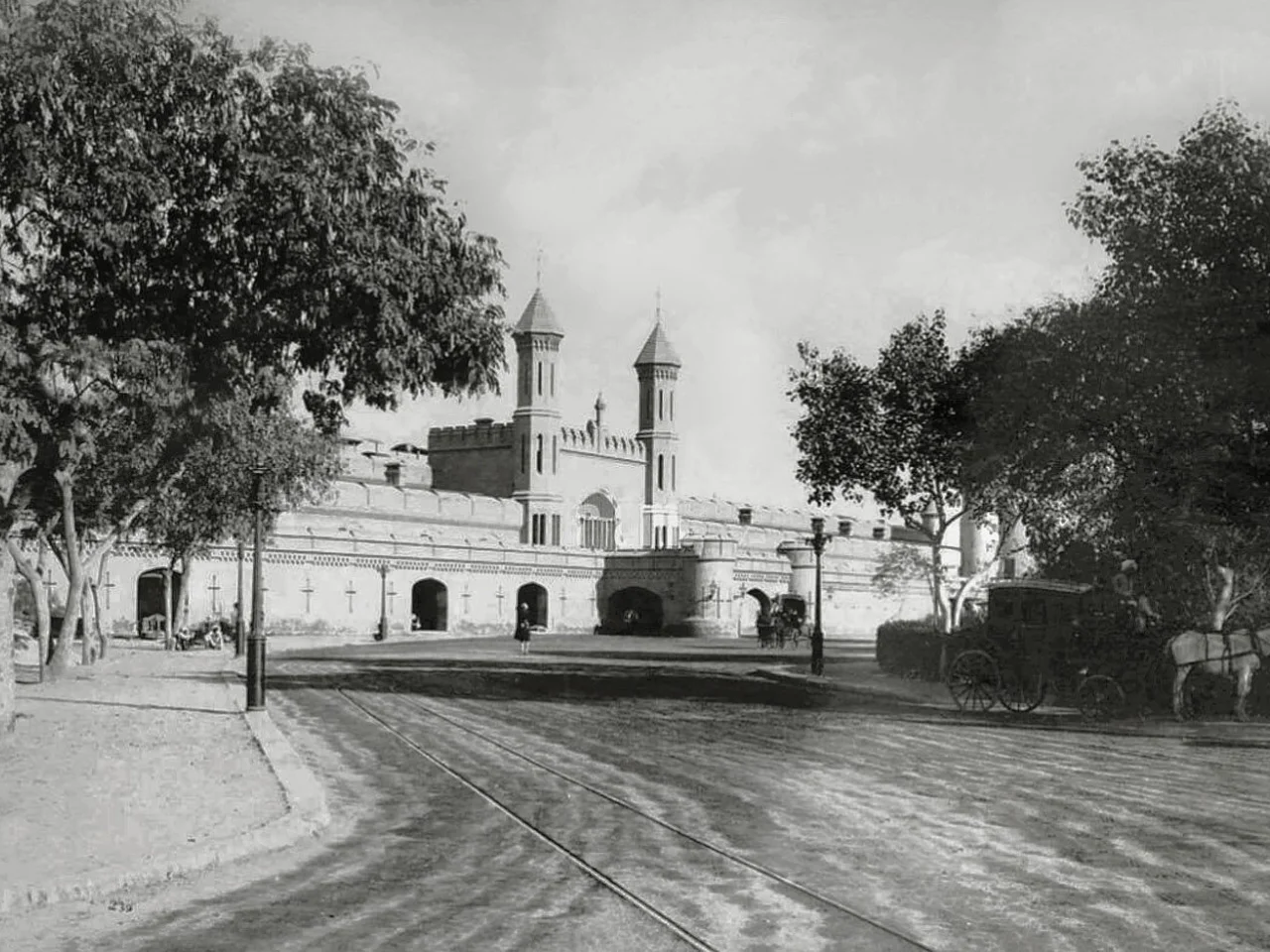
The station in the 1870s. Photo Credit: Unknown photographer.
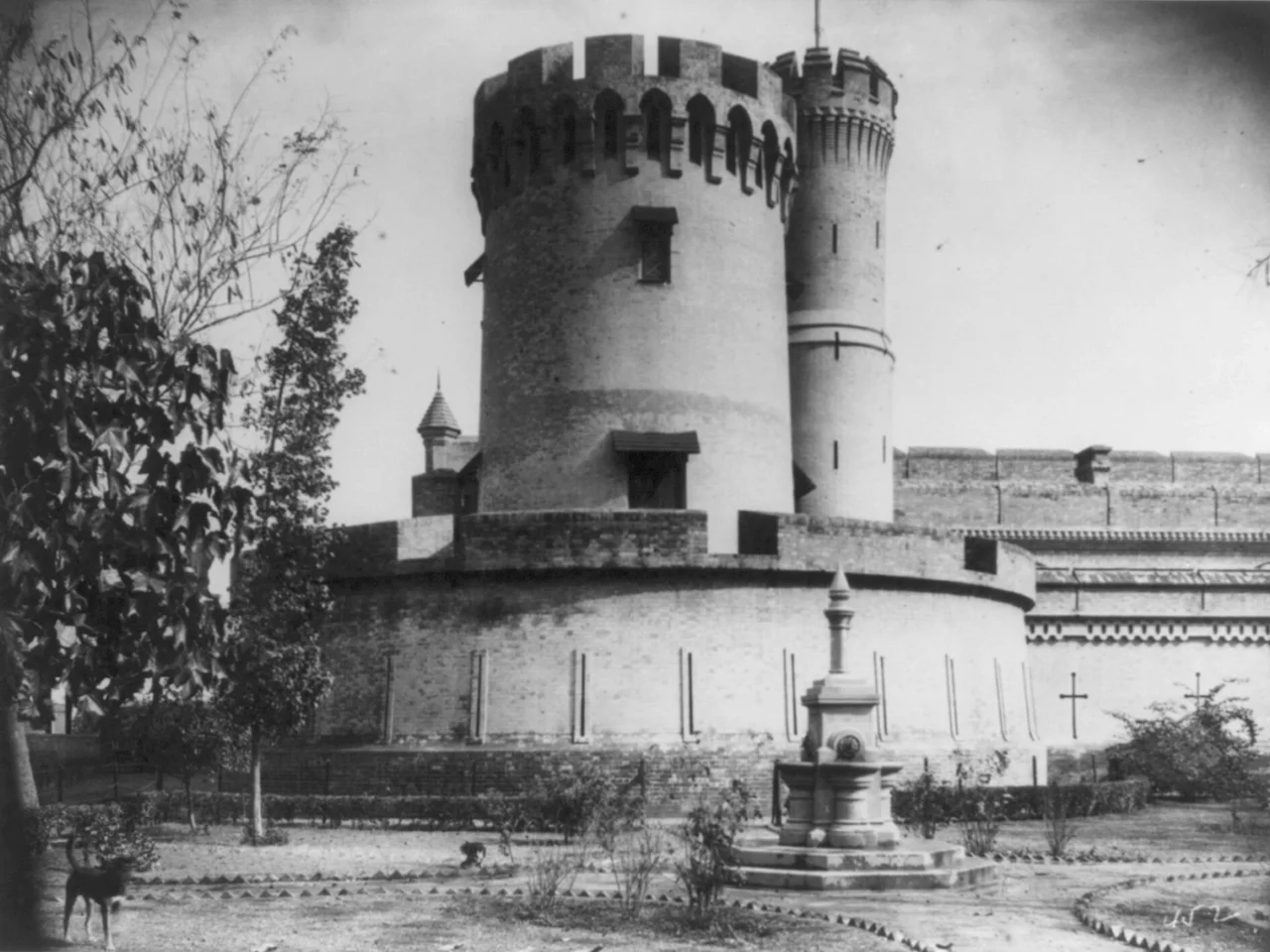
The fortified towers in 1895. Photo Credit: William Henry Jackson.
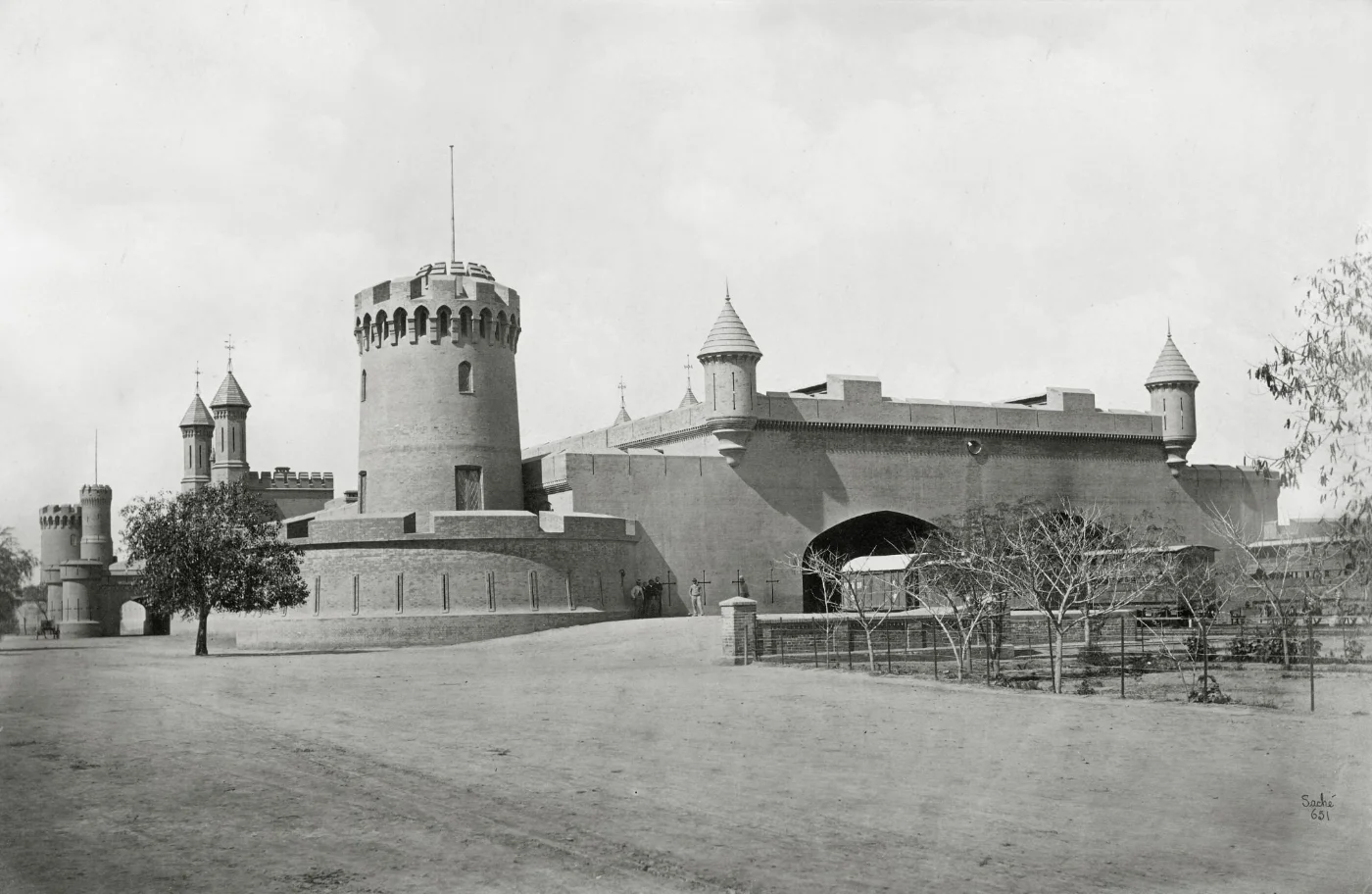
The station around 1870. Photo Credit: John Edward Saché.
A Station Built Like a Fort
First of all, look at the walls. Notice that they are thick, made of red brick, and topped with battlements, just like a castle. In addition, the corners have round towers with narrow slits, which were meant for guns and cannon fire. As a result, the whole station could be closed and defended like a fort.
Clock Towers and Pointed Turrets
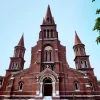
By contrast, the main front of Lahore Railway Station is softer. Here, instead, two clock towers with pointed roofs rise above the entrance, along with small turrets and arches. Together, this mix of Gothic and fort styles makes it one of the most photographed buildings in Lahore.
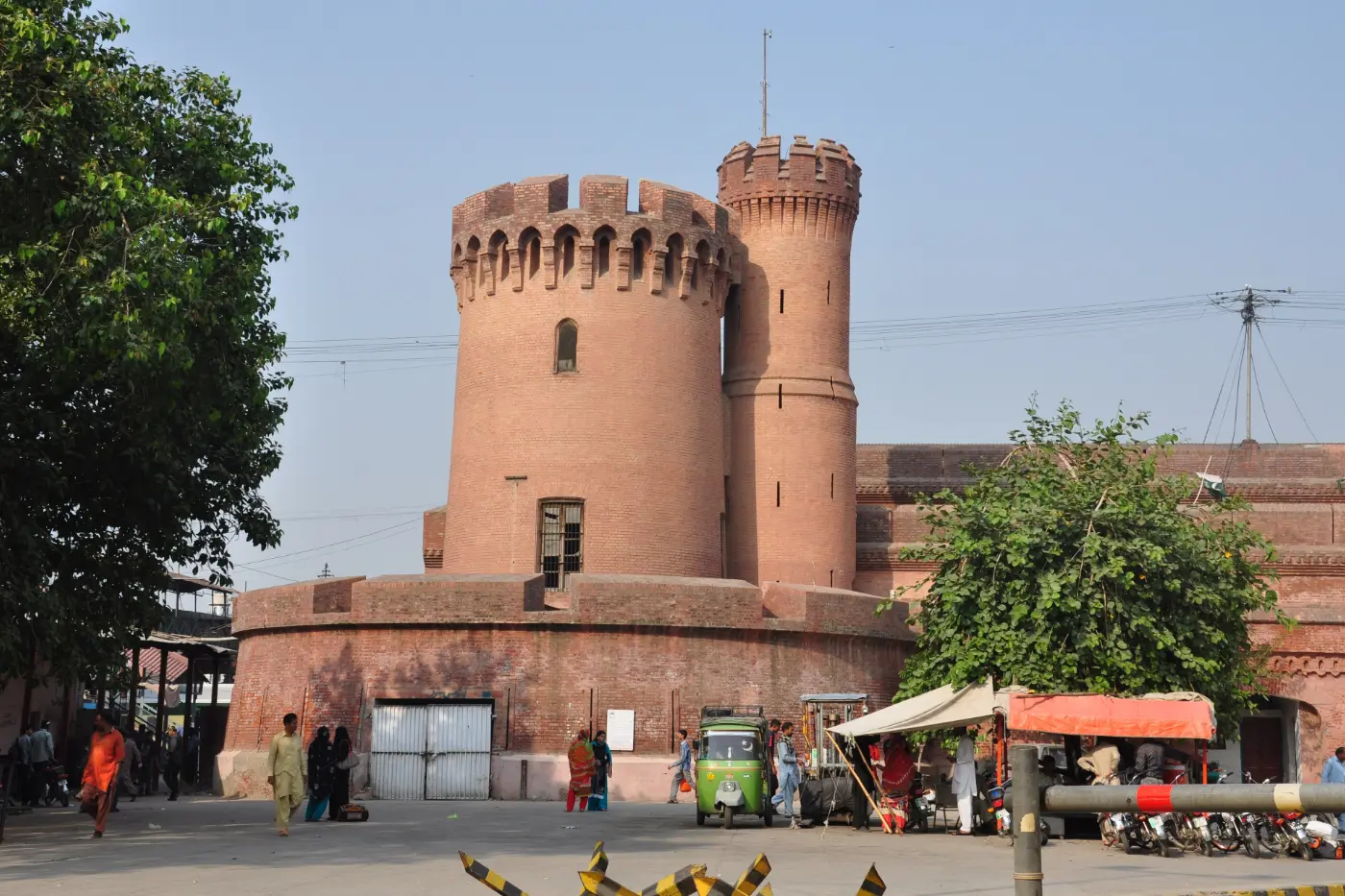
Round towers with battlements. Photo Credit: Nadeem Abbas Mushtaq, CC BY-SA 3.0.
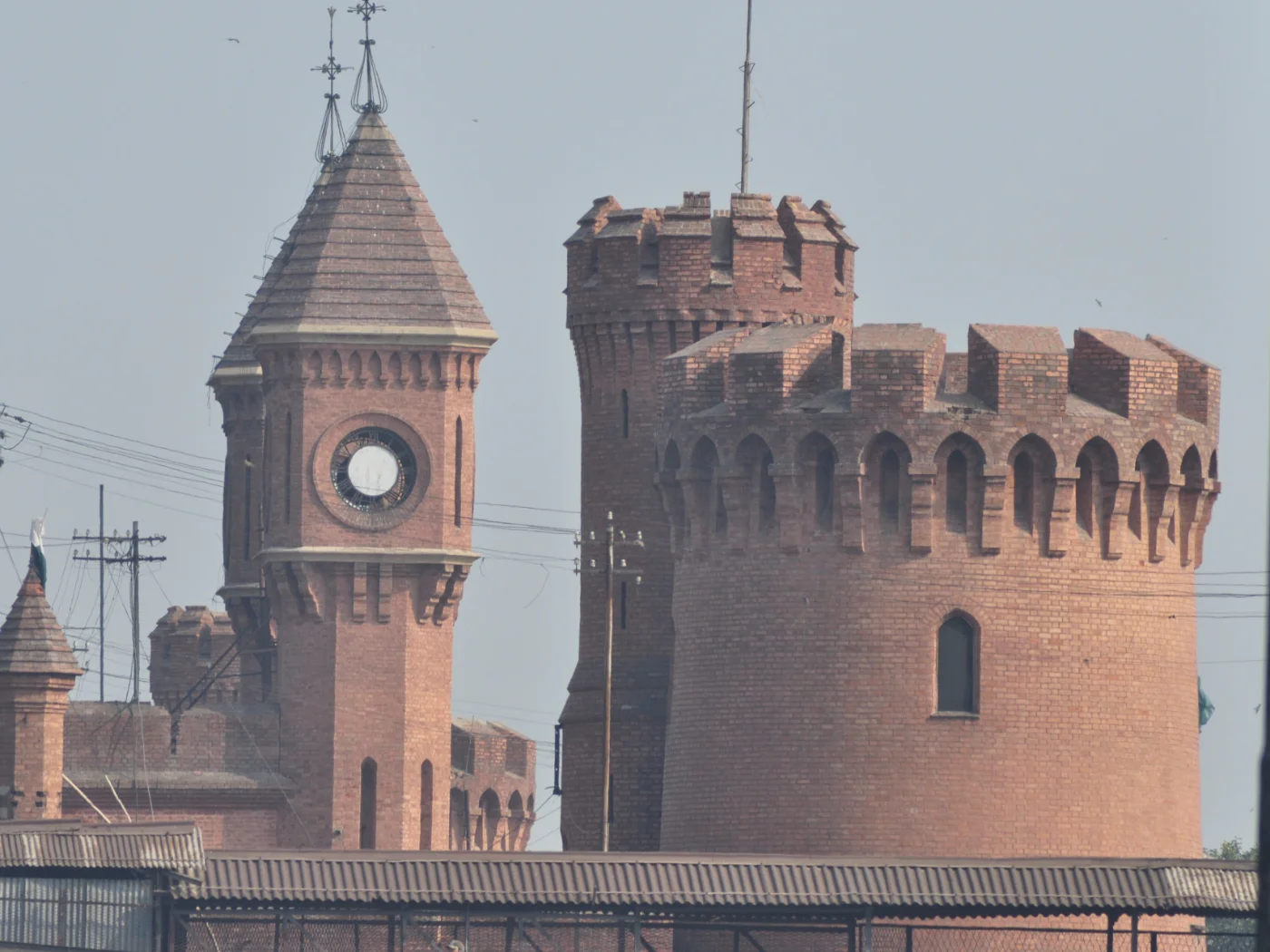
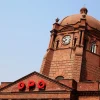
A clock tower beside a bastion. Photo Credit: Nadeem Abbas Mushtaq, CC BY-SA 3.0.
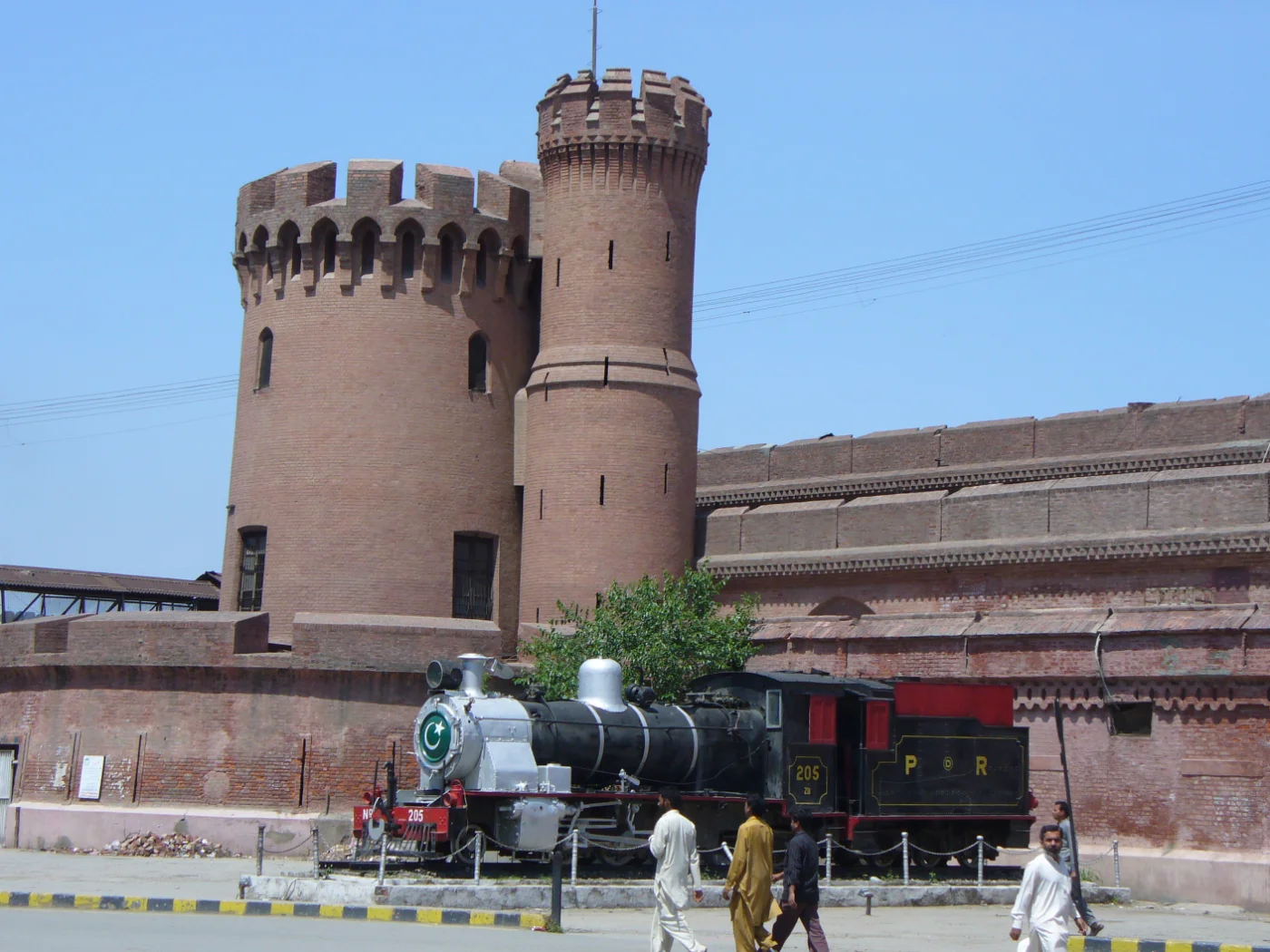
The side towers with an old engine. Photo Credit: Rabab FatimaTurabi, CC BY-SA 3.0.
What to See
The Steam Locomotives
Outside the station, Pakistan Railways has placed old steam locomotives on display. Naturally, children love them, and they make a great photo with the red towers behind.

A steam locomotive on display. Photo Credit: Rabab FatimaTurabi, CC BY-SA 3.0.
The Platforms
Inside, meanwhile, Lahore Railway Station has 11 platforms. Above them, long arched walls and iron roofs cover the main platforms, and the station clock hangs high above the crowds. Meanwhile, porters in red shirts, tea sellers and travellers fill the scene with life.
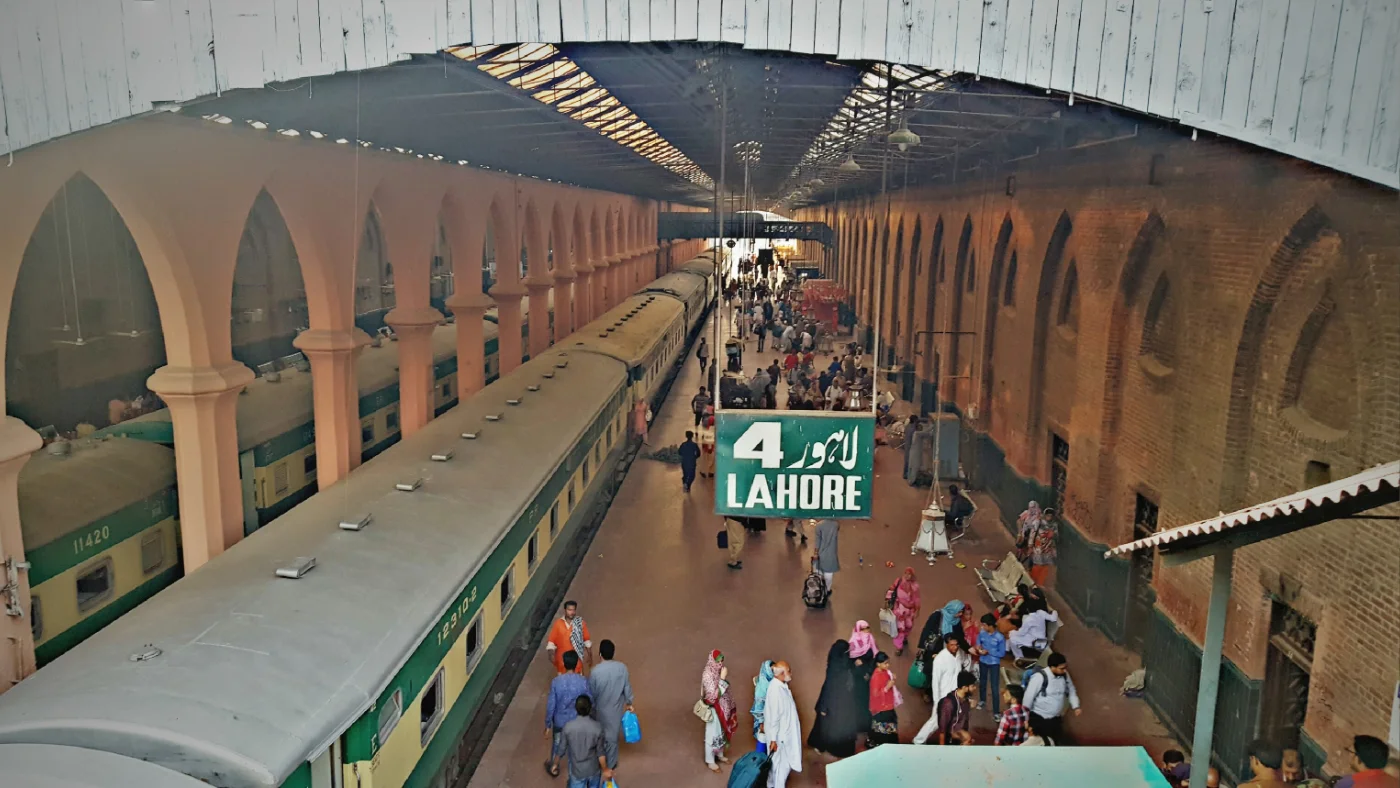
Platform 4. Photo Credit: Shahzaib Damn Cruze, CC BY-SA 4.0.
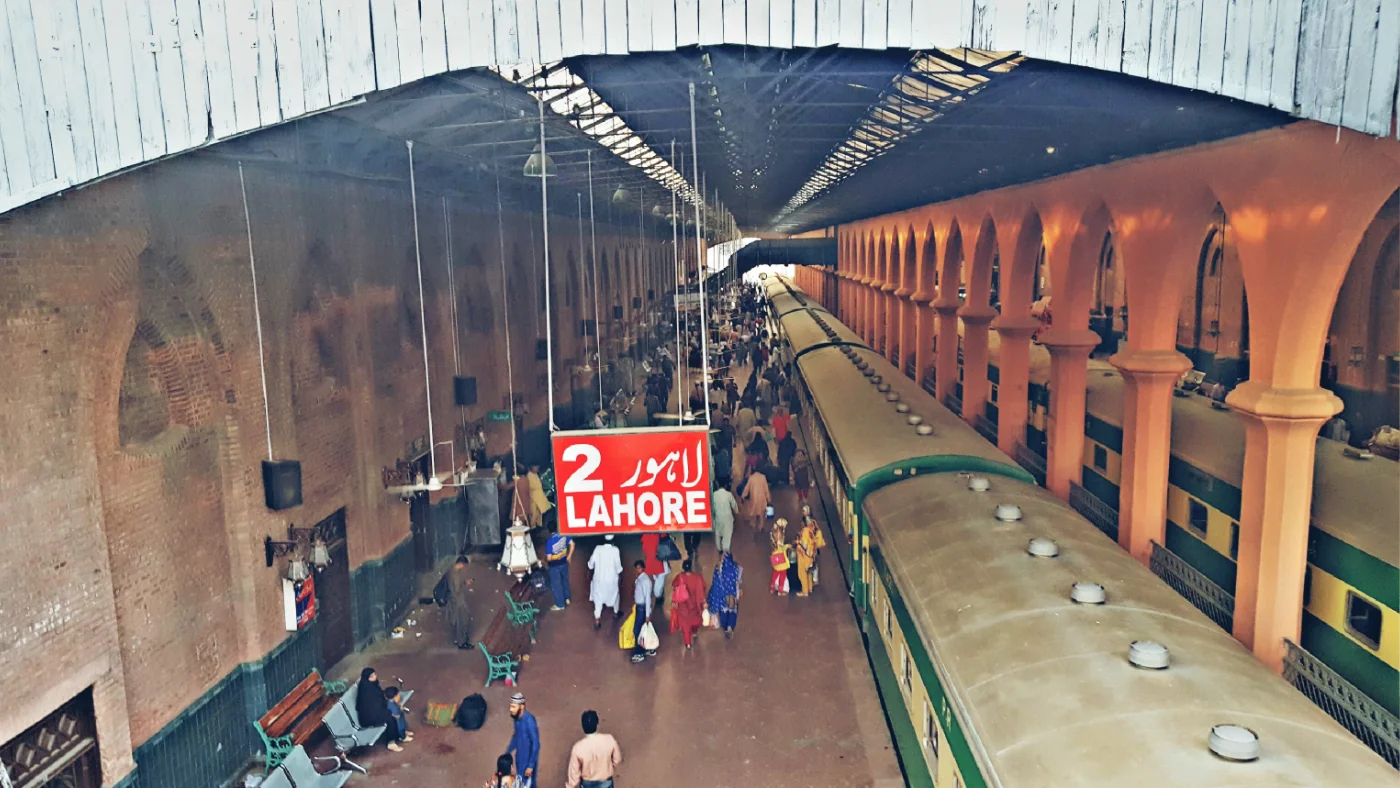
Platform 2. Photo Credit: Shahzaib Damn Cruze, CC BY-SA 4.0.
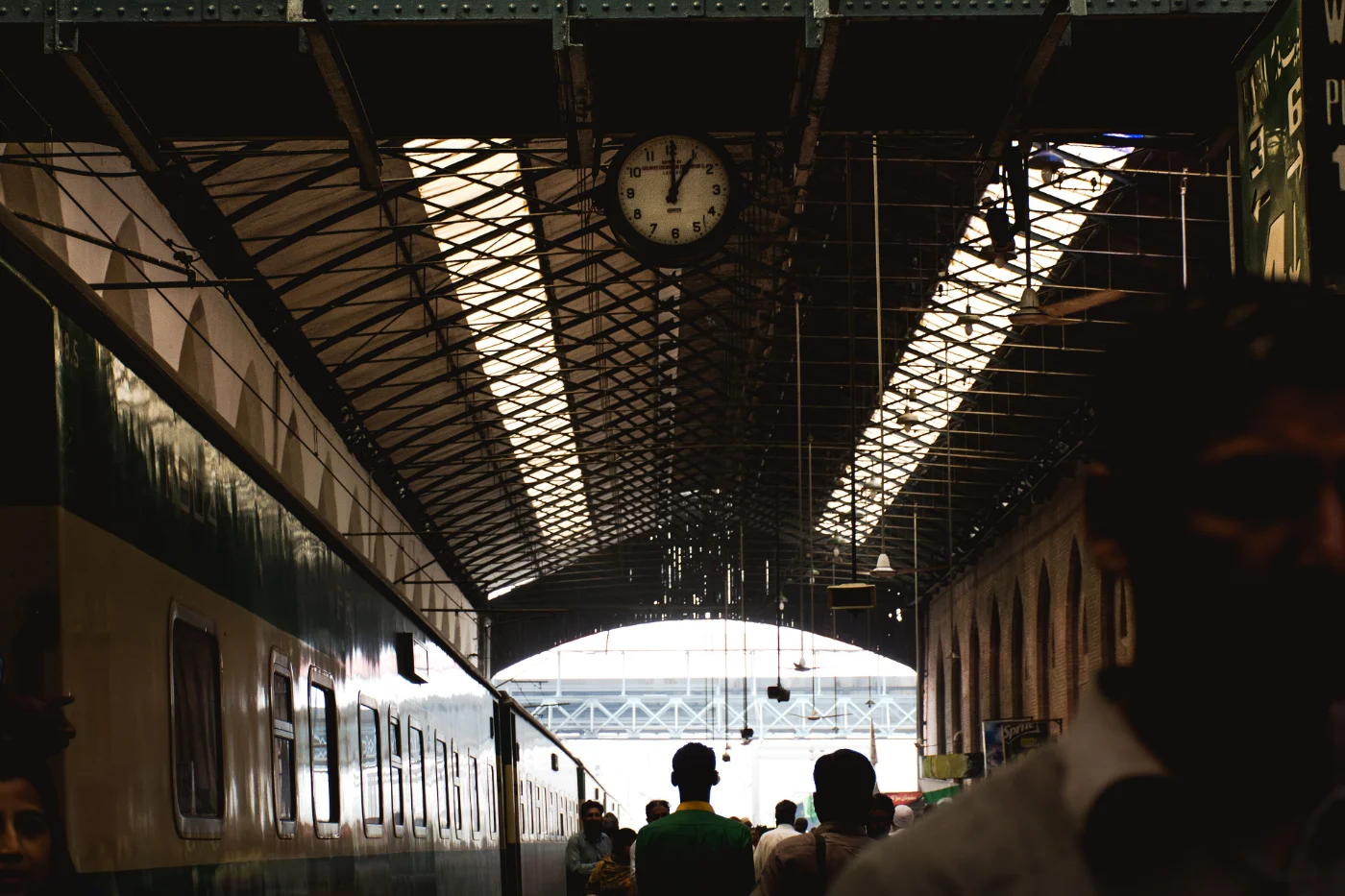
The platform roof and clock. Photo Credit: GeniMusty7, CC BY-SA 4.0.
The Old Signal Cabin
Finally, look for the old wooden signal cabin standing on stilts beside the tracks. In fact, it is a reminder of the days when signals were worked by hand.
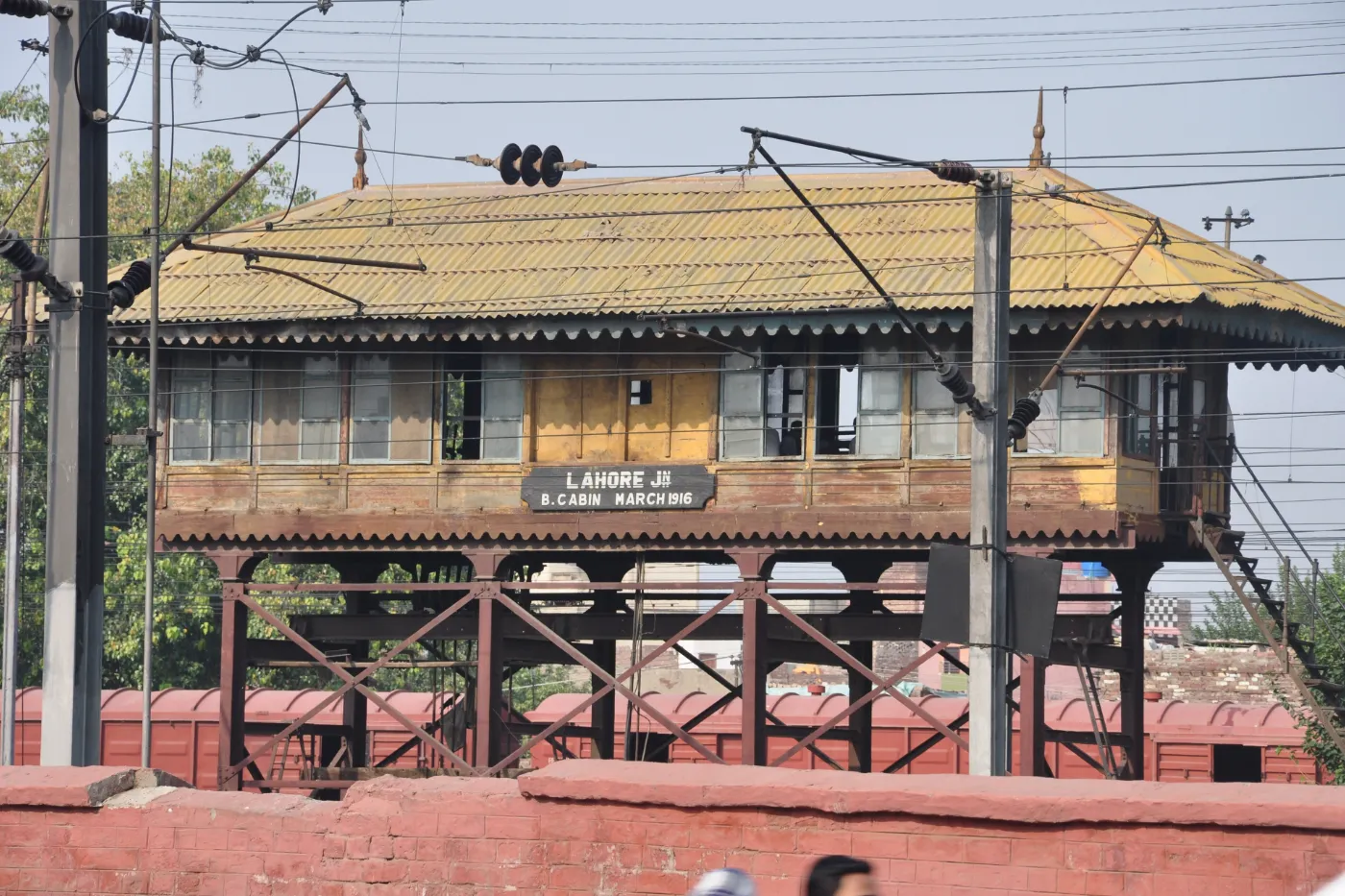
The old signal cabin. Photo Credit: Nadeem Abbas Mushtaq, CC BY-SA 3.0.
Things to Do
- First, photograph the clock towers and round bastions from the front square.
- Next, see the steam locomotives on display outside the station.
- After that, buy a platform ticket and watch the trains come and go.
- Also, take a train trip, for example to Rawalpindi, Multan or Karachi.
- Then walk to the Dai Anga Mosque, a tiled Mughal gem just behind the station.
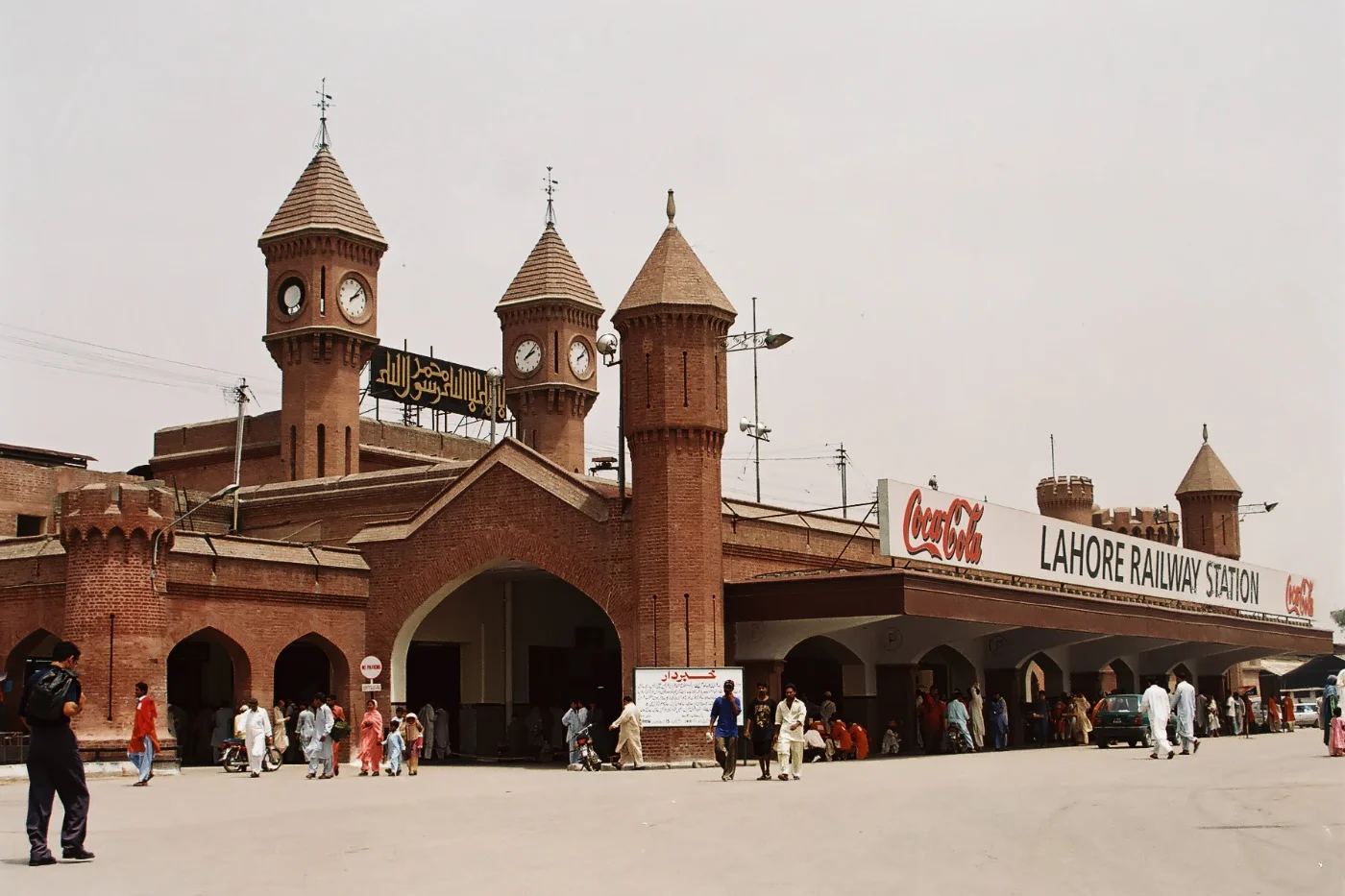
The arches of the front facade. Photo Credit: Usman.pg, CC BY-SA 3.0.
Food Nearby
Around the station, you will find many simple dhabas and tea stalls that serve travellers day and night. For example, try halwa puri and chanay for breakfast, or daal, nihari and fresh tandoori roti later in the day. Also, platform stalls sell tea, biscuits and snacks for the journey.
However, for a proper food street, take a short rickshaw ride to Gawalmandi or Lakshmi Chowk. Expect to pay around PKR 300 to 1,000 per person near the station.
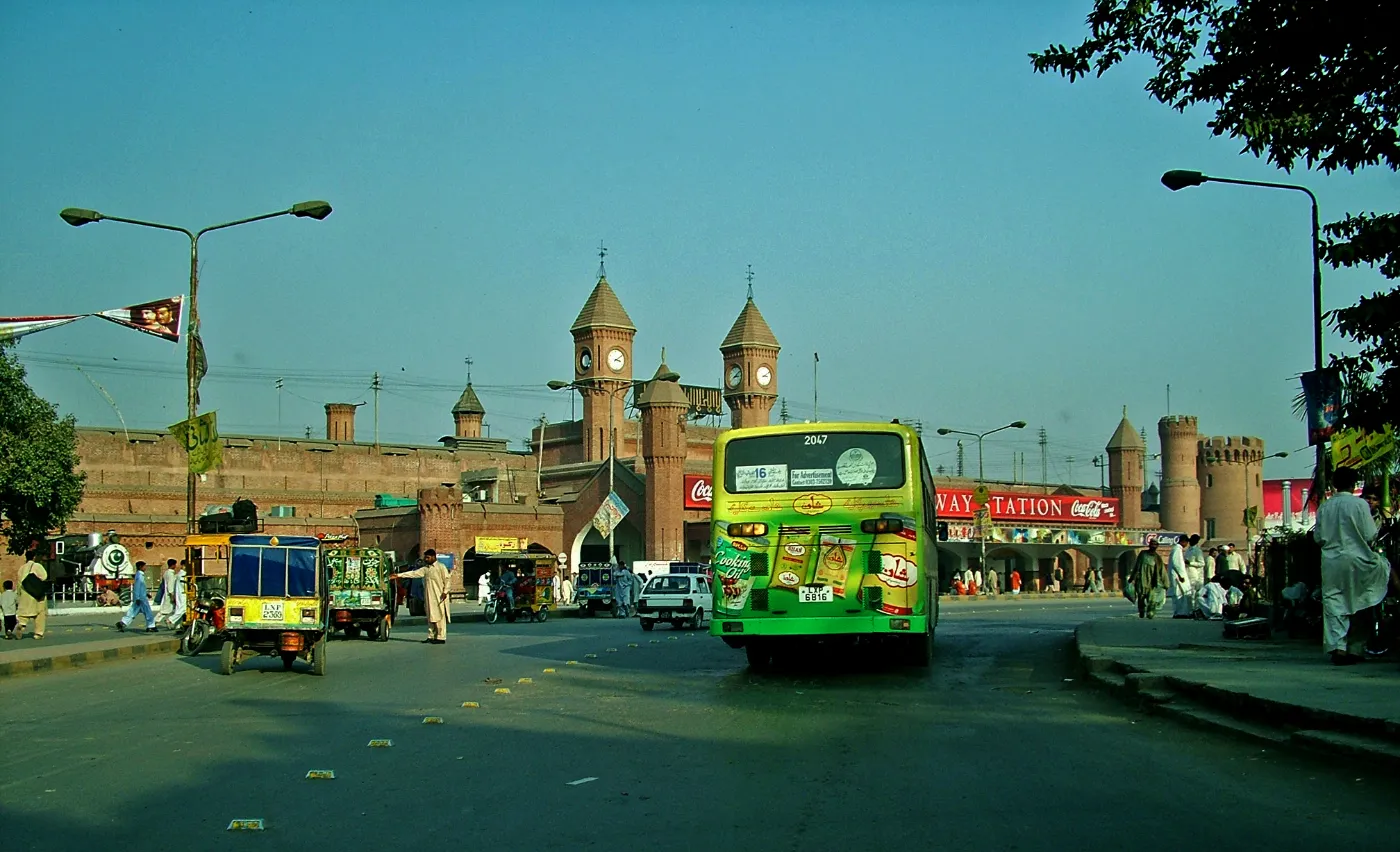
The station seen from the main road. Photo Credit: Guilhem Vellut, CC BY-SA 2.0.
Visitor Information
Visiting Lahore Railway Station
Before you visit Lahore Railway Station, keep these points in mind.
- Location: Empress Road, at the junction of Circular Road and Allama Iqbal Road, Lahore.
- Timings: Open around the clock, because trains run day and night.
- Tickets: Book train tickets at the counters or online through Pakistan Railways. To go on the platforms without travelling, buy a platform ticket.
- Best time: Ideally, early morning, for soft light on the red bricks, or evening, when the station is lit.
- Time needed: Usually 30 to 60 minutes for a visit.
- Parking: There is paid parking in front; however, it gets busy.
- Families and women: Safe and busy, and there are waiting rooms for families and women.
- Photography: Fine outside. On platforms, though, avoid photographing police or security staff.
- Accessibility: The main hall is flat. However, some platforms need stairs or the footbridge.
- Safety: Above all, keep your bags and phone close, especially in crowds, and only use official porters.
Finally, around Eid, the station gets extremely crowded, so book early if you plan to travel.
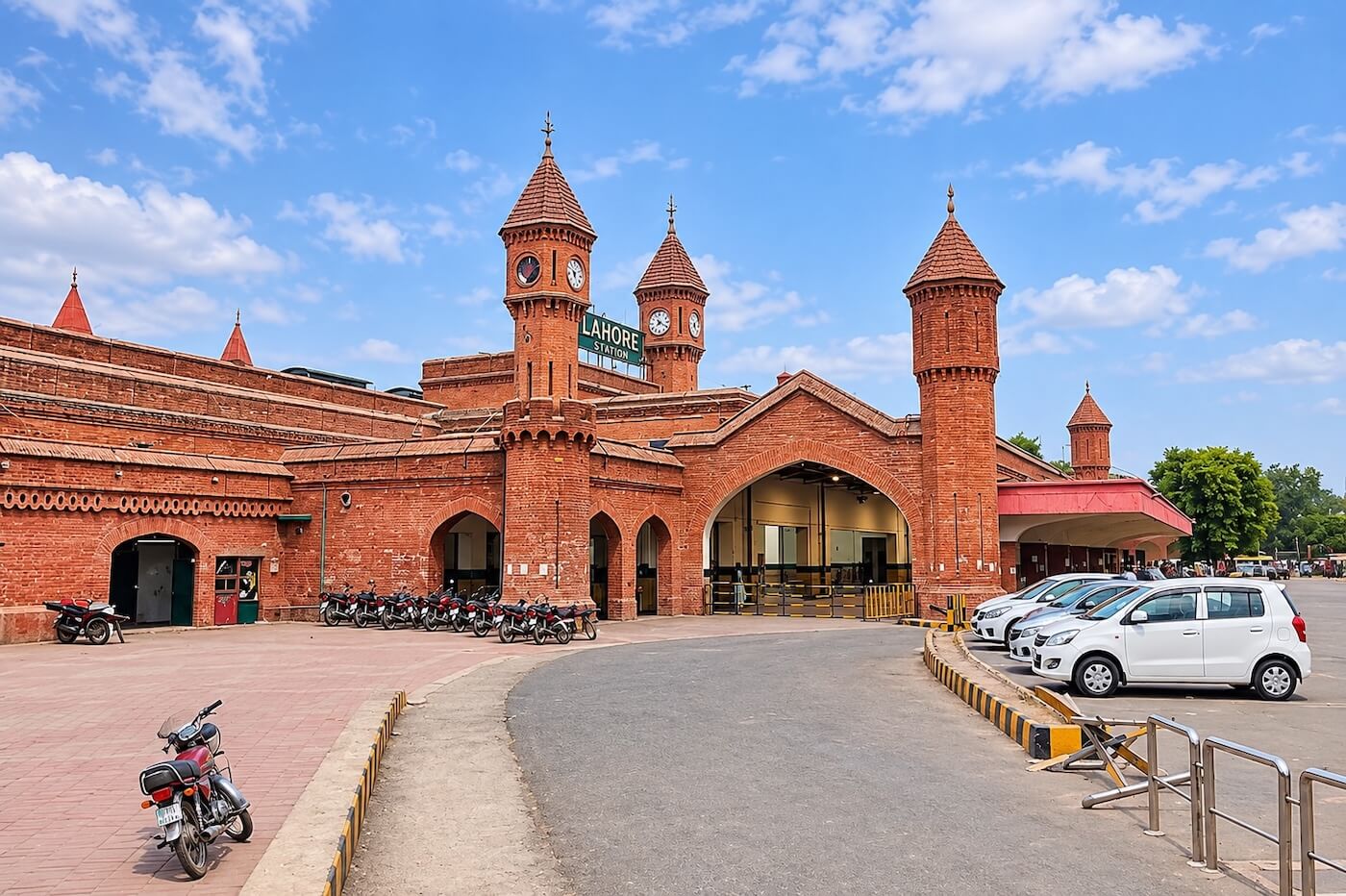
The station in 2024. Photo Credit: ほっきー.
How to Get There
Basically, Lahore Railway Station stands on Empress Road, east of the Walled City. By Careem, inDrive or rickshaw, just ask for Railway Station. As a result, it is one of the easiest places in Lahore to reach.
Alternatively, by public transport, take the Orange Line Metro Train to its Lahore Station stop, right next to the station. In addition, many local buses and wagons stop on the main road outside.
Places to Visit Near Lahore Railway Station
- Dai Anga Mosque: a tiled Mughal mosque, just southeast of the station.
- Delhi Gate: the main gate of the Walled City, a short rickshaw ride away.
- Masjid Wazir Khan: Lahore’s most colourful Mughal mosque, inside Delhi Gate.
- Gulabi Bagh: the tiled gateway and Tomb of Dai Anga on GT Road.
- Shalimar Gardens: Shah Jahan’s royal garden, further along GT Road.
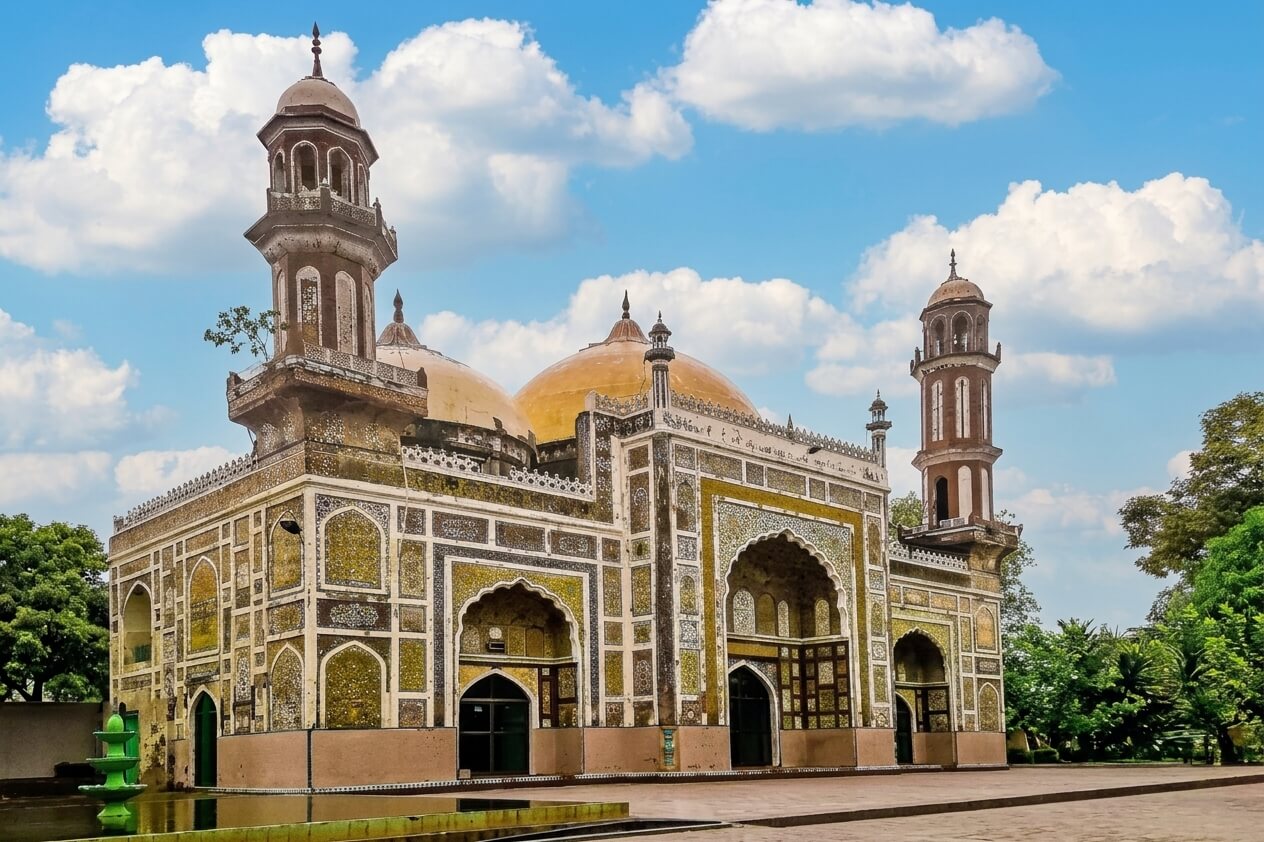
Dai Anga Mosque, just behind the station. Photo Credit: Kaleem Ullah, CC BY-SA 4.0.
Frequently Asked Questions
When was Lahore Railway Station built?
In short, it was built between 1859 and 1860, and it opened in 1860.
Why does Lahore Railway Station look like a fort?
The British built it soon after the 1857 revolt, so they designed it to be defended like a fort, with thick walls and towers.
How many platforms does Lahore Railway Station have?
Altogether, it has 11 platforms.
Can I visit the station without a train ticket?
Yes. You can see the outside for free, and you can buy a platform ticket to go inside.
How do I book a train ticket from Lahore?
Simply buy tickets at the station counters or online on the Pakistan Railways website or app.
Is there an Orange Line stop at the railway station?
Yes. The Orange Line Metro Train has a stop right next to the station.
Conclusion
In short, Lahore Railway Station is much more than a place to catch a train. Instead, it is a fort, a piece of colonial history and a busy, living part of the city. So, next time you pass by, stop for a few minutes and look up at its towers.
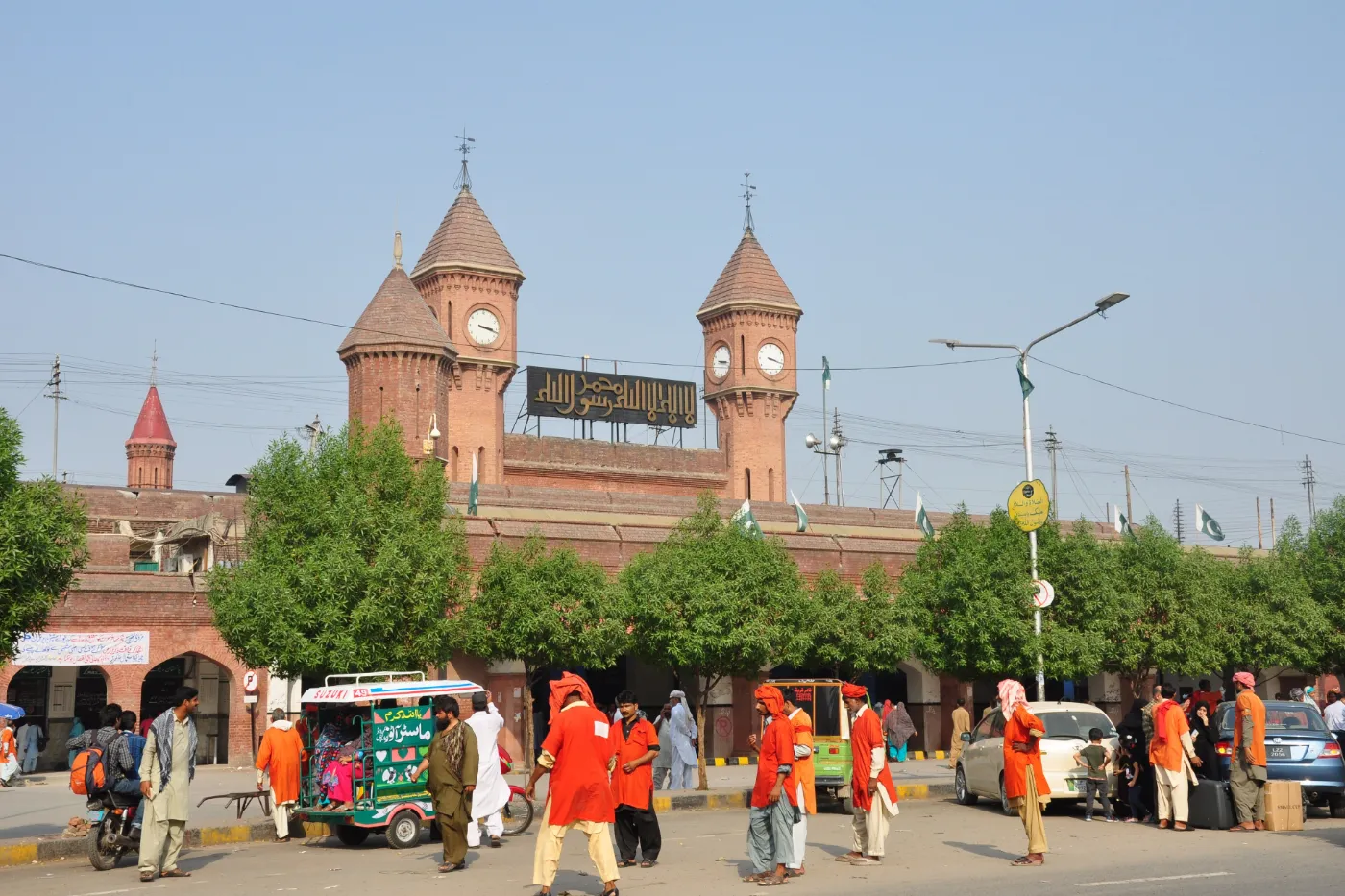
The clock towers on a busy morning. Photo Credit: Nadeem Abbas Mushtaq, CC BY-SA 3.0.
Cover photo: Joe mon bkk, CC BY-SA 4.0.