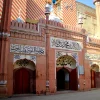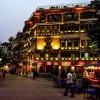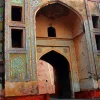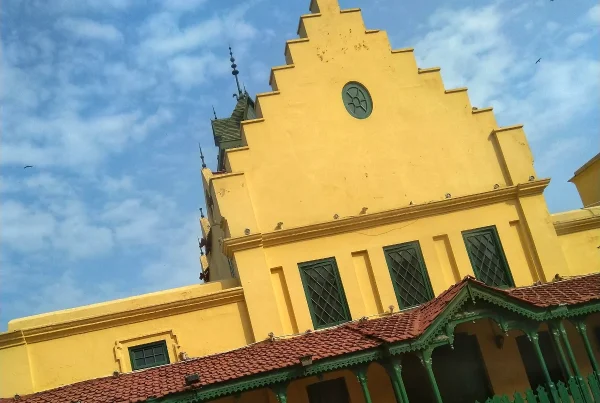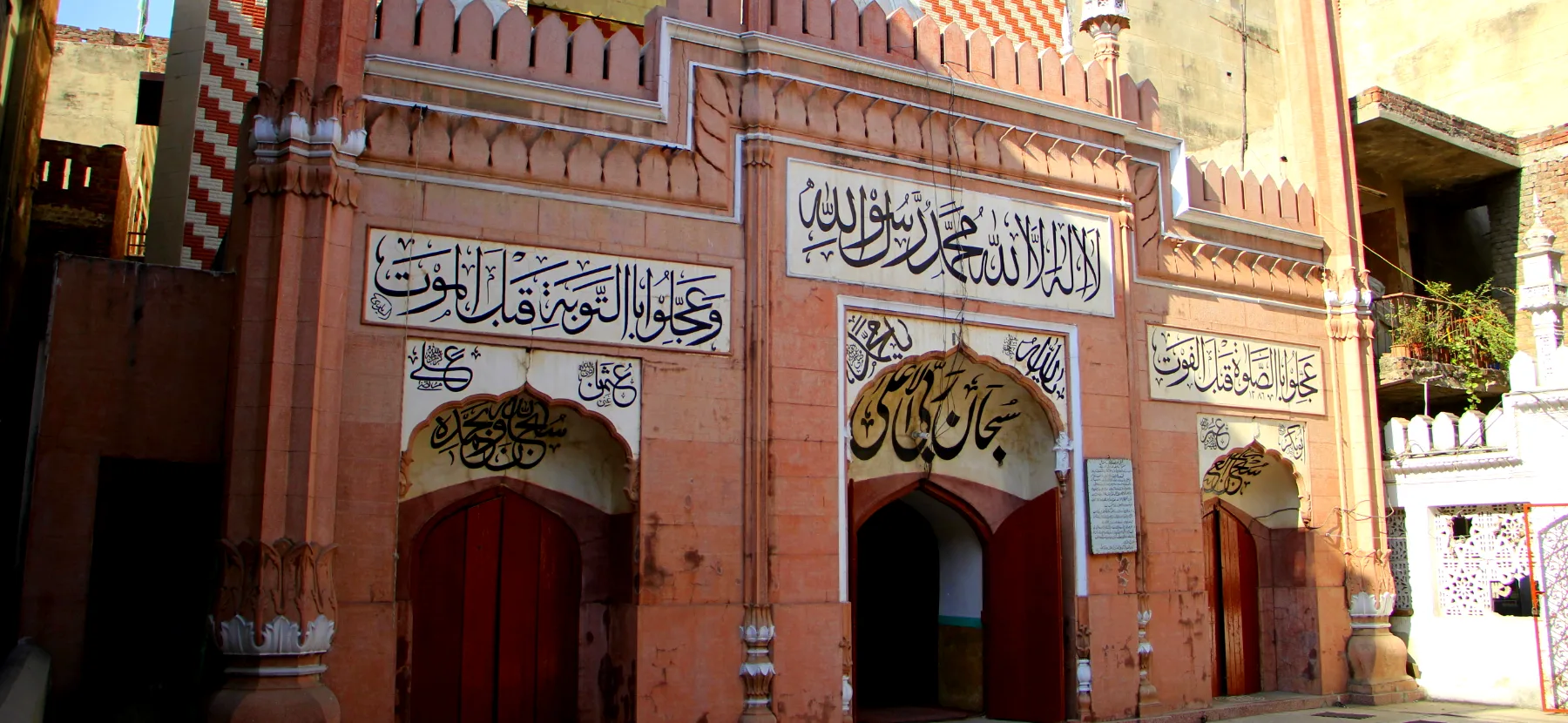
You will not find a gateway at Mochi Gate. The old gate disappeared long ago, yet the name lives on in one of the busiest corners of the Walled City of Lahore. Here, dry fruit shops spill onto the road, old havelis lean over narrow lanes and a 17th-century mosque hides its tile work behind shop signs.
Mochi Gate is also part of Pakistan’s political story. Next to it lies Mochi Bagh, once the most famous rally ground in the country. So this guide explains the history, the places worth finding and how to enjoy a short walk here.
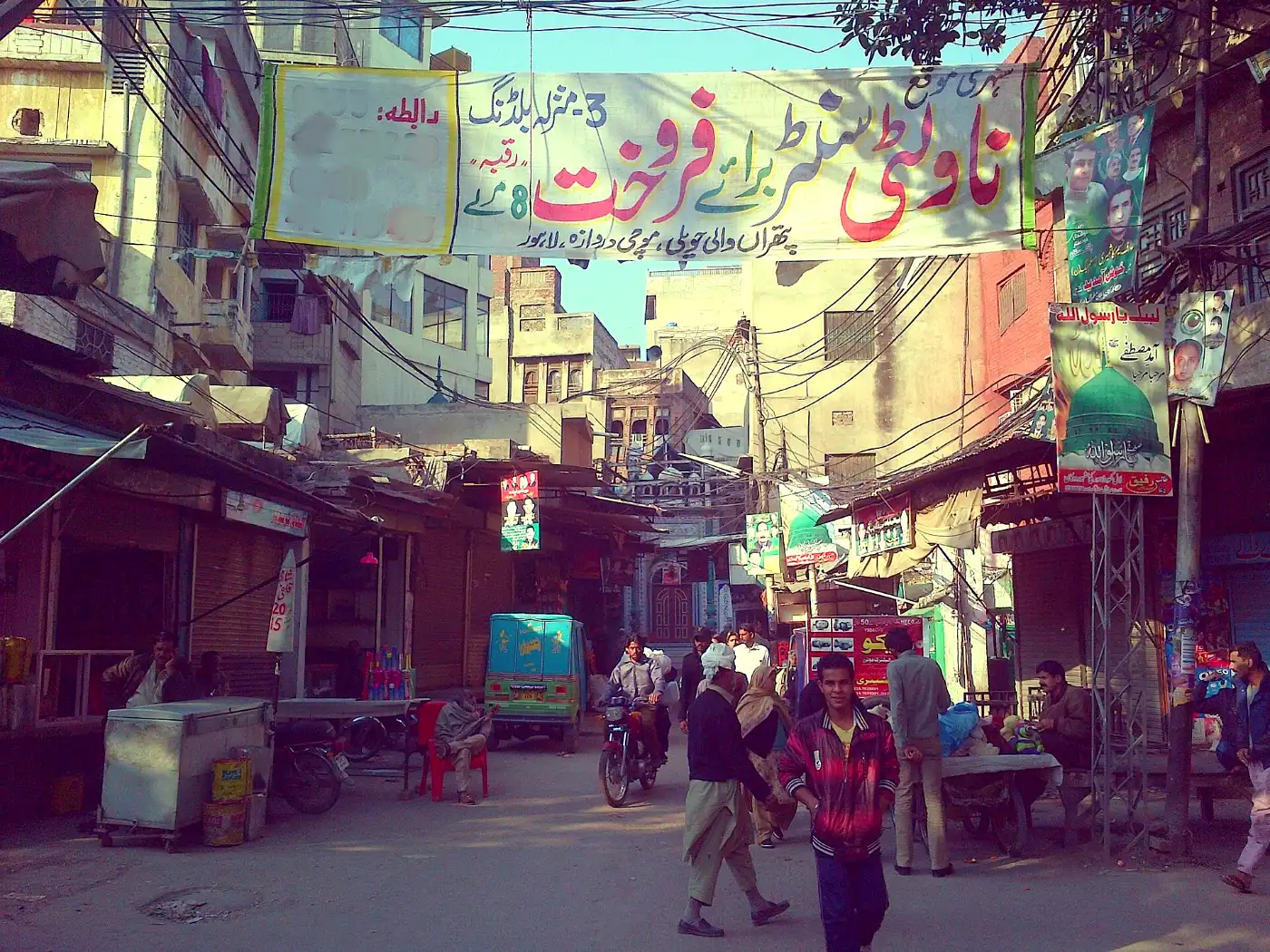
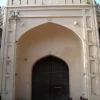
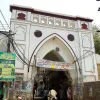
The entrance to Mochi Gate, where the old gate once stood. Photo Credit: Muhammad Imran Saeed from City of London, Canada, CC BY 2.0.
Quick facts
- Location: Circular Road, south side of the Walled City, between Shah Alami and Akbari Gate
- Timings: The area is open all day; shops from about 10 am to late evening
- Ticket: Free
- Time needed: 1 to 2 hours
- Best time: Morning, especially in winter
- Map: Open in Google Maps
Last checked: November 2026. Full details in Visitor Information.
History of Mochi Gate
Where the Name Comes From
To begin with, mochi means cobbler, so many people think shoemakers once worked here. However, local historians tell other stories too. One says the gate was named after Moti Ram, a guard who watched over it in the time of Emperor Akbar. Another says the word comes from “morchi”, the trench soldiers of the Mughal governor who were posted here. Street names nearby, such as Kaman Garan (bow makers), support the soldier story.
A Gate That Is No More
Mochi Gate was one of the 13 gates of the walled city built in Akbar’s time. Like the others, it was pulled down in the early British period and rebuilt later. Then, during the riots of 1947, the gate was burnt and lost. As a result, today only the name, the streets and the old buildings around it remain.
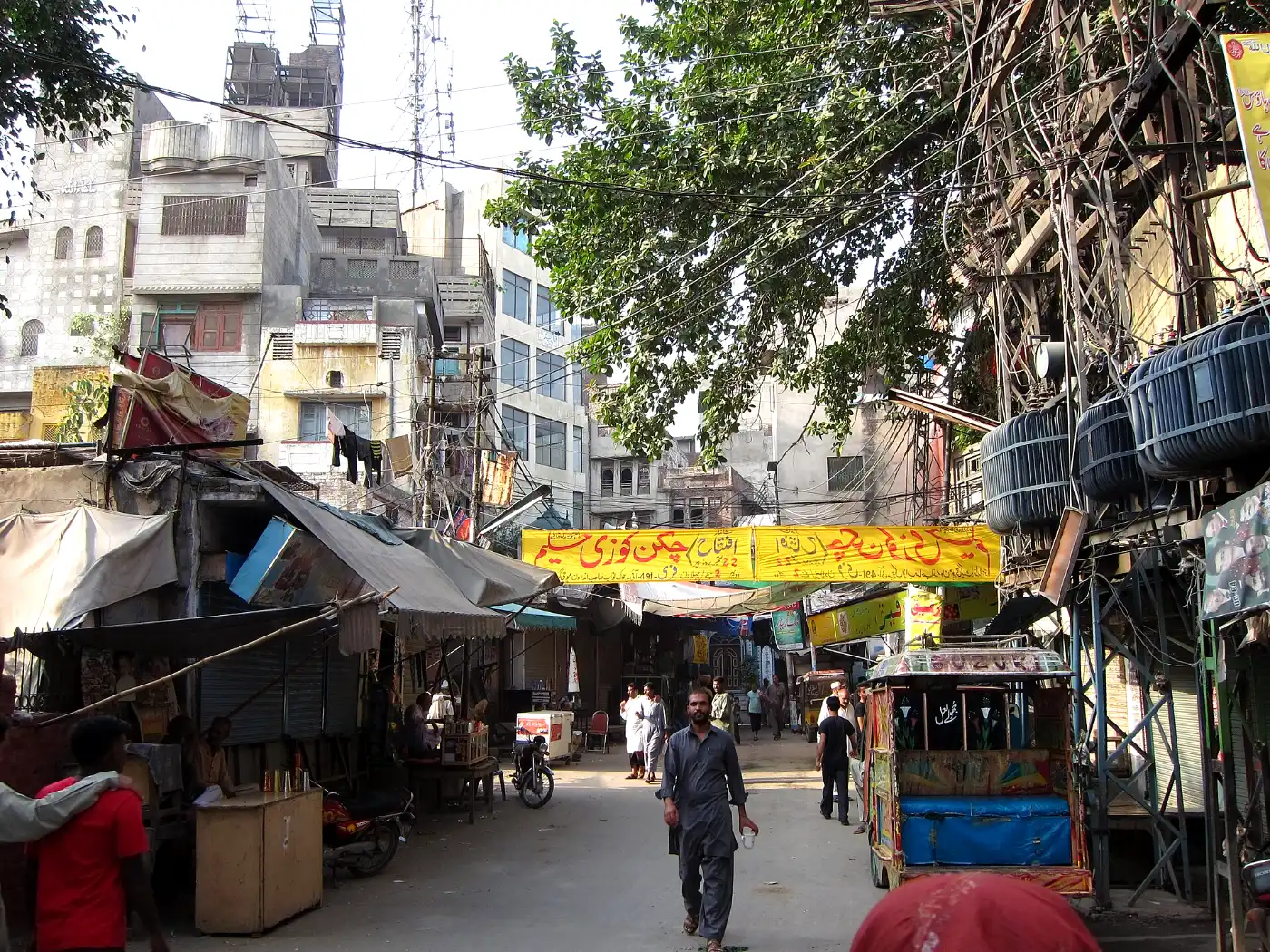
A bazaar street inside Mochi Gate. Photo Credit: S.Orangzeb, CC BY-SA 3.0.
Mochi Bagh and Pakistan’s Politics
Just outside the gate is Mochi Bagh, an open ground that became the country’s best-known rally spot. For example, leaders from before independence and long after it gave speeches here. In fact, for decades a big crowd at Mochi Gate was a test of any politician’s popularity.
Next to it stands the Barkat Ali Islamia Hall, built from 1888 as the Mohammedan Hall. After the Lahore Resolution of 1940, the Muslim League often met in the hall and on the ground outside. After years of neglect, the Walled City authority restored the hall, and the work was completed in 2024.
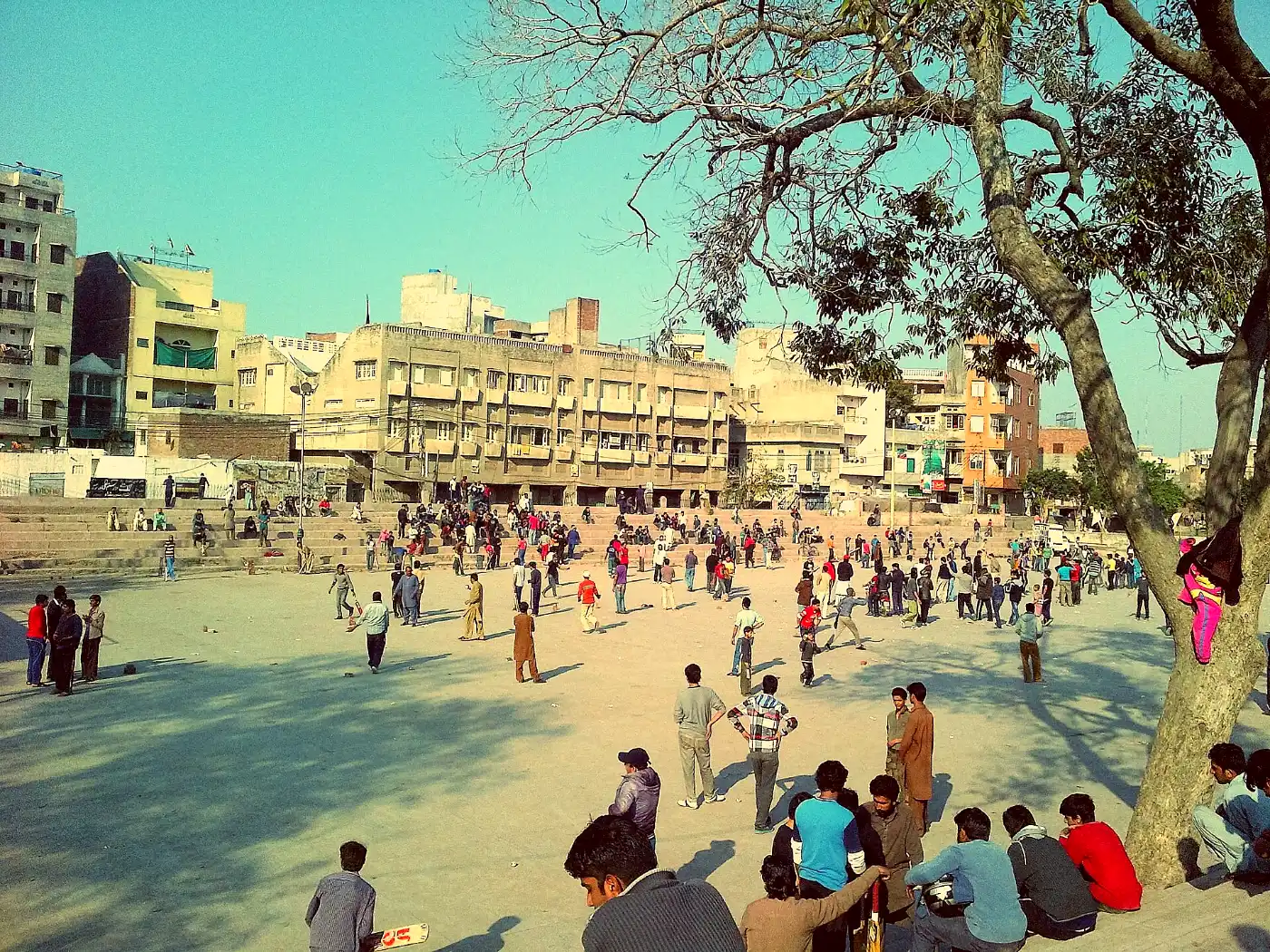
Mochi Bagh, the famous rally ground. Photo Credit: Muhammad Imran Saeed from City of London, Canada, CC BY 2.0.
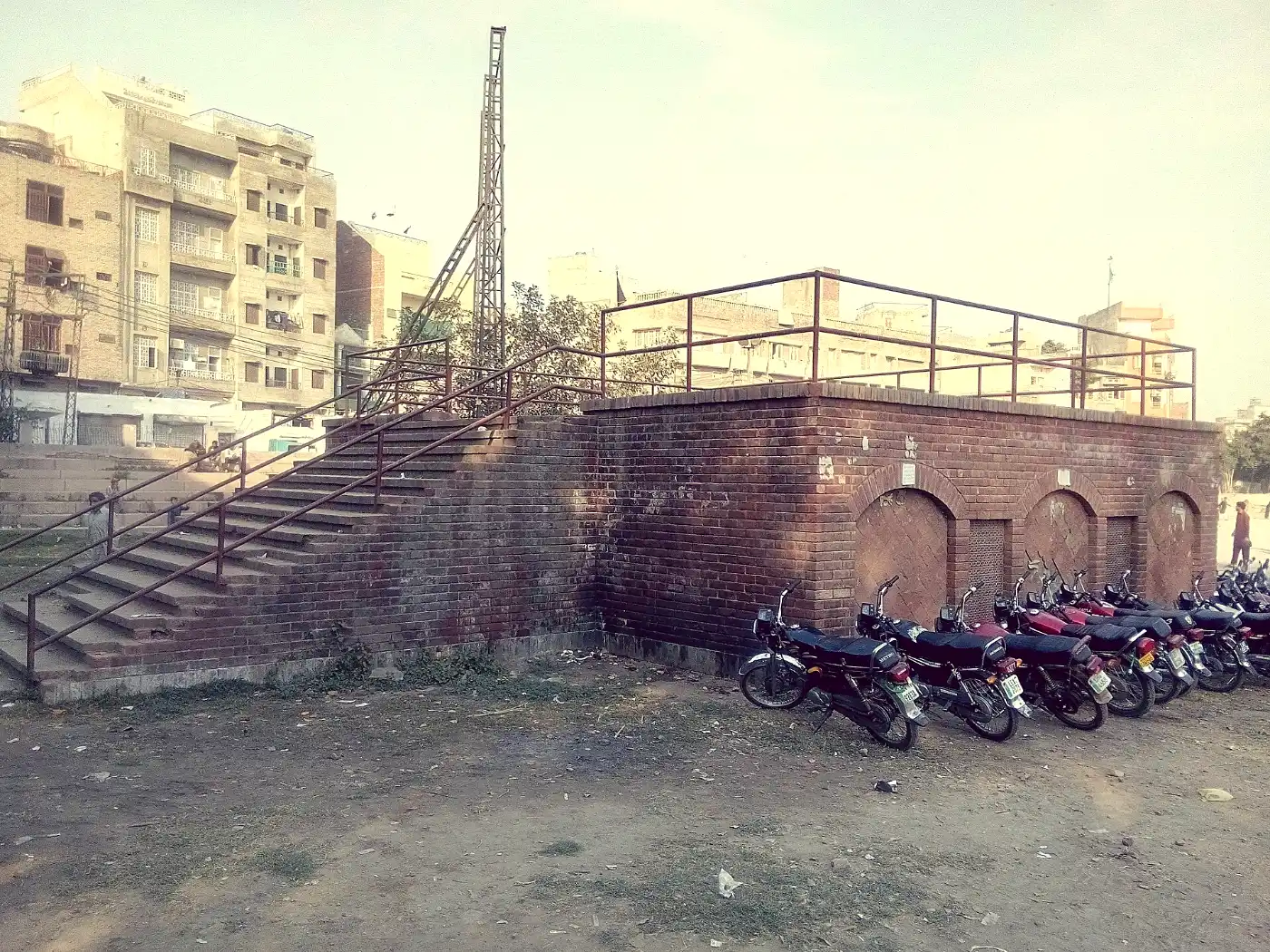
The old stage area of Mochi Bagh. Photo Credit: Muhammad Imran Saeed from City of London, Canada, CC BY 2.0.
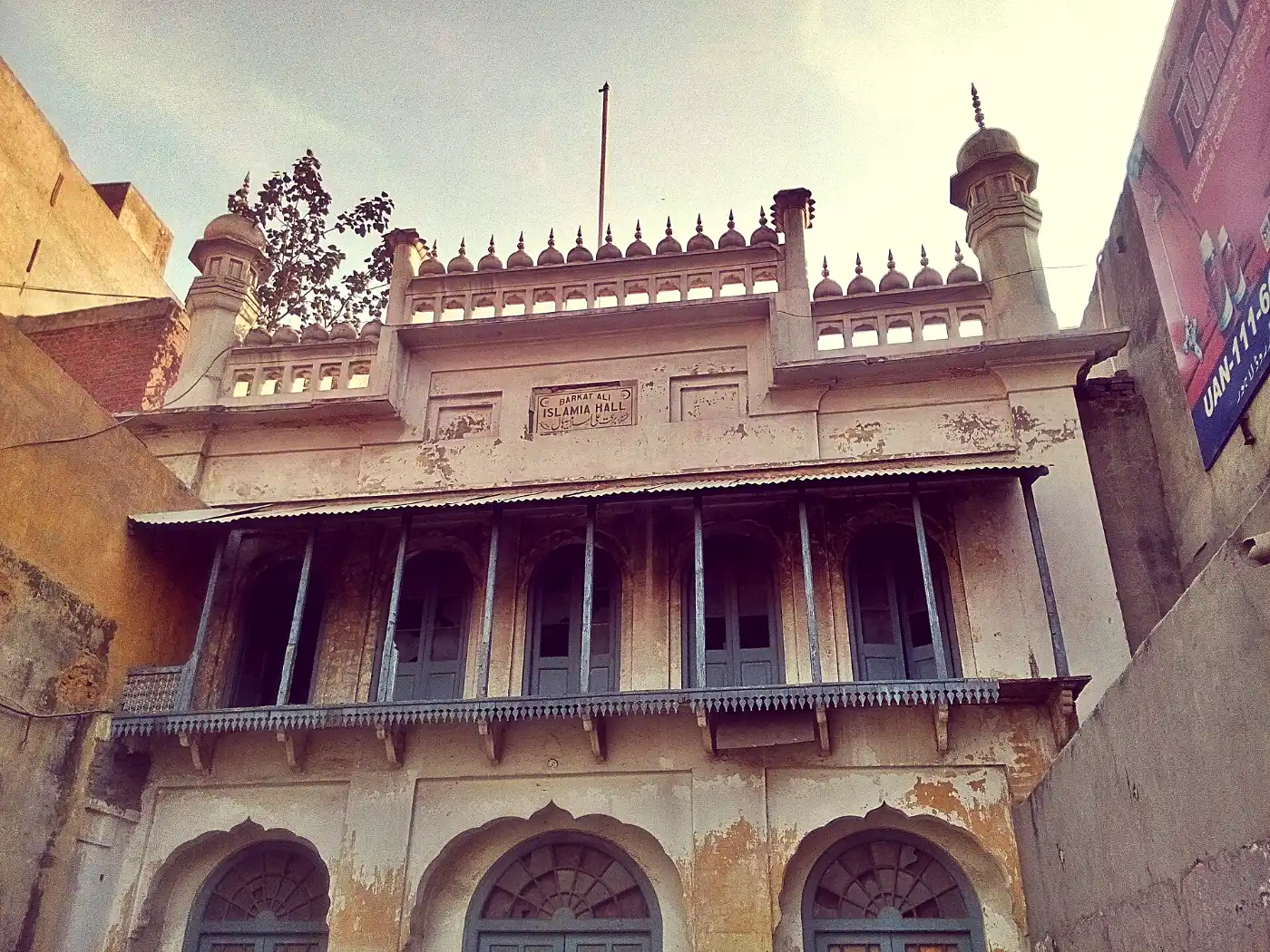
Barkat Ali Islamia Hall before its restoration. Photo Credit: Muhammad Imran Saeed from City of London, Canada, CC BY 2.0.
What Makes It Special
What Makes Mochi Gate Special
Mochi Gate is not one monument. Instead, it is a whole neighbourhood of trade, faith and old houses. For instance, behind the dry fruit shops you will find wooden jharokas (balconies), carved doorways and tall havelis.
The area is also the heart of Lahore’s Shia community. Several old havelis here, such as Nisar Haveli and Mubarak Haveli, are imambargahs. In Muharram, majalis are held in them, and processions start from here.
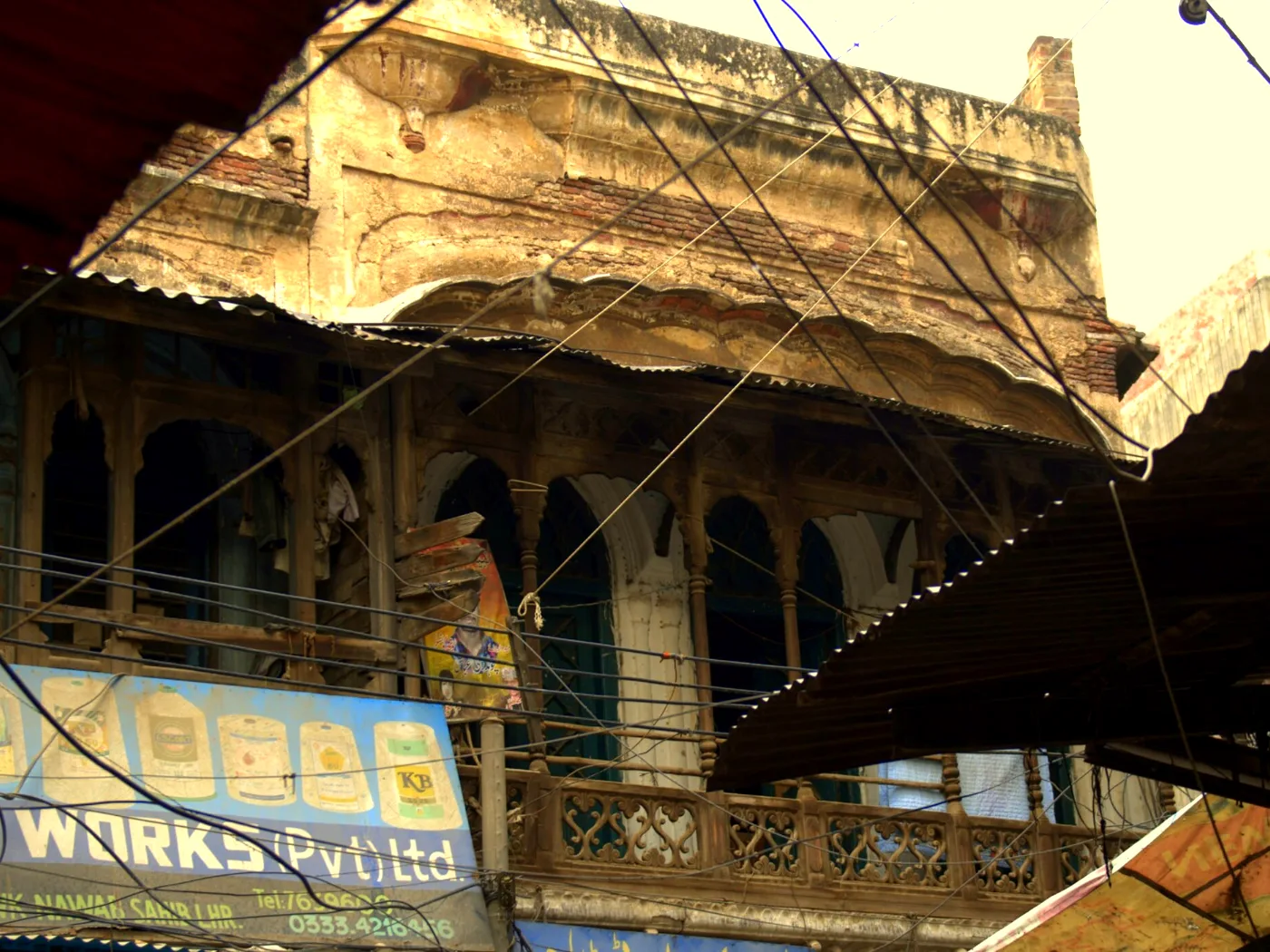
A wooden jharoka on an old haveli. Photo Credit: The Walled City of Lahore Authority, CC BY-SA 4.0.
What to See
Saleh Kamboh Mosque
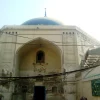
Walk into the bazaar and look for a small mosque with a tiled front. This is the mosque of Muhammad Saleh Kamboh, the court historian of Shah Jahan and a teacher of Aurangzeb. In fact, he built it in 1659. Locals call it Chinianwali Masjid because of its colourful kashi kari (tile mosaic). The front has changed over time, but parts of the old tile work and multifoil arches survive inside.
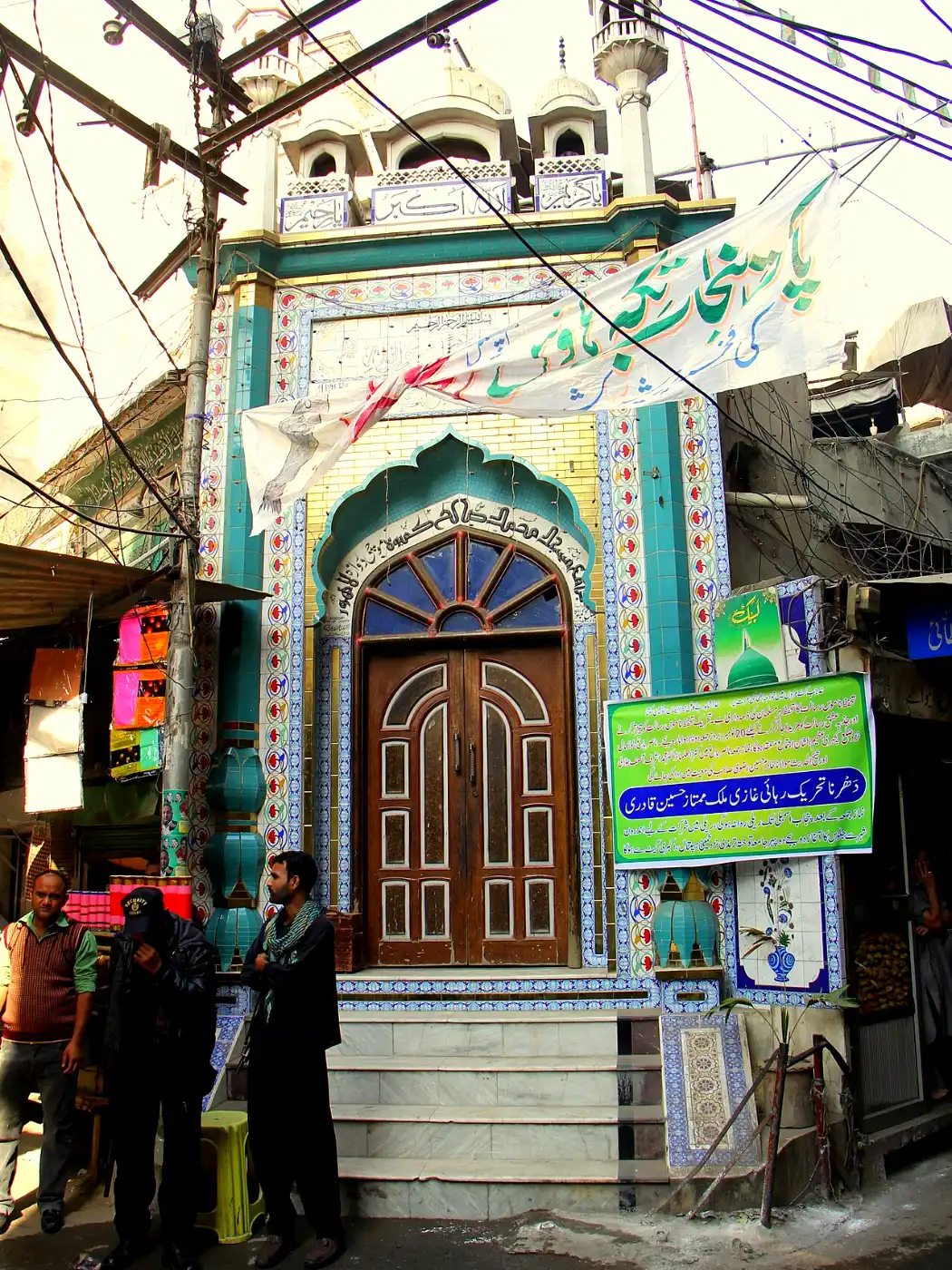
The tiled front of Saleh Kamboh Mosque. Photo Credit: The Walled City of Lahore Authority, CC BY-SA 4.0.
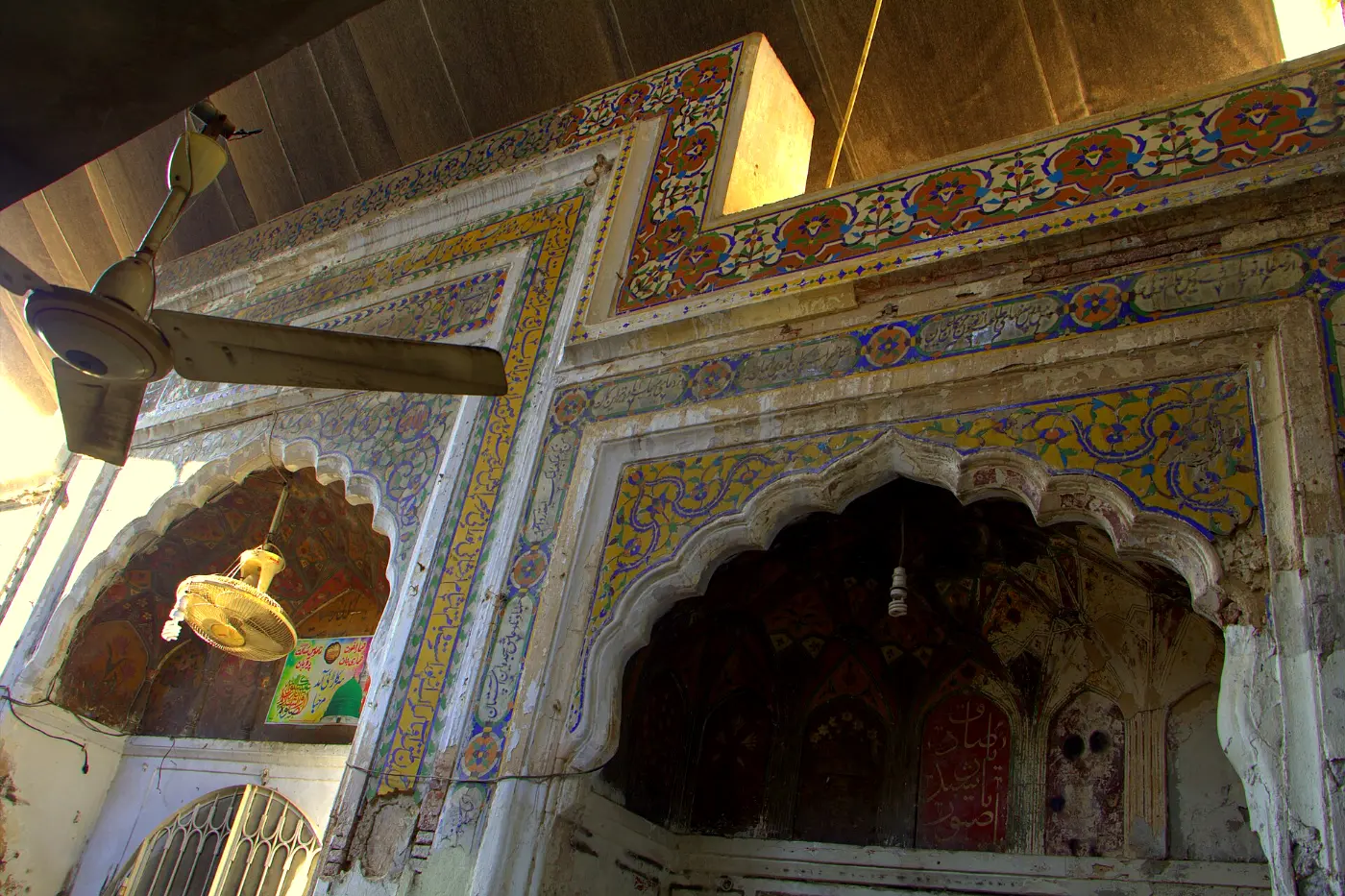
Old tile work inside the mosque. Photo Credit: The Walled City of Lahore Authority, CC BY-SA 4.0.
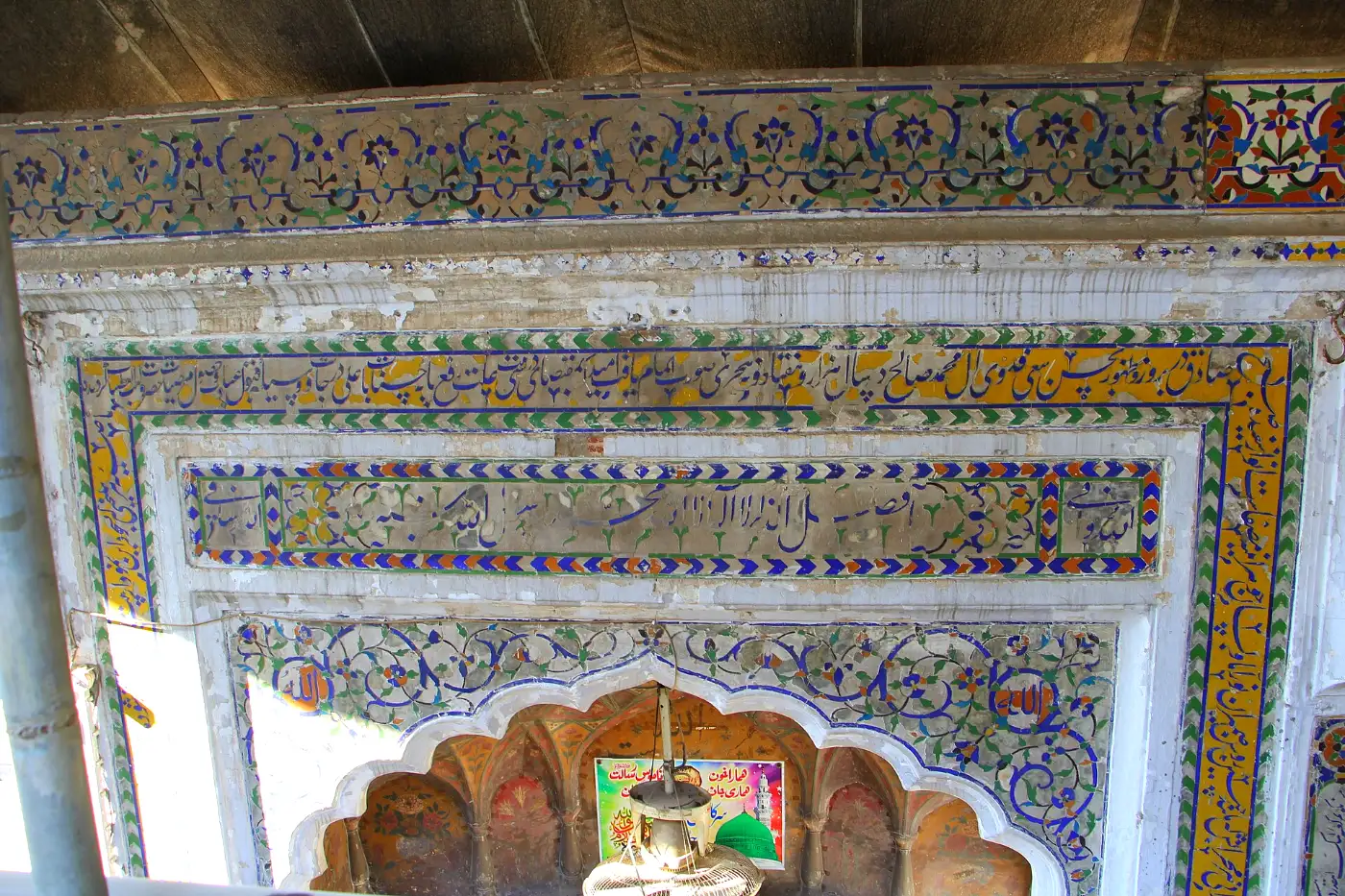
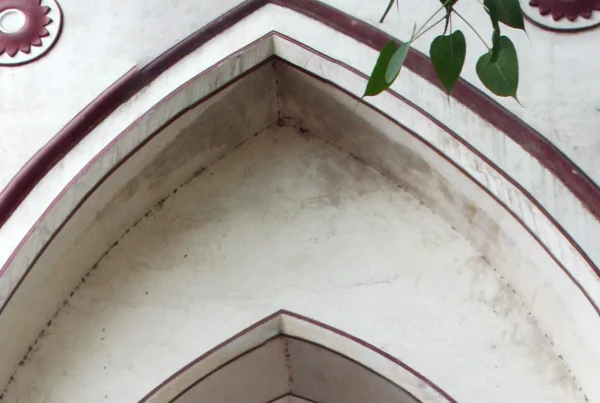
Kashi kari panels around an arch. Photo Credit: The Walled City of Lahore Authority, CC BY-SA 4.0.
The Old Lanes and Havelis
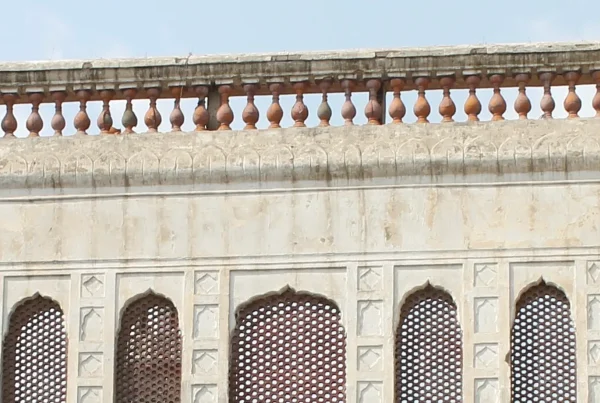
Next, step into the side lanes. There, you will see crumbling havelis with arched windows, carved wooden balconies and old brick work. Please be respectful, because these are people’s homes.
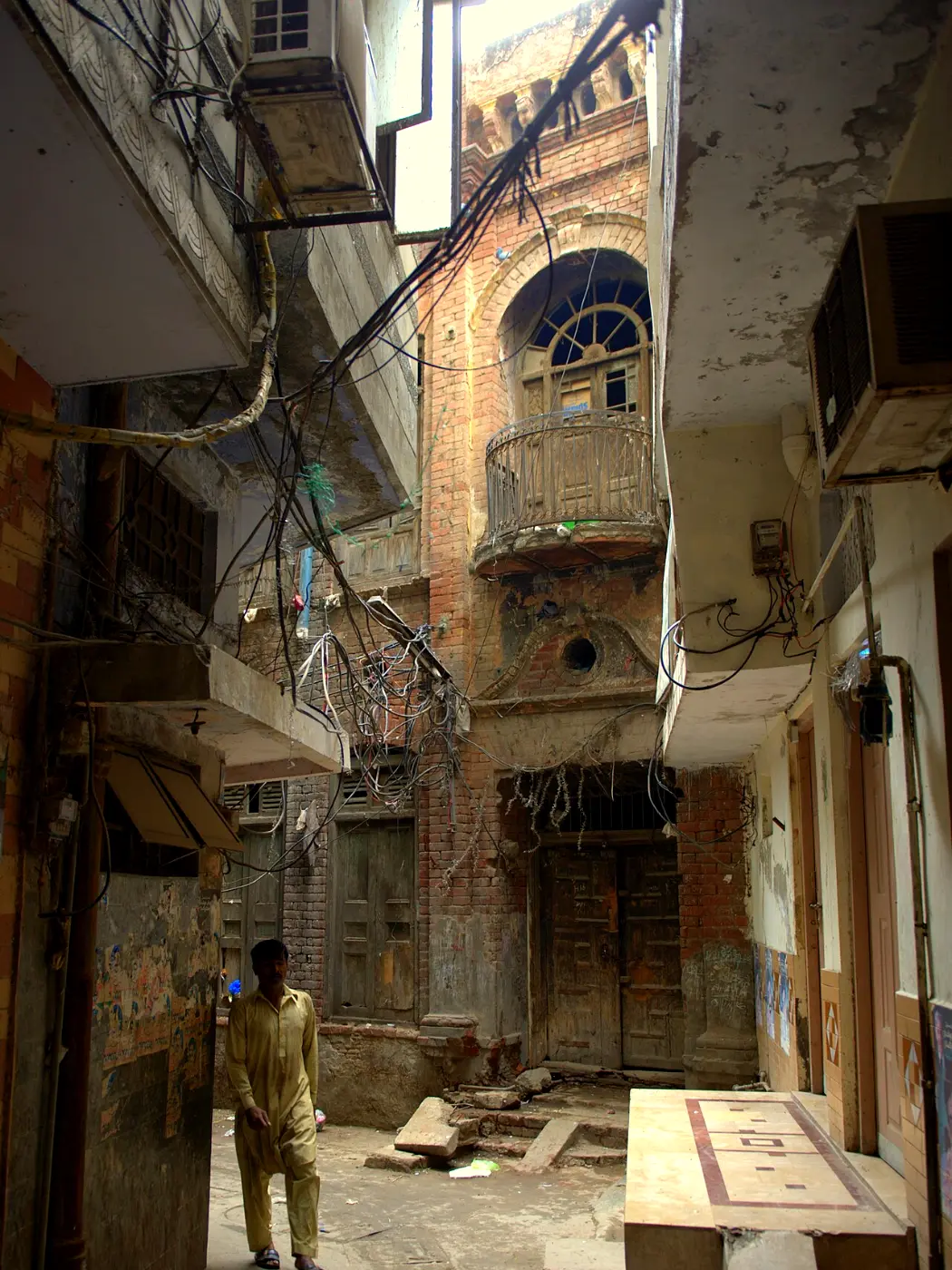
A narrow lane with an old haveli. Photo Credit: The Walled City of Lahore Authority, CC BY-SA 4.0.
The Dry Fruit Market
Mochi Gate is famous for dry fruit. For example, shops sell almonds, pistachios, walnuts, raisins, chilgoza and dried apricots, often at wholesale prices. The bazaar is also known for traditional mithai shops and, in the past, for kites and fireworks.
Things to Do
Tips for Enjoying Mochi Gate
- Buy dry fruit for winter: Compare a few shops before buying, and ask for a taste first.
- Have a local breakfast: The area is known for kebabs and for kulchas with lonchara (a spicy chutney) in the morning.
- Find the Saleh Kamboh Mosque: Ask any shopkeeper for “Chinianwali Masjid”. Visit outside prayer times.
- Walk to the havelis: Look for Nisar Haveli and Mubarak Haveli in Mohalla Shian. Take photos from the street unless you are invited in.
- Combine it with other gates: Lohari Gate is about 1 km to the west along the Circular Road.
Visitor Information
Visiting Mochi Gate
- Location: Circular Road, south side of the Walled City, between Shah Alami and Akbari Gate.
- Timings: The streets are open all day. Shops open around 10 am and stay open till late evening. Many close on Friday afternoon.
- Ticket: Free.
- Muharram: On the 9th and 10th of Muharram the area is crowded with processions and roads are closed. Plan your visit for another day.
- Dress code: Cover your head and shoulders in the mosque and imambargahs, and remove shoes.
- Parking: Very limited. Use a rickshaw, Careem or inDrive.
- Families and women: Busy and safe in the day; the lanes are crowded, so keep children close.
- Accessibility: Narrow lanes, motorbikes and uneven ground; hard for wheelchairs.
Last checked: November 2026. Timings and prices can change, especially in Ramadan and on public holidays.
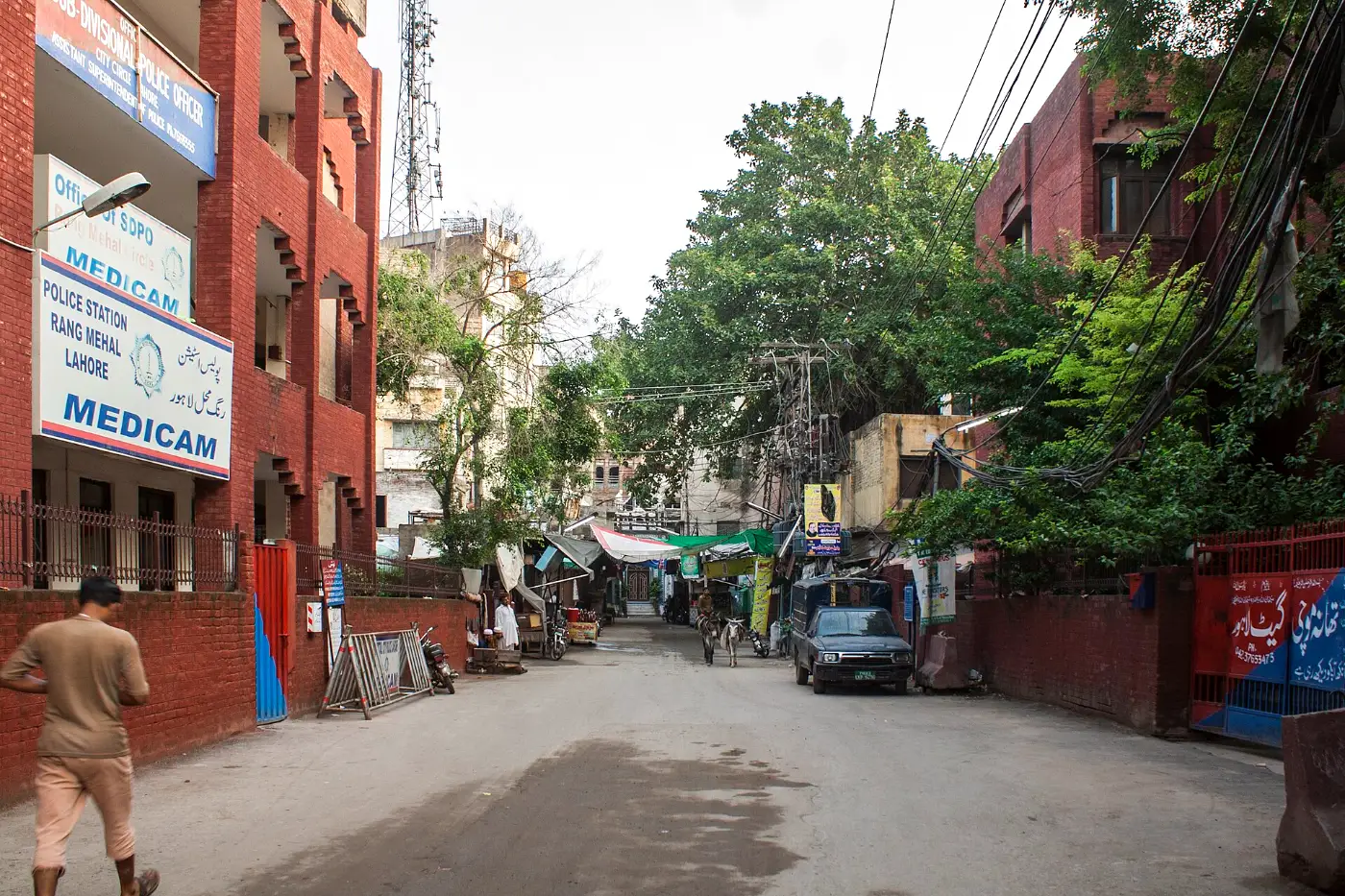
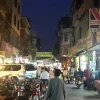
The street outside Mochi Gate. Photo Credit: Tahir8088, CC BY-SA 3.0.
How to Get There
Getting to Mochi Gate
Mochi Gate is on the Circular Road on the south side of the Walled City, about 1 km east of Lohari Gate. From Anarkali or the Mall Road, take a rickshaw and ask for “Mochi Gate” or “Mochi Bagh”. Alternatively, Careem and inDrive can drop you on the Circular Road outside the gate. The nearest Orange Line stop is Anarkali station, a short rickshaw ride away.
Places to Visit Nearby
More to See Near Mochi Gate
- Nisar Haveli: The old imambargah inside Mochi Gate. Read about Nisar Haveli.
- Mubarak Haveli: A historic haveli and imambargah in the same quarter.
- Rang Mahal: The busy market area deeper in the old city. See our Rang Mahal guide.
- Lohari Gate: One of the oldest gates of the Walled City. Read the Lohari Gate guide.
- Delhi Gate: The start of the Royal Trail. See the Delhi Gate guide.
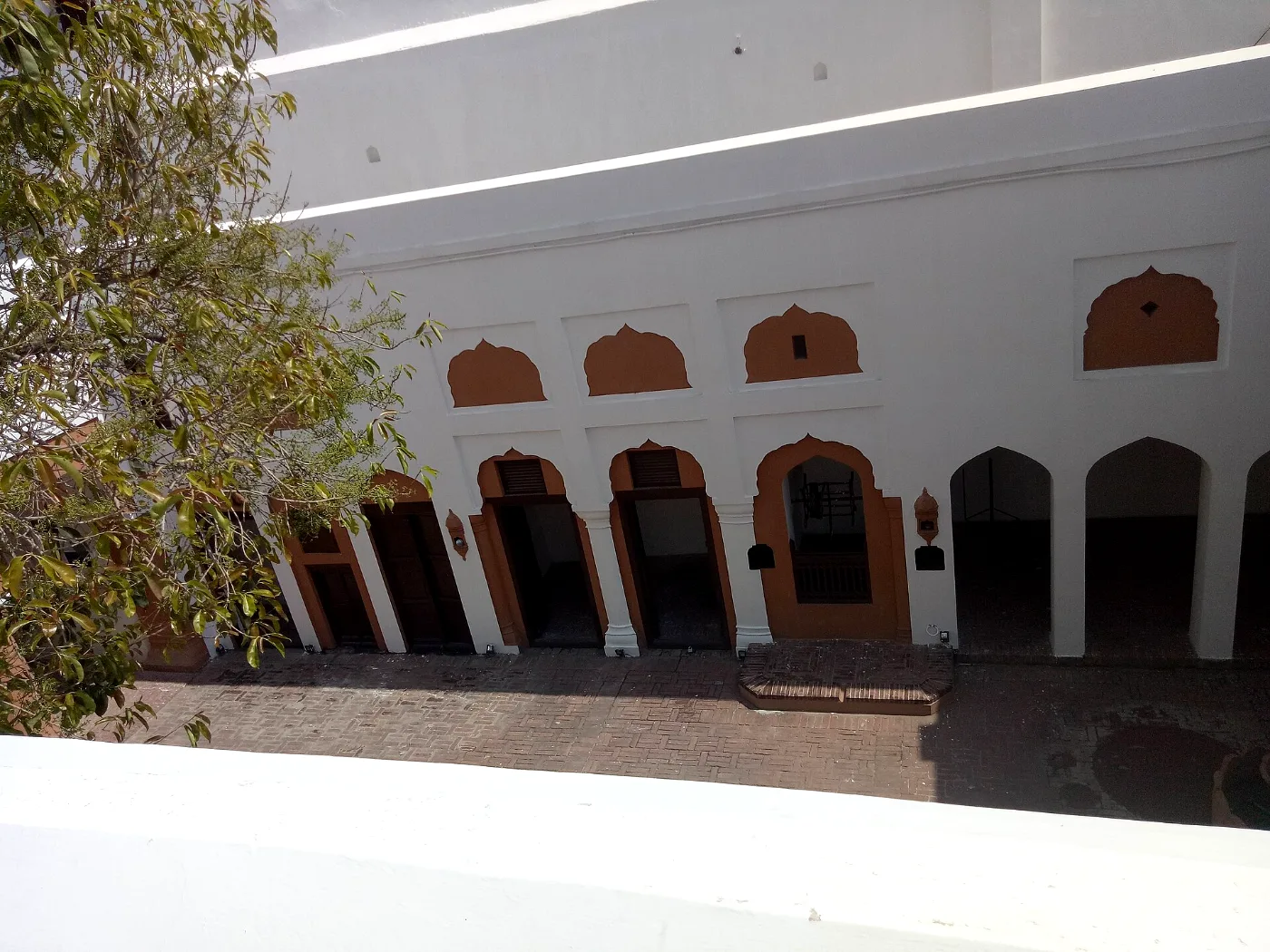
The courtyard of Mubarak Haveli. Photo Credit: Talha 189, CC BY-SA 4.0.
Frequently Asked Questions
Does Mochi Gate still exist?
No. The gate was burnt in 1947. Only the name, the streets and the old buildings remain.
Why is it called Mochi Gate?
Some say it was named after Moti Ram, a guard in Akbar’s time. Others link it to “morchi” (trench soldiers) or to mochi (cobblers).
What is Mochi Gate famous for?
It is known for its dry fruit market, Mochi Bagh rallies, old havelis, imambargahs and the Saleh Kamboh Mosque.
Where is Mochi Bagh?
It is the open ground just outside Mochi Gate, on the Circular Road.
Is Mochi Gate safe to visit?
Yes, in the daytime. However, it is crowded, so watch your belongings, and avoid the 9th and 10th of Muharram if you are only sightseeing.
Conclusion
Mochi Gate has lost its gateway, but not its life. In a single walk you can buy almonds for winter, stand where Pakistan’s leaders gave speeches and find a Mughal mosque covered in tiles. So come in the morning, walk slowly and look up, because the best of Mochi Gate is above the shop signs.
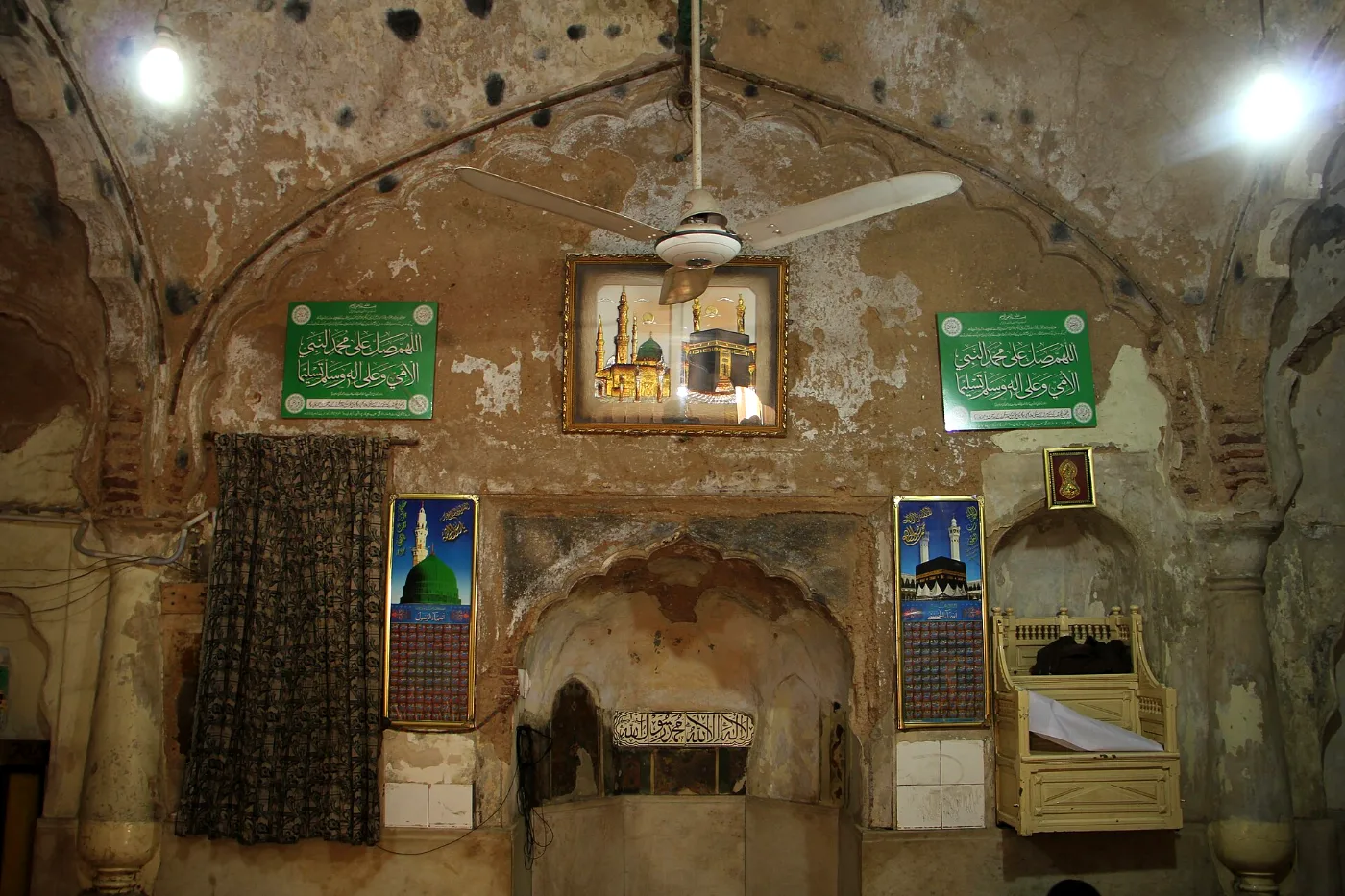
The prayer hall of Saleh Kamboh Mosque. Photo Credit: The Walled City of Lahore Authority, CC BY-SA 4.0.
Cover photo: The Walled City of Lahore Authority, CC BY-SA 4.0.